FOLLOW US

Last update: Apr 1, 2026 Reading time: 10 Minutes
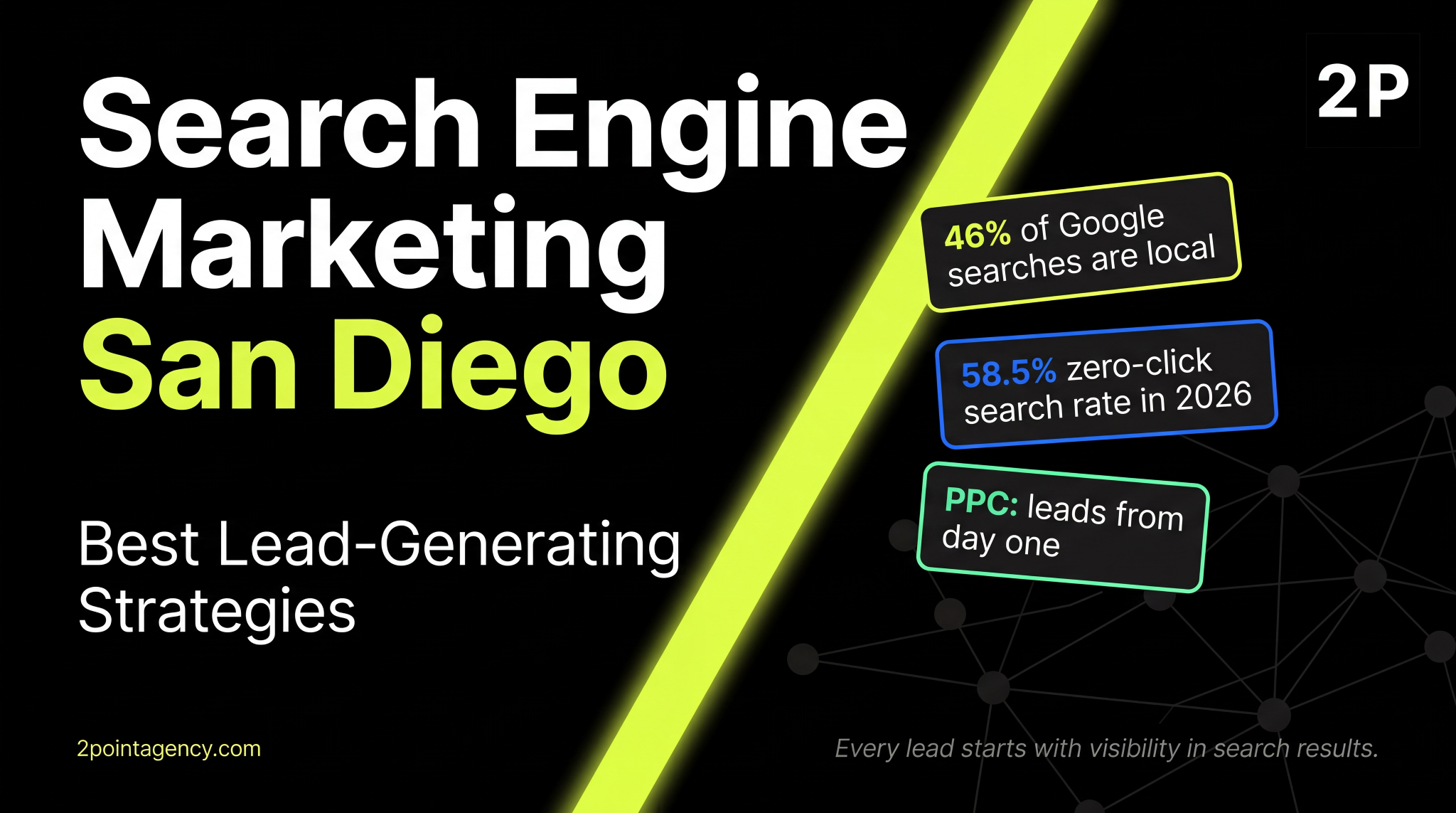
Every lead your San Diego business generates starts with visibility in search results.
Without it, competitors capture the demand you should be converting. That’s exactly why search engine marketing in San Diego has become the most direct path from query to customer.
Effective San Diego search engine marketing combines SEO and paid search to put you in front of people actively looking for what you offer. And the gap between companies scaling and those stuck usually comes down to how well these two channels work together.
This guide covers what San Diego lead generation through search actually looks like and what separates revenue-producing strategies from empty reports. At 2POINT, we build search programs around measurable outcomes.
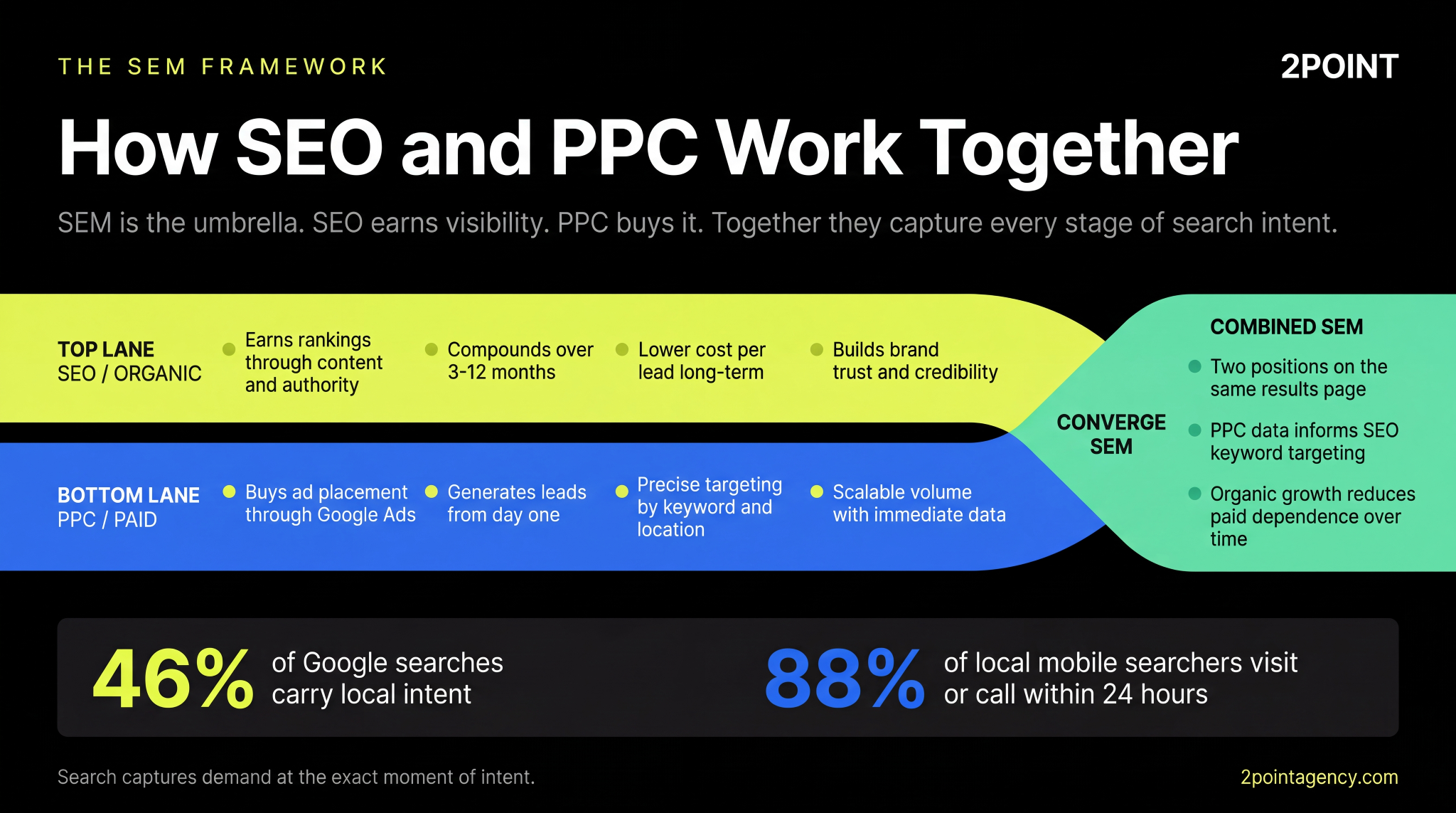
Before diving into tactics, you need to understand what search engine marketing in San Diego actually covers. SEM is the umbrella term for all marketing aimed at increasing your visibility in search results. It breaks into two channels that work best together.
SEO earns your organic rankings through content, technical optimization, and authority building.
PPC purchases ad placements for your target keywords through platforms like Google Ads. When you combine both, you cover paid and organic real estate on the same results page, maximizing lead capture across every stage of how your customers search.
Now that you understand what SEM covers, here’s why it outperforms other channels.
Search captures demand at the exact moment of intent. People actively searching for services are significantly closer to conversion than audiences reached through social or display.
The numbers back this up. According to HubSpot’s marketing research, 46% of all Google searches carry local intent. And knowing the differences between search advertising and paid social helps you put your budget where that intent is strongest.
On top of that, SEM gives San Diego businesses precise targeting by keyword, location, device, and time of day. That level of control ensures your spend goes toward people actively looking for what you offer.
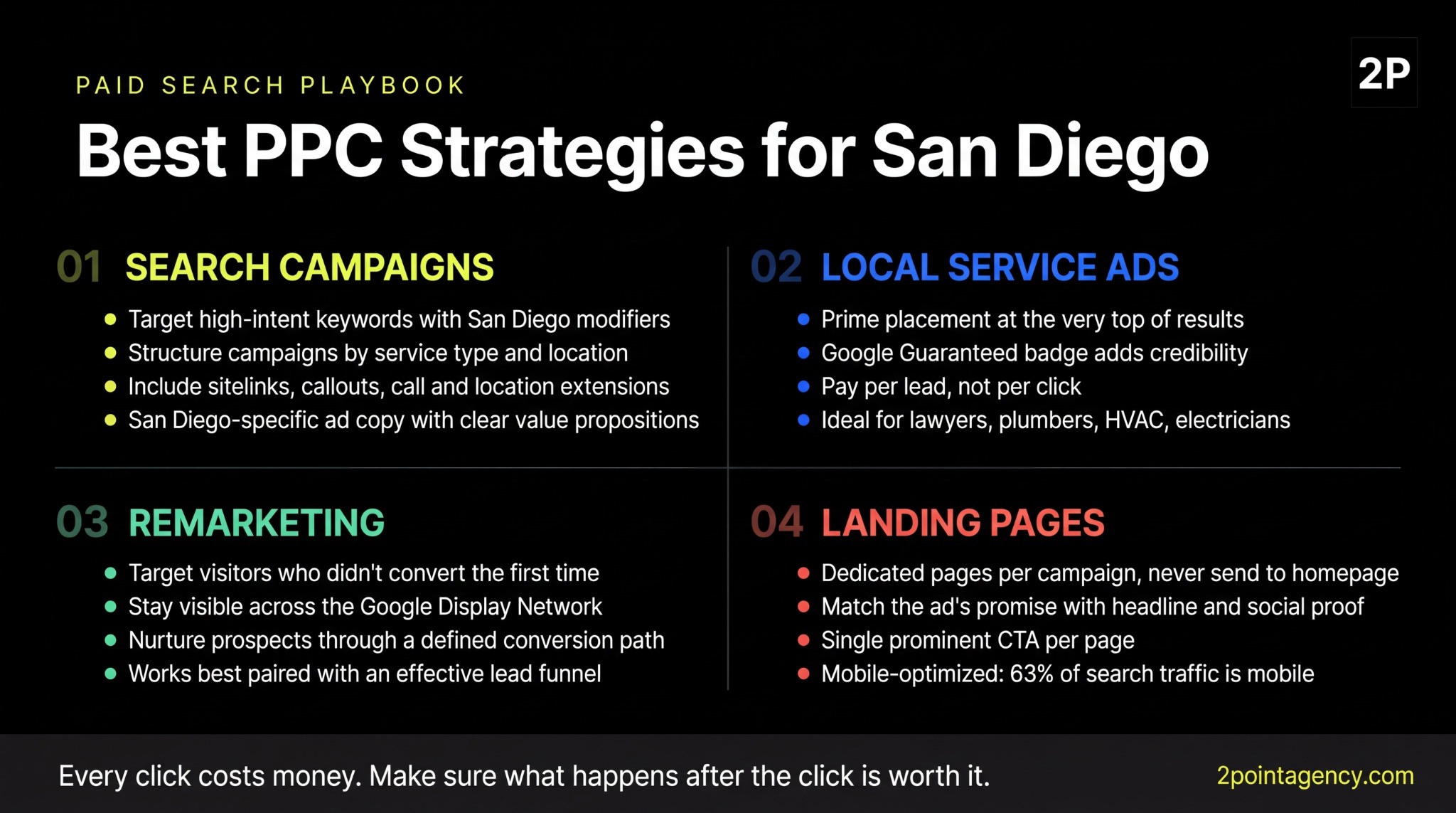
SEM’s precision starts with how you structure your Google Ads. Target high-intent keywords like “hire [service] San Diego,” “best [service] near me,” or “[service] quote San Diego.”
Structure campaigns by service type and location to keep relevance and Quality Score high.
Your ad copy matters just as much. Writing successful PPC campaigns means including San Diego-specific messaging, clear value propositions, and strong calls to action. Also add sitelinks, callouts, call extensions, and location extensions.
Google Ads San Diego campaigns with full extension sets consistently outperform bare-bones ads.
Beyond standard search ads, LSAs give you prime placement at the very top of results with a Google Guaranteed badge.
You only pay when someone contacts you directly, making it a true pay-per-lead model. These are ideal for service-based San Diego businesses like lawyers, plumbers, HVAC, and electricians, where Google’s verification process adds credibility while limiting your competition.
LSAs capture new prospects, but remarketing brings back the ones who got away. These campaigns target people who visited your site but didn’t convert, keeping your business visible as they continue browsing across the Google Display Network.
This works especially well when you’ve built an effective lead generation funnel behind it.
Instead of just showing ads again, you’re nurturing prospects through a defined path that moves them closer to conversion with each touchpoint.
Remarketing and search ads drive clicks, but your landing pages determine whether those clicks become leads.
Every PPC campaign in San Diego should send traffic to dedicated pages, not your homepage.
Each page should match the ad’s promise with a clear headline, social proof, and a single prominent call to action.
With 63% of all Google search traffic coming from mobile devices, mobile optimization is non-negotiable. A/B test your headlines, CTAs, and form length consistently to improve conversion rates over time.
Your paid campaigns capture high-intent searches, but local SEO ensures you show up organically when nearby customers need you. Google Business Profile optimization is the single most impactful action you can take.
Complete every section: name, address, phone, hours, categories, services, products, photos, and posts.
Review generation matters just as much because it directly influences your local pack rankings.
As HubSpot’s local search data highlights, 88% of consumers who search locally on their phones visit or call within 24 hours. Consistent citations across Yelp, BBB, and industry directories reinforce your authority further. Avoiding common SEO mistakes with your GBP and citations accelerates your path into the local pack.
Strong local visibility starts with targeting the right keywords. Focus on geo-modified terms like “[service] San Diego,” “[service] in La Jolla,” and “best [service] near me.” Then map each keyword to buyer intent:
Build your content around keyword clusters to establish topical authority in your service area.
Your PPC search term data is especially valuable here because it reveals which keywords actually convert, giving you a shortcut for prioritizing your SEO targets.
Your keywords tell you what to target. Your content strategy determines how you capture that demand. Each page type serves a different role in your San Diego lead generation funnel:
Every page needs clear calls to action: forms, phone numbers, and consultation offers. Results depend on matching search intent with the right page type.
Great content won’t rank if your technical foundation is weak.
Fast pages rank better and convert more visitors, especially on mobile where Google evaluates your site through mobile-first indexing. Responsive design isn’t optional.
Beyond speed, structured data for local businesses, services, and FAQs enhances how you appear in search results. Core Web Vitals optimization keeps your site meeting Google’s page experience standards, ensuring the traffic you’ve worked to earn actually converts once it arrives.
The best search engine marketing San Diego campaigns don’t treat SEO and PPC as separate efforts. Your PPC data reveals which keywords actually convert, giving your SEO strategy real performance data to work from.
As organic rankings strengthen, you gradually reduce paid spend on keywords you’re capturing organically.
Running both channels on the same keywords increases your total click share and brand trust. Remarketing then recaptures organic visitors who didn’t convert the first time. For any San Diego search engine marketing strategy, this shared data between channels improves targeting and budget allocation across the board.
With SEO and PPC working together, there’s one more shift you need to account for.
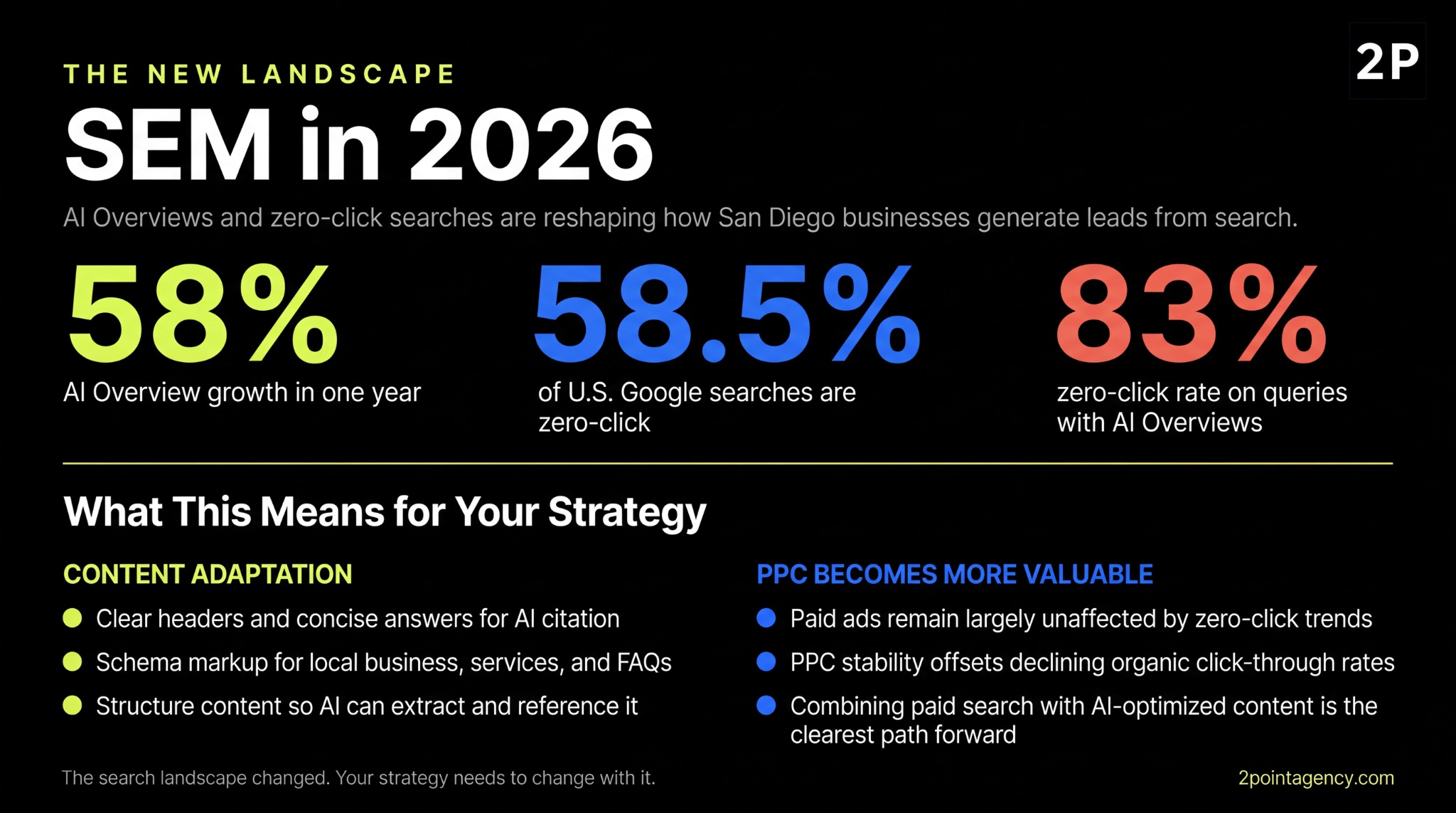
According to Semrush’s AI Overviews study, AI Overviews grew 58% in one year, and zero-click searches hit 58.5% of all U.S. Google searches. Queries triggering AI Overviews show zero-click rates as high as 83%.
Your content needs to adapt. Clear headers, concise answers, and schema markup increase your chances of being cited in AI Overviews. PPC remains largely unaffected, making paid search even more valuable when organic clicks are declining.
For SEM in San Diego, combining PPC stability with AI-optimized content is the clearest path forward.
AI Overviews are reshaping visibility, but your metrics should still tie back to business outcomes. Here’s what to track across both channels:
At 2POINT, we integrate SEO and PPC into a unified search engine marketing San Diego strategy built around lead generation. Every engagement starts with an audit of your current search visibility, competitor landscape, and keyword opportunities before we recommend anything.
From there, PPC campaigns target high-intent keywords with dedicated landing pages optimized for conversion. SEO follows our Hub-and-Spoke content system, building topical authority that compounds your organic traffic over time. Monthly reporting tracks leads, conversions, cost per lead, and revenue attribution so you always know what’s working.
Explore our SEO services and full marketing capabilities to see how we structure SEM for San Diego businesses.
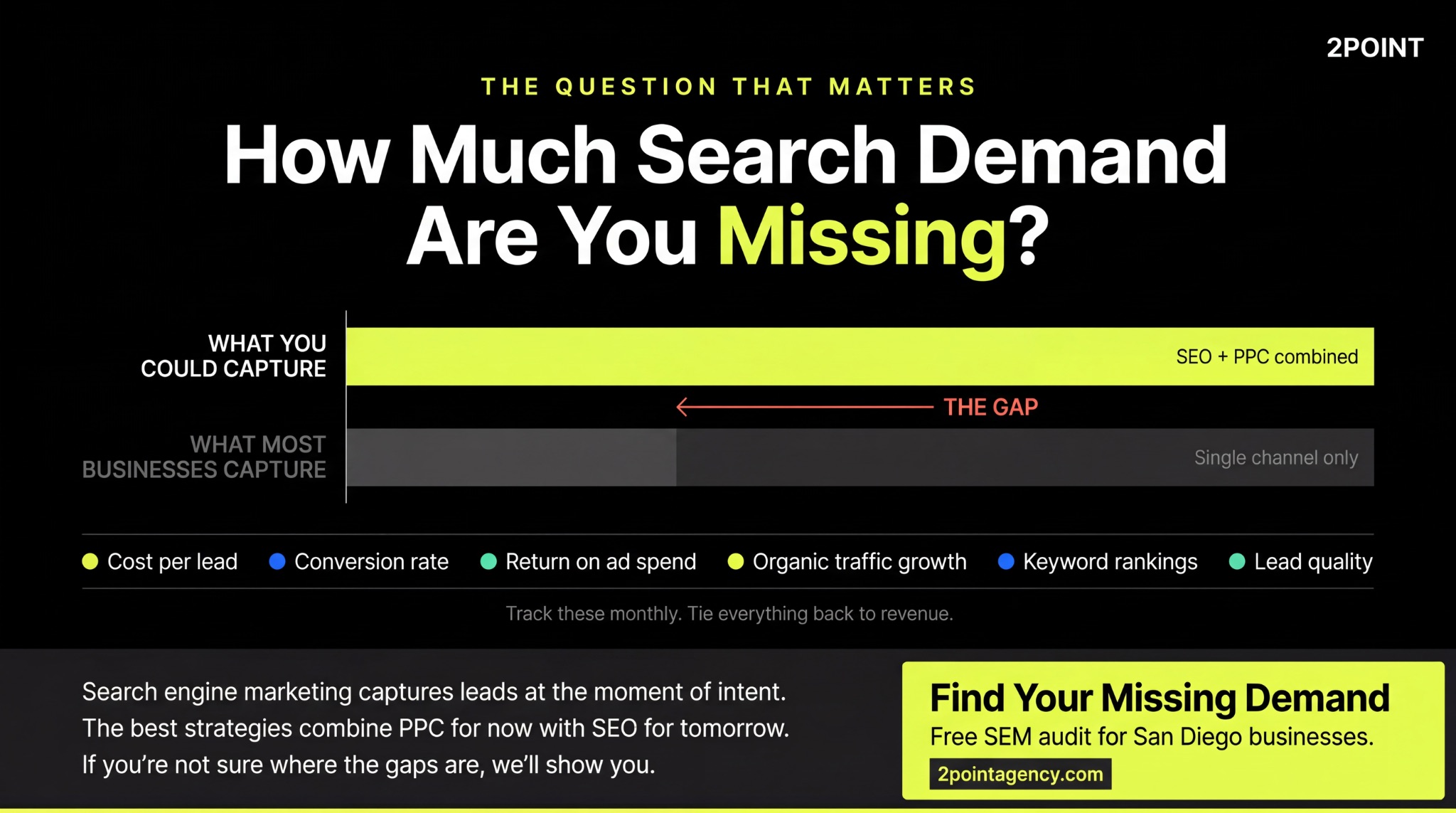
Search engine marketing in San Diego captures leads at the exact moment people are looking for what you offer. The best strategies combine PPC for immediate results with SEO for compounding long-term growth, covering every stage of the buyer journey.
If you’re not sure where the gaps are, reach out to 2POINT. We’ll show you exactly what you’re missing and how to capture it.
SEM is the umbrella term covering all search marketing. SEO earns organic rankings through content and authority. PPC buys ad placements through Google Ads in San Diego. A San Diego SEM agency combines both to maximize visibility and lead generation.
Google Ads CPCs in San Diego range from $2 to $18+ depending on industry. Legal keywords can exceed $100 per click. Monthly SEM retainers including SEO and PPC management typically run $3,000 to $10,000 for local businesses.
PPC campaigns generate leads within the first week. SEO takes 3 to 6 months for traction, with results compounding after month six. Search engine marketing San Diego businesses use delivers immediate leads through ads while building long-term organic equity.
PPC delivers faster leads. SEO delivers cheaper leads over time. The best San Diego lead generation strategies run both channels together. PPC provides conversion data that informs your SEO targeting, while organic rankings gradually reduce your dependence on paid spend.
Track cost per lead, conversion rate, return on ad spend, and organic traffic growth monthly. If cost per lead decreases while volume grows, your SEM in San Diego is working. Reporting should always tie to revenue, not vanity metrics.
A San Diego SEM agency brings specialized expertise, tools, and local market knowledge most in-house teams can’t match. Managing Google Ads, SEO, and content simultaneously requires significant bandwidth. For most businesses, an experienced San Diego search engine marketing partner delivers better ROI.


© 2POINT, INC 2026
(c) 2POINT, INC 2026

 let’s connect