FOLLOW US

Last update: Apr 1, 2026 Reading time: 12 Minutes
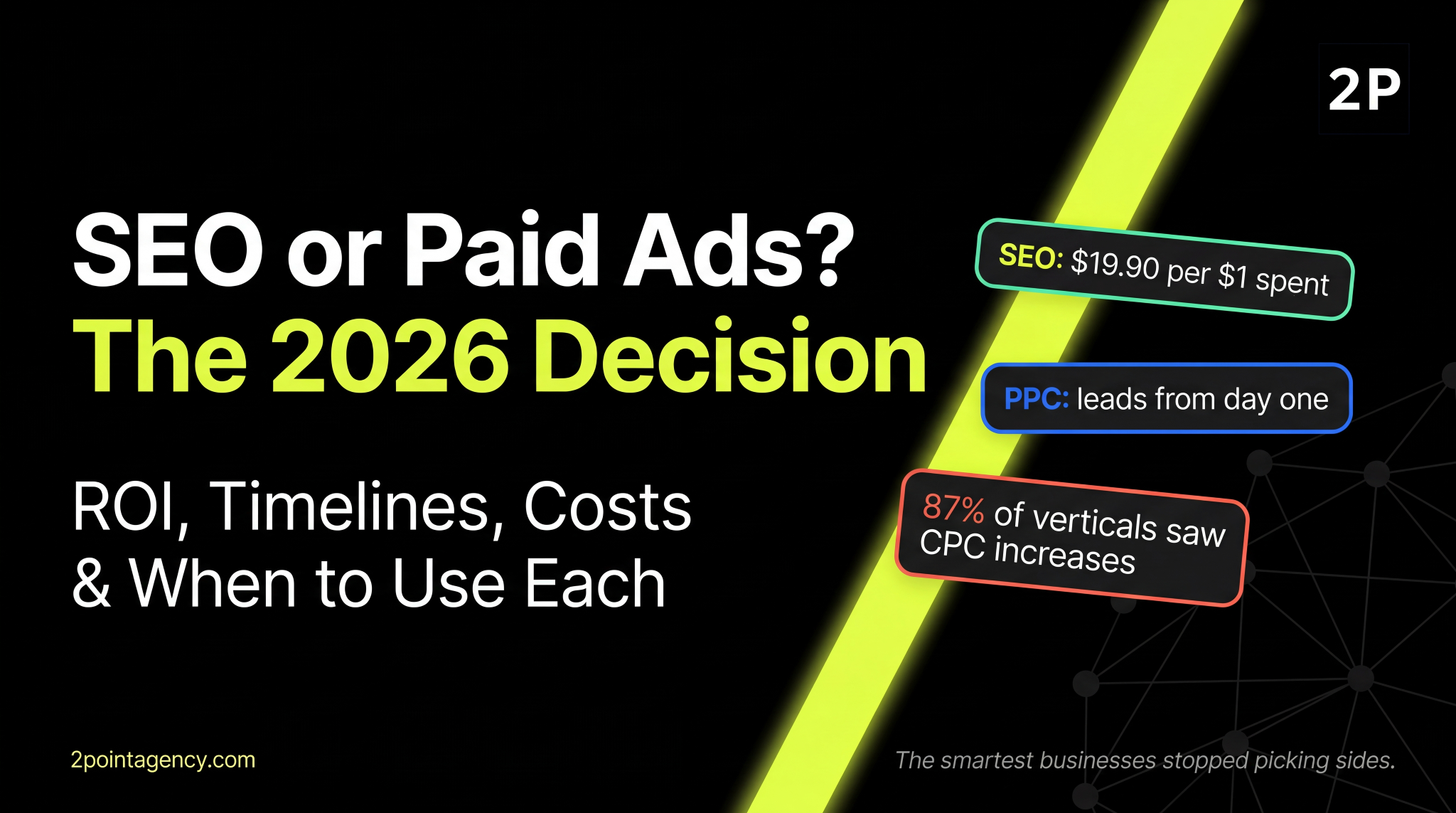
Every business eventually faces this decision: SEO or paid ads.
Invest in organic search that compounds over time, or paid campaigns that deliver leads right now. In 2026, the answer depends on your goals, budget, timeline and where your customers actually look for you.
SEO builds visibility through content and technical optimization. Paid ads buy it through auction-based placement. The smartest businesses use both strategically rather than picking sides.
This guide gives you an honest comparison covering ROI, timelines, costs, and when to lean into each. At 2POINT, we build strategies using both channels based on what your business actually needs.
Before you can decide between SEO or paid ads, you need to understand what each channel actually brings to the table. SEO earns you organic visibility for the keywords your audience is actively searching.
That visibility compounds as your content matures and domain authority builds.
Over time, this translates to lower cost per acquisition because you’re not paying for every click.
There’s also a trust factor that paid placements can’t replicate. Users consistently click organic results more often because they perceive them as earned, not bought.
Now that you understand what SEO delivers, here’s why it outperforms paid channels over the long run:
What makes SEO compound is structure. Isolated pages rank occasionally. But a content strategy built around topic clusters ranks consistently because connected content reinforces itself across your entire site.
While SEO’s strengths are compelling, you also need to be realistic about its constraints before committing your budget:
None of these are reasons to avoid SEO. They’re reasons to pair it with the right expectations and, in many cases, supplement it with paid ads while your organic visibility builds.
Google Ads places your business at the top of search results through an auction-based pay-per-click model.
When someone searches for “plumber near me” or “best CRM software,” they’re ready to act. That’s where SEO vs Google Ads gets interesting: paid ads grab those high-intent clicks immediately while SEO earns them over time.
Average CPC varies wildly by industry, and costs keep rising. As reported by FraudBlocker’s analysis of the most expensive keywords in 2026, the legal industry alone represents 19.4% of the top 5,000 most expensive search terms, with keywords routinely exceeding $100 per click.
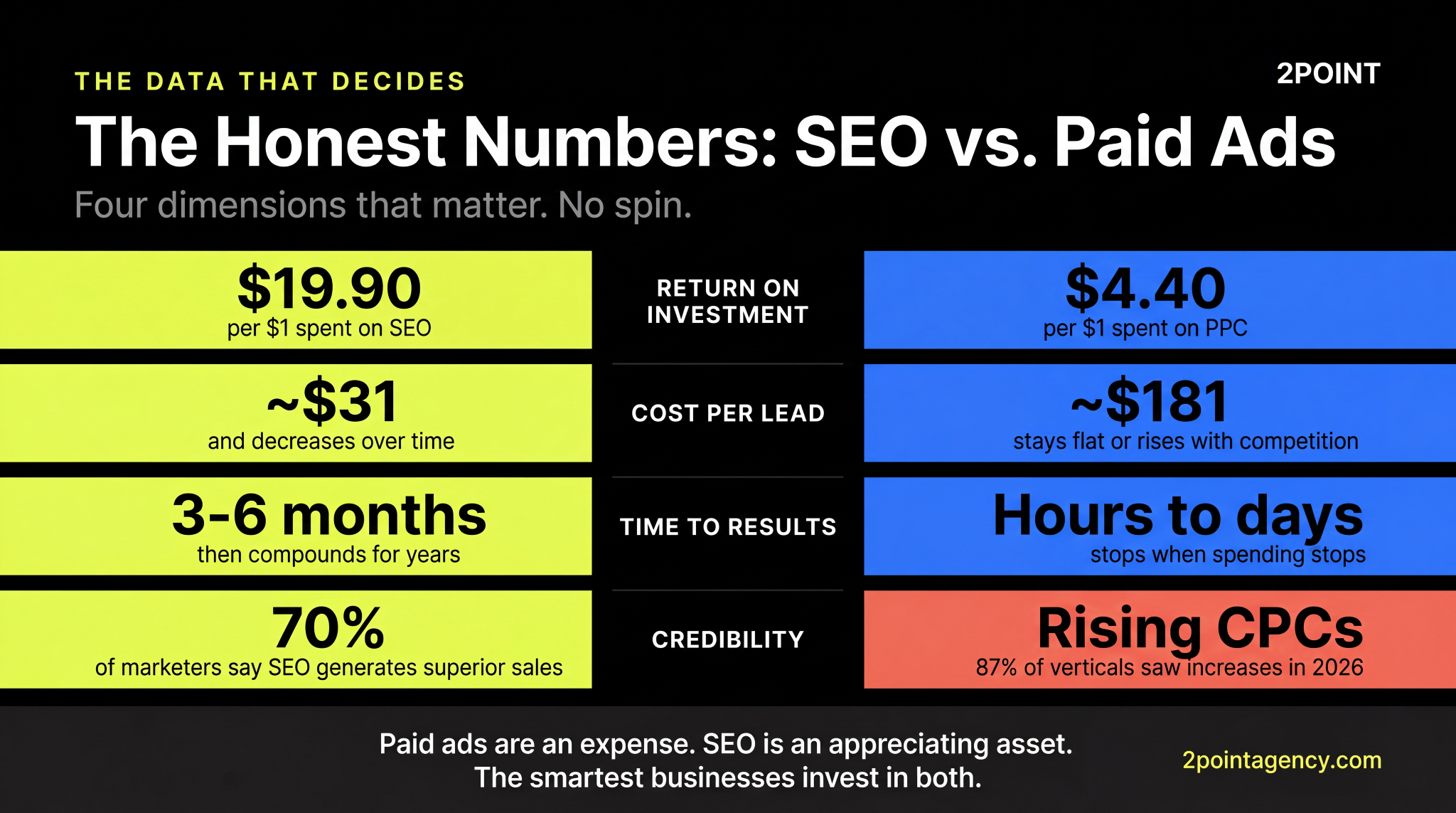
Even across less competitive industries, 87% of verticals saw CPC increases in the past year. Knowing how to run successful PPC advertising campaigns is critical to avoiding waste at those price points.
While Google Ads captures people actively searching, Facebook and Instagram ads work differently. They target users based on demographics, interests, behaviors, and lookalike audiences rather than search intent.
Your audience isn’t looking for you yet, but you can reach them with compelling offers before they ever type a query.
This makes Meta Ads especially strong for awareness, demand generation, and retargeting.
If you’re in e-commerce, local services, or any brand with visual products, this channel can drive results that search alone won’t capture. The key is knowing how search advertising and paid social differ so you can allocate your budget to the platform that matches your goals.
Now that you understand how both Google and Meta ads work, here’s why paid channels earn a place in your budget:
Those strengths come with real trade-offs you need to account for:
With the strengths and limitations of both channels clear, the ROI data helps you decide where to invest.
According to HubSpot’s marketing research, organic channels like SEO cost roughly $31 per lead compared to $181 for PPC, making SEO approximately 5.8 times more cost-effective on a per-lead basis.
That gap widens over time. Paid ads deliver faster ROI in the first 1 to 3 months because you’re buying immediate visibility. But SEO overtakes paid in cumulative ROI after 6 to 12 months as your content matures and compounds.
If you’re playing the long game, your organic search vs paid search investment will consistently deliver lower cost per lead through organic channels.
ROI data tells you where the value lives, but timing tells you which channel to activate first. Here’s what you can realistically expect:
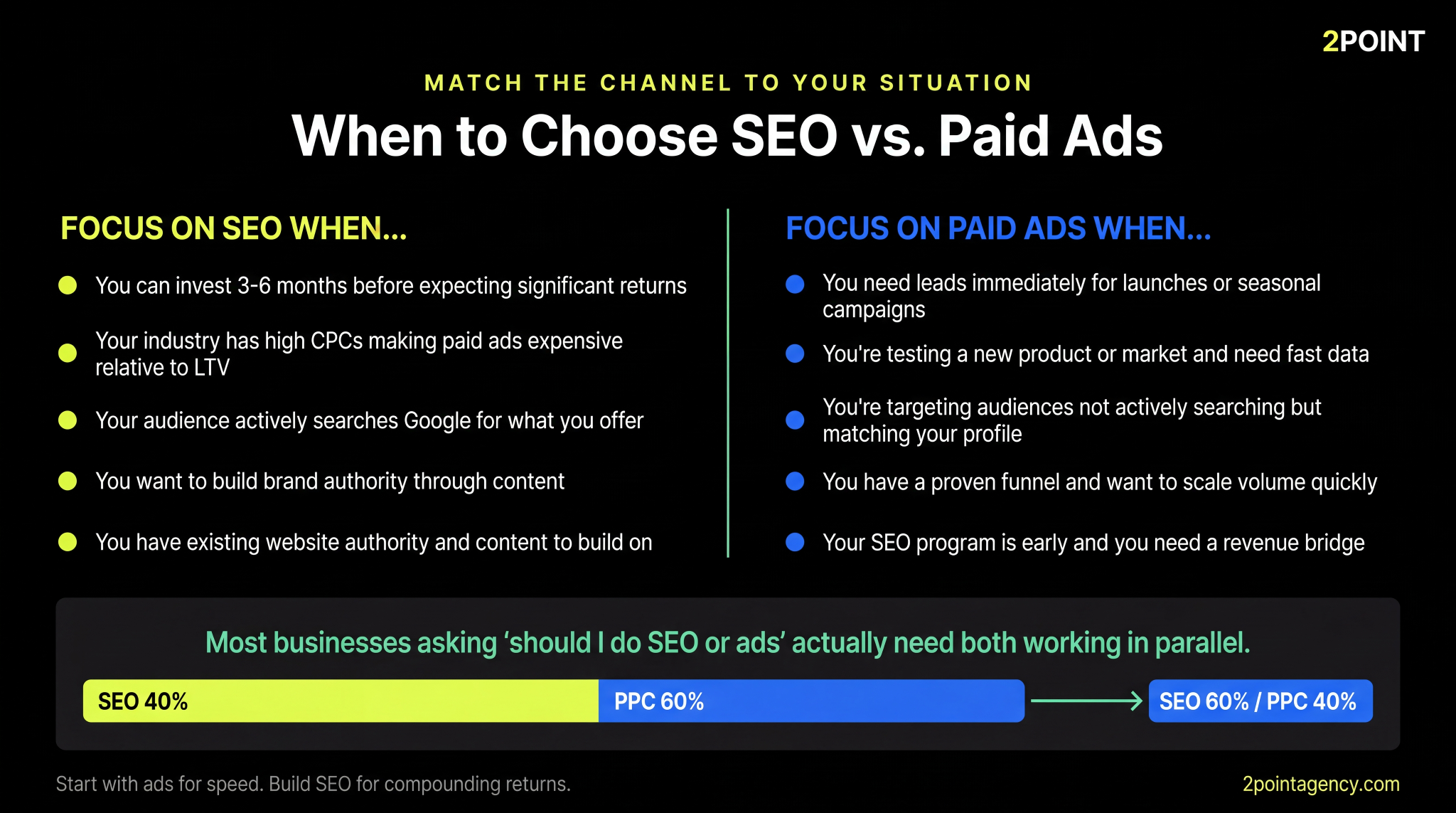
If you need leads this week, you need paid ads. If you’re building for the next 12 months, you need SEO. Most businesses asking “should I do SEO or ads” actually need both working in parallel, with ads covering the short term while organic gains momentum underneath.
Timing determines when you see results, but cost structure determines how sustainable those results are. Paid ads carry ongoing variable costs. You pay for every click, and those costs fluctuate with auction competition.
When your budget stops, so does your traffic.
SEO works differently. You invest a fixed amount in content, technical work, and link building, but your cost per lead decreases over time as rankings strengthen. Think of paid ads as an expense and SEO as an appreciating asset.
That’s the fundamental difference in the SEO or PPC equation, and it’s why the smartest businesses invest in both.
Cost structure shapes your budget, but trust shapes how your audience responds.
Users consistently click organic results more than ads because they perceive them as earned, not bought.
According to HubSpot’s marketing research, 70% of marketers report that SEO generates superior sales compared to PPC, largely because organic rankings signal authority in a way that paid placements can’t replicate.
SEO builds that authority through content over time. Ads build awareness but not lasting credibility. The one exception worth noting is Google Local Service Ads with trust badges, which are gaining acceptance among consumers because of Google’s screening process.
Trust and credibility point toward organic, but that doesn’t mean SEO is right for every situation. Here’s when you should prioritize it:
Avoiding the most common SEO mistakes businesses make from the start accelerates your timeline and prevents wasted effort on tactics that won’t move the needle.
On the other hand, there are clear situations where paid ads should take priority over SEO:
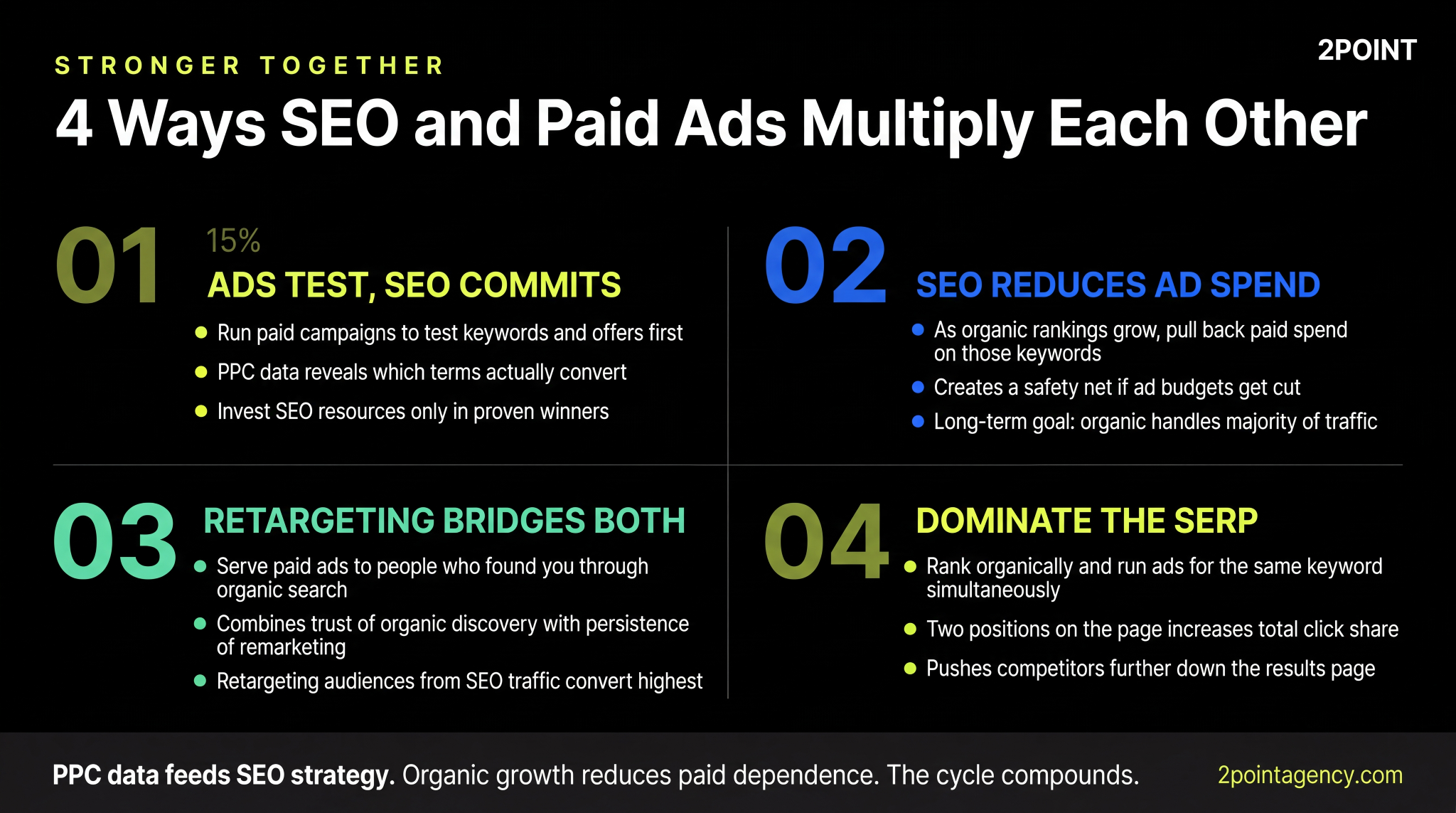
Knowing when to use each channel is valuable, but the real power comes from making them work together. Start by running paid campaigns to test which keywords, messages, and offers convert before committing to long-term SEO content.
The SEO or paid ads question becomes much easier when your PPC data reveals search intent patterns and high-converting landing page elements. Think of paid ads as a rapid testing lab that feeds insights into your slower-moving SEO program.
As your organic rankings grow, you can gradually pull back ad spend on keywords where you already rank well.
The SEO or PPC balance shifts naturally as organic traffic increases.
This also creates a safety net for your business. If ad budgets get cut, your organic traffic keeps generating leads. The long-term goal is organic visibility handling the majority of your traffic while ads target specific high-value opportunities.
Not every visitor converts on the first visit, regardless of how they found you. Retargeting solves this by serving paid ads to people who originally arrived through organic search, bringing them back when they’re ready to act.
This multi-touch approach combines the trust of organic discovery with the persistence of paid remarketing. Building an effective lead generation funnel that captures both channels is what makes this work at scale.
When you combine all of these tactics, something powerful happens.
Running paid ads and ranking organically for the same keyword gives your brand two positions on the results page. This dual SEO or paid ads presence increases your total click share and pushes competitors further down.
It’s particularly effective for high-value keywords where the incremental cost of ads is justified by the combined conversion lift.
At 2POINT, we don’t ask you to choose between SEO or paid ads. We build integrated strategies using both channels based on your goals, budget, and timeline.
Every engagement starts with an audit to determine where your biggest opportunities sit across organic and paid.
From there, paid campaigns launch for immediate leads while your SEO program builds long-term organic equity. PPC data feeds directly into your SEO strategy, and as organic growth strengthens, your reliance on paid spend naturally decreases. Multi-channel reporting shows you exactly how each channel contributes to leads, revenue, and overall SEO or PPC ROI.
Explore our marketing services to see how we structure integrated strategies for businesses ready to invest in both.
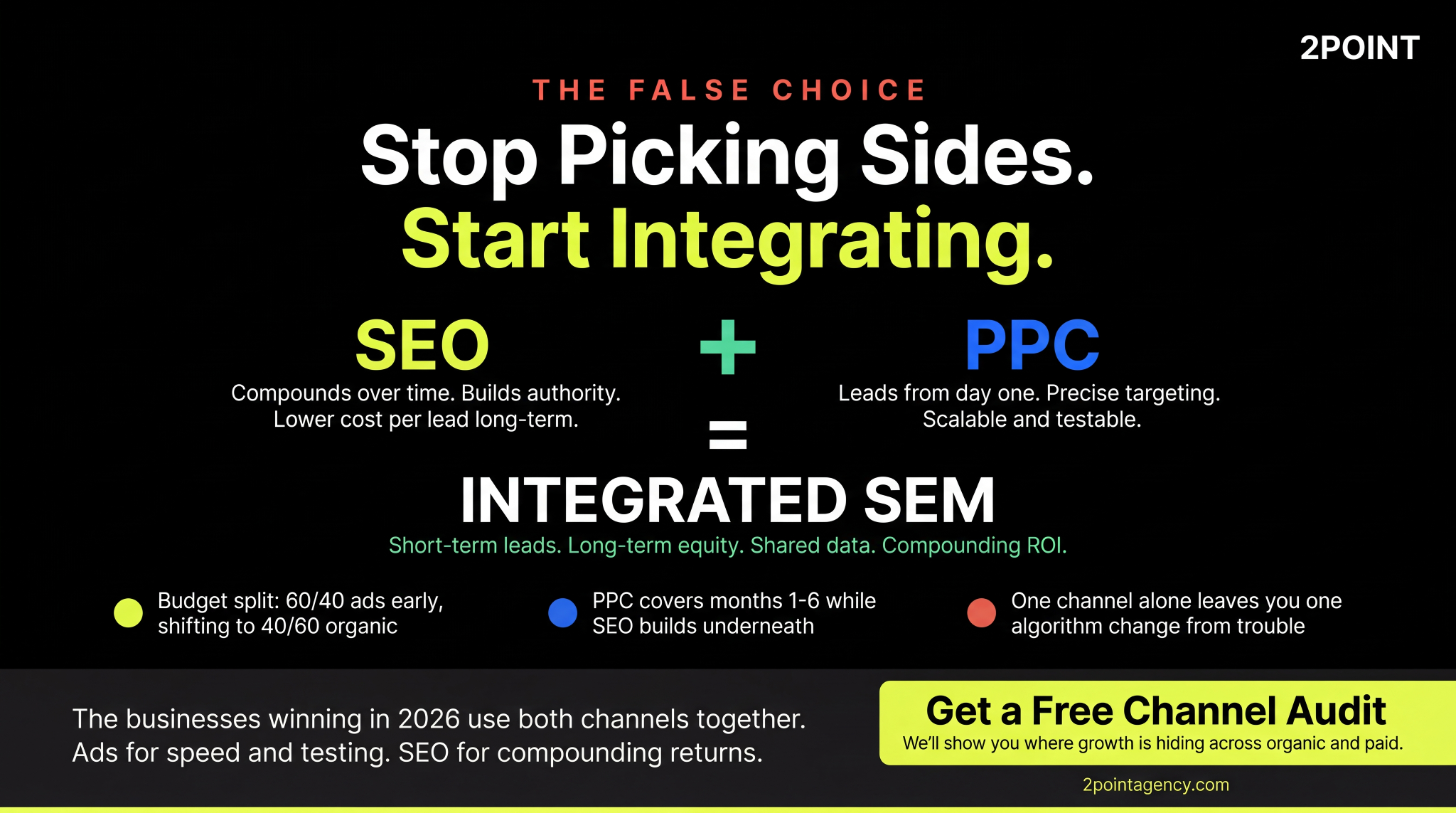
The SEO or paid ads debate is a false choice. SEO compounds over time. Paid ads deliver leads now. The businesses winning in 2026 use both, with ads covering short-term gaps while organic builds the foundation underneath.
If you’re leaning too heavily on one channel, reach out to 2POINT. We’ll show you where the growth opportunities are across both.
Start with paid ads for immediate leads while launching SEO for long-term growth. The best SEO or paid ads approach runs both channels simultaneously so paid covers short-term gaps while your organic visibility builds underneath.
SEO costs more upfront but delivers lower cost per lead over time. Organic search vs paid search data shows SEO returns significantly more per dollar spent long-term, while paid ads stop generating traffic the moment you stop spending.
Strong SEO can reduce your paid ad dependence significantly. However, most businesses maintain some spend for retargeting, seasonal campaigns, and high-value keywords where a dual SEO vs paid ads SERP presence increases total conversions.
SEO vs Google Ads captures high-intent searchers actively looking for solutions. The SEO or Facebook ads comparison is different because Meta targets users by interest and behavior for awareness, even when they’re not actively searching.
SEO typically matches paid ads in lead volume around the 6 to 12 month mark. Beyond that point, should I do SEO or ads becomes clear because organic traffic compounds without ongoing per-click costs eating into your margins.
A common split is 60% paid and 40% SEO early on, shifting toward 40% ads and 60% SEO as rankings strengthen. Your ideal SEO or PPC balance depends on your growth stage, industry competition, and timeline.


© 2POINT, INC 2026
(c) 2POINT, INC 2026

 let’s connect