

 let’s connect


What Is Social Media Marketing?
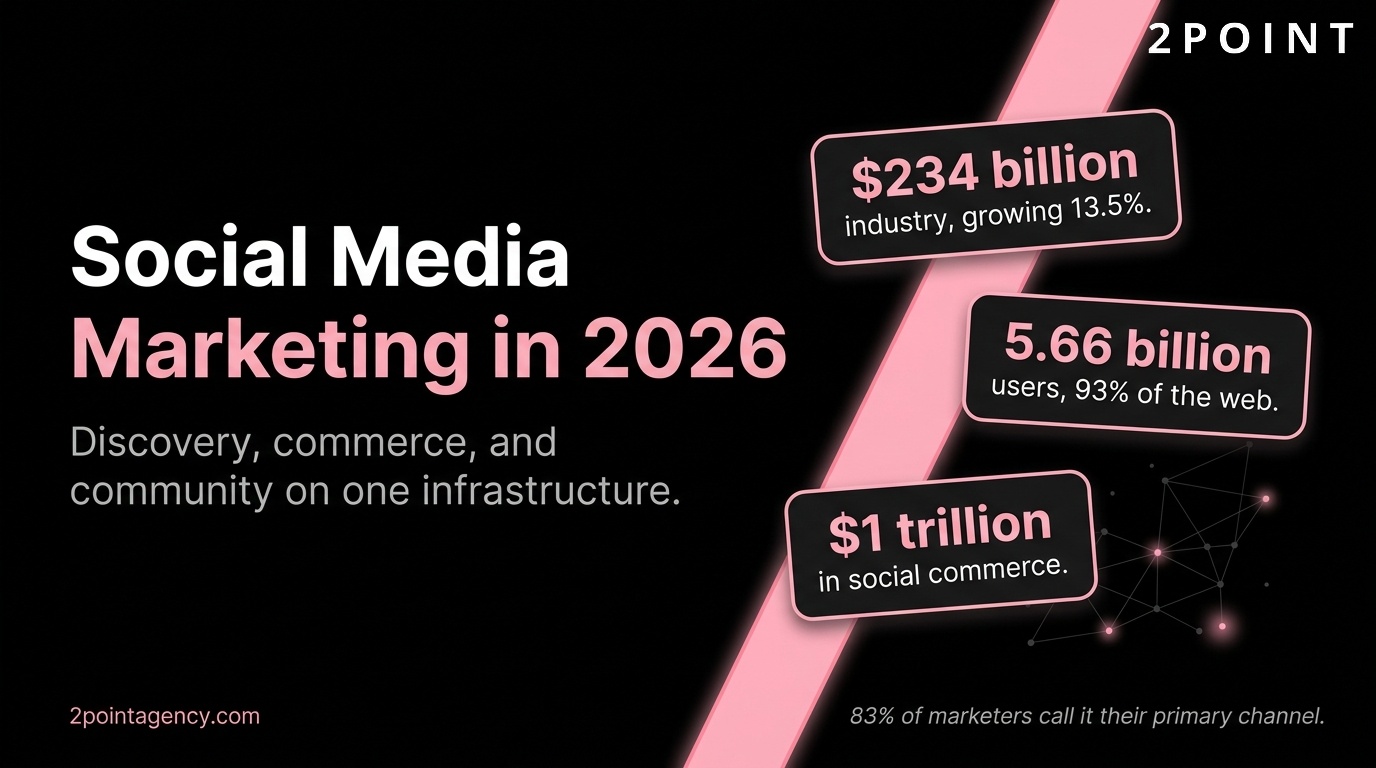
- Social media marketing uses platforms like Instagram, TikTok, LinkedIn, and Facebook to build brand awareness and drive revenue.
- The global social media marketing industry is worth $234 billion in 2026 and growing at 13.5% annually.
- There are 5.66 billion active social media users worldwide, representing 93% of all internet users.
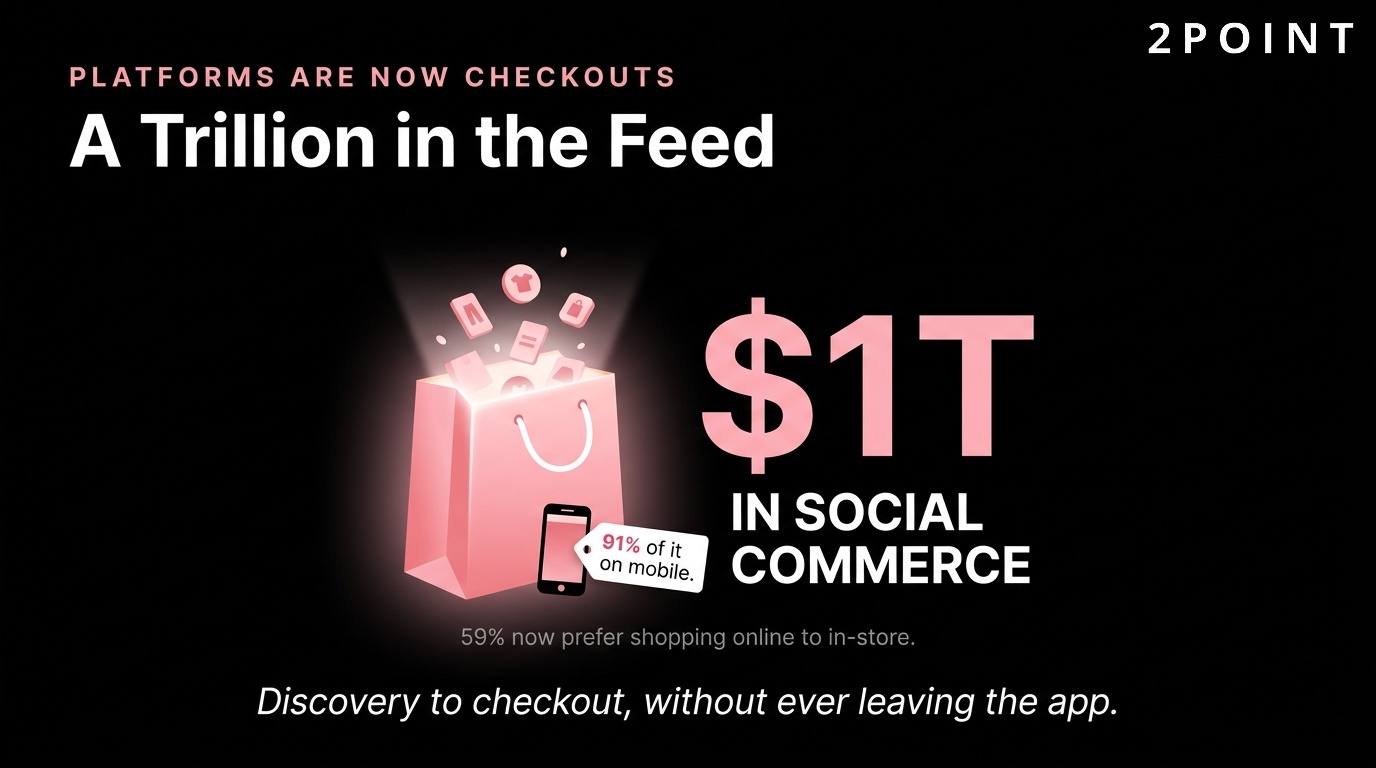
- Social commerce surpassed $1 trillion globally in 2026, transforming social platforms into full transaction ecosystems.
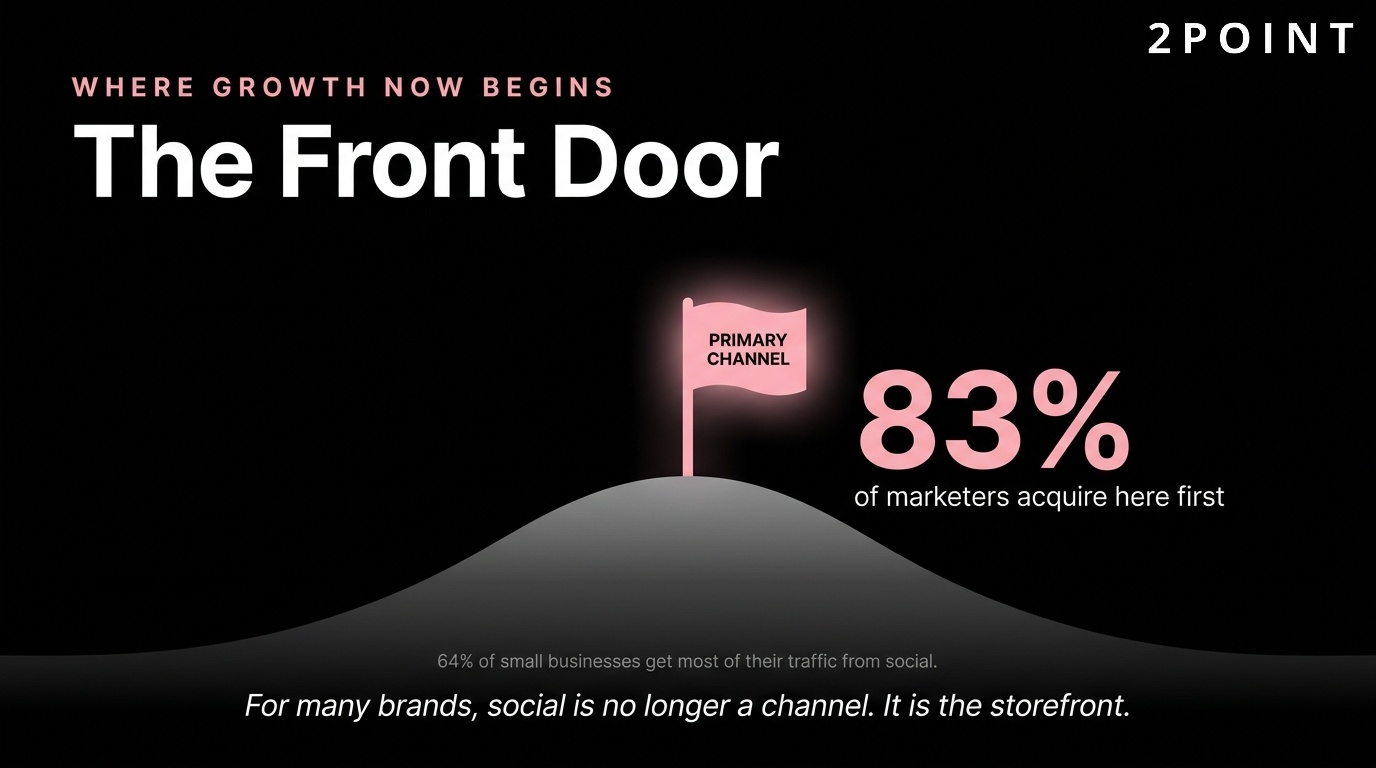
- 83% of marketers now cite social media as their primary customer acquisition channel.
- Effective social media marketing combines content creation, community management, paid advertising, and data analytics.
- Modern strategies prioritize authenticity over polish and engagement velocity over raw follower counts.
- AI adoption has reached 88% among marketers, accelerating content delivery and campaign optimization.
- Platform-specific strategies, cultural responsiveness, and consistent data-driven optimization are now non-negotiable.
The State of Social Media Marketing in 2026
Social media marketing has moved far beyond its origins as a branding supplement. It now sits at the center of modern digital marketing strategy, driving discovery, conversion, customer retention, and community building simultaneously. Understanding the scale and trajectory of this industry is essential before making a single content decision or ad placement.
Market Size and Investment Trends
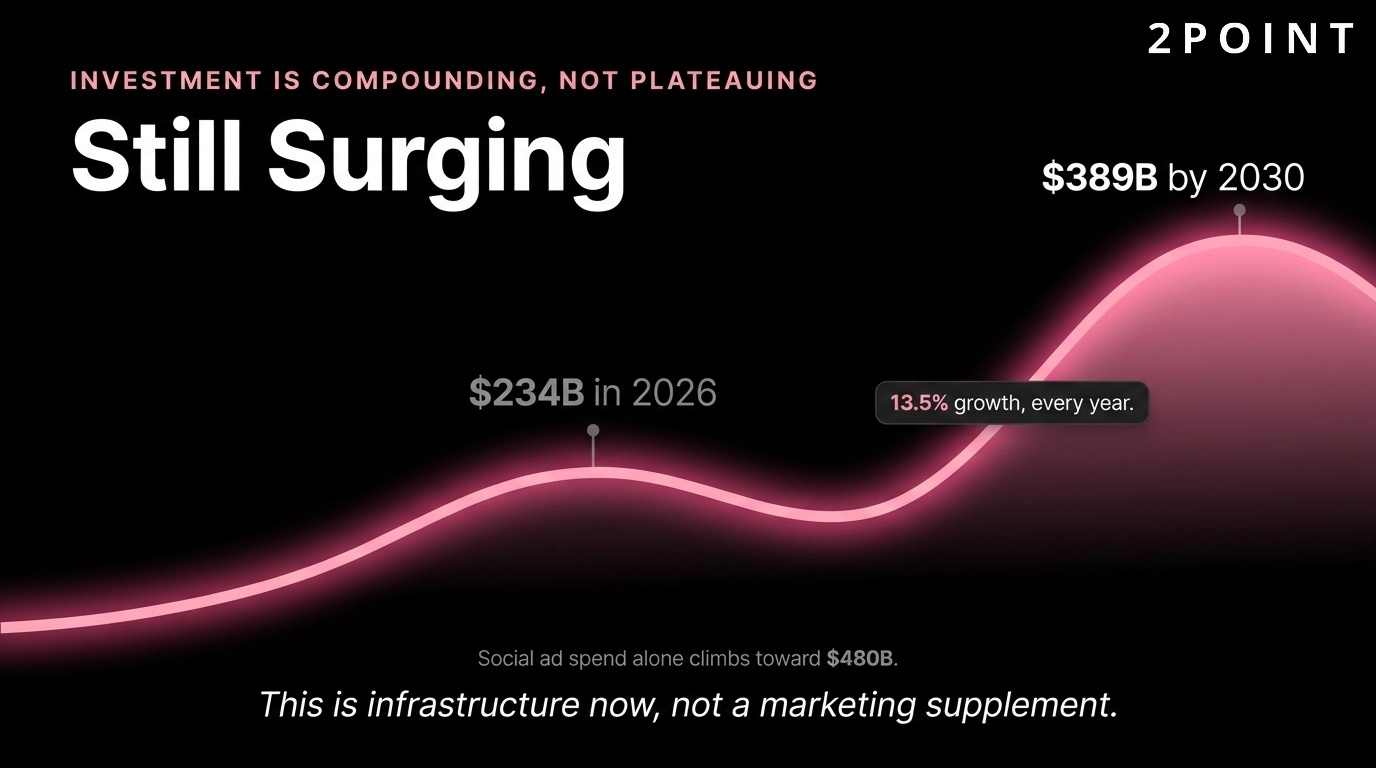
The global social media marketing industry reached $234.34 billion in 2026, with projections pointing to $389.36 billion by 2030 at a compound annual growth rate of 13.5%. These are not speculative figures; they reflect sustained, accelerating investment from brands of every size across every vertical. Social media advertising alone is forecast to hit $480.07 billion by 2030, up from $270 billion in 2025. Brands currently spend over $5 billion every week on social advertising, which accounts for 23.6% of total global digital ad spend. That proportion continues to grow as traditional advertising channels lose ground to digital formats that offer superior targeting and attribution. The creator economy adds another dimension to this investment landscape. In the United States alone, the creator economy exceeds $40 billion, while globally the figure surpasses $200 billion. Brands are not just buying ad placements; they are investing in creator relationships, content ecosystems, and audience trust built over years of authentic interaction. This shift in where marketing dollars go reflects a broader understanding that social media is not a channel; it is infrastructure.
| Social Media Marketing Metric | 2025 Value | 2030 Projection |
|---|---|---|
| Global market size | $234.34 billion | $389.36 billion |
| Social media ad spend | $270 billion | $480.07 billion |
| Share of digital ad spend | 23.6% | Growing |
| U.S. creator economy | $40+ billion | Expanding |
The most important takeaway from these figures is that social media marketing investment is compounding, not plateauing, making early and deliberate platform strategy a competitive necessity.
Global User Behavior and Platform Adoption
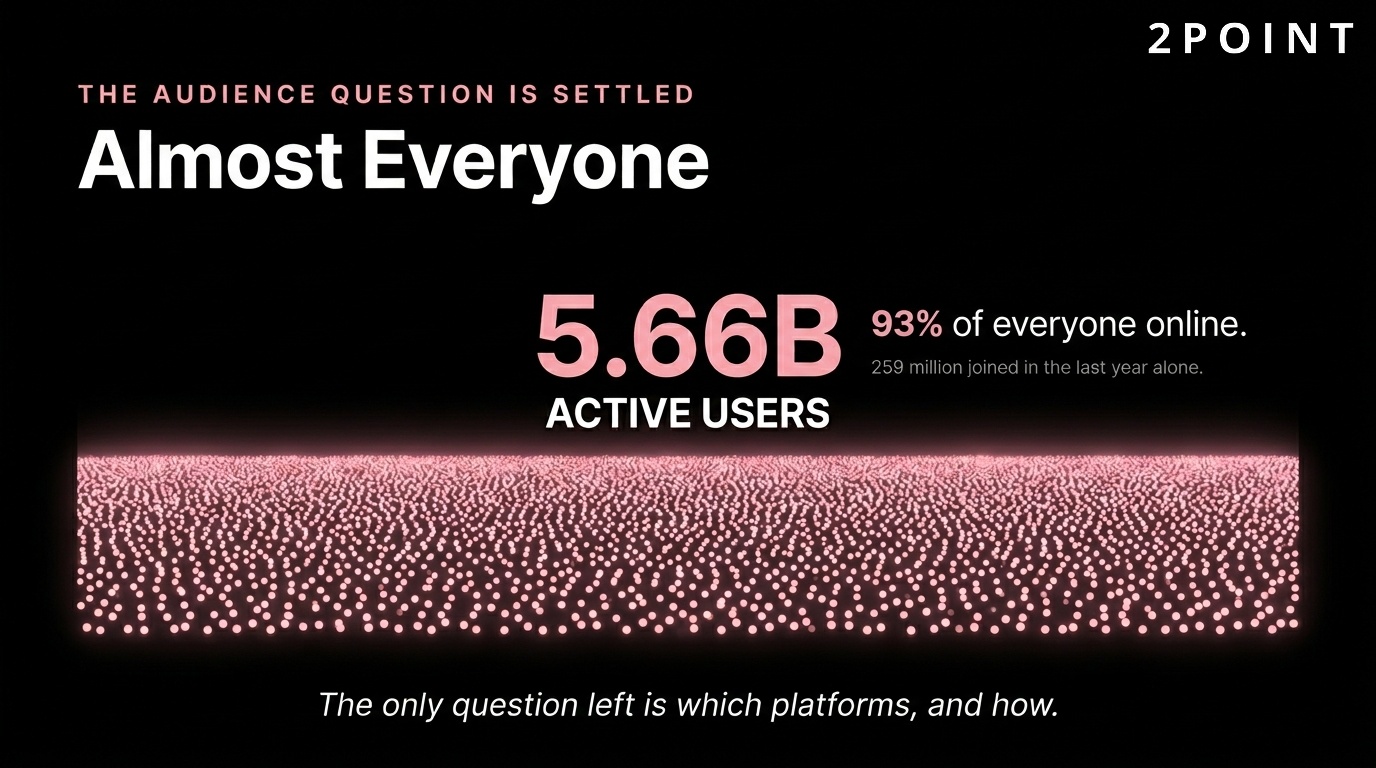
With 5.66 billion active social media users worldwide, representing 93% of all internet users, the question is no longer whether your audience is on social media. The question is which platforms they use, how they use them, and what kind of content earns their attention. The scale is unprecedented; 259 million new users joined social platforms in 2025 alone, representing 4.87% annual growth.
The Shift from Awareness to Revenue Generation
Social media began as a tool for building brand awareness, but its role has expanded dramatically. In 2026, social media is a full-funnel revenue driver capable of handling discovery, consideration, purchase, and post-purchase engagement without ever requiring a user to leave the platform. This is not incremental evolution; it is structural transformation.
Why Social Media Marketing Remains Essential in Every Business Category
The case for social media marketing is no longer confined to consumer brands with young demographics. Over 5.6 billion users rely on social platforms to research, discover, and evaluate products before purchasing, spanning every age group, income level, and geographic market. The social media influence on consumer purchasing decisions now touches virtually every product category. Fifty-six percent of marketers report that conversion optimization is easier today than it was a decade ago, largely due to the precision targeting, attribution tools, and in-platform commerce capabilities that social media provides. For B2B marketers, paid social and social shopping tools rank among the top ROI drivers alongside website and SEO investment. For B2C brands, paid social consistently delivers returns comparable to email marketing. The data is particularly compelling for small businesses. Sixty-four percent of small businesses cite social media as their primary source of website traffic, surpassing organic search. Thirty-five percent of businesses operate without a dedicated website, relying entirely on social profiles to generate leads and manage customer relationships. For these businesses, social media marketing is not a supplement to their digital presence; it is their entire digital presence.
Platform Selection and Social Media Performance Benchmarks
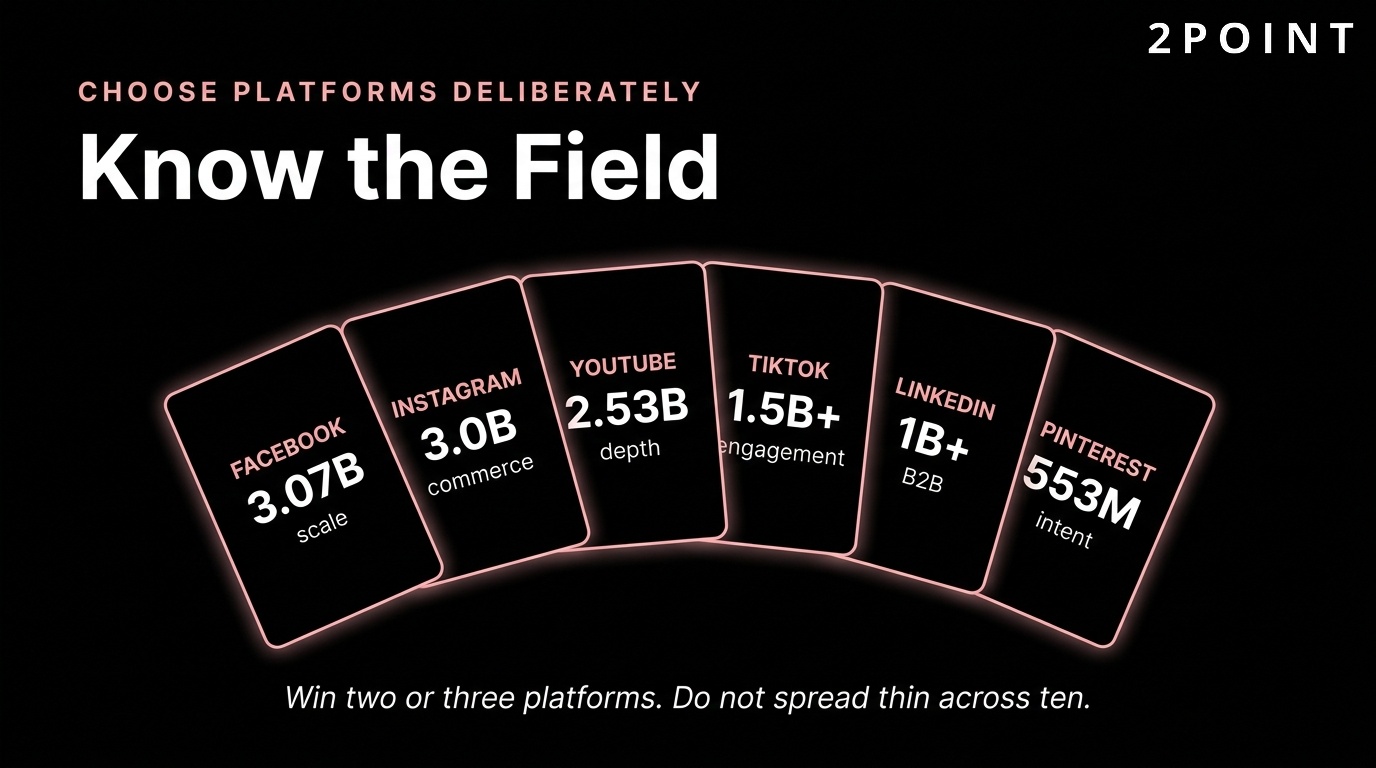
Choosing the right platforms is one of the most consequential decisions in any social media marketing strategy. Spreading resources across every available platform is a recipe for mediocrity. The most effective approach focuses investment on the two or three platforms where your target audience is most active, most engaged, and most likely to take the actions your business needs.
Facebook: Scale, Reach, and Customer Service Excellence
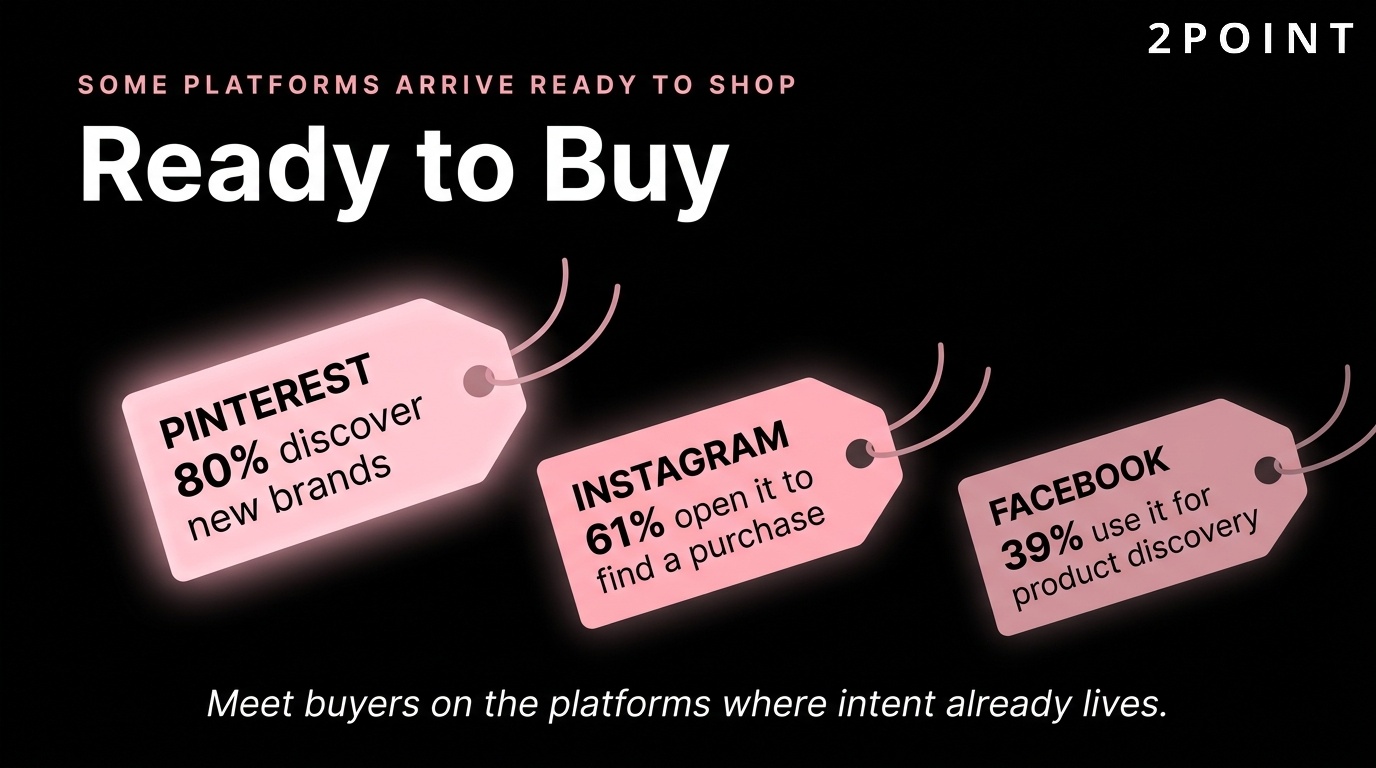
Facebook remains the most widely used platform among marketers worldwide, with 83% of marketing professionals actively using it as part of their social media strategies. With 3.07 billion monthly active users globally, no other platform offers comparable reach across age demographics, geographies, and interest categories. For brands seeking scale, Facebook is non-negotiable. The platform performs exceptionally well for two specific functions: product discovery and customer service. Thirty-nine percent of users turn to Facebook specifically for product discovery, while 45% seek customer support through the platform. These figures underscore Facebook's dual role as both a top-of-funnel discovery tool and a post-purchase service channel, making it valuable across the entire customer lifecycle. Content preferences on Facebook skew toward short-form video, with 48% of users engaging most with that format, followed by text posts at 32% and live video at 22%. The advertising ecosystem is the most mature of any social platform, offering granular targeting based on demographics, behaviors, interests, and custom audience data. For brands with established customer lists, Facebook's lookalike audience capabilities remain among the most powerful tools in performance marketing.
Instagram and TikTok: Visual Commerce Powerhouses
Instagram and TikTok have converged to dominate visual commerce, short-form video, and younger demographic engagement. While they differ in tone and algorithm behavior, both platforms are essential for brands targeting consumers under 45 and anyone operating in fashion, beauty, food, fitness, travel, or lifestyle categories.
Instagram reached 3 billion monthly active users in 2025, with ad reach increasing to 1.74 billion. What makes Instagram uniquely valuable for commerce is purchase intent: 61% of users open the app specifically to find their next purchase. This level of shopping intent makes Instagram not just a brand awareness platform but an active commercial environment where product discovery and purchase happen in the same session.
| Social Media Platform | Monthly Active Users | Key Strength | Primary Use Case |
|---|---|---|---|
| 3.07 billion | Scale and targeting | Discovery, customer service, ads | |
| 3 billion | Visual commerce | Shopping, Reels, influencer content | |
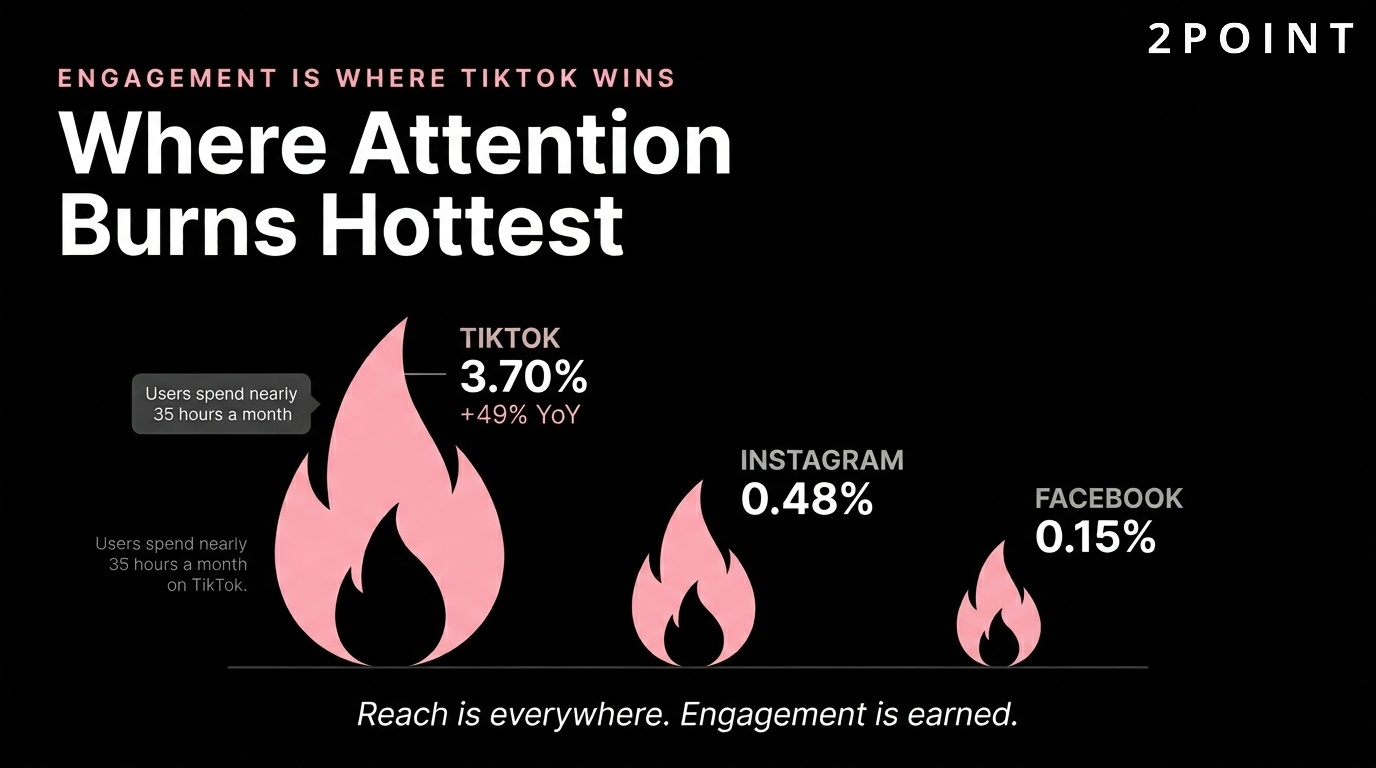
| TikTok | 1.5+ billion | Highest engagement rate (3.70%) | Discovery, trends, viral content |
| YouTube | 2.53 billion | Long-form and Shorts | Education, storytelling, tutorials |
| 1+ billion | B2B authority | Lead gen, thought leadership | |
| 553 million | High purchase intent | Product discovery, inspiration |
Platform selection should be driven by audience location, purchase intent, and content format fit rather than platform popularity alone.
LinkedIn and YouTube: B2B Authority and Long-Form Dominance
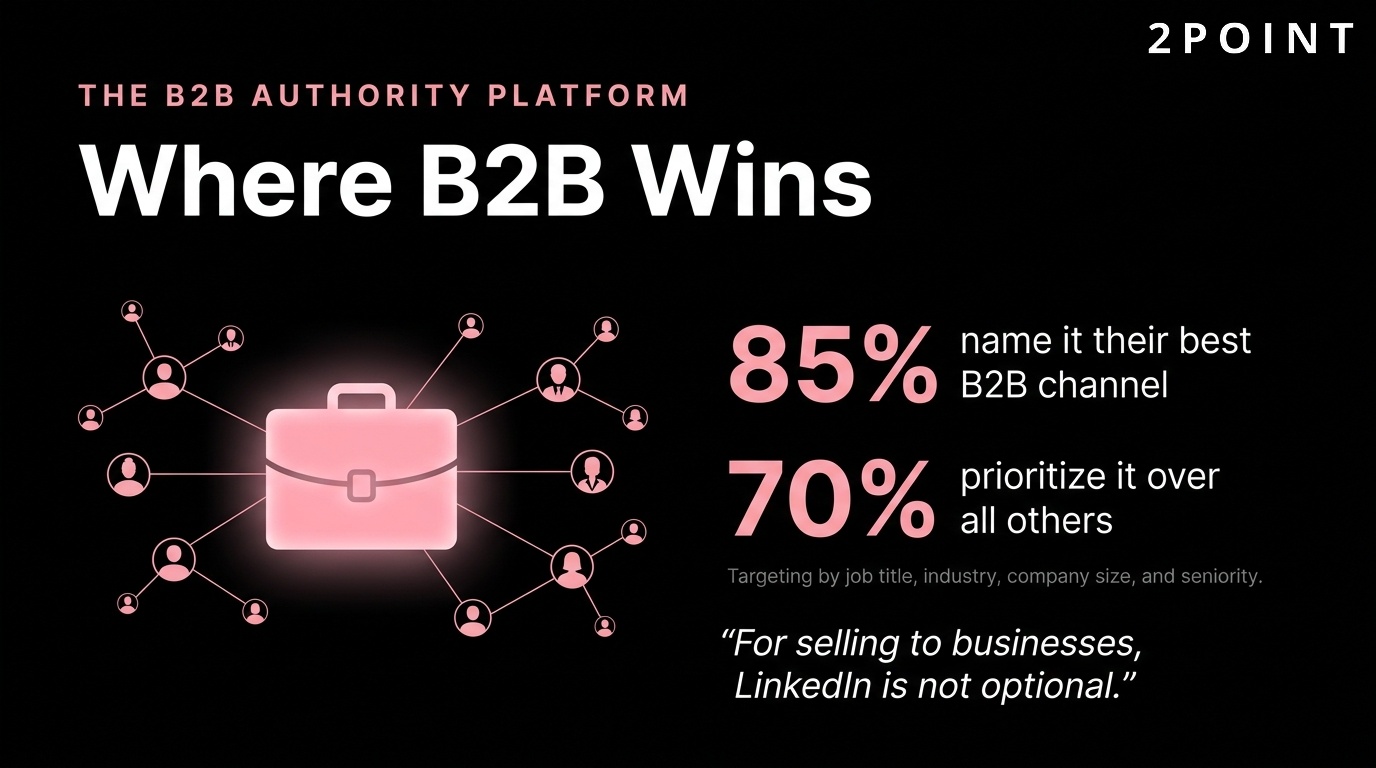
LinkedIn has cemented its position as the definitive platform for B2B social media marketing. Eighty-five percent of B2B marketers name LinkedIn their highest-performing channel, and 70% of B2B companies actively prioritize it over all other social platforms. For brands selling to businesses, executives, or professionals, LinkedIn's targeting capabilities, which include job title, industry, company size, and seniority level, are unmatched. The platform is evolving rapidly, attracting younger professionals and expanding its video capabilities. Thought leadership content, industry analysis, and professional development posts consistently generate high engagement, while the platform's newsletter and article features enable deeper content relationships. For B2B marketers seeking to build authority and generate qualified leads, LinkedIn is not optional; it is essential. YouTube's strength lies in its dual role as both social platform and the world's second-largest search engine. With 2.53 billion users reached in early 2025 and YouTube Shorts projected to exceed 70 billion daily views, the platform serves both long-form educational content and short-form discovery equally well. Storytelling in marketing finds one of its most powerful homes on YouTube, where brands can build deep audience relationships through tutorials, documentary-style content, and product deep-dives that other platforms cannot accommodate.
Emerging and Niche Platforms Worth Watching in 2026
Beyond the major platforms, several emerging and niche networks offer significant opportunity for brands willing to invest early. X (formerly Twitter) maintains a forecasted 450 million users in 2026 and remains unmatched for real-time cultural conversation, breaking news, and brand personality expression. For brands that thrive on wit, speed, and cultural commentary, X offers access to the conversations that shape public opinion. Pinterest continues to be underestimated despite its exceptional commercial performance. With 553 million monthly active users and Gen Z now representing 42% of its monthly user base, the platform is younger and more commercially potent than many marketers realize. Eighty percent of weekly Pinterest users discover new brands or products on the platform, making it one of the highest purchase-intent environments in social media. Substack has evolved beyond its newsletter origins into a genuine social platform, with social feeds, community profiles, and inbox features enabling real community building. For brands with a strong editorial voice or thought leadership positioning, Substack offers an audience that actively chooses to receive content, a level of opt-in engagement that no algorithm-driven platform can replicate. Businesses that maintain presence on multiple platforms consistently see 2 to 5% annual sales increases from cross-platform reach, making a diversified but focused platform strategy worth serious consideration.
Content Strategy and Creation Best Practices for Social Media Marketing
Content is the fuel that powers every social media marketing strategy. Without a coherent, platform-aware content approach, even the best audience targeting and advertising spend will underperform. The brands that consistently win on social media are not necessarily the ones with the largest budgets; they are the ones with the clearest content strategy and the discipline to execute it consistently.
The Three-Pillar Content Framework
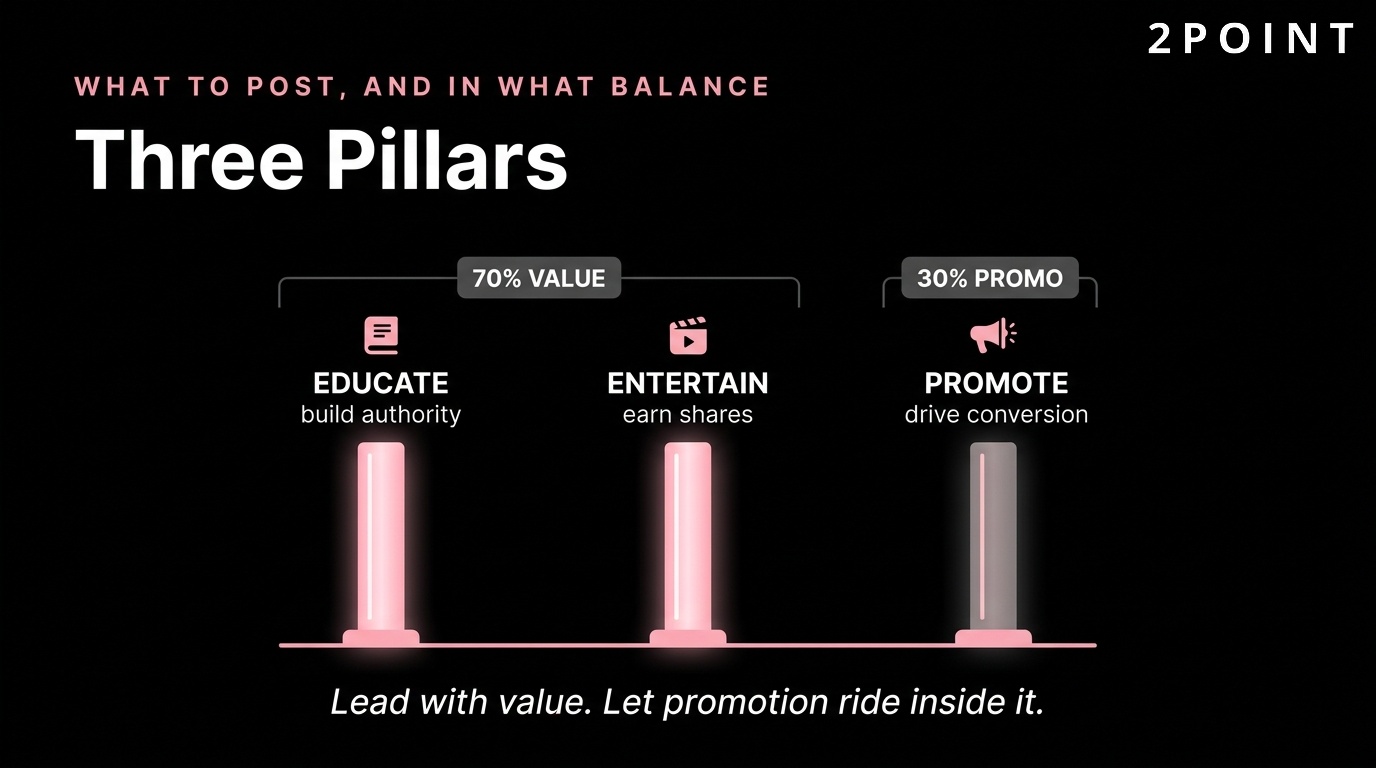
A sustainable social media content strategy rests on three pillars: educate and inform, entertain and engage, and promote and convert. Each pillar serves a distinct purpose, and the balance between them directly affects both reach and revenue. Most successful brands maintain a 70/30 split, with 70% of content providing genuine value and 30% focused on direct promotion. The first pillar, educating and informing, builds authority and positions the brand as a trusted resource rather than just a vendor. This includes industry insights, practical tips, explainer content, and thought leadership perspectives that audiences would engage with even if they had no immediate purchase intent. The second pillar, entertainment and engagement, creates emotional connection and drives the organic shares that extend reach beyond existing followers. Behind-the-scenes content, trend participation, humor, and human-interest stories all serve this function effectively. The third pillar, promotion and conversion, includes product highlights, customer success stories, offers, and calls to action. Ninety percent of consumers find custom content useful, and 78% associate brand content customization with relationship investment. These figures confirm that content created with the audience's interests in mind, rather than the brand's promotional goals alone, builds the trust that ultimately drives conversion. The key is ensuring promotional content is embedded within a broader value-driven content ecosystem rather than dominating it.
Short-Form Video as a Full-Funnel Social Media Driver
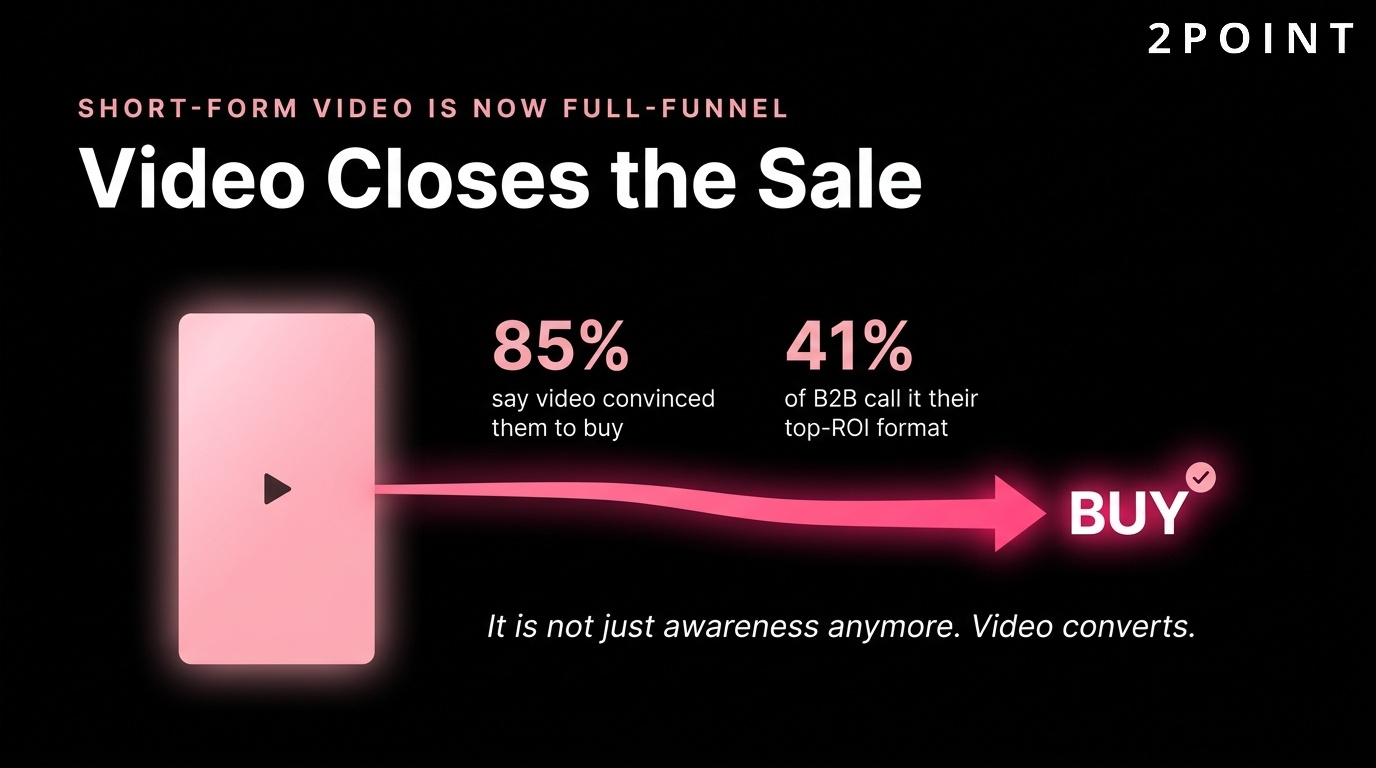
Short-form video has moved beyond its origins as an awareness format to become a full-funnel performance tool capable of driving results at every stage of the customer journey. Forty-one percent of B2B marketers report short-form video delivers their highest ROI of any content format, with brand storytelling at 38% and testimonials at 34% following closely behind.
Platform-Specific Content Adaptation for Maximum Engagement
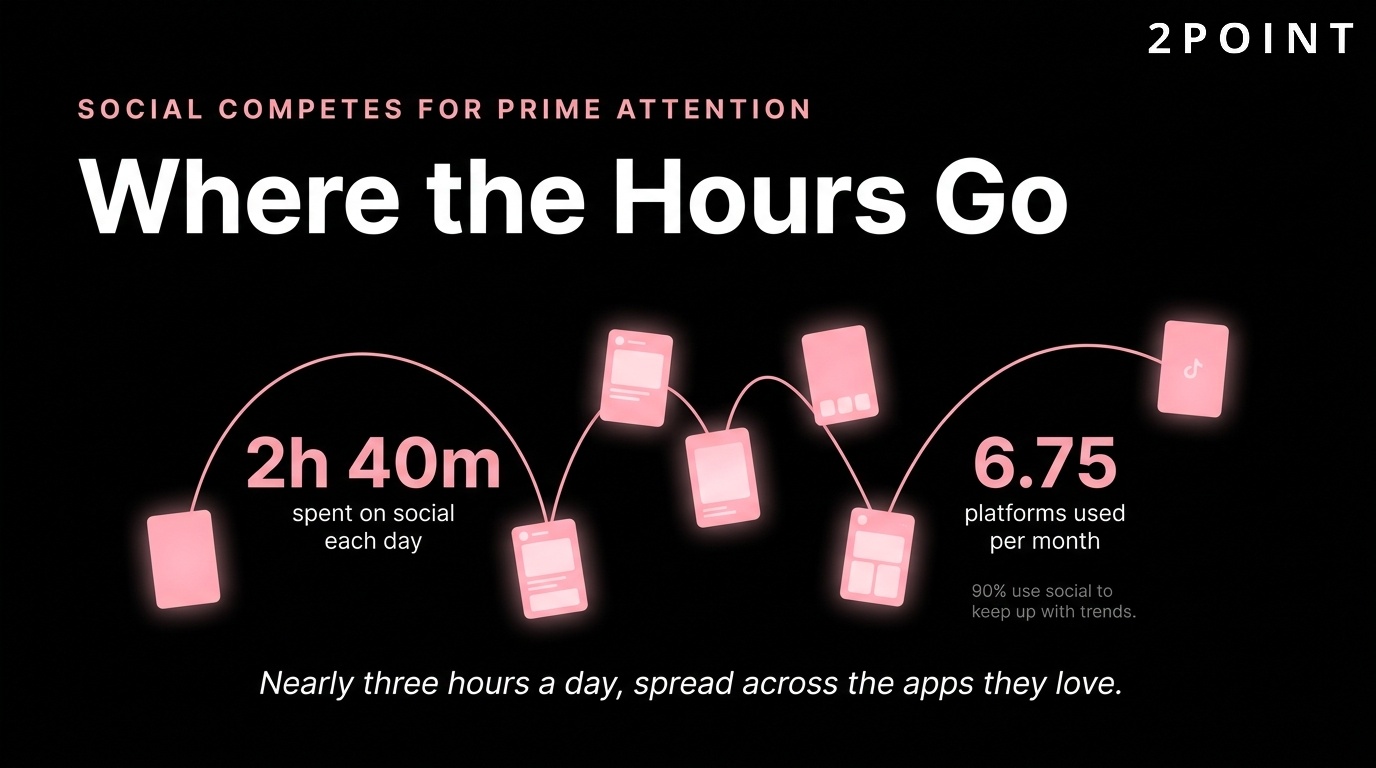
One of the most common content strategy errors is treating social media as a single channel and publishing identical content across every platform. Each platform has its own visual language, community norms, algorithm behavior, and audience expectations. Content that thrives on LinkedIn will often underperform on TikTok, and vice versa. Platform-specific adaptation is not extra work; it is the work. TikTok and Instagram Reels demand vertical 9:16 formats, trending audio integration, fast-paced editing, and content that hooks viewers within the first two seconds. LinkedIn rewards professional insight, industry analysis, and longer text posts that demonstrate expertise and generate thoughtful comments. Facebook performs best with community-oriented content, conversational captions, and a mix of formats that reflect the platform's broader demographic range. Pinterest requires high-quality visual imagery, informative overlays, and content that functions as both inspiration and practical resource simultaneously. YouTube supports both polished long-form content and casual Shorts, enabling a content strategy that spans depth and reach within a single platform. X excels at real-time commentary, concise brand personality expression, and threaded storytelling that unfolds over multiple posts. Since users engage with an average of 6.75 platforms monthly, each carrying different expectations, brands that invest in platform-native content creation consistently see higher engagement, better algorithmic distribution, and stronger audience relationships than those that simply repurpose identical content everywhere.
User-Generated Content and the Authenticity Imperative
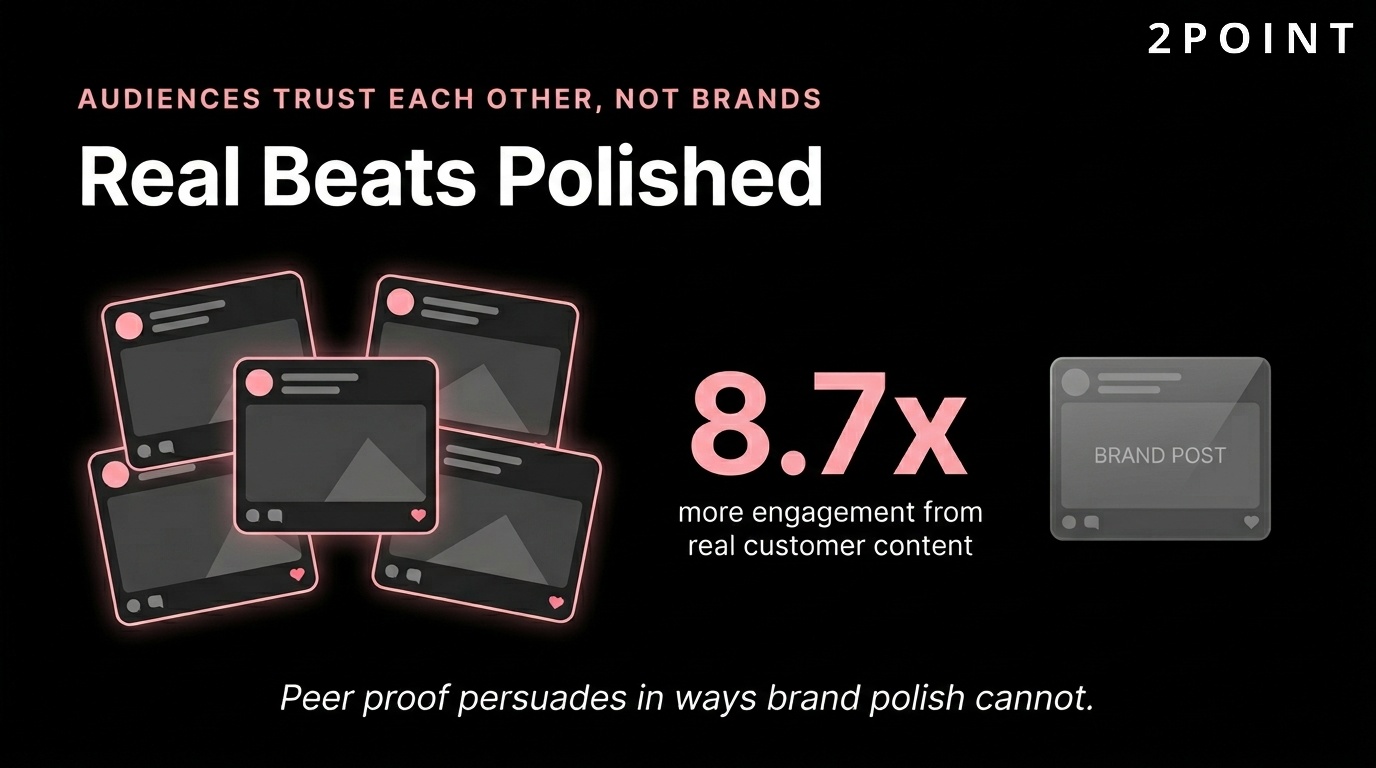
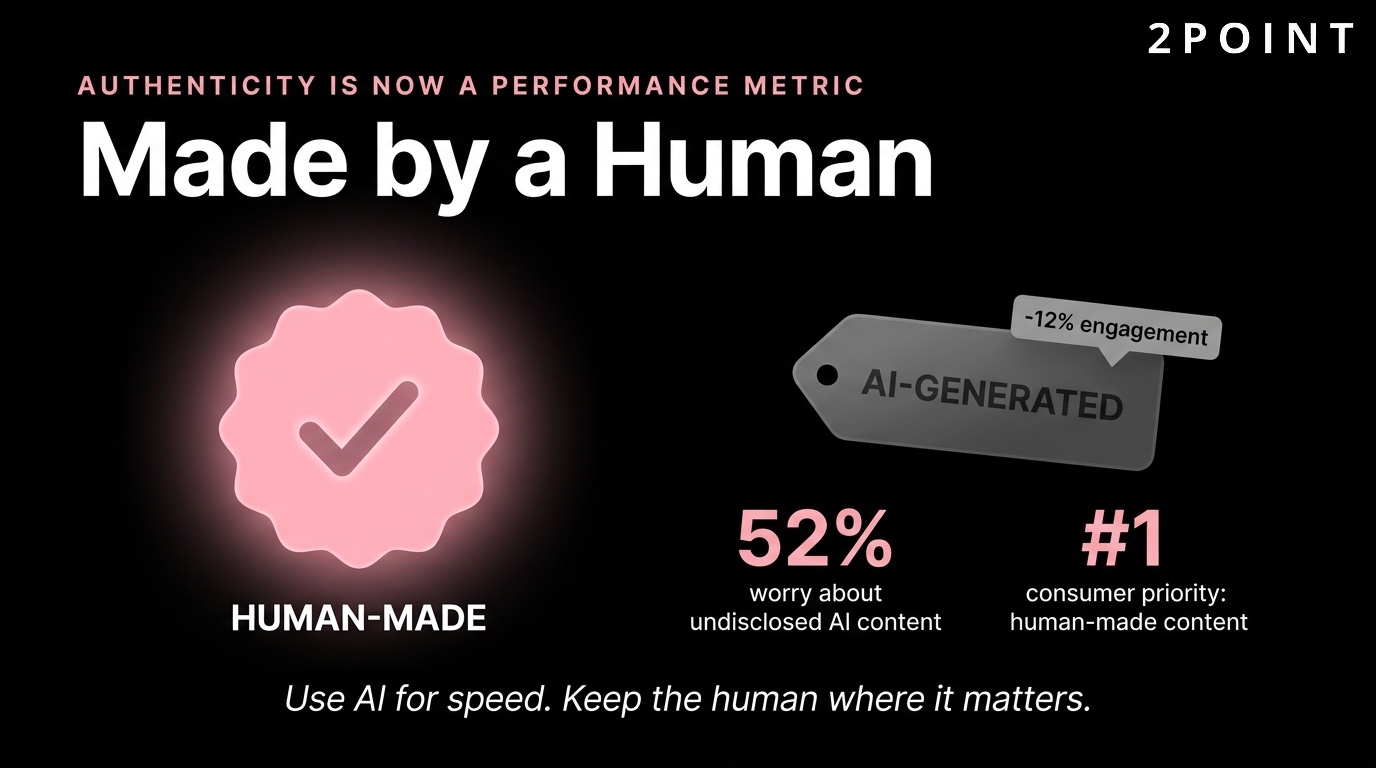
User-generated content (UGC) has become one of the most strategically valuable content types in social media marketing, and its importance is only accelerating. In certain verticals, UGC sees 8.7 times higher engagement than brand-produced content. The reason is straightforward: audiences trust other consumers more than they trust brands, and UGC provides the authentic peer validation that polished brand content simply cannot replicate. The authenticity imperative has intensified significantly in 2026 due to AI-generated content concerns. Fifty-two percent of consumers are concerned about undisclosed AI-generated content, and content identified as AI-generated faces a measurable 12% engagement penalty across platforms. Human-generated content is the number one consumer content priority in 2026, a direct market signal that authenticity is now a performance metric, not just a branding preference. Brands navigating this environment are shifting toward "lo-fi" content execution: mobile-shot videos, minimal editing, natural lighting, and unscripted moments that communicate genuine human presence. Employee stories, customer testimonials, unboxing videos shot by real customers, and behind-the-scenes content that shows real people and real processes all perform exceptionally well in this environment. The social proof for brand trust that UGC provides is not a nice-to-have; it is a competitive advantage that compounds over time.
How AI Integration Is Reshaping Social Media Marketing
Artificial intelligence has moved from experimental novelty to operational standard in social media marketing. The brands that are winning in 2026 are not those that have avoided AI, nor those that have fully automated their marketing. They are the ones that have developed thoughtful frameworks for integrating AI's speed and scale with human creativity, strategic judgment, and brand voice.
How AI Is Transforming Social Media Marketing Workflows
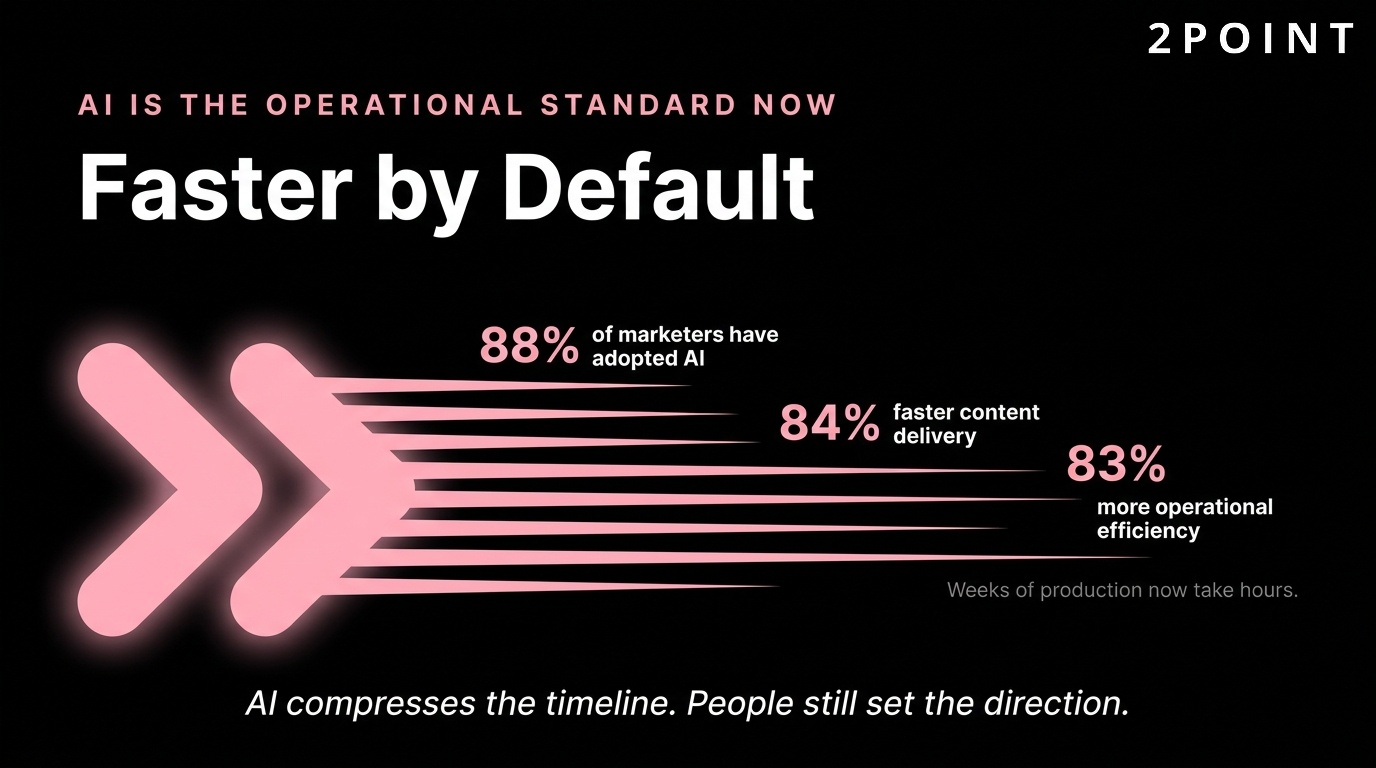
in some capacity, reporting 83% increased operational efficiency and 84% faster content delivery as immediate benefits. AI is not replacing marketing teams; it is changing what those teams spend their time on, shifting focus from repetitive production tasks toward strategy, relationship management, and creative direction. The primary AI applications in social media marketing cluster around four categories: content creation assistance, analytics and audience insights, customer service automation, and campaign optimization. Each application delivers distinct value, and the return on investment varies by use case. AI-powered analytics tools, for instance, provide sentiment analysis across thousands of brand mentions in real time, a task that would require an entire research team to accomplish manually. Similarly, AI-driven creative testing can generate and evaluate dozens of ad variations simultaneously, identifying top performers far faster than manual A/B testing allows. What makes AI integration genuinely transformative is its ability to compress timelines. Campaigns that previously required weeks of production can be prototyped in hours. Content calendars can be populated with AI-assisted drafts that human editors refine and approve. Performance reports that once took days to compile are now generated automatically. These time savings do not just reduce costs; they create agility, enabling brands to respond to cultural moments, algorithm changes, and competitive moves with unprecedented speed.
AI Use Cases in Social Media Marketing That Deliver Measurable ROI
Not all AI applications deliver equal value. The highest-ROI use cases share a common characteristic: they apply AI to tasks where volume, speed, and data processing create clear advantages over human effort, while keeping strategic and creative decisions in human hands. In content creation, AI excels at generating multiple caption variations for testing, suggesting hashtag combinations based on historical performance data, creating image and video variation sets for A/B testing, and producing first-draft scripts for short-form video that human creators then personalize. In analytics, AI-powered sentiment analysis tracks brand perception across millions of social mentions simultaneously, predictive analytics identify optimal posting times based on audience behavior patterns, and behavioral audience segmentation creates targeting clusters that manual analysis would never uncover. Customer service automation is another high-ROI AI application, with chatbots handling routine inquiries, automated response suggestions reducing response time for human agents, and 24/7 availability ensuring no initial customer contact goes unanswered. For campaign optimization, real-time bid adjustments, dynamic creative optimization, and automated performance reporting all reduce wasted ad spend while improving campaign efficiency. Analytics for digital marketing powered by AI has become so sophisticated that brands without these tools are operating with a significant information disadvantage.
What AI Cannot Replace in Social Media Marketing
Understanding AI's limitations is as important as understanding its capabilities. Strategy development requires human business context that AI tools do not possess. Decisions about which markets to enter, which audience segments to prioritize, which brand values to communicate, and which competitive positions to occupy require judgment that draws on organizational knowledge, stakeholder relationships, and long-term business vision, none of which AI can access or interpret meaningfully.
Brand voice and tone require human emotional intelligence that AI consistently fails to replicate authentically. Cultural sensitivity, trend interpretation, and navigating sensitive topics all demand the kind of nuanced human judgment that prevents brand disasters. Community relationship building, the ongoing process of responding to customers with genuine care and personality, depends on authentic human interaction that audiences can distinguish from automated responses.
Best Practices for Building AI-Augmented Social Media Marketing Workflows
Building effective AI-augmented workflows requires deliberate design rather than ad hoc tool adoption. Transparency is the first principle: when AI-generated content is published, consider whether disclosure is appropriate for your audience and context. While not every AI-assisted caption requires a disclaimer, undisclosed AI-generated content that audiences discover on their own carries significant trust costs. Quality control is non-negotiable. Every piece of AI-generated content should pass through human review before publication, with editors checking for brand voice consistency, factual accuracy, cultural appropriateness, and alignment with current campaign strategy. AI tools optimize for patterns in training data; they cannot know about a recent company development, a sensitive current event, or a nuance in brand positioning that a human team member would catch immediately. Strategic integration means defining clearly which parts of the workflow AI handles and which remain with human team members. A practical model: AI handles research, initial drafts, data analysis, and reporting; human team members handle strategy, final content approval, community engagement, and relationship decisions. Testing and optimization should also include evaluating AI-generated versus human-crafted content side by side, tracking performance differences, and using those insights to refine both AI prompts and human creative direction. Teams that build data analytics for marketing optimization into their AI workflows see the fastest performance improvements.
Social Commerce Strategies: Turning Platforms Into Revenue Channels
Social commerce is the most significant structural shift in social media marketing since the introduction of algorithmic feeds. The ability to complete an entire purchase journey, from discovery to checkout, without ever leaving a social platform has fundamentally changed how brands design their customer acquisition strategies.
The $1 Trillion Social Commerce Revolution
Social commerce crossing the $1 trillion threshold in 2026 is not just an impressive statistic; it is evidence of a complete behavioral shift in how consumers discover, evaluate, and buy products. The projected 14.7% CAGR through 2028 suggests this is not a temporary acceleration but a permanent reconfiguration of retail behavior. Social platforms are no longer marketing channels that drive traffic to e-commerce sites; they are commerce destinations in their own right.
Platform-Specific Social Commerce Features Every Marketer Should Know
Each major platform has developed distinct social commerce infrastructure, and understanding these features is essential for building an effective social commerce strategy. Instagram Shopping remains one of the most sophisticated in-app commerce ecosystems, offering product tags in posts and Stories, a dedicated Shop tab, Live Shopping events, and native checkout functionality that keeps the entire transaction within the app. Facebook operates a dual commerce system: Marketplace for individual and local sellers, and Facebook Shops for branded storefronts with customizable design, full product catalogs, and Messenger integration for pre-purchase customer questions. The reach of Facebook's commerce features is unmatched simply by virtue of the platform's 3.07 billion user base. TikTok Shop has emerged as one of the fastest-growing social commerce environments, combining live shopping broadcasts, profile-based product showcases, and a creator marketplace that seamlessly integrates influencer marketing with direct product sales. Pinterest's commerce features are built around its core strength: visual product discovery. Product Pins display pricing and availability directly in the feed, and visual search enables users to find similar products from any image, making Pinterest a uniquely powerful discovery-to-purchase tool for visually oriented product categories.
Creating Shoppable Social Media Content That Converts
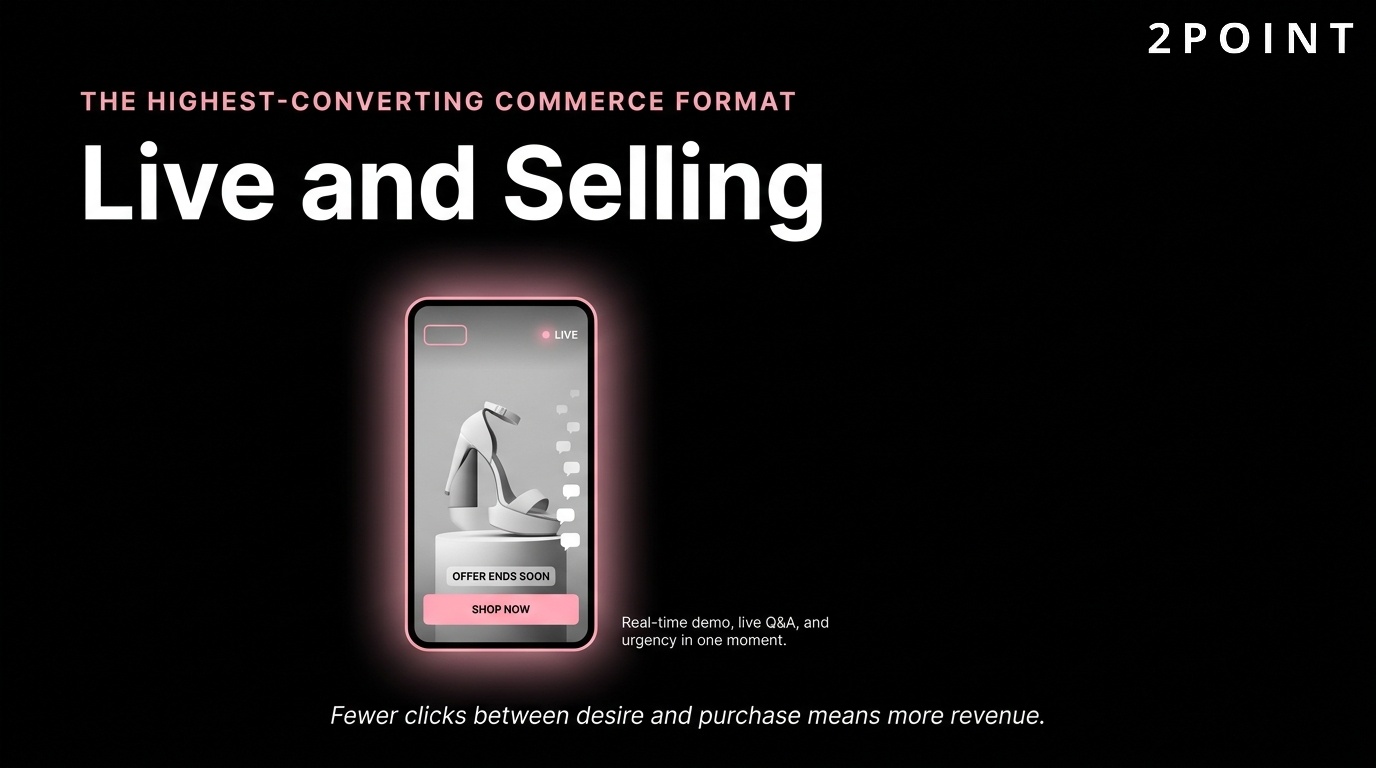
Shoppable content requires a different creative brief than standard social media content. The goal is not just engagement; it is conversion, which means every creative decision should reduce the psychological distance between the viewer and the purchase. High-quality product photography in realistic lifestyle contexts works better than studio shots for most social commerce applications because it helps consumers visualize the product in their own lives, reducing purchase uncertainty. Social proof integration is one of the most powerful conversion levers available in social commerce. Customer reviews and ratings visible within posts, user-generated content featuring real customers using products, and before-and-after transformations all reduce purchase anxiety and increase purchase confidence. The social media engagement generated by authentic customer content is measurably more persuasive than equivalent brand-produced content. Live shopping events represent one of the highest-conversion formats in social commerce, combining real-time product demonstration, immediate customer Q&A, and time-limited offers that create genuine purchase urgency. When an influencer or brand representative demonstrates a product live, answers questions in real time, and offers an exclusive discount available only during the broadcast, the conversion rates consistently exceed those of static product posts or pre-recorded videos. Streamlining the path from that live engagement to checkout completion, keeping it to as few clicks as possible, is the difference between a high-traffic event and a high-revenue one.
Measuring Social Commerce Performance and Attribution
Measuring social commerce performance requires tracking metrics across the entire purchase funnel, from initial product impression to completed transaction and beyond. The most important metrics include product view rate, add-to-cart rate, checkout completion rate, average order value from social channels, customer acquisition cost by platform, and return on ad spend (ROAS) segmented by platform and content type. Attribution presents the most complex challenge in social commerce measurement. Multi-touch attribution across platforms, cross-device tracking, and the distinction between assisted and last-click conversions all require sophisticated analytics infrastructure. Platform-native analytics tools, including Instagram Commerce Manager, Facebook's commerce reporting, TikTok Shop Analytics, and Pinterest Conversion Insights, each provide partial pictures that must be synthesized into a coherent cross-platform view. The optimization loop for social commerce should be continuous and data-driven. Testing product selection and merchandising, experimenting with content formats for product showcases, analyzing checkout flow drop-off points, and refining audience targeting based on purchaser profiles all compound over time into meaningful conversion rate improvements. Brands that build disciplined marketing campaign ROI tracking into their social commerce operations consistently identify optimization opportunities that intuition-based approaches miss entirely.
Influencer Marketing and Creator Partnerships in 2026
Influencer marketing has matured from a peripheral tactic into a central pillar of sophisticated social media marketing strategy. The economics are compelling, the trust dynamics are unique, and the integration with social commerce has created new models for creator-brand collaboration that deliver measurable revenue outcomes.
The Growing Power of Influencer Marketing as a Revenue Driver
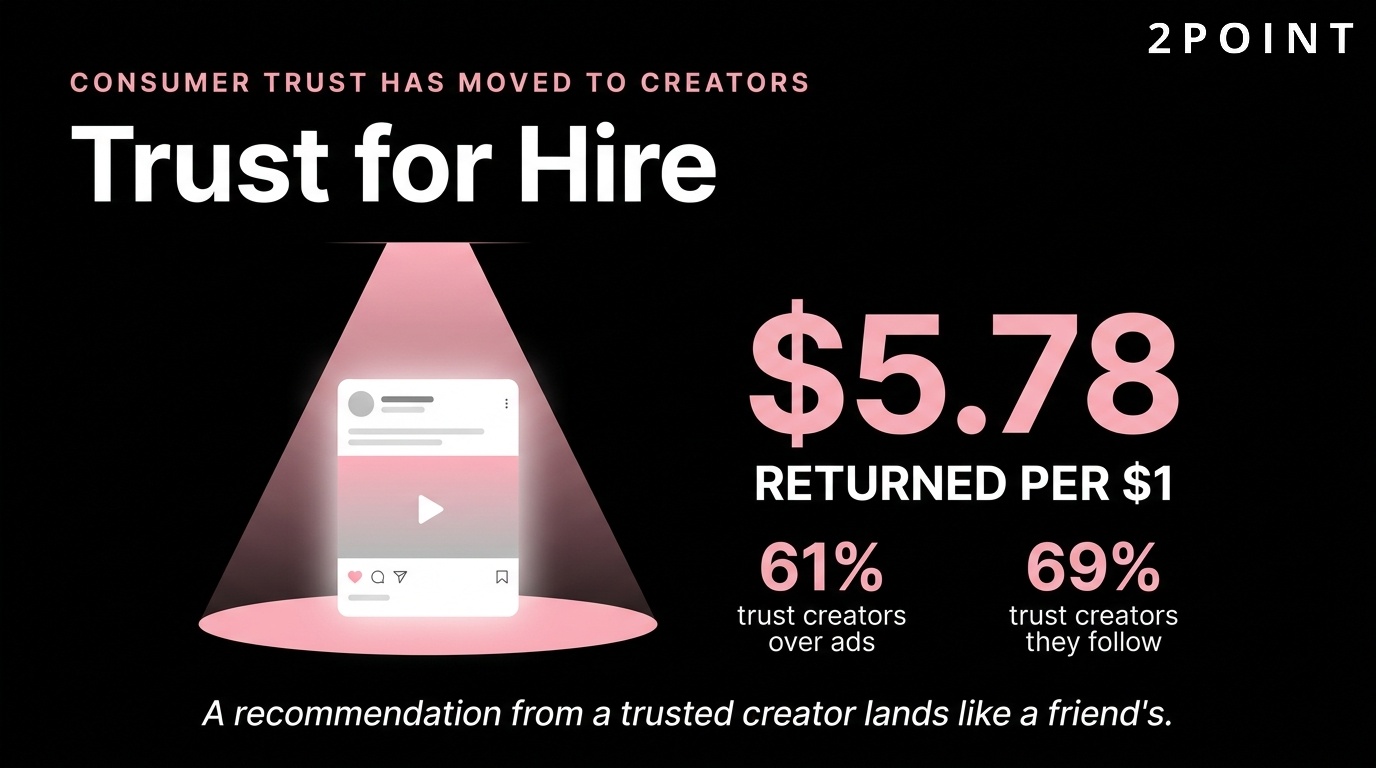
In 2026, brands are spending more on influencer marketing than on traditional digital advertising, a milestone that reflects a fundamental shift in where consumer trust resides. The average ROI for influencer marketing is $5.78 per $1 spent, nearly double the returns from traditional digital advertising, making it one of the most capital-efficient channels in the marketing mix. The trust dynamics driving this ROI are well-documented. Sixty-one percent of consumers trust influencer endorsements more than traditional advertising, and 69% trust product recommendations from influencers they actively follow. This trust is not passive; it is built over years of consistent content creation, authentic self-expression, and demonstrated expertise or lifestyle alignment that audiences value. When an influencer recommends a product, it carries the weight of a trusted friend's recommendation, not a paid advertisement. The brand visibility through influencer marketing extends well beyond the immediate post. Influencer content generates comments, shares, saves, and secondary shares that extend reach far beyond the influencer's own audience. Combined with the U.S. creator economy exceeding $40 billion and the global figure surpassing $200 billion, the infrastructure for sophisticated influencer partnerships has never been more developed or more accessible to brands of any size.
Micro-Influencers, Nano-Influencers, and the Engagement Advantage
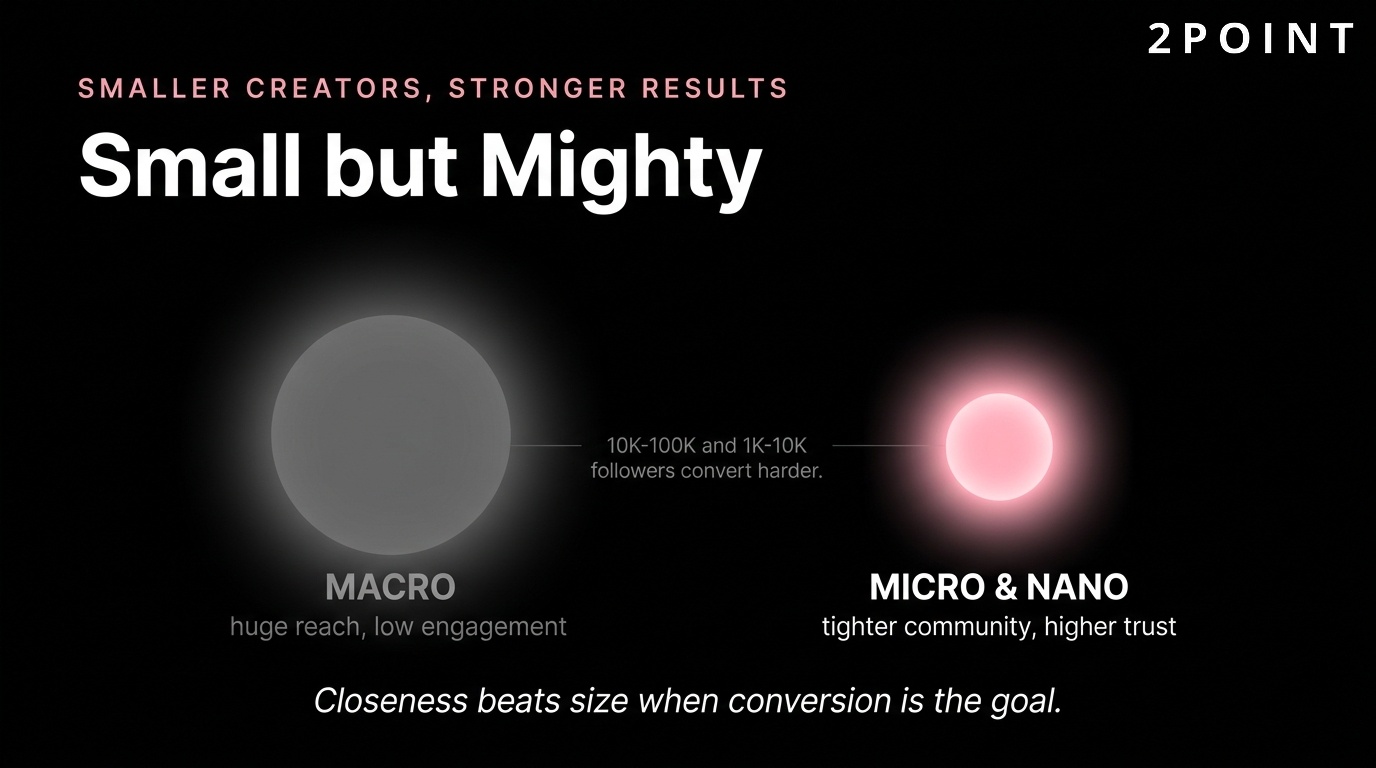
One of the most important developments in influencer marketing is the demonstrated performance advantage of smaller creator categories. Micro-influencers (typically defined as creators with 10,000 to 100,000 followers) and nano-influencers (1,000 to 10,000 followers) consistently generate higher engagement rates, stronger audience trust, and better conversion outcomes than macro-influencers and celebrities in many product categories. The reason is straightforward: smaller creators maintain closer relationships with their audiences. Their followers are more likely to read captions, respond to questions, and take action based on recommendations because the creator feels more accessible and relatable. For brands with limited influencer marketing budgets, a portfolio of micro-influencer partnerships often delivers superior results to a single macro-influencer campaign at the same total cost. The strategic application varies by objective. Celebrity and macro-influencer partnerships excel at generating rapid brand awareness at scale and creating cultural moments. Micro and nano-influencer campaigns deliver superior conversion rates, more authentic product integration, and more granular audience targeting. The most sophisticated influencer marketing strategies in 2026 combine both tiers, using larger creators for reach and smaller creators for the community-level trust and conversion that drives actual revenue. Developing a clear online marketing strategy that incorporates both tiers with distinct goals for each is essential for maximizing influencer investment.
Building Effective Influencer Marketing Partnerships
Effective influencer partnerships are built on alignment, not just reach. The most common influencer marketing mistake is selecting creators based solely on follower count or aesthetic fit without evaluating audience quality, engagement authenticity, content consistency, or values alignment with the brand. A creator with 500,000 followers and a 0.5% engagement rate from purchased followers will deliver worse results than a creator with 50,000 followers and a 6% engagement rate from a highly relevant, genuinely engaged community. Partnership structures have diversified significantly beyond simple sponsored posts. Long-term ambassador programs, co-created product lines, affiliate commission structures, exclusive content series, event co-hosting, and live shopping integrations all represent viable partnership models with distinct cost-benefit profiles. Long-term partnerships consistently outperform one-off collaborations because audiences understand the creator's genuine relationship with the brand rather than experiencing each post as a discrete commercial transaction. Performance tracking should encompass the full value chain: reach, engagement, link clicks, promo code usage, direct sales attribution, and brand sentiment metrics all contribute to a complete picture of influencer campaign performance. Establishing clear KPIs and attribution mechanisms before a campaign launches, rather than attempting to construct them retroactively, is the difference between influencer marketing that is accountable and influencer marketing that is merely anecdotal. Teams focused on measuring marketing success from influencer investments use multi-metric scorecards rather than single-metric evaluation.
Compliance, Disclosure, and Ethical Standards in Influencer Marketing
The regulatory landscape for influencer marketing has tightened significantly as the channel has matured. The FTC in the United States, the ASA in the United Kingdom, and equivalent bodies in most major markets now require clear, conspicuous disclosure of paid partnerships, gifted products, and affiliate relationships. Non-compliance carries financial penalties for both brands and creators, and more importantly, it carries the trust cost of audience backlash when undisclosed relationships are discovered. Best practice requires that disclosure language be immediately visible without any action from the viewer, not buried in extended captions or hidden behind "more" links. Platform-native disclosure tools, such as Instagram's "Paid Partnership" label and TikTok's "Branded Content" toggle, should be used consistently in addition to any caption-level disclosure language. Brands should contractually require creators to use these tools and conduct regular audits of live content to ensure compliance. Beyond regulatory compliance, ethical influencer marketing means partnering with creators who genuinely believe in the products they promote. Audiences are increasingly sophisticated at detecting forced or inauthentic endorsements, and the trust damage from a poorly fit partnership can far exceed the reach value it generates. Ensuring creators have actual experience with products before creating content, allowing creative freedom within brand guidelines, and building partnerships around genuine shared values produces both better content and better long-term brand outcomes.
Social Media Advertising: Paid Strategy and Campaign Optimization
Social media advertising represents the paid amplification layer of social media marketing strategy. While organic content builds community and demonstrates brand personality, paid social extends reach, enables precise targeting, and delivers accelerated results for specific business objectives. In 2026, with social media ad spend at $270 billion and growing, the competitive landscape for paid social requires sophistication, not just budget.
Understanding Social Media Advertising Formats and Objectives
Social media advertising encompasses a wider range of formats and objectives than most non-specialists appreciate. At the awareness level, video ads, carousel ads, and display ads introduce brands to new audiences based on demographic, behavioral, and interest-based targeting. At the consideration level, lead generation ads, traffic campaigns, and engagement campaigns move users from passive awareness to active interest. At the conversion level, dynamic product ads, retargeting campaigns, and catalog sales ads drive direct purchase actions from users who have already demonstrated relevant intent. Each platform's advertising ecosystem has distinct strengths that align with different campaign objectives. Facebook and Instagram's Meta advertising platform offers the most granular audience targeting in social media, with custom audiences from customer lists, lookalike audiences, and behavioral targeting based on the platform's enormous behavioral dataset. LinkedIn's advertising platform is uniquely valuable for B2B campaigns because of its professional targeting dimensions. TikTok Ads excel at reaching younger demographics with native video formats that feel organic rather than intrusive when well-executed. Pinterest Ads perform particularly strongly for product categories with high visual appeal and planning-oriented purchase behavior. Developing a strategy to engage customers through social media must incorporate both organic and paid components, using each for the objectives it serves best. Paid social amplifies what organic content has already validated; attempting to use paid spend to rescue underperforming organic content is almost always an expensive lesson rather than a strategic success.
Campaign Structure, Targeting, and Creative Best Practices
Well-structured social media advertising campaigns follow a logical hierarchy: campaign objective at the top, ad sets defining audience, placement, and budget in the middle, and individual ads containing creative at the bottom. This structure enables systematic testing, clear attribution, and efficient budget allocation based on performance data. Campaigns that collapse all variables into a single ad set make it impossible to identify which factor, audience, placement, creative, or offer is driving or limiting performance. Audience targeting strategy should balance precision with scale. Hyper-narrow targeting can deliver highly relevant reach but limits volume and increases cost per result. Broad targeting with strong creative allows platforms' AI-powered delivery systems to find the highest-performing audience segments through machine learning optimization. The most effective approach in 2026 tends toward defined audience parameters with sufficient scale, allowing platform algorithms to optimize delivery within those constraints rather than attempting to manually specify every characteristic of the target audience. Creative is the variable with the highest impact on ad performance. Research consistently confirms that creative quality accounts for 70% or more of campaign performance variance, dwarfing the contribution of targeting refinements or bid strategy adjustments. Ads that begin with a compelling visual hook in the first two seconds, communicate a clear value proposition, and include an unambiguous call to action consistently outperform technically sophisticated campaigns with mediocre creative. Testing multiple creative variations simultaneously and rapidly scaling the winners is the fundamental optimization discipline of high-performance paid social.
Retargeting and Full-Funnel Paid Social Strategy
Retargeting is the paid social technique that consistently delivers the highest return on ad spend because it focuses budget on audiences who have already demonstrated relevant interest or intent. Website visitors, video viewers, post engagers, email list subscribers, and past purchasers all represent retargeting audiences that convert at significantly higher rates than cold audiences, at lower costs per acquisition. A full-funnel paid social strategy sequences advertising exposure in alignment with the customer journey. Top-of-funnel campaigns build awareness among cold audiences using high-reach, low-cost formats. Mid-funnel campaigns retarget engaged users with more specific value proposition messaging and social proof content. Bottom-of-funnel campaigns focus on retargeting users with high purchase intent, such as cart abandoners or product page visitors, with direct conversion messaging and incentives. Budget allocation across funnel stages depends on business objectives, category consideration timelines, and the relative size of each audience segment. For most brands, a roughly 60/20/20 split between awareness, consideration, and conversion campaigns as a starting point provides adequate reach for sustainable funnel filling while maintaining conversion focus. This allocation should be continuously adjusted based on actual performance data, measuring marketing campaign effectiveness at each funnel stage to identify where investment generates the highest incremental return.
Measuring Social Media Marketing Success and ROI
Measurement is where social media marketing strategy either validates itself or reveals its gaps. Without a disciplined measurement framework, even high-quality social media execution becomes difficult to evaluate, optimize, or justify to stakeholders. The metrics that matter depend on business objectives, but the measurement approach should always connect social activity to business outcomes.
The Essential Social Media Marketing Metrics Framework
Social media metrics fall into four categories: reach metrics, engagement metrics, conversion metrics, and business impact metrics. Reach metrics include impressions, reach, follower growth rate, and share of voice. Engagement metrics encompass likes, comments, shares, saves, and the engagement rate, which is the ratio of total engagements to reach or impressions. Conversion metrics track link clicks, website sessions from social, leads generated, and direct social sales. Business impact metrics include customer acquisition cost from social, lifetime value of social-acquired customers, brand sentiment trends, and overall ROI. The engagement rate deserves particular attention as a performance indicator because it normalizes engagement volume against reach, making it comparable across accounts of different sizes and across time periods with different organic reach. A post with 500 engagements from an audience of 5,000 (10% engagement rate) is substantially outperforming a post with 2,000 engagements from an audience of 200,000 (1% engagement rate). Tracking engagement rate trends over time reveals whether content strategy is strengthening or weakening audience relationships, regardless of absolute volume changes. The most sophisticated social media measurement frameworks use analytics for strategic marketing decisions by connecting platform-level metrics to business outcomes through attribution modeling. This means tracking not just how many people clicked a social media link, but how many of those clicks resulted in purchases, what those customers' average order values were, whether they became repeat customers, and what their lifetime value is relative to customers acquired through other channels. This level of measurement precision transforms social media from a cost center into a quantified investment with clear return characteristics.
Attribution Models and Reporting Best Practices
Attribution remains the most technically challenging aspect of social media marketing measurement. The customer journey from first social media touchpoint to purchase rarely follows a linear path; it typically involves multiple social platforms, organic and paid exposures, website visits, email interactions, and sometimes offline touchpoints before a conversion occurs. Last-click attribution, the simplest and most common model, assigns all conversion credit to the final touchpoint before purchase, systematically undervaluing top-of-funnel social media activities that initiate the customer journey. Multi-touch attribution models, including linear attribution, time-decay attribution, and data-driven attribution, distribute conversion credit across multiple touchpoints based on different logic. Data-driven attribution, which uses machine learning to assign credit based on actual observed conversion patterns rather than predetermined rules, is the most accurate approach for brands with sufficient conversion volume to support the model. Brands with smaller conversion volumes often find position-based attribution models (which assign higher credit to first and last touchpoints) to be a practical middle ground between accuracy and simplicity. Reporting cadence should align with decision-making cycles. Daily reporting for active paid campaigns enables rapid creative and bidding adjustments. Weekly reporting provides a more stable performance signal for content strategy decisions. Monthly reporting supports budget allocation decisions and strategic pivots. Quarterly reporting enables year-over-year trend analysis and strategic planning. The marketing campaign effectiveness data gathered through disciplined reporting is the foundation of continuous improvement, turning each campaign cycle into a learning opportunity that compounds into sustained competitive advantage.
Building a Social Media Marketing Dashboard That Drives Decisions
A well-designed social media marketing dashboard consolidates the most decision-relevant metrics into a single view that enables rapid performance assessment without requiring deep data analysis to generate insight. Effective dashboards balance comprehensiveness with clarity, showing enough data to diagnose problems and identify opportunities without overwhelming viewers with metrics that do not drive decisions. The dashboard should be organized by business objective rather than by platform or metric type. If the primary objective is customer acquisition, the dashboard's most prominent section should track acquisition cost, conversion rate, and volume by channel. If brand building is the primary objective, sentiment trends, share of voice, and audience growth should take precedence. This objective-driven organization ensures that every dashboard interaction connects data to purpose, preventing the common problem of reporting that generates activity without generating insight. Benchmarking is essential for meaningful performance interpretation. Internal benchmarks, comparing current performance to historical baselines, reveal trends and seasonal patterns. Competitive benchmarks, using industry data and social listening tools, reveal relative performance and identify gaps or opportunities. The most useful dashboards display both, giving marketing teams the context needed to distinguish between a performance problem requiring immediate action and a normal seasonal variation requiring patience. Teams that embed data analytics for marketing optimization into their regular workflow consistently outperform those that treat measurement as a retrospective reporting exercise.
Building a Social Media Marketing Strategy: A Step-by-Step Framework
A successful social media marketing strategy does not emerge from platform-by-platform tactical decisions. It begins with clear business objectives and works backward to the platforms, content types, audience strategies, and measurement frameworks that best serve those objectives. The following framework provides a structured approach to building a strategy that is coherent, executable, and measurable.
Step 1: Define Business Objectives and Success Metrics
Every social media strategy must begin with business objectives that exist independently of social media. Are you seeking to increase brand awareness in a new market? Generate qualified leads for a sales team? Drive direct e-commerce sales? Reduce customer service costs by deflecting inquiries to social? Retain existing customers by building community? Each objective leads to different platform choices, content strategies, advertising approaches, and measurement frameworks. Attempting to accomplish all objectives simultaneously with a single undifferentiated strategy is the most common reason social media programs fail to deliver clear ROI. Once objectives are defined, translate them into specific, measurable success metrics with numeric targets and time horizons. "Increase brand awareness" becomes "reach 500,000 unique users per month within Q3, with a 5% engagement rate." "Generate leads" becomes "produce 200 qualified leads per month from LinkedIn at a cost per lead below $45." Specific metrics make strategy evaluation unambiguous, resource allocation decisions defensible, and performance conversations productive rather than subjective.
Step 2: Conduct Audience Research and Platform Selection
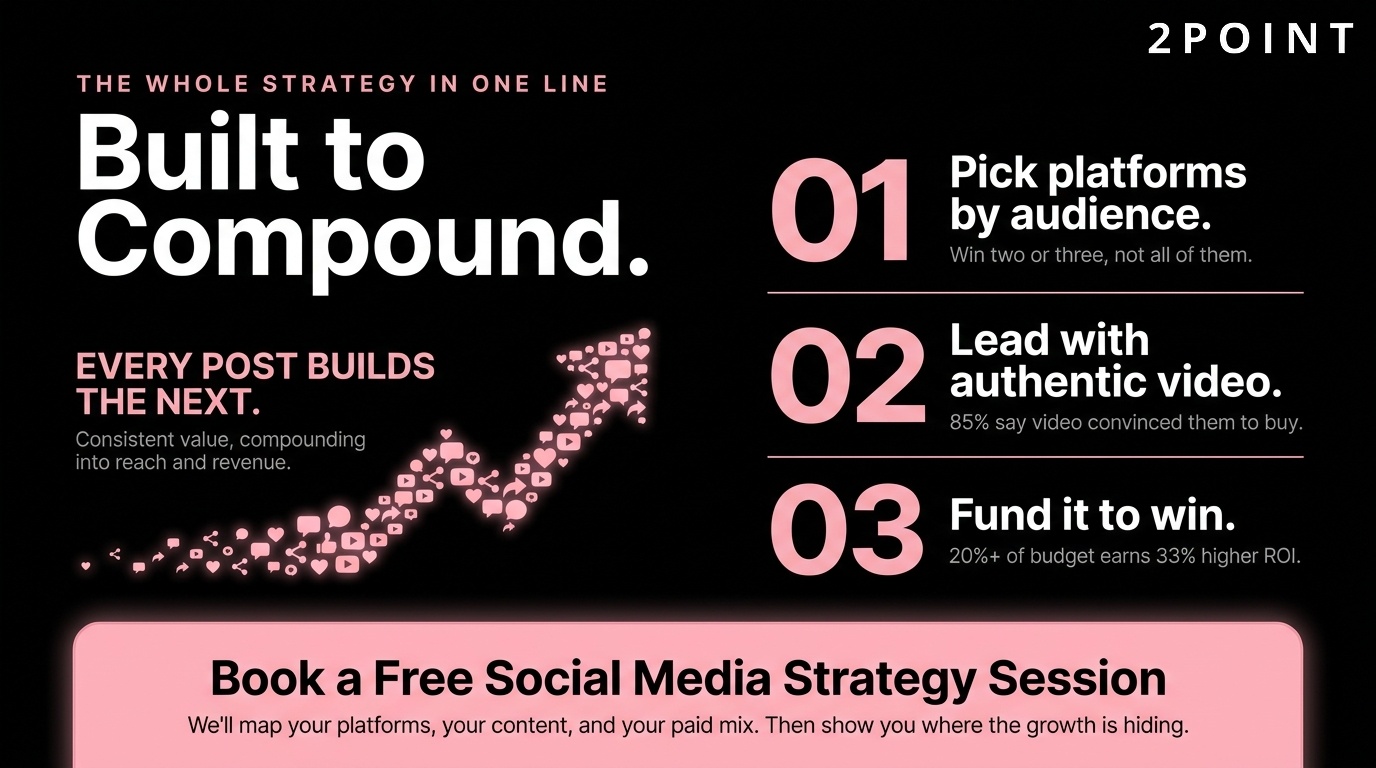
Audience research for social media strategy should answer three core questions: where is the target audience most active, what content do they engage with most, and what role does social media play in their path to purchase? Platform usage data, social listening insights, competitor analysis, and direct customer surveys all contribute to answering these questions with evidence rather than assumption. Platform selection should follow audience research, not precede it. The decision to invest in TikTok, LinkedIn, Instagram, or any other platform should be grounded in evidence that the target audience is meaningfully present and reachable there. The practical implication is focus: committing fully to two or three platforms where the audience is concentrated and engaged consistently outperforms spreading resources thinly across every available platform. The impact of social media on brand loyalty is strongest when brands maintain a consistent, high-quality presence on a small number of relevant platforms rather than a diluted presence everywhere.
Step 3: Develop Content Strategy and Editorial Calendar
Content strategy development translates business objectives and audience insights into a repeatable content production system. This includes defining content pillars (the categories of value the brand will consistently provide), formats (video, carousel, long-form text, Stories, etc.), posting cadence by platform, brand voice guidelines, and visual identity standards. A documented content strategy reduces production time, ensures consistency, and provides the framework for evaluating whether individual pieces of content align with strategic goals. The editorial calendar operationalizes the content strategy by scheduling specific content topics, formats, and publication dates across platforms and time periods. Effective editorial calendars balance planned content with space for reactive content that responds to trends, news, and cultural moments. Maintaining brand consistency in marketing across platforms and content types requires the kind of documented guidance that an editorial calendar and style guide provide, ensuring that content created by different team members or at different times maintains a coherent brand voice and visual identity.
Step 4: Execute, Test, and Optimize Continuously
Execution discipline separates strategies that remain documents from strategies that drive business results. This means consistent content publication at the planned cadence, active community management that responds to comments and messages within defined timeframes, regular monitoring of performance metrics against established benchmarks, and structured testing programs that systematically evaluate different approaches. Optimization should be embedded in the execution rhythm rather than treated as an occasional review activity. Weekly performance checks identify content formats and topics generating above-average engagement for amplification. Monthly reviews assess whether platform allocation, posting frequency, and content mix are aligned with objective performance. Quarterly strategy reviews evaluate whether the fundamental strategic approach needs adjustment based on cumulative performance data, platform algorithm changes, competitive dynamics, or shifts in business objectives. Teams that build innovation in marketing into their regular optimization cycles, experimenting with new formats, platforms, and approaches on a structured basis, consistently identify growth opportunities before competitors do.
Social Media Marketing Trends Shaping the Future
Understanding where social media marketing is heading is as important as mastering where it is today. The brands that will lead their categories in 2028 and beyond are already adapting to the trends that are reshaping platform behavior, audience expectations, and marketing technology in 2026.
AI-Powered Personalization and Predictive Content Delivery
AI-driven content personalization is moving beyond simple algorithmic recommendations toward true predictive content delivery that anticipates individual user interests before they are explicitly expressed. Platform algorithms are becoming increasingly sophisticated at identifying micro-behavioral signals, including scroll speed, hover time, click patterns, and content completion rates, that predict what a specific user wants to see next with remarkable accuracy. For marketers, this means that content quality and relevance are becoming more important than posting frequency or time-of-day optimization. Algorithms that can accurately predict user interest will increasingly prioritize the best available content for each user regardless of when it was published, compressing the advantage of real-time posting while amplifying the advantage of genuinely valuable, audience-specific content. Brands investing in deeper audience understanding and more precisely targeted content creation will benefit disproportionately as these algorithms mature.
Community-Led Growth and Private Social Spaces
Public-facing content performance metrics are becoming increasingly unreliable indicators of actual social media marketing effectiveness as dark social (sharing through private channels like DMs, group chats, and messaging apps) continues to grow. Content that generates enormous value in private sharing contexts often appears to underperform in public engagement metrics, leading brands that rely solely on public metrics to underinvest in formats and content types that are actually driving significant influence. The response to this trend is a growing emphasis on community-led growth: investing in owned community spaces, such as Facebook Groups, Discord servers, LinkedIn communities, and brand-owned platforms, where engagement is more visible, relationships are deeper, and brand influence is more direct. These private and semi-private social spaces offer brands the ability to build genuine community relationships that are less vulnerable to algorithm changes, platform policy shifts, and the attention competition of public social media feeds. The strategy to engage customers through social media in community-led environments differs significantly from broadcast content strategies and requires dedicated community management investment.
Social Search Optimization as a New SEO Frontier
Social media platforms are rapidly becoming primary search destinations, particularly for younger demographics. Research suggests that a substantial proportion of Gen Z users prefer TikTok and Instagram as search engines over Google for certain query types, including product recommendations, restaurant discovery, travel inspiration, and how-to content. This behavioral shift has created an entirely new category of optimization: social search optimization (SSO). Social search optimization requires approaching social media content with the same keyword intent analysis that traditional SEO applies to web content. Caption text, on-screen text in videos, hashtags, profile bio keywords, and even verbal language in video content all influence discoverability within platform search functions. Brands that begin treating their social media content as searchable assets rather than ephemeral posts are building a compounding discovery advantage as platform search functionality continues to develop. The intersection of social media and search represents one of the most significant innovation in marketing opportunities available to brands willing to adapt their content strategy accordingly.
Conclusion: Building a Social Media Marketing Strategy That Compounds
Social media marketing in 2026 is not a single tactic or a collection of platform-specific activities. It is a fully integrated business function that spans awareness, consideration, conversion, and retention simultaneously, requiring strategic clarity, operational discipline, and continuous learning to execute effectively.
The brands that consistently outperform in social media marketing share several characteristics: they make platform decisions based on audience evidence rather than platform popularity, they invest in content quality and authenticity over production volume, they combine AI-powered efficiency with human creative intelligence, they measure outcomes that connect to business goals rather than vanity metrics, and they treat social media as a long-term asset that compounds with consistent investment rather than a short-term campaign lever.
The market data is unambiguous. A $234 billion industry growing at 13.5% annually, 5.66 billion active users spending nearly three hours per day on social platforms, $1 trillion in social commerce transactions, and 83% of marketers citing social as their primary acquisition channel: these figures describe not a maturing channel in decline but an accelerating infrastructure for business growth that rewards early, strategic investment.
Whether you are building a social media presence from scratch, optimizing an existing strategy for better returns, or navigating the AI and social commerce transformations reshaping the industry, the principles remain consistent: know your audience, choose platforms deliberately, create content that provides genuine value, measure what matters, and optimize continuously based on real performance data. The compounding nature of social media marketing means that every strategic improvement made today builds the foundation for disproportionate returns tomorrow.
For brands seeking expert guidance on developing and executing social media marketing strategies aligned with these principles, 2POINT offers specialized expertise in platform strategy, content development, paid social, influencer marketing, and performance measurement. Building a social media presence that delivers measurable business outcomes requires both strategic clarity and operational excellence, and working with specialists who understand the nuances of each platform and the integration points between them accelerates the path from activity to results.
Frequently Asked Questions About Social Media Marketing
What is social media marketing and how does it work?
Social media marketing is the practice of using platforms like Facebook, Instagram, TikTok, LinkedIn, and YouTube to build brand awareness, engage audiences, drive website traffic, and generate sales. It works by combining organic content creation, paid advertising, community management, and data analytics to reach target audiences where they spend their time online. In 2026, social media marketing is a $234 billion global industry serving 5.66 billion active users.
How much should a business spend on social media marketing?
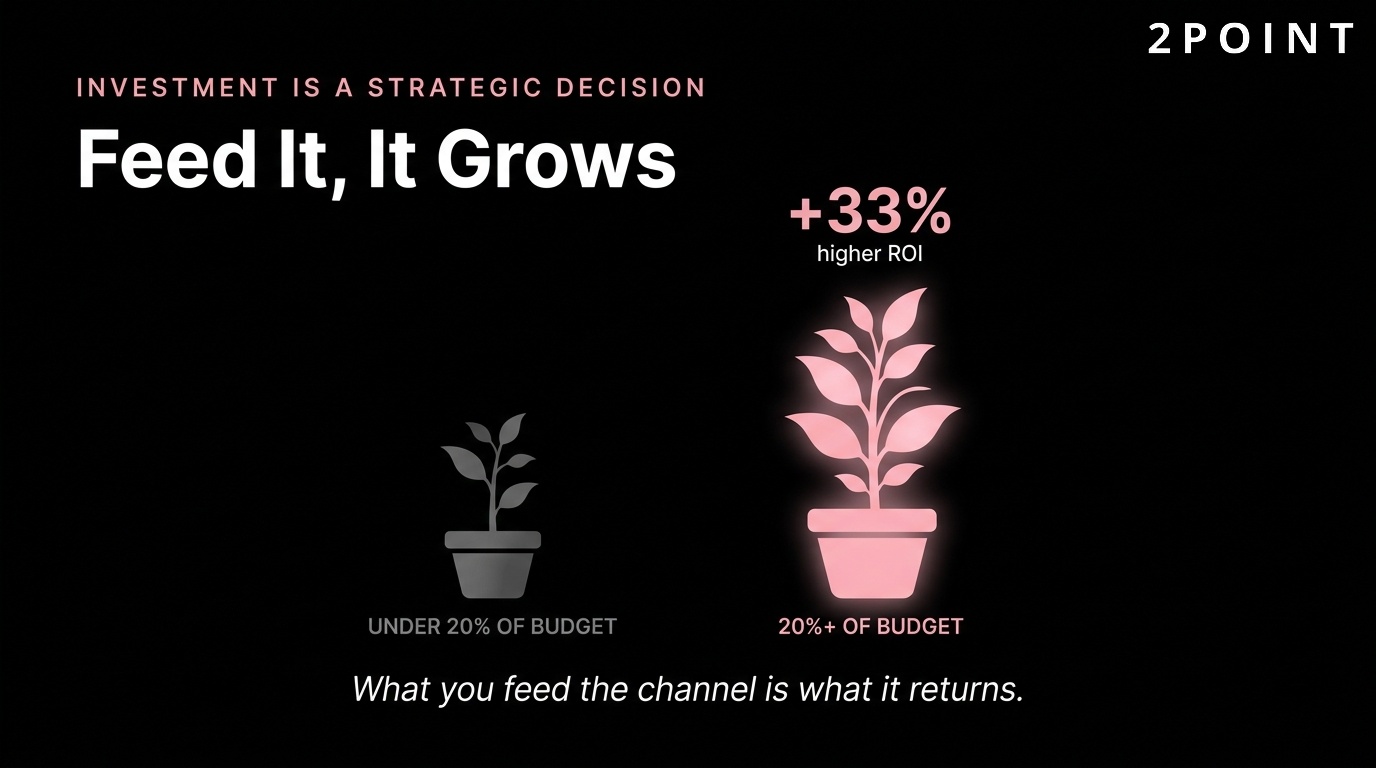
Most marketing experts recommend allocating 10 to 20 percent of total marketing budget to social media, with brands that invest 20% or more reporting 33% higher ROI than lower-spending competitors. The right amount depends on business objectives, industry competitiveness, and the role social plays in the overall customer acquisition strategy. Starting with a focused investment on one or two platforms and scaling based on performance data is more effective than spreading limited budgets across every platform simultaneously.
What is the difference between social media marketing and social media advertising?
Social media marketing is the broader discipline encompassing all activities used to build presence and achieve business goals on social platforms, including both organic and paid approaches. Social media advertising refers specifically to the paid placement of promotional content within social platforms using the platforms' advertising systems, with targeting, bidding, and budget controls. Effective social media marketing strategies use both organic content and paid advertising in complementary ways, with organic content building community and credibility while paid advertising accelerates reach and conversion.
Which social media platform is best for business marketing?
The best platform for business marketing depends on the target audience and business type rather than platform size alone. Facebook and Instagram are generally most effective for B2C brands targeting broad demographics. LinkedIn is the top-performing platform for B2B marketing, with 85% of B2B marketers citing it as their highest-ROI channel. TikTok delivers the highest engagement rates and is essential for reaching audiences under 35. The most reliable approach is to conduct audience research first and then select platforms based on where the target audience is most active.
Does social media marketing actually generate measurable ROI?
Social media marketing generates measurable ROI when campaigns are built with specific business objectives, tracked with the right attribution models, and optimized based on performance data. The average return on influencer marketing alone is $5.78 per $1 spent, and brands allocating 20% or more of marketing budgets to social report 33% higher overall ROI. The key to demonstrating ROI is connecting social media metrics to business outcomes such as customer acquisition cost, conversion rate, and customer lifetime value rather than reporting on engagement metrics in isolation.
How is social media marketing different for B2B versus B2C companies?
B2B social media marketing typically centers on LinkedIn for lead generation and thought leadership, with longer consideration cycles and content focused on expertise, case studies, and professional value proposition. B2C social media marketing spans more platforms including Instagram, TikTok, and Facebook, with content designed for emotional engagement, product discovery, and direct purchase conversion. Both approaches use paid social and influencer partnerships, but the creative style, messaging, platform focus, and success metrics differ significantly based on audience behavior and purchase decision dynamics.
What is social commerce and how is it different from regular e-commerce?
Social commerce is the process of selling products directly through social media platforms without requiring users to navigate to a separate website, completing the entire purchase journey within the social app. Regular e-commerce requires users to visit a dedicated online store to complete a purchase, introducing additional steps and navigation friction. Social commerce surpassed $1 trillion globally in 2026, with 91% of transactions occurring on mobile devices, driven by features like Instagram Shopping, TikTok Shop, and Facebook Shops that enable discovery-to-checkout within a single platform session.
How does user-generated content improve social media marketing performance?
User-generated content improves social media marketing performance because it carries higher audience trust than brand-produced content, with UGC generating up to 8.7 times higher engagement in certain verticals. Consumers perceive reviews, testimonials, and social media posts from real customers as more credible and authentic than polished brand content. In 2026, with 52% of consumers concerned about undisclosed AI-generated content, authentic human-created content has become a genuine performance differentiator that directly affects engagement rates, conversion rates, and brand trust metrics.
What role does AI play in social media marketing in 2026?
AI has been adopted by 88% of marketers, primarily for content creation assistance, campaign optimization, audience analytics, and customer service automation. AI tools accelerate content production, improve targeting precision, and enable real-time campaign adjustments that were previously impossible at speed. However, AI-identified content faces a 12% engagement penalty from audiences, making human oversight and authentic brand voice essential counterbalances to AI-powered efficiency in any social media marketing workflow.
How do you measure social media marketing success?
Social media marketing success is measured through a combination of reach metrics, engagement metrics, conversion metrics, and business impact metrics tied to specific campaign objectives. Key performance indicators include engagement rate, reach, website traffic from social, lead generation volume, cost per acquisition, and return on ad spend. The most meaningful measurement connects social media activity to business outcomes through attribution modeling, comparing customer acquisition cost and lifetime value across channels rather than evaluating social media performance in isolation.
Is influencer marketing worth the investment for small businesses?
Influencer marketing delivers an average ROI of $5.78 per $1 spent and is particularly accessible for small businesses through micro-influencer and nano-influencer partnerships, which typically cost significantly less than macro-influencer campaigns while often delivering higher engagement rates and better conversion performance. Small businesses with limited budgets can build effective influencer programs by partnering with 10 to 20 nano-influencers in a highly relevant niche rather than pursuing a single high-cost celebrity partnership. Clear performance tracking through promo codes, affiliate links, and UTM parameters ensures these investments can be evaluated against measurable business outcomes.
How often should businesses post on social media?
Optimal posting frequency varies by platform, audience, and content quality available. For most platforms, consistency matters more than volume: a predictable cadence of high-quality content outperforms erratic high-volume posting of mediocre content. General benchmarks suggest one to two posts per day on Instagram and Facebook, three to five posts per week on LinkedIn, and one to three TikTok videos per week, with these figures adjusted based on actual performance data from specific accounts. The most reliable approach is to start with a sustainable cadence, measure engagement rates per post, and scale frequency only when content quality can be maintained.
