

 let’s connect


What Is Omni-Channel Marketing? (Quick Answer)
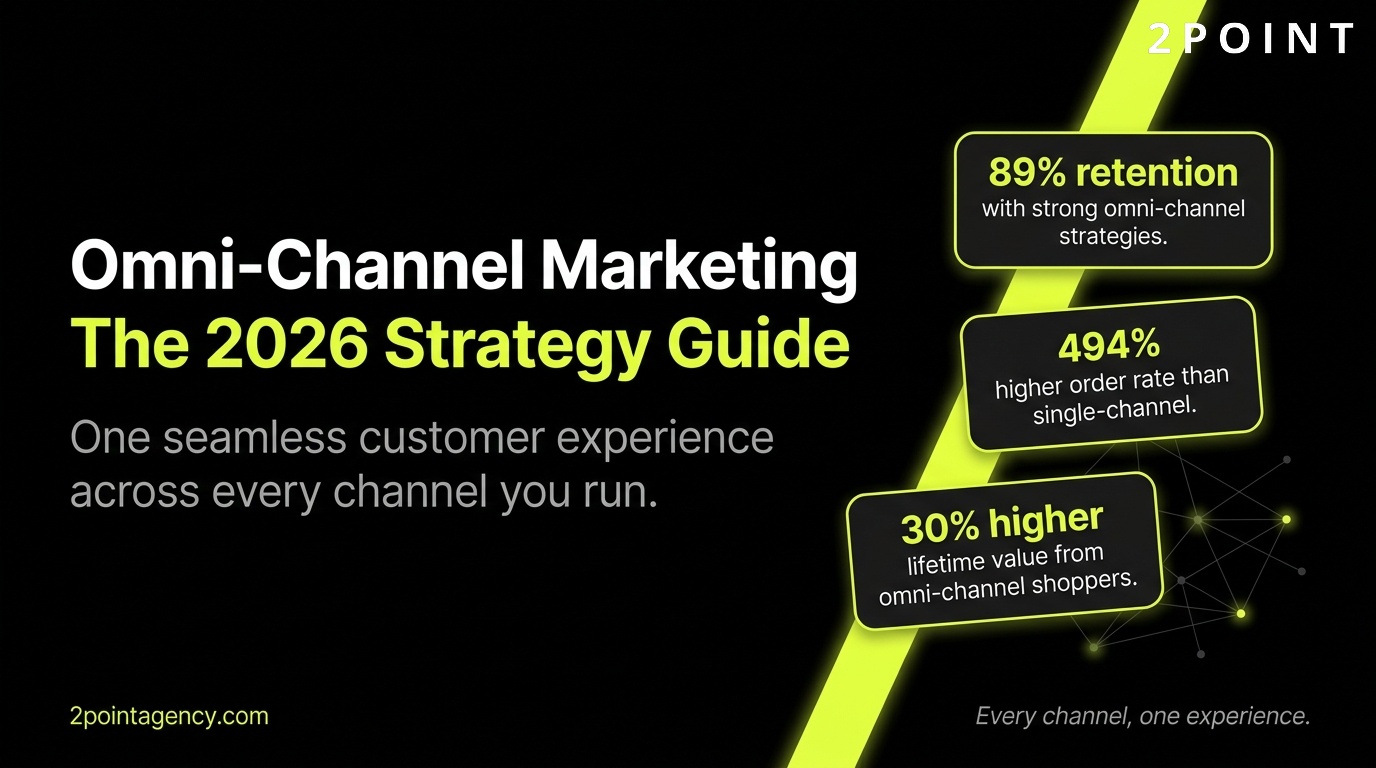
- Omni-channel marketing delivers seamless, integrated customer experiences across every touchpoint: online, in-store, mobile, and social media.
- Unlike multichannel approaches, omni-channel marketing unifies data, messaging, and inventory across all platforms in real time.
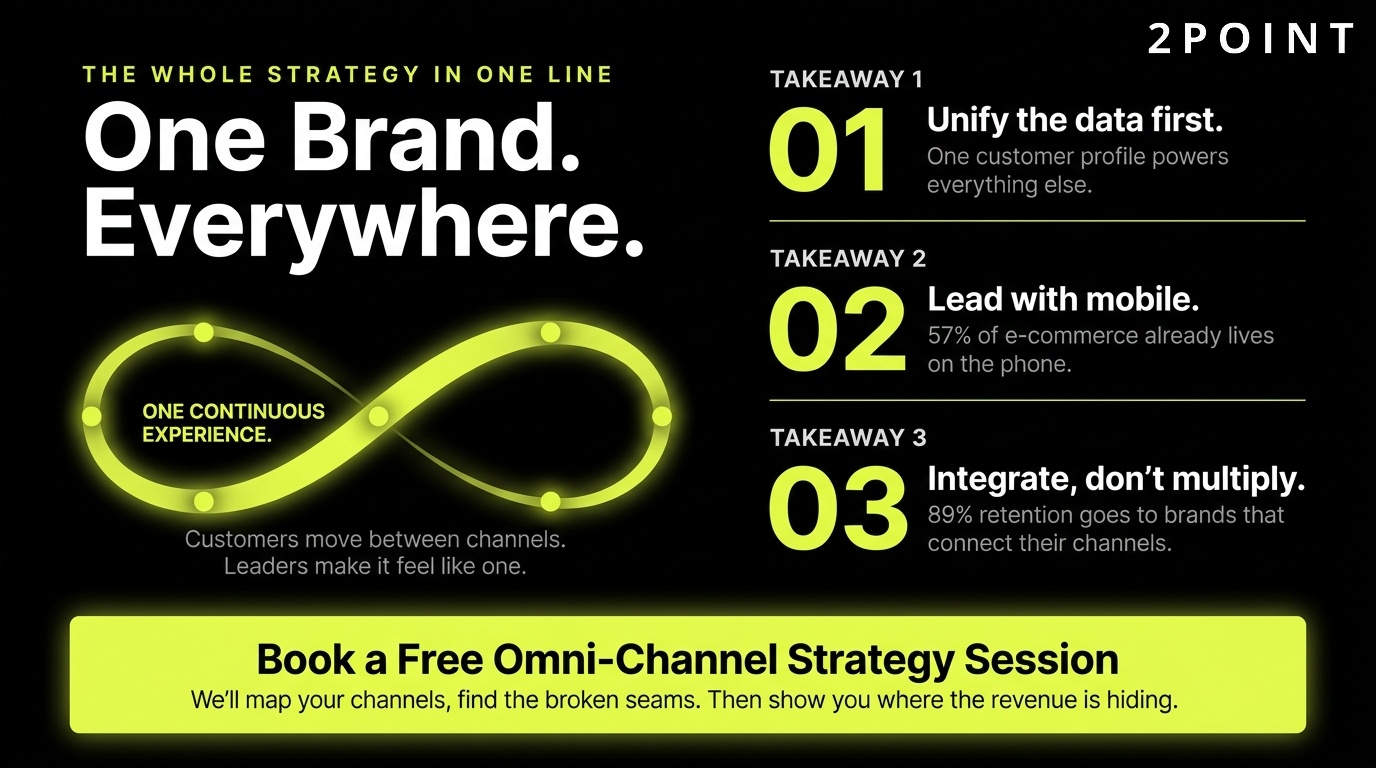
- Companies with strong omni-channel strategies retain 89% of their customers, compared to just 33% for those with weak strategies.
- Omni-channel shoppers deliver 30% higher lifetime value than single-channel customers.
- Multi-channel campaigns generate a 494% higher order rate than single-channel campaigns.
- Mobile commerce accounts for 57% of all e-commerce, making mobile-first design central to any omni-channel strategy.
- BOPIS (Buy Online, Pick Up In-Store) services increase purchase likelihood by 19.8% and are now used by 77.2% of top U.S. retailers.
- AI-powered personalization, unified commerce platforms, and real-time data synchronization are the three pillars of modern omni-channel execution.
The Business Case: Why Omni-Channel Marketing Drives Revenue Growth
The financial argument for omni-channel marketing is no longer theoretical. Across every measurable dimension, from revenue growth and customer retention to campaign performance and in-store traffic, integrated strategies outperform siloed approaches by margins that compound over time. Understanding the scale of this advantage is the first step toward building a strategy that captures it.
Revenue Impact and Growth Acceleration
Companies implementing effective omni-channel strategies experience 179% faster revenue growth compared to competitors. This is not incremental improvement. It represents a transformational competitive advantage that reshapes entire categories. The financial impact extends beyond top-line revenue: businesses that improve customer retention by just 5% see profit increases ranging from 25% to 95%.

The mechanism is straightforward. Omni-channel shoppers deliver 30% higher lifetime value than single-channel customers. When customers interact with brands across multiple touchpoints, they shop 1.7 times more frequently and increase both shopping frequency and basket size by 8% when converted from single-channel to omni-channel engagement.
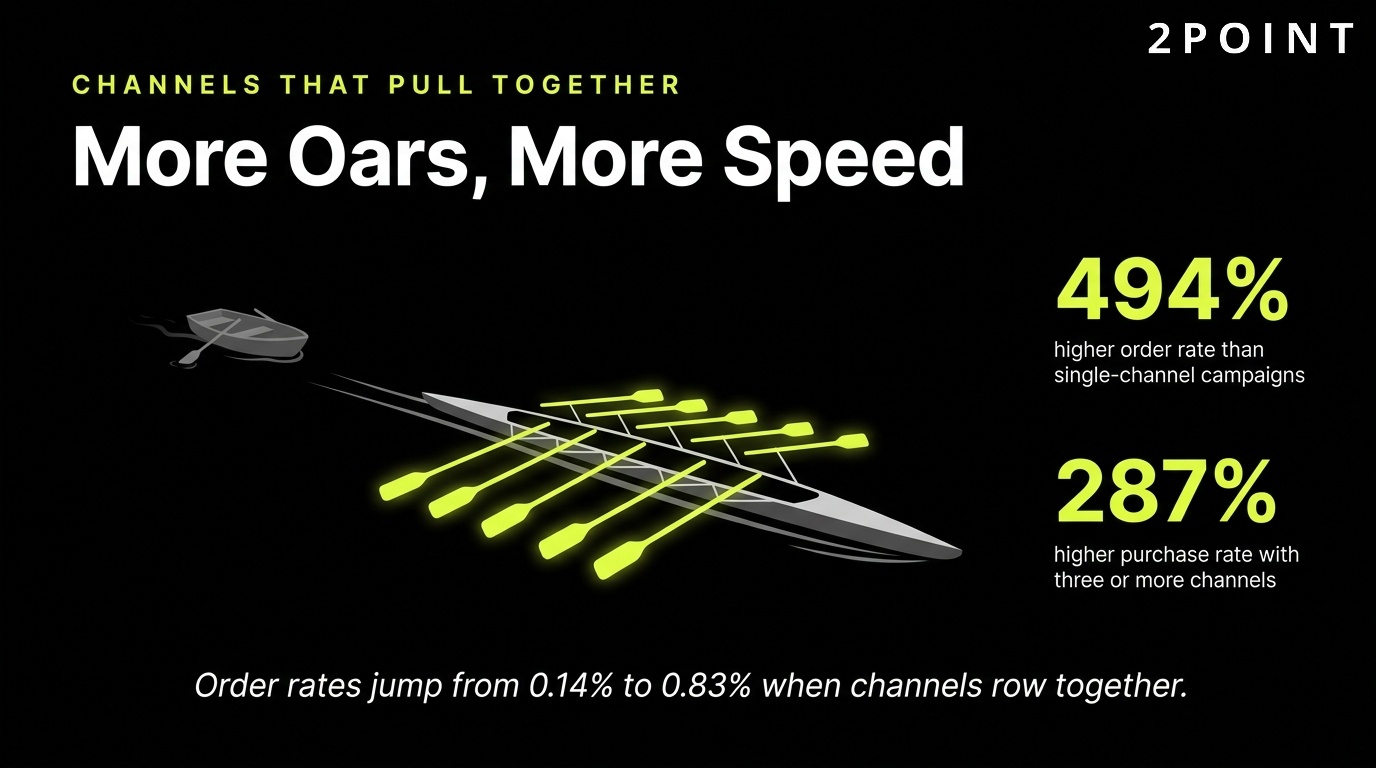
Campaign performance tells the same story. Multi-channel campaigns generate a 0.83% order rate versus 0.14% for single-channel efforts, a 494% increase. Marketers using three or more channels earn a 287% higher purchase rate than those relying on a single channel.
Physical and digital integration amplifies these effects further. Opening a brick-and-mortar store leads to a 37% increase in web traffic and a 6.9% increase in online sales in surrounding trade areas. Google's data shows omni-channel strategies drive 80% higher store visits, with these customers spending 4% more per visit than single-channel shoppers.
Customer Retention and Engagement Metrics
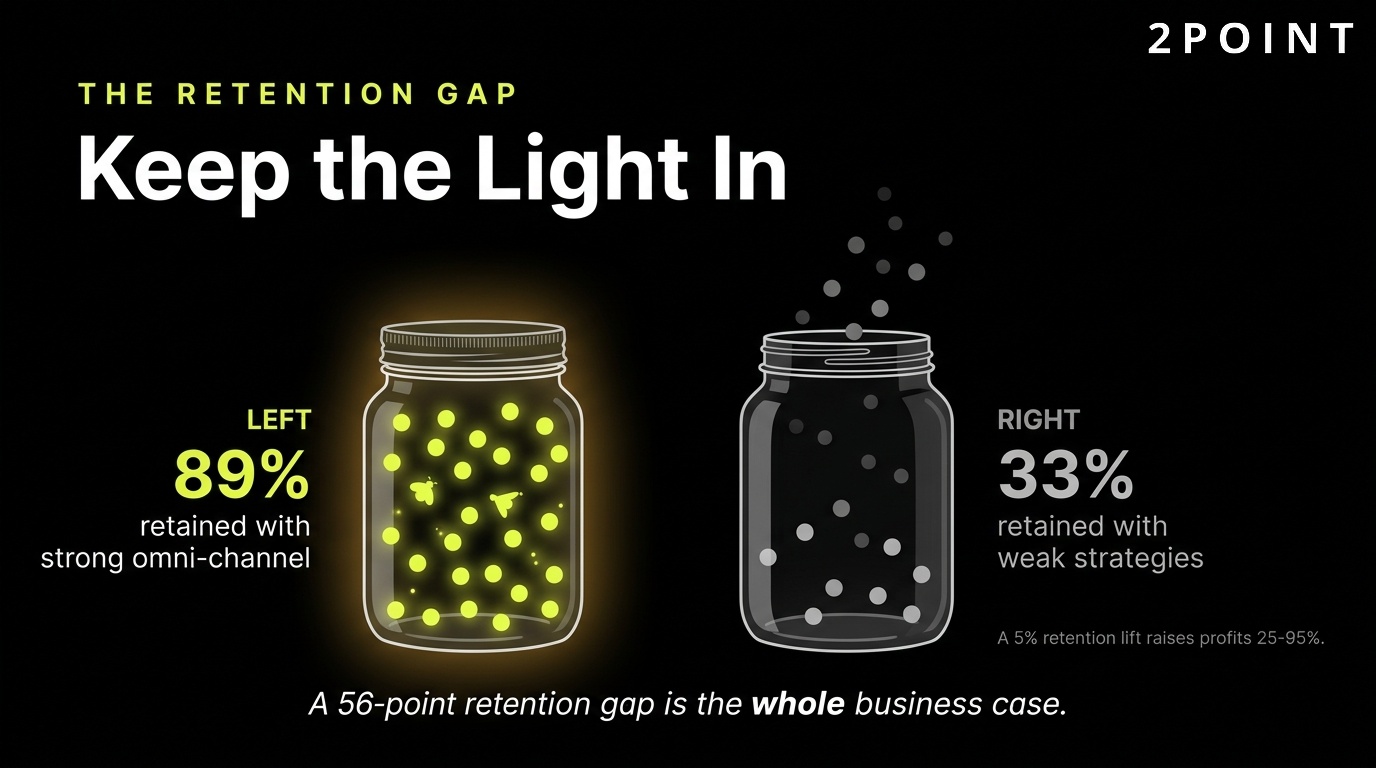
Customer retention represents omni-channel marketing's most compelling advantage. Companies with strong omni-channel engagement strategies retain 89% of their customers, while those with weaker strategies retain only 33%. This 56-percentage-point gap directly impacts profitability and long-term business sustainability.
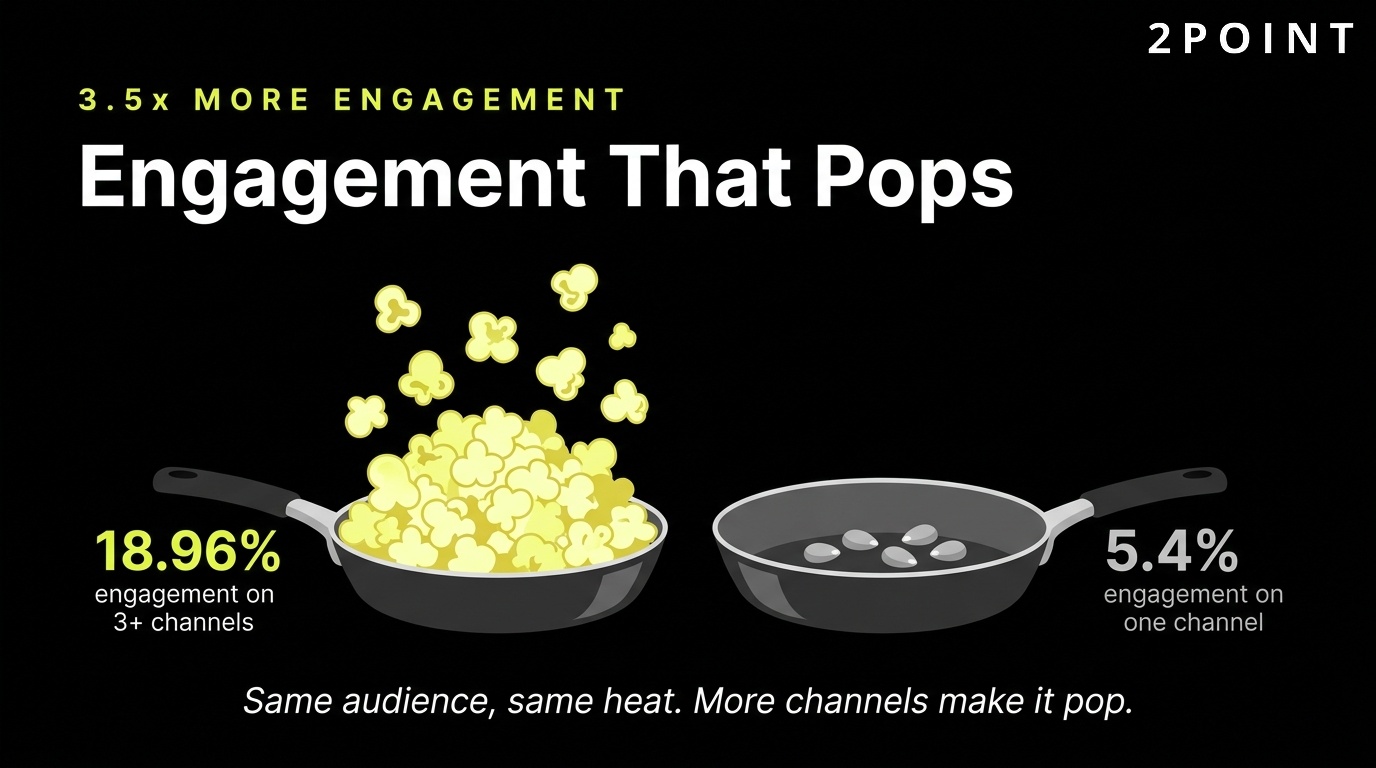
Engagement rates reveal similar disparities. Campaigns using three or more channels achieve 18.96% average engagement rates, compared to 5.4% for single-channel campaigns, representing 3.5 times more engagement from identical audiences. Retailers using three or more channels increase consumer engagement by 250% compared with single-channel approaches.
The engagement quality improves alongside quantity. Omni-channel consumers shop 70% more frequently than single-channel shoppers, creating more touchpoints for relationship building and personalized marketing. This frequency advantage compounds over time as brands gather richer behavioral data and deliver increasingly relevant experiences.
Customer lifetime value calculations demonstrate the cumulative effect. Beyond the 30% higher LTV for omni-channel shoppers, these customers convert at higher rates, respond more favorably to marketing campaigns, and demonstrate greater brand loyalty. The combination creates a virtuous cycle: better data enables more relevant experiences, which drives deeper engagement and higher retention. For businesses evaluating omni-channel investments, retention metrics provide the clearest ROI justification, since acquiring new customers costs five to seven times more than retaining existing ones.
Market Growth Trajectory and Projections
The omni-channel retailing market demonstrates explosive growth, estimated at $11.57 billion in 2026 and projected to reach $29.30 billion by 2033, representing a 14.2% compound annual growth rate. Alternative market analyses project the omni-channel retail commerce platform market reaching $14.6 billion by 2026, with broader omni-channel retail solutions markets growing from $29.13 billion in 2023 to $82.9 billion by 2032.
This growth occurs within the context of broader marketing technology expansion. The global martech market is valued at $557.94 billion in 2025, predicted to reach $3,286.94 billion by 2035 at a 19.40% CAGR. Omni-channel solutions represent an increasingly critical component of this technology ecosystem.
E-commerce integration drives significant market expansion. Global retail e-commerce sales are projected to reach $8.1 trillion by 2026, with e-commerce representing over 21% of total retail sales. Mobile commerce alone accounts for 57% of all e-commerce in 2024, with U.S. mobile commerce sales reaching $564.1 billion, up 14.8% year-over-year. The mobile share is expected to reach 62% of all e-commerce by 2027, cementing mobile-first strategies as central to omni-channel success. For a deeper look at these trends, the ecommerce marketing landscape in 2026 offers important context for building a future-ready strategy.
Competitive Advantage and Market Positioning
In 2026, omni-channel capability determines market winners and losers. The competitive gap between leaders and laggards has widened to the point where catching up requires fundamental business transformation rather than tactical marketing adjustments.
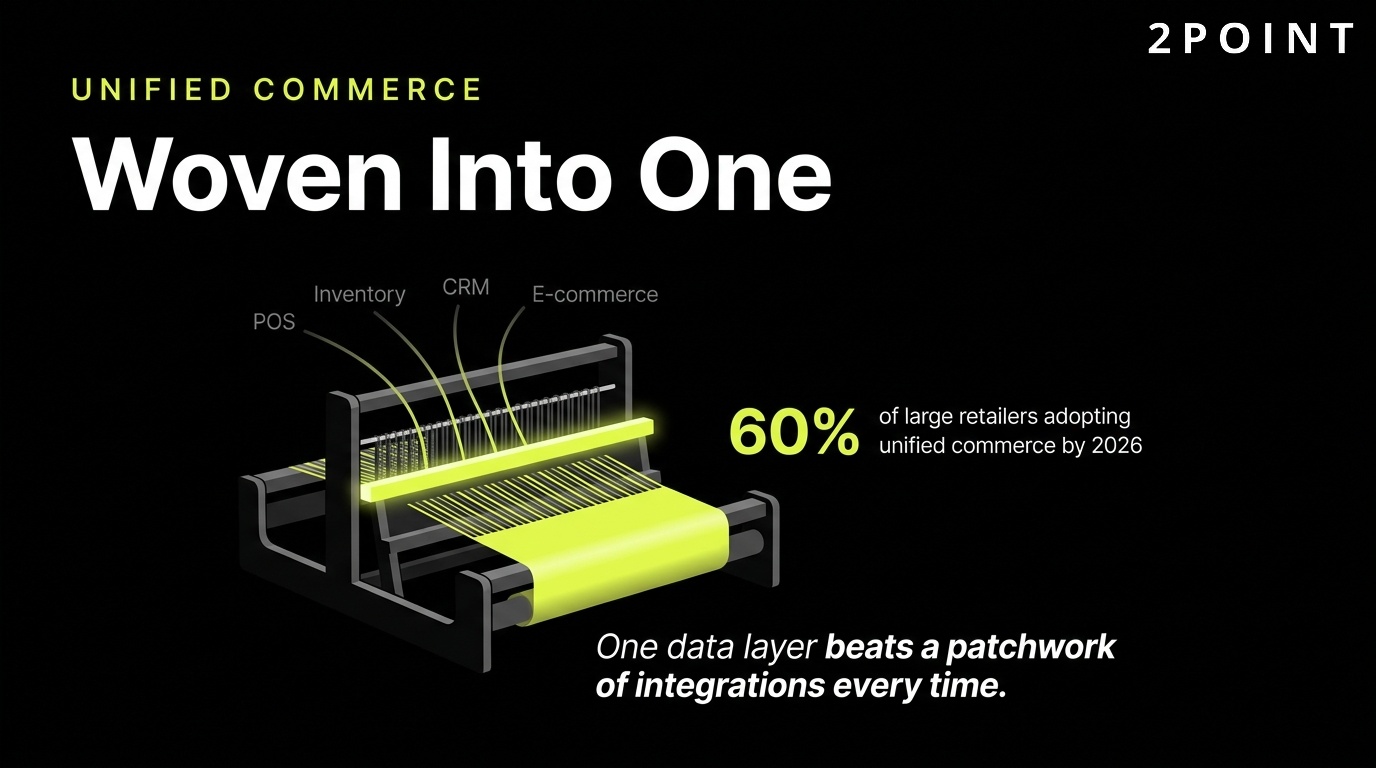
Gartner predicts that by 2026, 60% of large retailers will have adopted unified commerce solutions to improve customer experience and operational efficiency. Companies making these investments gain compounding advantages as their data quality, personalization capabilities, and customer insights improve continuously.
The strategic imperative centers on integration rather than expansion. Successful brands prioritize connecting existing systems over acquiring new software, focusing on mastering unified data and real-time events to ensure information flows instantly across all marketing channels. This integration creates barriers to competition that extend beyond technology to organizational capabilities.
North America dominates the global omni-channel retailing market, capturing 37% market share, while Asia-Pacific represents the fastest-growing region due to mobile penetration, social commerce adoption, and digital payment infrastructure. Brands that delay omni-channel investments face increasingly difficult competitive positions as customer expectations rise and leading competitors establish data advantages that compound over time. Developing a sound digital marketing strategy that incorporates omni-channel thinking is no longer a forward-looking recommendation. It is a present-day requirement.
Omni-Channel Marketing vs. Multichannel Marketing: Key Differences Explained
The terms omni-channel and multichannel are often used interchangeably, but they describe fundamentally different strategic approaches. Understanding the distinction matters because building the wrong architecture wastes resources, fragments customer data, and creates the inconsistent experiences that drive customers away. Getting the definition right is the starting point for building any successful integrated strategy.
Core Definitions and Strategic Differences
Omni-channel marketing delivers seamless, integrated customer experiences across all communication and sales channels, whether online, in-store, mobile, or social media. The strategy ensures that regardless of how or where customers interact with your brand, the experience feels consistent and connected.
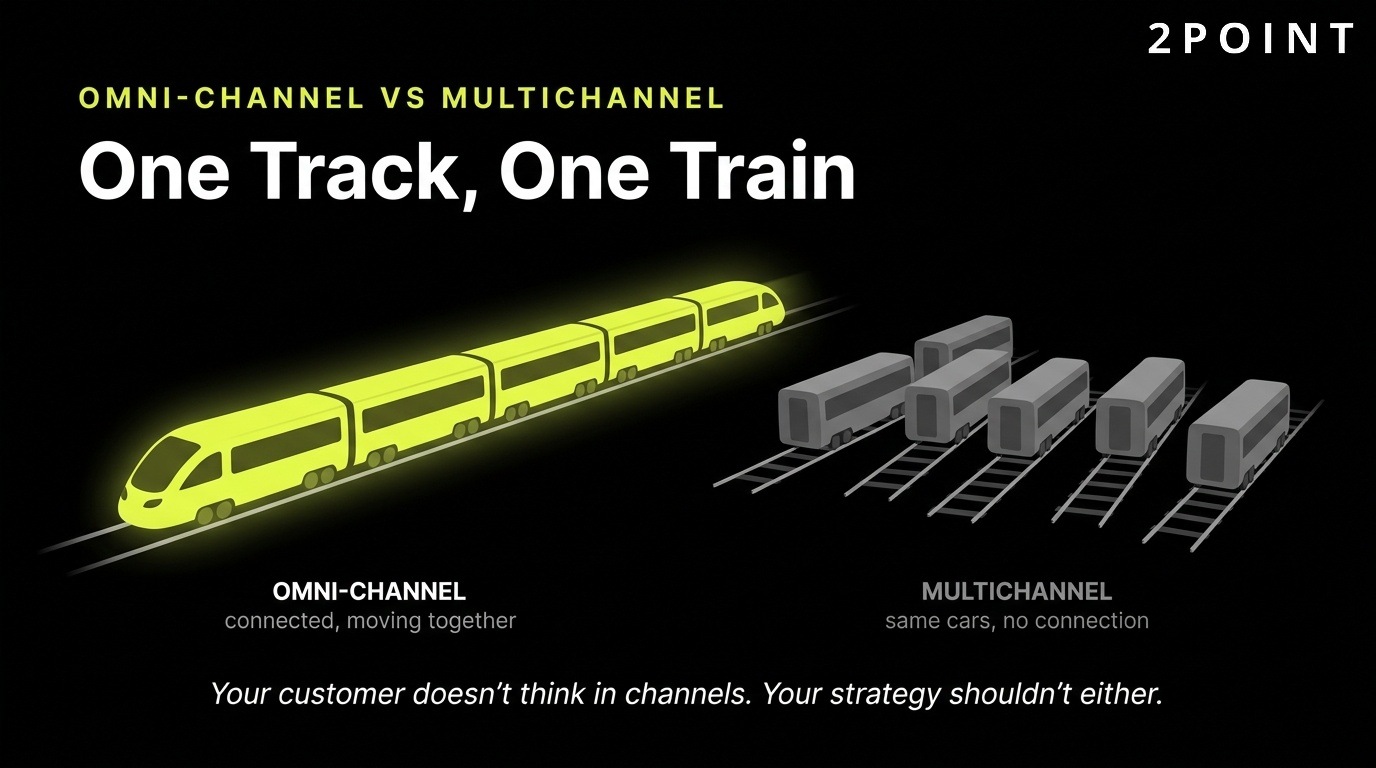
The distinction from multi-channel marketing is fundamental. While multichannel strategies give consumers multiple single-channel options to engage with a retailer, omni-channel strategies prioritize seamless integration and consistency across all customer touchpoints. Multichannel approaches treat platforms as separate entities. Omni-channel approaches unify them into a cohesive system.
Both strategies involve using multiple platforms to engage customers, but they differ fundamentally in integration depth and customer journey enhancement. Multichannel marketing operates channels in parallel, often with disconnected data, messaging, and inventory systems. Customers may receive inconsistent information, experience disjointed transitions, and encounter friction when moving between touchpoints.
Omni-channel marketing, by contrast, operates channels as interconnected components of a unified system. Customer data flows across all platforms in real time. Inventory visibility extends across online and physical locations. Marketing messages coordinate across channels to create coherent narratives rather than competing broadcasts. Your customer does not think in terms of channels. They move fluidly between screens, platforms, and physical locations, expecting coherence every time.
Omni-Channel Marketing vs. Multichannel Marketing: Strategic Comparison
| Dimension | Multichannel Marketing | Omni-Channel Marketing |
|---|---|---|
| Channel Architecture | Parallel, independent channels | Unified, interconnected system |
| Customer Data | Siloed by channel or platform | Unified across all touchpoints |
| Messaging Consistency | May vary by channel or team | Coordinated and consistent everywhere |
| Inventory Visibility | Often channel-specific | Real-time across all locations |
| Customer Journey Optimization | Per-channel metrics | End-to-end journey metrics |
| Technology Requirements | Disconnected platforms acceptable | Unified commerce platform required |
| Organizational Structure | Channel-specific teams | Cross-functional, shared objectives |
| Personalization Depth | Channel-level segmentation | Individual-level, real-time personalization |
The key takeaway: omni-channel marketing outperforms multichannel marketing because it treats customer data and experience as unified assets rather than channel-specific outputs.
Customer Journey Implications of an Omni-Channel Strategy
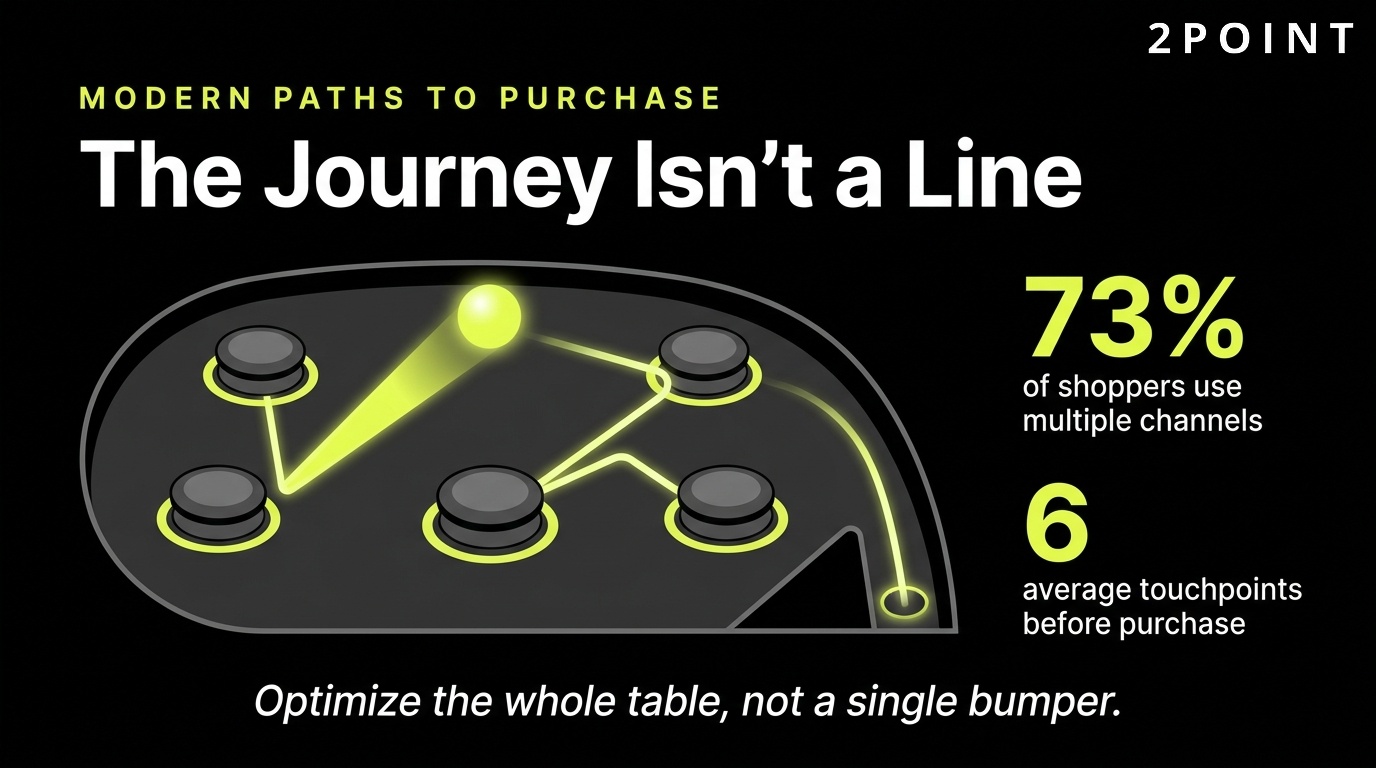
Omni-channel marketing recognizes that modern customer journeys rarely follow linear paths. A study involving 46,000 retail shoppers revealed that 73% engage with multiple channels during their shopping journey, utilizing an average of six touchpoints before making a purchase. B2B buyers demonstrate even more complex patterns, engaging with 10+ channels throughout their purchase journey and consuming an average of 13 pieces of content, eight from vendors and five from third parties.
This complexity requires fundamentally different strategic approaches. Multichannel strategies optimize individual channels in isolation, measuring success through channel-specific metrics like email open rates, website conversion rates, or in-store sales. Omni-channel strategies optimize the entire customer journey, measuring success through cross-channel attribution, customer lifetime value, and journey completion rates.
The implications extend to technology infrastructure. Multichannel marketing functions adequately with disconnected systems, including separate email platforms, e-commerce systems, point-of-sale systems, and CRM databases. Omni-channel marketing requires unified commerce platforms that integrate inventory, POS, CRM, and analytics into single systems that eliminate data silos. Understanding the complete marketing funnel is essential for mapping how different channels serve different stages of the customer journey.
Organizational structure reflects these differences as well. Multichannel approaches typically organize teams by channel, with email marketing teams, retail operations teams, digital marketing teams, and social media teams operating independently. Omni-channel approaches require cross-functional coordination with shared objectives, unified customer data, and integrated planning processes.
Integration Requirements and Data Unification for Omni-Channel Success
Successful omni-channel marketing depends on unified customer data platforms that aggregate information from every touchpoint. First-party data collection and Customer Data Platforms (CDPs) unify user profiles to deliver consistent experiences across web, mobile, email, social, and in-store channels.
Customer relationship management (CRM) systems serve as the hub of omni-channel experiences, functioning as the main warehouse for customer data. CRMs integrate with existing platforms to track customer interactions across channels, including email, social media, chat, phone support, and in-store visits. This integration creates comprehensive customer profiles that inform personalization, segmentation, and journey orchestration.
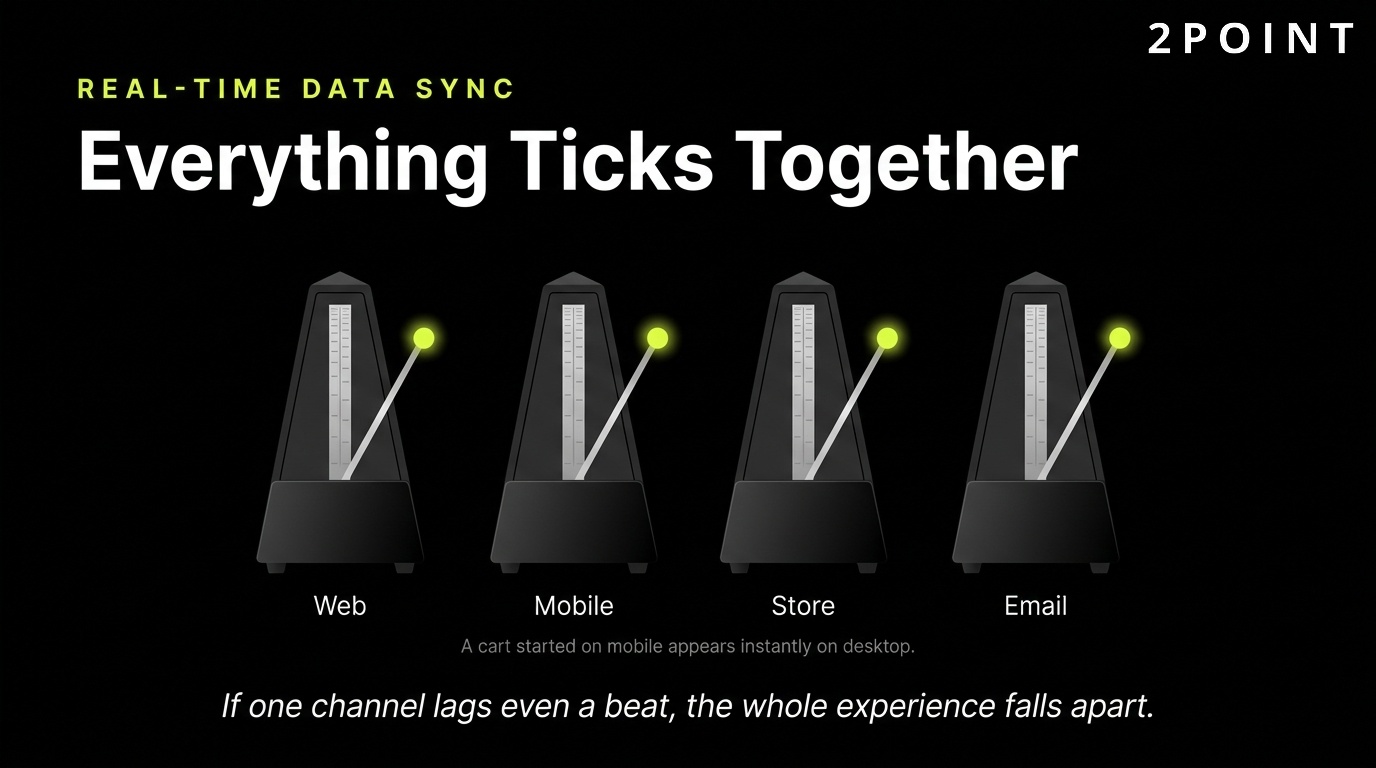
The technical requirements extend beyond data collection to real-time synchronization. When customers add items to carts on mobile devices, that information must appear instantly when they switch to desktop browsers. When they purchase online, inventory systems must update immediately across all channels. When they contact customer support, agents must access complete interaction history regardless of previous channels used.
Privacy-first identity and consent management have become standard requirements for compliant targeting, incorporating cookieless tracking, probabilistic matching, and API identity graphs. These systems balance personalization capabilities with regulatory compliance and consumer privacy expectations. The infrastructure investment required for true omni-channel integration is significant, but it becomes increasingly necessary as customer expectations for seamless experiences continue rising.
Strategic Planning and Scope Decisions for Omni-Channel Implementation
Organizations implementing omni-channel strategies face critical scope decisions: which channels to integrate, what customer journeys to prioritize, and how quickly to roll out unified experiences. On average, B2C marketers use at least five channels to execute customer engagement campaigns effectively, but successful omni-channel implementation does not require simultaneous integration of all possible touchpoints.
The most effective approach involves phased rollout. Brands should pilot in select markets or channels, learn from initial implementation, then scale based on proven results. The focus should center on unifying the minimum necessary data, orchestrating with clear prioritization, measuring incrementality, and improving continuously. Integration depth matters more than breadth. It is better to deliver seamless experiences across four well-integrated channels than fragmented experiences across ten poorly connected touchpoints.
Customer trust builds through consistency and reliability, not channel quantity. The strategic question is not whether to implement omni-channel marketing. It is how to sequence implementation for maximum impact and sustainable organizational change. Businesses navigating this transition often benefit from reviewing digital marketing strategies designed to adapt alongside evolving consumer behaviors.
Mobile-First Strategy: How Mobile Commerce Dominates Omni-Channel Marketing
No single channel has reshaped omni-channel marketing more profoundly than mobile. With more than half of all e-commerce transactions now occurring on mobile devices, and with smartphones serving as the primary connection point between digital discovery and physical purchase, building a mobile-first strategy is no longer a preference. It is the structural requirement for any omni-channel approach that aims to meet customers where they actually are.
Mobile Commerce Market Share and Growth Figures
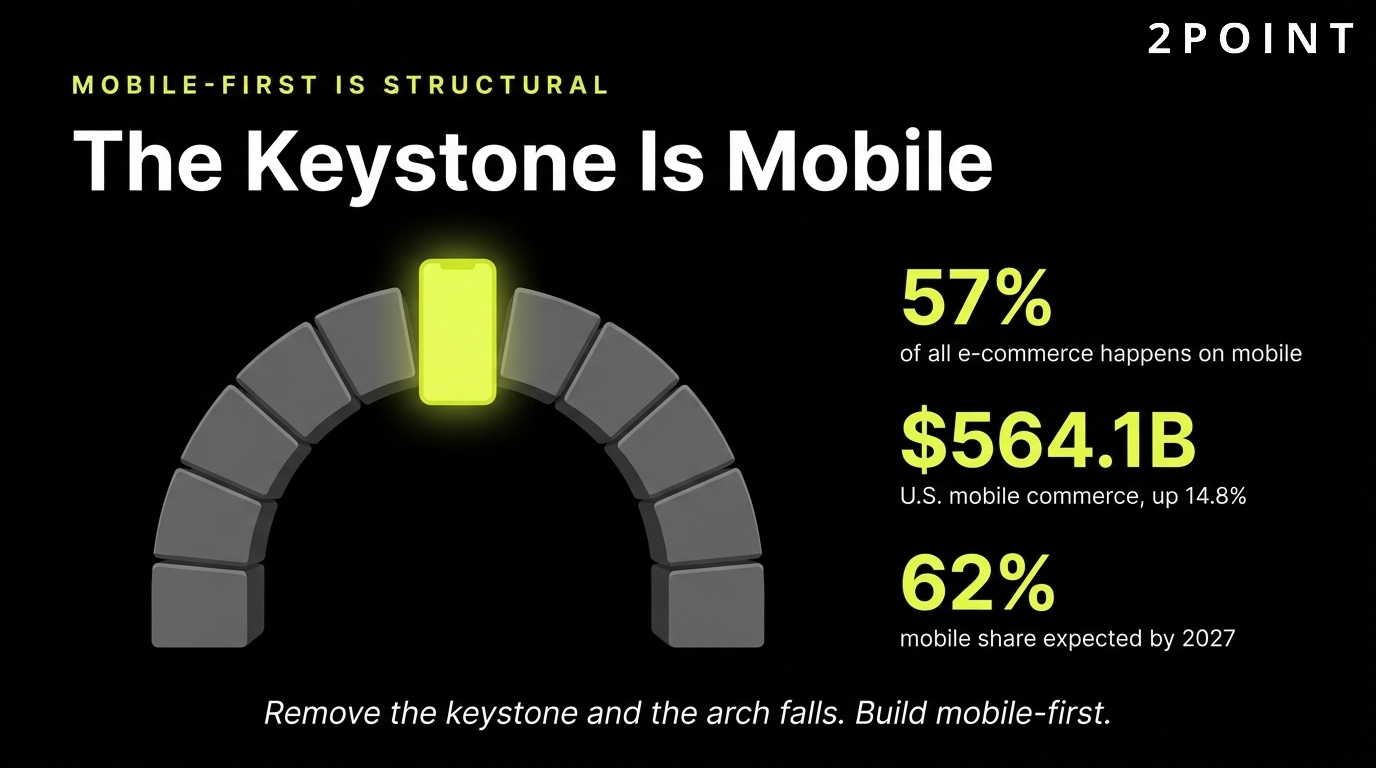
Mobile commerce has become the dominant force in digital retail. Global mobile-commerce sales accounted for 57% of all e-commerce in 2024, with U.S. mobile commerce sales alone reaching approximately $564.1 billion, up 14.8% year-over-year. The mobile share continues expanding, expected to reach 62% of all e-commerce by 2027.
This dominance reflects fundamental shifts in consumer behavior. Mobile devices serve as the primary internet access point for billions of consumers globally, particularly in emerging markets where mobile-first or mobile-only internet usage represents the norm rather than the exception.
Mobile-first discovery and social commerce dominate brand discovery across demographics. Customers expect to move from inspiration to action without friction, making mobile optimization critical for conversion. Pinterest, Instagram, and TikTok shopping features exemplify this convergence of discovery and commerce within mobile environments. The strategic implications are clear: mobile should not be treated as an extension of e-commerce but as the core of omni-channel strategy. Reviewing current social media marketing best practices can help brands align mobile and social strategies into a unified customer experience.
Eight out of ten shoppers use mobile phones inside physical stores to check product reviews, compare prices, or locate alternative options. This behavior blurs digital and physical boundaries, requiring inventory systems, pricing information, and product details to sync across environments in real time.
Mobile Technology and In-Store Integration Tools
Mobile devices serve as the bridge connecting digital and physical retail experiences. QR codes, augmented reality (AR), and application-based loyalty programs bridge the gap between digital channels and the physical world, all delivered through mobile phones.
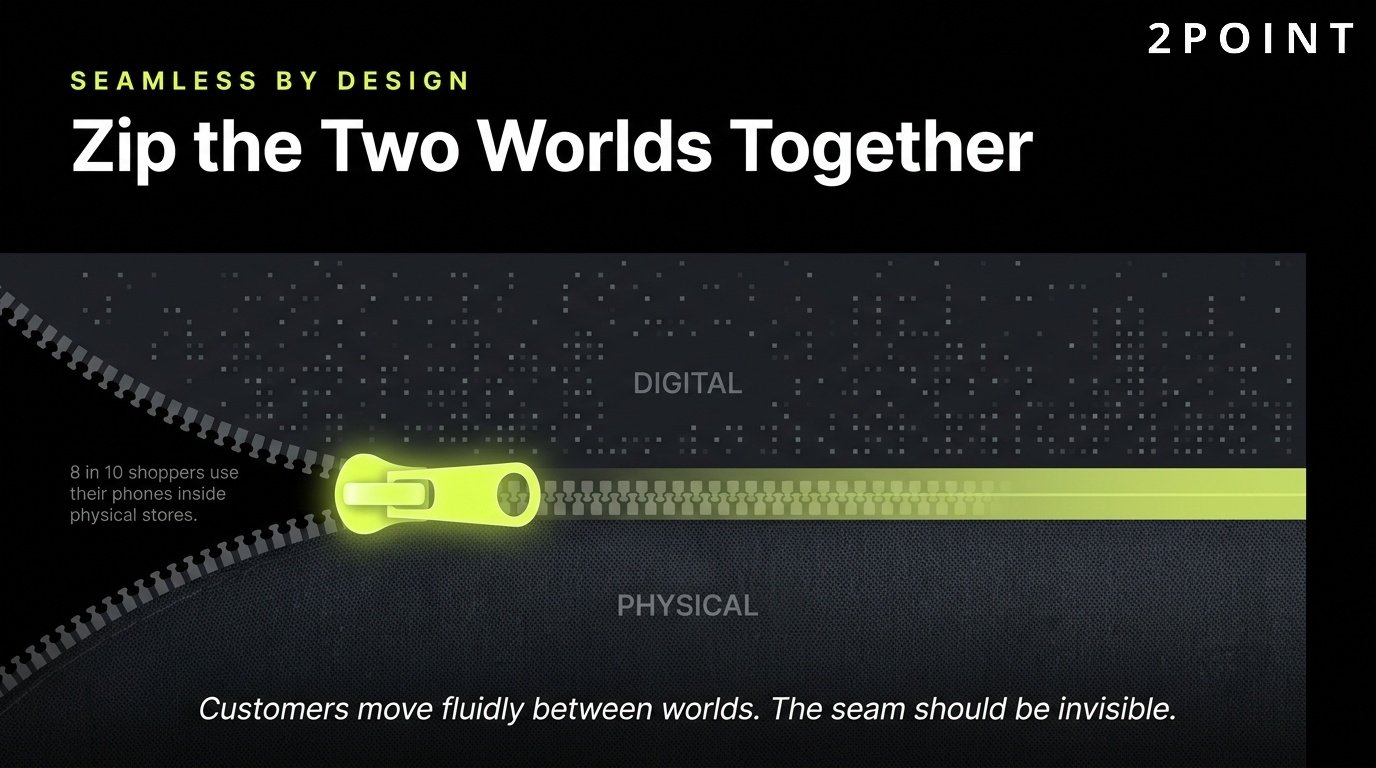
QR codes have evolved from niche technology to mainstream shopping tools, enabling instant access to product information, customer reviews, exclusive offers, and seamless payment. AR applications allow customers to visualize products in their homes before purchasing, try on cosmetics virtually, or see how furniture fits in their spaces. These tools reduce the perceived risk of online purchasing while keeping the convenience of digital browsing intact.
Mobile loyalty programs create persistent connections that span online and offline interactions. Starbucks exemplifies this integration through its mobile rewards program, which allows customers to recharge and use cards via website, mobile phone, in physical stores, or through the app. This seamless experience earned Starbucks one of the highest-rated customer experiences in retail, demonstrating how mobile-centric design reinforces offline brand relationships.
When customers research on mobile while in physical stores, they are often comparing prices to competitors, reading reviews, or checking availability at other locations. Brands that provide superior mobile experiences capture these micro-moments, while those with poor mobile optimization lose customers even when they are physically present in stores.
Mobile Personalization and AI Integration in Omni-Channel Campaigns
Mobile platforms enable unprecedented personalization through location data, device usage patterns, and real-time behavioral signals. AI-powered real-time personalization uses predictive and generative models to tailor content, timing, and channel selection per session, with mobile serving as the primary delivery mechanism.
The personalization extends beyond product recommendations to include contextually relevant messaging based on location, time of day, weather, and recent browsing behavior. Customers expect experiences that acknowledge their context, such as rain gear promotions during storms, lunch specials at midday, or store-specific inventory when they are near physical locations. These small moments of relevance build trust and reinforce brand preference over time.
Push notifications represent powerful mobile-specific engagement tools when used strategically. The most effective implementations balance relevance with restraint, sending timely and valuable messages rather than generic promotional blasts. Notification personalization based on individual preferences, purchase history, and engagement patterns dramatically improves response rates and reduces unsubscribe risk.
The future of mobile personalization involves multimodal AI and on-device inference that generates tailored copy, images, and product recommendations per channel, with large language models handling dynamic subject lines while edge computing runs personalization at millisecond latency. For brands investing in video marketing strategies, mobile platforms are the primary delivery environment and should inform every aspect of video format and length decisions.
Mobile-First Design Principles That Support Omni-Channel Goals
Mobile-first design approaches prioritize mobile experiences during initial design phases, then progressively enhance for larger screens. This contrasts with traditional desktop-first approaches that attempt to compress desktop experiences onto mobile devices, often resulting in poor usability and conversion rates.
Key mobile-first design principles include touch-optimized interfaces with appropriately sized tap targets, simplified navigation minimizing menu depth, fast loading times under variable network conditions, and content prioritization that delivers core information without excessive scrolling. Forms should minimize input requirements, leveraging autofill, smart defaults, and progressive disclosure that requests information only when necessary.
Checkout processes represent particular mobile optimization challenges. Multi-step checkouts should minimize form fields, offer guest checkout options, integrate mobile payment platforms like Apple Pay and Google Pay, and provide clear progress indicators. Cart abandonment rates on mobile exceed desktop rates, making checkout optimization essential for omni-channel conversion performance.
Testing across devices, operating systems, and network conditions ensures consistent experiences regardless of customer context. Performance optimization through Accelerated Mobile Pages, progressive web apps, and lazy loading techniques improves perceived performance even under suboptimal conditions. Every millisecond of delay in mobile load time costs measurable conversion rate points, making performance an omni-channel priority rather than a purely technical concern.
BOPIS and Click-and-Collect: Bridging Digital and Physical in Omni-Channel Retail
Buy Online, Pick Up In-Store services have transformed from a pandemic-era convenience into a permanent fixture of omni-channel retail. With adoption rates now exceeding three-quarters of major U.S. retailers and consumer usage woven into regular monthly shopping habits, BOPIS represents one of the clearest expressions of omni-channel marketing in practice. It combines the convenience of digital browsing with the immediacy of physical fulfillment, and the revenue data surrounding it is compelling.
Market Size and BOPIS Adoption Rates Among Retailers
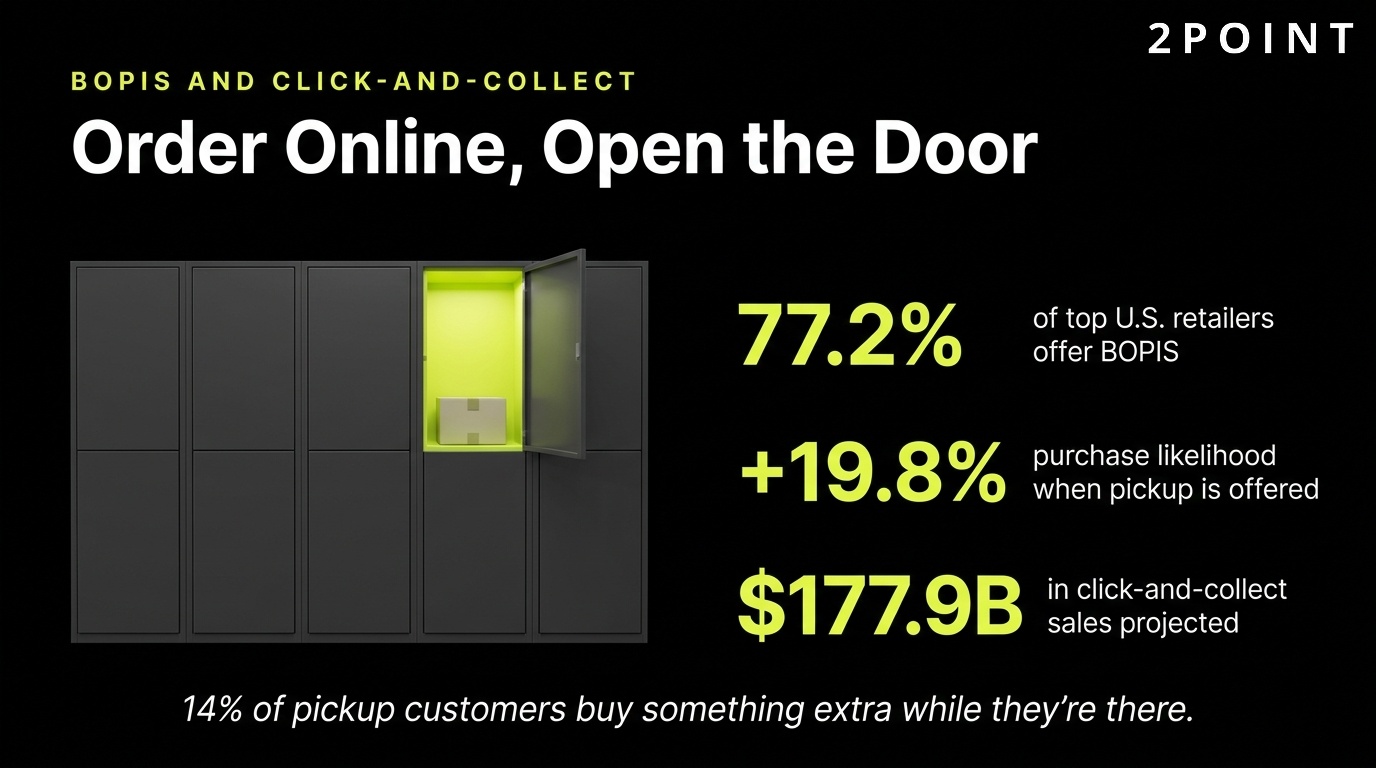
Click-and-collect retail, including curbside pickup and BOPIS, represents one of omni-channel marketing's fastest-growing segments. Sales are projected to total $177.9 billion in 2026, up 15.3% year-over-year, representing 19.9% of multichannel e-commerce sales.
Adoption rates have reached critical mass. In 2024, 77.2% of top U.S. retailers offered BOPIS services, making it a baseline customer expectation rather than a differentiating feature. As of January 2025, 72 million Americans, representing 25.3% of U.S. consumers, used curbside pickup within the previous 12 months.
The usage frequency demonstrates behavioral entrenchment rather than temporary adoption. Over 65% of U.S. consumers report using BOPIS or click-and-collect services at least once monthly in 2025, indicating these services have become integrated into regular shopping routines. Curbside pickup retail sales in the U.S. are estimated to reach $154.3 billion in 2025, representing a substantial portion of the broader click-and-collect market.
The market growth reflects convergent consumer preferences: online shopping convenience combined with immediate gratification, the ability to inspect products before final acceptance, and elimination of shipping costs and delivery wait times. Retailers benefit from increased foot traffic, opportunities for incremental purchases, and reduced shipping expenses that improve fulfillment economics.
Consumer Motivations and BOPIS Behavior Patterns
Consumer adoption of BOPIS and click-and-collect services stems from multiple motivations. The primary driver is immediacy: 26.5% of consumers using BOPIS or curbside pickup cite needing products sooner than shipping would allow. This urgency advantage makes click-and-collect particularly attractive for last-minute purchases, gifts, and replenishment items.
Control represents another significant factor. Customers appreciate eliminating delivery uncertainty, including no waiting for packages, no missed deliveries, and no porch theft risk. They control exactly when pickup occurs, fitting it into their schedules rather than accommodating delivery windows. Cost savings matter particularly for lower-value purchases where shipping costs represent significant percentages of transaction values.
Product inspection capabilities appeal to customers uncertain about online purchases. The ability to examine products in-store before final acceptance reduces perceived risk, particularly for categories like apparel, furniture, and electronics where photos may not fully represent products. This capability converts hesitant digital browsers into committed buyers by lowering the stakes of the online decision.
Perhaps most significantly from a revenue perspective, 14% of BOPIS shoppers buy additional items in-store when picking up online purchases, creating incremental revenue opportunities that offset the operational costs of providing pickup services. Converting single-channel customers to omni-channel shoppers through BOPIS increases shopping frequency and basket size by 8%, reinforcing the lifetime value advantages of integrated engagement.
Conversion Rate Impact and Revenue Effects of Click-and-Collect
BOPIS services deliver measurable conversion rate improvements. Offering omni-channel pickup or click-and-collect increases purchase likelihood by 19.8%, representing substantial revenue impact across large customer bases. Among top 1,000 retailers, offering curbside pickup increased conversion rates by 25.8% in 2024.
These conversion improvements stem from multiple mechanisms. BOPIS eliminates friction points that cause cart abandonment, specifically shipping costs, delivery wait times, and uncertainty about delivery reliability. It also provides option flexibility that accommodates diverse customer preferences, capturing sales that might otherwise go to competitors offering more convenient fulfillment options.
The revenue effects extend beyond initial transactions. When customers spend $100 online and then visit physical locations within 15 days, they spend an additional $131 on average. This cross-channel spending behavior demonstrates how BOPIS functions not just as a fulfillment option but as a traffic driver that unlocks incremental physical retail revenue.
Retailers that integrate BOPIS data into their broader omni-channel strategy gain valuable behavioral insights. Understanding which customers use BOPIS, how frequently, and what they purchase additionally in-store enables more targeted personalization, better inventory positioning, and more effective promotional strategies across all channels. The operational data generated by BOPIS programs feeds back into the unified customer profile that makes personalized omni-channel marketing possible.
Implementing BOPIS Within a Unified Omni-Channel Infrastructure
Successful BOPIS implementation requires deeper infrastructure integration than most retailers initially anticipate. Real-time inventory accuracy across all locations is the foundational requirement. If customers order online and arrive in-store only to find products unavailable, the trust damage extends far beyond a single failed transaction.
The technology stack for effective BOPIS includes unified inventory management systems that sync across warehouses and store locations in real time, order management systems that route pickup orders efficiently, and communication systems that notify customers when orders are ready with consistent messaging regardless of notification channel.
Staff training and operational workflows matter as much as technology. Physical store teams need clear processes for staging pickup orders, managing pickup zones, verifying customer identities, and handling returns or exchanges on pickup orders. The in-store pickup experience is often the first physical interaction a digital customer has with your brand, making it a critical moment that either reinforces or undermines the entire omni-channel investment.
The curbside pickup variant adds further operational complexity, requiring geofencing technology to detect customer arrival, staff deployment at pickup zones, and systems to match arriving customers with staged orders efficiently. Brands that execute these details well create experiences that drive repeat BOPIS usage and generate the positive word-of-mouth that customer testimonials capture so effectively.
AI-Powered Personalization: The Engine Behind Modern Omni-Channel Customer Experience
Personalization has always been central to effective marketing, but artificial intelligence has transformed what personalization means in practice. What once required enormous manual segmentation effort can now be executed at the individual customer level, in real time, across every channel simultaneously. For omni-channel strategies, AI-powered personalization is not a feature. It is the operational layer that makes unified customer experience possible at scale.
How AI Enables Real-Time Omni-Channel Personalization
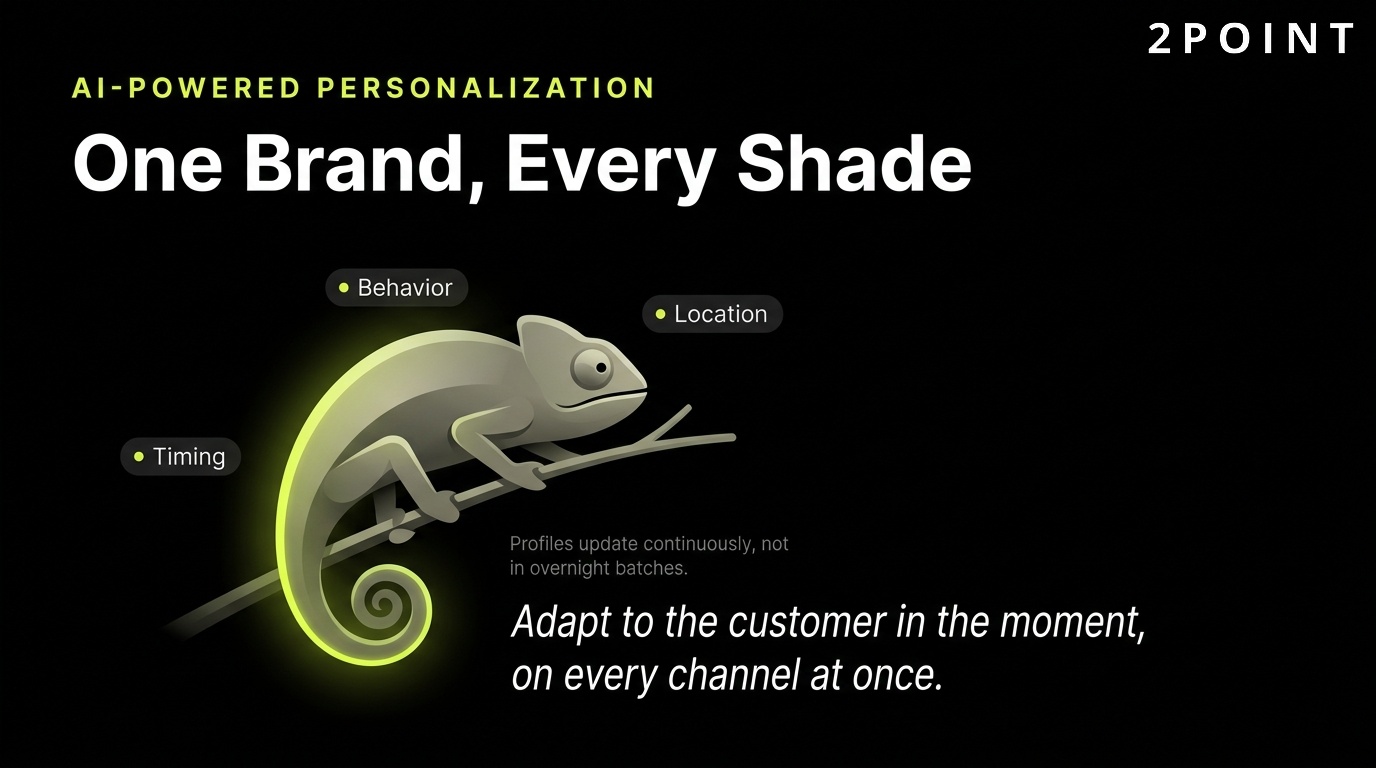
AI-powered personalization engines analyze behavioral signals from every channel simultaneously, including browsing history, purchase patterns, search queries, in-store interactions, email engagement, and support interactions. These signals feed predictive models that anticipate customer needs and preferences before explicit intent is expressed.
The real-time dimension is critical for omni-channel effectiveness. A customer who browses winter jackets on mobile during their morning commute should see relevant recommendations when they open email at lunch and encounter consistent product suggestions when visiting the website that evening. This coherence requires AI systems that update customer profiles continuously rather than in batch cycles that may lag hours or days behind actual behavior.
Generative AI adds another dimension to personalization. Large language models now generate dynamic email subject lines, personalized product descriptions, and contextually relevant marketing copy tailored to individual customer segments or even individual customers. Combined with behavioral data and purchase history, generative AI enables marketing communications that feel genuinely personal rather than generically targeted.
Recommendation engines have evolved from simple collaborative filtering (customers like you also bought) to sophisticated multimodal systems that incorporate visual similarity, contextual relevance, inventory availability, margin considerations, and individual preference data. These systems optimize for customer satisfaction and business metrics simultaneously, balancing personalization with commercial objectives. Building strong content marketing foundations ensures that AI personalization has high-quality material to surface at each touchpoint.
Predictive Analytics and Customer Journey Orchestration
Predictive analytics transforms historical customer data into forward-looking intelligence that guides omni-channel strategy. Churn prediction models identify customers at risk of disengagement before they actually leave, enabling proactive retention interventions through the channels most likely to re-engage them. Purchase propensity models prioritize marketing investment toward customers most likely to convert in specific product categories.
Customer lifetime value prediction models inform acquisition spending, retention investment, and channel allocation decisions. Knowing which newly acquired customers are likely to become high-value long-term relationships versus one-time transactors allows marketers to differentiate service levels, personalization investment, and promotional generosity accordingly.
Journey orchestration platforms use predictive models to determine not just what message to send but which channel, what time, and at what stage of the customer journey that message will have the greatest impact. This capability transforms omni-channel marketing from reactive broadcast to proactive conversation, with the brand responding intelligently to where each customer is in their decision process.
The integration of predictive analytics with omni-channel infrastructure enables closed-loop learning. When a personalized intervention drives a desired customer behavior, that outcome feeds back into the predictive model, improving future predictions and gradually increasing the precision of omni-channel personalization. Tracking this kind of iterative improvement requires robust marketing performance analysis frameworks that attribute outcomes across channels and time horizons.
Personalization Ethics, Privacy, and Data Governance
AI-powered personalization operates within an increasingly complex regulatory environment. GDPR in Europe, CCPA in California, and similar regulations in jurisdictions worldwide establish customer rights around data collection, usage, and deletion. Omni-channel strategies that depend on comprehensive customer data must build privacy compliance into their infrastructure rather than treating it as an afterthought.
Consent management platforms govern which data can be collected and used for which purposes, requiring omni-channel systems to respect consent signals consistently across all touchpoints. A customer who opts out of behavioral tracking through one channel should experience consistent privacy treatment across all channels, which requires the same unified data infrastructure that makes personalization possible in the first place.
The shift away from third-party cookies toward first-party data strategies has accelerated omni-channel data collection investments. Brands building genuine value exchange relationships with customers, offering clear benefits in return for data sharing, are better positioned for long-term personalization capability than those relying on third-party data sources subject to regulatory and platform policy changes.
Transparency in personalization builds rather than undermines customer trust. Customers who understand why they are seeing specific recommendations, and who have clear controls to adjust their preferences, demonstrate higher engagement with personalized experiences than those who feel tracked without their knowledge. Building personalization systems that feel helpful rather than intrusive requires ongoing attention to user feedback and willingness to adjust based on what customers actually find valuable.
Cross-Channel Marketing Strategy: Orchestrating Touchpoints Across the Customer Journey
Cross-channel marketing is the operational expression of omni-channel strategy. Where omni-channel describes the goal of unified customer experience, cross-channel marketing describes the practice of coordinating messages, offers, and content across multiple platforms in ways that build on each other rather than competing for the same customer's attention. Getting this coordination right is what separates omni-channel leaders from organizations that have simply added more channels without integrating them.
Mapping Cross-Channel Customer Journeys
Effective cross-channel marketing begins with detailed journey mapping that documents every touchpoint a customer might encounter from first awareness through post-purchase engagement. Journey maps reveal the sequences in which customers typically encounter your brand, the gaps where experiences break down, and the moments where coordinated cross-channel messaging can accelerate decision-making.
Modern journey mapping must account for non-linear paths. Customers entering through social media discovery may research extensively through organic search before converting via email promotion and then engaging post-purchase through a loyalty app. Each of these channels serves a different purpose in the journey, and cross-channel strategy must design for the full sequence rather than optimizing each touchpoint independently.
Attribution modeling presents one of cross-channel marketing's most complex challenges. First-touch, last-touch, and linear attribution models each tell incomplete stories about how channels contribute to conversions. Data-driven attribution models that use machine learning to assign credit based on actual causal contribution to conversion provide more accurate pictures of channel effectiveness but require sufficient data volume to generate reliable results.
Journey mapping also reveals where customers abandon or disengage, which is frequently more valuable than understanding where they convert. Cart abandonment, browse abandonment, and lapsed customer patterns all represent cross-channel re-engagement opportunities that well-orchestrated strategies can address through timely, relevant outreach across the channels most likely to recapture attention.
Email, SMS, and Push Notification Coordination
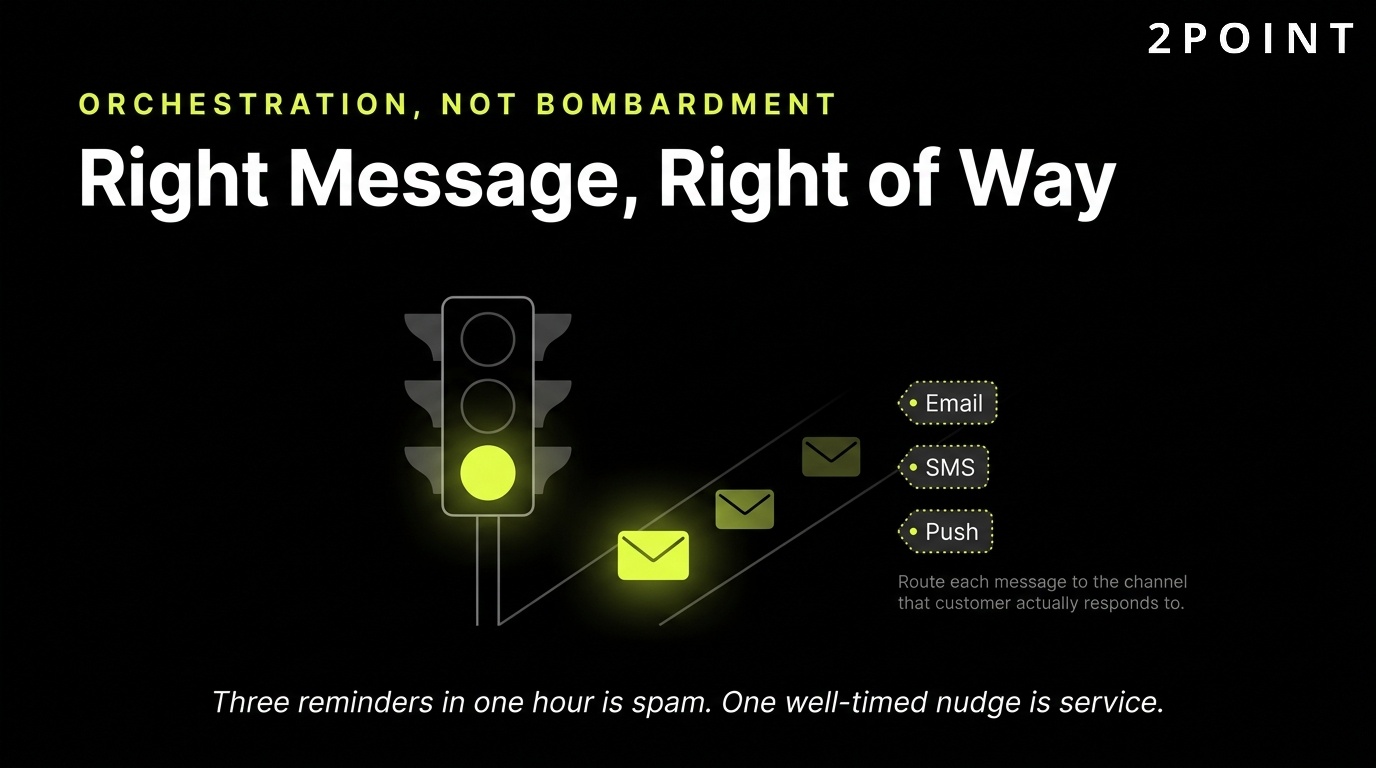
Email remains the most effective digital marketing channel for many businesses, but its power multiplies when coordinated with SMS and push notifications in a unified cross-channel strategy. Email marketing best practices for 2026 emphasize triggered behavioral sequences over scheduled broadcast campaigns, with personalized content that responds to actual customer actions rather than calendar dates.
The coordination challenge lies in frequency management across channels. A customer who receives an email about an abandoned cart, a follow-up SMS reminder, and a push notification about the same item within hours experiences the interaction as spam rather than helpful service. Omni-channel orchestration platforms manage cross-channel frequency caps, ensuring that the collective communication volume across all channels remains within acceptable limits while maintaining timely relevance.
Channel preference data should inform which medium carries which messages. Some customers engage primarily with email and ignore SMS. Others respond immediately to push notifications but rarely open emails. Preference learning systems identify these patterns and route messages to channels with the highest individual response probability rather than broadcasting uniformly across all available channels.
Effective email marketing techniques within an omni-channel framework treat email as one voice in an ongoing conversation rather than a standalone broadcast medium. Subject lines, content, and calls to action should acknowledge the customer's broader relationship with the brand, referencing recent in-store visits, online browsing, or previous purchases to create continuity across channels.
Social Commerce and Influencer Integration in Cross-Channel Strategies
Social platforms have evolved from awareness and engagement channels into full commerce environments where discovery, evaluation, and purchase can occur without leaving the platform. This evolution requires omni-channel strategies to integrate social commerce into unified inventory, order management, and customer data systems rather than treating social selling as a separate operation.
Instagram Shopping, TikTok Shop, and Pinterest Shopping features enable product tagging, in-app checkout, and seamless transitions from content consumption to purchase. These features generate valuable behavioral data about which content drives purchase intent, which products attract social attention, and which audiences engage most deeply with social commerce formats. Integrating this data into unified customer profiles enriches the omni-channel picture of individual customer preferences.
Influencer marketing plays an increasingly strategic role in omni-channel customer acquisition. Influencer marketing partnerships that incorporate trackable discount codes, affiliate links, and branded landing pages connect influencer-driven traffic to the broader omni-channel data ecosystem, enabling attribution and measurement of influencer contributions to customer acquisition and lifetime value.
User-generated content represents another powerful cross-channel asset. Customer photos, reviews, and social posts provide authentic proof that resonates across channels, from website product pages to email campaigns to in-store digital displays. Building systems that capture, curate, and deploy user-generated content across touchpoints creates consistency between social proof and brand messaging throughout the customer journey.
Loyalty Programs as Cross-Channel Connectors
Well-designed loyalty programs serve as the connective tissue that binds cross-channel experiences together. A loyalty account linked to a customer's email address, mobile number, and in-store purchase history creates a persistent identity that follows the customer across every touchpoint. This persistent identity is what makes genuine omni-channel personalization possible at scale.
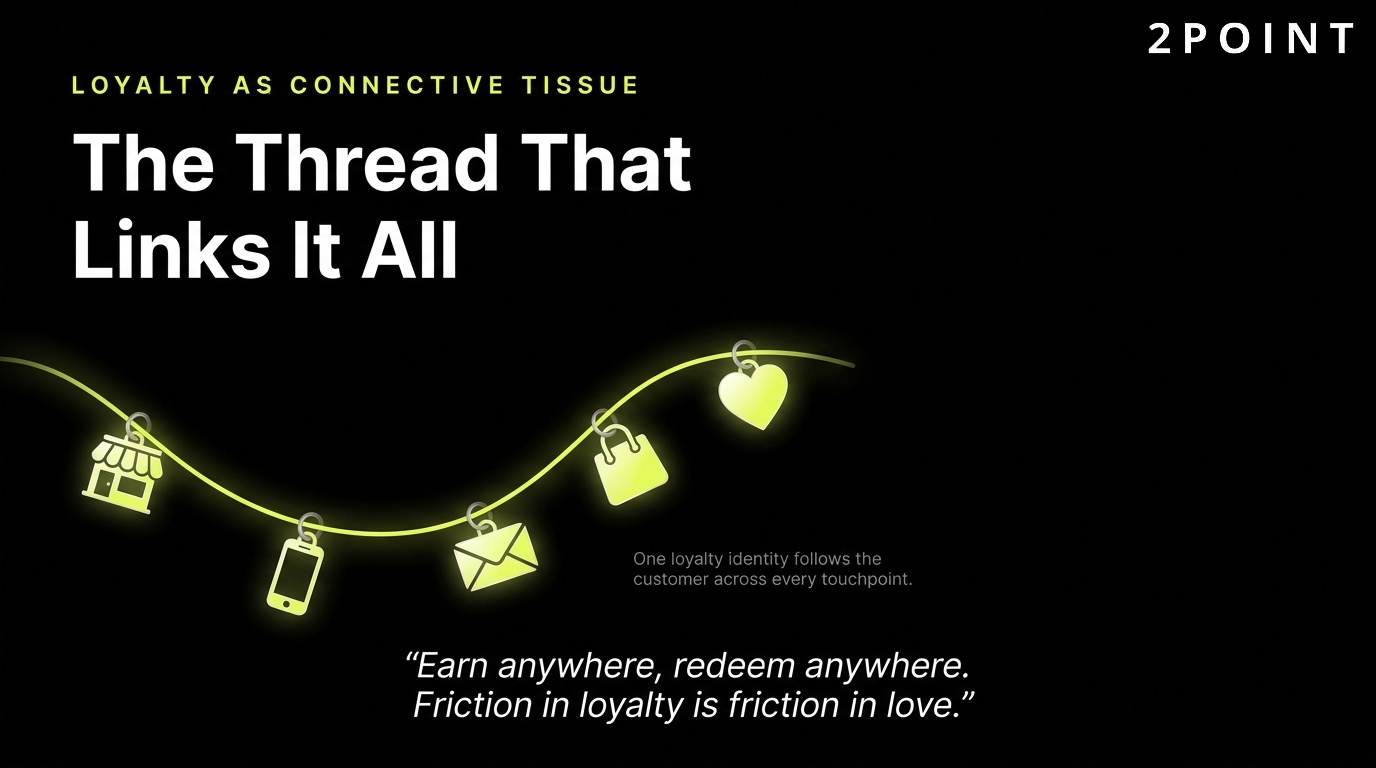
Points-based loyalty programs incentivize customers to identify themselves consistently across channels, providing the data needed for unified profiles. Tiered programs create aspirational engagement, encouraging customers to increase cross-channel interaction to reach higher reward levels. Experience-based rewards, such as exclusive events, early access, or personalized service, build emotional loyalty that transcends transactional relationships.
The most effective loyalty programs in omni-channel contexts integrate earning and redemption opportunities across all channels with equal ease. Customers should be able to earn points from in-store purchases, online orders, app engagement, and social sharing, then redeem those points through any channel without friction. Programs that restrict earning or redemption to specific channels inadvertently penalize customers for using the channels they prefer, contradicting the omni-channel principle of meeting customers on their terms.
Loyalty data also serves as a powerful community engagement tool. Members-only content, exclusive community access, and peer recognition programs create social bonds around the brand that extend beyond individual transactions into ongoing relationship investment that is difficult for competitors to replicate.
Unified Commerce: The Technology Infrastructure Behind Seamless Omni-Channel Experiences
Unified commerce is the technology architecture that makes omni-channel marketing operationally possible. Where omni-channel describes the customer experience goal, unified commerce describes the underlying platform integration that achieves it. Understanding unified commerce is essential for any organization serious about building genuine omni-channel capability rather than simply connecting separate systems through API patches that break under load.
What Unified Commerce Means for Omni-Channel Retail
Unified commerce integrates all retail operations, including POS, inventory management, order management, CRM, and e-commerce, into a single platform rather than separate systems connected through integrations. This architecture eliminates the latency, data inconsistency, and synchronization failures that plague multi-system approaches, enabling the real-time data flows that omni-channel experiences require.
The distinction between unified commerce and multichannel systems integration matters enormously in practice. A retailer operating separate e-commerce, POS, and inventory systems through API integrations may achieve functional connectivity under normal conditions, but experiences failures at peak transaction volumes, during updates to individual systems, or when data conflicts arise between systems. These failures create exactly the inconsistent customer experiences that omni-channel strategy aims to prevent.
Unified commerce platforms, by contrast, operate from a single data model where every transaction, regardless of channel, writes to and reads from the same underlying data store. Inventory levels update in real time across all channels simultaneously. Customer purchase history is complete regardless of which channel made the sale. Order status is visible and accurate across all customer service touchpoints. This architectural integrity is what enables the seamless experiences customers expect.
Gartner's prediction that 60% of large retailers will adopt unified commerce solutions by 2026 reflects growing recognition that API-integrated multi-system architectures cannot reliably deliver the omni-channel experiences that increasingly sophisticated customers demand. Organizations still operating disconnected systems face growing pressure to invest in unification or accept widening experience quality gaps relative to competitors who have already made the transition.
Key Components of a Unified Commerce Platform
A complete unified commerce platform integrates several core components that together enable seamless omni-channel operations. The following table outlines the essential elements and their omni-channel functions.
Core Components of a Unified Commerce Platform and Their Omni-Channel Functions
| Platform Component | Omni-Channel Function | Key Capability |
|---|---|---|
| Unified Order Management System (OMS) | Routes orders across channels and fulfillment locations | BOPIS, ship-from-store, split shipments |
| Real-Time Inventory Management | Syncs stock levels across all locations instantly | Prevents overselling, enables endless aisle |
| Customer Data Platform (CDP) | Unifies customer profiles from all touchpoints | Single customer view, personalization fuel |
| CRM Integration | Tracks and surfaces full interaction history | Cross-channel service continuity |
| E-Commerce Platform | Drives digital sales with real-time inventory | Consistent product data across web and mobile |
| Point-of-Sale System (POS) | Captures in-store transactions for unified profiles | Loyalty integration, cross-channel returns |
| Marketing Automation Platform | Orchestrates cross-channel communications | Triggered journeys, frequency management |
| Analytics and Attribution Engine | Measures omni-channel performance holistically | Cross-channel ROI, journey analysis |
The key takeaway is that unified commerce platforms differ from integrated multi-system architectures in that all components share a single data layer, enabling real-time consistency rather than periodic synchronization.
Selecting and Implementing Unified Commerce Technology
Selecting unified commerce technology requires evaluating platforms against both current requirements and projected growth trajectories. Brands should assess scalability under peak transaction loads, flexibility to accommodate new channels and markets, total cost of ownership including implementation and ongoing maintenance, and the vendor's roadmap alignment with emerging omni-channel capabilities like AI personalization and headless commerce architectures.
Headless commerce architectures separate front-end customer experience layers from back-end commerce logic, enabling brands to deliver optimized experiences across web, mobile, in-store kiosks, voice interfaces, and emerging channels without rebuilding core commerce infrastructure. This architectural flexibility is particularly valuable as new customer touchpoints continue emerging.
Implementation sequencing significantly impacts success rates. Most successful unified commerce implementations follow a phased approach: starting with inventory and order management unification to eliminate the most critical data inconsistencies, then adding customer data unification to enable personalization, then progressively integrating marketing automation and analytics capabilities. This sequencing delivers early wins that justify continued investment while managing implementation risk.
Change management is as important as technology selection in unified commerce implementations. Cross-functional teams spanning IT, marketing, retail operations, and customer service must align on new workflows, data governance policies, and performance measurement frameworks. Technical implementations that fail to address organizational change management rarely achieve their intended benefits regardless of platform quality. Developing a comprehensive winning digital marketing strategy before platform selection helps ensure technology choices align with strategic objectives rather than driving strategy by default.
Retail Marketing Strategy: Applying Omni-Channel Principles to Physical and Digital Stores
For retailers operating both physical and digital channels, omni-channel marketing is not an abstract strategic concept. It is a daily operational reality that determines whether customers can seamlessly move between browsing online and buying in-store, whether physical locations benefit from digital marketing investment, and whether brand experiences feel consistent regardless of where interaction occurs. Getting retail marketing strategy right in an omni-channel context requires addressing both the customer-facing experience and the operational infrastructure that supports it.
Physical Retail as an Omni-Channel Asset
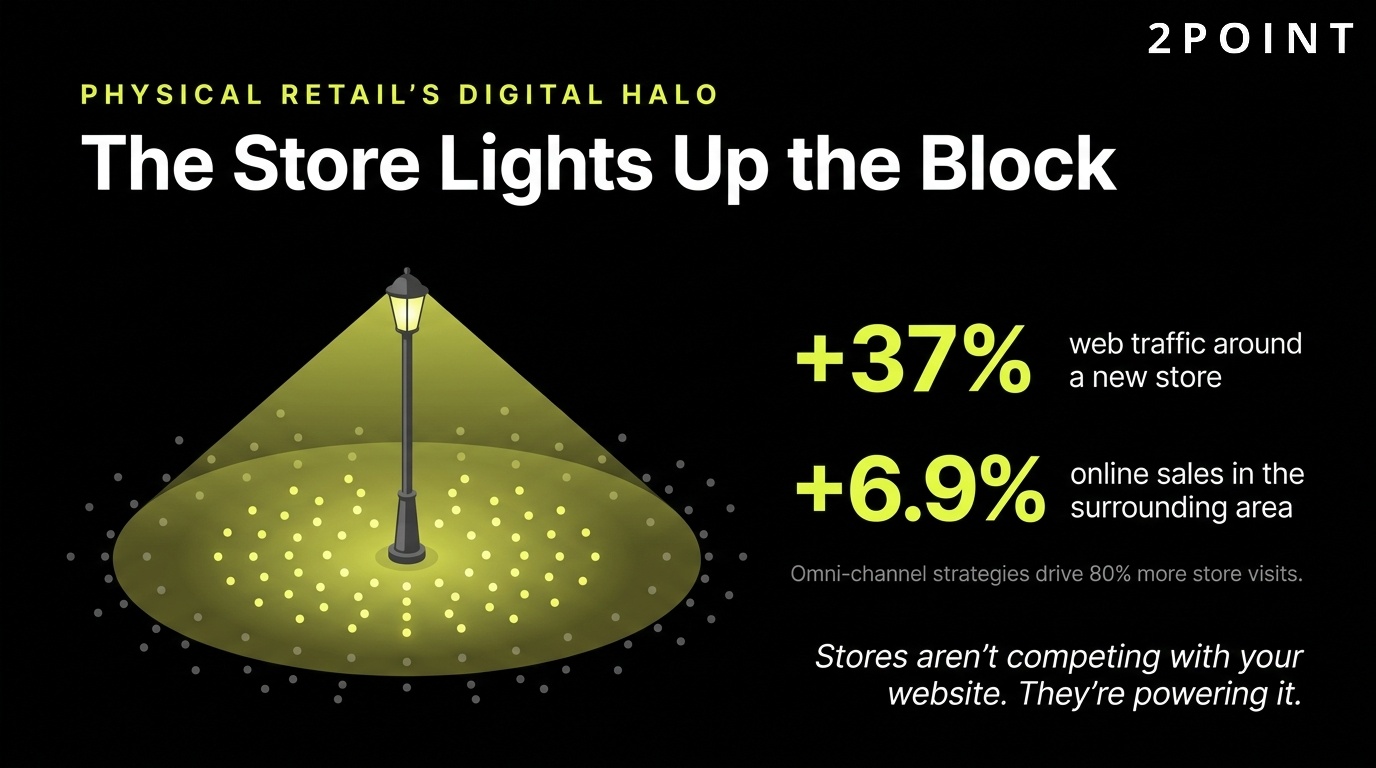
Physical stores are not under threat from e-commerce in an omni-channel world. They are strategic assets that, when properly integrated with digital channels, amplify the effectiveness of the entire omni-channel strategy. The data supports this clearly: opening a physical store increases web traffic in the surrounding area by 37% and boosts online sales by 6.9%. Physical presence creates discovery, trust, and brand salience that digital channels alone cannot fully replicate.
The strategic reframing required is significant. Physical stores should be evaluated not just on their own revenue performance but on their contribution to overall omni-channel customer value. A store that generates modest direct revenue but drives substantial online purchases from customers in its trade area, provides efficient BOPIS fulfillment, and creates brand experiences that generate social media sharing and word-of-mouth is delivering omni-channel value that traditional single-channel retail metrics entirely miss.
Store formats are evolving to reflect this expanded role. Showroom concepts allow customers to experience products physically before ordering online for home delivery, optimizing for experience and discovery rather than inventory-heavy traditional retail. Experience-focused store designs emphasize brand immersion, personalized service, and community events over transaction efficiency. These formats generate the user-generated content and social sharing that extend physical presence into digital channels organically.
In-store digital technology plays an increasingly important role in bridging physical and digital experiences. Interactive displays, digital signage, smart fitting rooms, and endless aisle kiosks that allow customers to order products not stocked in-store all extend the physical retail experience while connecting it to digital inventory and customer data systems.
Local Marketing Tactics That Strengthen Omni-Channel Reach
Local marketing tactics play a critical role in omni-channel strategies for businesses with physical locations. Effective local marketing connects digital awareness to physical traffic, ensuring that consumers in your geographic market understand your physical presence and the unique advantages it offers alongside digital channels.
Google Business Profile optimization remains one of the highest-ROI local marketing tactics available to physical retailers. Accurate hours, inventory information, customer reviews, and local posts all contribute to search visibility at the moments when nearby customers are actively seeking products or services you offer. Local search optimization connects the digital discovery journey to physical store visits, completing an omni-channel loop that drives measurable foot traffic.
Geotargeted advertising allows digital marketing budgets to concentrate on customers within driving distance of physical locations, improving the relevance and efficiency of campaigns intended to drive in-store visits or BOPIS adoption. When combined with behavioral data showing online browsing patterns, geotargeted ads can deliver timely, relevant messages at exactly the moments when nearby customers are most likely to act on physical retail options.
Community presence through local events, partnerships, and sponsorships builds the authentic local connections that national digital campaigns cannot replicate. These local relationships generate word-of-mouth referrals, strengthen customer loyalty among nearby high-value customers, and create content opportunities that support broader digital marketing efforts while maintaining the personal character that distinguishes local retail experiences from purely digital commerce.
Cross-Channel Returns and Post-Purchase Experience
Returns management represents one of the most strategically important and frequently neglected components of omni-channel retail marketing strategy. Customers who purchase online but want to return in-store, or who purchased in-store and want to process returns through an online portal, test the genuine integration depth of omni-channel infrastructure in ways that other interactions do not.
Cross-channel returns capabilities directly impact customer loyalty. When customers can return online purchases in-store without friction, they experience the seamlessness that omni-channel promises. When they cannot, they experience the disconnection that multichannel systems produce. The gap between these experiences is stark, memorable, and likely to influence future channel and brand choices.
In-store returns of online purchases also create significant revenue recovery opportunities. Customers who visit stores to process returns frequently make additional purchases during those visits, particularly when store associates are trained to engage constructively with returning customers rather than purely processing transactions. This behavior transforms a cost center (returns processing) into a revenue channel when managed thoughtfully within an omni-channel framework.
Post-purchase communication sequences should bridge channels as naturally as the purchase journey itself. Order confirmation emails, shipping notifications, delivery confirmations, and follow-up satisfaction surveys should all be coordinated across email, SMS, and app push notifications according to customer channel preferences, maintaining the personalized and consistent voice that defines genuine omni-channel customer experience.
How to Measure Omni-Channel Marketing Performance Effectively
Measuring omni-channel marketing performance requires a fundamentally different measurement framework than single-channel or even multichannel marketing. Because the goal of omni-channel strategy is the quality of the integrated customer experience and the business outcomes it produces across all channels combined, channel-siloed metrics tell only partial stories. Building a comprehensive omni-channel measurement architecture is as important as building the channels themselves..
Key Omni-Channel Performance Metrics
The following table summarizes the most important omni-channel marketing metrics, what they measure, and why they matter for strategy evaluation..
Essential Omni-Channel Marketing Metrics and Their Strategic Significance
| Metric | What It Measures | Omni-Channel Significance |
|---|---|---|
| Customer Lifetime Value (CLV) | Total revenue generated per customer over relationship | Omni-channel shoppers show 30% higher CLV |
| Cross-Channel Attribution Rate | Percentage of conversions involving multiple channels | Reveals true channel interdependencies |
| Omni-Channel Retention Rate | Percentage of customers retained across channels | 89% benchmark for high-performing strategies |
| Cross-Channel Engagement Rate | Active use of multiple channels per customer | Multi-channel campaigns achieve 18.96% engagement |
| BOPIS Conversion Rate | Percentage of online shoppers choosing in-store pickup | Indicates omni-channel fulfillment adoption depth |
| Customer Effort Score (CES) | Ease of cross-channel interactions | Lower effort correlates with higher retention |
| Net Promoter Score (NPS) | Likelihood of customers recommending the brand | Reflects integrated experience quality holistically |
| Channel Contribution Margin | Profit contribution per channel after direct costs | Guides investment allocation across touchpoints |
The key takeaway is that omni-channel performance measurement requires metrics that span channels rather than measure them in isolation, with customer lifetime value and retention rate serving as the most reliable indicators of overall strategy effectiveness.
Attribution Modeling for Cross-Channel Campaigns
Attribution modeling is the analytical foundation of omni-channel performance measurement. The challenge is that most customer journeys involve multiple touchpoints before conversion, making it impossible to assign credit accurately using simple first-touch or last-touch models. A customer who first discovers your brand through a social media ad, researches through organic search, opens an email promotion, and then converts in-store has created value across four channels, none of which individually caused the conversion.
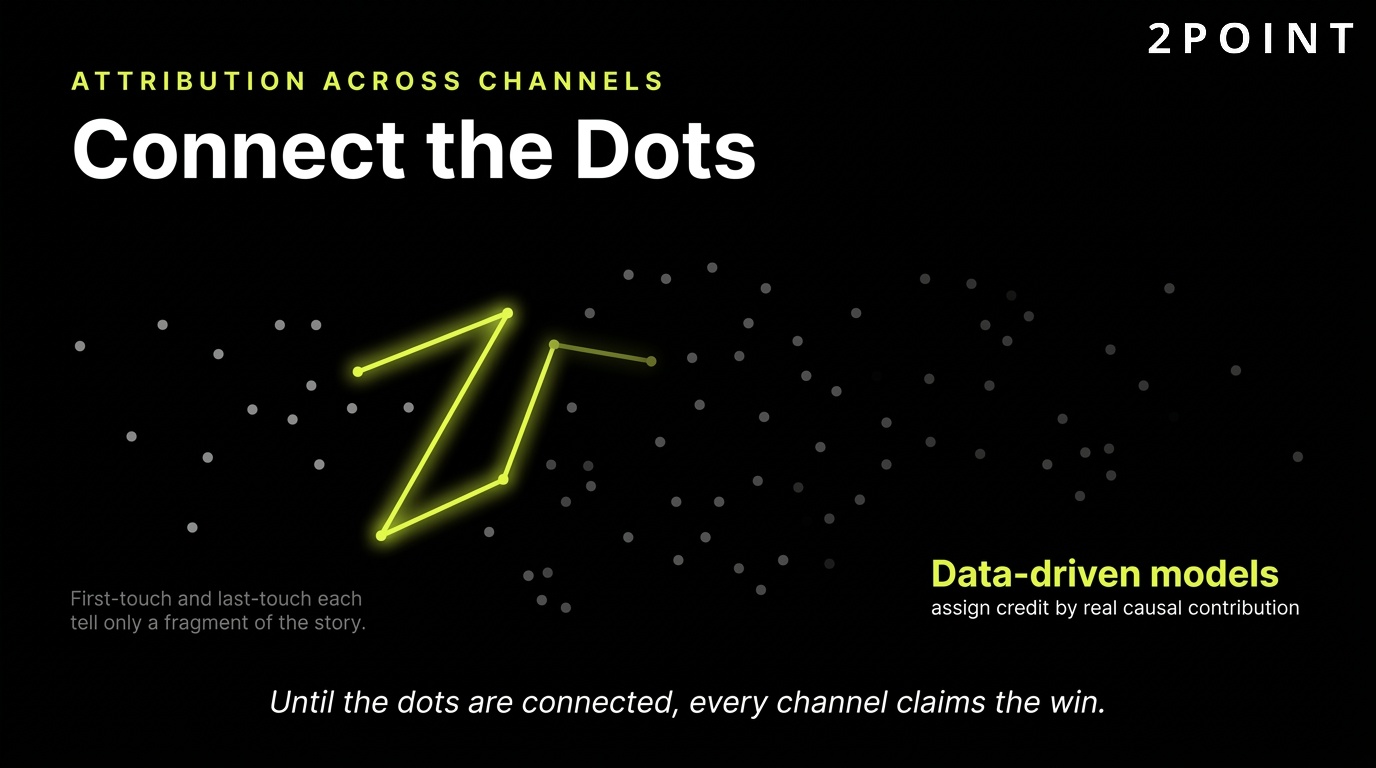
Data-driven attribution models use machine learning to analyze large volumes of customer journey data and assign credit to channels based on their actual causal contribution to conversions. These models require substantial data volumes to generate reliable results but provide significantly more accurate guidance for channel investment decisions than rule-based models. Most major advertising platforms now offer data-driven attribution options that can feed into unified measurement dashboards.
Incrementality testing provides an additional layer of attribution accuracy. By running holdout tests that withhold specific channel exposures from control groups, marketers can measure the true incremental lift generated by individual channels or campaigns, separate from the baseline behavior those customers would have exhibited without the marketing exposure. This approach is particularly valuable for channels where attribution models may systematically over-credit or under-credit contributions.
Unified measurement platforms that aggregate data from all channels into consistent reporting frameworks allow teams to compare performance across touchpoints using standardized metrics. These platforms should connect to the CDP and analytics infrastructure discussed earlier, drawing on the same unified customer data that powers personalization. A complete approach to marketing performance analysis goes beyond channel-level reporting to connect marketing investment to customer-level lifetime value outcomes.
Testing and Optimization Frameworks for Omni-Channel Strategies
Continuous testing and optimization separates organizations that implement omni-channel strategies from those that master them. A/B testing individual channel elements, such as email subject lines, push notification timing, or in-store signage, provides incremental improvements. But multi-variate and cross-channel tests that evaluate how combinations of channel interventions affect customer behavior provide the deeper insights that drive strategic optimization.
Experiment design in omni-channel contexts must account for channel spillover effects. Changes to in-store experience may affect online behavior. Email campaign adjustments may influence in-store visit rates. Tests designed without accounting for these interdependencies produce misleading results that can lead to counterproductive optimization decisions.
Establishing clear test and control group methodologies requires careful customer segmentation to ensure comparable groups, sufficient test duration to capture complete purchase cycles, and statistical rigor to distinguish genuine effects from random variation. Marketing teams without dedicated analytics capabilities often benefit from partnering with specialists to design and interpret omni-channel experiments correctly.
The optimization cadence matters as much as the testing methodology. Markets, consumer behaviors, and competitive contexts change continuously, meaning omni-channel strategies optimized for 2025 conditions may underperform in 2026 contexts without ongoing adjustment. Building systematic review cycles, quarterly strategy assessments, monthly channel performance reviews, and weekly tactical optimizations ensures that omni-channel strategies evolve alongside the environments they operate in.
How to Implement an Omni-Channel Marketing Strategy: A Step-by-Step Framework
Implementing omni-channel marketing successfully requires more than technology investment. It demands strategic clarity, organizational alignment, data infrastructure, and a disciplined phased approach that builds capability progressively rather than attempting wholesale transformation at once. The following framework provides a practical implementation roadmap grounded in how leading organizations have successfully made this transition.
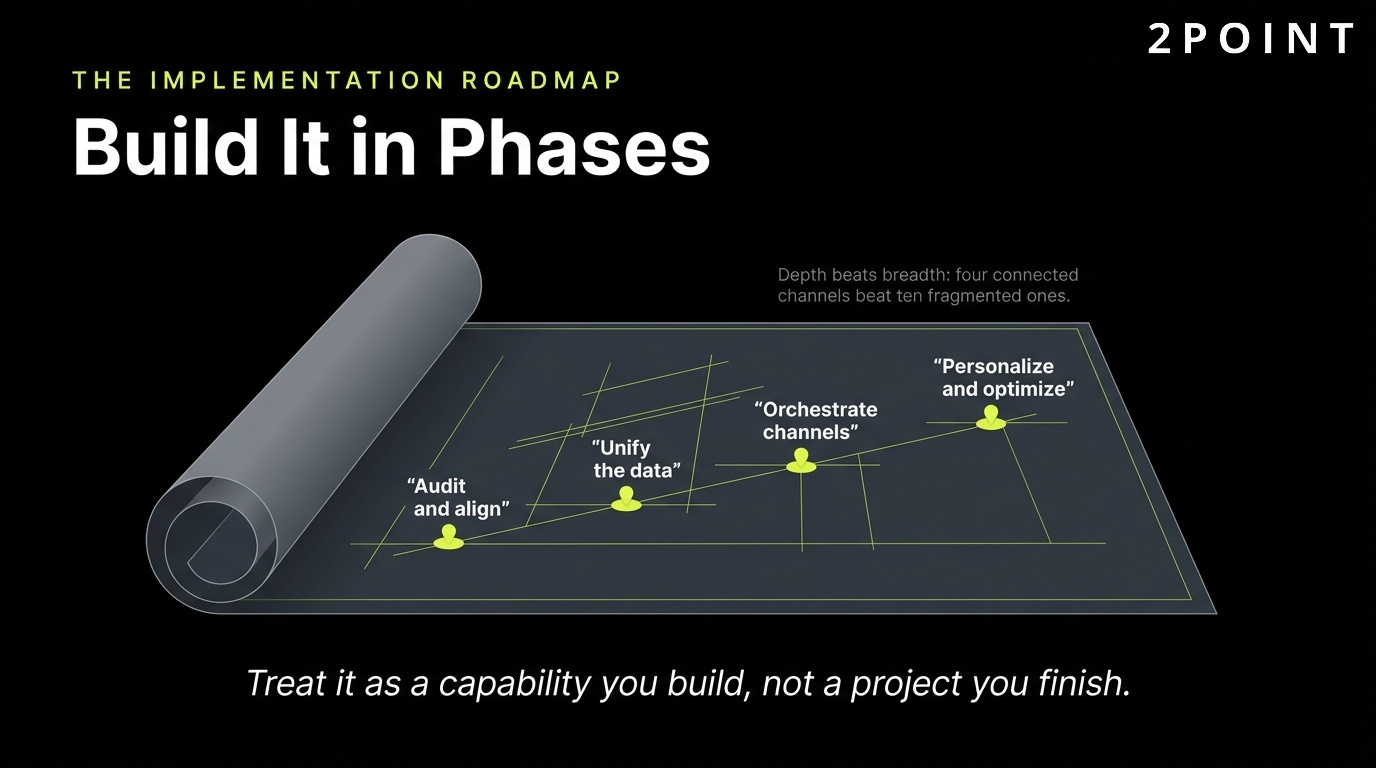
Phase 1: Audit, Align, and Define Priorities
Every successful omni-channel implementation begins with an honest audit of current state. Map every customer touchpoint your brand currently operates. Document the data systems behind each touchpoint. Identify where customer data is currently captured, stored, and used, and where it is collected but siloed. Map the gaps between what customers currently experience and what a seamless omni-channel experience would provide.
Stakeholder alignment across marketing, IT, retail operations, and customer service is essential at this stage. Omni-channel implementation affects every customer-facing function, and without executive sponsorship and cross-functional commitment, technical implementations stall on organizational resistance. Define shared success metrics that all functions agree represent genuine omni-channel progress before selecting any technology or beginning any implementation work.
Prioritize the customer journeys most important to address first. Not every journey deserves equal investment. Focus initial efforts on the highest-volume journeys where integration gaps create the most customer friction or the greatest revenue leakage. Early wins in high-impact areas build organizational momentum and demonstrate ROI that justifies expanded investment.
Phase 2: Build the Data Foundation
- Implement or select a Customer Data Platform capable of ingesting data from all current and planned touchpoints.
- Define the unified customer data model: which attributes, behaviors, and events must be captured for each customer record.
- Establish data governance policies covering collection consent, retention periods, access controls, and quality standards.
- Connect priority data sources: e-commerce platform, POS system, email platform, and CRM at minimum.
- Implement identity resolution to merge customer records from different sources into unified profiles.
- Build data quality monitoring to detect and resolve inconsistencies before they propagate through personalization systems.
- Validate data accuracy by auditing sample customer profiles against known purchase histories and interaction records.
The data foundation is the most technically complex phase but the most strategically important. Every subsequent capability, from personalization to attribution to loyalty program integration, depends on the quality and completeness of the unified customer data layer built here.
Phase 3: Orchestrate Cross-Channel Experiences
- Select a marketing automation platform capable of cross-channel orchestration that integrates with your CDP.
- Design triggered journey sequences for high-priority use cases: welcome series, cart abandonment, post-purchase, win-back.
- Implement frequency management rules that govern the total communication volume a customer receives across all channels.
- Build channel preference capture and routing logic that directs messages to customer-preferred channels.
- Create consistent brand voice and visual identity guidelines that ensure messaging coherence regardless of channel.
- Integrate BOPIS workflows connecting e-commerce order management with in-store fulfillment and customer notification systems.
- Launch loyalty program integration that enables earning and redemption across all channels with equal functionality.
Phase 4: Personalize, Measure, and Optimize
- Deploy AI-powered personalization for product recommendations, content selection, and offer targeting across channels.
- Implement cross-channel attribution modeling to understand how channels contribute to conversion jointly.
- Build unified reporting dashboards that aggregate performance data across all channels with consistent metric definitions.
- Establish regular testing cadences for cross-channel experiments with clear hypotheses and measurement frameworks.
- Review and refresh customer journey maps quarterly to reflect evolving behavior patterns and new channel capabilities.
- Conduct regular competitive benchmarking against omni-channel leaders in your category to identify capability gaps.
- Build feedback loops connecting customer service insights, NPS data, and behavioral analytics to strategy refinement.
Organizations that approach implementation as a continuous improvement process rather than a one-time project consistently outperform those treating omni-channel as a finite transformation initiative. The brands winning in omni-channel today are not those that implemented perfectly. They are those that implemented earliest, learned fastest, and built organizational cultures of cross-channel optimization. Working with experienced partners like 2POINT can help businesses navigate both the strategic and technical dimensions of omni-channel implementation more efficiently, avoiding the common pitfalls that slow progress and erode ROI.
The Future of Omni-Channel Marketing: Emerging Trends Shaping Customer Experience in 2026 and Beyond
Omni-channel marketing is not a static destination. The channels, technologies, and customer expectations that define it evolve continuously. Understanding the trajectories shaping the next phase of omni-channel development allows forward-thinking organizations to build strategies today that will be competitive tomorrow rather than playing perpetual catch-up with trends they failed to anticipate.
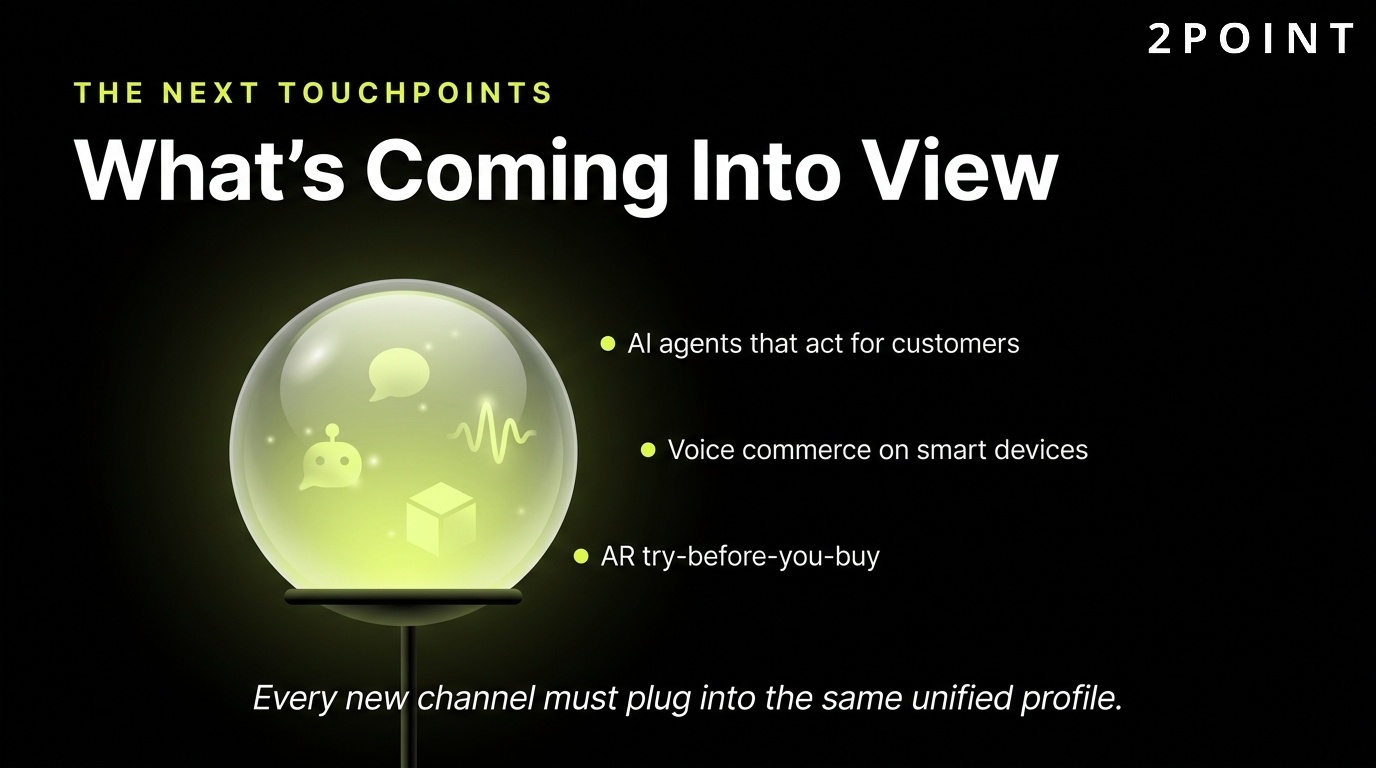
AI Agents and Autonomous Customer Engagement
AI agents are moving beyond recommendation engines and chatbots into autonomous customer engagement systems capable of managing complex multi-step interactions across channels. These systems can proactively identify service opportunities, resolve customer issues before complaints arise, and personalize experiences at levels of granularity and speed that human operators cannot match at scale.
Conversational commerce powered by AI agents is increasingly integrated into omni-channel strategies, with AI-driven chat interfaces handling product discovery, purchase facilitation, order management, and post-purchase support across web, mobile, social messaging platforms, and voice interfaces. The consistency these agents provide across channels, available 24 hours a day and maintaining full interaction history, represents a significant omni-channel experience improvement over human agent-dependent service models.
The strategic implication is that AI agent capabilities should be evaluated as channel infrastructure rather than point solutions. Organizations that deploy AI agents as standalone customer service tools miss the omni-channel opportunity they represent. Integrated with CDP and CRM systems, AI agents become powerful omni-channel touchpoints that both serve customers and generate valuable behavioral data.
Voice Commerce and Ambient Computing Integration
Voice commerce through smart speakers, automotive systems, and ambient computing devices represents an emerging omni-channel touchpoint that is growing steadily, particularly for replenishment purchases, appointment scheduling, and information queries. As voice interfaces become more sophisticated and consumers develop greater comfort with voice commerce interactions, integrating voice into omni-channel strategies becomes increasingly important.
The technical challenge of voice commerce integration mirrors broader omni-channel integration requirements: voice interactions must connect to the same unified customer profile, inventory, and order management systems that serve all other channels. A customer who reorders a product through a smart speaker should receive the same loyalty points, personalized offers, and seamless fulfillment experience as one ordering through the mobile app.
Augmented Reality and Immersive Commerce
Augmented reality applications are transforming product evaluation across categories from furniture and home decor to cosmetics, fashion, and automotive. As AR hardware improves and mobile AR capabilities expand, the ability to try products virtually before purchasing reduces the primary friction point of online shopping: uncertainty about how products will look or fit in real contexts.
Integrating AR experiences into omni-channel strategies means connecting virtual try-on and visualization tools to real-time inventory systems, enabling customers to see accurate product availability and make direct purchases from within AR experiences. The friction-free transition from immersive product experience to purchase completion is an omni-channel design challenge that brands investing in AR must solve to realize the full conversion potential of these technologies.
Social Commerce Evolution and Platform Integration
Social platforms continue deepening their commerce capabilities, with TikTok Shop, Instagram Checkout, and Pinterest Shopping evolving from discovery tools into full commerce environments. The trend toward keeping customers within social platforms for complete purchase journeys, rather than redirecting to brand websites, creates integration challenges and opportunities for omni-channel strategies.
Brands that integrate social commerce channels fully into unified order management, inventory, and customer data systems capture the behavioral and transactional data from social sales that enriches omni-channel customer profiles. Those treating social commerce as separate from their omni-channel infrastructure create new data silos that undermine the unified customer view that effective personalization requires. The continued evolution of social media marketing as a commerce channel makes this integration an increasingly urgent priority for omni-channel retailers.
Sustainability and Values-Based Omni-Channel Experiences
Consumer expectations increasingly extend beyond transactional convenience to values alignment, with sustainability, ethical sourcing, and corporate responsibility becoming factors in brand preference and channel selection. Omni-channel strategies that communicate sustainability commitments consistently across every touchpoint, from packaging messaging to website content to in-store displays, build the authentic brand narrative that resonates with values-conscious consumers.
Circular commerce capabilities, including in-store take-back programs, resale platforms, and repair services integrated into the omni-channel experience, are moving from niche brand differentiators toward mainstream expectations in categories from apparel to electronics. Building these capabilities into unified commerce infrastructure ensures they are discoverable and accessible across all channels, extending the omni-channel principle of seamless experience to the full product lifecycle. Ensuring cultural sensitivity in how these values-based messages are framed across different markets is equally important for global omni-channel brands.
Building a Future-Ready Omni-Channel Marketing Strategy
Omni-channel marketing in 2026 is the baseline expectation for customer-centric businesses, not a differentiating luxury. The data is unambiguous: companies delivering seamless, integrated experiences across all channels retain more customers, generate higher lifetime value, achieve better campaign performance, and grow faster than those operating siloed channel strategies. The 56-percentage-point gap in customer retention between omni-channel leaders and laggards represents a competitive chasm that widens every year as leading brands accumulate data advantages and deepen customer relationships while laggards scramble to integrate systems that should have been connected years ago.
The strategic priorities are clear. Build the unified data foundation that makes genuine personalization possible. Integrate physical and digital channels into coherent customer journeys rather than parallel experiences. Prioritize mobile as the core of your omni-channel architecture, not an afterthought. Deploy BOPIS and click-and-collect services that convert digital browsers into physical store visitors and generate incremental revenue in both directions. Use AI personalization not to overwhelm customers with messages but to deliver the right communication through the right channel at the right moment.
Implementation success depends on treating omni-channel transformation as a continuous organizational capability rather than a technology deployment project. The brands winning in omni-channel today built their capabilities systematically, starting with data infrastructure, adding channel integration progressively, and committing to ongoing measurement and optimization cycles that improve performance continuously.
Whether you are beginning your omni-channel journey or optimizing an existing strategy, the path forward runs through the same principles: unified data, consistent experience, customer-centric design, and relentless measurement. The organizations that internalize these principles today will be the market leaders their competitors are trying to catch in 2030. For businesses ready to build or sharpen their omni-channel strategy, 2POINT works with brands to translate these strategic principles into practical, measurable execution plans that deliver the integrated customer experiences today's consumers expect.
Frequently Asked Questions About Omni-Channel Marketing
What is omni-channel marketing and how does it work?
Omni-channel marketing is a strategy that delivers seamless, integrated customer experiences across all touchpoints, including online, in-store, mobile, social media, and customer service. It works by unifying customer data, inventory, messaging, and fulfillment systems so that customers can move between channels without experiencing inconsistency or friction. The core requirement is a unified customer data platform that connects information from all touchpoints into a single customer profile.
What is the difference between omni-channel and multichannel marketing?
Multichannel marketing uses multiple platforms to reach customers but operates each channel independently, often with separate data systems and inconsistent messaging. Omni-channel marketing integrates all channels into a unified system where data, inventory, and messaging are synchronized in real time. The customer-facing difference is that multichannel experiences vary by channel while omni-channel experiences feel consistent regardless of touchpoint.
How does omni-channel marketing improve customer retention?
Companies with strong omni-channel engagement strategies retain 89% of their customers, compared to just 33% for those with weak omni-channel strategies. Omni-channel marketing improves retention by delivering consistent, personalized experiences that reduce friction, build trust, and make customers feel understood across every interaction. The unified data layer enables brands to recognize and respond to individual customer preferences in ways that single-channel or disconnected multichannel approaches cannot match.
What channels should be included in an omni-channel strategy?
A complete omni-channel strategy typically includes e-commerce, physical retail, mobile app, email, SMS, social media, paid advertising, customer service, and loyalty programs. The priority channels depend on where your specific customers spend time and how they prefer to interact with your brand. Integration depth across fewer channels is more valuable than superficial presence across many channels, so brands should prioritize the touchpoints most important to their customers before expanding channel breadth.
How do you measure the success of omni-channel marketing?
Key omni-channel metrics include customer lifetime value, cross-channel retention rate, multi-channel engagement rate, BOPIS adoption rate, customer effort score, and cross-channel attribution. Unlike single-channel marketing measurement, omni-channel performance evaluation requires metrics that span channels and capture the quality of integrated customer experiences rather than isolated channel performance. Data-driven attribution models are essential for understanding how channels contribute jointly to conversion outcomes.
Is omni-channel marketing only relevant for large retailers?
No. While large retailers were early omni-channel adopters, the technology infrastructure required has become accessible to businesses of all sizes through cloud-based platforms, SaaS omni-channel solutions, and modular commerce architectures. Small and mid-sized businesses can implement effective omni-channel strategies by prioritizing their most important customer touchpoints and building integration progressively rather than attempting full-scale transformation at once. The customer expectation for consistent experiences across channels applies regardless of business size.
What technology is needed to implement omni-channel marketing?
Core omni-channel technology requirements include a Customer Data Platform for unified customer profiles, a marketing automation platform for cross-channel orchestration, an order management system for unified fulfillment, real-time inventory management, a CRM for interaction history, and analytics infrastructure for cross-channel measurement. The specific platforms depend on business scale, existing technology investments, and channel priorities, but the data unification layer is the non-negotiable foundation that all other capabilities depend on.
How does BOPIS relate to omni-channel marketing?
BOPIS, or Buy Online Pick Up In-Store, is one of the most direct expressions of omni-channel integration in practice, bridging digital commerce and physical retail through a unified fulfillment experience. It requires real-time inventory synchronization, order management systems that route pickup orders to correct locations, and customer communication systems that notify buyers when orders are ready. BOPIS adoption increases purchase conversion rates by 19.8% and drives incremental in-store spending from customers who make additional purchases during pickup visits.
What role does AI play in omni-channel marketing?
AI powers the personalization, prediction, and orchestration capabilities that make omni-channel marketing effective at scale. Specific applications include real-time product recommendation engines, predictive churn and purchase propensity models, AI-driven journey orchestration that selects optimal channels and timing for each customer communication, and generative AI tools that create personalized marketing copy at individual customer level. AI also supports attribution modeling and anomaly detection in omni-channel performance data.
How does omni-channel marketing handle customer privacy and data compliance?
Omni-channel strategies must build privacy compliance into the data infrastructure rather than treating it as an afterthought. This requires consent management platforms that enforce customer privacy preferences consistently across all channels, first-party data strategies that reduce dependence on third-party data sources, and data governance policies covering collection consent, retention periods, and access controls. Regulations including GDPR and CCPA apply to omni-channel customer data collection regardless of which specific channel collected the data.
What is unified commerce and how does it differ from omni-channel marketing?
Unified commerce is the technology architecture that enables omni-channel marketing, integrating POS, inventory, order management, CRM, and e-commerce into a single platform with a shared data layer. Omni-channel marketing is the customer experience strategy that unified commerce makes possible. The practical difference is that unified commerce describes back-end infrastructure while omni-channel marketing describes the front-end customer experience goal, and effective omni-channel execution requires both working together.
How long does it take to implement an effective omni-channel marketing strategy?
A phased omni-channel implementation typically takes 12 to 24 months to reach full operational maturity for mid-sized businesses, though initial capabilities can deliver measurable results within the first 3 to 6 months when focused on highest-priority customer journeys. The timeline depends on the complexity of existing technology infrastructure, the number of channels requiring integration, and the organizational change management requirements. Most implementations follow a sequence of data foundation first, then cross-channel orchestration, then AI personalization and advanced analytics.
