

 let’s connect


Most email programs are built backwards.
Marketers spend the majority of their time, budget, and creative energy on broadcast campaigns.
The monthly newsletter. The promo blast. The seasonal push. Those emails get the team meetings, the approval rounds, the subject line debates.
Meanwhile, a small set of automated flows sits quietly in the background. Almost no one touches them.
And those flows are generating more revenue than everything else combined.
The 2% Rule That Should Change How You Operate
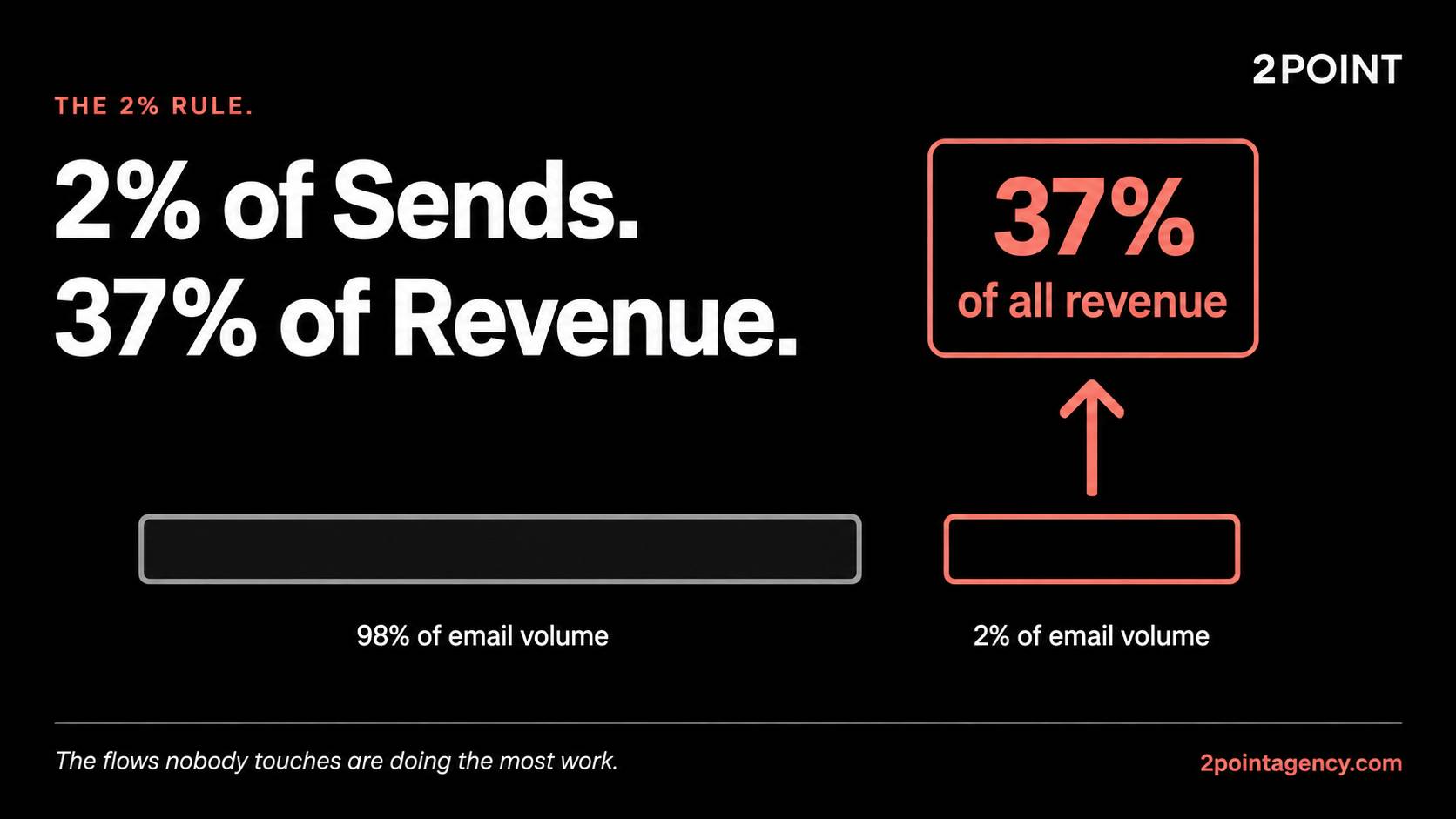
Did you know automated emails represent roughly 2% of total email volume for most brands?
Two percent. The other 98% is broadcast, campaign, and newsletter sends.
That 2% generates 37% of all email-attributed revenue.
Think about what that means structurally. The messages getting the most attention, the most production time, the most creative investment are responsible for 63% of revenue spread across 98% of volume.
The messages nobody is building new creative for, nobody is A/B testing subject lines on, and nobody is putting in a Monday meeting agenda are doing the heavy lifting.
Welcome series, post-purchase flows, replenishment reminders, win-back sequences, cross-sell automations. These are not supplementary. They are the core revenue engine, and most brands are underinvesting in them by a factor of ten.
The performance gap is obvious:
- Triggered behavioral emails achieve 52% higher open rates and 332% higher click rates than standard campaigns
- The average abandoned cart automation converts at 3.33% with a 50.5% open rate
- Win-back flows, even at the low end of 2 to 5% conversion, generate meaningful revenue from a segment that costs nothing to reach
What the Best Programs Are Built On
There is a second data point that cuts against the conventional playbook even harder.
The top 8% of email programs, the ones regularly hitting 45:1 ROI and above, are not winning primarily on promotions.
They are winning on newsletters and onboarding emails. Those two formats are up 12% among high-performers year-over-year.
The brands extracting the most from email are investing in relationship infrastructure first. A sequence that introduces a new subscriber over 5 to 7 touches. An ongoing newsletter that builds authority between purchase cycles.
Promotions follow the relationship. A high-performing email program is not defined by send frequency or discount depth. It is defined by how well it earns trust before it asks for anything.
From Guessing at Behavior to Just Asking
One of the quieter shifts happening in email marketing right now is a movement away from behavioral inference toward what practitioners are calling zero-party data.
Behavioral inference is the old model. You watch what subscribers click, what pages they visit, what they leave in a cart, and you build segments based on those signals.
It works. But those signals are noisy, privacy constraints are tightening, and the model has a ceiling.
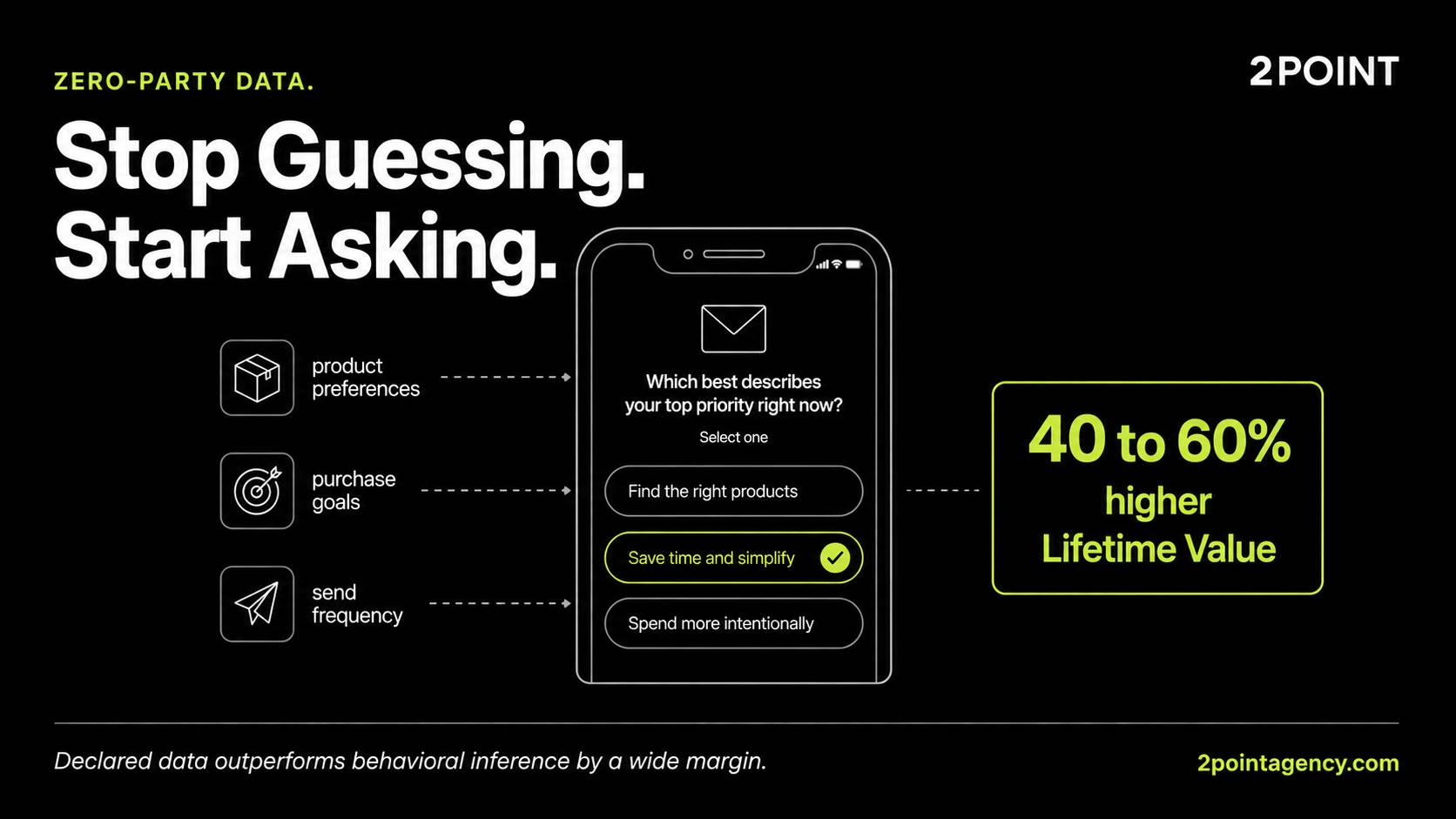
Zero-party data is the alternative. You ask your subscribers directly what they want.
- Onboarding surveys.
- Preference centers.
- Quiz flows.
- "Tell us what you are shopping for."
- "What are your goals?"
The outcomes can't even compare. Declared data segments generate 40 to 60% higher Lifetime Value (LTV) than segments built on behavioral inference alone.
There is something counterintuitive operating here. The instinct is to gather data passively, without friction, without asking.
But the act of asking creates engagement. The subscriber who fills out your onboarding survey is already more invested than those who didn't.
And the emails that follow feel personal in a way that behavioral inference rarely achieves (because they are).
The brands building quiz-based onboarding flows, post-purchase preference surveys, and segmented content tracks driven by declared interest are getting Lifetime Value (LTV) premiums that are hard to replicate through targeting alone.
Referrals Belong Inside the Lifecycle, Not Outside It
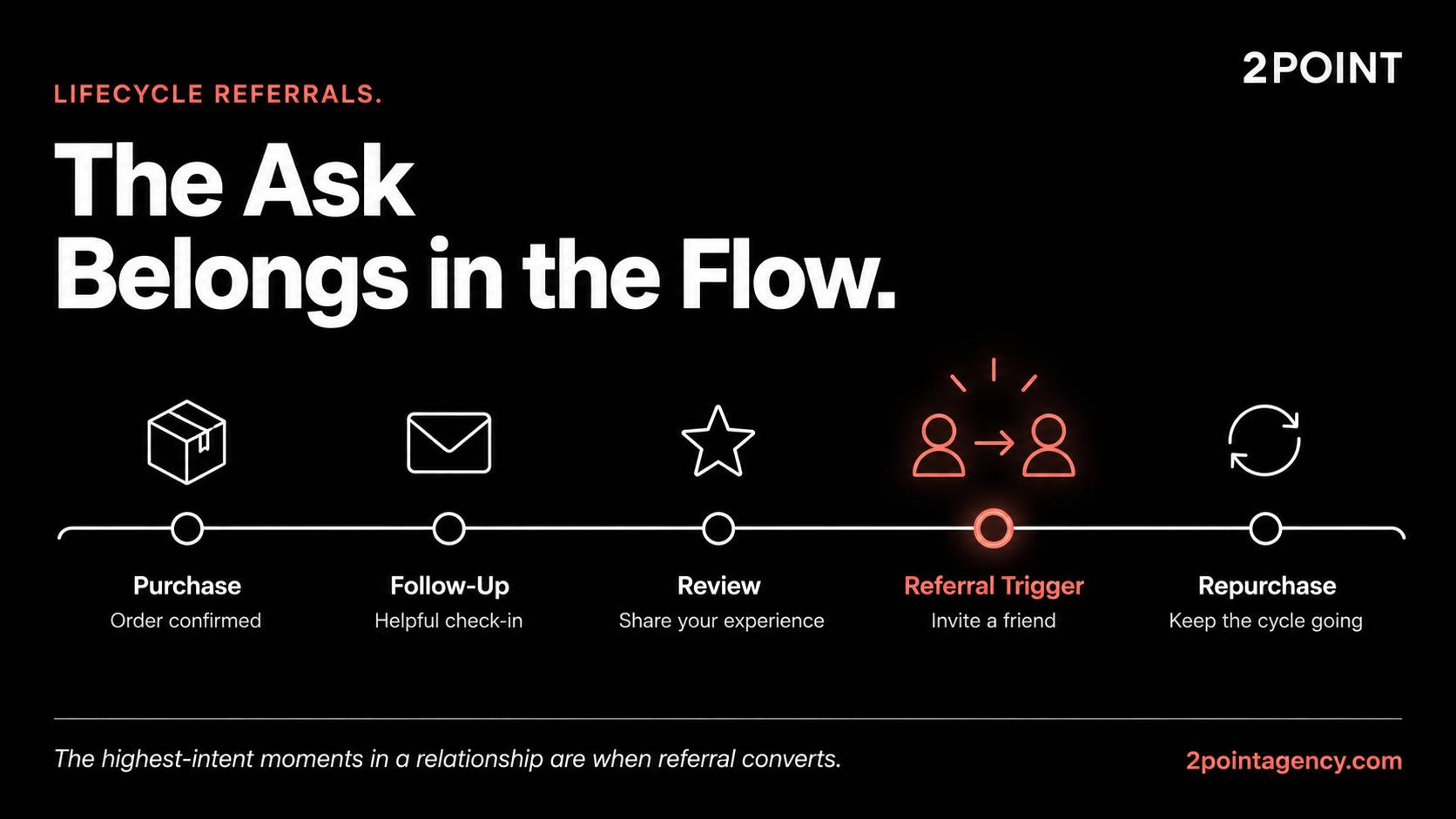
Most referral programs are built as standalone campaigns. An email goes out in February. Another one in October.
The mechanics are siloed from everything else the brand is doing.
Brands generating 3 to 5x higher revenue from referrals have moved the ask inside the lifecycle itself. Post-purchase thank-you. After the third order. After a five-star review. After a win-back conversion.
These are the highest-intent moments in a customer relationship, and they are exactly when a referral ask converts best.
The format is evolving too. Modern referral programs are moving away from flat cash-back toward flexible reward structures.
Store credit, loyalty points, charitable donations, tiered bonuses. Customers with choice in how they are rewarded show meaningfully higher participation rates.
The structural implication: referrals should be a flow, not a campaign.
Build the triggers into your automation stack and let them fire contextually at the right moment in the relationship.
Your Metrics Are Lying to You More Than You Think
This one will be uncomfortable if you are making decisions based on click-through rates.
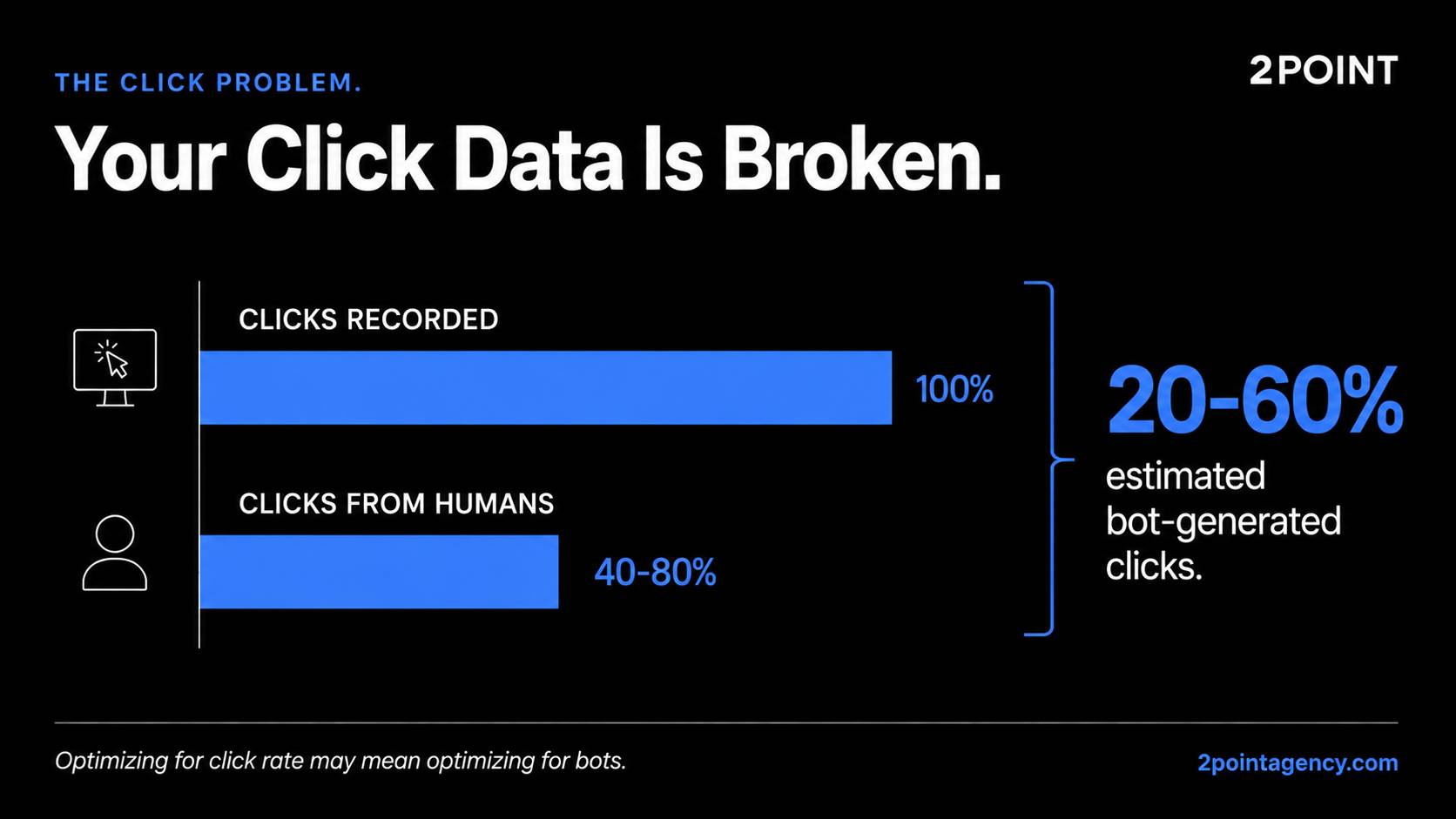
Bot clicks now represent an estimated 20 to 60% of the clicks recorded in email marketing platforms. Security filters, preview bots, corporate link-scanning tools. They are firing on your email links before any human being sees them.
That means your click data has been artificially inflated for years.
The campaigns you thought were performing may have real human engagement far lower than reported. The flows you thought were underperforming may actually have been fine.
There is no perfect fix here. But the practical response is to weight your decision-making toward downstream metrics: revenue per recipient, conversion rate on actual purchases, unsubscribe rate.
Click rate alone is no longer a reliable signal.
This has a sharp implication for A/B tests built around click performance. If you are declaring a winner based on click rate, you are potentially optimizing for bot behavior.
Pull the metrics that connect to money. Build your optimization logic around those.
What to Actually Do This Month
1. Audit your automation stack first.
Pull the revenue breakdown between flows and broadcasts. If your flows are not driving at least 25 to 30% of email revenue, you are underinvesting in them.
2. Build or rebuild your onboarding sequence.
The top performers are winning on this flow above all others. Five to seven emails minimum, spanning 14 to 21 days. Do real work introducing your brand before you ask for anything.
3. Add a preference survey to your post-subscribe or post-purchase flow.
One question is enough to start. "What are you most interested in?" That single answer unlocks declared segmentation.
4. Embed a referral ask at your highest-intent moment.
Not a campaign. One automation trigger after the action that signals a satisfied customer.
5. Switch your A/B test success metric from click rate to revenue per recipient.
If your platform supports it, make that change now.
Most brands are one solid flow audit away from finding 20 to 30% more revenue in their existing list.
Your list is ready. Your infrastructure just needs to catch up.
Are you building your email program like an asset, or managing it like a calendar?
If the honest answer is closer to the second one, it is worth a conversation.
We audit email programs across platforms, rebuild underperforming flows, and build lifecycle strategies for brands ready to stop leaving revenue on the table.
