FOLLOW US

Last update: Jan 28, 2026 Reading time: 15 Minutes
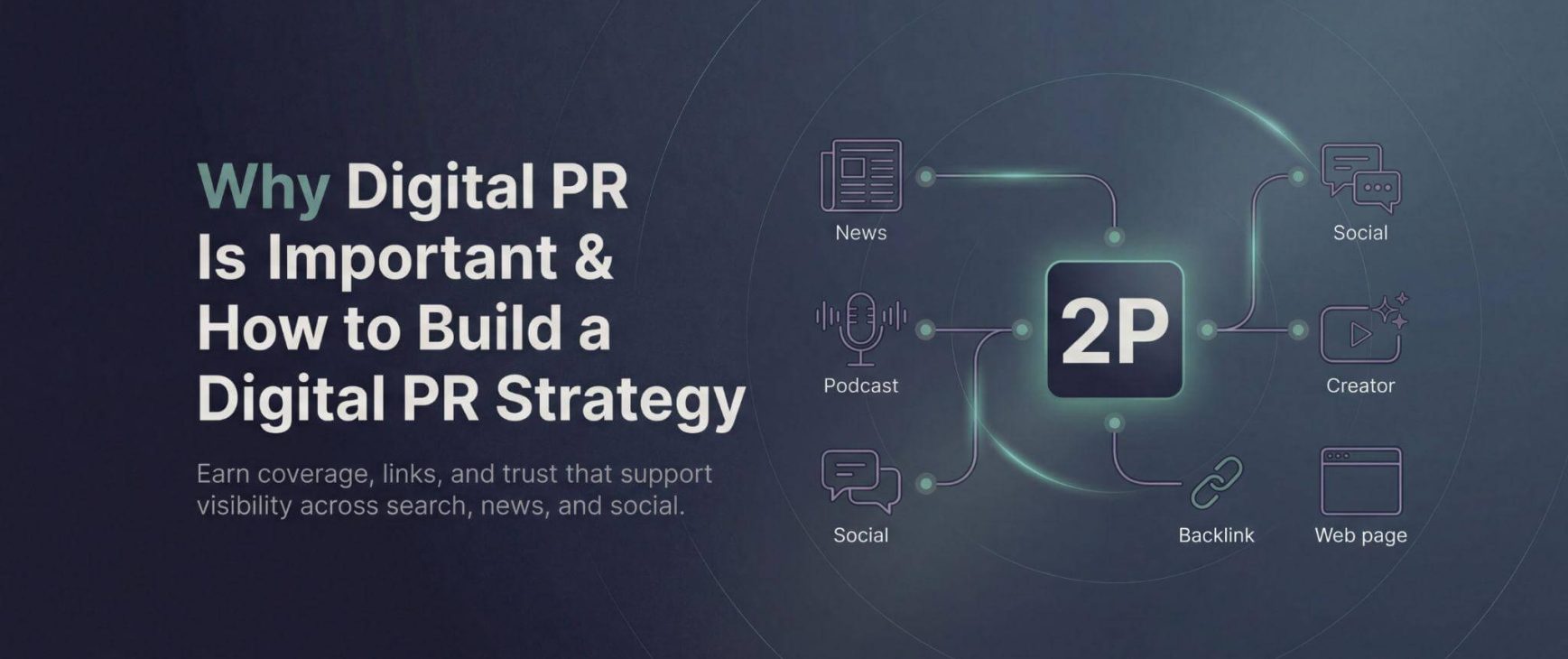
Traditional PR and SEO no longer live in separate rooms. Your audience discovers and decides in public: search, social, newsletters, podcasts, and niche communities.
Your site can claim credibility, yet trust grows faster when other voices echo it. A mention in a relevant outlet ties your name to priority topics and sends people to pages that matter.
This is why digital PR is important when budgets tighten, and every channel has to prove impact. Digital PR integrates brand, content, and SEO into a single system.
At 2POINT Agency, we build coverage you can track and scale.

Digital PR earns online coverage, mentions, and backlinks that build visibility, credibility, and search performance. It is earned, not bought. You win attention by packaging real insights into stories that editors and creators want to share.
Because the placement lives online, it can send readers to the exact page you want discovered.
Classic PR chased clippings, while digital PR ties every pitch to measurable content and SEO goals. In a trust-scarce, feed-driven world, a Pew study shows how people weigh information across news and social, which is the same ecosystem your brand competes in.
Look for outcomes like:
Together, these signals show what landed and what to refine.
Digital PR matters now because it builds authority where people research, compare, and decide. You get compounding value when one story earns coverage, drives referral traffic, and sends trust signals that support organic visibility.
Digital PR supports SEO because editorial links are crawlable pathways. Google’s guidance on link best practices explains that crawlable links help Google discover content and understand how pages relate to one another.
Aim earned links at pillar pages and category hubs tied to priority keywords, so the coverage reinforces the cluster you want to rank.
That is also why your pitch needs a real asset behind it, since editorial wins tend to follow the same fundamentals that earn high-quality backlinks: usefulness, relevance, and clear value for the reader.
Visibility also matters beyond classic results.
The Guardian reports that publishers fear AI search summaries and chatbots will reduce referral traffic, making every credible mention a durable distribution point that can surface in news features, creator roundups, and AI summaries.
Buyers borrow confidence through other people’s credibility signals.
Your site can claim expertise, yet a respected outlet quoting your team turns that claim into third-party proof.
Those mentions reduce friction when someone is comparing options, and they reinforce the same trust foundation that protects your brand reputation online when prospects search your name, scan reviews, and look for signals that you are credible.
This is also where digital PR supports E-E-A-T expectations. Google’s Rater Guidelines remind raters to evaluate experience, expertise, authoritativeness, and trust, even though rater scores do not directly set rankings.
Each placement, podcast, and quote feature puts your voice in trusted environments, so credibility follows you back into search and buyer decisions.
A single story can travel far if it is built for shareability. A journalist publishes it, a newsletter summarizes it, a creator reacts to it, and a community thread debates it.
That multi-channel footprint creates surround sound, which is also why message discipline matters.
When the same promise shows up across placements and platforms, you avoid confusionand build recognition through brand consistency in digital marketing, even as the story is retold in different voices.
This matters because attention habits keep shifting. The Reuters Institute reports ongoing changes in how people engage with news and digital sources, with social and video networks playing a growing role in discovery for many audiences.
Digital PR delivers measurable impact because it leaves clear signals in its wake. You can track what coverage earned, what traffic it sent, and which pages gained momentum, so decisions rely on evidence, not instinct.
Measure:
That scoreboard is why digital PR for SEO holds up in budget reviews.

Use this filter to match your digital PR strategy to your stage, competition, and goals.
In competitive SEO niches, content is table stakes. Your competitors publish guides, refresh them, and stack internal links, so “we posted a blog” stops moving the needle.
Digital PR gives you differentiation that lives outside your site.
When credible outlets mention your brand and link to your core pages, you earn authority signals that are hard to imitate. That is the shift you want: you do not simply get indexed, you get referenced, and rankings follow the reputation.
Early-stage brands do not lose deals solely because of product. They lose on certainty. Buyers and partners still wonder if you are proven, stable, and worth the switch.
Digital PR closes that gap faster by leveraging trust. A relevant feature, a founder quote, or an expert mention puts your name in credible places your audience already believes.
That validation also lifts conversion paths, since it improves click confidence and moves prospects into a lead generation funnel that converts once they start researching, comparing, and deciding.
Repositioning works only when the market quickly understands the new story. A launch has the same pressure; clarity has to arrive before confusion spreads.
Digital PR puts your narrative in third-party places your buyers already trust, so the message lands as proof, not promotion. NNGroup research on Credibility factors shows people treat external validation as a stronger trust signal than brand-owned claims, which is exactly what a reposition needs.
With consistent digital PR campaigns, you repeat the same promise across relevant outlets and communities, so awareness turns into recognition, and recognition turns into demand.
A strong digital PR strategy runs on clear goals, tight targeting, compelling assets, and relationships.
Start by deciding what you want digital PR to do for the business. When the goal is clear, your outreach gets sharper, your assets get stronger, and your reporting stays honest.
Set objectives that tie to outcomes you can actually defend:
Keep your metric set small so you can judge wins cleanly, spot patterns, and refine execution, rather than debating vanity numbers.
An effective digital PR strategy begins with one question: who are you trying to reach, and where do they already pay attention?
Map publications, journalists, newsletters, podcasts, creators, and communities by topic and audience fit. You are building a relevance engine, not a random media list.
A practical way to structure this map is by tiers:
Digital PR lands best when the story helps the audience, not your ego. Start with angles journalists can use, and pair each one with an asset that supports brand and SEO goals.
Strong story formats include:
Every pitch should point to a relevant guide, report, tool, or landing page, and those assets work harder when they are built to hold attention, like interactive content that keeps readers engaged and gives journalists something worth referencing.
Outreach is craft, not a volume contest, so precision wins. It starts with research that proves fit, because relevance earns opens and replies.
Once you have the right target, personalize the pitch around the outlet’s beat and lead with the hook, not your brand story. Follow up with restraint and fresh value, such as a sharper stat, a stronger visual, or an exclusive angle.
Between campaigns, keep relationships warm by sharing useful leads and responding fast, so saying yes feels easy.
If you are asking why digital PR is important and how to start without wasting months, use this blueprint.
Start by choosing the topics you want to be known for, not the ones that feel easy to publish.
Tie each theme to a keyword cluster, a business priority, and a page you actually want to rank, so every mention has a destination.
To keep teams aligned, map digital PR campaigns on the same calendar as launches, content updates, seasonal demand, and research drops. That shared plan keeps PR, content, and SEO aligned, so coverage supports the pages your site is ready to win.
A media and creator list is not a directory; it is targeting intelligence you can reuse.
You review recent work, note the angles they repeat, and spot the formats they publish most, so your outreach fits their beat and your audience.
Use a simple pitch rubric to qualify contacts and prioritize outreach. That way, your list supports a story that has a clear premise, real tension, and obvious news value, not generic promotion.
Develop 2–3 campaign concepts at a time so you have options if one angle stalls. Keep each idea tight, with a clear hook and a specific audience payoff.
Strong campaign concepts:
Assets that make coverage easy:
Write pitches that respect time and earn attention. Lead with the hook and why their audience should care, and keep your proof tight so the angle feels credible.
Once you send it, manage follow-up with intent. A short check-in works best when you add value, such as a sharper stat, a better visual, or an exclusive angle for that outlet, and you reply fast when questions land.
After coverage runs, amplify it on your owned channels, tag contributors, and direct readers to the linked asset so the story keeps traveling.
Measurement turns digital PR campaigns into a repeatable system.
Track coverage quality, earned links, referral sessions, and assisted conversions, and tag every placement using a URL builder so traffic attribution stays clean. This gets easier when your stack is connected, since reliable reporting depends on SEO integrations that keep data aligned across analytics, Search Console, and conversion tracking.
After each campaign, document what worked:
Use those notes to sharpen the story and outreach before your team ships again.
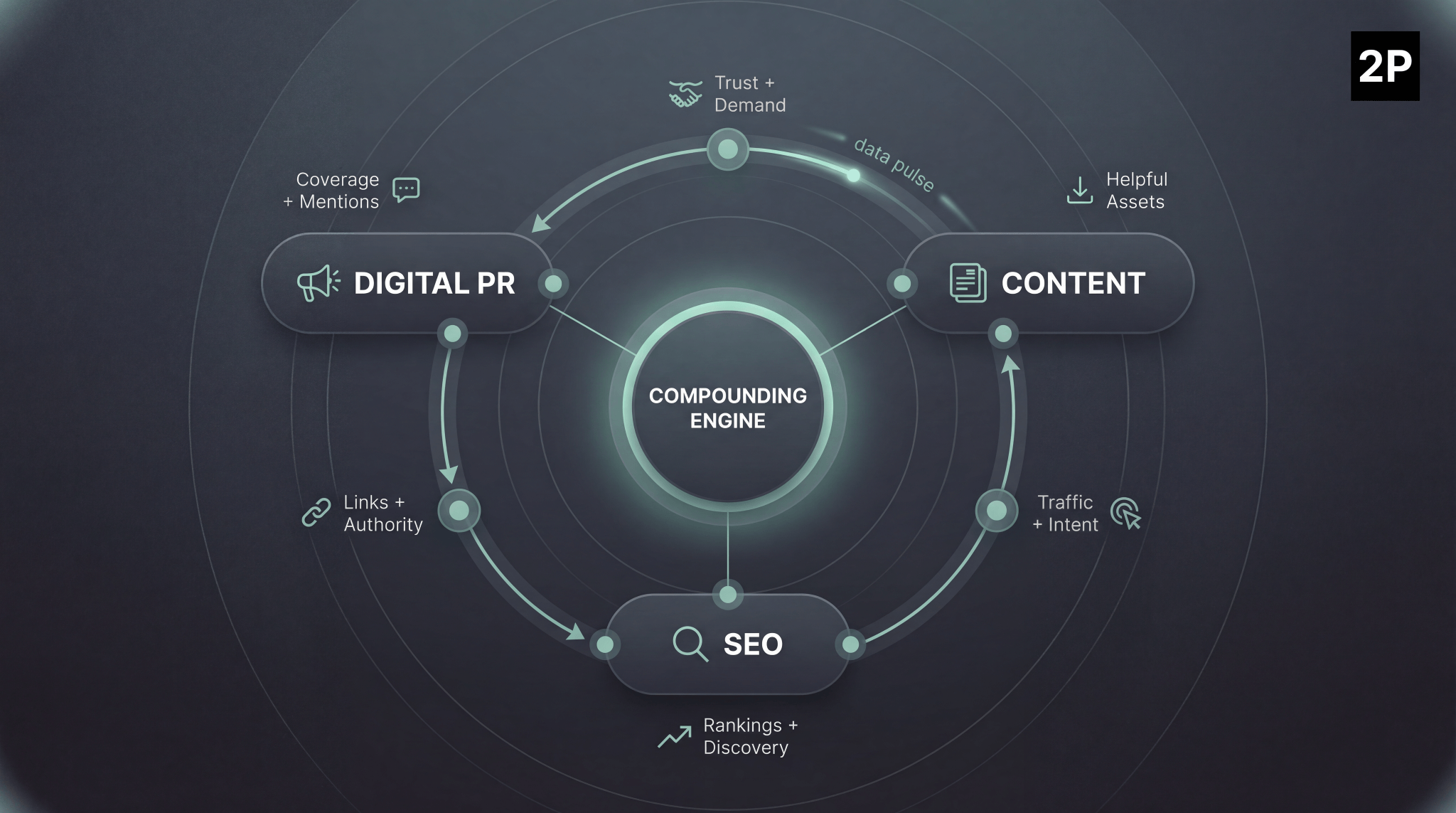
Digital PR performs best as part of a growth system, not a solo channel.
Your best assets already contain stories, so treat them like pitch fuel.
A report turns into one headline insight, a long guide becomes a clean expert angle, and a dataset becomes a trend ranking people can reference.
That packaging matters because it earns coverage that points back to the pages you want to win with. When you link the story to the asset, digital PR for SEO stops being about awareness and starts supporting rankings.
Third-party mentions do the heavy lifting for E-E-A-T because they show your expertise being recognized directly outside your site.
A quote in a respected publication reads like a credential, and readers treat it that way.
Digital PR earns those signals at scale. When your team gets cited, interviewed, or featured in relevant outlets, trust follows you across search results, social feeds, and sales conversations.
Digital PR outreach is a real-time listening channel. Journalists signal which angles are stale, while replies and pickups reveal what the market wants to read.
Feed those signals into your content roadmap and SEO priorities using Search Console query data, plus behavior on key pages. Treat each campaign as feedback, and your messaging sharpens, your targets get clearer, and each release improves again.
Many teams try digital PR once, see limited results, and decide it is not worth the effort. The issue usually sits in execution, not the channel.
One-off blasts fail because they never build momentum. You pitch, go quiet, and your list forgets you, so every outreach cycle starts cold and costs more effort.
A sustainable cadence fixes that. When you show up consistently with relevant angles and useful assets, familiarity grows naturally.
Replies come easier, relationships deepen, and digital PR stops feeling unpredictable.
Generic, brand-centric pitches fail because they give editors nothing worth publishing. Digital PR needs a story with clear audience value and an asset that makes coverage easy.
Bring something they can use:
If it would not stop you mid-scroll, it will not land in an inbox.
Mass emailing journalists who do not cover your topic wastes time and chips away at trust. It also teaches editors to ignore you, so strong stories get buried later.
Personalization does not mean writing a novel. It means proving fit fast, referencing a recent angle, and explaining why your hook belongs on their beat. A reporter’s perspective guide even recommends pointing to an example of their work you read, since it signals real research and a relevant match.
Chasing any link can land you on low-quality or off-topic sites. That weakens trust and can muddy your positioning. Prioritize relevance and credibility.
A smaller number of meaningful placements usually beats a pile of questionable wins.
At 2POINT, we treat digital PR as an operating system that connects PR, SEO, content, and creative, so your work compounds rather than spikes for a week.
If you want help building a program you can sustain, explore our Multi-channel marketing services.

Digital PR works best when it runs like a system. Clear targets guide the story, strong assets give it weight, and consistent outreach keeps momentum alive.
When you measure what lands, you stop guessing. You see which angles earn coverage, which pages benefit, and what to refine so the next campaign performs better.
If you want 2POINT to help you build that system, start here: SEO services.
Modern buyers compare options publicly, not just on your site. Third-party mentions reduce doubt, influence clicks, and keep your brand visible during research, even when competitors publish similar content.
Use digital PR for SEO to earn editorial links to the pages you want to rank. Those links drive discovery, strengthen topical relevance, and send qualified referral traffic. Aim placements at pillars and hubs so authority flows where it counts.
A good digital PR strategy keeps a steady rhythm: monitor narratives, build one strong angle, prep a landing page, and pitch the right people. Track links, referrals, and query lift, and keep notes on replies to improve outreach over time.
Some digital PR campaigns earn coverage within days when the hook is timely and the asset is ready. Compounding impact takes longer because authority builds with repetition. Expect early referral spikes, followed by steadier branded search and keyword movement.
Small teams can win by targeting niche outlets and being easy to quote. Digital PR can build borrowed trust, steady visibility, and pipeline support without chasing headlines. One strong story per month is enough.


Your SEO tech stack keeps growing, but the story your data tells still feels messy. GA4 shows sessions and events. Search Console shows queries and impressions. Your CRM shows leads, but not always the path that created them.
Backlinks seem simple until you try to deliberately replicate results. One strong link lands, rankings shift, and a pattern starts to show. The link helped because it fit the context, was on a page that already mattered, and pointed to something worth citing.
DIY SEO can work. It can also quietly drain months if you are fixing the wrong things, chasing the wrong keywords, or guessing at technical changes that affect revenue. Before you commit to a path, you need a way to judge what is realistic for your team, what is risky, and what is simply not worth doing alone.

 let’s connect



