

 let’s connect



Most sales teams think their problem is lead volume.
It isn't.
The average B2B rep spends 17 minutes manually researching a prospect before a call. And most of that research is surface-level.
A LinkedIn glance. A homepage scroll.
Then they dial. And they sound like they've never met the prospect before.
Because they haven't.
What The Data Says
76% of buyers expect salespeople to understand their business before the first call.
Only 26% of reps say they have enough context to personalize the opening conversation.
That is not a training problem. It is a research infrastructure problem.
Forrester's 2026 B2B Buying Study found that sellers who demonstrated genuine knowledge of a prospect's business in the first touchpoint closed at a 34% higher rate than those who led with product pitches.
Not because of the product. Not because of pricing. Because of preparation.
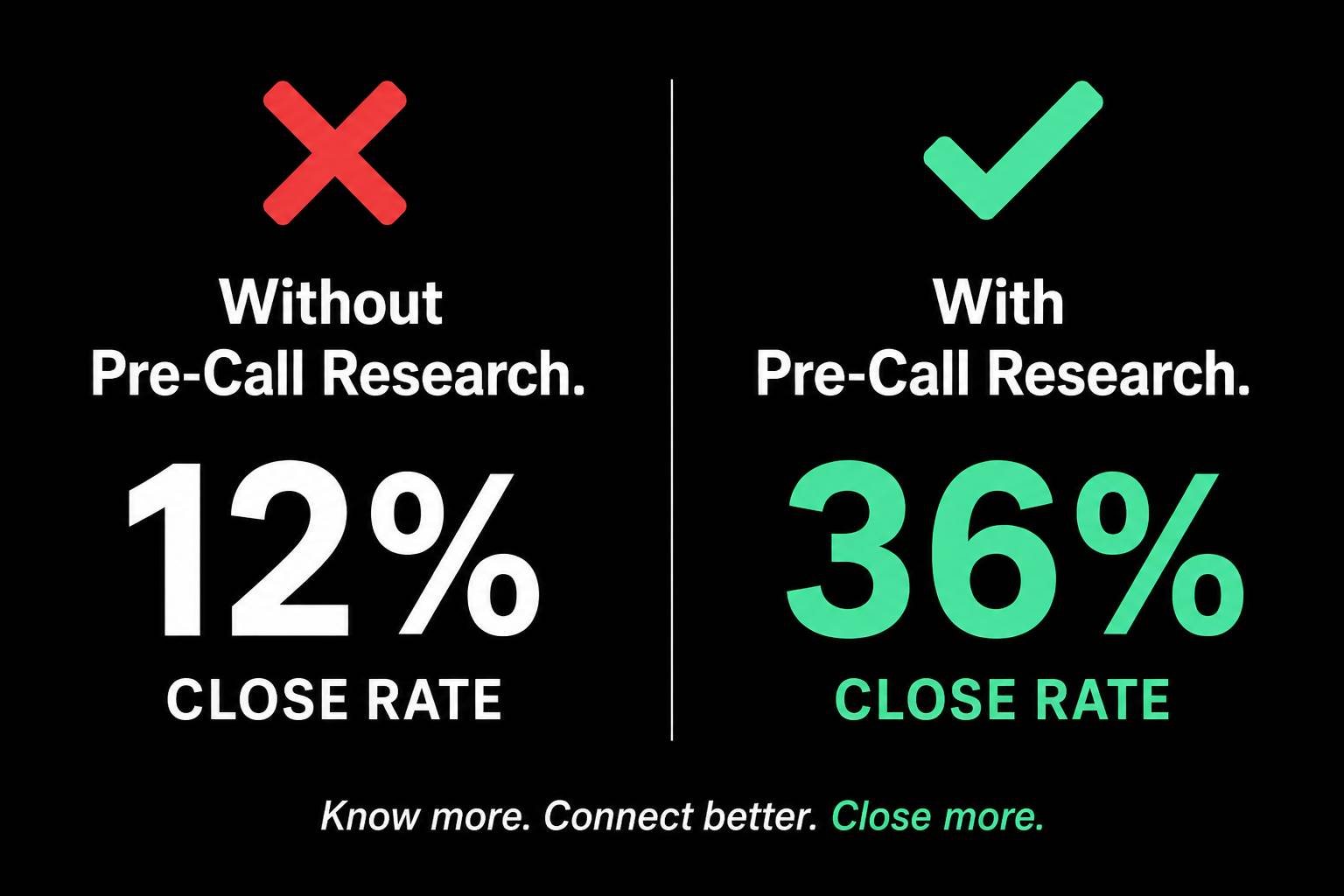
McKinsey's 2026 growth benchmarking report backs it up: top-performing sales orgs are 2.3x more likely to use structured pre-call research as a standardized step.
The pattern is consistent. Better research leads to better conversations.
Better conversations lead to more closed deals.
Why It Never Gets Fixed
The obvious move is to require reps to do more research.
That never scales.
When research is manual, it gets skipped under pipeline pressure. Reps prioritize call volume over call quality. The requirement becomes a checkbox. The checkbox erodes into nothing.
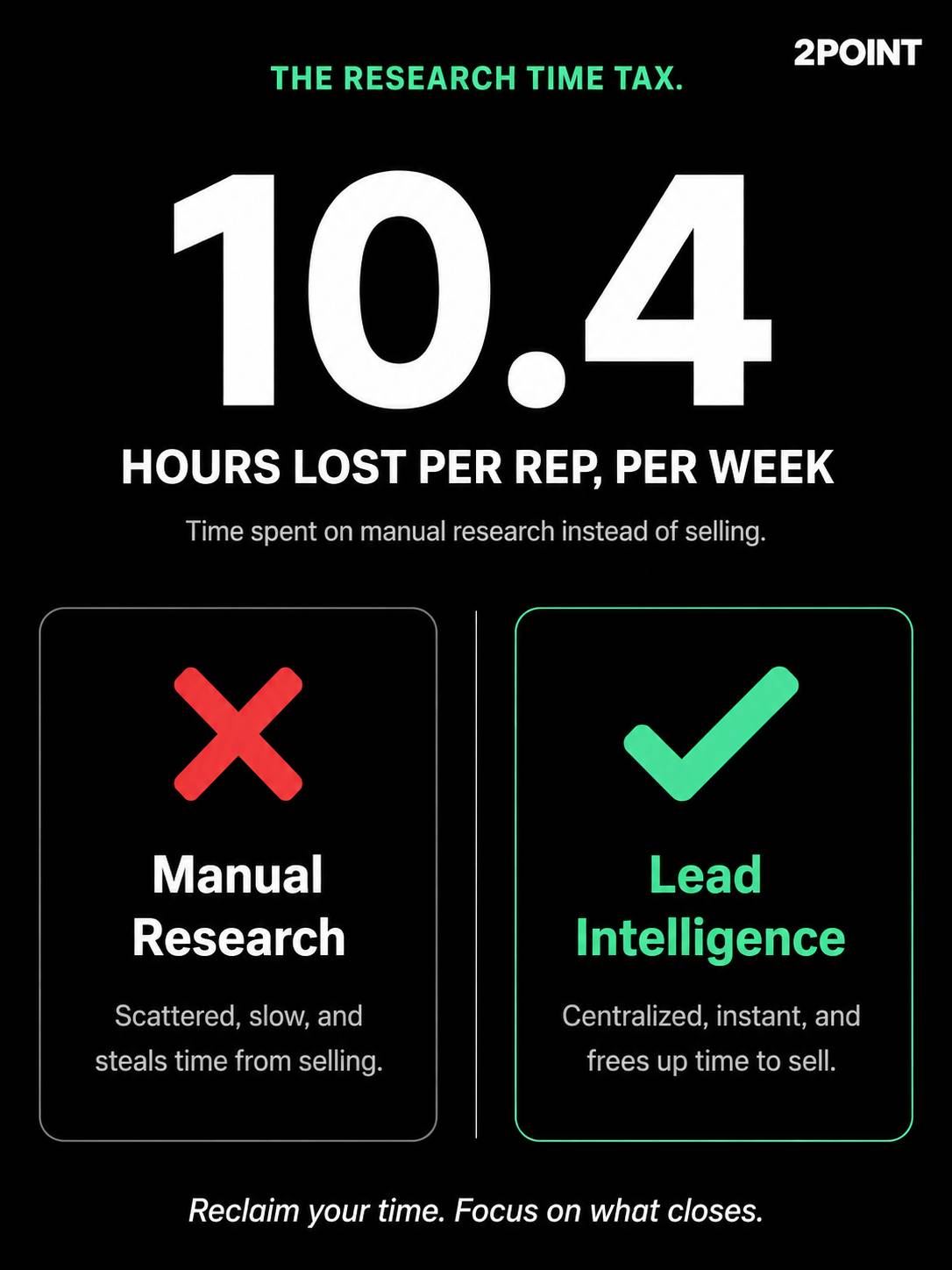
Thorough prospect research takes 15 to 45 minutes per contact when done properly: company background, recent news, leadership signals, hiring trends, tech stack, competitive position.
Multiplied across a full pipeline, that is hours per week that do not exist.
So reps improvise instead.
What Changes When Research is Automatic
When your rep arrives already knowing:
- What the company does and who their customers are
- Recent news that affects their priorities
- The decision-maker's background and likely pain points
- Company size and technology signals
...the first call stops being an information-gathering session.
It becomes a conversation between two people who already share context.
These types of conversations get straight to the root of the prospects challenges and help sales reps tailor their approach to every person.
The 2026 Salesforce State of Sales report found that high-performing teams are 4.1x more likely to use AI for pre-call research than underperforming ones.
The gap is growing every day.
How We Solved This
We built Lead Intelligence for exactly this problem.
The moment a new contact lands in your HubSpot, Lead Intelligence fires automatically.
It runs 30+ searches across the web, both on the prospect and the brand. It writes a formatted brief covering company context, recent signals, likely priorities, and talking points. Then it posts that brief as a note directly on the contact record.
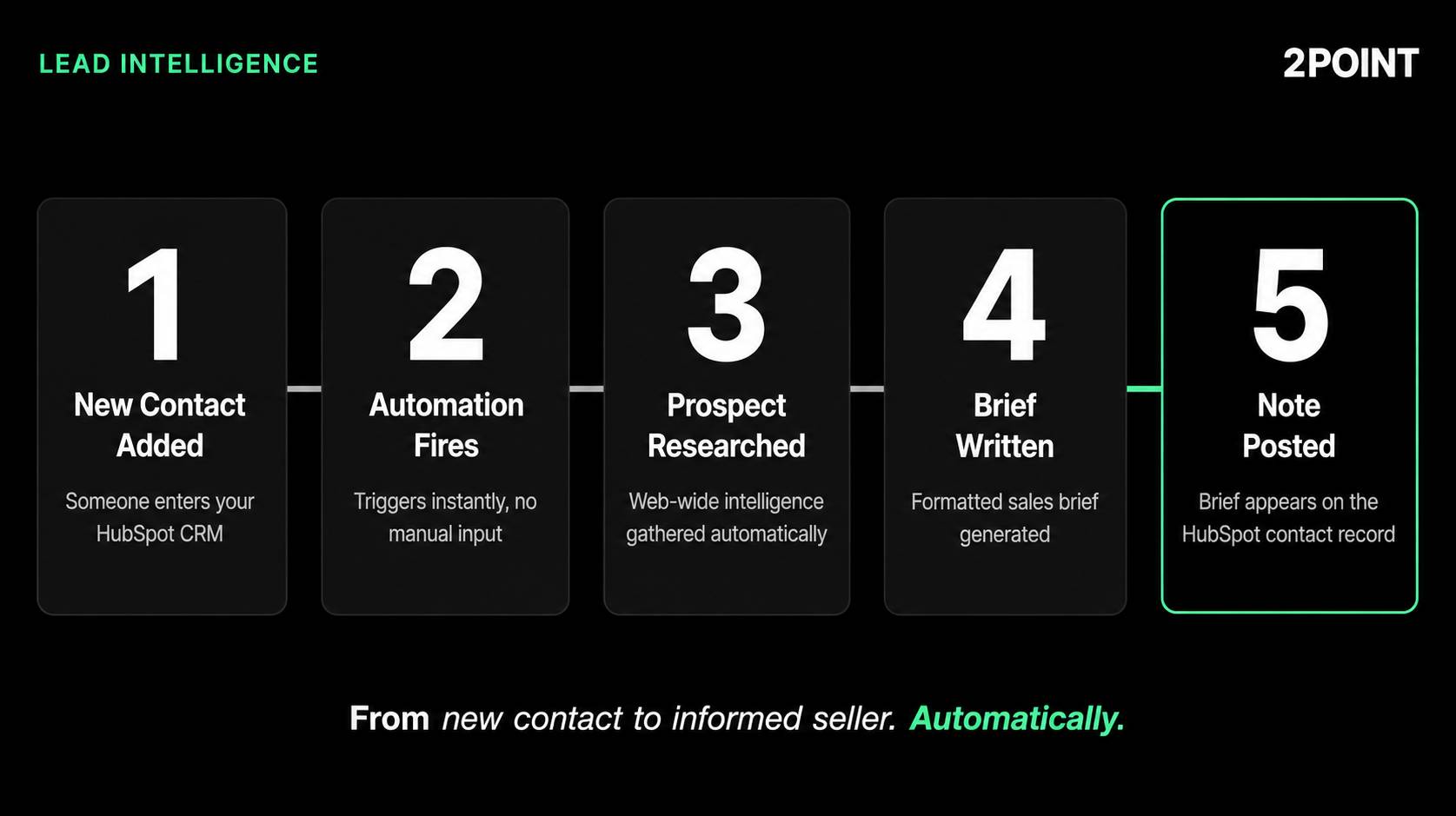
Before your rep even opens the profile.
No manual trigger. No configuration. No research session before every call.
Your team shows up informed, every time.
What To Do This Week
- Audit your pre-call research process.
Is it standardized? Is it actually happening? If you cannot answer yes to both, you have a gap costing you deals. - Calculate the research time tax.
Take the number of new contacts your team touches per week. Multiply by 20 minutes. That is the floor for hours lost to manual research, or skipped research entirely. - If you use HubSpot:
Lead Intelligence installs in under 2 minutes through a standard one-click install. Nothing to configure after that.
The best-prepared rep in the room closes the most deals.
That used to require hustle. Now it requires infrastructure.
Are your reps the most prepared people on every call they take?
Running HubSpot? Your reps could show up informed on every single call.
Lead Intelligence writes a full prospect brief on every new contact, automatically, before anyone dials. It works exclusively with HubSpot right now. If that is your CRM, you can activate it today.
