

 let’s connect


For most of the last decade, the question every business asked about their website was the same.
Are we ranking?
Page one, top five, number one for the keyword that matters most. That was the game. That was the whole conversation.
And for a long time, it was the right conversation to be having.
Then 2024 happened. And 2025. And the game changed in ways that most businesses still haven't fully registered.
The question isn't just "are we ranking" anymore.
The question is: are we being cited?
The New Front Door
Here's what's actually happening when someone searches for your product, service, or category today.
Before they ever see an organic result, before they see your ad, before they see your competitor's ad, they often see an AI-generated answer.
A paragraph or two written in plain, confident English. It answers the question. It names sources. It might even link to one of them.
Then the user closes the tab.
For informational searches, Google's AI Overviews now appear in roughly 1 in 4 results. In categories like finance, health, legal, and home services, that number is closer to 1 in 2.
A Pew Research Center study following 68,000 real searches found that when an AI Overview appears above an organic result, click-through rates drop by nearly 47%.
Not a small dip. Nearly half.
And that's for businesses who still rank.
Two Kinds of AI Visibility
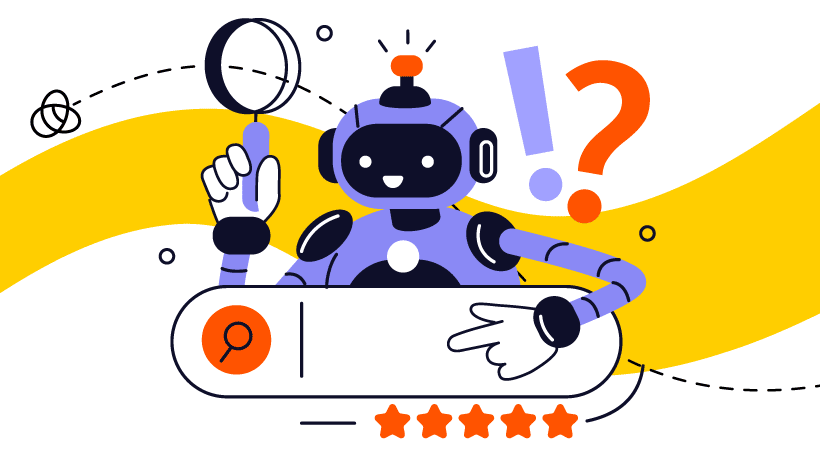
There's a distinction that almost nobody is making clearly yet, and it's the most important distinction in digital marketing right now.
The first kind of AI visibility is being referenced. Your brand, your content, your answers show up when someone asks ChatGPT, Perplexity, or Google's AI a question in your space.
No click required. Your name enters the conversation. That's brand awareness at a scale and a stage of the funnel that didn't exist three years ago.
The second kind is being cited. Your page is sourced directly inside an AI Overview or AI Mode response. A link appears.
And here's the part that surprises most people: being cited as a source inside an AI answer actually increases click-through rates. Research suggests cited sources see up to 35% more clicks than a standard organic listing in the same position.
Being cited is the new number one.
Most businesses have no idea whether they're achieving either one.
We Ran the Numbers
Earlier this year, we conducted AI visibility audits across several client accounts.
The methodology was straightforward: we tested dozens of high-intent queries across ChatGPT, Gemini, and Perplexity, tracked citation rates, brand mentions, and the quality of how each business was described when AI did reference them.
The findings were consistent enough that a pattern emerged fast.
Businesses with strong traditional SEO foundations, well-structured pages, clear topical authority, legitimate backlink profiles, weren't necessarily winning in AI search.
But businesses without those foundations were losing badly. Zero citations. Zero mentions. Effectively invisible in the AI layer entirely.
The floor is the same. The ceiling is different.
What separated the businesses seeing AI citations from the ones seeing none wasn't keyword density or content volume.
It was something harder to manufacture: demonstrated expertise that a trained AI system could verify.
Original data. Named authors with credentials. Primary sources. Clear, specific answers to specific questions. Schema markup that told AI crawlers exactly what the page was about.
The businesses without those things weren't exactly penalized, they were just ignored.
What the AI Is Actually Looking For
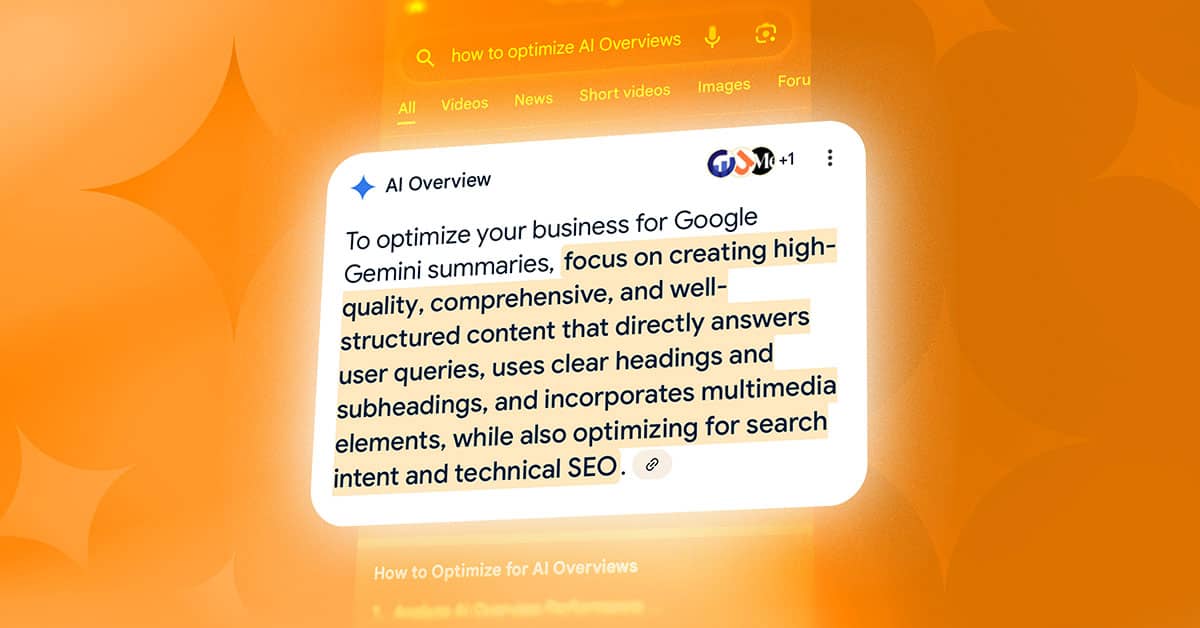
Google's internal documentation, portions of which were confirmed authentic after an accidental leak in 2024, revealed something the company had publicly denied for years: engagement signals matter enormously.
How long someone stays on your page. Whether they scroll. Whether they go back to Google immediately after visiting you.
The AI systems reading your content are trained on signals that look remarkably similar.
- Does this page demonstrate that a real expert wrote it?
- Does the content give a specific, defensible answer, or does it hedge everything into
uselessness? - Is there original information here that can't be found everywhere else?
- Is the business it represents a real, trusted entity with a traceable presence?
These aren't new questions. They're the questions Google's human quality raters have been asking for over a decade. AI just runs them at a different scale and speed.
96% of content cited in AI Overviews comes from sources with verified credibility signals. The AI isn't browsing randomly. It's citing the sources it has learned to trust.
The Businesses That Are Falling Behind
They're not bad businesses. They're often excellent businesses with real expertise and genuine value.
But their digital presence was built for a different era.
- Thin content pages optimized for keywords.
- Product and service descriptions that say nothing specific.
- A blog that hasn't been updated in 18 months.
- No schema markup. No clear author attribution.
- No original data, research, or perspective that differentiates the site from the ten competitors who wrote the same article from the same template.
In traditional search, this was survivable. Rankings were sticky. Momentum helped. A decent backlink profile could carry an average content strategy for years.
In AI search, there's no momentum to coast on. Every query is evaluated fresh. If your content doesn't give the AI something worth citing, it will find someone who does.
What You Should Take With You
AI visibility isn't a new discipline layered on top of SEO.
It's what SEO was always supposed to be, executed at a higher standard, for a more discerning reader that never gets tired, never gets distracted, and has already read everything your competitors have published.
The businesses that win in this environment are the ones with something real to say, said clearly, structured correctly, and backed by a brand the AI has learned to trust.
That's achievable. It's not fast, and it's not cheap, but it compounds in a way that no ad spend ever will.
If you want to know where you stand, we're running AI visibility audits right now.
We'll show you exactly how you're appearing (or not appearing) across the major AI platforms, and what it would take to change it.
The AI is reading your content.
The only question is whether it's finding a reason to cite you.
Are you showing up in AI?
If the answer is "No" or "I have no idea" please save yourself a rough 2026 and click the button below to talk to an expert.
