

 let’s connect



Every dollar you spend on ads, SEO, social, and email is doing less than it should.
Not because your targeting is off. Not because your creative is weak.
Because nobody knows who you are.
And the reason nobody knows who you are is simpler than you think.
You've never told them a story.
The Oldest Strategy in Human History
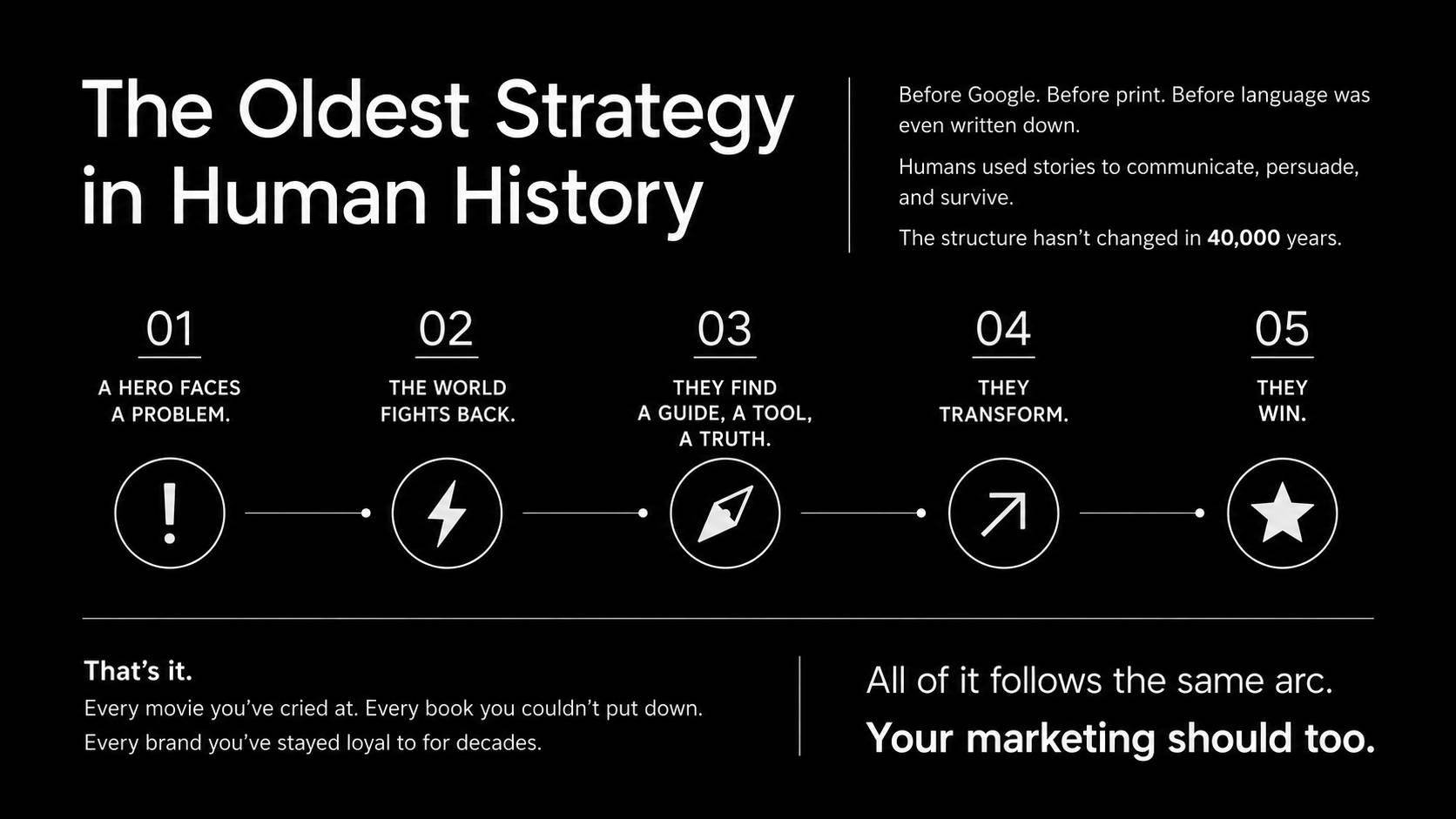
Before Google. Before print. Before language was even written down.
Humans used stories to communicate, persuade, and survive.
The structure hasn't changed in 40,000 years.
A hero faces a problem. The world fights back. They find a guide, a tool, a truth. They transform. They win.
That's it.
Every movie you've cried at. Every book you couldn't put down. Every brand you've stayed loyal to for decades.
All of it follows the same arc.
Your marketing should too.
Why Most Brand Messaging Falls Flat
Most companies market like this:
"We're a family-owned HVAC company serving the tri-state area since 1987."
Nobody cares.
Not because it isn't true. Because it isn't a story. It's a résumé.
Here's the problem with résumé marketing: it puts your brand at the center. Your experience. Your process. Your credentials.
But your customer isn't looking for a company to admire. They're looking for a guide to help them win.
The moment you flip that, everything changes.
The 2POINT Story Framework
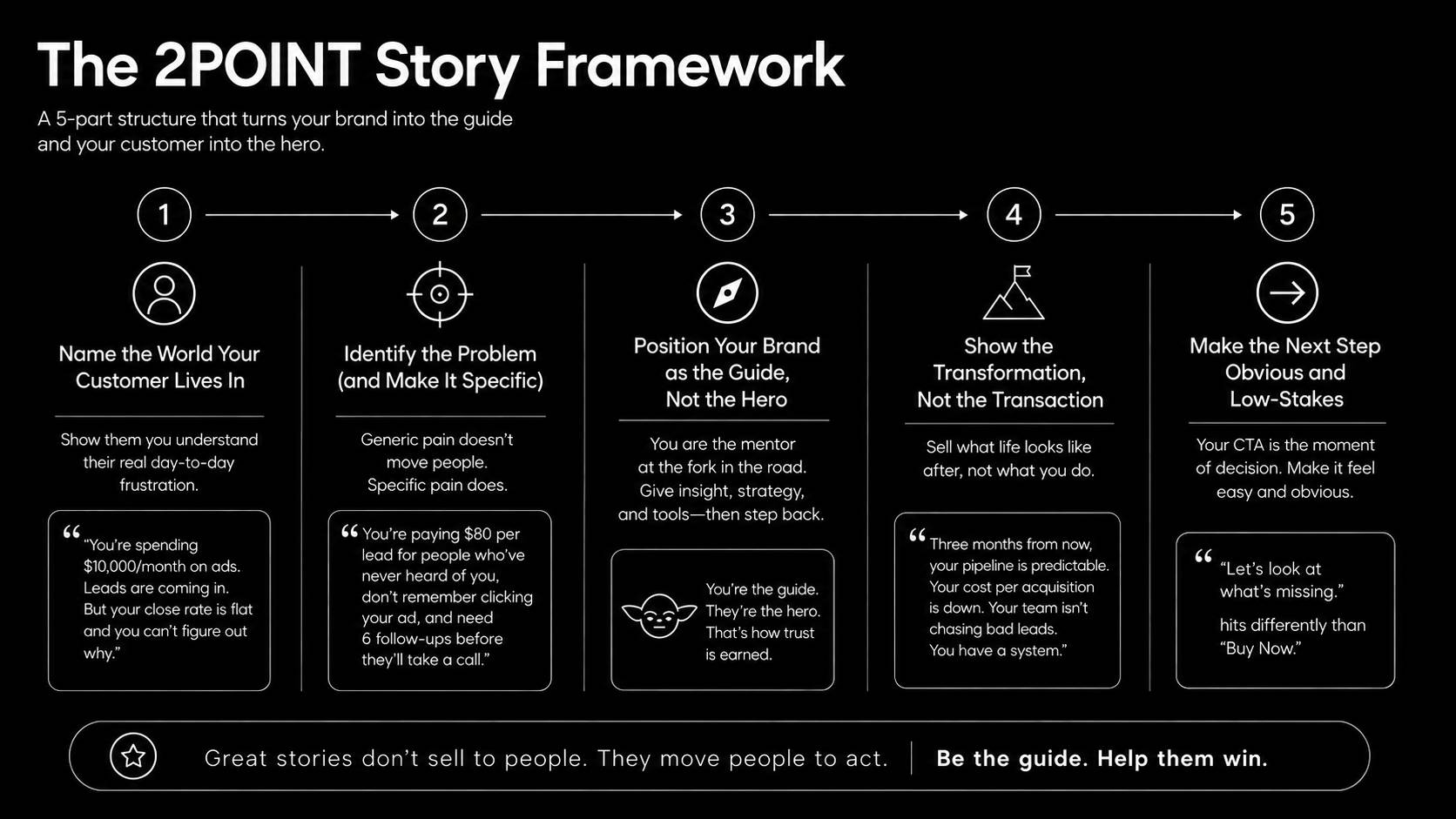
We've adapted the hero's journey into a 5-part structure you can apply to any brand, any message, any channel.
1. Name the World Your Customer Lives In
Before anything else, show them you understand their reality. Not their industry. Their actual day-to-day frustration.
"You're spending $10,000/month on ads. Leads are coming in. But your close rate is flat and you can't figure out why."
That sentence, if accurate, stops a reader cold.
You're not pitching. You're reflecting.
2. Identify the Problem (and Make It Specific)
Generic pain doesn't move people. Specific pain does.
Don't say: "Most businesses struggle with lead quality."
Say: "You're paying $80 per lead for people who've never heard of you, don't remember clicking your ad, and need 6 follow-ups before they'll take a call."
Specificity is empathy. It tells the reader you've been in the room.
3. Position Your Brand as the Guide, Not the Hero
This is where most brands break the story.
They make themselves the hero. The one with the experience, the awards, the case studies.
But in your customer's story, they are the hero. You are Yoda. You are the mentor at the fork in the road.
Your job is to give them the insight, the strategy, the tools, and then step back.
Brands that do this earn trust faster than any ad ever could.
4. Show the Transformation, Not the Transaction
Don't sell the service. Sell what life looks like after.
"Three months from now, your pipeline is predictable. Your cost per acquisition is down. Your team isn't chasing bad leads. You have a system."
That's a destination, giving people something to move toward.
5. Make the Next Step Obvious and Low-Stakes
Every good story ends with a decision.
The hero chooses to act. Or they don't.
Your CTA is that moment. Don't make it feel like a commitment. Make it feel like the obvious next step in their journey.
"Let's look at what's missing." hits differently than "Buy Now."
Where to Apply This (Everywhere)
Run every piece of marketing through it:
- Homepage: Does it reflect the customer's world in the first 5 seconds?
- Ad creative: Does it name a specific pain before it sells anything?
- Email subject lines: Are you leading with their story or yours?
- Sales deck: Are you the guide, or are you the hero?
- Social content: Are you educating or just promoting?
Most brands fail this test across every channel simultaneously. Which means fixing the story fixes everything downstream.
The Compounding Effect
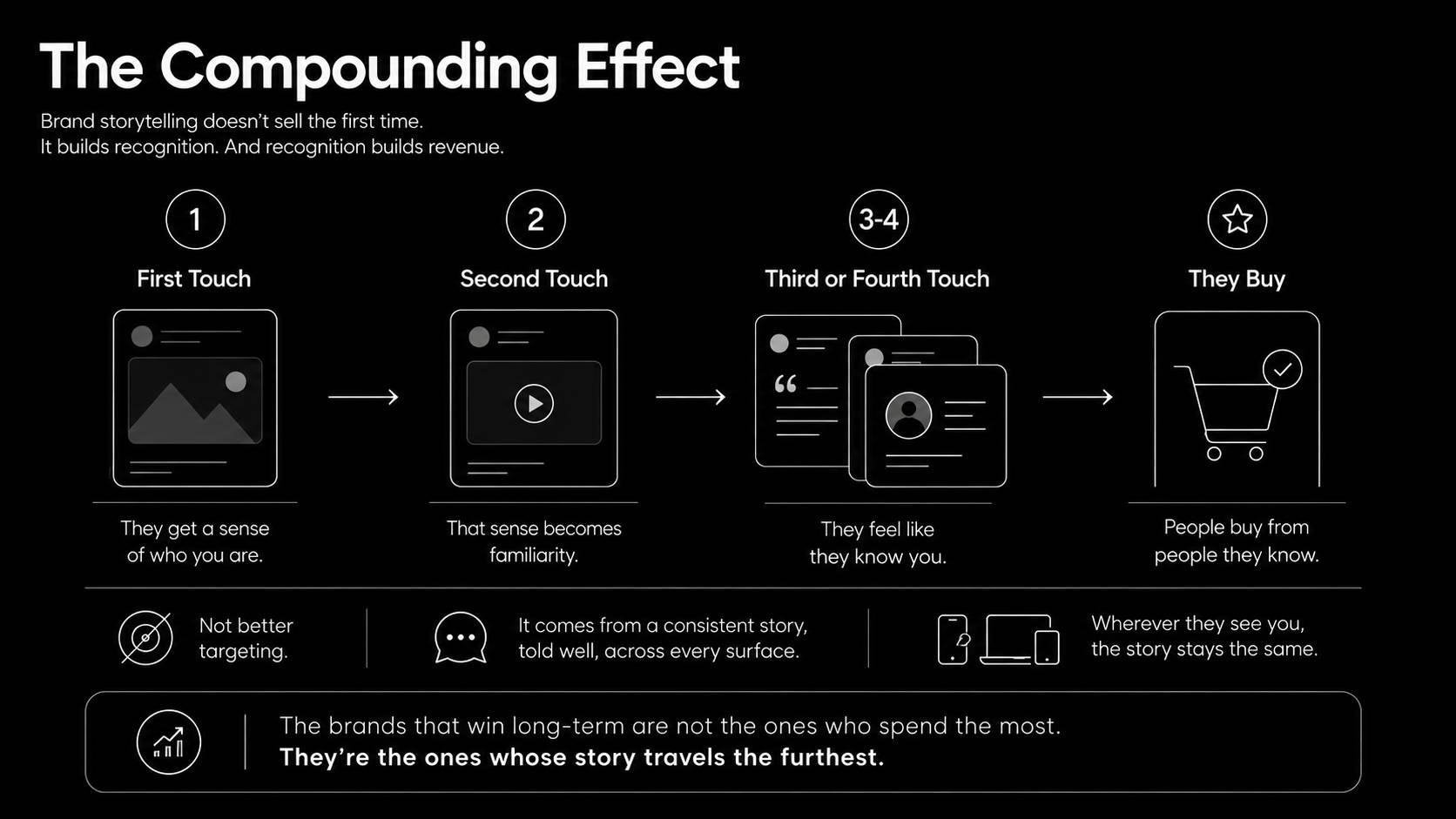
Here's what nobody tells you about brand storytelling.
It compounds.
The first time someone sees your ad, they don't buy. They get a sense of who you are.
The second time they see your content, that sense becomes familiarity.
By the third or fourth touchpoint, they feel like they know you. And people buy from people they know.
That recognition doesn't come from better targeting.
It comes from a consistent story, told well, across every surface they encounter you on.
The brands that win long-term are not the ones who spend the most. They're the ones whose story travels the furthest.
Where Do You Start?
Write one sentence that completes this prompt:
"We help [specific person] who is struggling with [specific problem] get to [specific outcome] by [what you actually do]."
If you can write that sentence clearly, you have the spine of your brand story.
If you can't, that's the work.
Everything else, the ads, the emails, the content, is just amplification. The story has to come first.
Is your brand telling a story worth remembering?
If you're not sure, or if you know the answer is no, that's exactly what we help with.
We work with brands to build the messaging foundation that makes every channel perform better.
Hit the button below and let's figure out what yours is missing.
