

 let’s connect


What Is Healthcare Marketing and Why Does It Matter in 2026?
Healthcare marketing is the strategic process of attracting, engaging, and retaining patients through a coordinated mix of digital and traditional communication channels. In 2026, it has evolved far beyond brochures and billboards into a precision-driven discipline powered by AI, first-party data, and real-time campaign optimization. Understanding the fundamentals is essential for any provider or organization looking to grow in today's consumer-driven care environment.
- Healthcare marketing connects providers with patients across digital, social, and traditional channels.
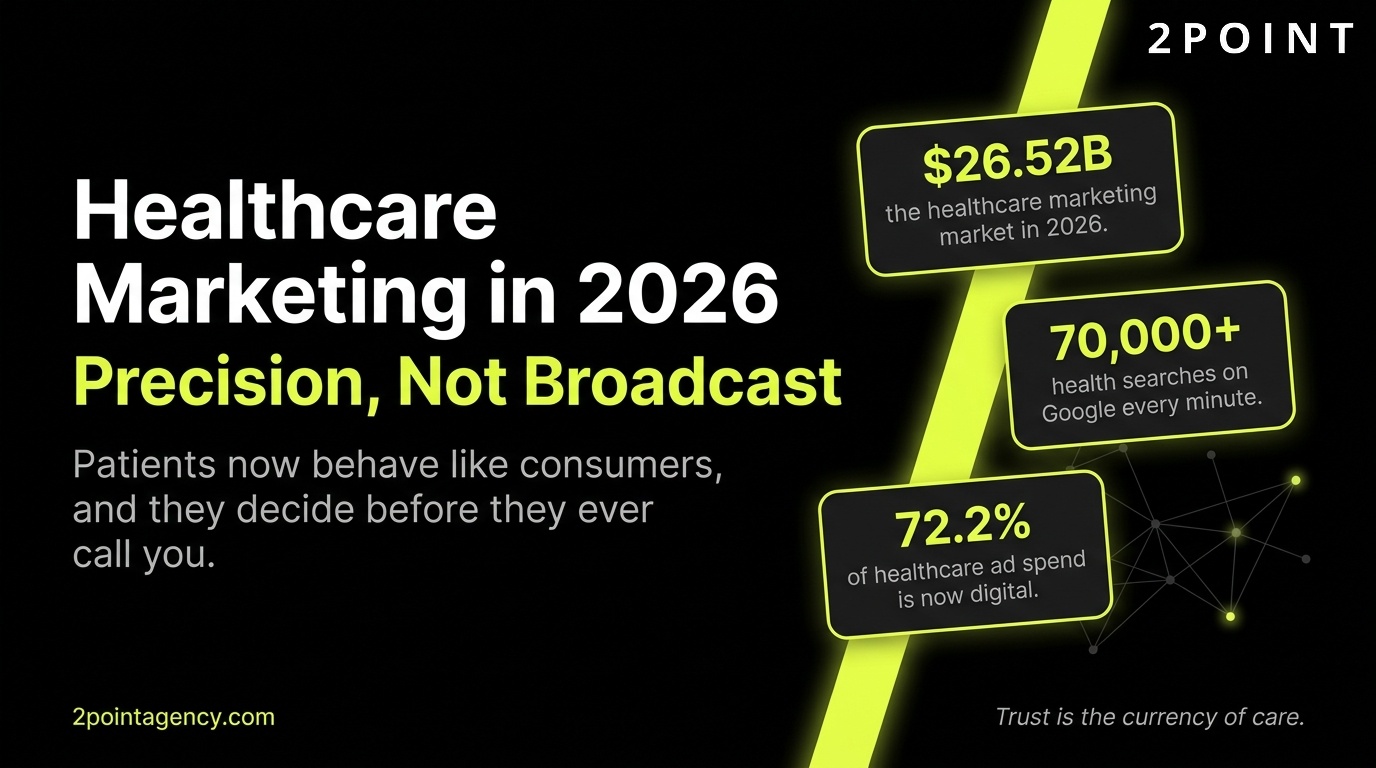
- The global healthcare marketing market is valued at $26.52 billion in 2026, projected to reach $43.26 billion by 2032.
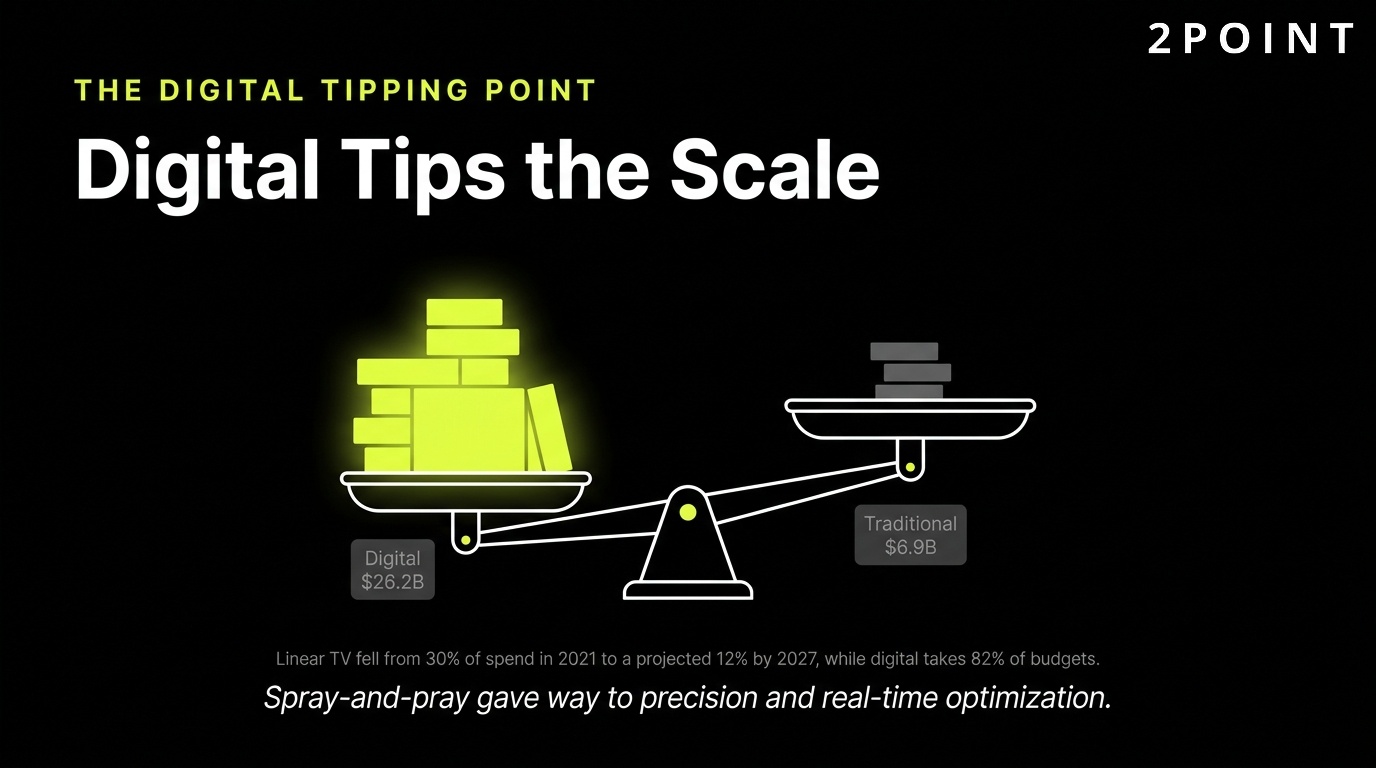
- Digital ad spend in healthcare now surpasses TV for the first time: $26.2 billion digital versus $6.9 billion traditional.
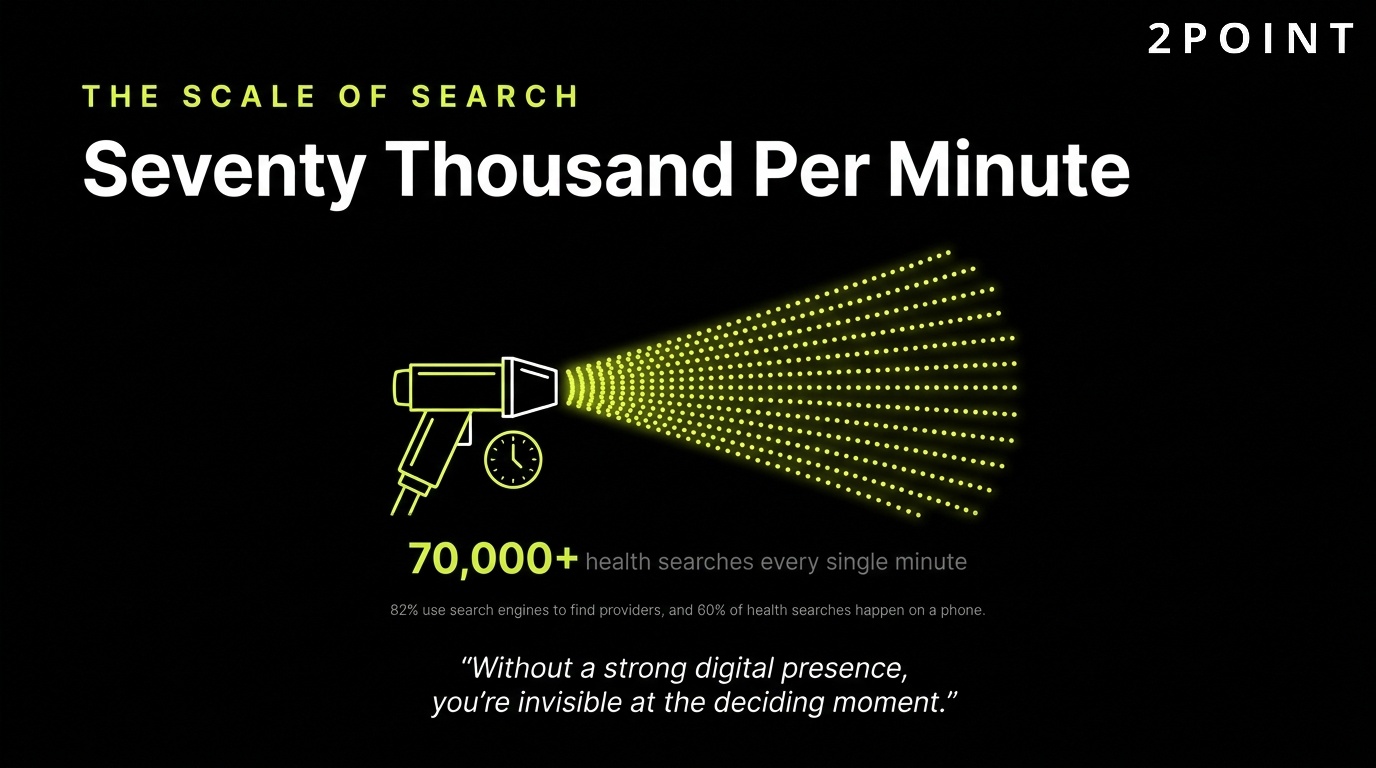
- Google processes over 70,000 health-related searches every single minute.
- Patients now research providers online before making contact, making digital presence non-negotiable.
- Effective healthcare marketing improves patient volume, health outcomes, and organizational competitiveness.
- 2026 marks a watershed moment where digital-first strategies have become the operational standard, not the exception.
The scale of transformation in healthcare marketing is difficult to overstate. Organizations that understood early that patients behave like consumers are now reaping measurable rewards in appointment volume, retention rates, and brand authority. Those that delayed digital investment are playing catch-up in an increasingly competitive landscape where the rules change faster than annual planning cycles can accommodate.
The sections that follow break down every major dimension of modern healthcare marketing, from AI-powered campaign strategy and patient acquisition to compliance frameworks and performance measurement. Whether you are managing marketing for a single-specialty practice, a multi-site health system, or a pharmaceutical brand, this guide provides the strategic foundation and tactical detail you need to compete effectively in 2026.
The Digital Transformation of Healthcare Marketing
The transformation of healthcare marketing from a broadcast-first to a digital-first discipline did not happen overnight, but 2026 marks the point at which that shift became impossible to ignore. Digital strategies now command the majority of healthcare advertising budgets, and organizations that have not aligned their operations with this reality are leaving significant growth on the table.
From Traditional to Digital-First Strategies
The most significant milestone in healthcare advertising in 2026 is the fact that digital healthcare advertising spending has officially exceeded linear TV spending for the first time. This is not a marginal shift. It represents a fundamental restructuring of where healthcare organizations believe their audiences actually are and how those audiences prefer to receive information.
Traditional advertising operated on a spray-and-pray model: run a broad message across mass channels and hope enough relevant viewers or listeners saw it to generate appointments. Digital marketing inverts that logic entirely. Precision targeting means you can serve a highly specific message to a specific audience segment at a specific moment in their health journey. Real-time optimization means you can test, learn, and improve within hours rather than waiting for campaign post-mortems weeks after media has run.
The numbers reflect this philosophy shift. Linear TV's share of healthcare ad spending dropped from 30% in 2021 to a projected 12% by 2027, while digital channels now account for 72.2% of total healthcare advertising spend. By 2027, an estimated 82% of healthcare marketing budgets will be allocated to digital channels. These are not projections from optimistic digital-first advocates. They are the aggregate investment decisions of hospitals, health systems, pharmaceutical companies, and private practices operating in a marketplace shaped by patient expectations.
Current Budget Allocation Across Channels
Understanding where healthcare organizations are directing their marketing dollars reveals both where confidence is highest and where emerging opportunities exist. The allocation landscape in 2026 reflects a clear hierarchy of investment priorities.
| Healthcare Marketing Channel | Average Budget Allocation | Year-Over-Year Growth |
|---|---|---|
| Paid Digital Advertising | 12.5% | Strong growth, driven by search and programmatic |
| Social Media Marketing | 11.5% | Increasing, especially short-form video |
| Traditional Advertising | 9.5% | Declining, offset by CTV migration |
| Digital Video and Display | Varies by organization | 70% YoY increase |
| Connected TV (CTV) | Varies by organization | 60% YoY growth |
The standout story in budget allocation is the explosive growth in digital video and Connected TV, which signals that healthcare marketers have found a way to preserve the emotional storytelling power of broadcast media while gaining the targeting precision of digital channels.
Paid digital advertising commands the largest single digital channel allocation because search intent is the most direct signal a potential patient can send. Someone searching for "orthopedic surgeon near me" is ready to act. Social media investment reflects the reality that brand discovery and community-building happen on platforms like Facebook, Instagram, and YouTube before patients ever arrive at a search engine. The strategic reasoning behind each allocation is grounded in where different stages of the patient journey happen, not just where impressions are cheapest.
How Patient Behavior Has Changed Digital Strategy
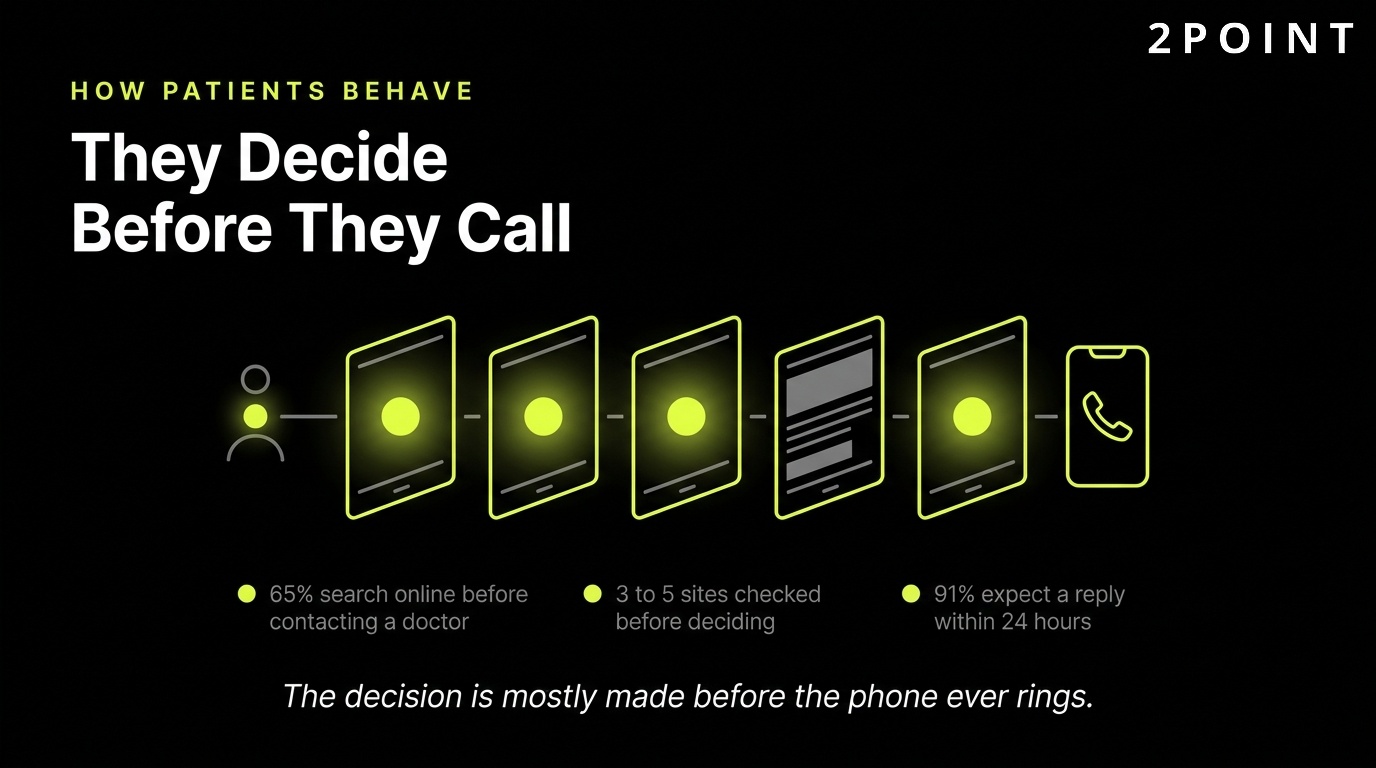
The single most important driver of digital strategy in healthcare marketing is not technology. It is behavior. The modern patient approaches healthcare decisions the same way they approach purchasing a car or booking a hotel: they research extensively, compare options, read reviews, and form strong opinions before making contact with a provider.
65% of patients search online before contacting a doctor, and 82% use search engines as their primary method for finding healthcare providers. The average patient checks three to five websites before making a decision, and 60% of all health-related searches happen on mobile devices. Once a patient has identified a potential provider, 91% expect a response to an inquiry within 24 hours.
These behavioral patterns demand a specific type of digital infrastructure. Your website must load quickly on mobile, your Google Business Profile must be accurate and complete, your reviews must be visible and managed, and your response systems must be fast. The importance of digital marketing for healthcare providers has never been clearer: without a strong digital presence, you are invisible to the majority of your potential patient population at the precise moment they are ready to make a decision.
The ROI Case for Digital Healthcare Marketing
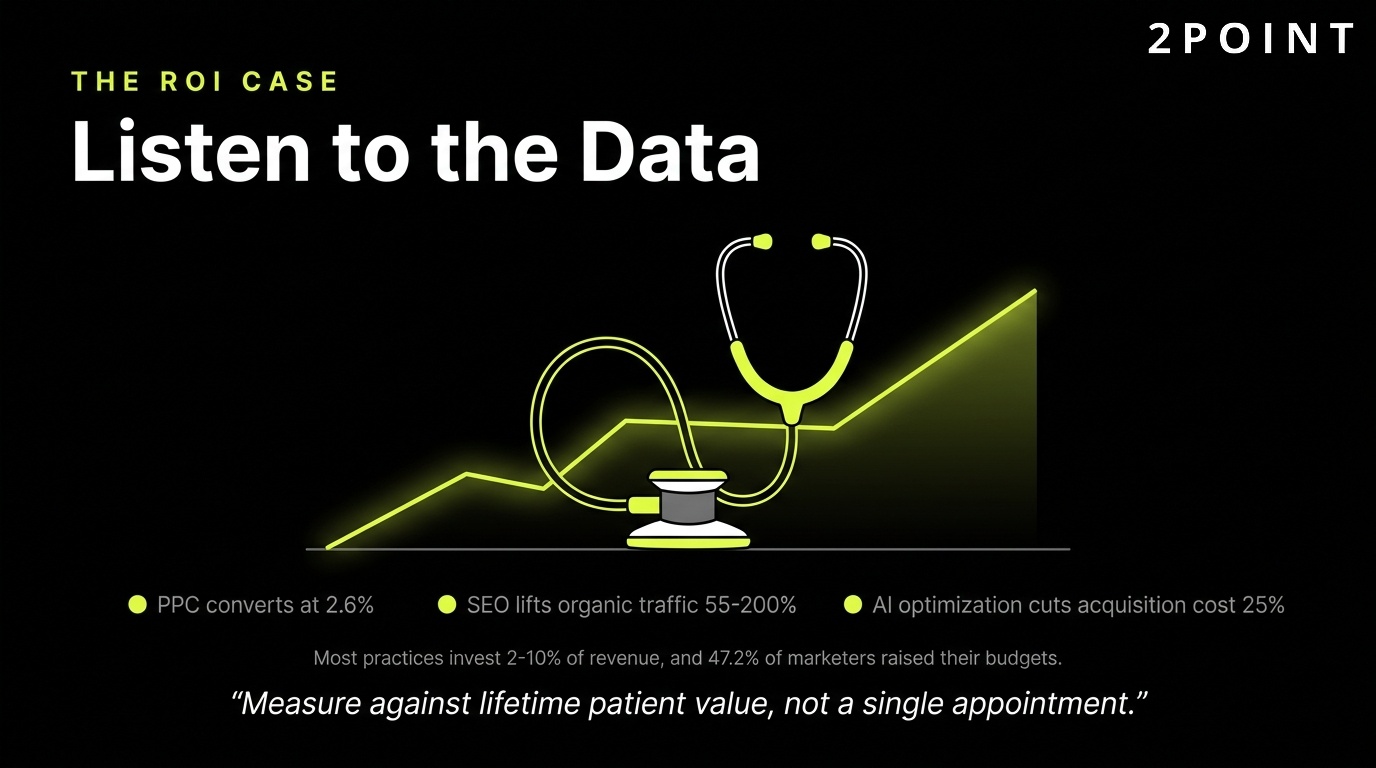
Skepticism about marketing investment is common in healthcare organizations where clinical priorities and thin margins compete for every budget dollar. The data, however, makes a compelling case for sustained digital investment. Most healthcare practices allocate between 2% and 10% of revenue to marketing, with higher-growth organizations trending toward the upper end of that range.
Healthcare pay-per-click advertising converts at 2.6%, which compares favorably to many other sectors. AI-powered campaign optimization has been shown to reduce customer acquisition costs by up to 25%. Practices that invest in SEO see organic traffic increases of 55% to 200%. And the investment trend reflects growing confidence: 47.2% of healthcare marketers increased their budgets in 2024, setting the stage for continued growth in 2025 and 2026.
The return on investment calculation in healthcare marketing must account for lifetime patient value, not just the cost of acquiring a single appointment. A patient who returns annually for preventive care, refers family members, and leaves positive reviews generates revenue that dwarfs their initial acquisition cost. When digital marketing is measured against that full value equation, the ROI case becomes even stronger. For guidance on building a realistic marketing budget that aligns with these opportunities, strategic planning tools can help healthcare organizations establish the right investment baseline.
AI-Powered Healthcare Marketing Strategies That Are Delivering Results
Artificial intelligence crossed a critical threshold in healthcare marketing between 2024 and 2026, moving from pilot programs and conference-circuit buzz into operational deployment at scale. The organizations seeing the most significant performance improvements are those that moved from experimentation to integration, embedding AI into their core marketing workflows rather than treating it as a separate initiative.
Moving from Pilot Programs to Production Deployment

75% of U.S. health systems now use at least one AI application in their marketing or operations. Among healthcare marketing leaders, 69% rank generative AI as a critical or high-priority technology for the coming 12 months. More specifically, 68% plan to use AI for lead generation, and more than 50% of health systems that have deployed AI solutions report achieving 2x or better ROI.
The distinction between pilot-stage and production-stage AI is important. Pilot programs tend to run in isolated channels or on limited data sets, producing results that are interesting but not scalable. Production deployment means AI is embedded in audience building, campaign bidding, creative testing, and performance reporting simultaneously, creating a compounding advantage that grows more powerful the more data it processes. Healthcare organizations that made that transition in 2024 and early 2025 now operate with a structural performance advantage over those still running manual campaign management.
The practical applications that are delivering measurable results include predictive audience targeting, automated content personalization, chatbot-driven patient intake, and real-time budget reallocation across channels. These are not experimental features. They are live, operational capabilities available through major digital platforms and specialized healthcare marketing technology vendors today.
Clinical Data and Predictive Audience Building
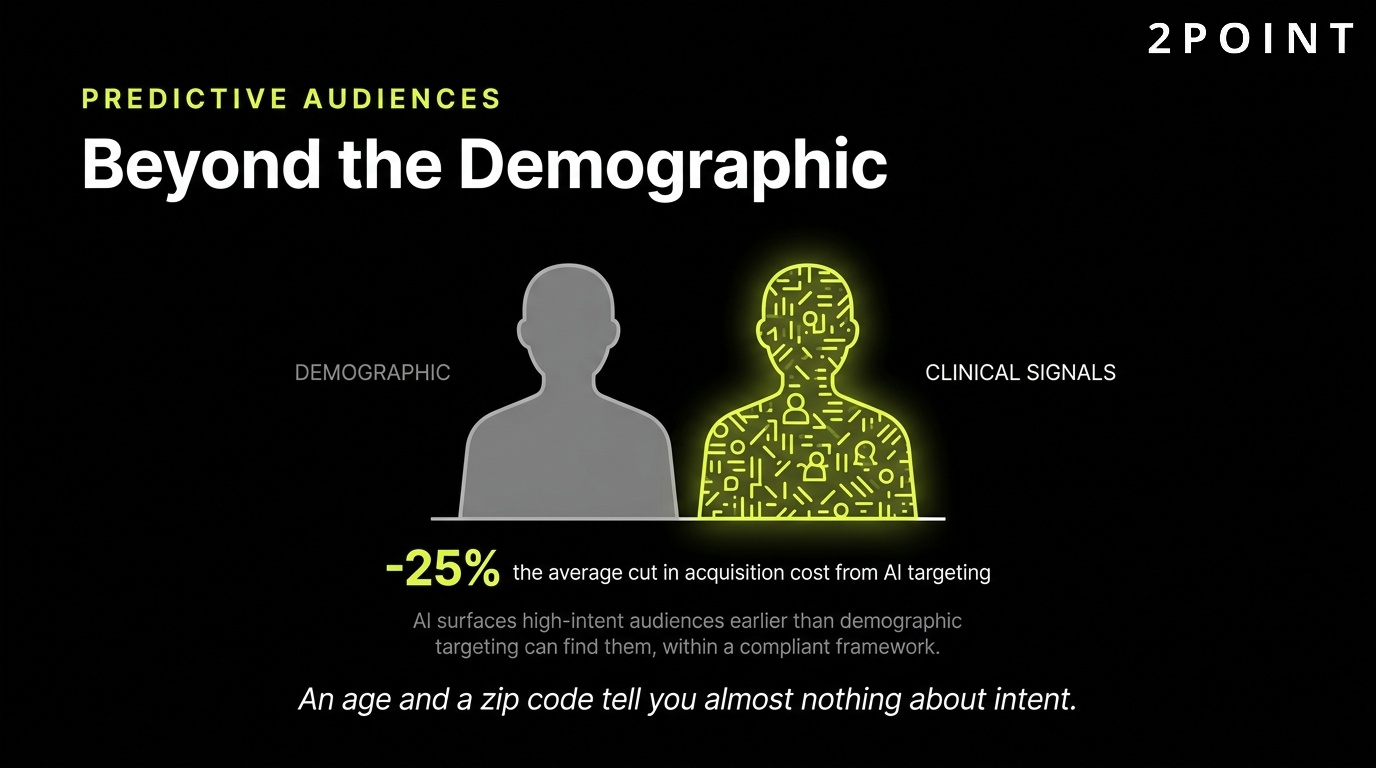
One of the most powerful applications of AI in healthcare digital marketing is the use of clinical data, including claims data, pharmacy records, and condition-level data, to build audiences that outperform traditional demographic targeting in every measurable dimension. Demographic targeting tells you that a user is a 55-year-old woman in a specific zip code. Clinical data targeting tells you that she has been diagnosed with Type 2 diabetes, fills metformin prescriptions regularly, and has searched for endocrinology specialists in the past 90 days.
The difference in precision is dramatic. AI-powered predictive models deliver more conversions earlier in campaigns because they surface high-intent audiences before traditional targeting methods can identify them. The AI recognizes patterns in behavioral and clinical data that human analysts would either miss entirely or take weeks to identify. This pattern recognition capability is particularly valuable in healthcare, where the path from awareness to appointment is rarely linear and often involves multiple condition-related research behaviors that precede active provider search.
AI-driven targeting reduces customer acquisition costs by 25% on average compared to conventional demographic approaches. When that cost reduction is multiplied across thousands of monthly impressions and dozens of campaigns running simultaneously, the financial impact on marketing efficiency becomes substantial. The key is ensuring that the data used to build these audiences is handled within a HIPAA-compliant framework, which brings us to the compliance dimension of AI-powered personalization.
Personalization at Scale Without Sacrificing Compliance
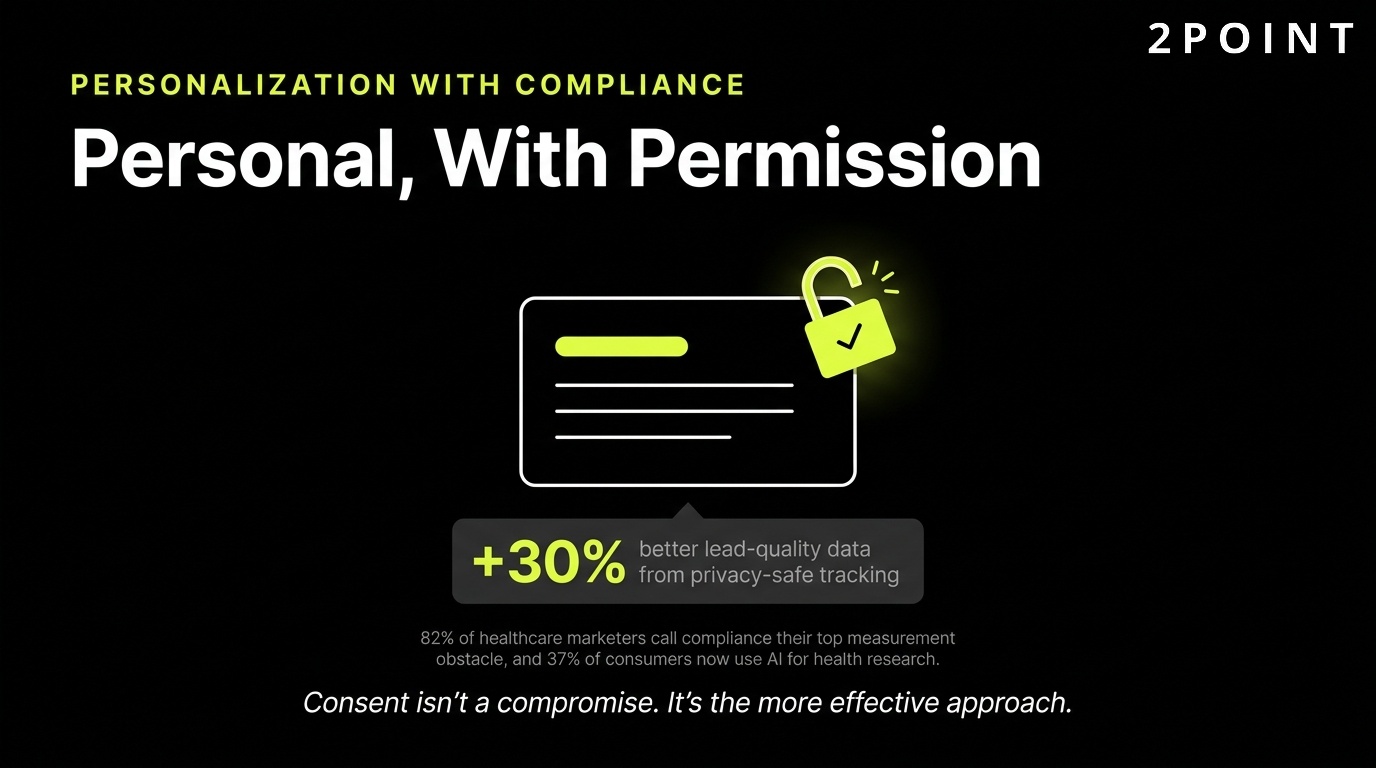
The central tension in AI-driven healthcare marketing is the conflict between the desire to deliver highly personalized patient experiences and the obligation to protect patient privacy under HIPAA and an increasingly complex state regulatory landscape. This tension is real, but it is not irresolvable. The organizations that are succeeding have adopted a consent-based personalization framework that delivers meaningful relevance without crossing compliance lines.
37% of consumers now use generative AI tools for health research, which means AI platforms are increasingly shaping patient perceptions of providers, treatments, and conditions before those patients ever engage with a healthcare organization's marketing. This creates both risk and opportunity. The risk is that AI-generated health information may be inaccurate or may direct patients toward competitors. The opportunity is that organizations that publish well-structured, authoritative content are better positioned to have their information surfaced by AI platforms.
On the tracking and personalization side, 82% of healthcare marketers cite compliance as their top measurement obstacle. Privacy-safe tracking methods, when implemented correctly, actually improve lead quality data by up to 30% because they focus on consented, high-quality data signals rather than broad, passive tracking that degrades as browser policies tighten. Consent-based personalization is not a compromise position. It is a more sustainable and ultimately more effective approach to understanding and reaching patients.
Real-Time Campaign Optimization and Performance
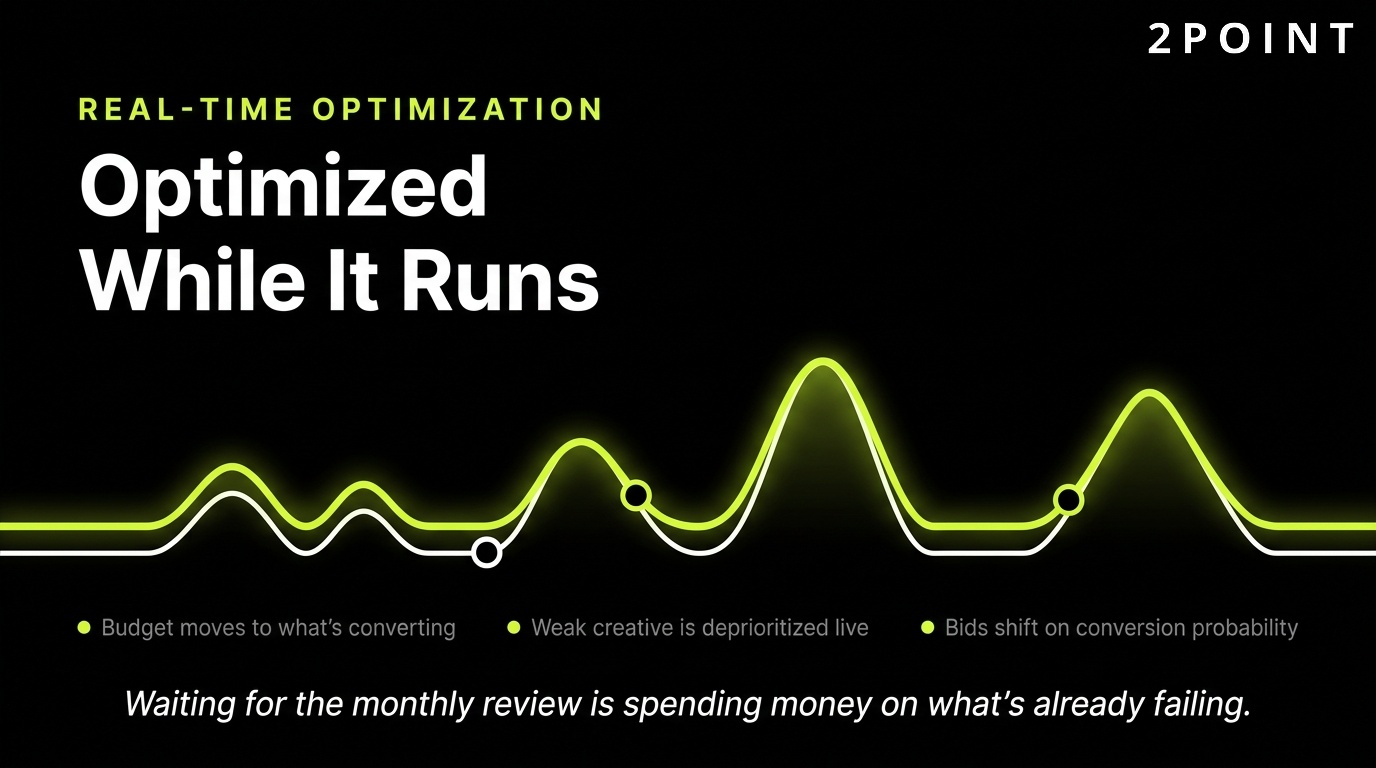
Beyond audience targeting and personalization, AI delivers transformational value in the ongoing management of active campaigns. Traditional campaign management relied on weekly or monthly performance reviews, followed by manual adjustments to bids, budgets, and creative. By the time those adjustments took effect, significant spend had often occurred against underperforming ad sets or audiences.
AI-powered campaign management operates on a continuous optimization loop. Budget is reallocated automatically toward channels and audiences showing the best conversion performance. Creative variations are tested simultaneously and underperforming versions are deprioritized in real time. Bidding strategies adjust dynamically based on conversion probability signals. The practical result is that more than half of health systems that have deployed AI report achieving 2x ROI compared to conventional approaches, with AI-powered campaigns consistently delivering higher engagement rates earlier in the campaign lifecycle. Knowing how to implement a digital marketing strategy that incorporates these AI capabilities from the outset is increasingly the baseline expectation for competitive healthcare organizations.
Patient Acquisition Strategies That Work in the Digital Age
Patient acquisition is the most concrete measure of healthcare marketing effectiveness, and in 2026, the strategies that work are fundamentally different from those that worked five years ago. The modern patient acquisition funnel is longer, more complex, and more heavily influenced by digital touchpoints than any previous generation of healthcare marketing practitioners anticipated.
Understanding the Modern Patient Journey
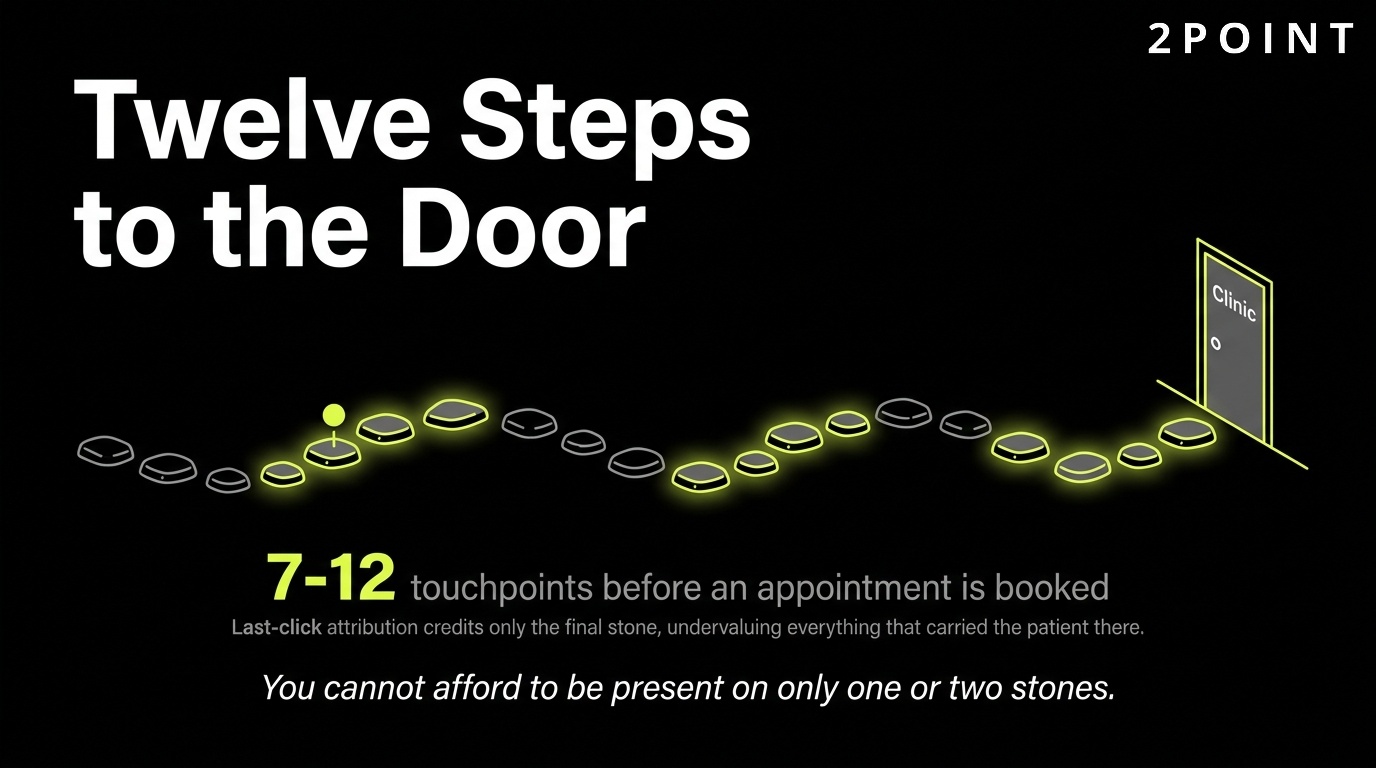
Approximately 12.4% of the population requires regular access to healthcare providers at any given time. Each of those individuals typically encounters seven to twelve touchpoints before booking an appointment. Those touchpoints span search engine results pages, review platforms, social media, email, and direct word-of-mouth, in a sequence and combination that varies significantly by condition, age group, and geography.
84% of patients read online reviews before selecting a healthcare provider, and 90% use those reviews as a primary factor in choosing a doctor. The multi-touch nature of this journey creates a complex attribution challenge. A patient may first encounter your brand through a YouTube pre-roll ad, research you through a Google search, read your reviews on Healthgrades, and then finally book through your website after seeing a retargeted Facebook ad. Each touchpoint contributed to the conversion, but standard last-click attribution would give credit only to the final ad. Accurately understanding this journey is the foundation of effective patient acquisition strategy.
The strategic implication is clear: healthcare organizations cannot afford to be present in only one or two channels and hope for the best. The multi-touchpoint reality requires coordinated visibility across the channels where patients conduct health research, with consistent messaging and brand presentation at every stage of their journey.
SEO and Local Search Dominance
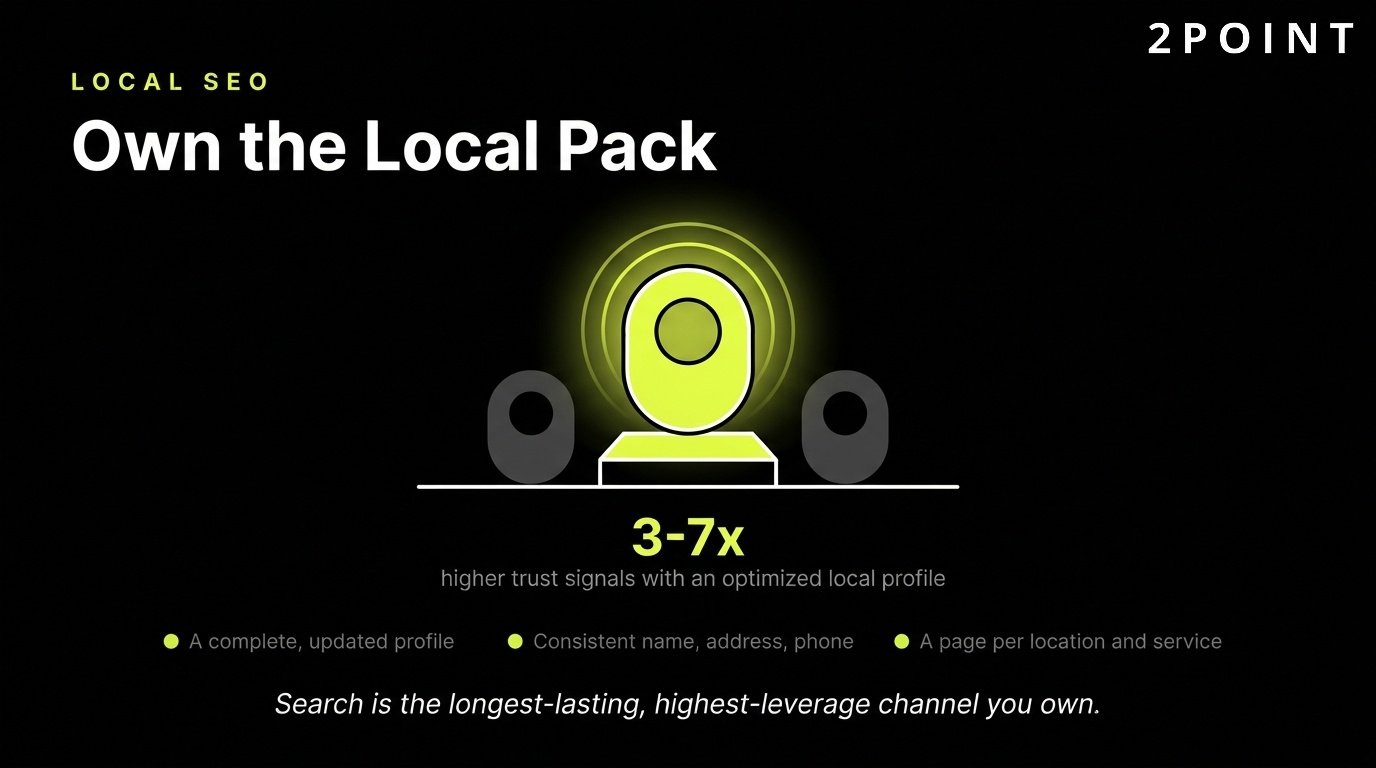
Search engine optimization remains the highest-leverage, longest-lasting channel in healthcare digital marketing. With over 70,000 health-related searches happening on Google every minute, the volume of potential patient engagement available through organic search is staggering. Healthcare organizations that invest in SEO consistently see organic traffic increases of 55% to 200% over 12 to 24 months.
For most patient-facing healthcare organizations, local SEO is the highest-priority dimension of search strategy. When someone searches for "cardiologist in Dallas" or "urgent care open now," Google's local pack results are the most visible elements on the page. Providers with strong local SEO presence see three to seven times higher trust signals compared to those without optimized profiles. The foundation of local SEO in healthcare includes:
- A fully optimized and regularly updated Google Business Profile with accurate hours, services, photos, and responses to reviews
- Consistent NAP (name, address, phone number) information across all online directories and citation sources
- Location-specific landing pages for each practice location or service area
- Schema markup that helps Google understand your practice specialty, accepted insurance, and appointment availability
- Mobile-first website design given that 60% of health searches happen on mobile
- Condition and treatment-specific content that answers the questions patients are actively searching
Technical SEO also matters significantly in healthcare. Page load speed, core web vitals, structured data, and site architecture all influence how Google ranks your content relative to competitors. Many healthcare websites carry years of accumulated technical debt that actively suppresses their search visibility. A comprehensive digital marketing audit is often the most efficient starting point for identifying and prioritizing these technical improvements.
The Power of Online Reviews and Reputation Management
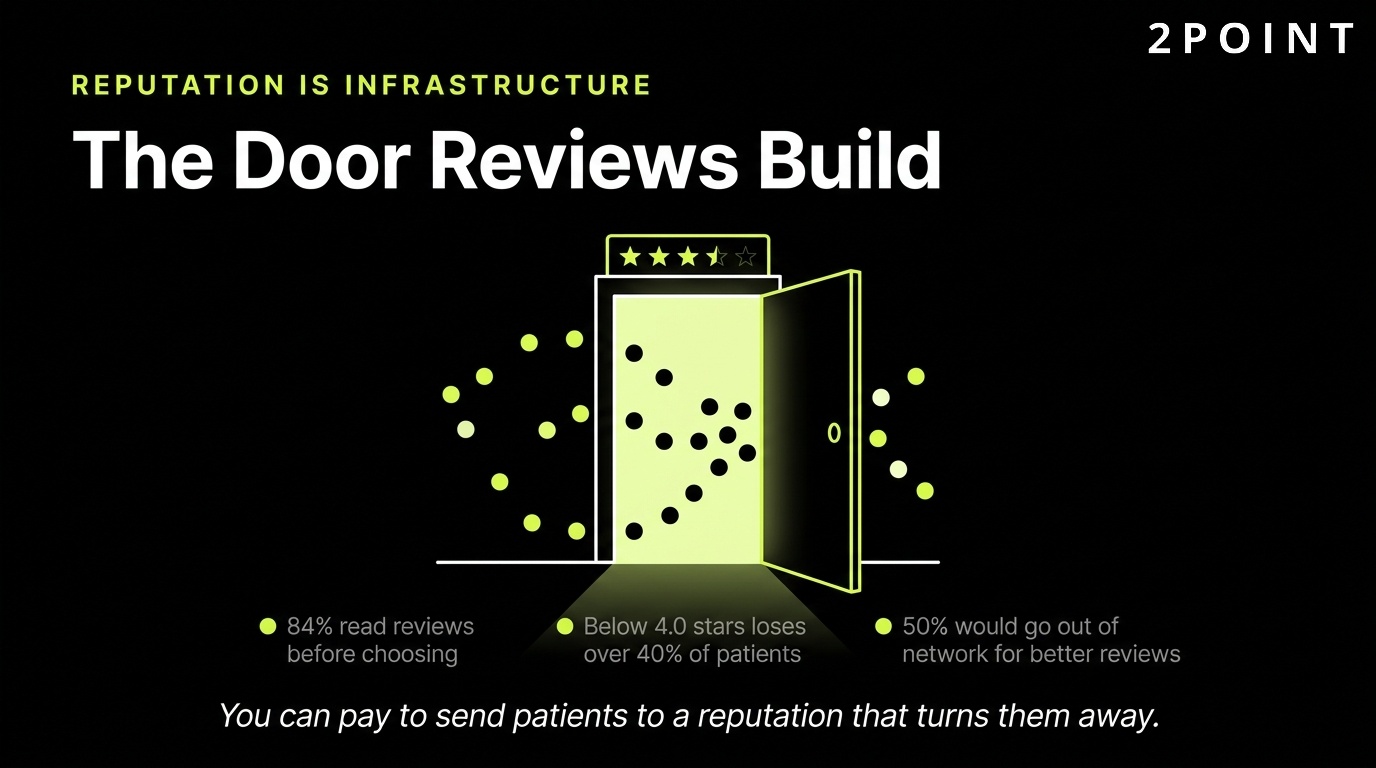
Online reputation is not a marketing channel in the traditional sense. It is the infrastructure that either amplifies or undermines every other marketing investment you make. A practice that spends $15,000 per month on paid search and maintains a 3.2-star rating on Google is paying to send patients to a reputation that turns them away.
The stakes could not be higher. 84% of patients read online reviews before selecting a healthcare provider, and nearly 75% use reviews as the first step in their provider evaluation process. 50% of patients say they would go out of network to see a provider with better reviews, even at higher out-of-pocket cost. Reputation score influences 65% of final provider selection decisions. And practices with average ratings below 4.0 stars lose more than 40% of potential patients before those patients ever make contact.
Effective reputation management in healthcare requires a systematic approach, not a reactive one. Best practices include:
- Implementing a post-visit review request process through SMS or email, making it frictionless for satisfied patients to leave feedback
- Responding professionally and promptly to all reviews, both positive and negative, without disclosing any patient information in responses
- Monitoring all major platforms including Google, Healthgrades, Yelp, Zocdoc, and specialty-specific directories
- Addressing legitimate service failures internally before they become public complaints
- Using review sentiment data to identify systemic patient experience issues that marketing cannot fix on its own
Converting Digital Interest into Appointments
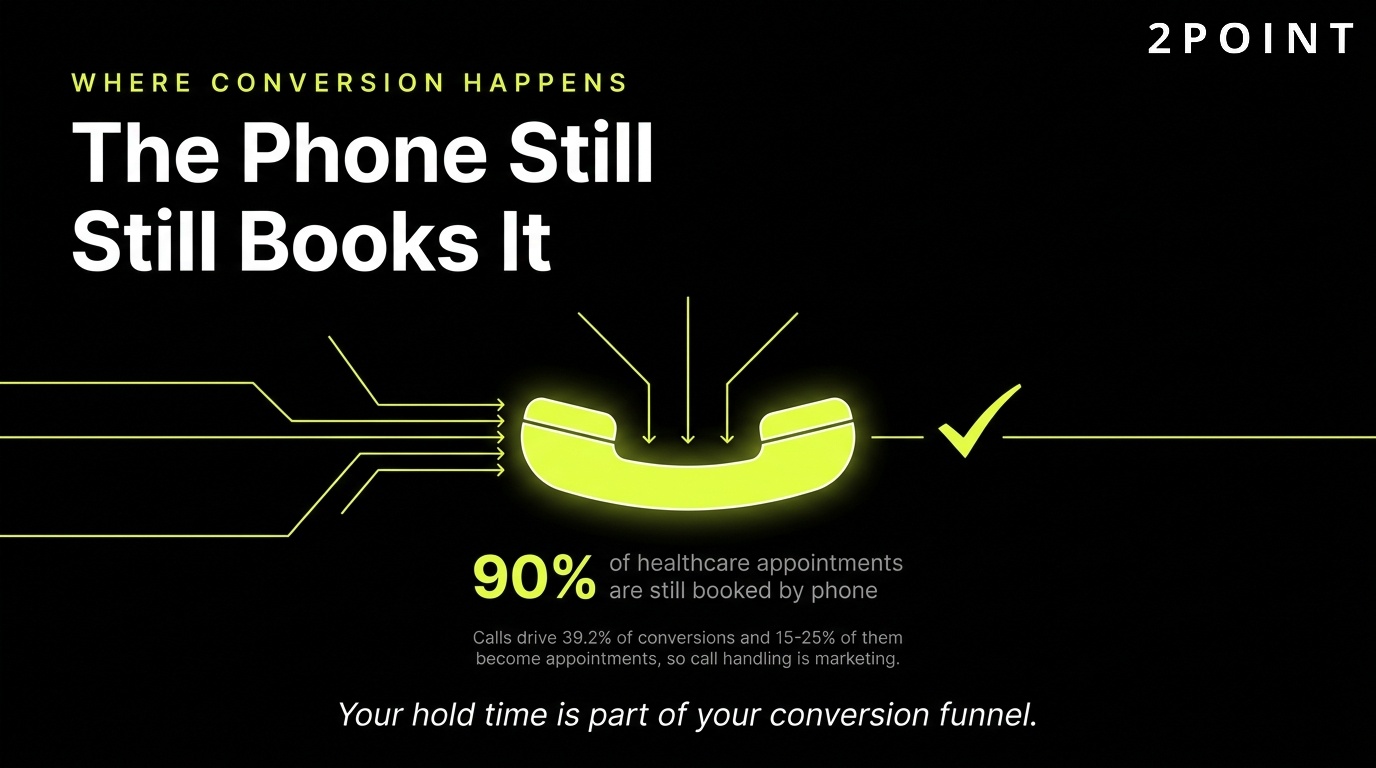
Driving traffic and building reputation are prerequisites, but the ultimate goal of patient acquisition marketing is converting interest into booked appointments. Healthcare websites convert between 2% and 5% of visitors into patients, leaving significant room for improvement through conversion optimization. Understanding where conversion happens is the starting point for improving it.
Despite the digital transformation of healthcare marketing, 90% of healthcare appointments are still scheduled by phone, and phone calls account for 39.2% of all healthcare conversions. This means that your phone systems, hold times, and scheduling staff are critical components of your marketing conversion funnel, not just operational considerations. 15% to 25% of inbound calls lead directly to appointments, which means that call handling quality can dramatically influence acquisition efficiency.
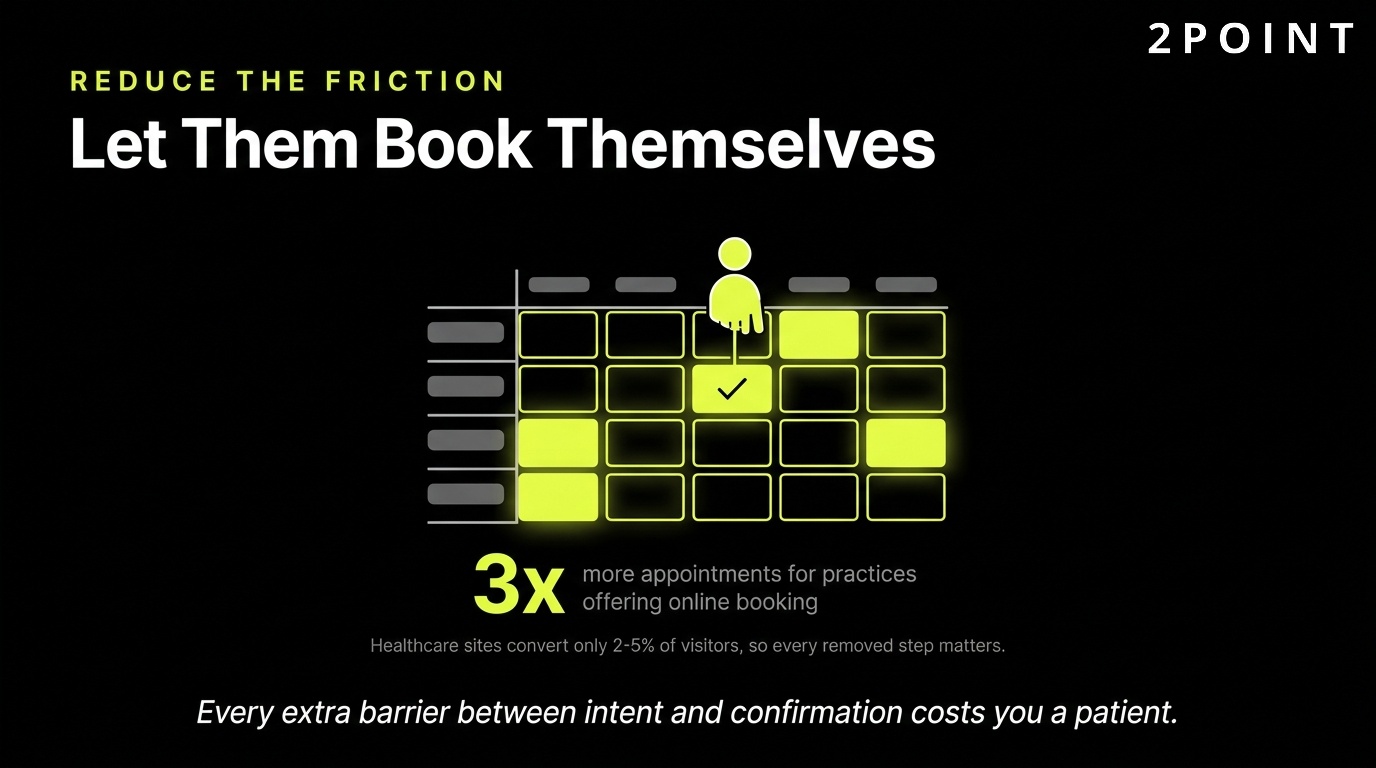
Online scheduling adoption is growing rapidly as a conversion channel. Practices that offer online booking see three times more appointments than those that rely exclusively on phone scheduling. The friction-reduction principle is straightforward: every additional step or barrier between a patient's intent and a confirmed appointment reduces the likelihood they complete the process. Conversion optimization strategies that deliver consistent improvements in healthcare include:
- Placing scheduling calls-to-action prominently above the fold on every service page and landing page
- Integrating real-time availability calendars so patients can self-schedule without staff involvement
- Using click-to-call functionality on mobile pages to eliminate the copy-and-dial friction
- Implementing appointment reminder and confirmation sequences to reduce no-show rates
- Testing form length and field requirements to find the minimum viable information capture that satisfies clinical intake needs
- Creating condition-specific landing pages that match the exact language patients use in their search queries
Content Marketing for Healthcare Organizations That Builds Lasting Trust
Healthcare content marketing operates on a different trust dynamic than most other industries. Patients are making decisions that directly affect their health, and they are acutely sensitive to content that feels promotional, uninformed, or designed to manipulate rather than help. The organizations that win with content in healthcare are those that commit to genuine educational value as the primary objective, with patient acquisition as the natural downstream benefit.
Building Trust Through Educational Content

70% of healthcare organizations now have a formal content marketing strategy, reflecting broad recognition that content is not a nice-to-have but a competitive necessity. The performance data supports this investment: educational content posts earn 2.3 times more engagement than promotional content, and providers that publish educational content consistently see 34% higher patient retention rates compared to those that rely primarily on promotional messaging.
Trust is the most important currency in healthcare digital marketing. When a patient finds a blog post that accurately describes their symptoms, explains their condition in plain language, and outlines their treatment options without overselling a specific approach, that patient associates the publishing provider with competence, empathy, and honesty. That association is extraordinarily difficult for competitors to displace with advertising alone. Content types that consistently build trust in healthcare include condition guides, procedure explanations, provider bios and philosophy statements, patient success stories (with appropriate consent), FAQ content addressing common concerns, and preventive health guides tied to seasonal health issues.
The structural requirements for effective healthcare content have also evolved. Content must be medically accurate and reviewed by licensed clinicians. It must be written at an accessible reading level without sacrificing accuracy. It must be structured in a way that allows Google and AI platforms to extract specific answers from it. And it must be updated regularly to reflect changes in clinical guidelines, regulatory requirements, and available treatments. Healthcare content marketing is a sustained operational commitment, not a campaign.
Video Marketing and Short-Form Content
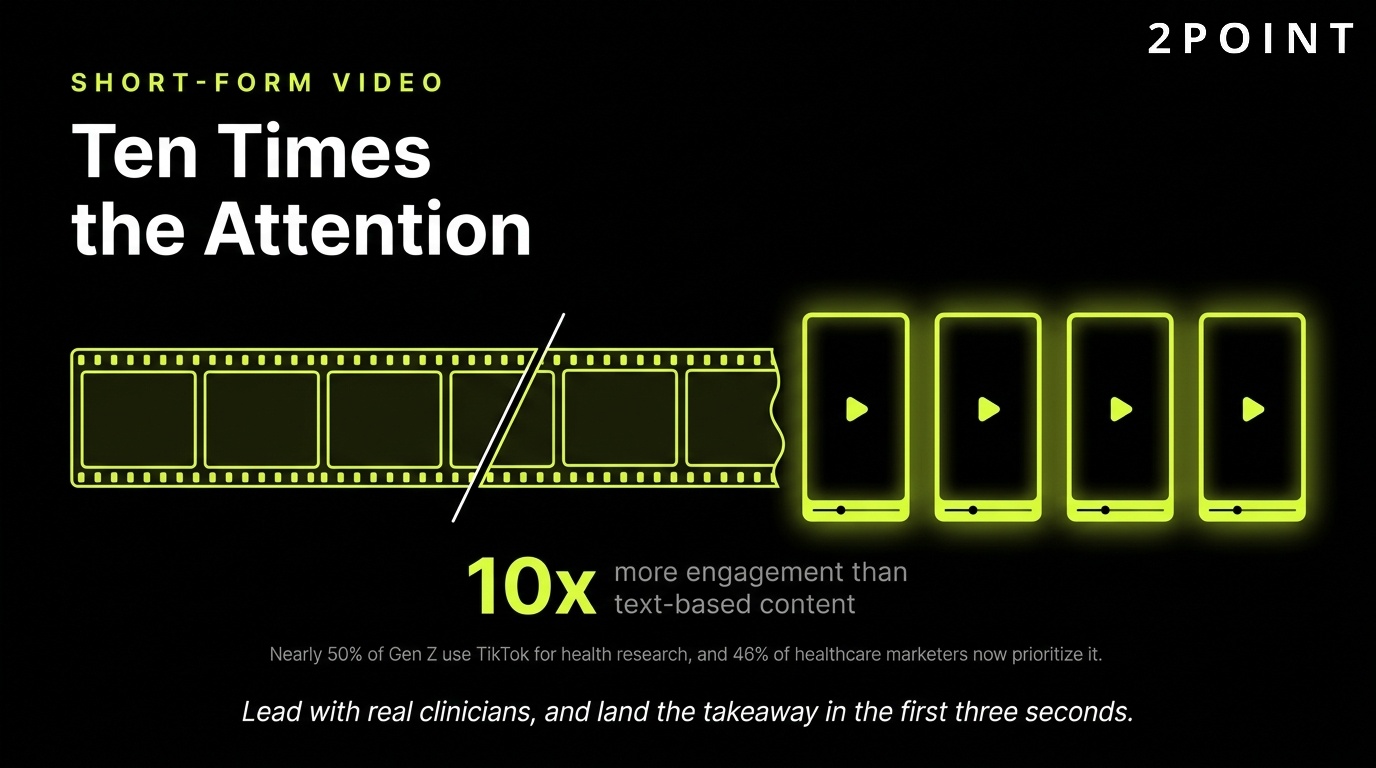
Video has become the dominant format for healthcare content engagement, driven by the intersection of platform algorithm preferences and changing patient media consumption habits. Healthcare videos receive 10 times more engagement than text-based content across social platforms, and the growth of short-form video specifically has opened a powerful new channel for patient education and provider brand building.
Nearly 50% of Gen Z consumers use TikTok for health research, and more than 33% of Millennials use social video platforms as a primary source of health information. TikTok's importance to healthcare marketers jumped 28% year-over-year, with 46% of healthcare marketers now prioritizing the platform. Instagram Reels have been shown to improve reach by 87% in the medical content niche. The importance of video marketing for healthcare providers cannot be overstated in a media environment where short-form video dominates platform discovery and patient education consumption.
Best practices for healthcare video content include leading with clinical credibility by featuring actual providers rather than actors, addressing real patient questions and concerns in plain language, maintaining strict HIPAA compliance in any content that references patient situations, including captions for accessibility and engagement, keeping short-form content under 60 seconds with a clear takeaway in the first three seconds, and repurposing longer educational videos into multiple short-form clips to maximize content efficiency.
Answer Engine Optimization Beyond Traditional SEO
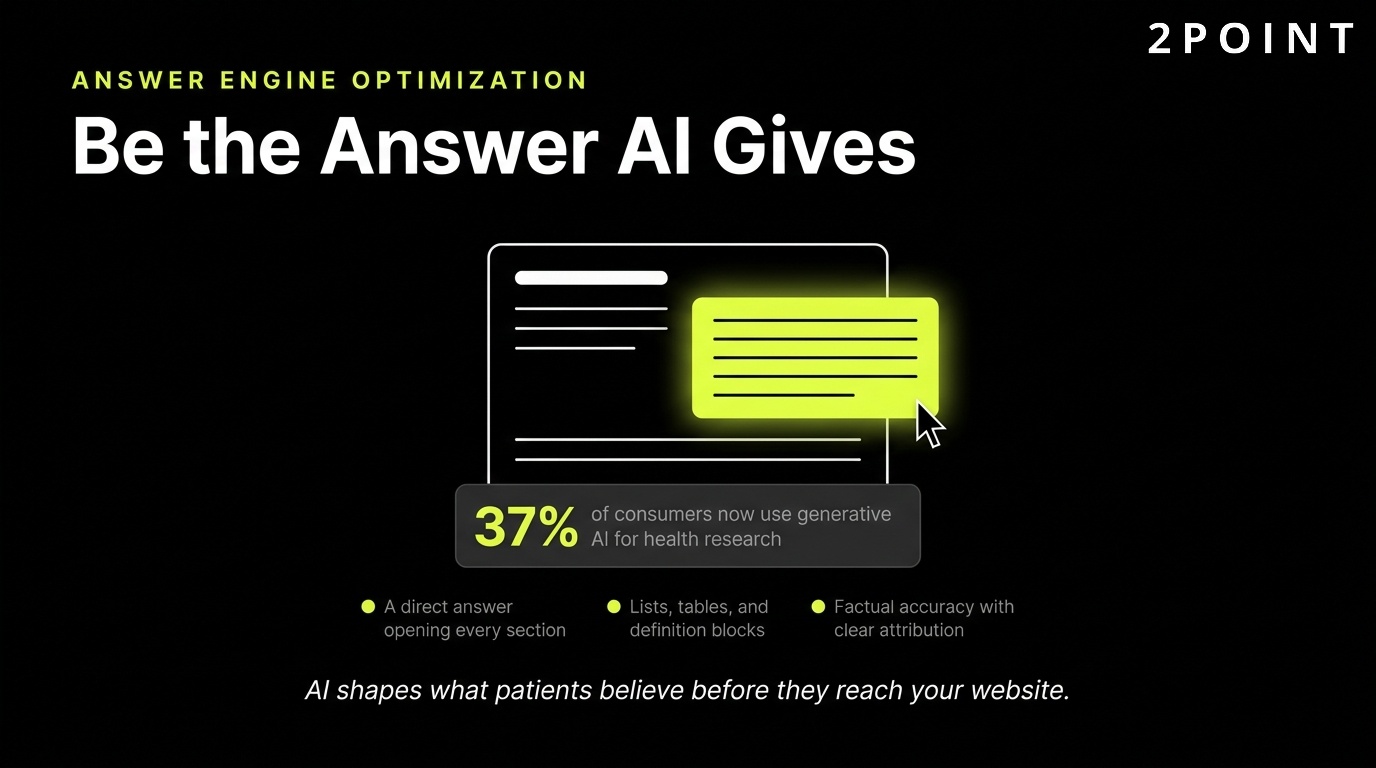
The emergence of AI-powered search and answer platforms has created a new content optimization imperative that sits alongside traditional SEO: Answer Engine Optimization, or AEO. With 37% of consumers now using generative AI platforms for health research, tools like ChatGPT, Perplexity, and Google's AI Overviews are increasingly shaping patient perceptions of providers, conditions, and treatments before those patients ever land on a provider's website.
AEO requires structuring content specifically for how large language models consume and surface information. This means writing clear, direct answers at the beginning of every content section, using structured formats like numbered lists, tables, and definition blocks, including the specific questions patients ask in headings and subheadings, maintaining factual accuracy with clear attribution so AI platforms can cite your content with confidence, and ensuring your content is crawlable and accessible to AI agents that are building knowledge bases about healthcare topics.
AI platforms are increasingly shaping the patient journey from the earliest stages of health research. Healthcare organizations that optimize for AI discovery now will build a visibility advantage in a channel that is growing rapidly and is still relatively uncrowded compared to traditional search. The organizations that master both traditional SEO and AEO will occupy more of the patient's research journey than those optimizing for only one format.
Email Marketing and Patient Retention Strategies
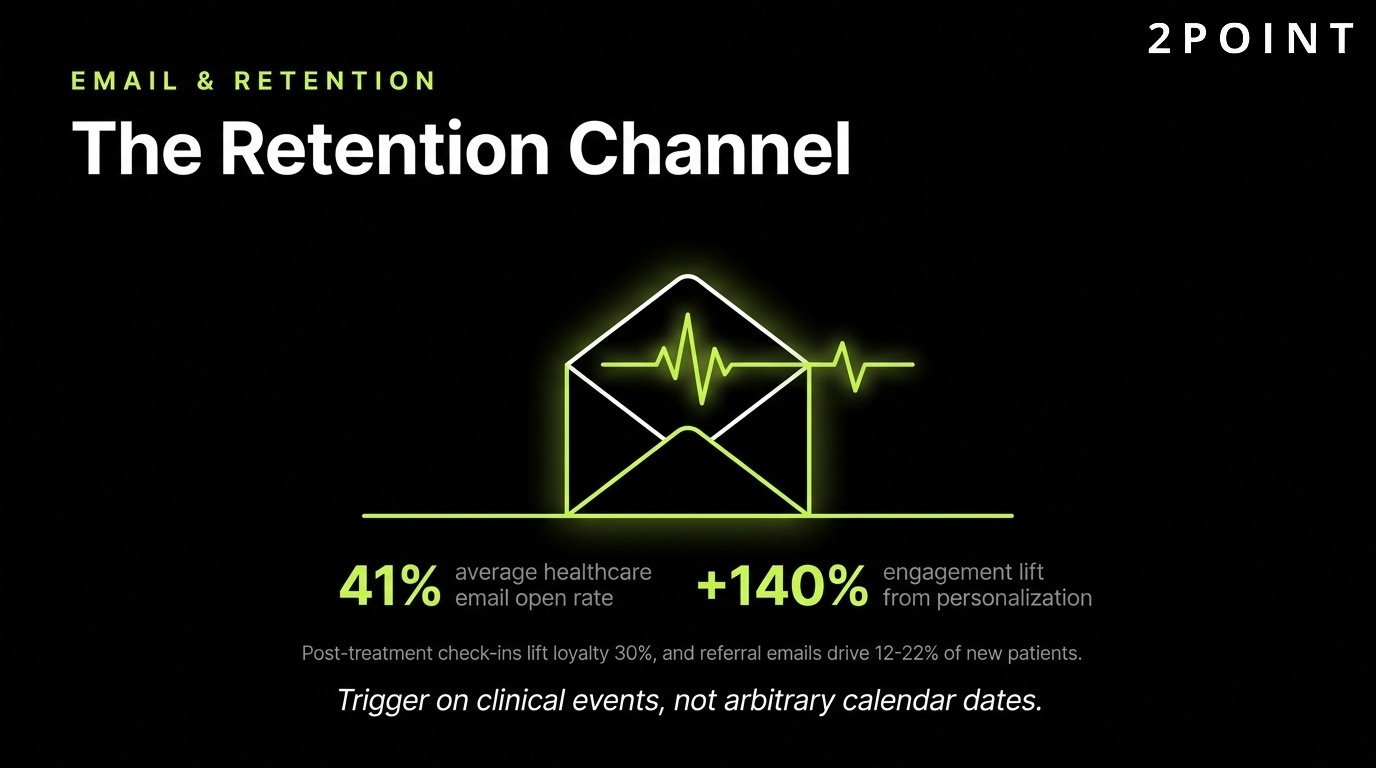
While much of the healthcare marketing conversation focuses on acquisition, retention is where the economics of patient relationships become most compelling. Email marketing is the primary digital channel for nurturing existing patient relationships, and its performance metrics in healthcare are exceptionally strong. Healthcare email open rates average 41%, compared to cross-industry averages of 20% to 25%. Email conversion rates in healthcare average 2.6%, making it one of the most cost-efficient channels available.
Personalization is the primary driver of email performance in healthcare. Personalized emails improve engagement by 140% compared to generic broadcast communications. This means segmenting your email database by condition, treatment history, age group, and engagement behavior, then delivering content that is directly relevant to each segment's specific health situation. Post-treatment check-in sequences improve patient loyalty by 30%, and referral-focused email campaigns generate 12% to 22% of new patients for practices that deploy them systematically.
Integrating email marketing with your patient relationship management system enables a level of personalization that generic email platforms cannot match. Understanding how to integrate CRM with marketing systems allows healthcare organizations to trigger lifecycle emails based on actual clinical events, such as annual wellness visit reminders, chronic condition management check-ins, and prescription refill nudges, rather than arbitrary time-based schedules. This behavioral triggering dramatically improves relevance and, consequently, open and conversion rates.
Connected TV and Video Advertising in Healthcare Marketing
Connected TV has emerged as one of the fastest-growing and most strategically important channels in healthcare advertising, filling the precision-targeting gap that linear television left open for decades. For healthcare organizations that built brand equity through broadcast TV and are now watching that channel fragment and decline, CTV offers a credible migration path that preserves the visual storytelling format while adding the measurability of digital.
Why Healthcare Advertisers Are Abandoning Linear TV
The decline of linear television as a primary healthcare advertising channel is both rapid and structural. Linear TV will account for just 12% of healthcare advertising spend by 2027, down from 30% in 2021. The reasons for this decline go beyond simple cord-cutting audience loss, though that is certainly a contributing factor. Linear TV's fundamental limitations as an advertising channel have become impossible to overlook when digital alternatives offer dramatically superior capabilities.
Traditional TV advertising in healthcare meant purchasing broad demographic targeting (adults 45-65, for example), accepting that a significant portion of your impressions would reach people who were not candidates for your services, and waiting for post-campaign surveys or sales data to understand whether the investment worked. There was no real-time optimization, no household-level precision, and no meaningful connection between TV exposure and downstream patient behavior.
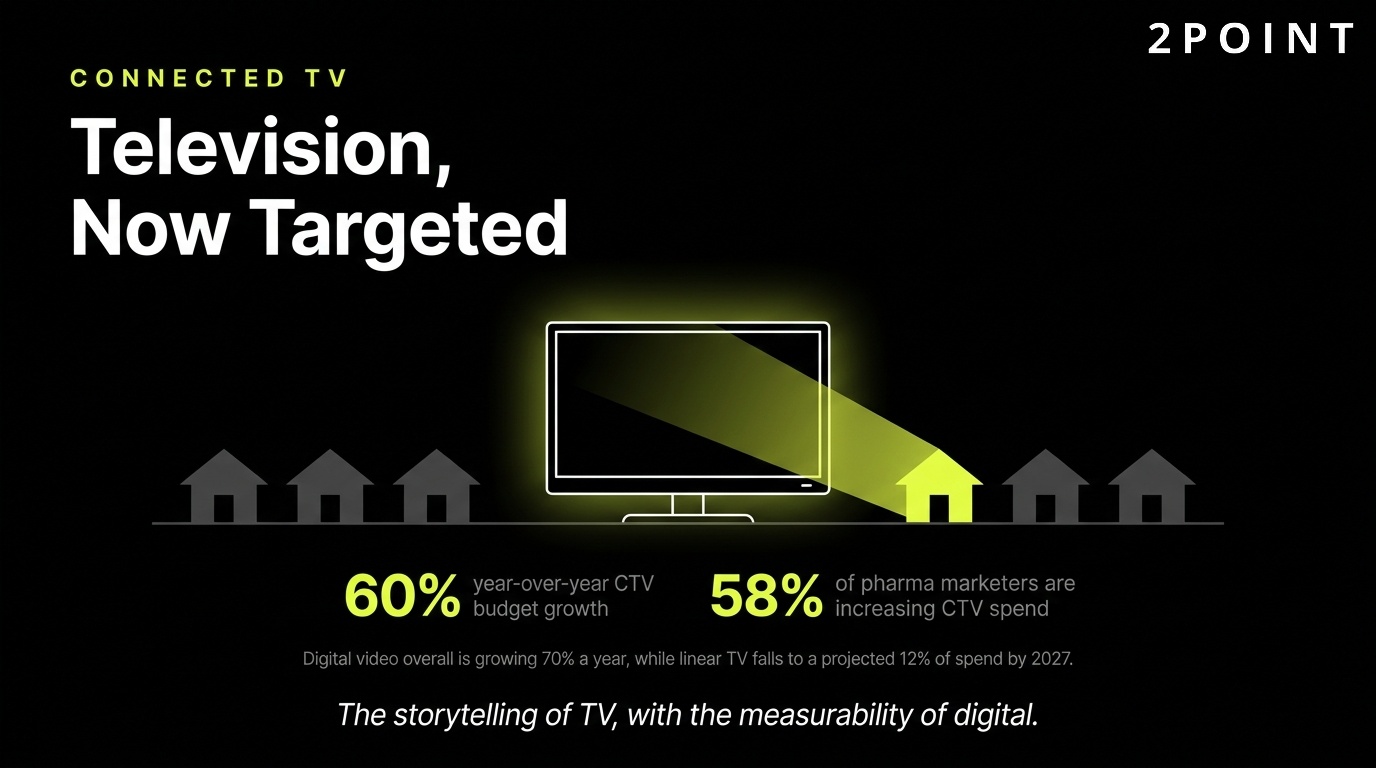
CTV eliminates these limitations. 58% of pharmaceutical marketers are increasing their CTV spending specifically because it offers precise household-level targeting, programmatic optimization, and cross-device measurement capabilities that linear TV cannot match. Healthcare advertisers can reach households where clinical data signals suggest relevant health conditions are present, then measure whether those households subsequently search for the advertised provider or fill the promoted prescription. This is a categorically different advertising capability than anything broadcast television offered.
Connected TV Strategy for Patient Acquisition
Building an effective CTV strategy for healthcare patient acquisition requires thinking about the medium differently than either traditional TV or standard digital display. CTV combines the lean-back, high-attention viewing environment of television with the data-driven targeting capabilities of programmatic digital. CTV budgets in healthcare are growing at 60% year-over-year, and digital video budgets overall are growing at 70% year-over-year, reflecting rapid adoption of this channel category.
Effective CTV campaign structure for healthcare patient acquisition typically includes:
- Audience targeting using clinically grounded data to reach households with relevant health conditions or prescription patterns
- Frequency capping to ensure message reach without overexposure, which can generate brand fatigue even in a high-quality viewing environment
- Creative that leads with patient empathy and condition recognition before introducing the provider or solution
- Clear, achievable calls to action that translate a passive viewing experience into an active digital response, typically a web search or QR code interaction
- Sequential messaging strategies that evolve the narrative across multiple exposures as the household moves through the patient decision journey
- Automatic Content Recognition (ACR) data integration to extend measurement across both linear and connected viewing, creating a complete household-level picture
The creative requirements for CTV in healthcare differ from standard digital creative because the viewing context is different. Patients watching streaming content are in a different mental state than patients scrolling a social feed or reading search results. CTV creative should be emotionally resonant, professionally produced, and designed to build brand trust over time rather than drive immediate click-through action. The measurement of CTV effectiveness therefore requires tracking downstream search behavior, website visits, and appointment bookings rather than relying on click-through rate as a performance proxy.
Measuring CTV Performance in Healthcare
Attribution is the most significant ongoing challenge in CTV advertising for healthcare, and it is a challenge the industry has not yet fully resolved. Currently, only 1% of healthcare marketers can connect more than half of their total advertising spend to measurable patient outcomes. However, 49% report that they can improve ROI measurement at the individual appointment level when using advanced attribution technologies, which represents meaningful progress from the near-zero attribution capability that characterized TV advertising a decade ago.
Household-level tracking, enabled by CTV's connected device infrastructure, provides the clearest path to attribution accuracy. When a household is exposed to a CTV ad for a cardiology practice and subsequently conducts a Google search for that practice, visits the website, and schedules an appointment, the connected data infrastructure can map that sequence even without individual user tracking. ACR data further extends this capability by identifying when a household has seen specific creative executions across both streaming and linear TV viewing, enabling a more complete picture of total media exposure. These attribution capabilities, while imperfect, are already dramatically superior to what traditional TV measurement offered and will continue to improve as household identity resolution technology matures.
Privacy, Compliance, and Ethical Healthcare Marketing
Privacy and compliance are not obstacles to effective healthcare marketing. They are the framework within which effective healthcare marketing must be designed. Organizations that treat compliance as a constraint to be minimized inevitably create liability exposure that far outweighs any short-term performance gains. Organizations that build privacy-first marketing infrastructure find that it also becomes a performance advantage as tracking restrictions tighten across the broader digital ecosystem.
Navigating HIPAA and State Privacy Laws in Healthcare Marketing
Healthcare marketers operate under one of the most complex regulatory environments of any industry. HIPAA establishes the federal floor for patient privacy protection, but it is supplemented by 22 or more state privacy laws that impose additional requirements, many of which are stricter than HIPAA in specific ways. California's CMIA, Washington's My Health MY Data Act, and similar state-level regulations have created a patchwork of compliance obligations that vary by geography and patient population.
The practical implications for healthcare marketing are significant. Patient health information cannot be used for advertising targeting without explicit patient consent. Retargeting pixels that capture browsing behavior on pages where health conditions might be inferred can create HIPAA liability if those pixels transmit data to third-party ad platforms. 82% of healthcare marketers cite compliance as their top measurement obstacle, and the deprecation of third-party cookies has further complicated tracking strategies that previously relied on browser-based signals.
FDA guidance adds another layer for pharmaceutical and medical device marketers. Direct-to-consumer advertising must meet specific fair balance requirements for risk disclosure. Social media content promoting prescription medications must follow platform-specific policies that are in some cases more restrictive than FDA requirements. Healthcare marketers working across these regulatory dimensions need legal counsel with specific healthcare advertising expertise, not just general marketing law knowledge. The challenges of digital marketing in a regulated industry are significant, but they are navigable with the right compliance framework.
Privacy-Compliant Analytics and Tracking in Healthcare
The tracking tools that most digital marketers rely on as default infrastructure, specifically Google Analytics 4 and Meta Pixel, present meaningful compliance risks in healthcare contexts. Both tools were designed to transmit behavioral data to third-party platforms (Google and Meta, respectively) for advertising optimization purposes. In healthcare contexts where patients are visiting pages related to specific conditions or treatments, that data transmission may constitute sharing protected health information without patient consent.
This does not mean healthcare organizations must abandon analytics and tracking entirely. It means they must replace generic tracking infrastructure with HIPAA-compliant analytics alternatives that are designed specifically for the healthcare regulatory environment. Several specialized healthcare analytics platforms have emerged that provide comparable behavioral insights while processing data in ways that satisfy HIPAA technical safeguard requirements.
Consent-based tracking is the new operational standard in healthcare digital marketing. Rather than passively collecting behavioral data from all site visitors, consent-based approaches ask visitors to explicitly opt in to data collection, then build analytics and targeting capabilities on that consented data set. While consent-based data sets are smaller than passive collection approaches, they are higher quality. Privacy-safe tracking improves lead quality data by up to 30% because consented data signals correlate more strongly with genuine patient intent than passively collected behavioral noise. Cookie deprecation, far from being a threat to healthcare marketing effectiveness, is accelerating a shift toward data practices that were always more appropriate for a privacy-sensitive industry.
Building First-Party Data Assets in Healthcare Organizations
First-party data, meaning data that patients and website visitors voluntarily share directly with your organization, is becoming the most valuable and defensible marketing asset in healthcare. As third-party data sources become less reliable due to regulatory pressure and browser policy changes, organizations with rich, consented first-party data sets are gaining a structural competitive advantage in targeting, personalization, and measurement.
Healthcare organizations have natural first-party data collection opportunities that other industries would envy. Patient portals capture appointment history, communication preferences, and health interests. Email subscription lists built through educational content offers represent engaged audiences with stated health interests. Website behavior data collected with appropriate consent reveals which conditions and services patients are most actively researching. Practice management systems contain the richest possible data about patient demographics, visit history, and health patterns.
The challenge is not collecting this data. Most healthcare organizations are already collecting substantial amounts of it across fragmented systems. The challenge is unifying that data into a coherent, actionable marketing infrastructure that enables personalization, lookalike audience modeling, and cross-channel attribution while maintaining strict compliance with privacy regulations. Organizations that make this infrastructure investment now will find that their first-party data becomes an increasingly powerful competitive moat as the healthcare marketing landscape continues to tighten around privacy-first practices. Understanding how to evaluate a digital marketing proposal that includes compliant first-party data strategy is an important capability for healthcare marketing leaders.
Omnichannel Healthcare Marketing: Coordinating Every Patient Touchpoint
Omnichannel healthcare marketing is the operational discipline of ensuring that a patient receives a consistent, coherent experience regardless of which channel they use to interact with your organization. It is not about being present in every channel simultaneously. It is about orchestrating those channels so that they reinforce each other and collectively move the patient toward a decision and a lasting relationship with your practice or system.
Coordinating HCP and DTC Campaigns in Healthcare Marketing
One of the most significant structural inefficiencies in pharmaceutical and specialty healthcare marketing has historically been the complete separation between healthcare professional (HCP) marketing campaigns and direct-to-consumer (DTC) campaigns. These campaigns were typically managed by different agencies, planned on different timelines, and executed with different creative frameworks. The result was often that a patient who had just seen a DTC ad for a new medication arrived at their physician's office with questions the physician had not yet been briefed on through the HCP channel.
Coordinated HCP and DTC strategies show clear, measurable lift in patient starts compared to siloed approaches. When a physician receives a clinical education message about a new treatment option at the same time that their patients are seeing consumer-facing awareness advertising, the likelihood of a productive treatment conversation increases significantly. The operational cost of maintaining separate agencies and timelines for HCP and DTC campaigns is measurable, both in direct cost and in the conversion efficiency lost when the two campaigns are not synchronized. The 2026 priority for pharmaceutical and specialty healthcare marketers is synchronizing patient and provider touchpoints across a unified campaign architecture.
This synchronization requires shared data infrastructure, integrated media planning, and organizational willingness to overcome the traditional HCP/DTC silos that have persisted partly for historical reasons and partly because measurement systems historically could not demonstrate the value of coordination. Modern cross-channel marketing platforms now provide the measurement capability to demonstrate that coordination lift, which is accelerating organizational buy-in for integrated campaign approaches.
Creating Consistent Experiences Across Touchpoints
The patient experience of your brand does not begin when they walk through your door. It begins the first time they encounter your practice in a search result, a social post, a review, or a referral. Every touchpoint in that journey communicates something about who you are and whether you deserve their trust and their healthcare dollars. Inconsistency across touchpoints, different messaging on your website versus your social profiles, different tone in your email communications versus your ad creative, creates cognitive friction that erodes confidence.
With patients encountering seven to twelve touchpoints before booking an appointment, each of those touchpoints is an opportunity to either reinforce or undermine the overall brand impression. Marketing automation platforms enable healthcare organizations to orchestrate these touchpoints systematically. Automated workflows can trigger specific email follow-ups based on which service page a visitor viewed. Retargeting campaigns can serve ads that reference the specific condition content a visitor read on your blog. Appointment confirmation sequences can set expectations and reduce no-shows before the first in-person encounter. Cross-channel remarketing improves conversion rates by 35% to 50% when deployed with consistent messaging and appropriate frequency management.
Creating this level of coordination requires more than technology. It requires a unified brand voice guide, clinical review processes for all patient-facing content, shared audience data across channels, and regular cross-functional alignment between marketing, clinical, and operations teams. For healthcare organizations that have previously operated each marketing channel as an independent function, building omnichannel coordination capability represents a meaningful organizational change. The competitive advantage it creates, however, is equally meaningful. Developing a comprehensive digital marketing campaign framework that incorporates omnichannel coordination from the outset is increasingly the expectation of sophisticated healthcare marketing operations.
Attribution Across Complex Patient Journeys
The multi-touch, multi-channel nature of the modern patient journey creates an attribution challenge that standard marketing analytics tools are not equipped to handle. Last-click attribution, the default in most analytics platforms, attributes 100% of conversion credit to the final touchpoint before appointment booking. This systematically undervalues awareness-stage channels like CTV, social, and display advertising, which introduce patients to providers they later convert through search, and systematically overvalues search advertising, which often captures intent generated by other channels.
The data on healthcare attribution accuracy is sobering. Only 1% of healthcare marketers can currently connect more than half of their advertising spend to measurable patient outcomes. This attribution gap leads to systematic misallocation of marketing budgets, with organizations overinvesting in easily measured lower-funnel channels and underinvesting in the upper-funnel awareness channels that actually initiate the patient journey. Advanced attribution models, including data-driven attribution, multi-touch attribution, and marketing mix modeling, are required to accurately understand the contribution of each channel to total patient acquisition. Organizations making this analytics investment are gaining the ability to optimize their channel mix in ways that pure last-click analytics users cannot, creating a compounding performance advantage over time.
Measuring Healthcare Marketing Performance That Satisfies Leadership
Healthcare marketing has historically struggled to demonstrate its business value in terms that resonate with hospital CFOs and health system executives. Impressions, clicks, and social followers are not the language of healthcare finance. Appointments, patient starts, retention rates, and revenue per patient are. The shift toward outcomes-based measurement is the most important operational evolution in healthcare marketing measurement, and it is redefining what good marketing performance looks like.
Moving Beyond Vanity Metrics in Healthcare Marketing
The era of reporting healthcare marketing success through impressions, reach, and engagement rate is ending. These metrics describe activity, not outcomes, and they do not connect to the financial realities that determine marketing budget sustainability within healthcare organizations. The measurement standard that is replacing them is outcomes-based, connecting marketing activity to script lift, verified patient reach, appointment bookings, and ultimately revenue generated per dollar invested.
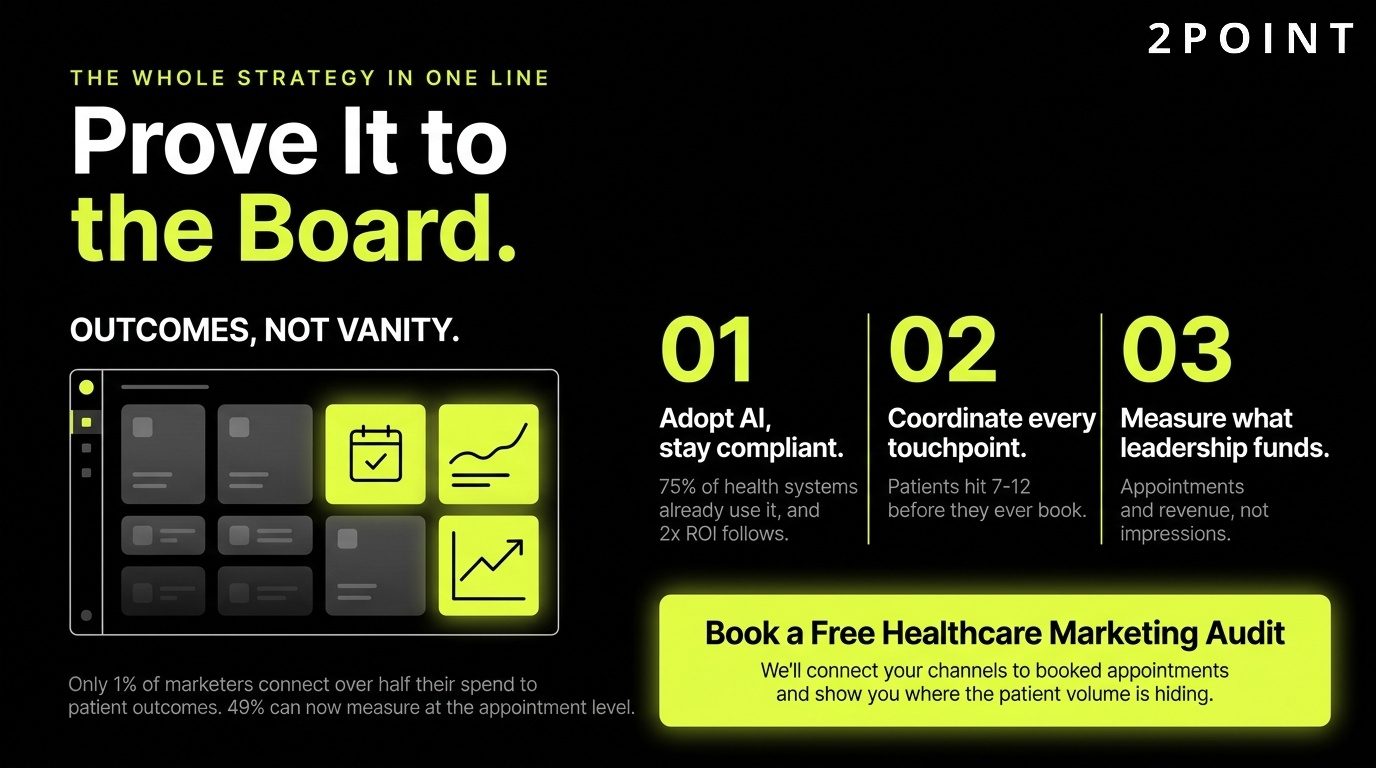
49% of healthcare marketers claim they can now improve ROI measurement at the individual appointment level using advanced attribution and data integration technologies. That capability, once considered aspirational, is becoming a baseline expectation for organizations that want to maintain and grow marketing investment. The reason is straightforward: only 1% of marketers can currently connect more than half of their spend to patient outcomes, which means the vast majority of healthcare marketing budgets are being defended with activity metrics rather than business impact evidence. Organizations that solve this measurement challenge will find it dramatically easier to secure the investment needed to compete effectively. Using data visualization in marketing reporting makes outcomes-based metrics accessible and compelling for non-marketing leadership audiences.
Outcomes-based measurement in healthcare marketing requires investment in data infrastructure, attribution technology, and analytical capability. It requires connecting marketing data to EHR systems, practice management platforms, and revenue cycle systems in a way that complies with privacy regulations. It is not a simple implementation, but organizations that make it work gain an irreplaceable strategic advantage in justifying marketing investment and directing it toward the activities that genuinely drive patient volume growth.
Key Performance Indicators for Healthcare Marketing
Defining the right KPIs for healthcare marketing requires aligning metrics to the specific stage of the patient relationship and the organizational goals driving marketing investment. The following framework covers the metrics that matter most across the full patient lifecycle.
| Healthcare Marketing KPI | Industry Benchmark | What It Measures |
|---|---|---|
| PPC Conversion Rate | 2.6% | Paid search efficiency in driving patient actions |
| Website Conversion Rate | 2-5% | Overall site effectiveness in converting visitors to patients |
| Email Conversion Rate | 2.6% | Email marketing effectiveness in driving appointments |
| Phone Call to Appointment Rate | 15-25% | Inbound call handling efficiency |
| Patient Acquisition Cost (CAC) | Varies by specialty | Total marketing cost per new patient acquired |
| Patient Lifetime Value (LTV) | Varies by specialty | Total revenue generated per patient over relationship duration |
| Review Rating Average | Above 4.0 stars | Reputation quality and patient experience signal |
| Email Open Rate | 41% | Patient engagement with retention communications |
| Referral Rate | 12-22% of new patients | Word-of-mouth effectiveness and patient satisfaction signal |
The most important insight from this KPI framework is that retention metrics, including email open rate, referral rate, and patient lifetime value, should receive equal analytical attention to acquisition metrics, because retention programs are consistently more cost-effective than acquisition campaigns for generating sustainable revenue growth.
Patient Lifetime Value deserves particular attention as a strategic metric. A patient who visits once for an acute issue has a very different revenue profile from a patient who returns annually for chronic condition management, refers family members, and remains loyal across multiple service lines. Healthcare organizations that calculate and track LTV by patient segment, channel, and service line gain the ability to make acquisition investment decisions that optimize for long-term profitability rather than just lowest-cost first appointment. This is the framework that separates healthcare marketing operations focused on sustainable growth from those focused on short-term volume numbers. Choosing the right digital marketing strategy for a healthcare organization requires understanding which KPIs are most aligned with organizational goals at each stage of growth.
Building Marketing Dashboards That Drive Healthcare Decisions
Data that lives in separate channel-specific reporting silos is interesting but not actionable. The highest-performing healthcare marketing organizations unify their key metrics, including CAC by channel, conversion rate by service line, pipeline velocity from first touchpoint to appointment, and LTV by acquisition source, into shared dashboards that are accessible to both marketing and leadership stakeholders. High-growth healthcare organizations consistently cite unified metric dashboards as a critical enabler of informed budget allocation decisions.
The infrastructure required to build these unified dashboards typically includes a marketing data warehouse or business intelligence platform that can receive data from multiple sources (ad platforms, CRM, practice management system, website analytics, and call tracking), a patient identity resolution layer that links cross-channel behavioral data to individual patient records in a compliant way, and standardized metric definitions across all connected systems so that "conversion" means the same thing whether it is being counted in your Google Ads report, your email platform, or your practice management system.
Daily-refreshed clinical data enables in-flight campaign optimization, which means that organizations with robust data infrastructure can make campaign adjustments based on near-real-time performance signals rather than waiting for end-of-month reporting cycles. This operating cadence, in which marketing decisions are driven by current data rather than historical analysis, is the operational model that the most competitive healthcare marketing organizations have adopted and that others are actively working to emulate. A structured management approach for digital marketing teams that includes regular dashboard review cadences ensures that data investment translates into consistent decision-making improvement rather than becoming dashboard theater that nobody acts on.
Conclusion: The Healthcare Marketing Imperative in 2026
Healthcare marketing has completed a fundamental transformation. The discipline that once relied primarily on community relationships, physician referral networks, and broad-reach broadcast advertising now operates as a precision-driven, data-powered, AI-augmented function with measurable outcomes tied directly to patient volume and organizational revenue. The statistics throughout this guide are not projections or predictions. They are the current operating reality that healthcare organizations are navigating right now.
Three imperatives define competitive healthcare marketing in 2026. First, adopt AI while maintaining compliance. Automation, predictive targeting, and personalization at scale are no longer differentiators available only to well-resourced health systems. They are becoming baseline capabilities, but they must be deployed within a regulatory framework that protects patient privacy and organizational integrity. The organizations that figure out how to do both simultaneously will operate with a sustained competitive advantage.
Second, coordinate across channels. The patient journey does not respect channel boundaries. It moves fluidly from social media to search to review platforms to email to in-person experience. Healthcare organizations that have aligned their messaging, data, and measurement across these touchpoints are delivering patient experiences that build loyalty and generate referrals. Those still managing each channel as an independent function are generating internal inefficiency and patient-facing inconsistency simultaneously.
Third, measure what matters. Moving from vanity metrics to outcomes-based measurement is not just an analytical improvement. It is an organizational positioning shift that gives marketing a seat at the strategic table with CFOs and health system executives who make decisions based on patient outcomes and financial returns. Healthcare marketing that cannot demonstrate its connection to appointment volume, patient starts, and revenue is always vulnerable to budget cuts. Healthcare marketing that can prove its ROI is a defensible and growable investment.
The organizations that will thrive are those that balance innovation with trust, personalization with privacy, and digital sophistication with the human connection that patients ultimately seek from their healthcare relationships. If you are ready to evaluate and strengthen your organization's healthcare marketing approach, the team at 2POINT brings the strategic expertise and implementation capability to help you navigate this complex, rapidly evolving landscape with confidence.
Frequently Asked Questions About Healthcare Marketing
What is healthcare marketing and how does it differ from general marketing?
Healthcare marketing is the strategic process of attracting, engaging, and retaining patients through coordinated digital and traditional communication channels, specifically designed to operate within healthcare's regulatory environment. Unlike general marketing, healthcare marketing must comply with HIPAA, state privacy laws, and FDA guidelines, which restrict how patient data can be used for targeting and what claims can be made in advertising. These constraints require specialized strategies that balance personalization with privacy protection.
How much should a healthcare organization spend on marketing?
Most healthcare practices allocate between 2% and 10% of their annual revenue to marketing, with higher-growth organizations and competitive markets trending toward the upper end of that range. The right budget depends on organizational growth goals, competitive landscape, specialty type, and the current state of digital infrastructure. A marketing audit is typically the most efficient way to identify where investment will generate the highest return before committing to a specific budget level.
What are the most effective digital marketing channels for patient acquisition?
The highest-performing patient acquisition channels in 2026 are local SEO and Google Business Profile optimization, paid search advertising, reputation management and online reviews, and Connected TV for awareness-stage reach. Search channels capture active patient intent, making them the most efficient conversion drivers, while reputation management ensures that patients who find you through any channel convert rather than turning away based on a poor review profile.
Is healthcare marketing subject to HIPAA regulations?
Yes, healthcare marketing is subject to HIPAA, which restricts how patient health information can be used for marketing purposes, including advertising targeting and remarketing. Specifically, common tracking tools like Google Analytics and Meta Pixel can create HIPAA compliance risks when deployed on pages where patients enter or imply health information. Healthcare organizations must use HIPAA-compliant analytics alternatives and obtain explicit patient consent before using health-related behavioral data for marketing purposes.
How does AI improve healthcare marketing performance?
AI improves healthcare marketing performance through predictive audience targeting using clinical and behavioral data, real-time campaign optimization that reallocates budget toward the highest-performing audiences, personalized content delivery at scale, and chatbot-driven patient intake automation. Organizations that have deployed AI in their marketing operations report achieving 2x ROI compared to conventional approaches, and AI implementation reduces patient acquisition costs by an average of 25%.
What is the difference between healthcare marketing and medical marketing?
Healthcare marketing is the broader discipline encompassing all health system, hospital, provider group, pharmaceutical, and health technology marketing efforts directed at patients, providers, or payers. Medical marketing is a subset term often used specifically for marketing services and treatments from physician practices, clinics, and medical device companies. In practice, the terms are frequently used interchangeably, though healthcare marketing tends to imply a more comprehensive strategic scope that includes both clinical and consumer-facing communications.
How important are online reviews for healthcare patient acquisition?
Online reviews are critically important for healthcare patient acquisition, with 84% of patients reading reviews before selecting a provider and 90% using reviews as a primary factor in their decision. Practices with average ratings below 4.0 stars lose more than 40% of potential patients before those patients ever make contact. A systematic review generation and response program is one of the highest-ROI investments a healthcare organization can make in patient acquisition infrastructure.
What is answer engine optimization and how does it apply to healthcare?
Answer Engine Optimization (AEO) is the practice of structuring digital content to be discovered and cited by AI-powered platforms like ChatGPT, Perplexity, and Google AI Overviews, in addition to traditional search engines. In healthcare, AEO matters because 37% of consumers now use generative AI for health research, meaning AI platforms increasingly shape patient perceptions of providers and conditions before those patients visit any website. Healthcare content optimized for AEO uses clear direct answers, structured formatting, and factual accuracy to earn citation and visibility in AI-generated responses.
How do healthcare organizations measure marketing ROI effectively?
Effective healthcare marketing ROI measurement requires connecting advertising spend to downstream patient actions, including appointment bookings, patient starts, and long-term retention, rather than relying on click and impression metrics. This requires integrating marketing data with practice management and EHR systems in a HIPAA-compliant way, implementing multi-touch attribution models that distribute credit across the full patient journey, and building unified dashboards that surface CAC, LTV, and conversion rates by channel and service line for leadership decision-making.
What makes a healthcare marketing strategy compliant with privacy regulations?
A compliant healthcare marketing strategy uses consent-based data collection rather than passive tracking pixels, employs HIPAA-certified analytics platforms instead of standard tools like Google Analytics on clinical pages, avoids retargeting audiences defined by health condition or medical history without explicit consent, and uses first-party data collected directly from patients through proper disclosures. Working with legal counsel that specializes in healthcare advertising law is essential for organizations operating across multiple states with differing privacy requirements.
How does Connected TV differ from traditional TV advertising for healthcare?
Connected TV (CTV) differs from traditional linear TV by offering household-level targeting using clinically grounded audience data, programmatic real-time optimization, cross-device measurement, and the ability to connect ad exposure to downstream patient actions like website visits and appointment bookings. Linear TV offered broad demographic reach with minimal targeting precision and no meaningful attribution to patient outcomes. CTV preserves the visual storytelling format of television while adding the data infrastructure and measurability of digital advertising.
Should healthcare organizations invest in content marketing or paid advertising first?
Healthcare organizations should invest in both simultaneously, but the priority balance depends on organizational goals and timeline. Paid advertising delivers faster results by capturing active patient search intent immediately, while content marketing builds lasting organic visibility, trust, and patient retention over 12 to 24 months. The most effective healthcare marketing strategies use paid advertising to drive near-term patient volume while simultaneously building the content and SEO infrastructure that reduces long-term acquisition costs and improves patient lifetime value.
