

 let’s connect


What Are Marketing Fundamentals? A Direct Answer
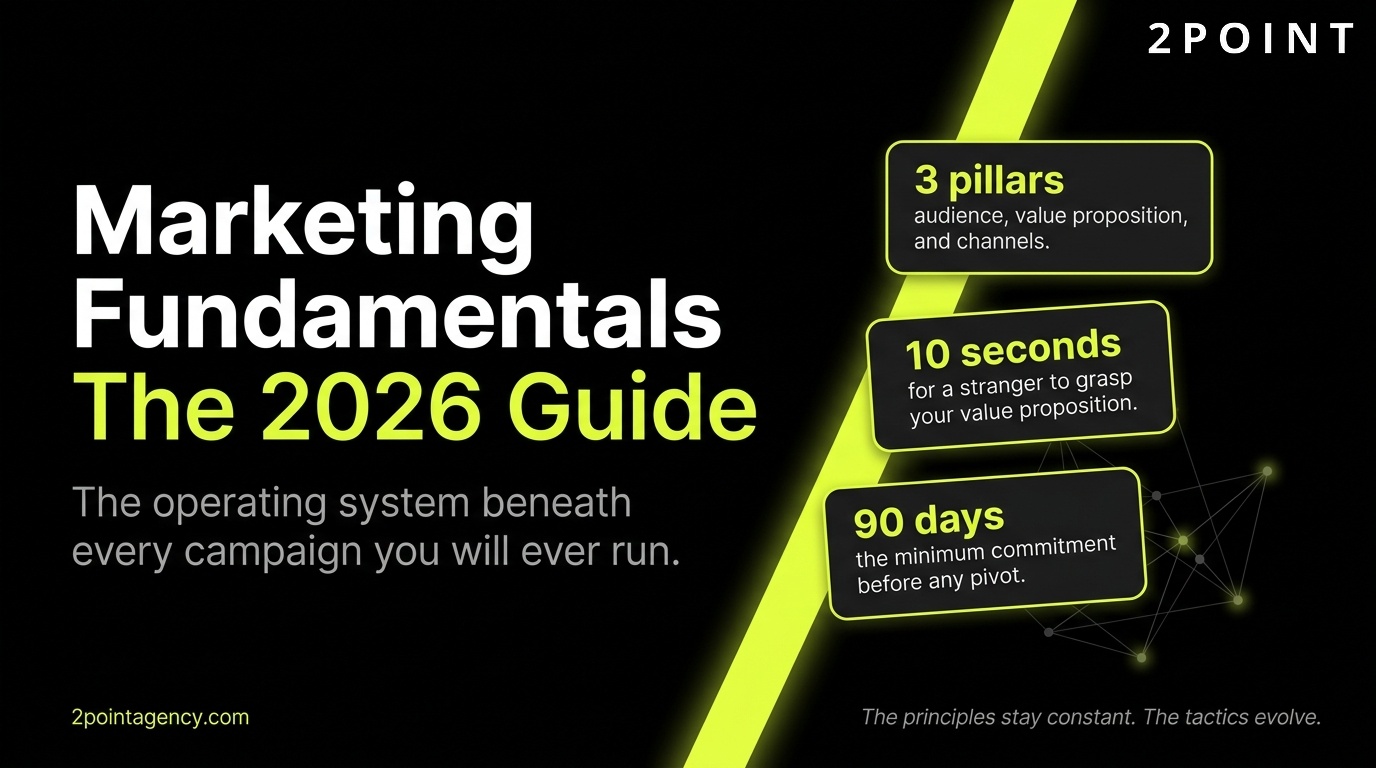
Marketing fundamentals are the essential principles businesses use to create, communicate, and deliver value to customers. Before diving deeper, here is a direct, scannable answer to what they are and why they matter:
- Marketing fundamentals are the core principles that guide every effective campaign and business growth decision.
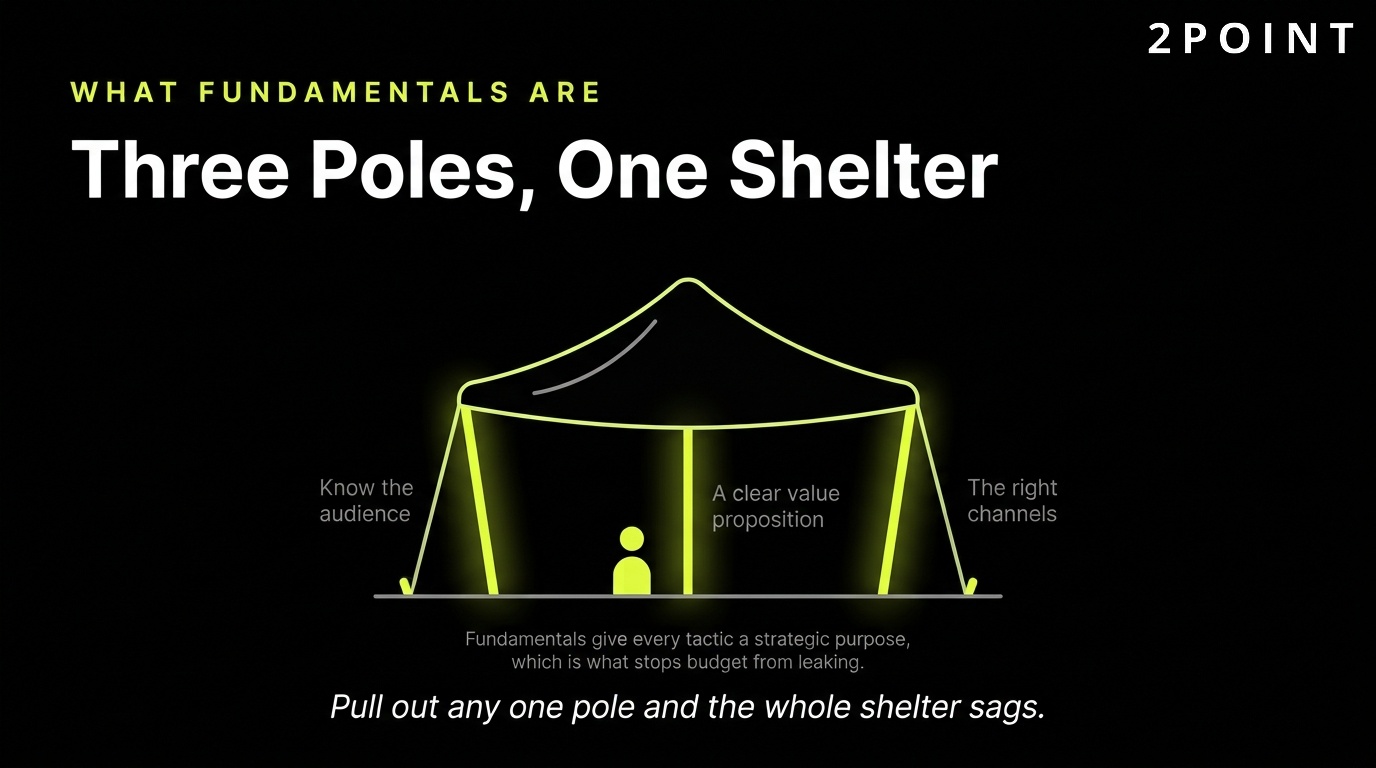
- They rest on three pillars: understanding your audience, crafting a compelling value proposition, and choosing effective channels.
- They prevent wasted budget by giving every tactic a strategic purpose and clear direction.
- They drive predictable results because the underlying logic of value exchange does not change with trends.
- The foundational frameworks include the 4Ps, the 7Ps, and the STP model of segmentation, targeting, and positioning.
- In 2026, AI and automation amplify fundamentals rather than replace them; strategy still requires human judgment.
- Businesses that master marketing fundamentals consistently outperform those that chase every new tool or trend.
The fastest path to marketing clarity is not finding the next viral platform. It is understanding the timeless principles that make any platform work in the first place.
Why Marketers Are Returning to Marketing Fundamentals in 2026
There is a quiet but powerful shift happening across marketing teams in 2026. After years of chasing shiny tools, rapid platform pivots, and algorithm-driven tactics, experienced marketers and business owners are circling back to something more reliable: the core principles that have always determined whether a campaign succeeds or fails. The Content Marketing Institute describes this as a pendulum swinging back, with the most successful brands rediscovering that timeless fundamentals anchor sustainable growth.
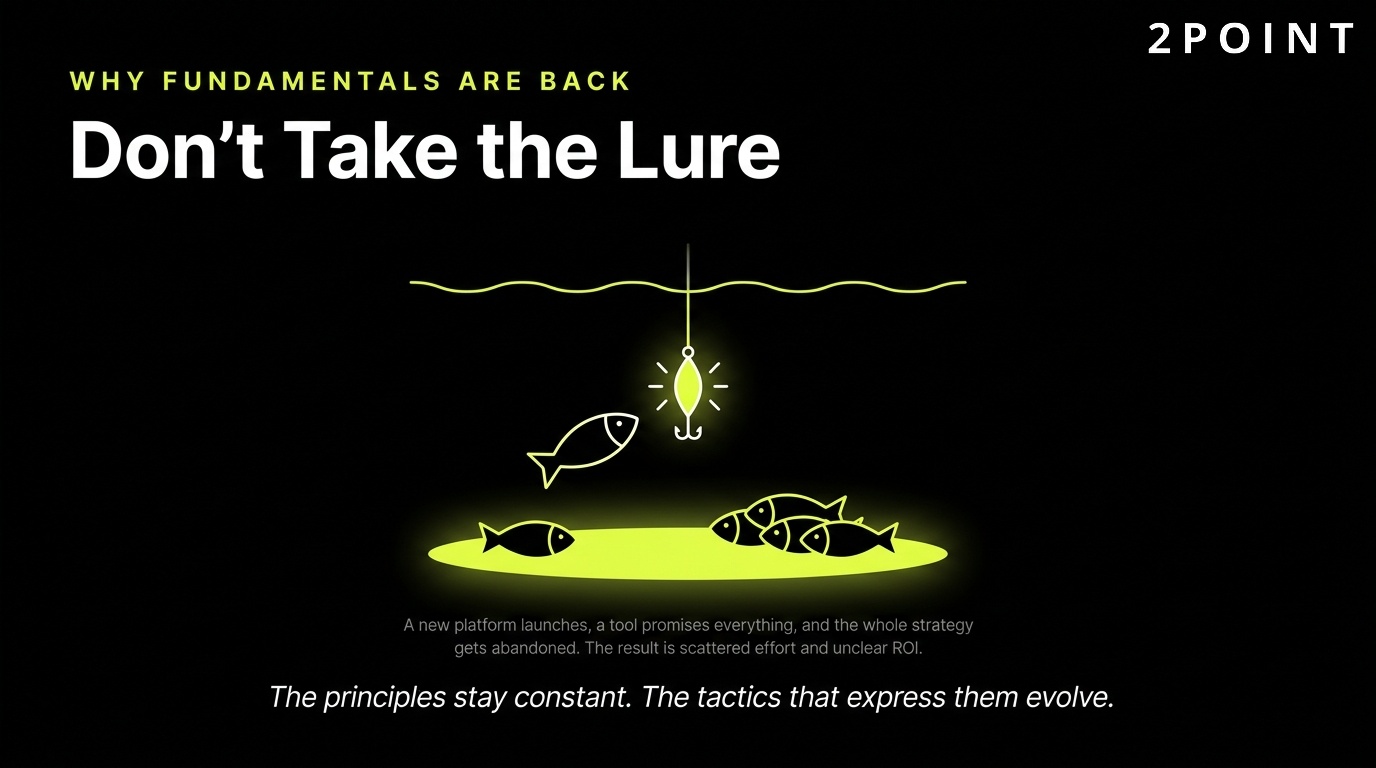
The problem many organizations face is what is commonly called "shiny object syndrome." A new social platform launches, a new AI tool promises to automate everything, or a competitor runs a campaign that goes viral, and suddenly the entire marketing strategy gets abandoned in favor of the latest tactic. The result is scattered efforts, unclear ROI, and a team that is perpetually exhausted but rarely effective. Budget leaks from every direction because no one can explain exactly why a particular campaign is running or what business outcome it is connected to.
The solution is not simpler than the problem, but it is more straightforward than most people expect. According to marketing educators at Rankyak, mastering core principles provides stability through constant change. When you understand why customers buy, how to position an offer clearly, and how to select channels based on where your audience actually spends time, every new tool becomes an accelerant rather than a distraction. The principles stay constant; the tactics that express them evolve.
This guide covers the complete landscape of marketing fundamentals, from the foundational 4Ps and expanded 7Ps frameworks to the STP model, digital marketing principles for 2026, customer-centric strategy, and practical implementation. Whether you are a small business owner building your first marketing plan, a marketing professional seeking to sharpen your strategic thinking, or a team leader trying to align scattered efforts, these principles will give you a coherent foundation to work from.
Think of this as the operating system beneath every campaign you will ever run. When the operating system is solid, every application you install on top of it performs better.
The Marketing Mix: Understanding the 4Ps Framework
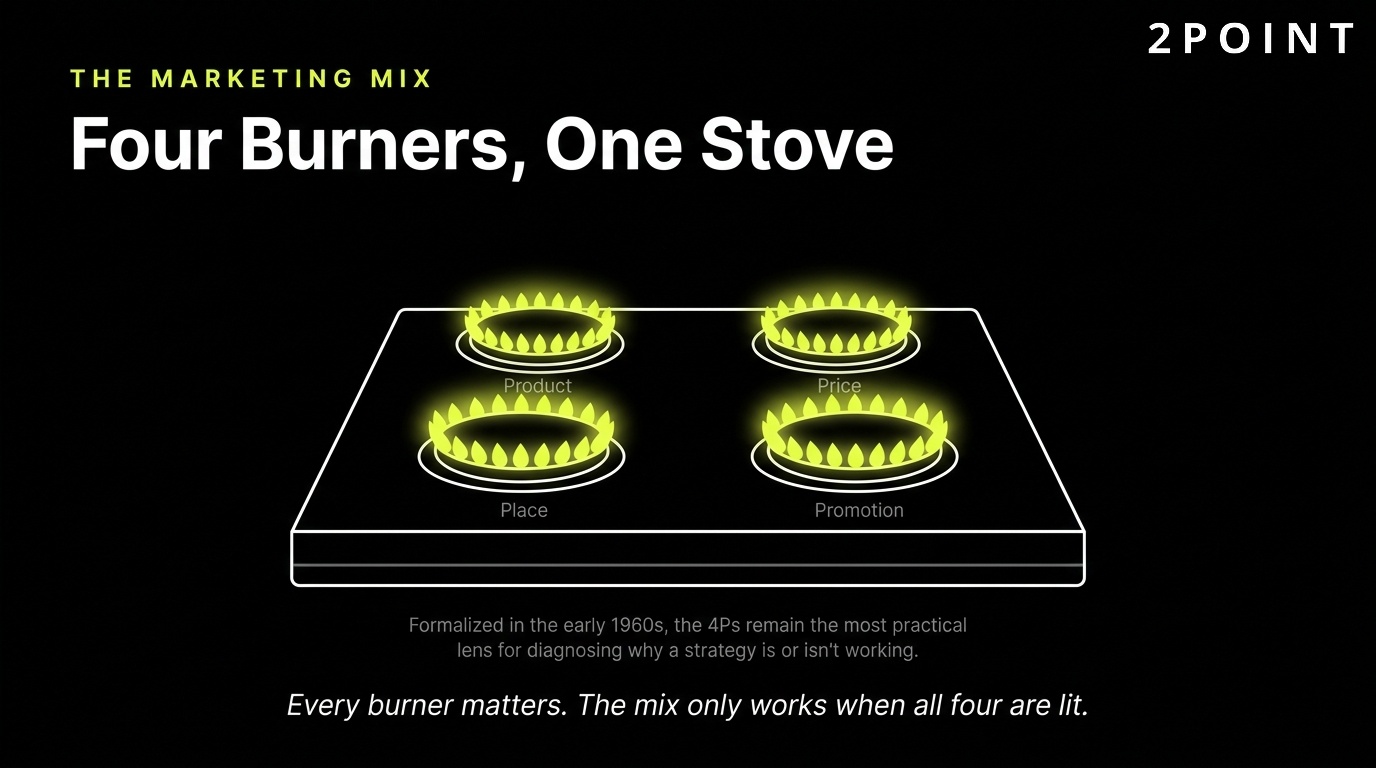
The marketing mix is arguably the most widely taught concept in marketing education, and for good reason. It provides a structured way to think about every decision involved in bringing an offer to market. The 4Ps framework, which organizes marketing decisions around Product, Price, Place, and Promotion, was formalized in the early 1960s and remains one of the most practical lenses for diagnosing why a marketing strategy is or is not working. Understanding the marketing mix is the starting point for any serious study of marketing principles.
Product: Building What Customers Actually Want
The product is the tangible or intangible offering your business creates to solve a specific customer problem. According to Oberlo's breakdown of marketing principles, the product decision is not just about what you make but about what transformation you deliver. A software product does not sell features; it sells the outcome those features create, whether that is saved time, reduced risk, or increased revenue.
Key considerations at the product stage include demand validation, product-market fit, and the critical distinction between features and benefits. Demand validation means confirming that real people with real money will actually pay for the solution before significant resources are invested in building it. Product-market fit means the offer genuinely resonates with a specific segment's needs rather than being a solution searching for a problem.
In 2026, the most effective product strategies involve co-creation: bringing customers into the development process through beta programs, feedback loops, user research sessions, and advisory boards. A SaaS company that builds its roadmap directly from structured user interviews and support ticket analysis is far less likely to release features nobody wanted. The 2026 approach treats customers as co-designers rather than passive recipients.
The most common and costly product mistake is building what the internal team thinks is valuable rather than what the customer has explicitly requested or behaviorally demonstrated they need. Features that exist because of internal assumptions rather than external evidence waste development time, create marketing confusion, and dilute the product's core value proposition. Validate first, build second.
Price: Strategic Positioning Through Value
Price is far more than a number on an invoice. It is one of the most powerful signals your brand sends about quality, positioning, and the kind of customer you are trying to attract. EBSCO's research starters on marketing principles emphasize that pricing decisions must account for fixed and variable costs, competitive landscape, perceived customer value, and willingness to pay, all simultaneously.
The strategic tension in pricing sits between two poles: premium pricing, which signals exclusivity and high value but limits volume, and penetration pricing, which maximizes market entry speed and volume but can create long-term margin pressure. Neither is universally correct. The right price is the one that aligns with your positioning, supports your other marketing mix decisions, and reflects the genuine value your product delivers relative to available alternatives.
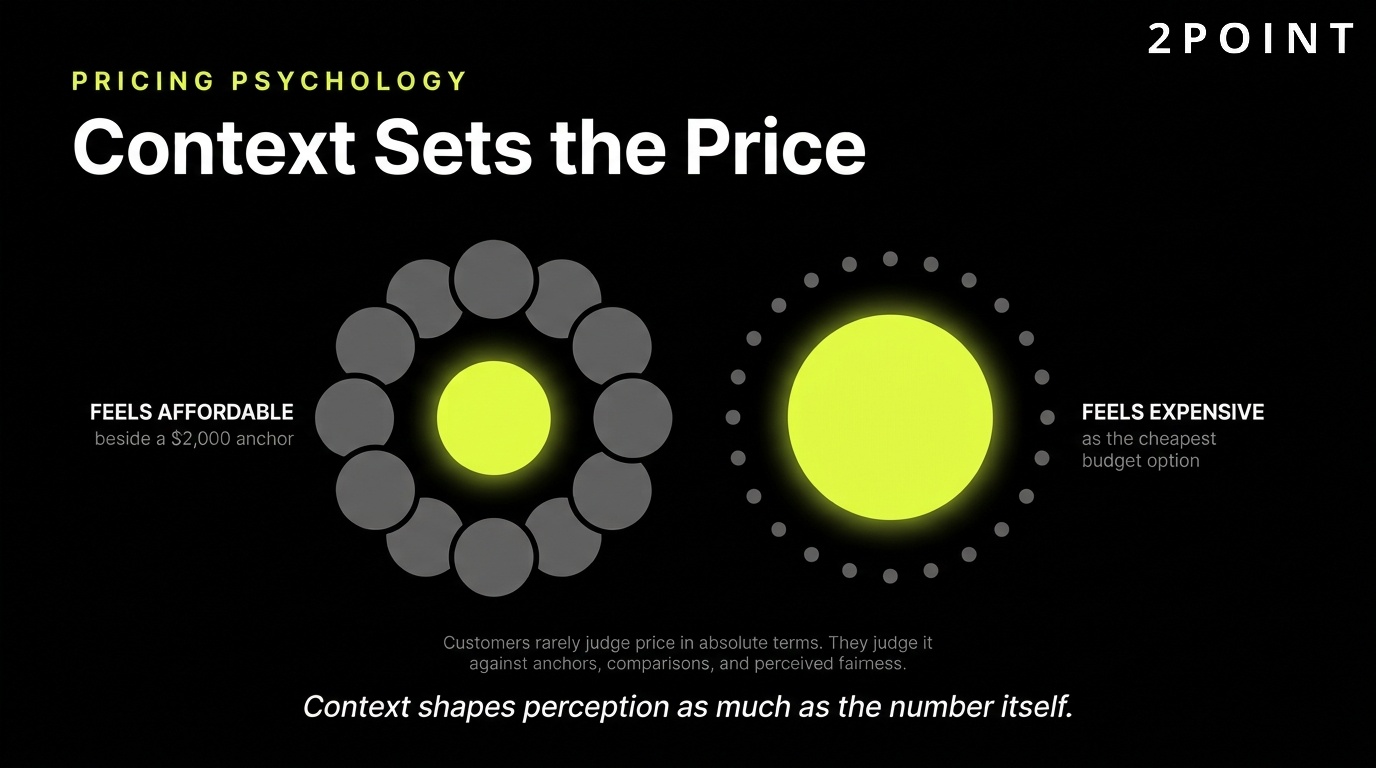
Pricing psychology plays a substantial role that many businesses underestimate. Customers rarely evaluate price in absolute terms; they evaluate it relative to anchors, comparisons, and perceived fairness. A $500 product positioned next to a $2,000 alternative feels affordable. The same $500 product positioned as the cheapest option in a budget category feels like a compromise. Context shapes perception as much as the number itself.
In 2026, AI-powered dynamic pricing has moved from enterprise-only territory into reach for mid-market businesses. Tools that analyze purchasing patterns, competitive pricing shifts, demand signals, and customer segments can automatically adjust pricing in real time. The fundamental principle, that price must reflect and reinforce value, remains unchanged. The execution has simply become more sophisticated and data-driven.
Place: Making Your Offer Accessible
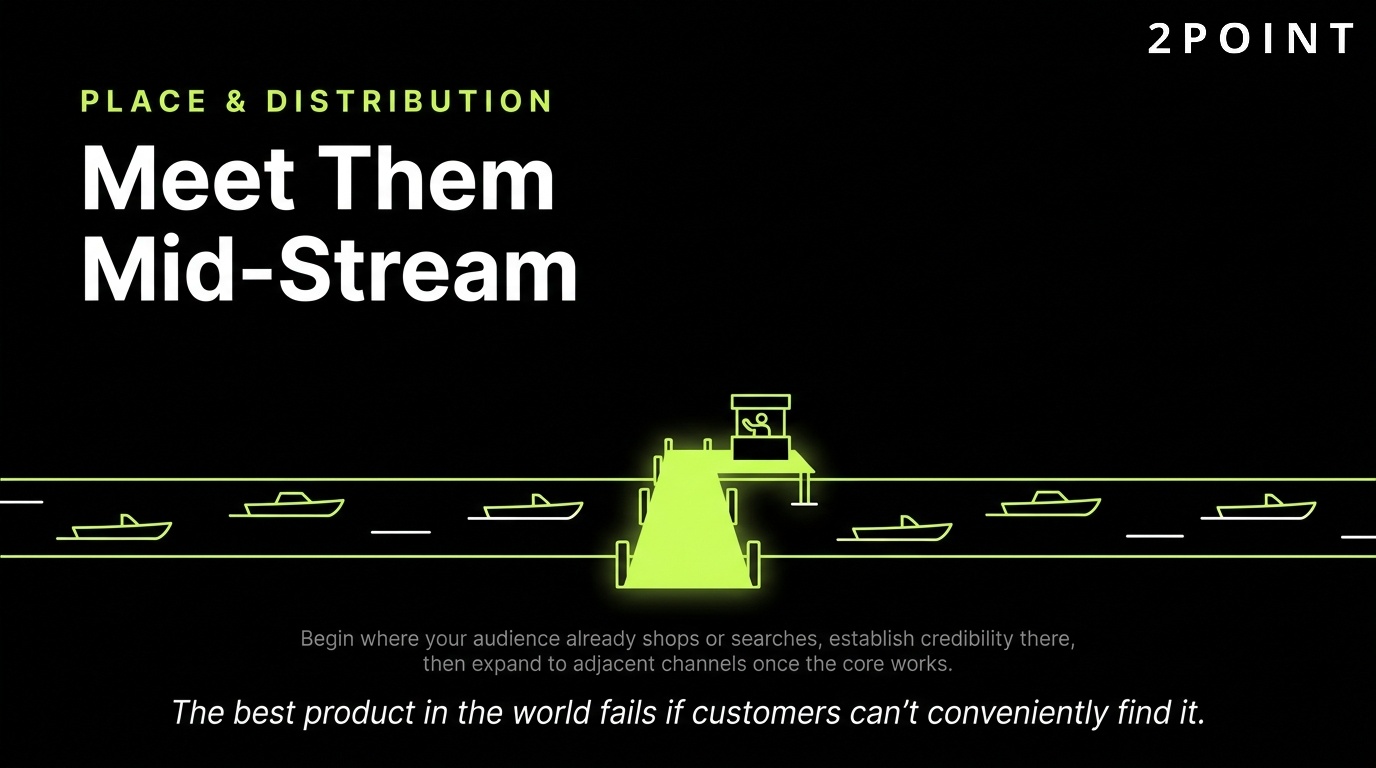
Place refers to the distribution channels and locations through which customers can access and purchase your product or service. Indeed's career development guide on marketing principles frames place decisions as the bridge between your offer and your customer, emphasizing that the best product in the world fails if customers cannot conveniently find and buy it.
The place decision spans physical and digital dimensions. Physical distribution includes retail stores, wholesalers, distributors, direct sales teams, and pop-up locations. Digital distribution includes your own e-commerce website, third-party marketplaces like Amazon or Etsy, app stores, and digital platforms suited to your specific industry. Each channel comes with trade-offs in control, cost, margin, and customer relationship ownership.
Geographic scope matters significantly for place strategy. A local bakery's distribution strategy looks entirely different from a national software company's. The bakery maximizes physical accessibility within a radius; the software company focuses on eliminating every digital friction point in the global purchase journey. Understanding your natural geographic boundaries and growth ambitions shapes every place decision you make.
By 2026, omnichannel presence has become a standard customer expectation rather than a competitive differentiator. Customers expect consistent brand experiences whether they encounter you through a Google search, a social media ad, a physical store, or a customer service chat. The practical starting principle for place strategy remains: begin where your audience already shops or searches, establish presence and credibility there, then expand to adjacent channels once the core is working.
Promotion: Getting Your Message Seen and Acted Upon
Promotion encompasses every communication activity that builds awareness, generates interest, creates desire, and drives action. This includes paid advertising, content marketing, public relations, social media marketing, email marketing, events, influencer partnerships, and any other channel that connects your message with your target audience. The common thread is communication with intent.
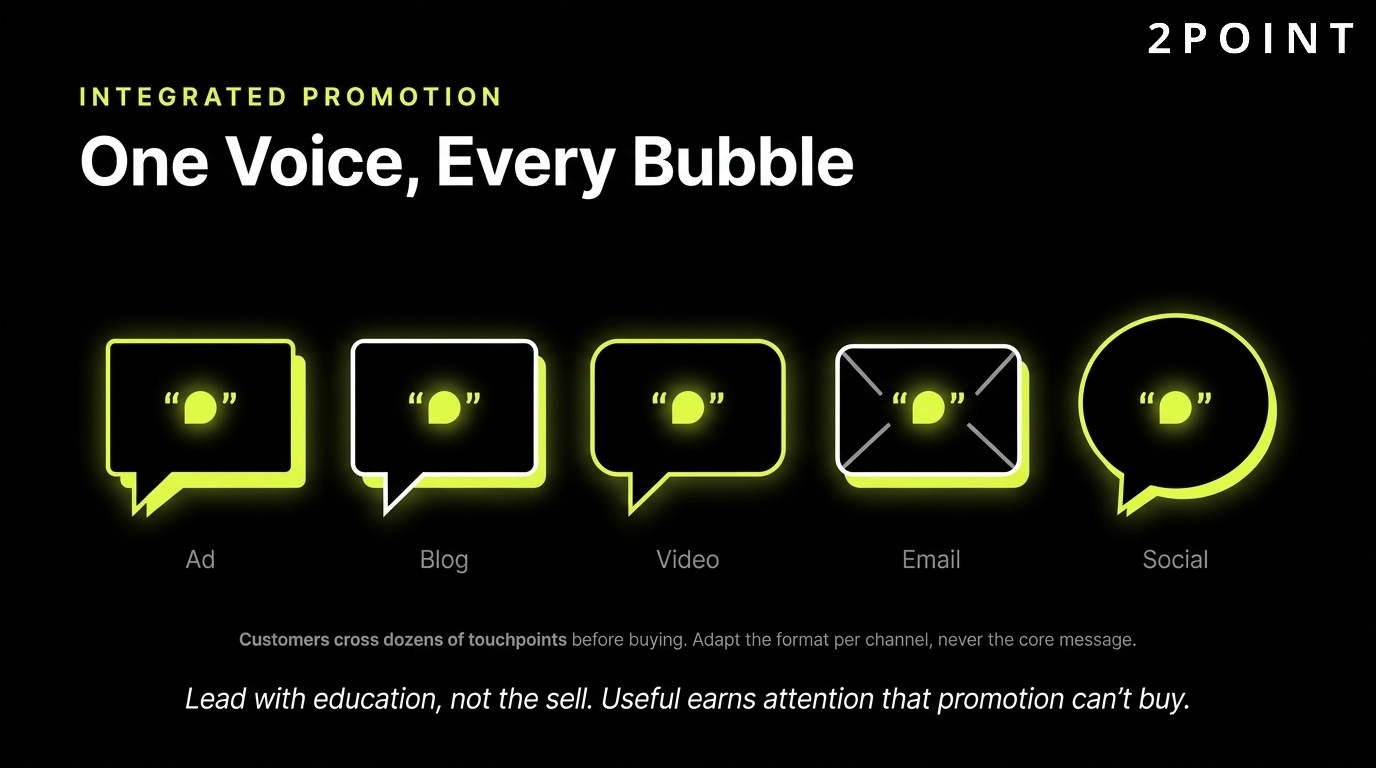
The integration principle is non-negotiable in 2026. Customers encounter brands across dozens of touchpoints before making a purchase decision, and inconsistent messaging at any of those points creates confusion and erodes trust. Your promotion strategy must deliver a coherent narrative whether someone sees your paid ad on LinkedIn, reads your blog, watches your YouTube video, or opens your email sequence. The message may be adapted for channel format, but the core value proposition and brand voice must be consistent.
A notable shift in effective promotion strategy is the move from sales-first to education-first messaging. Audiences have grown highly resistant to direct-sell content, especially in awareness-stage contexts. Campaigns that lead with genuinely useful information, practical guidance, and relevant insights earn attention that pure promotional content cannot buy. The education-first approach is not just philosophically appealing; it produces measurable differences in engagement, trust, and ultimately conversion rates.
Measurement is where promotion strategy matures. Tracking which specific promotion activities drive actual conversions, not just clicks or impressions, closes the loop between investment and return. Every promotion channel should have a defined goal and a corresponding metric. Without this discipline, promotion budgets expand based on gut feel rather than evidence, and waste accumulates invisibly.
Expanding to the 7Ps: The Complete Modern Marketing Framework
The 7Ps of marketing represent the natural evolution of the original 4Ps, designed to address the complexity of service-based businesses and the heightened importance of customer experience in modern markets. Understanding why this expansion happened and how to apply the additional three Ps gives marketers a more complete framework for diagnosing and improving their marketing strategy.
Why the 4Ps Evolved Into the 7Ps Model
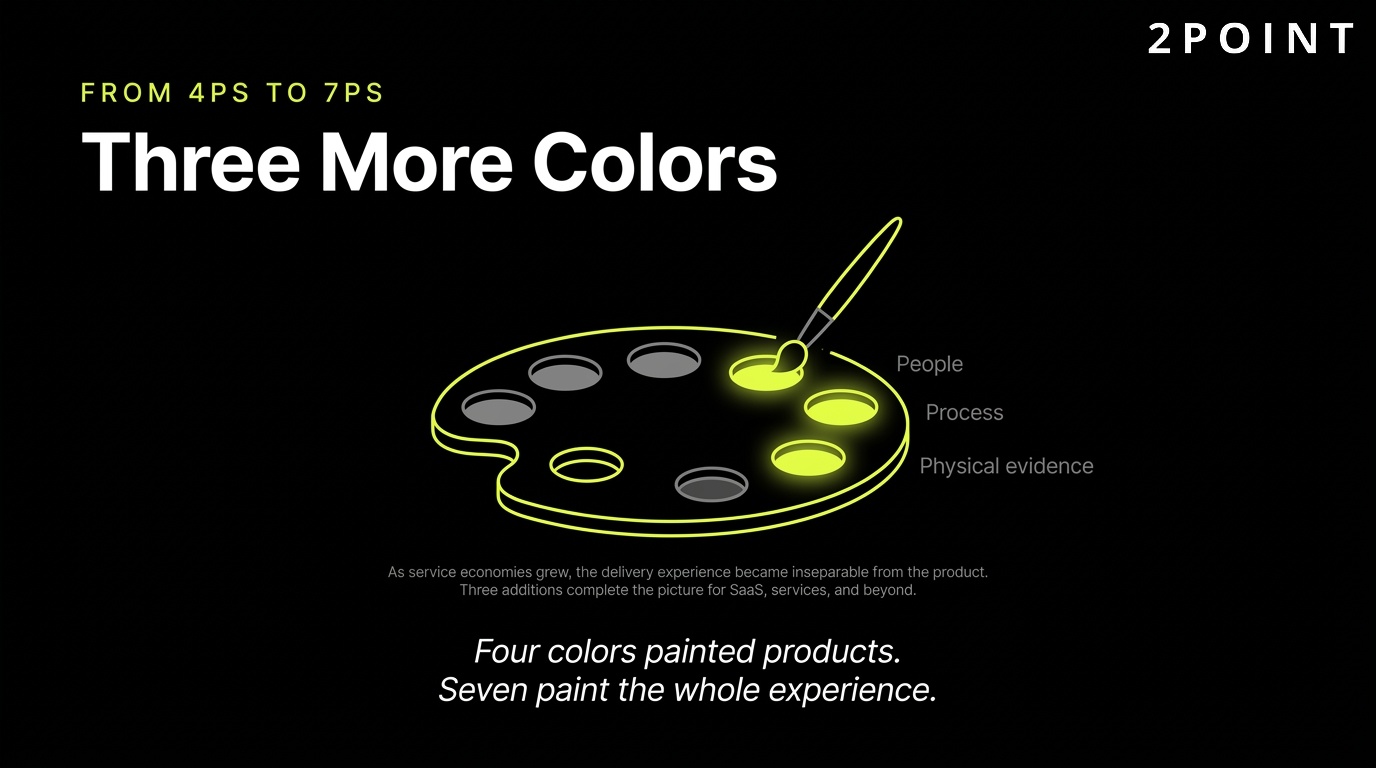
The original 4Ps framework was developed in an era when most marketing thinking centered on physical consumer goods. Sell a box of cereal, and the product, price, place, and promotion decisions capture most of what matters. Agile Sherpas' comprehensive guide to marketing fundamentals explains that as service industries grew to dominate modern economies, three additional elements became necessary to fully describe the customer experience: People, Process, and Physical Evidence.
The service economy transformed what customers expected from their interactions with businesses. Buying accounting software is fundamentally different from buying a box of pens. The human interactions, the onboarding process, the quality of customer support, and the digital environment in which the service is delivered all shape whether the customer perceives value or disappointment. The 4Ps could not account for these dimensions adequately.
In 2026, the expanded 7Ps model is particularly relevant for SaaS companies, professional service firms, hospitality businesses, healthcare providers, financial services, and any organization where the delivery experience is inseparable from the product itself. Even product companies increasingly benefit from the 7Ps lens because customer service, user experience design, and brand environment have become significant differentiators. The framework helps teams think holistically rather than in silos.
People: Your Most Visible Brand Asset
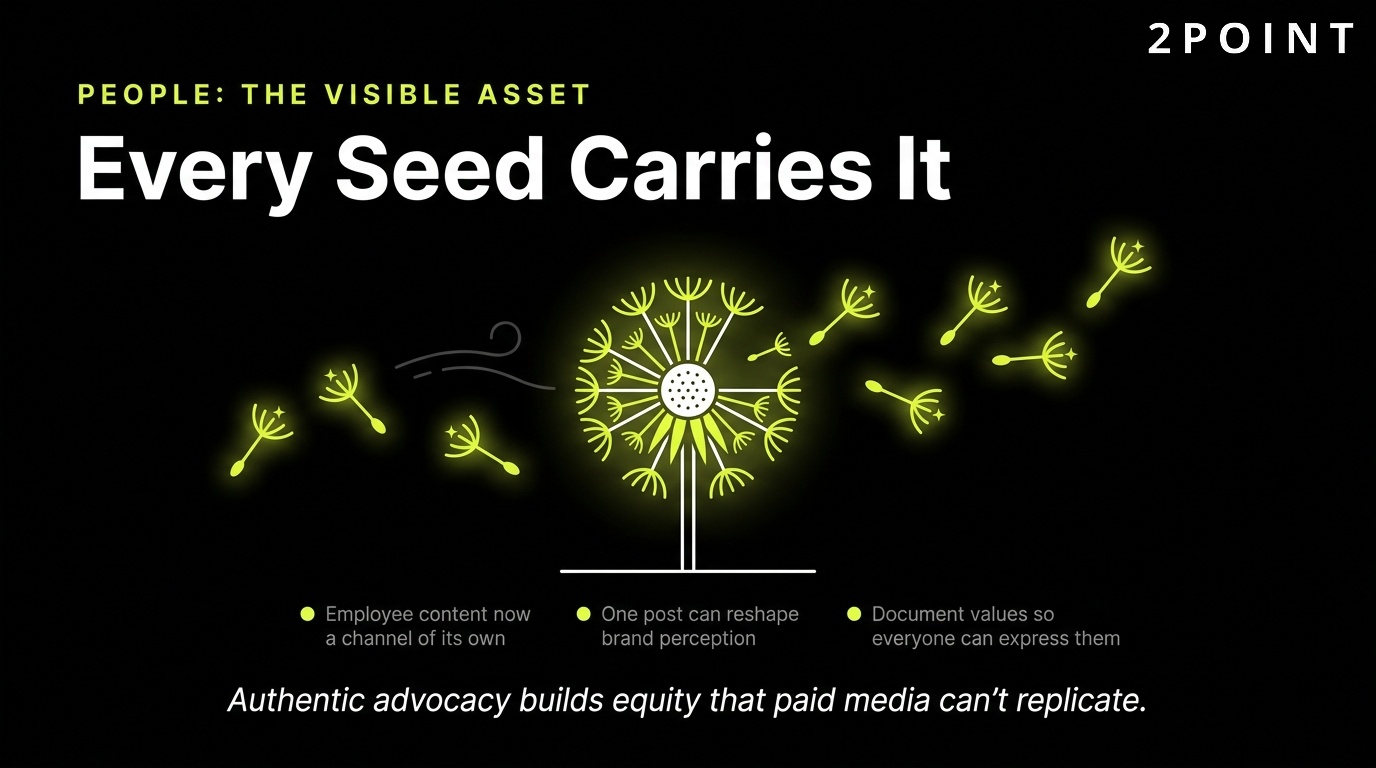
The People element of the 7Ps refers to everyone who represents your brand in any capacity: sales team members, customer service representatives, marketing staff who create public content, executives who speak on behalf of the company, and partners or influencers who carry your brand's message. Exeed College's guide to core marketing principles emphasizes that every human touchpoint is a brand experience moment, positive or negative.
The stakes around People have intensified considerably. A single employee's social media post, a salesperson's dismissive comment on a call, or an executive's public statement can reshape brand perception faster than any advertising campaign can repair it. Conversely, genuine employee advocacy, authentic behind-the-scenes content, and exceptionally skilled customer interactions build brand equity that paid media cannot replicate.
In 2026, employee-generated content has become a significant marketing channel in its own right. Teams whose members share expertise on LinkedIn, create educational content about their industry, and authentically represent the company culture produce a steady stream of trust signals that resonate far more deeply than corporate broadcast messaging. This requires investment in training, clear brand communication guidelines, and a culture that makes people proud to represent the organization.
Best practice begins with documenting brand values, communication standards, and customer interaction principles so that every team member, from interns to senior leadership, understands what the brand stands for and how to express it. The People element is not HR territory borrowed into marketing; it is a core strategic asset that marketing leadership must actively cultivate.
Process: Designing Frictionless Customer Journeys
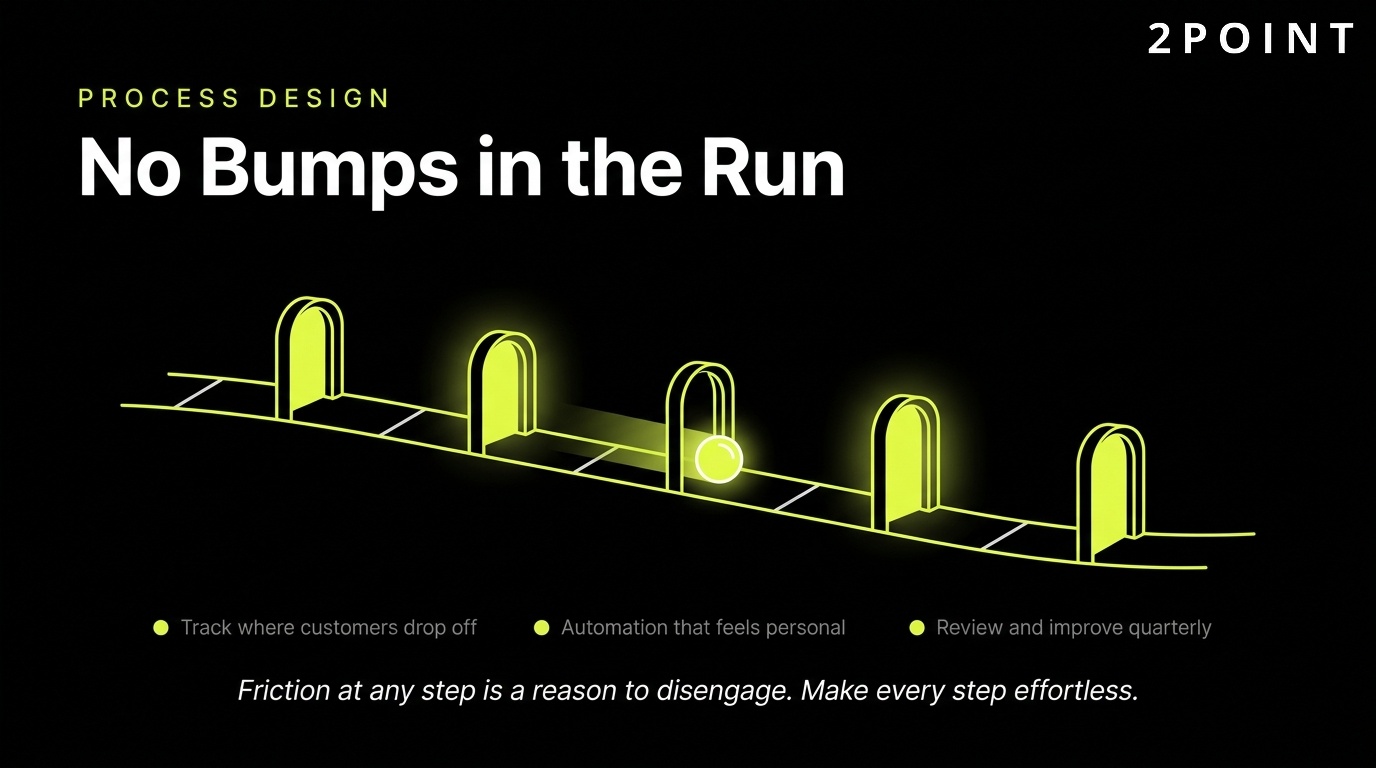
Process refers to the systems, procedures, and experiences customers move through from their first discovery of your brand to purchase, onboarding, ongoing use, and eventual renewal or advocacy. Every step in that journey is a process decision, and friction at any stage directly translates into lost customers and revenue.
Consider the touchpoints a typical B2B software customer experiences: discovering a blog post, landing on the website, navigating to the pricing page, requesting a demo, receiving a follow-up email, attending the demo call, receiving a proposal, going through contract negotiation, completing onboarding, contacting support for the first time, and eventually renewing the subscription. Each of these is a process moment. Poor design at any one of them creates a reason to disengage or choose a competitor.
Measurement is critical for process improvement. Tracking where customers drop off in the purchase funnel, monitoring cart abandonment rates in e-commerce, analyzing support ticket volume and resolution times, and surveying customers about friction points all generate the data needed to systematically improve the process. A business that reviews these metrics quarterly and makes deliberate improvements compounds its conversion and retention rates over time.
The 2026 standard for process design is automation that feels personal rather than robotic. Triggered email sequences that respond to specific behaviors, chatbots that intelligently escalate to humans at the right moment, and personalized onboarding flows that adapt to user activity are all examples of process excellence. The underlying goal is always the same: make every step as easy and clear as possible so that customers reach value quickly and with minimal effort.
Physical Evidence: Building Trust Through Tangibles

Physical Evidence encompasses all the visible, tangible elements that customers encounter when interacting with your brand, and which they use to form judgments about quality, credibility, and professionalism before any transaction takes place. Mindcentrix's overview of marketing fundamentals describes physical evidence as the cues that reduce perceived risk and build confidence in prospective customers.
In physical business environments, these cues include the cleanliness and design of a store or office, the quality of printed materials, the professionalism of staff attire, and the overall atmosphere. For service businesses that operate digitally, the equivalent cues are website design quality, page load speed, security certificates, professional photography, clearly written copy, and the presence of credibility markers like certifications, awards, or recognizable client logos.
Digital physical evidence also includes social proof elements: customer reviews on Google and industry platforms, case studies with specific measurable outcomes, video testimonials, published research or thought leadership content, and media mentions. These are the trust-building signals that a first-time visitor encounters and uses to decide whether to take the next step or click away.
A practical audit of your physical evidence starts with the question: "What does someone see in the first thirty seconds of encountering our brand?" Check your website homepage, your Google Business profile, your LinkedIn company page, your email signature template, and your primary marketing materials like your marketing brochure. Each of these is a physical evidence touchpoint that either builds or erodes the trust needed to move a prospect forward.
Core Marketing Principles That Drive Every Successful Strategy
Beyond the structural frameworks of the 4Ps and 7Ps, certain marketing principles operate as decision-making filters that cut across all frameworks and all contexts. These are the beliefs and behaviors that distinguish effective marketing organizations from those that struggle perpetually with wasted effort and unclear results. Internalizing these principles changes not just what you do but how you think about every marketing decision.
Customer-Centricity as the Ultimate Decision Filter
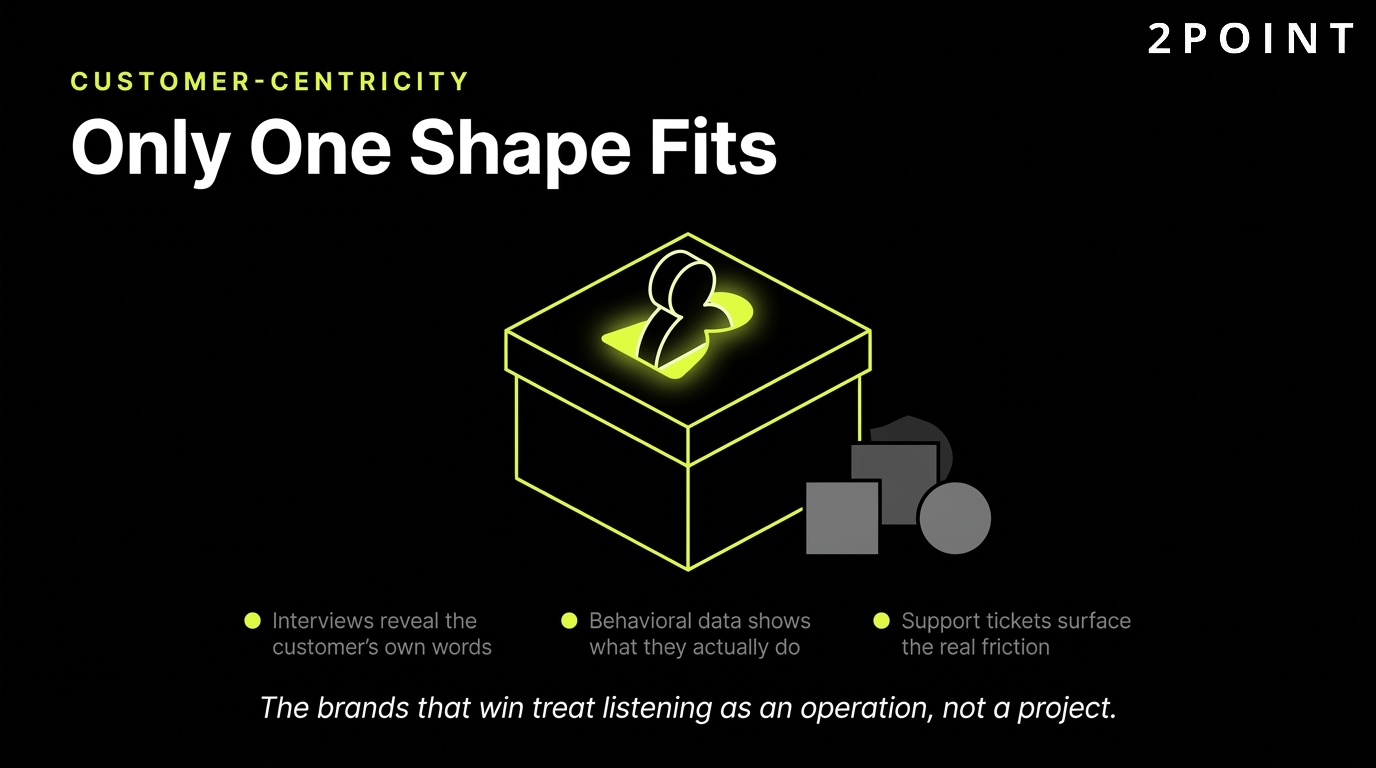
Customer-centric marketing means building every strategy, campaign, and message around customer needs rather than internal convenience, executive preferences, or competitive imitation. Ossisto's guide to marketing fundamentals frames customer-centricity as the filter through which every marketing decision should pass: "Does this create genuine value for our customer?"
The practical implementation of customer-centricity requires systematic research. Customer interviews reveal the language people use to describe their problems, which is invaluable for writing resonant copy. Surveys quantify preferences and priorities at scale. Behavioral data from website analytics and CRM systems shows what people actually do rather than what they say they will do. Support tickets and sales call recordings surface the objections and confusion points that never make it into formal research.
In 2026, the brands that are winning are those that treat customer insight as an ongoing operational priority rather than a periodic project. Quarterly customer advisory board sessions, monthly analysis of support themes, and weekly review of sales conversation patterns create a continuous feedback loop that keeps strategy calibrated to actual customer reality. Brands that stopped listening to customers during periods of rapid growth typically discover the gap painfully when growth stalls.
Customer-centricity also requires organizational courage: the willingness to hear that a beloved internal project does not resonate with customers, that a long-running campaign is actually confusing the audience, or that a competitor is solving the problem more effectively. The businesses that act on uncomfortable customer feedback rather than rationalizing it away are the ones that earn lasting loyalty.
Evidence-Based Marketing Over Assumptions
One of the most damaging defaults in marketing is the assumption. Teams assume they know which messages resonate. They assume a particular channel will work because a competitor uses it. They assume a feature is valued because the product team loves it. Evidence-based marketing replaces these assumptions with data and structured testing before committing significant resources to a direction.
The data sources available to modern marketing teams are extensive. Win/loss analysis reveals why deals closed or did not, providing direct insight into positioning effectiveness. Campaign performance data shows which messages, offers, and audiences generate the best cost-per-outcome. Website behavior analytics expose where customers get confused or lose interest. Sales conversation transcripts, when systematically reviewed, contain patterns that should inform messaging and positioning. Data analytics for informed marketing decisions has become a core competency, not an optional add-on.
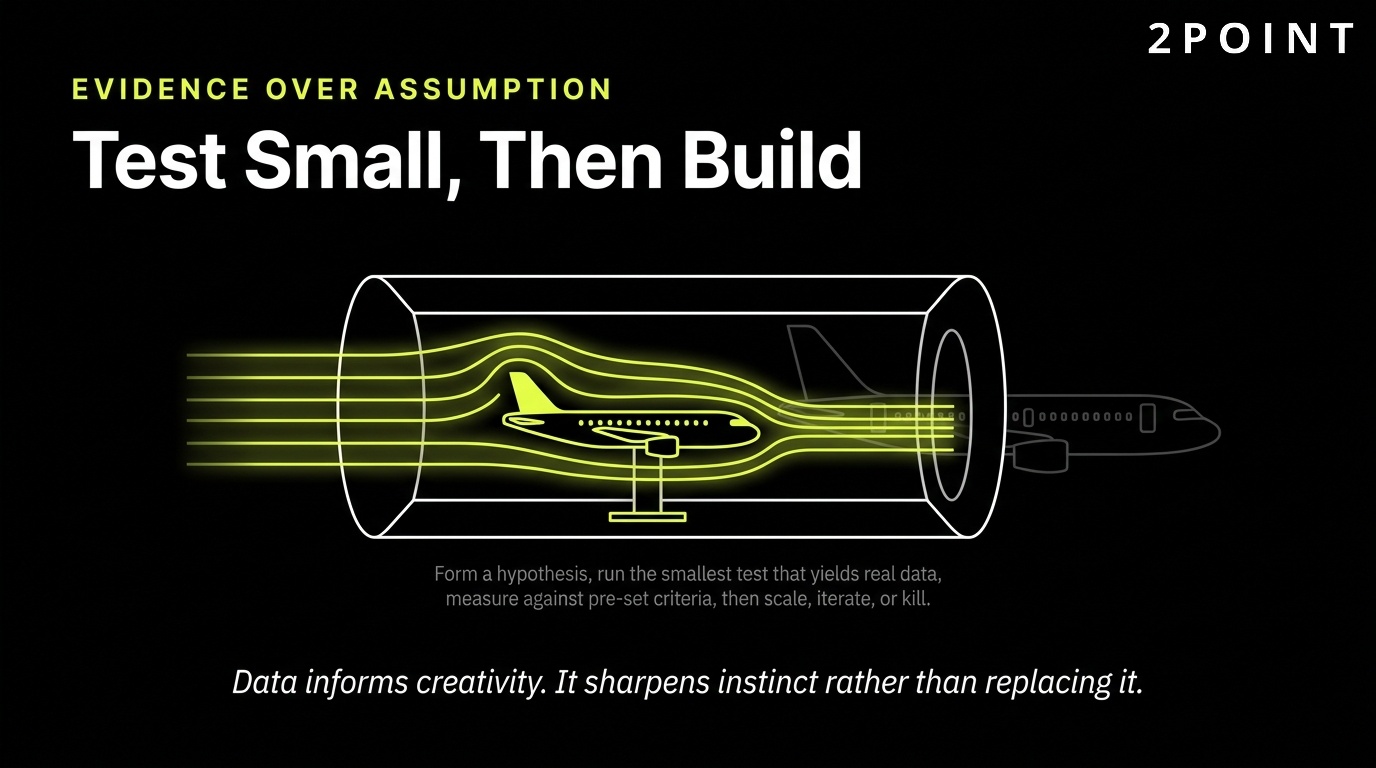
Building a testing culture means creating systems for generating ideas, running small-scale experiments to validate them, measuring results rigorously, and then making scale or kill decisions based on evidence. This sounds straightforward but requires deliberate process design. Without a structured approach, testing becomes sporadic, results are interpreted inconsistently, and the learning never accumulates into improved performance.
The important balance to maintain is that data informs creativity rather than replacing it. Numbers tell you what happened; they do not always tell you why, and they rarely tell you what has never been tried before. The best marketing teams combine analytical discipline with creative intuition, using data to sharpen instincts rather than outsourcing judgment entirely to dashboards.
Segmentation, Targeting, and Positioning: The STP Marketing Model
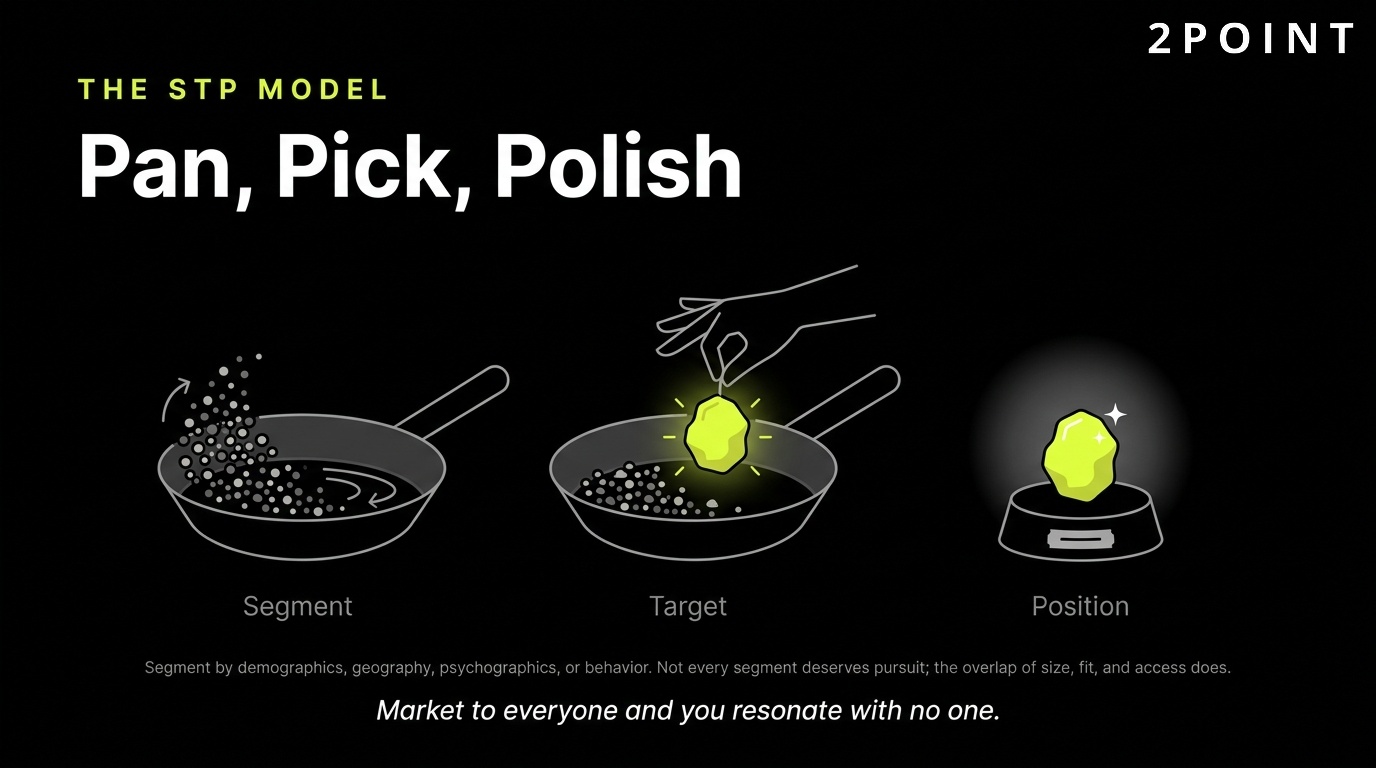
STP marketing, the framework of Segmentation, Targeting, and Positioning, is one of the most practically useful models in the entire marketing fundamentals toolkit. It addresses the fundamental challenge of how to focus limited resources on the customers most likely to generate value, and how to communicate with those customers in a way that resonates specifically with their situation.
Segmentation divides the total available market into distinct groups based on shared characteristics. These can be demographic (age, income, company size), geographic (location, region, urban vs. rural), psychographic (values, lifestyle, attitudes), or behavioral (purchase patterns, usage intensity, brand loyalty). The goal is to identify segments that are measurably different from each other in ways that are relevant to your marketing decisions.
Targeting means choosing which segments to pursue based on an honest assessment of fit and opportunity. Not every segment is worth serving. The most attractive segments combine significant size or value, strong alignment with your product's strengths, relative competitive openness, and genuine accessibility through your available channels and budget. A B2B SaaS company that tries to market identically to three-person startups and Fortune 500 enterprises will almost certainly fail to resonate with either.
Positioning creates a distinct perception in the minds of your chosen segments. EBSCO's research on marketing principles describes positioning as the process of owning a meaningful, credible, and differentiated space in the customer's mind relative to all alternatives. Effective positioning is specific, defensible, and valuable to the target segment. "We're the fastest," "We're the most affordable," and "We're the most trusted by [specific industry]" are all positioning claims, varying in distinctiveness and credibility depending on context and evidence.
Experimentation and Continuous Adaptation
Every marketing channel, tactic, and message faces eventual diminishing returns. An email subject line that generated 45% open rates six months ago may now produce 22%. A Facebook ad audience that converted profitably for two years may have become saturated. A content strategy built around particular search terms may need updating as audience behavior shifts. The marketing landscape changes continuously, and static strategies progressively lose effectiveness.
The solution is building experimentation into the operating rhythm of your marketing program. This means maintaining a structured process for generating hypotheses, designing valid small-scale tests, measuring outcomes against clear benchmarks, and making evidence-based decisions about scaling, modifying, or abandoning each approach. Agile Sherpas' marketing fundamentals guide treats this experimental mindset as a core competency rather than an occasional activity.
The practical framework is: form a hypothesis about what will work and why, run the smallest test that will generate meaningful data, measure results against pre-defined success criteria, and then decide whether to scale, iterate, or move on. This prevents both premature scaling of unproven ideas and premature abandonment of ideas that need refinement.
In 2026, markets change faster than in previous decades. Consumer behavior, platform algorithms, competitive landscapes, and cultural contexts all shift more rapidly under the influence of technology. Static strategies that worked brilliantly two years ago can become invisible or irrelevant today. The organizations that build experimentation into their culture, treating it as necessary operational practice rather than reactive crisis response, consistently outperform those that wait for obvious failure signals before adapting.
Digital Marketing Fundamentals for 2026
Digital marketing fundamentals share the same theoretical roots as traditional marketing principles but operate in an environment characterized by real-time data, algorithmic distribution, global reach, and the constant emergence of new channels and tools. Understanding which digital marketing principles are stable and which are context-dependent is essential for building a strategy that survives the inevitable platform and algorithm changes.
Core Digital Principles That Have Not Changed
Despite the constant surface-level changes in digital marketing, the foundational principles have remained remarkably stable. Mindcentrix's marketing fundamentals overview emphasizes that understanding customer intent, behavior, and preferences must precede any decision about tools or channels. The technology stack is only as valuable as the strategic clarity it serves.
The four pillars of digital marketing remain consistent: SEO for discovery when customers are actively searching for solutions, content for education and trust-building, email for nurturing relationships over time, and social media for building awareness and community. Each pillar serves a distinct purpose in the customer journey, and neglecting any one of them creates gaps that competitors can exploit.
AI enhancement is now woven into every one of these pillars. AI tools can generate more accurate customer personas by analyzing behavioral data at scale, predict which content topics will resonate with specific segments, personalize email sequences at an individual level, and optimize social media targeting automatically. These capabilities are powerful, but they amplify good strategic thinking; they do not compensate for the absence of it.
Data-driven personalization has shifted from a competitive differentiator to a baseline expectation in 2026. Customers expect that brands they have interacted with will remember their preferences, acknowledge their history, and serve them relevant rather than generic content. The fundamental principle, that relevance drives response, has not changed. The tools for delivering relevance at scale have simply become more accessible. A well-implemented digital marketing strategy incorporates personalization from the outset rather than retrofitting it later.
Channel Selection Strategy: Where to Focus Your Resources
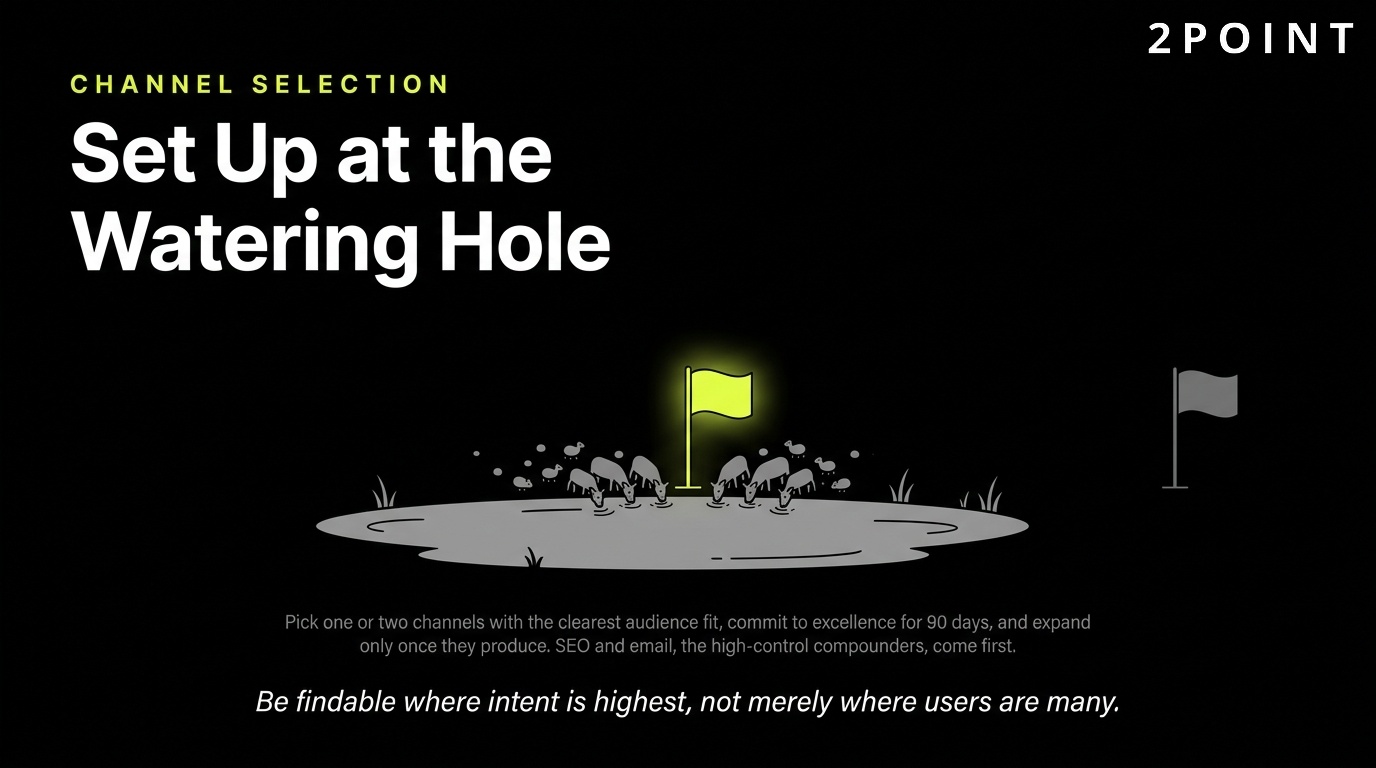
The single most common digital marketing mistake is attempting to maintain active presence on every available channel simultaneously. This "be everywhere" approach spreads teams too thin, produces mediocre content across all channels, and prevents the depth of execution needed to actually build traction anywhere. The 2026 mantra for channel strategy is "be findable where intent is highest," which means prioritizing channels based on where your specific audience actively seeks solutions rather than where the most users spend time in aggregate.
Evaluating channel fit requires answering three questions honestly. First, is your target audience genuinely active and reachable on this channel? Second, do your budget constraints allow for the consistency and quality this channel demands? Third, how much control do you have over this channel's performance, given that algorithm changes can dramatically alter organic reach with little warning?
| Marketing Channel | Primary Strength | Control Level | Time to Meaningful Results | Best Suited For |
|---|---|---|---|---|
| SEO and Organic Search | Captures active intent | High (own your content) | 3 to 6 months | Long-term lead generation |
| Email Marketing | Owned audience, high ROI | Very high | Immediate, compounds over time | Nurturing and retention |
| Paid Search (PPC) | Immediate visibility | High within platform | Days to weeks | Short-term demand capture |
| Social Media (organic) | Brand awareness and community | Low (algorithm dependent) | 6 to 12 months | Thought leadership, brand building |
| Paid Social | Targeted reach at scale | Medium | Weeks to months | Awareness and retargeting |
| Content and Blog | SEO fuel, trust building | High | 3 to 9 months | Inbound lead generation |
| Video (YouTube, Reels, Shorts) | Engagement and discovery | Medium | 2 to 6 months | Education and awareness |
The key takeaway from this comparison is that channels with higher control and compound value, specifically SEO and email, should form the foundation of any sustainable digital marketing program before experimental channels are added.
The practical starting point for any team is to select one or two channels where the audience fit is clearest, commit to excellence on those channels for a minimum of 90 days, measure results rigorously, and only expand to additional channels once the core channels are producing consistent outcomes. Comparing available digital marketing tools can help identify the right platform ecosystem to support your chosen channel strategy without over-complicating the technology stack.
SEO and Content as the Discovery Foundation
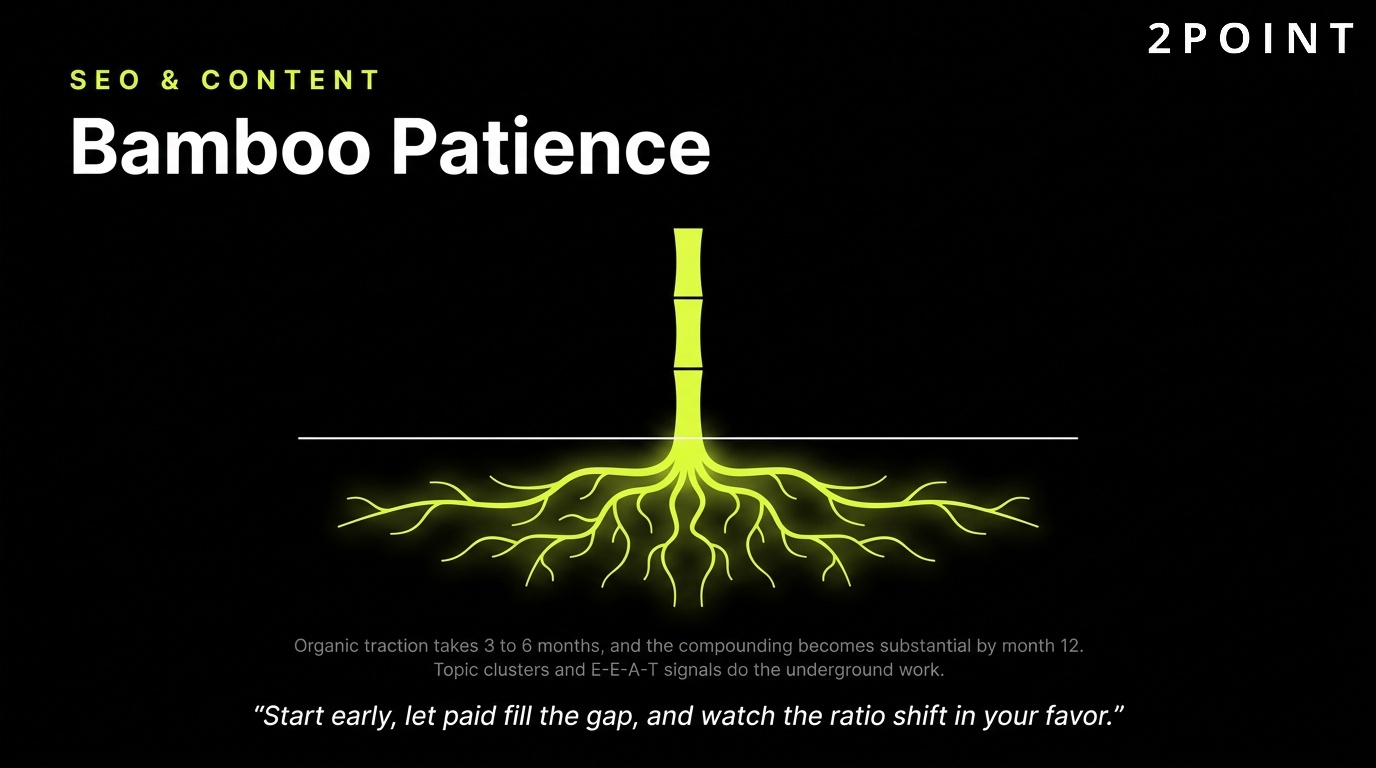
Search engine optimization and content marketing remain the most durable and compound-value combination in digital marketing. SEO captures active intent, meaning it reaches people at the precise moment they are searching for the solution your business provides. No other digital channel matches this quality of timing. Rankyak's marketing fundamentals resource identifies SEO-driven content as the foundation layer upon which all other digital marketing efforts are built most effectively.
In 2026, SEO priorities have matured significantly. Topic cluster strategies, where a comprehensive pillar page links to and from a network of supporting content pieces, have replaced the old single-keyword page approach. E-E-A-T signals, Google's evaluation framework for Experience, Expertise, Authoritativeness, and Trustworthiness, now heavily influence ranking decisions, particularly for topics that affect decisions, finances, or health. Core Web Vitals, which measure page loading performance, interactivity, and visual stability, have become ranking factors that reward technically optimized content. Schema markup helps search engines extract and feature your content in rich results and answer boxes.
The content strategy that works in 2026 is built on answering real questions that real customers are actually asking, demonstrating genuine expertise through depth and specificity, and building trust before attempting to sell. Content that treats every page as an opportunity to educate rather than just to rank performs on two levels simultaneously: it attracts search traffic and it converts that traffic into trust, then leads, then customers.
A practical note on timeline management: organic SEO typically requires three to six months before significant traction appears, and twelve months before the compounding benefits become substantial. This timeline means that businesses relying solely on paid channels while delaying SEO investment are continuously paying for traffic they could eventually attract for free. Start SEO and content early, run paid channels to fill short-term gaps, and watch the ratio shift favorably over time.
Short-Form Video and Social Strategy in 2026
Short-form video has become one of the dominant forces in digital content consumption. Instagram Reels, YouTube Shorts, and TikTok drive enormous awareness volumes, while LinkedIn has evolved into the primary professional community platform for B2B audiences at the consideration stage. Leading Response's 2026 marketing trends analysis identifies video as a non-negotiable component of modern marketing strategy across virtually all industries.
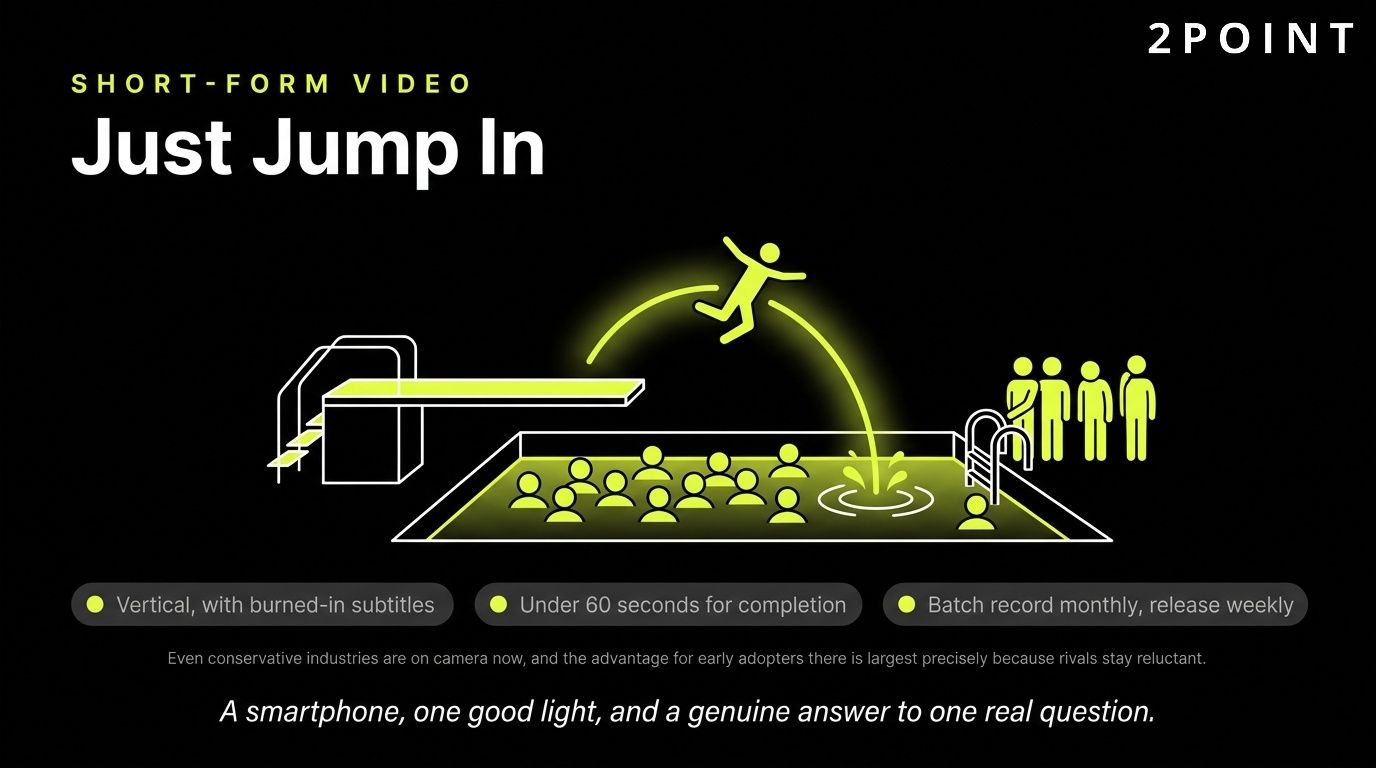
The format specifications for effective short-form video in 2026 are well-established: vertical orientation for mobile viewing, mobile-first production quality (which does not necessarily mean expensive), burned-in subtitles because a significant portion of viewers watch without sound, and under 60 seconds for optimal completion rates. The production standard has shifted decisively from polished broadcast aesthetics toward authentic, direct-to-camera expertise sharing that prioritizes substance over production value.
The content that consistently performs is educational and authentic. Answering the most common questions your customers ask, demonstrating expertise through practical examples, sharing behind-the-scenes processes, and creating contrast content that challenges common misconceptions all generate the kind of engagement that builds audiences and trust simultaneously. Video marketing for engagement and sales conversion is now a skill every marketing team needs to develop internally.
The most common objection is the camera barrier: "I'm not comfortable on camera." The 2026 reality is that professionals in every field, including conservative industries like finance, law, and healthcare, are creating camera content and building significant audiences by doing so. The competitive advantage for early adopters in conservative industries is substantial precisely because most competitors remain reluctant. Start with smartphone, one good natural light source, and a genuine answer to one real customer question. Batch record monthly, release weekly, and iterate based on which topics generate the most response.
Building a Customer-Centric Marketing Strategy From the Ground Up
Customer-centric marketing is not simply a philosophy; it is an operational methodology that requires specific tools, processes, and habits to execute consistently. Building this approach from the ground up means developing deep knowledge of your customers, mapping the journey they take to reach and stay with you, and crafting the value proposition that makes choosing your business the obvious decision for the right customer.
Creating Detailed Customer Avatars That Drive Decisions
Customer avatars, also called buyer personas, are detailed representations of your ideal customer segments built from real research rather than internal assumptions. Effective avatars go far beyond basic demographics to capture the struggles, motivations, search behaviors, decision blockers, trust factors, and preferred content formats of specific customer types. Brand Clickx's marketing fundamentals guide emphasizes that depth of understanding rather than breadth of coverage is what makes avatars genuinely useful.
Research methods for building accurate avatars include one-on-one customer interviews (the single highest-value source), systematic analysis of sales call recordings, thematic review of support tickets and live chat transcripts, exit surveys from churned customers, and structured analysis of online communities where your audience spends time. Each source adds a different dimension: interviews reveal emotional motivations, support tickets reveal functional pain points, churn surveys reveal expectation gaps.
A complete customer avatar includes: demographic profile, professional context, primary goals related to your category, daily frustrations your product could address, specific objections to purchasing, content formats and platforms they prefer, the trigger events that initiate their search for a solution, and the criteria they use to evaluate options. The more specific and concrete each element, the more useful the avatar becomes as a marketing tool.
The operational practice is to filter every marketing decision through the avatar question: "Would [Avatar Name] care about this? Would this language resonate with them? Would they encounter this on the channel we're considering?" Avatars should be reviewed and updated quarterly because customer needs, behaviors, and contexts evolve. An avatar built two years ago may no longer accurately represent the customer your product now attracts.
Understanding Consumer Behavior Patterns to Anticipate Needs
Consumer behavior analysis moves marketing from reactive to anticipatory. Rather than responding to what customers are asking for today, behavior pattern analysis allows you to identify what they will need next, which problems are emerging before they become explicit requests, and which segments are most likely to convert, expand, or churn. Ossisto's fundamentals of marketing resource describes behavioral segmentation as one of the most powerful and underutilized tools available to marketing teams.
Behavioral segmentation groups customers based on observable actions rather than assumed attributes. Purchase frequency and recency reveal loyalty patterns. Product usage data shows which features are valued and which are ignored. Content consumption patterns indicate what topics a prospect is actively researching. Support interaction history reveals customers at risk of churn before they announce it. These behavioral signals, when systematically monitored, give marketing and customer success teams the intelligence to intervene proactively.
In 2026, AI-powered analytics platforms have made behavioral profiling accessible to businesses of all sizes, not just enterprise organizations with data science teams. These tools can identify behavioral clusters automatically, flag anomalies that indicate opportunity or risk, and generate predictive scores for outcomes like purchase likelihood, churn risk, or upsell potential. The fundamental principle remains the same as always: understand what customers actually do, not just what they say they do, and build your marketing responses around those behaviors.
Mapping the Customer Journey Across Every Stage
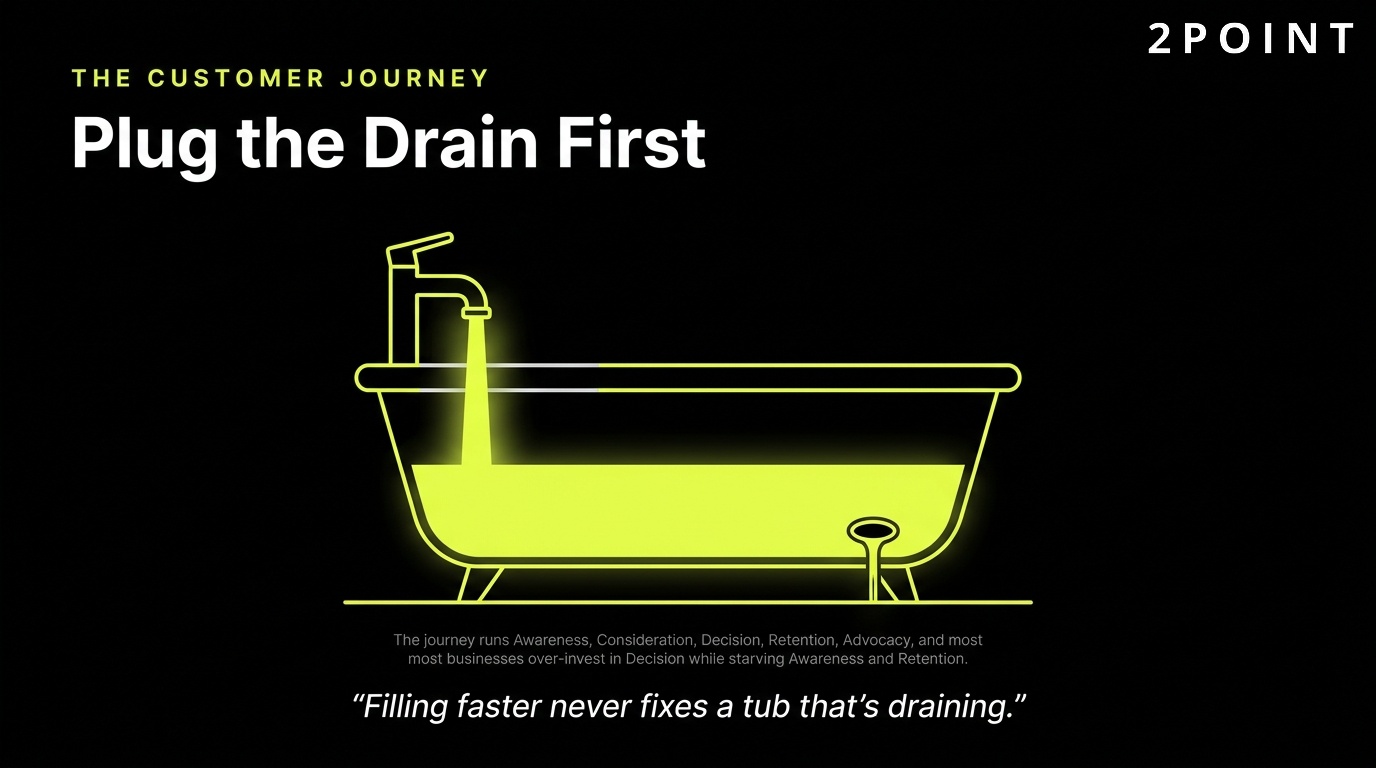
The customer journey is the full sequence of experiences a person has from the moment they first become aware that they have a problem your business solves to the moment they become a loyal advocate who refers others. Every stage of this journey, Awareness, Consideration, Decision, Retention, and Advocacy, requires different content, different channel strategies, and different success metrics.
| Journey Stage | Customer Question | Best Content Types | Primary Marketing Channels | Key Metric |
|---|---|---|---|---|
| Awareness | I have a problem. What is it called? | Blog posts, short-form video, social content | SEO, social media, paid awareness | Reach and brand recall |
| Consideration | What are my options for solving this? | Comparison guides, webinars, case studies | Email, retargeting, LinkedIn | Engagement rate and lead volume |
| Decision | Why should I choose this specific solution? | Demos, free trials, testimonials, proposals | Direct sales, email, website | Conversion rate and cost per acquisition |
| Retention | Am I getting the value I expected? | Onboarding sequences, tutorials, check-ins | Email, in-app messaging, customer success | Retention rate and net promoter score |
| Advocacy | How can I share this with others? | Referral programs, community, co-created content | Community platforms, email, events | Referral rate and lifetime value |
The key takeaway from customer journey mapping is that most businesses over-invest in the Decision stage and dramatically under-invest in Awareness and Retention, creating an acquisition machine that leaks value at both the top and bottom of the funnel.
A practical journey mapping exercise involves identifying every touchpoint at each stage, assessing the current experience quality at each touchpoint, and prioritizing improvements where customer satisfaction is lowest or dropout rates are highest. The gap identification process often reveals quick wins: a confusing pricing page, a broken onboarding email sequence, or a missing comparison piece that would accelerate the consideration phase significantly.
Value Proposition Development: The Core of All Marketing Communication

The value proposition is the clearest and most concentrated expression of why a specific customer should choose your product over all available alternatives. It is not a tagline, not a mission statement, and not a list of features. It is a precise articulation of the transformation your product delivers, the specific problem it solves, the mechanism through which it solves it, and the evidence that it works as claimed.
A simple framework for value proposition development: Value equals Benefits minus Costs. Benefits include the functional outcomes the product delivers (time saved, revenue increased, risk reduced), the emotional outcomes it creates (confidence, relief, status), and the social outcomes it enables (recognition, belonging, influence). Costs include the monetary price, but also the time investment required, the implementation risk, the learning curve, and any switching costs from existing solutions.
The clarity test for a value proposition is demanding: can a stranger who has never heard of your business read or hear your value proposition and immediately understand what you do, who it is for, and why it matters, all in under ten seconds? If the answer is no, the proposition needs work. Vague claims like "we help businesses grow" or "innovative solutions for modern challenges" fail this test because they apply to hundreds of competitors equally. Writing effective marketing copy that captivates your audience starts with a clear value proposition that every piece of marketing content flows from.
The most common mistake in value proposition development is defaulting to feature lists rather than outcome statements. Features describe what the product is; outcomes describe what the customer becomes or achieves by using it. "24/7 customer support" is a feature. "Resolve any issue before your customers notice it existed" is an outcome. The second version is more compelling because it speaks to what the customer actually cares about.
Essential Marketing Skills for 2026 Success
Marketing skills in 2026 span both technical and human dimensions. The most effective marketing professionals combine analytical capability, technological fluency, strategic thinking, and interpersonal communication in ways that neither pure technologists nor pure creatives can match alone. Understanding which skills to prioritize and how to develop them systematically is itself a form of strategic career and team planning.
Data Analysis and ROI Measurement as Core Competencies
The ability to connect marketing activities to business outcomes with specific numbers is now a baseline expectation for marketing professionals at every level. Monday.com's marketing skills guide identifies data analysis as one of the top two most in-demand marketing competencies in 2026, driven by increasing executive scrutiny of marketing budgets and the growing availability of analytics infrastructure that makes measurement practical.
Different marketing goals require different metric frameworks. Awareness campaigns should be evaluated on reach, frequency, and brand recall lift, not conversion rates that do not reflect the stage's purpose. Consideration content should be measured on engagement depth, time on page, return visit rates, and lead form completions. Conversion-focused campaigns belong against acquisition metrics: lead-to-customer conversion rate, customer acquisition cost, and payback period.
Attribution remains one of the genuinely hard problems in marketing analytics. Modern purchase journeys involve multiple touchpoints across multiple channels over days or weeks, and attributing conversion credit to the "right" touchpoint is both technically complex and philosophically contested. The practical approach for most businesses is to use multi-touch attribution models that distribute credit across the full journey rather than last-touch models that give all credit to the final interaction before purchase, which systematically understates the value of awareness and consideration activities. Understanding data visualization in marketing helps make complex analytical insights accessible and persuasive to stakeholders who are not analytically oriented.
AI Literacy and Automation as Competitive Requirements
AI literacy is no longer a forward-looking aspiration; it is a present-tense competitive requirement for marketing teams in 2026. The Content Marketing Institute's strategic fundamentals research identifies AI integration as one of the defining characteristics separating high-performing marketing organizations from those falling behind. This does not mean every marketer needs to understand machine learning algorithms, but it does mean every marketer needs to be able to work effectively with AI tools as a standard part of their workflow.
Core AI literacy for marketers includes the ability to write effective prompts that produce useful outputs, the judgment to evaluate AI-generated content critically and refine it, and the workflow design skills to integrate AI assistance into content creation, data analysis, customer segmentation, and campaign optimization processes. Teams that have developed these capabilities are producing more content at higher quality with the same headcount, analyzing more data more quickly, and personalizing communications at scales that were previously impossible without enterprise budgets.
The critical boundary to understand is what AI cannot replace. Strategic judgment about which markets to pursue, emotional intelligence in customer conversations and stakeholder management, creative intuition about what will resonate with a specific human audience, and ethical decision-making about how to use customer data all remain irreducibly human capabilities. AI handles the execution layer; humans must still provide the strategic and creative direction. The marketing professionals who thrive are those who use AI to amplify their human strengths rather than treating it as a replacement for strategic thinking.
Cross-Functional Collaboration as a Marketing Multiplier
Marketing does not exist in organizational isolation. Its effectiveness depends critically on tight alignment with sales (to understand what messages resonate in real customer conversations), product (to accurately represent capabilities and roadmap), customer success (to understand post-sale experience and retention drivers), and executive leadership (to connect marketing investment to business strategy). Agile Sherpas' effective marketing guide identifies cross-functional collaboration as one of the most consistently underrated marketing competencies.
The communication skill at the heart of successful cross-functional collaboration is translating marketing metrics into business language that non-marketing stakeholders understand and care about. "We generated 1,200 impressions" does not resonate with a CEO the way "our content program contributed to 34 qualified leads last quarter, representing approximately $280,000 in pipeline value" does. Learning to make this translation fluently is career-accelerating and budget-securing.
Practical mechanisms for improving cross-functional alignment include regular joint meetings between marketing and sales to review lead quality and message effectiveness, monthly marketing reviews that include product and customer success input, shared dashboards where all teams can see the metrics relevant to their intersection with marketing, and joint goal-setting processes that create shared accountability for pipeline and revenue outcomes. Integrated marketing communications as an organizational strategy is the formal framework for creating this kind of cross-functional coherence.
Learning Timeline and Skill Development Priorities
One of the most practical questions for any marketer or business owner starting with fundamentals is: how long does this take? The honest answer is that foundational marketing competency, the ability to understand frameworks, design a basic strategy, and execute coherently across two or three channels, is achievable in three to six months of focused study and practical implementation. Channel expertise, the ability to consistently produce excellent results in a specific area like SEO or paid social, typically requires one to two years of hands-on experience.
The skill development sequence that yields the fastest practical results starts with customer research and analysis, then moves to strategy development (using frameworks like STP and the 7Ps), then to content and copy fundamentals, and then to channel-specific technical skills. This sequence prevents the common mistake of becoming technically proficient in executing tactics before understanding the strategic context those tactics should serve.
Continuous learning is not optional in marketing. The landscape changes quickly enough that even experienced professionals must commit ongoing time to staying current. The most effective approach combines structured learning (formal courses, certifications) with applied experimentation (running real campaigns), consumption of industry research and trend reports, and peer learning through professional communities and mentoring relationships. The practical rule is simple: allocate a minimum of one to two hours per week to deliberate learning, apply new concepts immediately in active work, and document what you discover so the learning compounds over time.
Modern Marketing Trends Reinforcing Core Fundamentals
The most important insight about marketing trends is that the strongest ones are not departures from fundamentals but amplifications of them. Personalization amplifies the customer-centricity principle. Education-first content amplifies the value creation principle. Community building amplifies the relationship and trust principles. Understanding trends through the lens of fundamentals makes it much easier to evaluate which are genuinely worth pursuing and which are tactical distractions.
Personalization as Baseline Expectation, Not Premium Feature
Personalization has completed its journey from innovative differentiator to fundamental expectation. Leading Response's 2026 marketing trends report documents that customers now evaluate brand communications through the question: "Does this message speak to where I actually am in my life and business?" Generic, one-size-fits-all communications increasingly generate the kind of disengagement that reduces deliverability, increases unsubscribe rates, and erodes brand perception.
Personalization operates at multiple implementation levels. Basic personalization uses first name and basic demographic data. Intermediate personalization responds to behavioral signals: browsing history, email engagement, purchase recency, and product usage patterns. Advanced personalization is predictive: using machine learning to anticipate what content, offer, or communication timing will resonate with a specific individual based on their complete behavioral profile.
The critical balance is the line between personalization that feels helpful and personalization that feels surveillant. Customers are comfortable when personalization makes their experience easier and more relevant. They become uncomfortable when it reveals that a brand has tracked behaviors they did not expect to be tracked or used data in ways that feel intrusive. The practical guideline is to use personalization to serve the customer's needs rather than to demonstrate data collection capability. Relevant product recommendations serve the customer. Unsolicited references to browsing behavior feel invasive.
Education-First Marketing as the New Standard
The shift from promotional to educational content as the primary marketing currency is one of the most fundamental changes in customer behavior over the past decade. The Content Marketing Institute's research on marketing fundamentals consistently shows that audiences who encounter a brand through genuinely useful educational content develop higher trust, shorter sales cycles, and greater lifetime value than those acquired through purely promotional channels.
Education-first marketing works because it demonstrates expertise before asking for trust. When a business consistently answers the real questions its prospects are asking, provides actionable guidance they can use regardless of whether they purchase, and does so with genuine depth and specificity, it builds credibility that promotional claims cannot achieve. This is the mechanism behind the phrase "give value first." The value exchange works because customers reciprocate trust for trust.
The content types that deliver education-first marketing most effectively include detailed how-to guides that walk through real processes step by step, comparison articles that help prospects evaluate options honestly (including situations where your product is not the best choice for them), webinars that provide interactive depth on specific topics, email courses that build understanding progressively over days or weeks, and video tutorials that demonstrate practical applications in real contexts. The storytelling approach in content marketing adds an emotional dimension that pure instructional content lacks, making educational material more memorable and more likely to be shared.
Community and Conversation as Core Marketing Channels
Modern customers expect two-way engagement rather than one-way broadcast. The shift from broadcasting to conversation is one of the most structurally significant changes in marketing over the past decade, and it has accelerated sharply in 2026. Brands that still primarily publish promotional content and never genuinely engage with their audiences find that reach and engagement metrics decline steadily as algorithms and customer behavior increasingly reward reciprocal interaction.
Community building takes multiple forms: LinkedIn Groups organized around professional topics relevant to your audience, Facebook Groups for consumer communities, Slack workspaces for customer collaboration, Discord servers for enthusiast communities, and forum participation in spaces where your audience already gathers. Each of these channels creates ongoing relationship infrastructure that transcends any individual campaign. Social media marketing is most powerful when it facilitates genuine community rather than functioning as a digital billboard.
Co-creation is a community strategy that delivers particular business value: involving customers in product development decisions, inviting them to contribute to content, featuring their success stories and insights, and creating genuine advocacy through participation rather than just purchasing. Customers who contribute to shaping a product or community develop ownership feelings that dramatically increase loyalty, retention, and referral behavior. The measurement challenge is tracking the downstream business value of community activity, which requires connecting community engagement data to purchase behavior, retention rates, and referral volumes.
In-Person and Hybrid Event Resurgence
One of the most counterintuitive findings from Leading Response's 2026 trends research is that in-person events consistently deliver some of the highest conversion rates and longest customer lifetime values of any marketing channel available. In an era of digital saturation, face-to-face connection creates a quality of trust acceleration that no digital channel can replicate efficiently. Seminars, dinner events, small-group workshops, and client advisory sessions all generate relationship depth that converts at significantly higher rates than digital-only marketing funnels.
The hybrid model, combining the intimacy and trust of in-person engagement with the scalability and accessibility of digital follow-up, has become the standard sophisticated event strategy. A small in-person workshop for twenty high-value prospects creates the initial connection and trust foundation; the digital follow-up sequence, content library, and community access extend the relationship indefinitely and scale the initial investment.
ROI measurement for events requires tracking the full conversion journey: attendee-to-qualified-lead rate, qualified-lead-to-customer rate, and average lifetime value of event-sourced customers compared to other acquisition channels. Event marketing typically shows its full value only over twelve to eighteen months as event relationships mature through the sales cycle, which means short-term ROI assessments often undervalue events significantly.
Implementing Marketing Fundamentals: A Practical Framework for Action
Knowing the frameworks and principles is necessary but not sufficient. The gap between marketing knowledge and marketing results is implementation, and implementation requires a systematic approach that sequences decisions correctly and builds on each step before adding the next layer of complexity. This section provides a practical framework for translating marketing fundamentals into an actual operating system for your marketing program.
Strategy Before Tactics: The Most Important Sequence
The most expensive and common marketing mistake is launching tactics before defining strategy. Teams run Facebook ads without knowing who they are targeting. They write blog posts without a clear content strategy. They send email campaigns without a defined nurture sequence logic. The result is effort without compounding value and spend without clear return. Strategy Peak's marketing principles guide places strategy-first thinking as the single most important discipline in effective marketing.
A complete marketing strategy requires clear, specific answers to four foundational questions. Who exactly are you serving, described with the specificity of a detailed customer avatar rather than a broad demographic? What transformation or outcome do you deliver for that customer, stated as an outcome rather than a feature list? Why should they choose you specifically over all available alternatives, stated as a defensible and credible differentiation? And how will you measure success, expressed as specific metrics tied to specific business outcomes rather than vanity metrics?
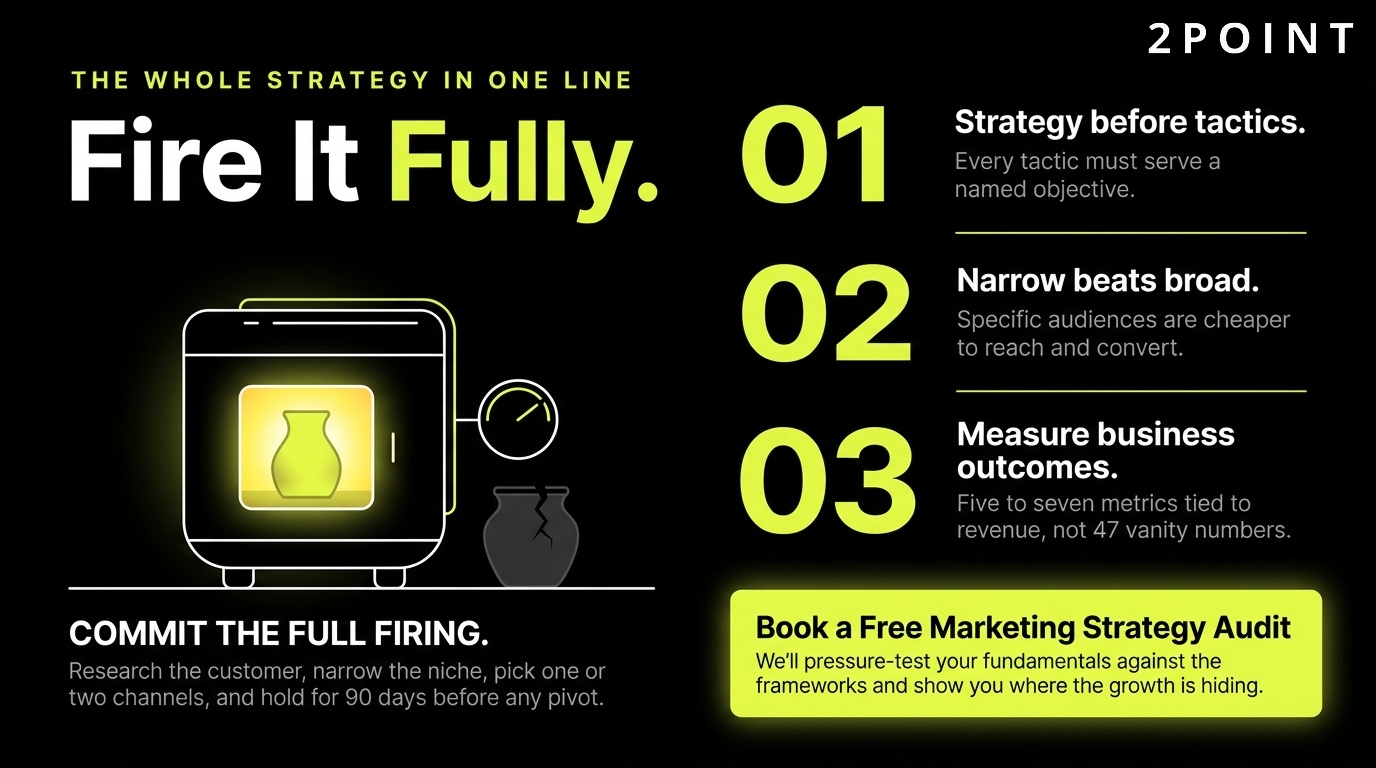
The most practical implementation tool for strategy-first marketing is a one-page strategic plan that documents these answers and connects every campaign decision back to them. Before any tactic is approved, the question is: "Which strategic objective does this serve, and how will we know if it worked?" Tactics that cannot be connected to a strategic objective do not get resources. This discipline feels rigid initially, but it creates the kind of organizational clarity that makes every subsequent decision faster and more consistent.
Narrow Focus Over Broad Appeal: The Niche Advantage
One of the most counterintuitive but reliably effective principles in marketing is that narrowing focus increases results rather than limiting them. The instinct to broaden appeal to reach more potential customers is understandable but strategically flawed. When you try to speak to everyone, your message resonates with no one. When you speak precisely to a specific audience with specific problems, your message cuts through the noise that generic competitors create.
The "riches in niches" principle operates through several mechanisms. Specific audiences are easier and cheaper to reach through targeted channels. Specific problems allow for more precisely targeted value propositions. Category ownership in a focused niche builds credibility faster than marginal presence in a broad market. Specific customers have a higher probability of being excellent fits and therefore generate higher satisfaction, lower churn, and more referrals.
Narrowing effectively means choosing along one or more dimensions: the specific industry vertical you serve (not "all businesses" but "physical therapy clinics"), the company size or revenue range (not "small business" but "businesses between $1M and $5M in annual revenue"), the geographic market (not "nationally" but "the Pacific Northwest"), or the specific problem solved (not "business software" but "scheduling software for mobile service teams"). Each dimension of specificity increases message relevance and reduces acquisition cost.
The practical expansion path is to dominate one well-defined niche first, develop deep credibility and strong case study evidence there, and then expand to adjacent niches using the credibility built in the first market as a foundation. Businesses that expand too early dilute the focus that generated initial success and find themselves competing broadly before they have the resources to do so effectively.
Consistency and Patience: The Compound Marketing Effect
Marketing results are not linear; they are compound. Consistent, quality effort over time produces results that accelerate rather than just accumulate. A blog that publishes two well-researched posts per week for a year has far more than twice the SEO and audience value of a blog that publishes the same posts over two years with gaps and inconsistency. Brand Clickx's marketing fundamentals resource identifies consistency as one of the most underrated determinants of long-term marketing success.
The timeline reality of different marketing channels must be set as explicit expectations to avoid premature channel abandonment. Paid advertising shows measurable results within days to weeks. Email marketing to an established list produces results immediately. SEO requires three to six months for meaningful organic traction and twelve months for the compounding effect to become substantial. Brand building requires years of consistent messaging before it produces the kind of low-friction recognition that generates organic word-of-mouth referrals. Each of these timelines is normal; disappointing results within those windows are not necessarily signals to pivot.
The most damaging pattern in marketing implementation is what might be called "channel hopping": abandoning a channel or strategy before giving it enough time to show its true potential, then starting the same premature cycle with a new channel. Teams that fall into this pattern are perpetually in the startup phase of every channel and never reach the compounding phase of any of them. The practical discipline is to commit to a strategy for a minimum of 90 days before making major pivots, unless data shows a fundamental mismatch between the channel and the audience rather than just early-stage lag.
Measuring What Actually Matters: Building a Results-Focused Marketing System
The final piece of the implementation framework is measurement discipline. Vanity metrics, specifically likes, follower counts, impressions, and page views, feel reassuring but do not pay for business operations. The metrics that matter are those directly connected to business outcomes: qualified lead volume, cost per acquisition, customer lifetime value, revenue influenced by marketing, and retention rates that reflect whether the customers marketing acquires are actually good fits. Monday.com's marketing skills research confirms that the ability to demonstrate marketing's contribution to revenue is the most career-impactful and budget-protective skill a marketing professional can develop.
Dashboard design should follow the principle of ruthless prioritization. A dashboard with 47 metrics tracks everything and guides nothing. A dashboard with five to seven carefully chosen metrics, each tied directly to a strategic goal and reviewed weekly, creates the operational discipline needed to make consistent improvements. Awareness-focused campaigns get reach and brand recall metrics. Lead generation campaigns get cost-per-lead and lead quality scores. Revenue campaigns get conversion rate, customer acquisition cost, and payback period.
Reporting to leadership should always translate marketing activity into business language. "We published fourteen blog posts last month" is a workload report. "Our content program contributed to 28 inbound leads with an estimated pipeline value of $340,000, representing a 22% increase versus the prior quarter" is a business case. Learning to make this translation consistently and accurately is what secures budget, builds organizational trust in marketing, and creates the kind of data feedback loop that continuously improves strategic decision-making. Using effectiveness measurement principles consistently across all channels ensures that no marketing investment persists on assumption alone.
Bringing It All Together: Your Marketing Fundamentals Action Plan
Marketing fundamentals provide the stable foundation that allows businesses to navigate constant change without losing strategic coherence. The 7Ps framework gives you a complete lens for designing and auditing every dimension of your market presence. The STP model focuses your resources on the customers where you can create the most value and competitive advantage. Customer-centric research disciplines keep your strategy calibrated to reality rather than internal assumption. Evidence-based decision-making prevents the resource waste of scaling unvalidated ideas. And continuous experimentation ensures that your marketing program adapts as markets, technologies, and customer behaviors evolve.
In 2026, the relationship between fundamentals and technology is clearer than ever. AI and automation have dramatically expanded what marketing teams can execute with finite resources, but they have not changed what makes marketing work. A brilliant AI-generated email campaign built on a poorly defined value proposition and sent to an unsegmented list will still underperform. A thoughtfully crafted, strategically targeted campaign amplified by AI personalization and automation will dramatically outperform both the manual version and the AI-without-strategy version. Technology amplifies strategy; it does not replace it. Atentec's digital marketing fundamentals research for 2026 consistently demonstrates this amplification relationship in practice.
The action steps from this guide resolve to a clear sequence. Start with customer research: invest genuine time in understanding who your best customers are, what problems they are trying to solve, and why they chose you over alternatives. Narrow your strategic focus to the segment and problem where you have the strongest differentiation and the highest probability of delivering exceptional value. Define your positioning with the precision that the clarity test demands: a stranger should understand your value proposition in ten seconds. Choose one to two channels where your audience has demonstrated intent and where you can produce consistently high-quality execution. Commit to that strategy for a minimum of 90 days, measure rigorously, and iterate based on evidence.
The businesses that master marketing fundamentals do not just perform better in individual campaigns. They build organizational marketing capability that compounds over time, generates increasingly favorable economics as customer acquisition costs fall and retention rates rise, and creates competitive moats that are genuinely difficult for resource-heavy but strategy-poor competitors to bridge. Fundamentals are learnable at any stage of business development. Start simple, implement consistently, add complexity only as the foundational layer proves solid, and the results will follow. Teams that want expert guidance on applying these principles in practice consistently turn to specialists like 2POINT, whose work centers on translating strategic fundamentals into measurable business outcomes for organizations across industries.
Frequently Asked Questions About Marketing Fundamentals
What are marketing fundamentals?
Marketing fundamentals are the core principles, frameworks, and practices that guide how businesses create, communicate, and deliver value to customers. They include concepts like the 4Ps and 7Ps of the marketing mix, the STP model of segmentation, targeting, and positioning, customer-centric strategy, and evidence-based decision-making. These principles apply regardless of industry, business size, or which specific marketing channels are being used.
What are the 4Ps of marketing?
The 4Ps of marketing are Product, Price, Place, and Promotion. Product refers to what you offer and how it solves customer problems. Price is how much customers pay and how that positions your brand. Place covers the channels and locations through which customers can access your offer. Promotion encompasses all communications that build awareness and drive purchasing action. Together they form the foundational marketing mix framework.
What is the difference between the 4Ps and 7Ps of marketing?
The 4Ps (Product, Price, Place, Promotion) were developed primarily for physical goods marketing, while the 7Ps add People, Process, and Physical Evidence to address service businesses and experience-driven offerings. People covers everyone who represents your brand. Process covers the customer experience from discovery to post-purchase support. Physical Evidence covers the tangible and visual cues that build credibility before a transaction occurs. The 7Ps model is generally more applicable to service companies, SaaS businesses, and any organization where the delivery experience shapes perceived value.
What is STP marketing and why does it matter?
STP stands for Segmentation, Targeting, and Positioning. Segmentation divides the market into meaningful groups based on shared characteristics. Targeting selects which segments to pursue based on fit and opportunity. Positioning defines the distinct perception your brand creates in the minds of chosen segments. STP matters because it prevents the common and costly mistake of trying to market to everyone, which results in messages that resonate with no one and budgets spread too thin to be effective anywhere.
How long does it take to learn marketing fundamentals?
Building foundational marketing competency through focused study and hands-on practice typically takes three to six months. Developing genuine channel-specific expertise, such as proficiency in SEO, paid advertising, or email marketing, generally requires one to two years of active experimentation and measurement. Marketing is a continuous learning discipline because channels, tools, and customer behaviors evolve consistently, making ongoing education a career-long commitment rather than a one-time achievement.
Are marketing fundamentals still relevant in 2026 with AI available?
Marketing fundamentals are more relevant in 2026, not less. AI and automation amplify strategy but cannot replace it; a poorly conceived campaign executed with AI tools still fails to resonate with customers or drive business outcomes. The fundamentals, including understanding customer needs, crafting clear value propositions, selecting appropriate channels, and measuring results against business goals, are the strategic layer that determines whether AI-assisted execution produces results or simply produces more output faster.
What is customer-centric marketing?
Customer-centric marketing means building every strategy, message, and campaign decision around customer needs, behaviors, and preferences rather than around internal convenience or executive preferences. It requires ongoing customer research through interviews, behavioral data analysis, and feedback loops. The practical filter is asking "Does this create genuine value for our specific customer?" before committing any marketing resource to a direction.
What is the difference between marketing strategy and marketing tactics?
Marketing strategy defines the who, what, and why: who you are targeting, what value you deliver to them, and why they should choose you over alternatives. Marketing tactics are the specific activities used to execute strategy: publishing a blog post, running a Facebook ad, or sending an email campaign. The most common implementation mistake is jumping directly to tactics without defining strategy first, which results in scattered effort and unclear ROI because each tactic is disconnected from an overarching strategic purpose.
What marketing metrics should I focus on?
The right metrics depend on your specific marketing goal. Awareness campaigns should be measured on reach and brand recall. Lead generation programs belong against cost-per-lead and lead quality scores. Conversion-focused campaigns need conversion rate and customer acquisition cost metrics. Retention programs should track churn rate and net promoter score. The guiding principle is that every metric tracked should be directly connected to a defined business outcome, not selected because it is easy to measure or produces flattering numbers.
How do digital marketing fundamentals differ from traditional marketing fundamentals?
Digital marketing fundamentals apply the same core principles of customer understanding, value proposition clarity, channel selection, and measurement to online environments. The key differences are the speed of data availability (results are measurable in real time rather than weeks), the ability to target audiences with precision, the expectation of personalization at scale, and the dominant role of content and search in the customer discovery process. The strategic logic is identical; the tools and channel mechanics are specific to digital environments.
What are the most important marketing skills to develop in 2026?
The highest-priority marketing skills in 2026 combine data analysis and ROI measurement, AI literacy and prompt-crafting proficiency, strategic thinking grounded in customer research, strong written and visual communication, and cross-functional collaboration with sales, product, and customer success teams. Technical channel skills like SEO, paid media management, and email marketing automation are valuable but most effective when built on top of this strategic and analytical foundation rather than as standalone capabilities.
What is the marketing mix and how is it used?
The marketing mix is the set of controllable variables a business uses to bring its product or service to market and achieve its marketing objectives. In the 4Ps framework, it includes Product, Price, Place, and Promotion. In the expanded 7Ps framework for services, it adds People, Process, and Physical Evidence. The marketing mix is used as a diagnostic and planning tool: by evaluating each element systematically, marketers can identify misalignments, gaps, and opportunities to improve overall market performance.
