

 let’s connect


What Is Marketing Management and Why It Matters in 2026
- Marketing management is the strategic process of planning, implementing, and measuring programs that promote brands and drive business growth.
- In 2026, marketing management has evolved from tactical campaign execution to full strategic business enablement.
- Marketing managers now own revenue, pipeline development, and market expansion, not just channel activity.
- AI-powered personalization and integrated customer journeys have fundamentally transformed how marketing teams operate.
- Successful marketing management combines technology mastery with human creativity and authentic storytelling.
- AI is making marketing the most valuable function within modern organizations, raising the stakes for every marketing decision.
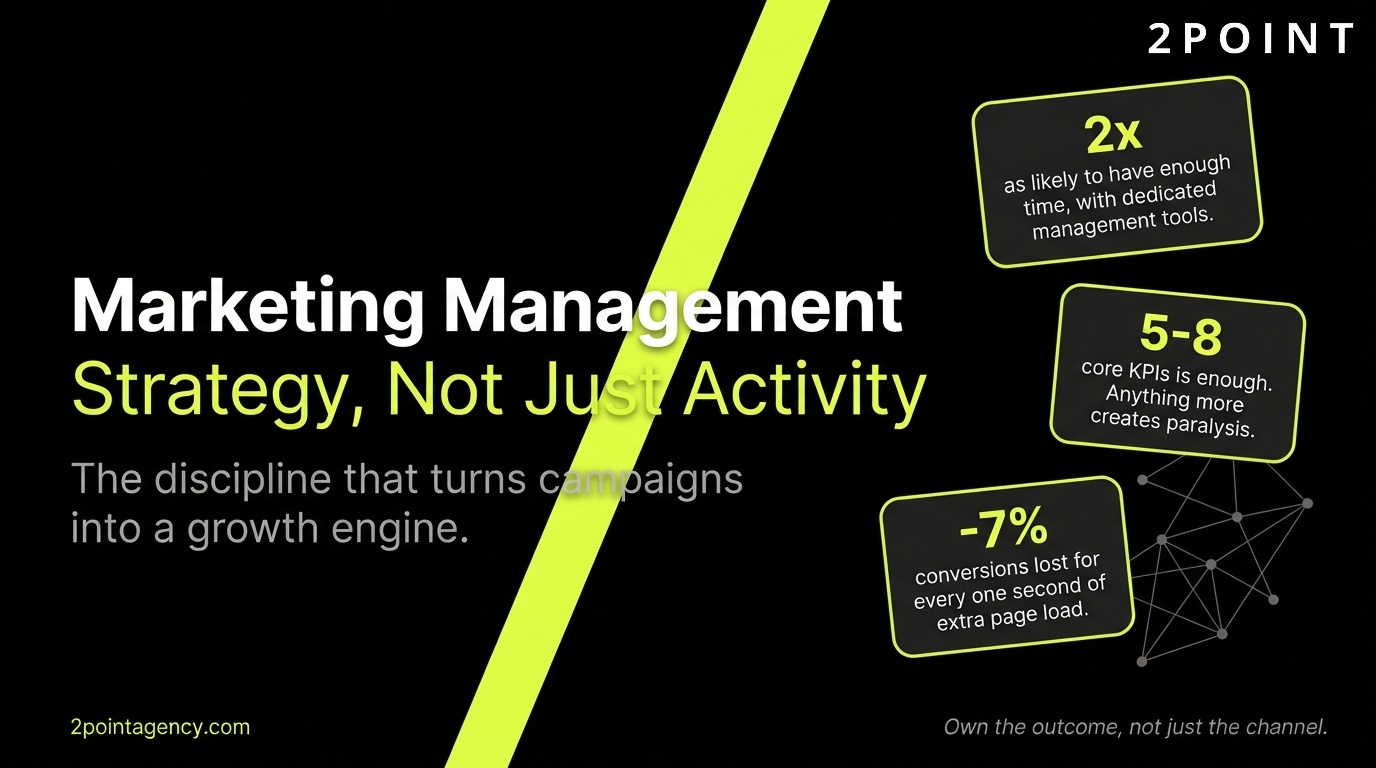
- Teams using dedicated management tools are almost twice as likely to have enough time for their work, making tool selection a leadership priority.
- The discipline spans brand strategy, digital execution, budget management, team leadership, and performance optimization simultaneously.
Marketing management sits at the intersection of art and science. It requires strategic clarity to set direction, analytical rigor to measure results, creative leadership to inspire teams, and technological fluency to deploy the right tools at the right time. This guide covers every dimension of the discipline to help you build, lead, and grow a marketing function that delivers measurable business outcomes.
The Evolution of Marketing Management: From Campaigns to Business Strategy
The role of marketing management has undergone one of the most dramatic transformations in its history. What was once a function defined by campaign calendars, creative briefs, and channel metrics has become a strategic leadership role with direct accountability for company growth. Understanding this evolution is essential context for every decision a modern marketing manager makes.
How Marketing Management Has Changed in 2026
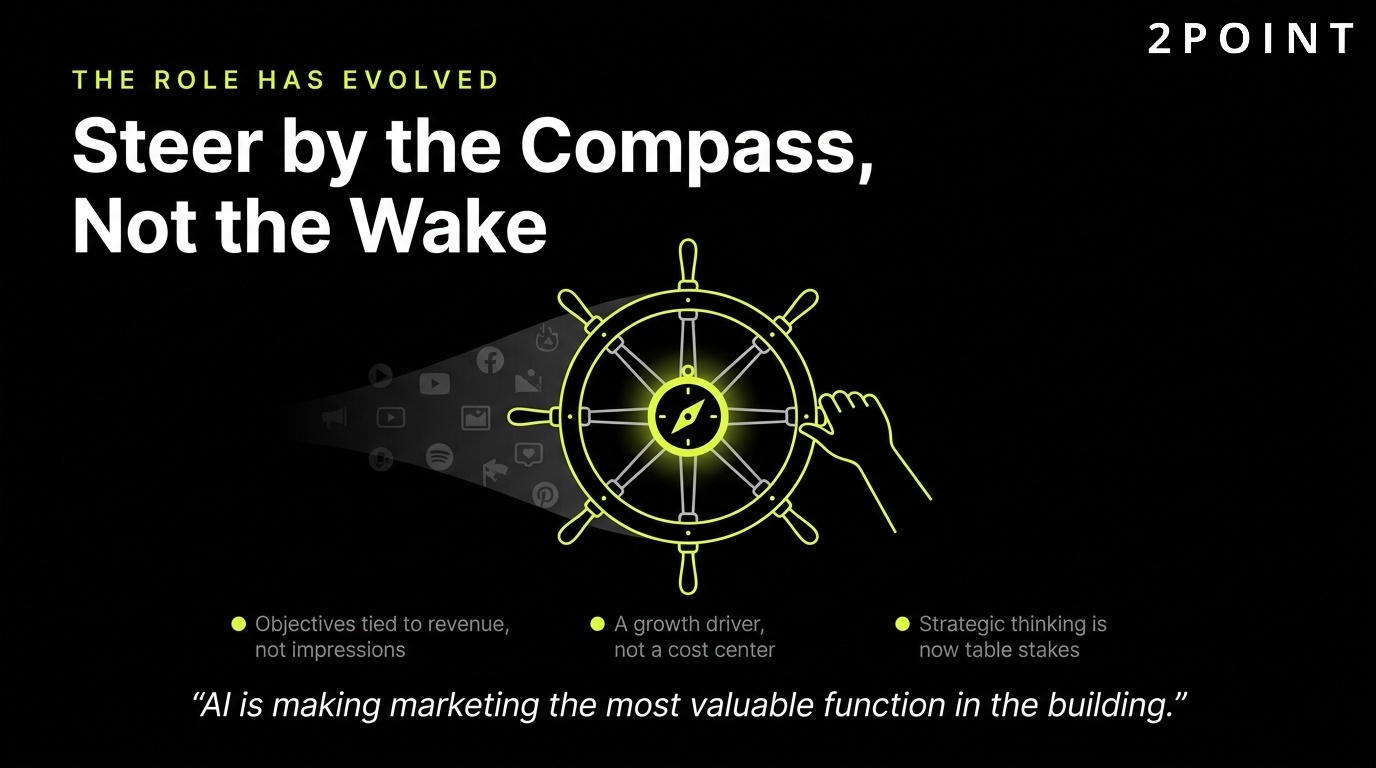
The fundamental shift in marketing management is the move from channel-focused execution to strategic business leadership. Marketing managers no longer measure success by the number of campaigns launched or impressions earned. Instead, they anchor every objective to a business outcome, whether that is revenue generation, sales pipeline contribution, customer retention, or market expansion, each with clear ownership and defined timeframes.
Marketing managers must anchor objectives to business outcomes rather than channel activity, representing a profound change in how the function is evaluated. This shift moves marketing from a cost center to a growth driver in the eyes of company leadership.
Perhaps more significantly, AI is making marketing the most valuable organization within companies. As AI lowers the barriers to product creation and commoditizes features, the ability to win customer hearts and minds becomes the primary competitive differentiator. Marketing, as the function closest to customers and brand perception, carries more strategic weight than ever before. Marketing managers who understand this dynamic position their teams as central to company survival and growth, not peripheral support functions.
This evolution also changes the profile of skills required. Technical channel expertise still matters, but it is now table stakes. Strategic thinking, financial literacy, cross-functional influence, and technology leadership define the modern marketing management role.
The Marketing Manager as Product Builder

One of the most striking trends reshaping marketing management in 2026 is the blurring of lines between marketing strategy and product strategy. The biggest shift in 2026 is marketers becoming product managers and builders, moving from communicating about products to actively shaping what those products become.
Marketing managers now participate in product roadmap discussions, prototype development, and feature prioritization. Their unique position at the intersection of customer insight and market data makes them invaluable contributors to product decisions. A marketing manager who understands what customers want, how they talk about problems, and what competitors are offering can directly inform which features get built and how they are positioned.
Simultaneously, these same marketing leaders must create AI workflows that distribute the products and features they helped conceptualize. This dual role, shaping what gets built while also orchestrating how it reaches the market, requires a broader skill set than marketing management historically demanded. Organizations that embrace this expanded mandate give their marketing leaders more influence, more accountability, and ultimately more impact on business outcomes. The marketing manager who successfully occupies this space becomes one of the most strategically important people in the company.
From Siloed Channels to Unified Ecosystems
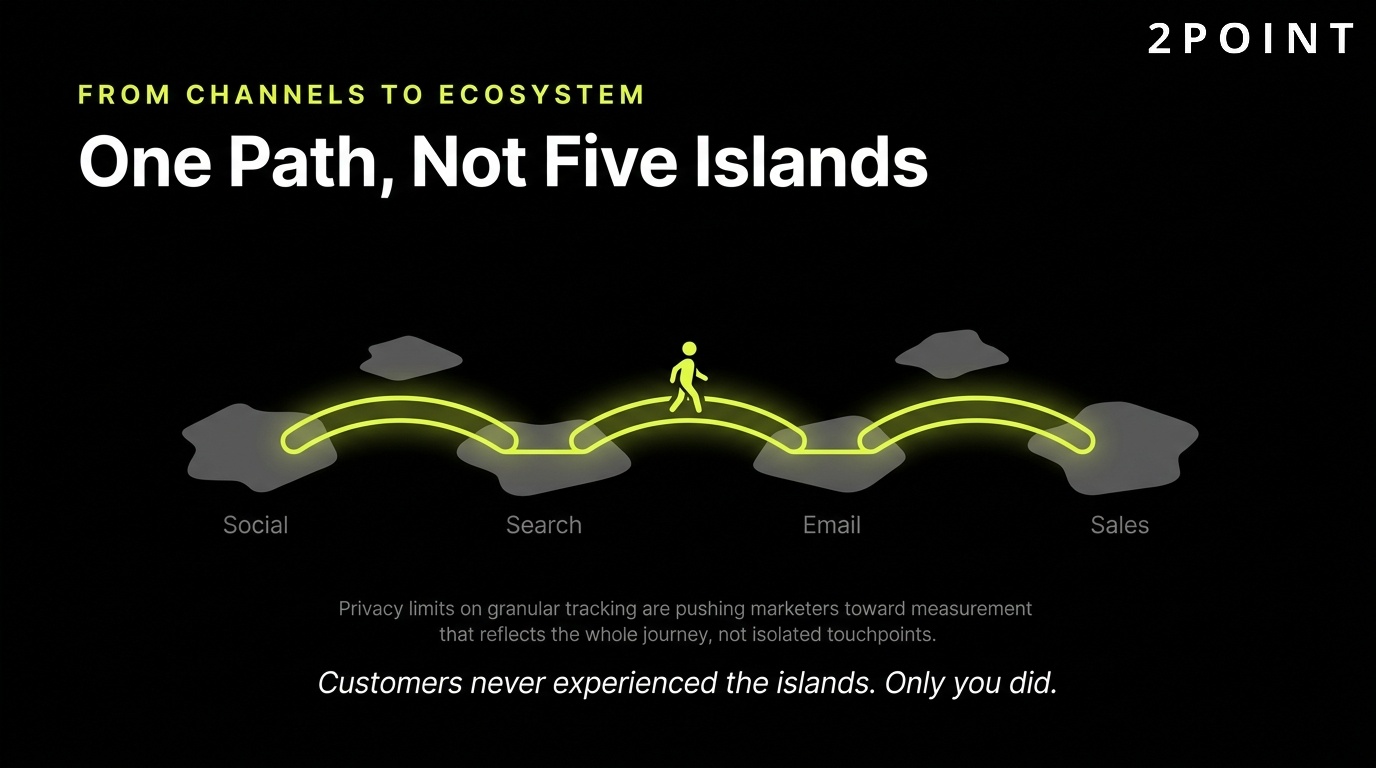
For years, marketing management was organized around channels. There were social media managers, email marketers, paid media specialists, and content creators, each operating in relative isolation with their own tools, metrics, and reporting structures. That model has become a liability in 2026.
Growth-oriented organizations now focus on mapping and connecting the entire customer journey, recognizing that customers do not experience brands through individual channels but through a continuous, interconnected set of touchpoints. A prospect might discover a brand through an organic social post, research it via an AI-powered search, engage with a retargeting ad, receive a personalized email, and convert through a landing page, all before speaking to a salesperson.
Privacy limitations on granular tracking have accelerated this shift. As third-party cookies disappear and platform-level attribution becomes less reliable, marketers are pushed toward unified measurement approaches that reflect entire customer journeys rather than individual touchpoints. Brands that shift from siloed channels to fully connected ecosystems unlock greater efficiency, better creative consistency, and incremental growth that isolated channel management simply cannot achieve. Integrating affiliate, paid, social, content, and email under consistent messaging and shared metrics is no longer optional for brands that want to compete.
Core Responsibilities of Modern Marketing Managers
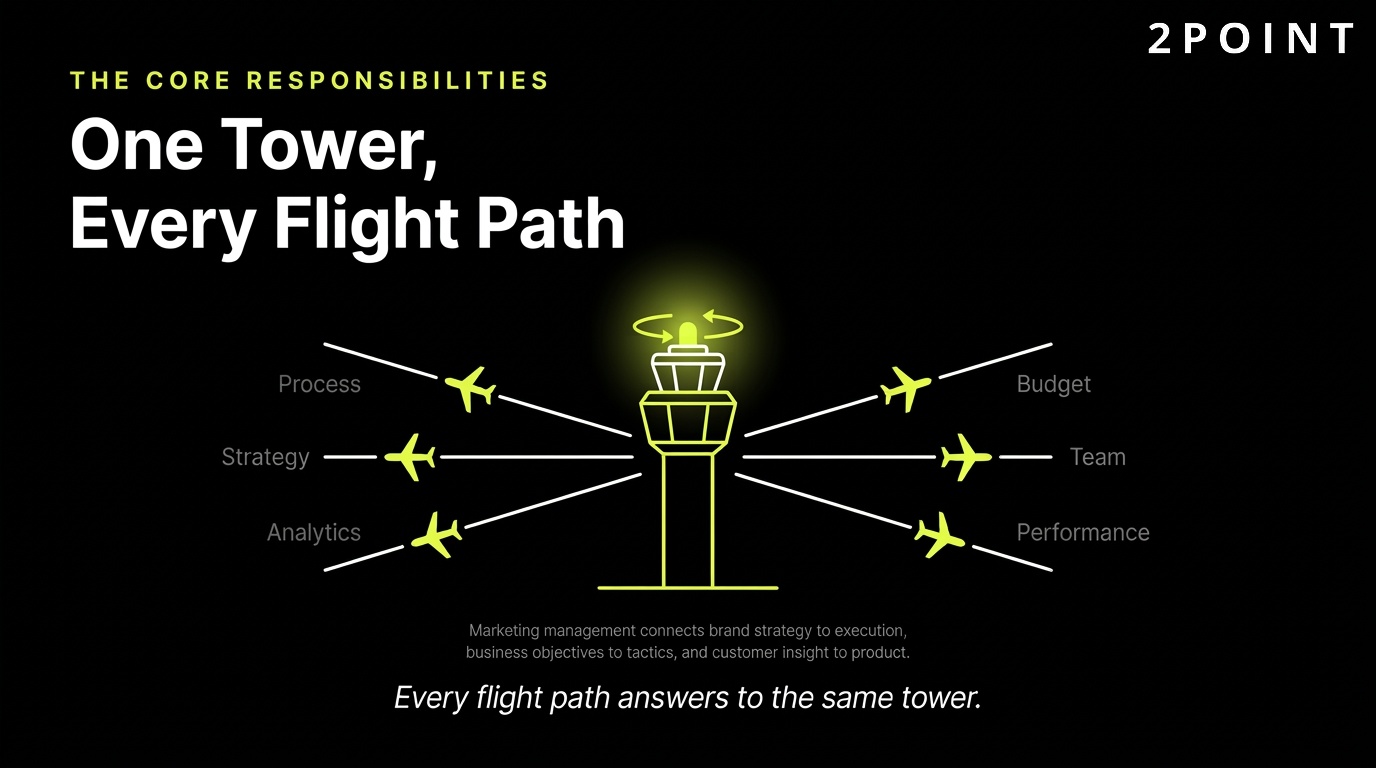
Despite the evolution of the role, certain core responsibilities remain central to effective marketing management. Marketing management is the process of developing and implementing strategic programs that promote a brand's products or services, but that definition now encompasses a much broader set of activities than it once did.
Strategic planning anchors the entire function, setting clear direction for deliverables and defining priorities before campaign planning ever begins. Budget management with genuine ROI accountability follows, ensuring every dollar spent can be justified against business outcomes. Team leadership, cross-functional collaboration with sales and product, performance measurement and optimization, and technology stack management round out the core responsibilities.
Marketing management serves as the umbrella under which all marketing practices fall. It connects brand strategy to execution, business objectives to campaign tactics, and customer insights to product development. Marketing managers who understand the full scope of this umbrella function lead with greater confidence and deliver more consistent results.
Essential Marketing Management Strategies for Sustainable Growth
Effective marketing management strategies do not emerge from templates or best-practice lists borrowed wholesale from competitors. They emerge from a clear understanding of business context, customer behavior, competitive dynamics, and resource constraints. The following strategies provide a framework for building marketing programs that deliver sustained, measurable growth.
Building Strategic Framework and Operating Models

Strong marketing management begins with a clear operating model that outlines how leaders move from strategic direction to coordinated execution, and then use performance data to refine future decisions. This model is the backbone of everything that follows. Without it, even the most talented marketing team operates reactively, chasing opportunities rather than creating them.
Strong processes follow clear operating models that provide structure without rigidity. The goal is a framework that helps teams stay aligned when priorities shift, which they inevitably do, without requiring a complete strategic reset every quarter. This operating model should define how decisions get made, who owns what, how performance gets reviewed, and how insights feed back into planning.
Well-crafted marketing strategies help gain competitive advantage and increase sales by ensuring every tactic connects to a clear purpose. Marketing strategies help teams identify goals, understand target audiences deeply, and develop effective approaches to reach those audiences in ways that resonate. When the operating model is clear and the strategy is well-crafted, execution becomes faster, more consistent, and easier to scale. A solid digital marketing plan is one of the most practical manifestations of this strategic framework in action.
Strategic Prioritization and Focus Discipline
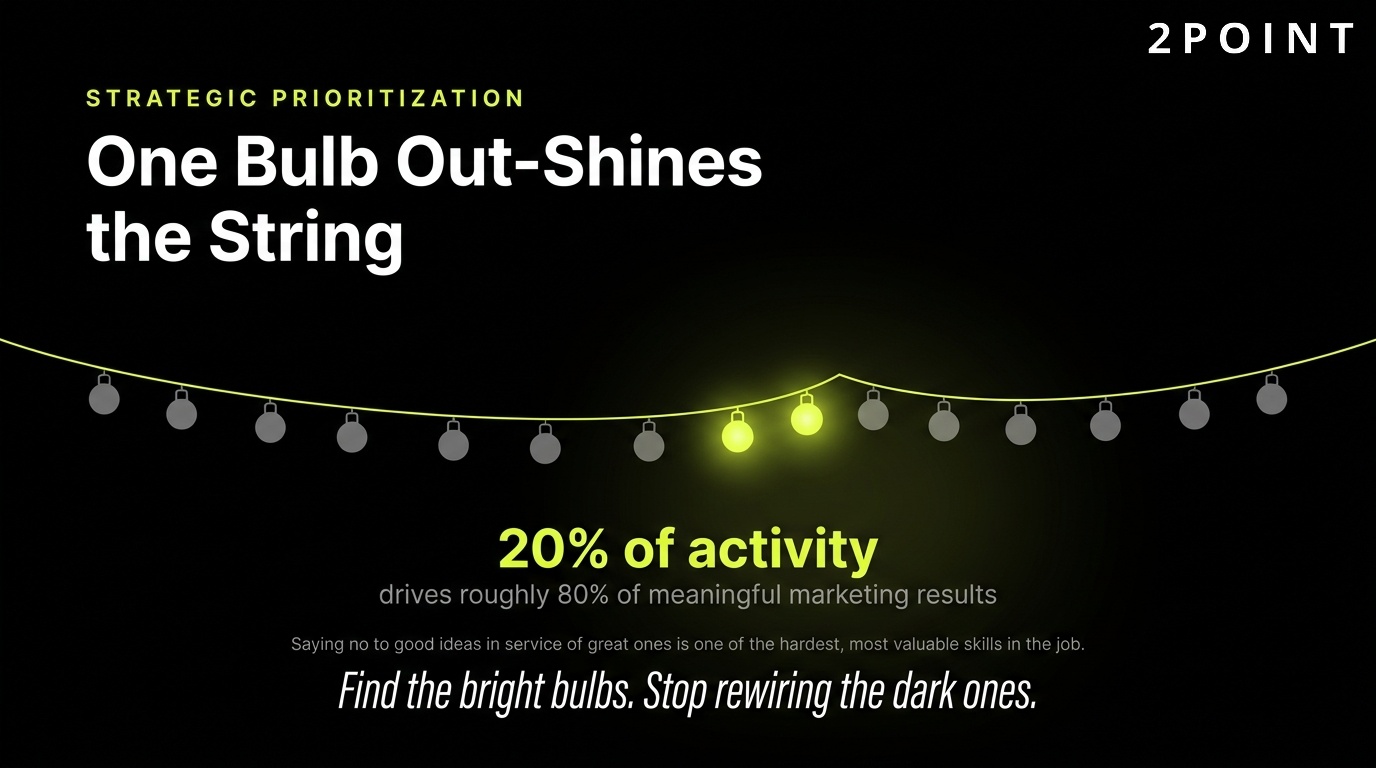
One of the greatest challenges in marketing management is resisting the temptation to do everything. New channels emerge constantly, competitors launch new tactics, and internal stakeholders generate endless requests. Without strategic prioritization, marketing teams become scattered, producing activity without impact.
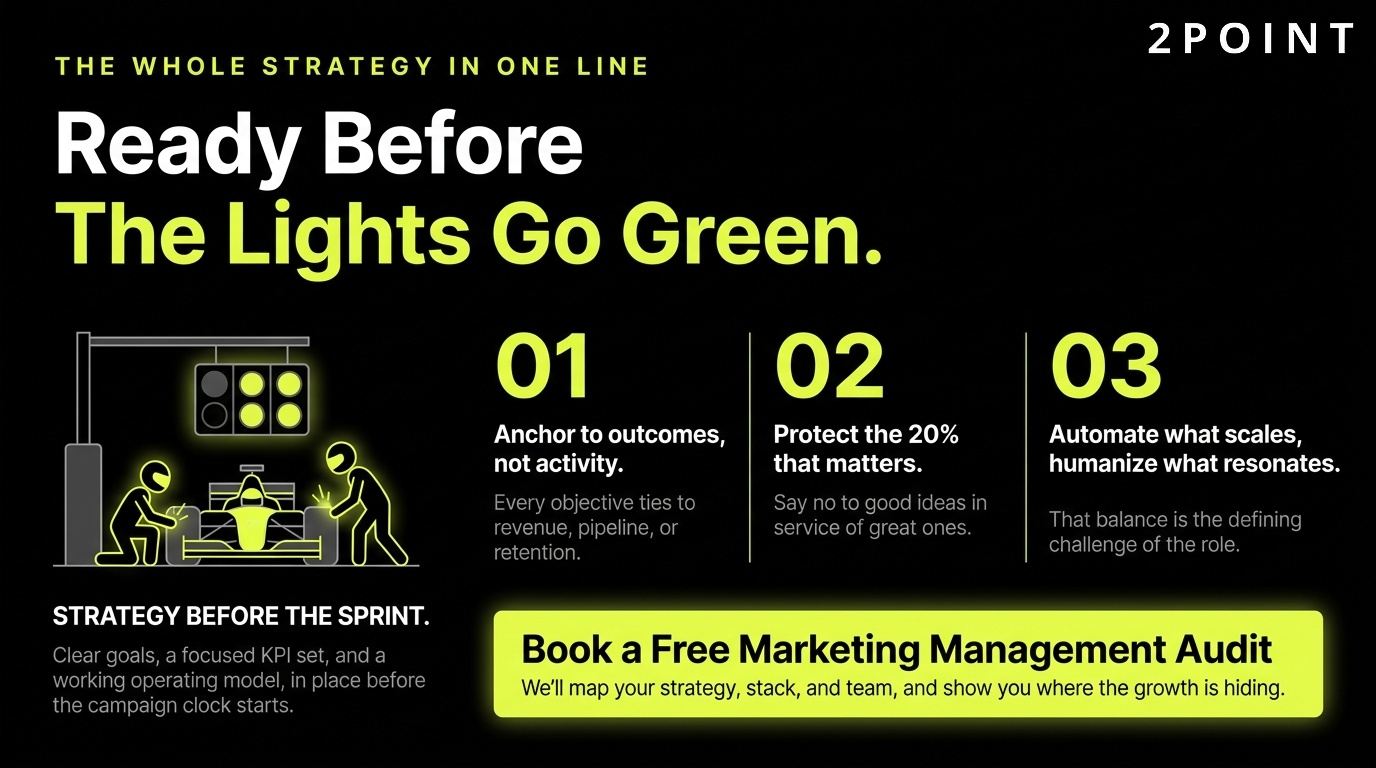
Strategic prioritization maintains focus and applies discipline by clearly communicating not just what needs to be done but what needs to be avoided. This negative discipline, the ability to say no to good ideas in service of great ones, is one of the hardest and most valuable skills in marketing management.
A practical approach is to identify the eight highest-value marketing activities for your specific business context, the ones most likely to move the needle on revenue and pipeline, and concentrate resources there rather than spreading thin across every possible channel. The 80/20 principle applies consistently in marketing management: roughly 20% of activities tend to drive 80% of meaningful results. Identifying that 20% and protecting it from distraction requires ongoing discipline. When new opportunities arise, they should be evaluated against the existing prioritization framework before resources are committed. This creates a culture of strategic intentionality rather than reactive opportunism.
Implementing the Marketing Mix Framework
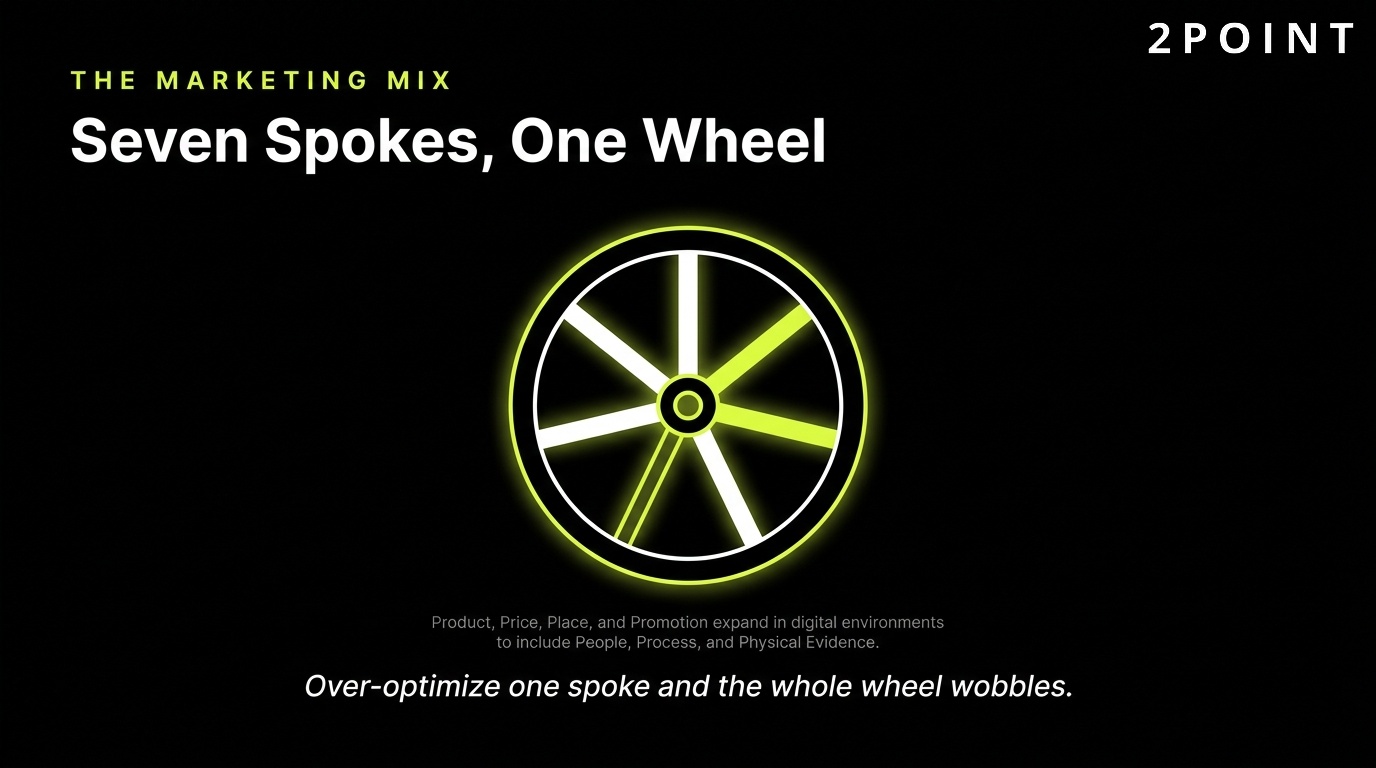
The foundational 4 Ps of marketing, Product, Price, Place, and Promotion, remain as relevant in 2026 as they were when first introduced. The marketing mix combines Product, Price, Place, and Promotion into an integrated framework that prevents any single element from being over-optimized at the expense of the others. Brilliant promotion cannot compensate for poor product-market fit. Competitive pricing means nothing if distribution channels do not reach the target audience.
These elements depend on each other to create great campaigns, and modern marketing managers must maintain awareness of how changes to one element ripple through the others. In digital environments, this framework expands to include additional Ps: People (who delivers the customer experience), Process (how experiences are delivered), and Physical Evidence (digital touchpoints that build trust). Balancing these elements for cohesive campaigns requires regular cross-functional dialogue with product, sales, and customer success teams. When the marketing mix is well-calibrated, campaigns feel coherent and intentional rather than disconnected and tactical.
Goal Setting and Channel Selection Strategy
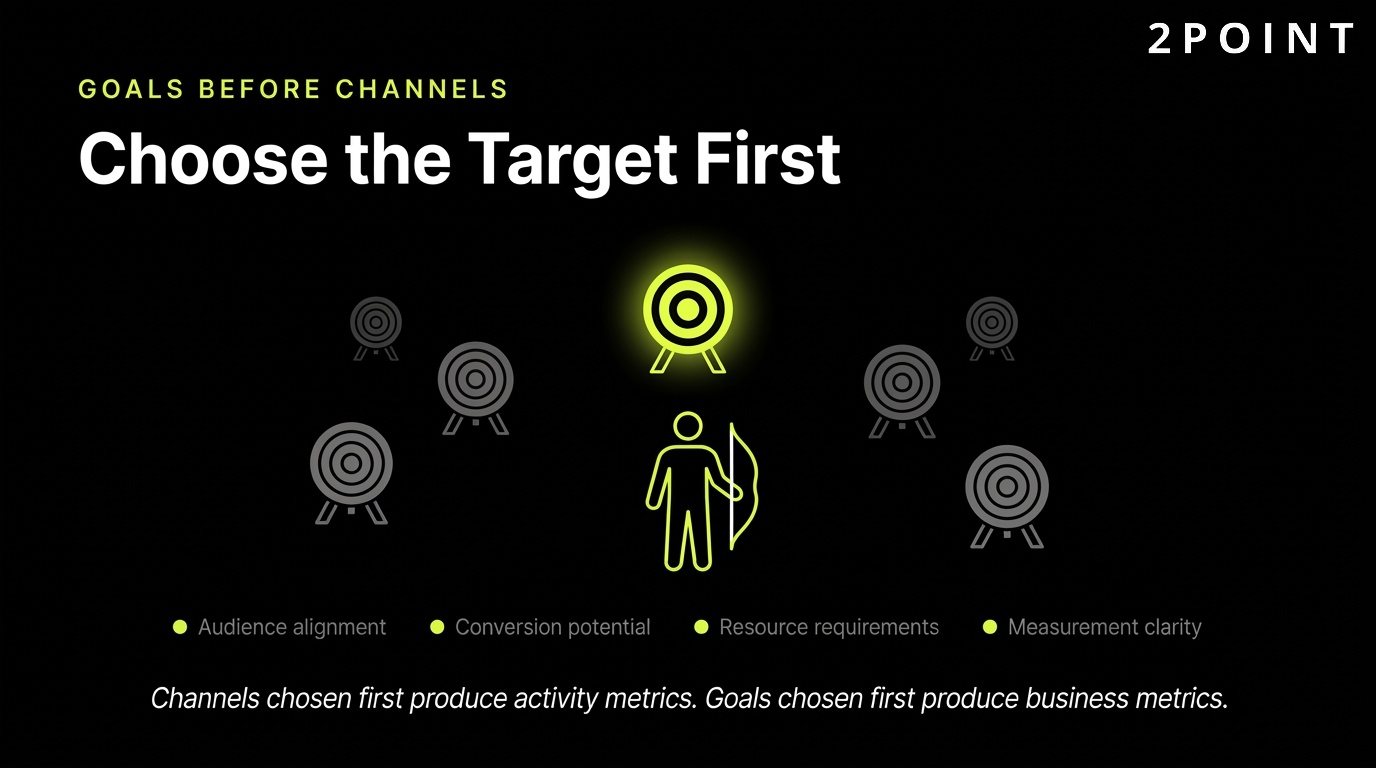
Effective marketing management requires setting clear, measurable objectives before selecting channels or tactics. This sequencing matters enormously. Organizations that choose channels first and objectives second end up with activity metrics rather than business metrics, measuring impressions and engagement when what actually matters is pipeline and revenue.
Focusing on channels most likely to influence goals that can realistically be executed within available resources is the guiding principle for channel selection. This requires honest assessment of where your target audience spends time, which channels align with your business model, and where your team has genuine expertise or can develop it quickly.
A prioritization framework for resource allocation across channels should consider four factors: audience alignment, conversion potential, resource requirements, and measurement clarity. Channels that score well on all four factors deserve priority investment. Channels that score poorly on measurement clarity or resource requirements may be deferred regardless of their theoretical potential. Understanding which digital marketing channels best fit your goals and audience is a foundational step in building any effective marketing program.
Building Topic Authority Over Keyword Chasing

The approach to organic search has fundamentally shifted in marketing management. Where once SEO meant targeting specific keywords with individual pages, the 2026 reality requires building comprehensive topic authority across entire subject areas. The SEO approach is changing toward building topic authority rather than chasing individual keywords, driven by AI-powered search engines that understand semantic relationships between concepts rather than just matching keyword strings.
Search engines now reward brands that demonstrate depth of expertise across a subject domain. A brand that publishes twenty interconnected pieces of content on customer experience management will consistently outperform a brand that publishes one optimized page targeting a single keyword. This shift requires marketing managers to think like publishers and educators rather than keyword optimizers.
Developing topic clusters, creating pillar content that covers broad subjects comprehensively, and supporting that pillar content with detailed sub-topic articles creates the kind of authority that earns sustained organic visibility. This approach also aligns well with marketing analytics because it generates rich performance data across a portfolio of content rather than betting everything on a single page's ranking.
Continuous Learning and Market Adaptation
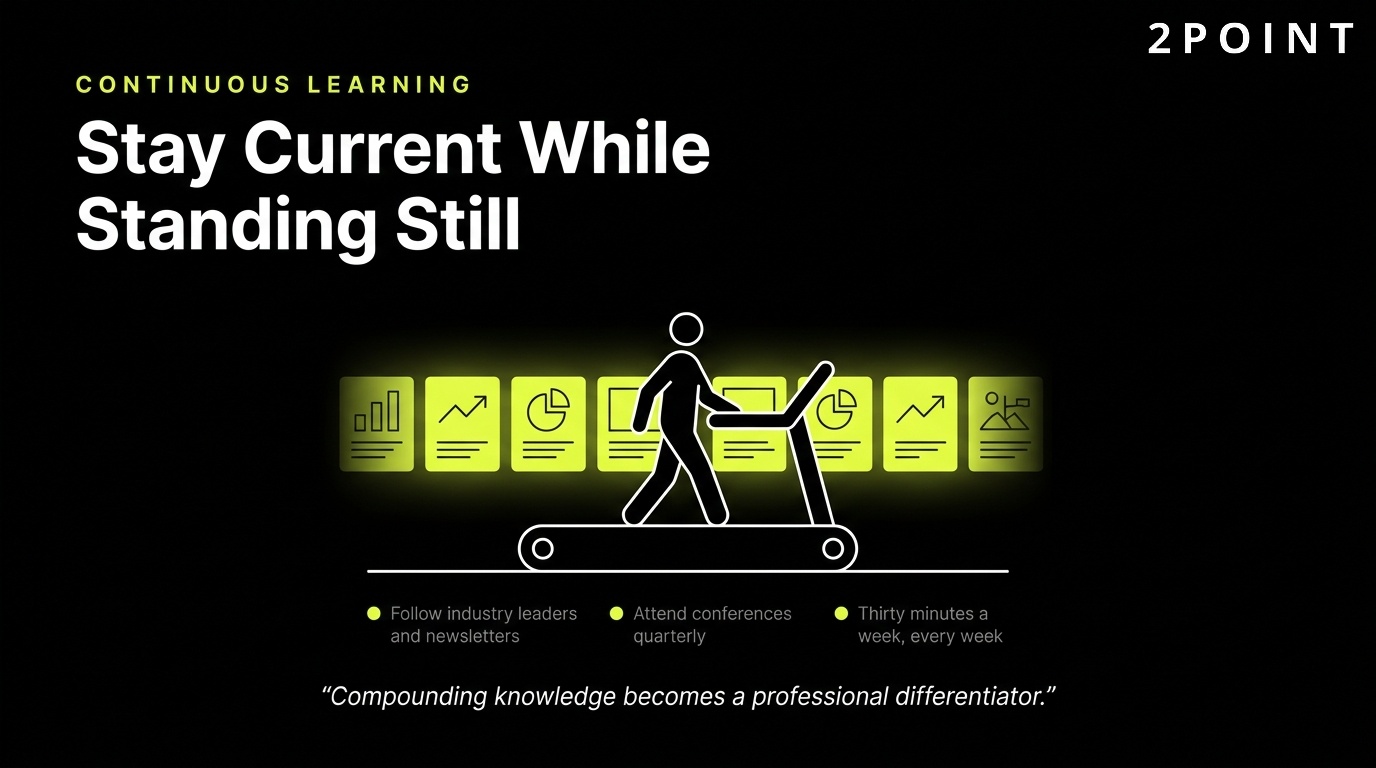
Marketing management operates in one of the fastest-changing professional environments in business. Tools change, algorithms shift, consumer behaviors evolve, and competitive dynamics transform on timelines that would have been unthinkable a decade ago. Staying current with industry trends is not optional for marketing managers; it is a core professional responsibility.
The marketing landscape requires staying ahead with the latest industry trends to maintain competitive advantage and enable genuine innovation. Specific tactics for staying current include following industry leaders on LinkedIn and X, subscribing to curated marketing newsletters, attending quarterly virtual or in-person conferences, and participating in peer communities where practitioners share real-world experiences.
Being genuinely informed about what is working enables marketing managers to bring new approaches to their teams with confidence, backed by external evidence rather than internal assumption. It also enables more credible conversations with executives, who increasingly expect marketing leaders to connect their strategies to broader market trends. Continuous learning should be structured, not left to chance. Building thirty minutes of reading and reflection into the weekly routine creates compounding knowledge that becomes a professional differentiator over time.
Marketing Performance Measurement and Optimization
Marketing performance management is the discipline that separates strategic marketing management from tactical activity. Without rigorous measurement connected to meaningful business outcomes, even the most creative and well-resourced marketing programs become difficult to justify, optimize, or scale. The following section covers how to build a measurement framework that drives genuine improvement.
Establishing the Right KPIs and Metrics

Not all metrics are created equal. Vanity metrics, such as follower counts, raw impressions, and page views in isolation, create the appearance of progress without confirming actual business impact. Effective marketing management requires distinguishing between metrics that feel good and metrics that guide decisions. Rigorous measurement of the right KPIs directs the path to success, giving marketing managers the information needed to double down on what works and redirect resources away from what does not.
A balanced KPI framework includes both lagging indicators and leading indicators. Lagging indicators like revenue contribution, customer acquisition cost, and conversion rate confirm whether strategies worked. Leading indicators like traffic growth, engagement rates, and lead volume signal whether strategies are working in real time, before final outcomes are confirmed. You should only have a small number of focused KPIs rather than tracking everything measurable. Five to eight core KPIs per function is sufficient for most marketing teams. More than that creates analysis paralysis rather than decision clarity.
Connecting every KPI to a specific business objective is essential. If a metric cannot be traced back to revenue, retention, or market expansion, question whether it belongs on the dashboard at all. This discipline keeps marketing teams focused on outcomes rather than activities. A thorough performance review process ensures KPIs stay aligned with current business priorities rather than becoming outdated relics of last year's strategy.
Creating Effective Marketing Dashboards
A well-designed marketing dashboard is one of the most powerful tools available to a marketing manager. It creates the shared visibility necessary for aligned decision-making across teams and gives leadership confidence that marketing performance is being actively monitored. Dashboards need to bring real-time visibility to top goals like ROMI (Return on Marketing Investment) and marketing-sourced revenue contribution, making performance transparent at every level of the organization.
Equally important, dashboards must escalate variances to the right people at the right time. A dashboard that simply displays data without surfacing anomalies is a passive report, not an active management tool. Effective dashboards highlight when performance deviates from expected ranges and route that information to the stakeholder who can act on it, whether that is a campaign manager adjusting ad spend or a CMO revisiting budget allocation.
Dashboard design should serve different stakeholder needs. Executive dashboards emphasize business-level outcomes: pipeline influenced, revenue attributed, customer acquisition cost trends. Tactical team dashboards emphasize operational metrics: campaign performance by channel, content engagement rates, A/B test results. Building separate views for different audiences ensures that the information reaching each stakeholder is relevant, actionable, and appropriately contextualized. The tool selection for dashboards matters less than the clarity of the underlying data model and the thoughtfulness of the metric selection.
Attribution and Customer Journey Measurement

Attribution has always been one of the most contested topics in marketing management, and the privacy-first landscape of 2026 has made it both more challenging and more important. As third-party tracking becomes less reliable, marketers face the difficult task of understanding which touchpoints actually drive conversions without the granular user-level data they once relied upon.
Growth is shaped by how well businesses understand customers and connect tactics to outcomes, making attribution a strategic priority rather than a technical afterthought. Privacy trends are leading marketers to rely on unified measurement approaches that model customer journeys at a cohort or channel level rather than tracking individual users across sessions.
Multi-touch attribution distributes conversion credit across multiple touchpoints, giving a more complete picture of how different channels work together. Single-touch models, whether first-touch or last-touch, are simpler but can dramatically mislead resource allocation decisions. The right model depends on sales cycle length, channel mix, and available data. For most B2B marketing teams, a data-driven multi-touch model calibrated with first-party data and media mix modeling provides the most actionable insights. Regardless of the model chosen, the goal is to make resource allocation decisions based on genuine channel contribution rather than whichever channel happens to be easiest to measure.
Conversion Rate Optimization Best Practices
Traffic acquisition strategies can be world-class, but if the experiences they drive traffic to fail to convert, the investment is wasted. Conversion rate optimization (CRO) is therefore a core component of effective marketing performance management, not a separate discipline managed by web teams in isolation.
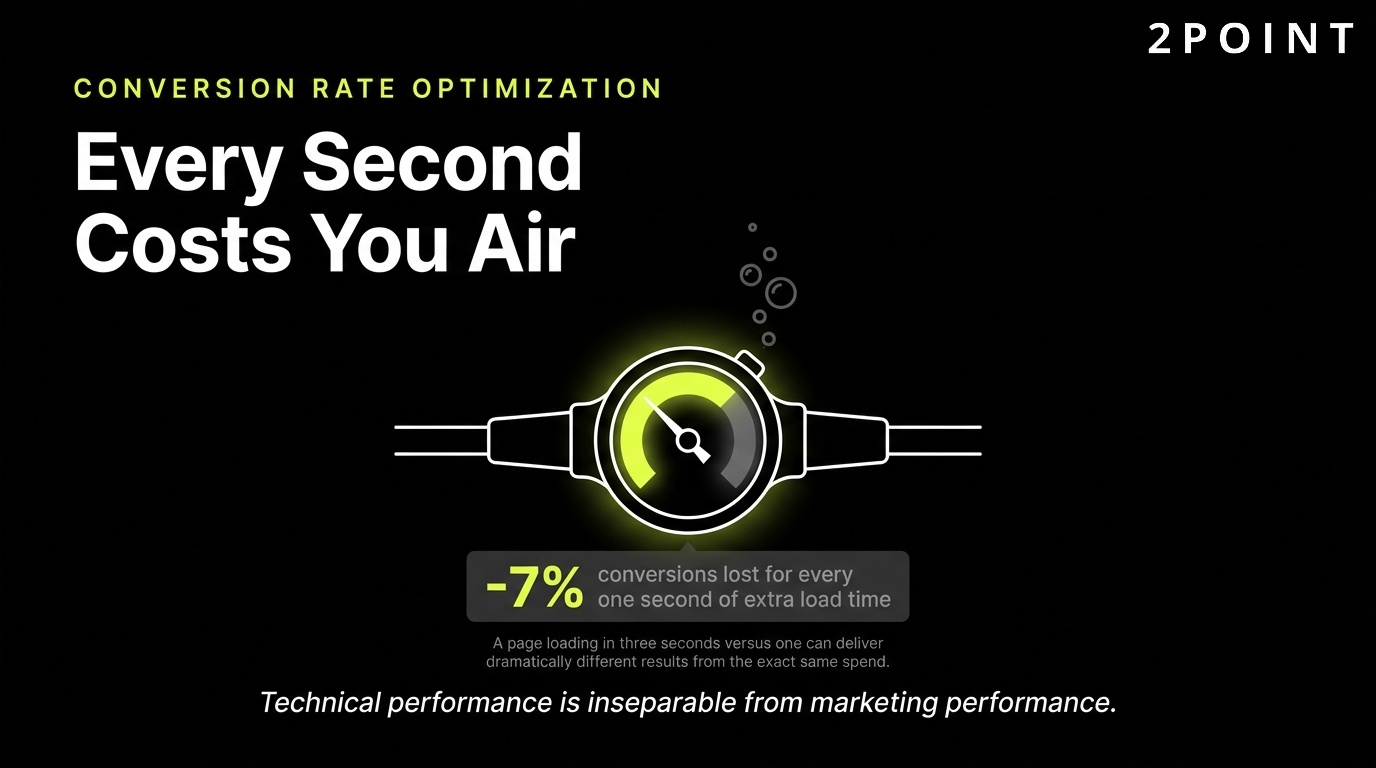
A one-second delay in page load speed leads to a 7% drop in conversions, illustrating that technical performance is inseparable from marketing performance. A landing page that loads in three seconds versus one second can deliver dramatically different results from the same media spend. Marketing managers must own this connection and ensure technical page performance is part of campaign planning, not an afterthought.
Staying updated with landing page best practices is non-negotiable in an environment where user expectations and platform standards evolve rapidly. A/B testing frameworks, clear value proposition articulation, friction reduction in form flows, and mobile-first design are foundational. Beyond these basics, marketing managers should build systematic testing programs that generate ongoing conversion improvements rather than one-time optimizations. Small, consistent improvements compound significantly over time and can dramatically lower customer acquisition costs without increasing media spend.
AI and Technology Transformation in Marketing Management
No force has reshaped marketing management more profoundly in recent years than artificial intelligence. From personalization at scale to automated campaign optimization to AI-powered content creation, technology has fundamentally expanded what marketing teams can accomplish. But technology transformation requires strategic leadership, not just tool adoption, to deliver genuine competitive advantage.
AI-Powered Personalization at Scale
Personalization has always been a marketing aspiration, but until recently, true personalization at scale was largely impossible without enormous resources. AI changes this equation fundamentally. AI unlocks new possibilities for marketing, redefining channels and accelerating execution in ways that would have been unimaginable five years ago.
AI-powered personalization is among the most impactful marketing trends of 2026, enabling dynamic content that adapts to individual user behavior, predictive models that anticipate what customers need before they search for it, and automated campaign optimization that improves performance continuously without manual intervention. Practical applications include dynamically personalized email subject lines and content, website experiences that change based on visitor segment, and paid advertising that optimizes bidding and creative selection in real time.
The marketing managers who capture the most value from AI personalization are those who invest in clean, well-structured first-party data. AI is only as good as the data it learns from. Organizations with rich, accurate customer data create personalization experiences that genuinely delight customers; organizations with poor data create experiences that feel generic at best and off-putting at worst. Building data infrastructure is therefore a prerequisite for realizing AI's personalization potential.
When to Automate vs. When to Humanize

As AI capabilities expand, one of the most important strategic decisions in marketing management is determining which activities to automate and which require irreplaceable human creativity. Getting this balance right separates marketing programs that feel genuinely engaging from those that feel mechanically efficient but emotionally hollow.
AI automates transactional marketing work while human creativity becomes the differentiator. Tasks like scheduling social posts, sending triggered email sequences, adjusting bid strategies, and generating performance reports are excellent candidates for automation. They are repetitive, rules-based, and benefit from speed and consistency that machines provide more reliably than humans.
In contrast, brand voice development, creative strategy, cultural storytelling, and community relationship building require human judgment, cultural fluency, and emotional intelligence that AI cannot replicate authentically, at least not yet. Marketers who blend AI-powered insights with authentic storytelling see the strongest engagement and loyalty outcomes. The practical framework is simple: automate what scales, humanize what resonates. Use AI to handle the operational burden so human creative energy can focus on the brand expressions that truly differentiate your company in the market. Brand consistency becomes even more important in this model, as automation must be carefully calibrated to reinforce rather than dilute the human brand voice.
Moving from AI Experimentation to Adoption
The majority of marketing organizations spent 2024 and 2025 experimenting with AI tools, running pilots, testing outputs, and cautiously integrating generative AI into selected workflows. In 2026, that experimental phase is over. GenAI now produces output good enough for real customer-facing use, and the time for broad adoption has arrived.
AI is now embedded in daily tasks across marketing functions as necessary everyday technology, not an experimental add-on. Organizations still treating AI as optional or niche are falling behind competitors who have integrated it into content production, audience research, campaign optimization, and customer service workflows. The transition from experimentation to adoption requires a structured approach. Marketing managers should audit current workflows to identify where AI can most immediately improve output quality or team efficiency, then implement tools with proper training, governance, and output review processes.
The governance piece is critical. AI tools require human review, especially for customer-facing content, to ensure accuracy, brand alignment, and compliance. Building review workflows that leverage AI efficiency without removing human judgment creates the right balance. Organizations that successfully make this transition free up significant creative capacity, enabling teams to pursue higher-value strategic work rather than getting buried in production tasks. This is also an opportunity to revisit your marketing automation strategy and identify where AI-enhanced tools can replace older rule-based systems with more dynamic, intelligent alternatives.
Building Data Infrastructure as a Marketing Asset
Data is no longer something that marketing teams passively collect and occasionally analyze. In 2026, data infrastructure is a strategic asset that directly determines the quality of every AI-powered decision, personalization experience, and performance optimization in the marketing stack. Collecting data is now infrastructure, not optional, and as an owned asset it carries clear financial value that leadership should recognize and invest in accordingly.
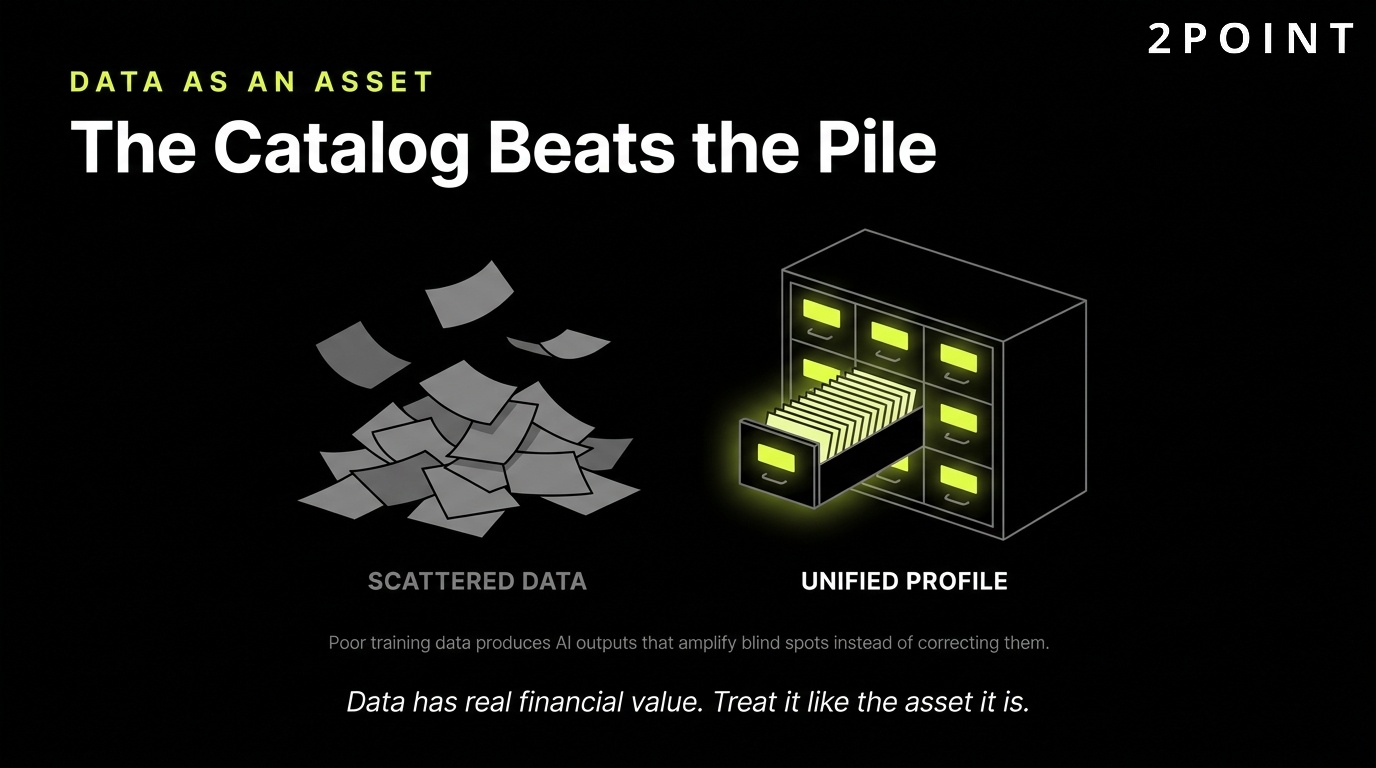
The quality of data infrastructure directly determines the quality of AI outputs. Focusing on quality training datasets for AI tools ensures that automated decisions are based on robust, representative, and trustworthy inputs rather than biased or incomplete information. Poor training data produces AI outputs that amplify existing blind spots rather than correcting them.
Data consolidation strategies, bringing together CRM data, website analytics, campaign performance data, and customer service records into unified customer profiles, create the foundation for both AI personalization and accurate attribution. Marketing managers should advocate for data infrastructure investment with the same urgency they bring to campaign budget requests. A brand with superior data infrastructure has a compounding advantage that grows more powerful with every piece of data added to the system. Reviewing your marketing software stack through this lens helps identify where data silos exist and where integration investments would deliver the highest returns.
Privacy-First Marketing in an AI-Powered World
The expansion of AI capabilities in marketing does not exist in a vacuum. It coexists with growing consumer expectations for privacy, data transparency, and authentic interactions. Marketing managers must navigate the tension between personalization and privacy with both strategic sophistication and genuine ethical commitment.
AI enhancement must coexist with consumer demands for privacy and authenticity. Brands that treat privacy as a compliance checkbox rather than a genuine customer value proposition risk eroding the trust that makes personalization effective in the first place. Consumers are willing to share data with brands they trust and who clearly deliver value in return; they resent data collection that feels extractive or opaque.
Personalized experiences that respect privacy distinguish leading brands from those that prioritize capability over ethics. Compliance with GDPR, CCPA, and emerging privacy regulations is the floor, not the ceiling. The brands that earn the deepest customer loyalty build privacy-respecting practices that go beyond minimum legal requirements, offering genuine transparency about data use, meaningful opt-out options, and clear value exchanges for data sharing. Transparency in data practices is increasingly a brand differentiator, not just a legal obligation. Marketing managers who communicate their data practices clearly and honestly build the trust that makes AI-powered personalization genuinely valuable rather than intrusive.
Search Evolution and Social SEO
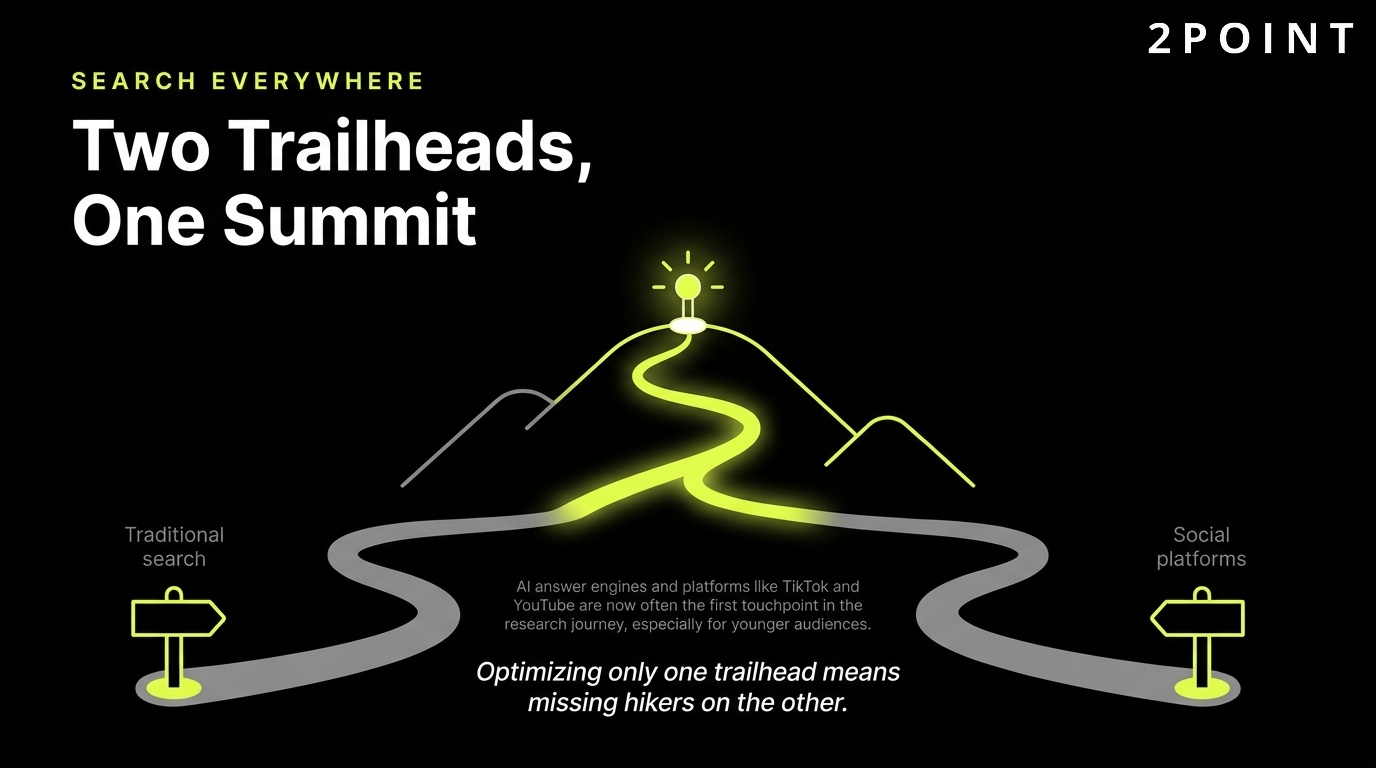
The search landscape has been transformed by AI, and marketing managers who continue optimizing only for traditional search algorithms are missing an increasingly important discovery channel. AI is evolving into a primary discovery channel, with platforms like ChatGPT, Perplexity, and Google's AI Overviews increasingly becoming the first touchpoint in customer research journeys.
Optimizing for AI-powered search requires different approaches than traditional SEO. AI search platforms favor content that directly and completely answers specific questions, is structured for easy extraction, and comes from sources with clear authority signals. The topic authority strategy discussed earlier in this guide aligns perfectly with AI search optimization, as AI systems are more likely to surface brands that demonstrate comprehensive expertise across a subject domain.
Social SEO is becoming as critical as traditional search optimization, particularly for reaching younger audiences who use platforms like TikTok, Instagram, and YouTube as primary search engines. Younger audiences favor content that feels personal and rooted in lived experience over polished corporate content. Marketing managers must build social SEO strategies that optimize content for discovery within social platforms using relevant hashtags, keyword-rich captions, and engagement signals that platform algorithms reward. The brands that win in this environment create content genuinely worth finding, not just content technically optimized to appear in results.
Essential Digital Marketing Tools for Effective Marketing Management
The right technology stack can dramatically multiply a marketing team's effectiveness. But choosing tools strategically, selecting those that genuinely improve outcomes rather than just adding complexity, requires careful thinking about team needs, integration requirements, and strategic priorities. This section covers the essential tool categories and how to build a cohesive marketing technology stack.
Core Tool Categories Every Marketing Manager Needs
Modern marketing management requires competency across multiple tool categories, each serving a distinct function in the overall marketing operation. Most digital marketing tools fall into a set of core categories that collectively cover the end-to-end marketing workflow. Understanding these categories helps marketing managers identify gaps in their current stack and prioritize new investments.
Tools range from advertising platforms to analytics to automation, spanning the full breadth of marketing operations. The seven core categories are: social media management (for publishing, engaging, and measuring across social platforms), AI and automation (for research, content creation, and optimization), email marketing (for campaigns and lead nurturing), SEO (for organic visibility and traffic), analytics (for performance tracking and data-driven decisions), conversion and lead generation (for turning traffic into measurable actions), and design (for creating visual content that represents the brand effectively). Having at least one capable tool in each category, with strong integration between them, creates the foundation for efficient and measurable marketing management.
Building Your Marketing Technology Stack
Every marketing technology stack has two layers: fundamental technologies that every team needs regardless of size or sophistication, and specialized tools that serve specific strategic needs. Fundamental marketing management tools include email marketing platforms, web forms, analytics, and CRM systems, while specialized tools include design platforms, ad management software, keyword trackers, and competitive intelligence tools.
Most performance marketing teams use between ten and twenty digital marketing tools to manage end-to-end campaigns. This number reflects the genuine complexity of modern marketing operations, but it also creates integration challenges that require active management. The key principle for stack building is integration first. Tools that do not connect well with your existing systems create data silos, require manual data transfer, and slow down reporting. Before adding any new tool, evaluate its integration capabilities with your CRM, analytics platform, and primary data warehouse.
The procurement process for new marketing tools should involve input from the people who will use them daily, not just the decision-makers approving budget. Adoption is the ultimate measure of tool effectiveness. A sophisticated tool that your team does not use because it is too complex or poorly integrated delivers zero value regardless of its theoretical capabilities. Prioritize usability and adoption potential alongside feature richness when evaluating new additions to your stack.
Social Media Management Platforms
Social media is a channel that genuinely benefits from dedicated management tools. The alternative, managing multiple social accounts natively through each platform's interface, creates enormous operational inefficiency and makes cross-platform performance measurement nearly impossible. Social management tools provide centralized control of all profiles from one dashboard and advanced scheduling backed by audience activity data.
The benefits of centralized social management extend well beyond convenience. Performance analytics that track engagement and ROI across platforms give marketing managers a consolidated view of social performance rather than requiring manual reconciliation of multiple native analytics interfaces. Team collaboration features, including content approval workflows, comment assignment, and internal notes, enable marketing teams to maintain brand voice consistency while distributing the workload across multiple team members.
Teams using dedicated social management tools are almost twice as likely to have enough time for their work. This productivity multiplier has a direct impact on content quality, strategic thinking time, and overall marketing output. When operational tasks are handled efficiently by well-designed tools, marketing professionals can redirect their energy toward the creative and strategic work that drives genuine differentiation. The multi-channel marketing benefits of coordinated social management become particularly apparent when social activity is connected to broader campaign performance data.
Analytics and Performance Intelligence Tools
Analytics tools are the nervous system of data-driven marketing management. Without robust analytics, marketing decisions are based on intuition and assumption rather than evidence. Web analytics tools provide rapid understanding of user behavior, enabling continuous campaign optimization based on real performance data rather than hypothetical audience models.
Google Analytics remains the foundational web analytics platform for most marketing teams, providing traffic source analysis, conversion tracking, audience behavior reports, and goal measurement that connect website activity to business outcomes. Tools like Hotjar and Microsoft Clarity add behavioral layer data through heat maps, click maps, and session recordings that reveal how users actually interact with pages, often surfacing conversion barriers that quantitative data alone would not identify.
Analytics tools help teams make data-driven decisions about campaigns and strategies by transforming raw behavioral data into actionable insights. The most effective analytics implementations connect web behavior data with campaign data, CRM data, and business outcome data in unified dashboards that tell the complete story from first touchpoint to closed revenue. Conducting regular marketing audits using your analytics data ensures your measurement infrastructure evolves alongside your marketing strategy rather than becoming an outdated snapshot of last year's priorities.
Emerging AI-Powered Marketing Tools
The landscape of AI-powered marketing tools has expanded dramatically, offering capabilities that range from content creation to competitive intelligence to predictive audience modeling. AI tools like ChatGPT are revolutionizing content creation by enabling marketing teams to generate first drafts, brainstorm campaign concepts, develop audience personas, and create content variations at a speed that was previously impossible without significantly larger teams.
Competitive intelligence platforms now leverage AI to monitor competitor content, ad strategies, messaging shifts, and audience engagement patterns at a level of depth that manual research could never achieve. These tools give marketing managers real-time awareness of competitive dynamics that can inform positioning, creative strategy, and channel investment decisions. Trend prediction platforms analyze millions of data points to anticipate hot topics before they peak, enabling brands to create relevant content at the moment of rising interest rather than chasing trends after they have already crested.
Audience discovery tools use AI to identify high-potential audience segments by analyzing engagement patterns, behavioral signals, and demographic characteristics across platforms. These tools help marketing managers find new customer segments that share characteristics with their best existing customers, enabling more precise targeting and often significantly improving campaign efficiency. The key to extracting value from AI-powered tools is integration with existing workflows and clear use case definition before adoption rather than after.
Tool Selection Strategy and Integration
The best digital marketing tools share three characteristics regardless of their specific category or function. The best tools consolidate data from multiple sources, automate repetitive tasks, and provide actionable insights rather than simply surfacing more raw data. Tools that only collect data without helping interpret it add noise rather than signal to marketing decision-making.
When selecting new tools, marketing managers should think beyond immediate needs. Build your stack for where you are going, not just where you are today. A tool that perfectly serves a team of three may create serious limitations when that team grows to fifteen or when new channels are added to the marketing mix. Evaluating scalability alongside current functionality prevents costly tool migrations later.
Critically, technology can only aid the execution of a sound marketing strategy. No tool compensates for unclear positioning, weak messaging, or misaligned channel strategy. Tools amplify what is already there, whether that is a strong strategy or a weak one. Marketing managers who invest in strategic clarity before tool selection get dramatically more value from their technology investments than those who chase tools hoping technology will create strategy for them. The right marketing software enables your strategy; it does not replace the thinking required to develop it.
Building High-Performing Marketing Teams
Marketing management is ultimately a people discipline. The strategies, tools, and frameworks covered throughout this guide only deliver results through teams of skilled, motivated, and well-coordinated marketing professionals. Building and leading high-performing marketing teams is the highest-leverage activity available to any marketing manager.
Setting Clear Goals and Defining Responsibilities
The foundation of team performance is clarity. When team members understand exactly what they are working toward and precisely what their role is in achieving it, execution improves dramatically. Ambiguity about goals or responsibilities is one of the most common causes of marketing team underperformance, yet it is entirely preventable with deliberate goal-setting processes.
Setting clear goals means defining specific objectives and KPIs that align the whole team's efforts toward shared outcomes. This requires translating high-level business objectives into specific, measurable marketing goals that each team member can connect their daily work to. When a social media specialist understands exactly how their engagement metrics contribute to overall pipeline targets, their work takes on clearer purpose and priority.
Defining roles and responsibilities clearly ensures that every team member understands their contribution to shared objectives and that critical activities are not falling through the cracks between undefined role boundaries. This clarity is particularly important in cross-functional marketing programs where multiple team members or teams contribute to the same campaign or objective. RACI frameworks (Responsible, Accountable, Consulted, Informed) provide a practical structure for mapping responsibilities across complex marketing initiatives.
Fostering Open Communication and Collaboration
High-performing marketing teams are characterized by open, frequent, and honest communication. Issues surface early rather than festering until they become crises. Ideas are shared freely rather than hoarded. Feedback flows in multiple directions rather than only from leadership downward. Creating this communication culture requires both the right tools and active leadership modeling.
Encouraging open communication using tools like Microsoft Teams or Slack creates infrastructure for ongoing team dialogue that does not require scheduled meetings for every exchange. Asynchronous communication tools are particularly valuable for geographically distributed marketing teams, enabling collaboration across time zones without creating meeting overload. Beyond internal communication, promoting cross-functional collaboration between marketing and other teams such as sales, product, and customer success generates the shared understanding that enables truly integrated customer experiences.
Marketing managers who model the communication behaviors they want to see in their teams create a powerful normative effect. When a marketing leader actively seeks input from team members, shares the reasoning behind decisions, acknowledges mistakes openly, and responds to feedback constructively, those behaviors spread throughout the team. Communication culture is created from the top down, whether intentionally or not. The choice for marketing managers is whether to create it deliberately or leave it to chance. Regular team retrospectives, where what worked and what did not are reviewed openly without blame, are one of the most effective tools for building communication cultures that continuously improve.
Creating Centralized Visibility and Coordination
As marketing teams grow in size and scope, maintaining alignment becomes one of the most significant operational challenges. Different sub-teams can easily develop divergent priorities, duplicate work, use inconsistent messaging, or create experiences that feel disconnected to customers who interact with multiple touchpoints. Centralized visibility is the solution.
Establishing shared goals and creating centralized visibility through unified dashboards and regular cross-team coordination meetings keeps all marketing teams working toward common outcomes even as they execute distinct functions. When every team can see the same performance data and understands the same priorities, decision-making becomes more consistent and resource conflicts are easier to resolve. Using collaborative work management platforms to coordinate activities and share resources across teams creates the operational infrastructure for this coordination at scale.
Project management platforms like Asana, Monday.com, or Notion provide marketing teams with shared views of campaign timelines, content calendars, budget tracking, and project status. When these platforms are used consistently and updated diligently, they eliminate the "what's the status of this?" conversations that consume enormous amounts of marketing leadership time. The investment in getting teams to adopt and consistently use these platforms is significant, but the productivity returns more than justify it. Centralized visibility also makes marketing campaign planning much more effective, as all stakeholders can see dependencies, timelines, and resource requirements in one place.
Critical Skills for Modern Marketing Managers
The skills required for effective marketing management in 2026 span technical expertise, analytical capability, and interpersonal leadership. While technical and analytical skills get significant attention in hiring and development conversations, the soft skills that enable effective team leadership are equally critical and often more difficult to develop.
Critical soft skills for marketing managers include communication in all its dimensions: delivering and receiving feedback, presenting to executive audiences, negotiating for resources, resolving conflicts, active listening, and effective delegation. These skills determine whether a marketing manager can attract and retain top talent, influence cross-functional partners, secure budget from leadership, and navigate the organizational dynamics that determine whether great marketing strategies actually get implemented.
Strategic thinking, the ability to connect daily decisions to long-term business objectives, separates marketing managers who create lasting impact from those who execute well but without cumulative direction. Data literacy enables marketing managers to engage credibly with performance data, identify meaningful patterns, and make evidence-based decisions rather than defaulting to intuition when evidence is available. Professional development pathways for marketing managers include certifications from Google, HubSpot, and the American Marketing Association, as well as MBA-level strategic frameworks that provide broader business context for marketing decisions. Continuing education is not just beneficial for career advancement; it directly improves the quality of marketing leadership and decision-making.
Marketing Trends Shaping 2026 and Beyond
Staying ahead of emerging trends is a core marketing management competency. The following trends are not speculative possibilities but observable movements already reshaping how the most effective marketing organizations operate. Understanding them enables proactive strategy rather than reactive adaptation.
The Rise of Authentic, Human-Centered Content
As AI-generated content becomes increasingly prevalent across digital channels, a powerful counter-movement is emerging. Audiences are developing sophisticated sensitivity to content that feels manufactured or inauthentic, and they are gravitating strongly toward content that feels genuinely human. The shift toward authentic, human-centered content is one of the defining marketing trends of 2026, driven by audience fatigue with polished corporate messaging that prioritizes aesthetics over genuine connection.
Younger audiences in particular crave deeper human connection and favor content rooted in lived experience. They respond to behind-the-scenes glimpses of real work, honest discussions of challenges and failures, and personal perspectives that feel distinct rather than focus-grouped. Rising creator influence is a key trend reflecting this dynamic: consumers trust individual voices who have earned their credibility through consistent, authentic sharing over corporate messaging that is transparently promotional. Marketing managers should invest in creator partnerships, employee advocacy programs, and content formats that showcase real people and real stories behind the brand. Integrating customer reviews and testimonials into content strategy also serves this authenticity imperative, letting real customer voices carry messages that corporate content cannot convey with equal credibility.
Social Commerce and Short-Form Video Dominance
Social commerce, the ability for consumers to discover, evaluate, and purchase products without leaving social platforms, has moved from emerging trend to mainstream commercial reality. Short-form video has become the dominant discovery and commerce format, combining entertainment value with purchasing immediacy in ways that text and static image content simply cannot match.
The consumer psychology driving social commerce is captured in the concept of "treatonomics," the willingness of consumers to spend impulsively on items that feel personally rewarding. Social platforms have pivoted toward commerce capabilities that create and fulfill demand within seconds, compressing the traditional consideration-to-purchase journey from days or weeks to literal minutes. Short-form video is the format most effective at triggering this behavior, combining visual demonstration, social proof through creator credibility, and instant purchase pathways into a seamless conversion experience.
Marketing managers should treat short-form video and social commerce not as experimental channels but as established revenue drivers requiring dedicated resource allocation, distinct creative strategies, and specific measurement frameworks. The brands winning in social commerce are those that create content genuinely worth watching rather than ads thinly disguised as entertainment. Platform-native production values, authentic presenters who feel at home on the platform, and seamless integration of product demonstration with storytelling characterize the most effective social commerce content. Exploring how online sales strategies connect with social commerce capabilities creates new revenue pathways for brands willing to invest in this format.
Hyper-Personalization and Zero-Party Data Strategies
The personalization imperative in marketing management is escalating. Consumers now expect experiences tailored to their individual preferences, behaviors, and contexts, and they are less willing to engage with generic messaging that ignores the data they have already shared with brands. Hyper-personalization, moving beyond segment-level customization to individual-level experience design, is becoming a competitive requirement in categories where customer retention is critical.
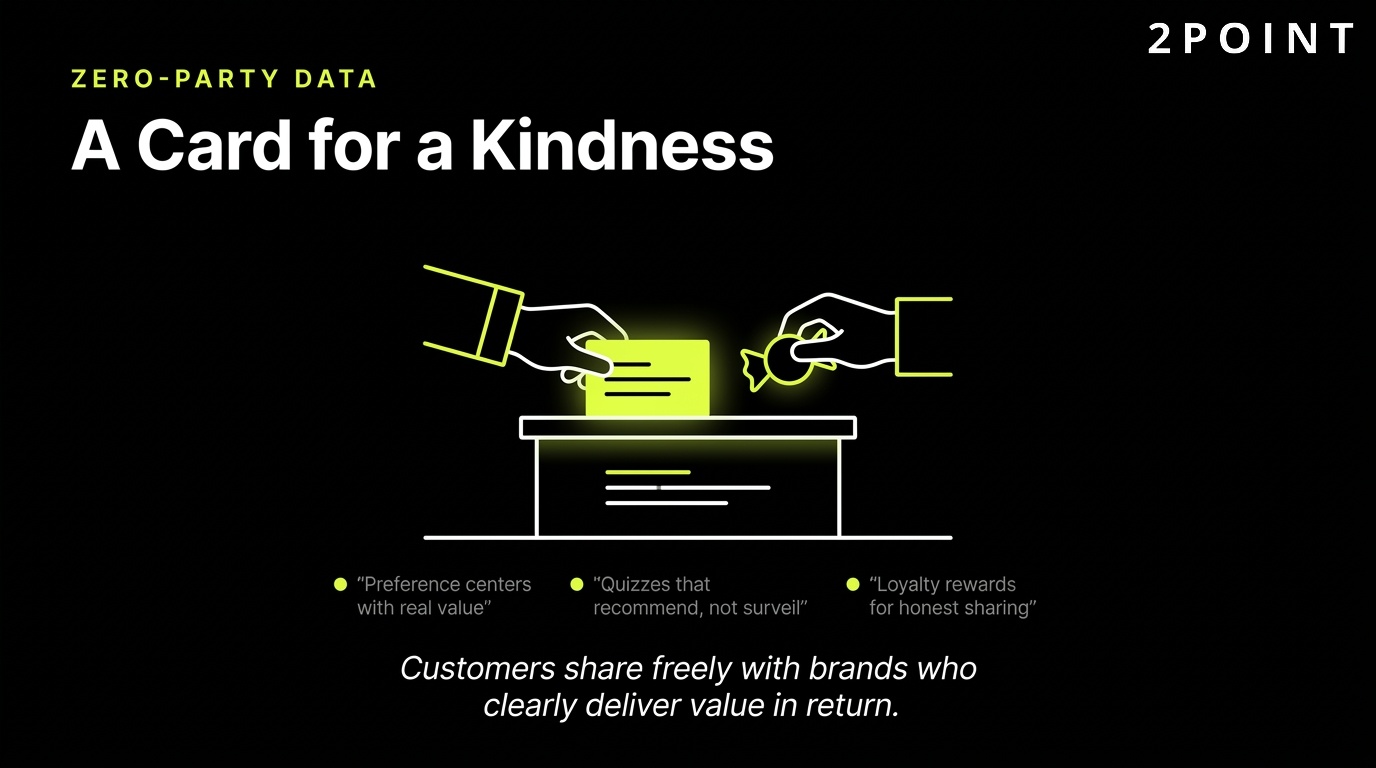
Zero-party data, information that consumers voluntarily and explicitly provide in exchange for clear value, is emerging as one of the most valuable marketing assets in a privacy-first world. Unlike third-party data that consumers may not realize is being collected, zero-party data is built on transparent value exchange: "tell us your preferences and we will personalize your experience accordingly." This approach creates both better personalization inputs and stronger trust relationships with customers.
Practical implementations of zero-party data strategies include preference centers that let customers indicate content interests and communication preferences, interactive quizzes that recommend products based on stated needs, and loyalty programs that reward data sharing with tangible benefits. When combined with AI personalization capabilities, zero-party data creates personalization experiences that feel genuinely helpful rather than surveillance-enabled. Marketing managers who build zero-party data strategies now will have significant advantages as privacy regulations continue tightening and third-party data becomes less available. Connecting this approach with a thoughtful digital marketing integration strategy ensures personalization extends consistently across both digital and offline customer touchpoints.
Community Building as a Growth Strategy
Community has emerged as one of the most durable and defensible growth strategies in marketing management. Unlike paid media that stops generating results the moment spend stops, or content SEO that requires ongoing production investment, genuine brand communities create self-sustaining engagement and advocacy that compound over time. Members recruit other members, generate content that attracts new audiences, and provide social proof that no brand-produced content can replicate.
The shift toward community-led growth reflects broader changes in consumer behavior. As trust in institutional messaging continues declining and peer influence continues rising, brands that successfully embed themselves within authentic communities earn access to relationships and influence that advertising budgets cannot purchase. Community building requires long-term thinking and genuine investment in member value, which many marketing organizations struggle to prioritize amid short-term performance pressures.
Effective community building in 2026 leverages multiple formats: owned communities (newsletters, forums, membership programs), partnered communities (co-marketing with complementary brands, industry associations), and earned community presence (consistent, valuable participation in existing conversations rather than intrusive promotional messaging). The marketing managers who invest in community building are building assets whose value grows with every new member and every genuine connection formed. The branding decisions made within community contexts carry enormous weight, as community members are among the most attentive and critical audiences a brand will ever reach.
Marketing Management Best Practices: A Comprehensive Checklist
Translating marketing management principles into daily operational practice requires systematic approaches that ensure important disciplines are applied consistently rather than only when they are top of mind. The following best practices consolidate the most impactful guidance from across this guide into actionable behaviors.
Strategic Planning Best Practices
Effective marketing management begins with disciplined strategic planning that precedes all tactical execution. Before any campaign is planned or creative brief is written, the strategic foundation must be firmly established. This means business objectives are documented and translated into specific marketing goals, target audiences are defined with behavioral and attitudinal depth beyond basic demographics, competitive positioning is current and informed by recent market research, and channel strategy is deliberately chosen based on audience behavior rather than internal preferences or legacy habits.
Quarterly planning cycles keep strategy responsive to market changes without creating the instability of constant strategic pivots. Annual planning provides the broader arc within which quarterly cycles operate. The discipline of planning at multiple time horizons simultaneously, setting annual direction while planning quarterly execution and reviewing monthly performance, is one of the most valuable habits a marketing manager can develop. Preparing a thorough marketing proposal for each major initiative ensures strategic alignment is confirmed before resources are committed and execution begins.
Execution and Campaign Management Best Practices
Excellent strategy does not automatically produce excellent execution. The operational disciplines of campaign management require their own systematic approaches to ensure that planned programs are delivered on time, on budget, and at the quality level required to achieve their objectives. Campaign briefs that document objectives, audiences, messaging, channel strategy, timeline, budget, and success metrics before production begins create alignment that prevents expensive rework later.
Regular campaign performance reviews, at minimum weekly during active campaigns and daily for high-investment programs, create the feedback loops necessary for in-flight optimization. The best marketing programs improve while they are running, not just between campaigns. This requires marketing managers to create review cadences and clear processes for acting on performance data quickly rather than waiting for post-campaign analysis. Tracking marketing insights before and during campaigns ensures decisions are grounded in evidence at every stage of execution.
Measurement and Optimization Best Practices
The measurement disciplines that distinguish excellent marketing management are characterized by rigor, consistency, and a genuine commitment to learning from both successes and failures. KPI frameworks should be documented formally and reviewed for continued relevance at the start of each annual planning cycle. Dashboards should be accessible to everyone who needs performance visibility and updated automatically where possible to prevent manual reporting backlogs.
Post-campaign analysis is often neglected amid the pressure of launching the next program, but the learning it generates is among the highest-value activities in marketing management. Structured retrospectives that identify what drove results, what hindered them, and what specific changes will be made in future campaigns create compounding organizational knowledge. Teams that conduct and document post-campaign analysis consistently improve faster than those that treat each campaign as a standalone event rather than a chapter in an ongoing learning story.
How to Work with a Marketing Agency to Extend Your Marketing Management Capabilities
Many organizations, from growth-stage startups to established enterprises, enhance their internal marketing management capabilities by partnering with specialized marketing agencies. Understanding when and how to leverage agency partnerships is an important dimension of modern marketing management strategy.
Agency partnerships make the most sense in situations where specialized expertise is needed for a finite period, where production capacity needs to be scaled quickly without the commitment of permanent headcount, or where an external perspective is valuable for challenging internal assumptions and introducing new approaches. The decision to hire an agency should be preceded by clear articulation of what capabilities are needed, what the expected outcomes are, and what success looks like for the engagement.
Effective agency management requires the same disciplines as internal team management: clear goal setting, regular communication, transparent performance measurement, and honest feedback. Marketing managers who treat agency partners as strategic collaborators rather than vendors extract significantly more value from these relationships. When considering an external partner, knowing the right questions to ask is essential. Understanding what to ask before hiring a marketing agency ensures alignment on strategy, measurement, and expectations before the engagement begins rather than after problems emerge.
Organizations like 2POINT bring specialized marketing management expertise that helps companies build more effective internal capabilities while executing high-impact programs. Whether the need is strategic planning support, digital execution, or comprehensive marketing management, partnering with a specialized agency can accelerate results and build internal capabilities simultaneously.
Frequently Asked Questions About Marketing Management
What is marketing management?
Marketing management is the strategic process of planning, implementing, and measuring programs that promote a brand's products or services and drive business growth. It encompasses strategy development, budget management, team leadership, performance measurement, and technology management. In 2026, marketing management is accountable for revenue contribution and business outcomes, not just channel activity.
What does a marketing manager do on a daily basis?
A marketing manager's daily activities typically include reviewing campaign performance data, collaborating with internal teams on active programs, approving creative work, managing agency and vendor relationships, and contributing to strategic planning. They balance immediate execution responsibilities with longer-term strategic thinking, making decisions that affect both current campaigns and future marketing direction.
What are the most important marketing management skills?
The most critical marketing management skills include strategic thinking, data literacy, communication (feedback, presenting, negotiating, and delegation), cross-functional collaboration, budget management, and technology fluency. Strong analytical skills that translate data into actionable insights are increasingly essential, as is the ability to manage both human teams and AI-powered tools effectively.
How is marketing management different from digital marketing?
Marketing management is the broader discipline that encompasses strategy, planning, team leadership, performance measurement, and organizational alignment across all marketing activities. Digital marketing is a subset of marketing management focused specifically on digital channels like social media, email, SEO, and paid media. A marketing manager oversees digital marketing as one component of a comprehensive marketing strategy.
What metrics should marketing managers track?
Marketing managers should track a focused set of KPIs that connect to business outcomes, including marketing-sourced revenue, customer acquisition cost, marketing return on investment (ROMI), lead generation volume and quality, conversion rates, and customer lifetime value. Both lagging indicators that confirm results and leading indicators that signal future performance should be included in the measurement framework.
How has AI changed marketing management?
AI has transformed marketing management by enabling personalization at scale, automating repetitive tasks like campaign optimization and report generation, improving content creation speed, and enhancing audience targeting precision. Marketing managers now need AI literacy alongside traditional marketing skills, and the ability to distinguish which activities benefit from automation versus which require irreplaceable human creativity is a critical management competency.
What is the difference between marketing management and marketing strategy?
Marketing strategy defines the direction and approach for achieving business objectives through marketing, including positioning, target audiences, channel selection, and messaging frameworks. Marketing management is the broader operational discipline that includes developing the strategy but also encompasses team leadership, budget management, execution oversight, and performance measurement. Strategy answers "what and why"; management encompasses "how, who, when, and how well."
How do you measure marketing management effectiveness?
Marketing management effectiveness is measured through a combination of business outcomes and operational metrics. Business outcome measures include revenue attributed to marketing, customer acquisition cost trends, marketing ROI, and pipeline contribution. Operational measures include campaign delivery against plan, budget adherence, team productivity, and speed of performance improvement across key KPIs over time.
What marketing management tools are most important?
The most essential marketing management tools include a CRM system for customer data management, an analytics platform for performance measurement, a social media management tool for centralized social operations, an email marketing platform for nurturing and campaigns, and a project management tool for team coordination. Most marketing teams also need SEO tools, design tools, and increasingly AI-powered content and optimization tools to operate effectively.
What is the biggest marketing management challenge in 2026?
The most significant challenge for marketing managers in 2026 is balancing AI adoption and automation with the human authenticity that audiences increasingly demand. Successfully navigating this tension, using AI for efficiency and scale while preserving the genuine human creativity and cultural fluency that differentiates brands, is the defining marketing management challenge of the current era.
How should a small business approach marketing management?
Small businesses should prioritize focus over comprehensiveness, selecting two or three channels where their target audience is most active and developing genuine expertise in those channels before expanding. A simple operating model with clear goals, basic analytics, and consistent execution beats an ambitious multi-channel strategy that cannot be resourced adequately. As the business grows, the marketing management infrastructure can expand systematically.
When should a business hire a marketing agency versus building an internal team?
Businesses should consider hiring a marketing agency when specialized expertise is needed quickly, when campaign volume exceeds internal capacity, or when an external perspective is valuable for challenging internal assumptions. Building an internal team makes more sense when marketing is a core strategic function requiring deep organizational knowledge, when activities require daily coordination with other departments, or when a long-term consistent brand voice is the priority. Many organizations benefit from combining both models strategically.
