let’s connect


Your brand no longer competes in one place. Search results, AI answers, social feeds, and news stories are all fighting for the same attention.
As a result, traditional PR, SEO, and content have merged into a single surface.
That shift is exactly why digital PR is important in 2026. It connects brand visibility, earned media, SEO authority, and AI citations into a single system. Without a cohesive digital PR strategy, your efforts stay siloed and underperform.
This guide covers why digital PR matters now, how it differs from traditional PR, the digital PR tools that actually work, and a framework you can adapt. At 2POINT, we build digital PR into strategies that align with how search works today.
Key Takeaways
- Digital PR earns authoritative backlinks and coverage that drive rankings and organic traffic.
- Digital PR for SEO strengthens brand trust across search, news, social, and AI answers in 2026.
- AI systems cite brands more when trusted publications already reference them consistently.
- A modern digital PR strategy pairs data, story ideas, and repeatable outreach processes.
- Effective digital PR campaigns align with SEO goals and audience pain points.
- You don’t need a global newsroom. You need a clear story and consistent execution.
What Is Digital PR?
Digital PR is the practice of earning online coverage, mentions, and backlinks across digital channels to build your visibility, credibility, and search performance. If that sounds like traditional PR, there’s a key difference.
Old-school PR chased print clippings and broadcast slots where tracking impact was nearly impossible.
Digital PR blends PR tactics with content marketing and SEO. You create stories worth covering, pitch them to relevant outlets, and gain coverage that strengthens your organic search footprint.
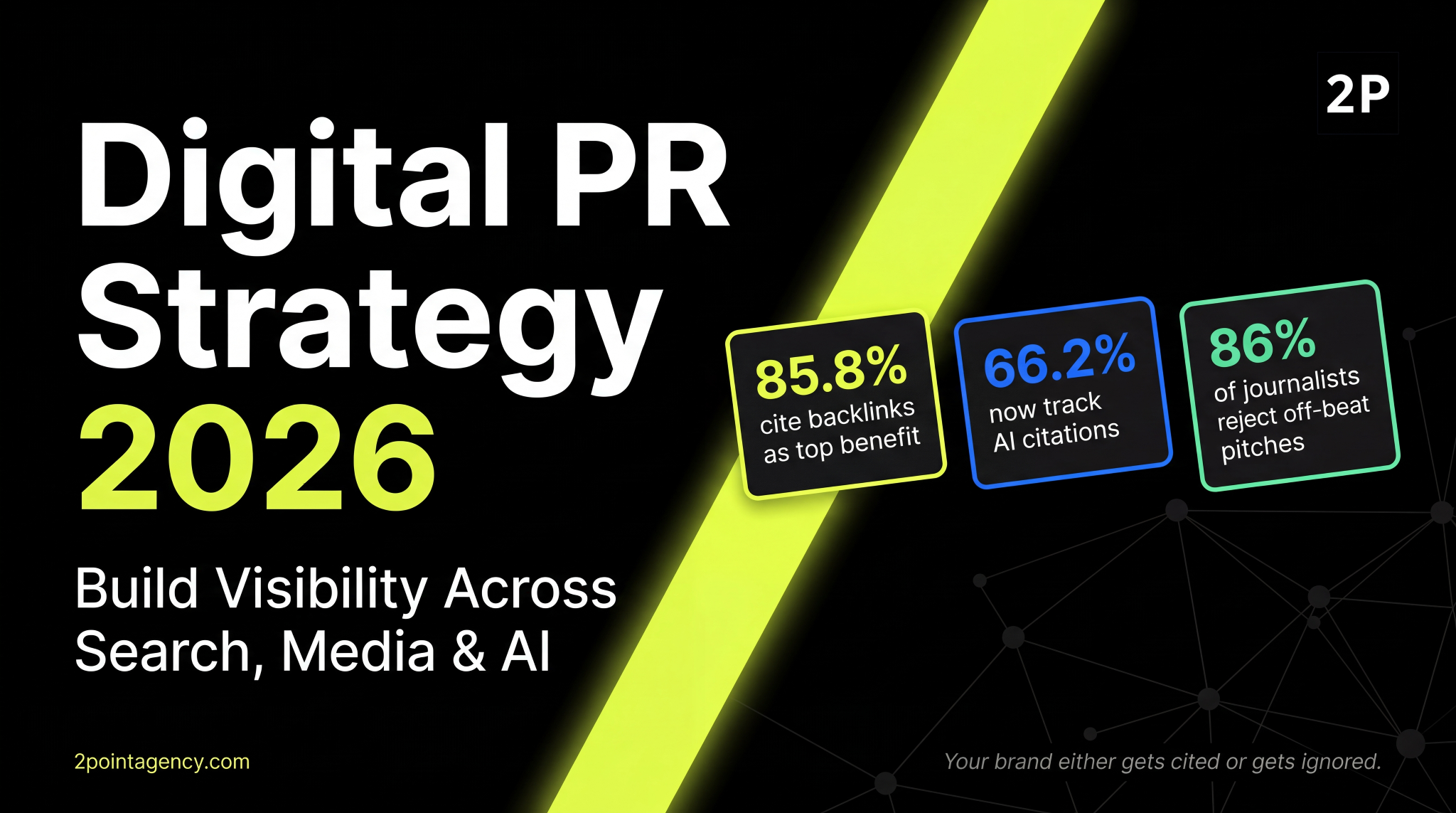
BuzzStream’s 2026 State of Digital PR report found that 85.8% of practitioners cite backlinks as the primary benefit, while 66.2% now track AI citations as a new success metric, showing how the discipline has evolved well beyond media coverage alone.
The rest of this guide answers why digital PR is important right now, then walks you through how to build a sustainable digital pr strategy you can adapt to your team.
Digital PR vs Traditional PR vs Link Building
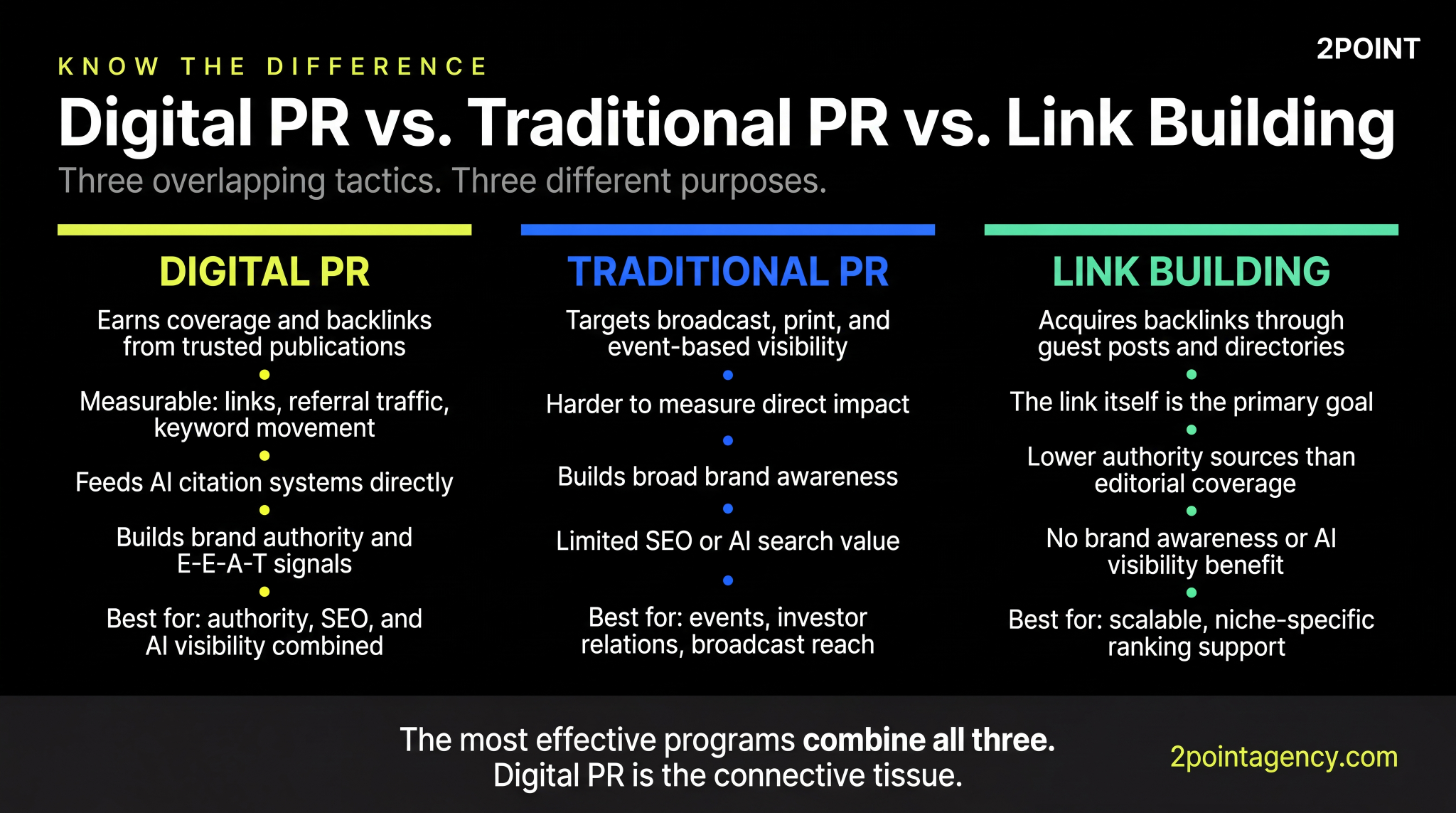
These three terms overlap constantly, leading teams to invest in the wrong approach. Before you build a digital PR strategy, you need to understand what each one actually does and where they fit.
How Digital PR Differs from Traditional PR
Traditional PR focused on broadcast, print, and event-based visibility. You’d land a newspaper feature or TV segment and hope the right audience saw it. Tracking real impact was mostly guesswork.
Digital PR shifts that entirely. It targets online editorial coverage across publications, podcasts, newsletters, and creator channels, where every placement is measurable through backlinks, referral traffic, and brand search lift. That precision matters because, as Cision’s 2025 State of the Media Report found, 86% of journalists immediately reject pitches not aligned with their beat, making targeted outreach essential.
Digital PR also feeds AI systems directly. AI-generated answers draw from the same trusted publications your campaigns target, which means coverage today can become an AI citation tomorrow.
How Digital PR Differs from Link Building
Link building focuses on acquiring backlinks through guest posts, directories, and link exchanges primarily to improve your rankings.
The link itself is the goal, and the surrounding content is secondary.
Digital PR works differently. You earn links as a byproduct of earning coverage, and those links tend to come from higher-authority sources that traditional link builders struggle to access.
A feature in a respected publication carries far more weight than a guest post on a niche blog.
When to Use Each (and When to Combine Them)
Each approach serves a different purpose depending on your goals.
Use traditional PR for events, investor relations, and broadcast visibility. For scalable, niche-specific backlinks that support targeted rankings, link building is your best bet.
However, when you need high-authority coverage that serves your brand, SEO, and AI visibility simultaneously, digital PR is the clear choice. In 2026, that combination matters more than ever. That said, the most effective programs don’t choose just one. They combine all three, with digital PR acting as the connective tissue that strengthens everything else you’re doing.
Why Digital PR Is Important Today
Understanding how digital PR differs from other tactics is useful, but the real question is why it matters right now. Here’s what makes digital PR essential for your business in 2026.
Digital PR Supports SEO and Keyword Visibility
Digital PR earns high-quality backlinks from trusted publications, which remain one of the strongest ranking signals for search engines.
What makes these links especially valuable is where they point.
Coverage can direct readers to your key landing pages or pillar content, helping those pages climb for strategic keyword clusters.
The fundamentals behind earning editorial coverage follow the same principles that earn high-quality backlinks for your website. And because some digital PR wins also surface in news results, review carousels, or AI summaries, a single campaign can multiply its impact across multiple SERP features at once.
Digital PR Builds Brand Authority and Trust
Backlinks help your rankings, but trust is what converts visitors into customers.
Modern buyers rely on third-party validation, and seeing your brand in respected outlets builds credibility faster than any self-published claim.
Digital PR placements, podcast appearances, and quote features position your team as genuine experts. These signals directly support what Google’s Search Quality Rater Guidelines call E-E-A-T: experience, expertise, authoritativeness, and trustworthiness.
This trust also protects you long-term. A strong presence in reputable publications pushes negative content down in search results, which is why digital PR directly connects with online reputation management as a strategy.
Digital PR Expands Reach Across Multiple Channels
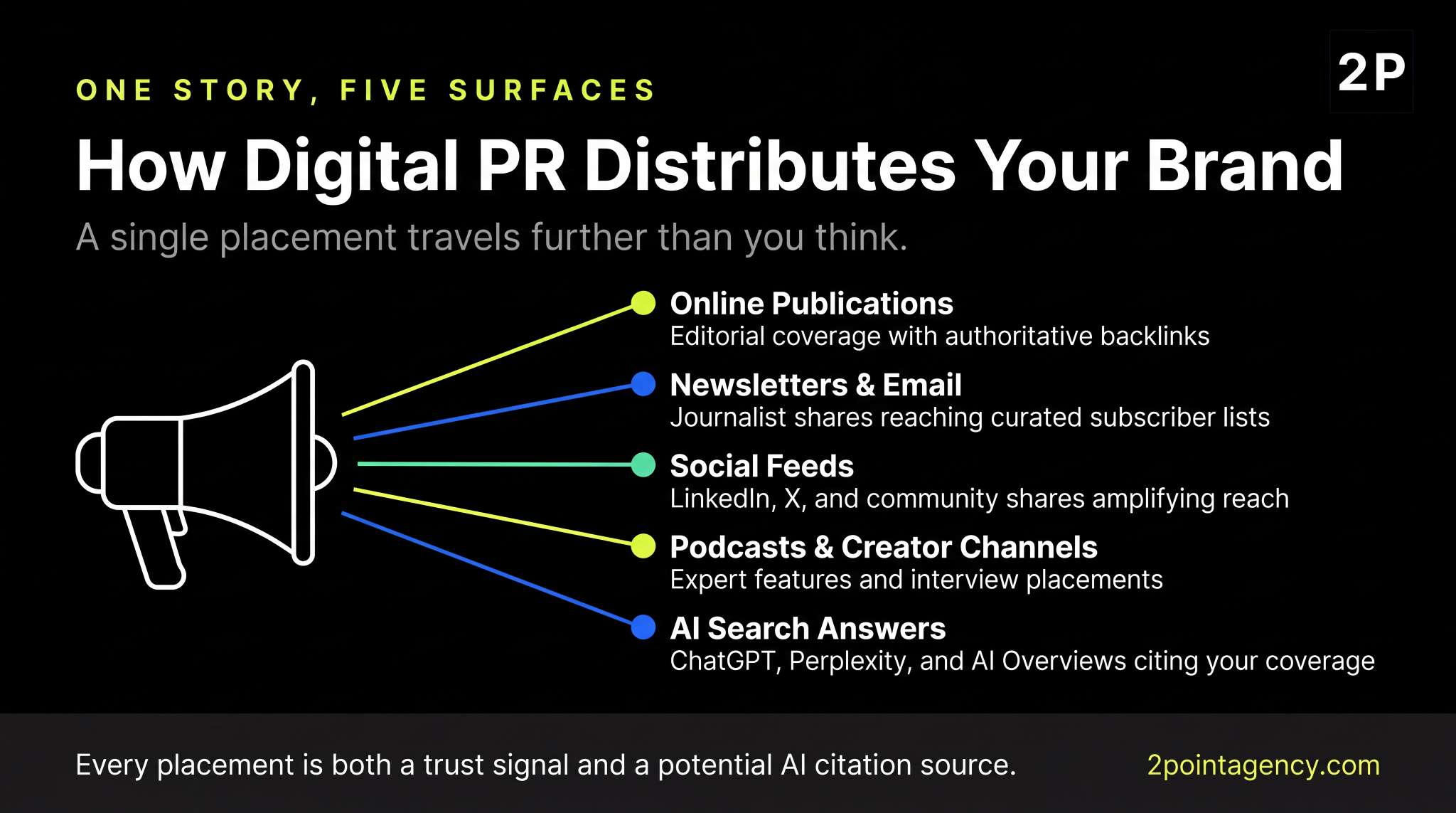
Trust builds your foundation, but reach determines how many people encounter your brand. A single digital PR story can travel across online magazines, newsletters, social feeds, and communities, creating a surround-sound effect for your business.
This multi-channel footprint puts you in front of your audience earlier and more often.
Maintaining brand consistency across digital channels ensures every touchpoint reinforces the same message, whether someone finds you through a news article, a LinkedIn share, or a podcast mention.
Digital PR Delivers Measurable Impact
Reach matters, but only if you can prove it’s working.
Every digital PR campaign produces trackable outcomes: backlinks, referral traffic, keyword movement, assisted conversions, and social engagement all show whether your investment is delivering.
This clarity of measurement is one of the key reasons digital PR is more important than traditional PR. Instead of guessing whether a placement made an impact, you can see exactly which campaigns drove traffic, which keywords moved, and which efforts contributed to your pipeline.
Digital PR Powers AI Search Visibility
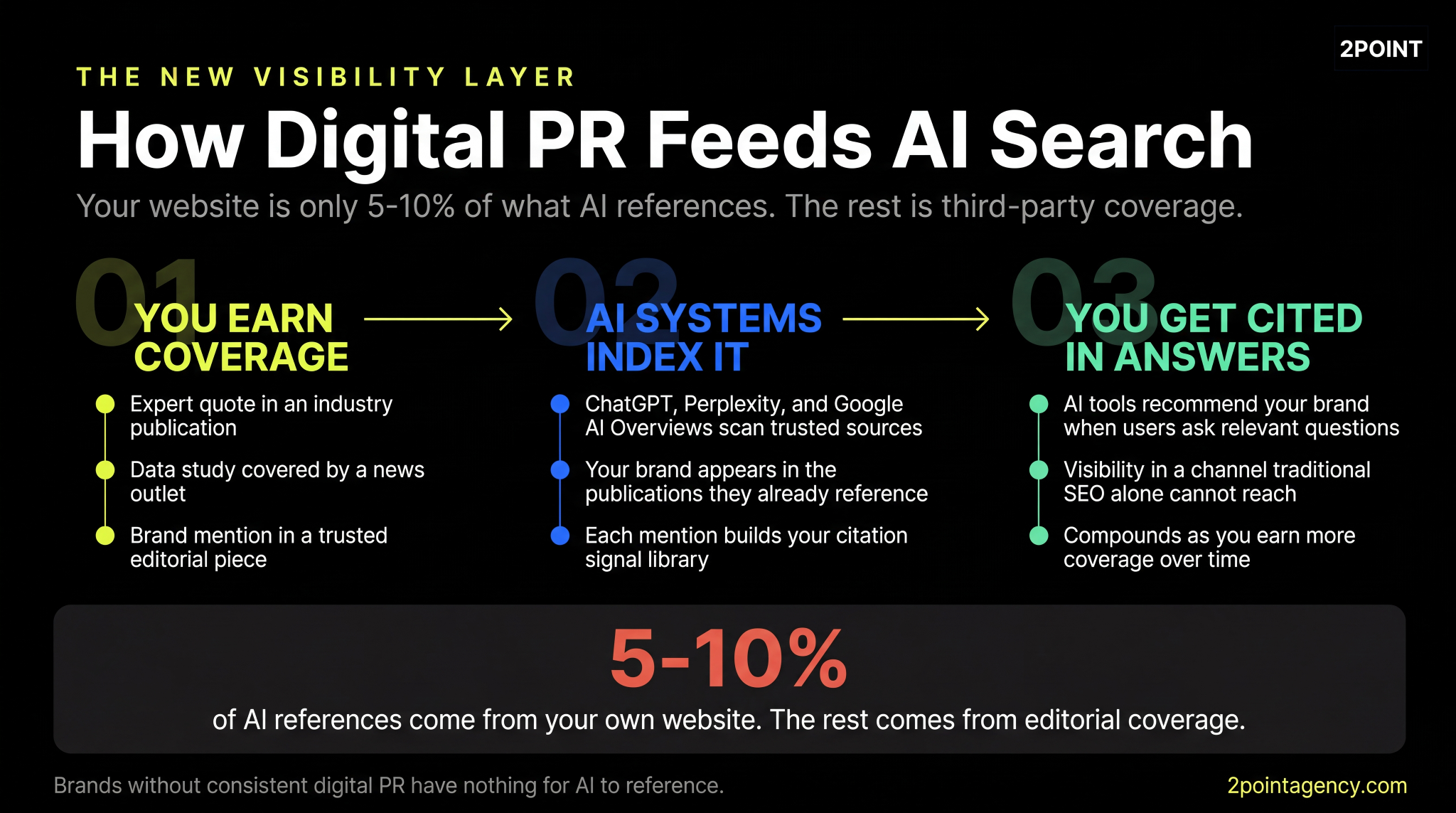
Measurable results prove your campaigns work, but in 2026, there’s an even bigger reason digital PR is essential. AI tools like ChatGPT, Perplexity, and Google AI Overviews generate answers by citing trusted sources.
According to McKinsey’s research on AI search, your own website accounts for only 5 to 10% of what AI references.
The rest comes from third-party editorial coverage, which is exactly what digital PR earns.
Each placement, quote feature, or expert mention becomes a citation source that AI systems can reference. That gives you visibility in a channel that traditional SEO alone cannot reach, making digital PR infrastructure for being found by AI.
When Digital PR Matters Most for Your Brand
Digital PR delivers value at every stage, but certain situations make it especially impactful. Here’s how to determine where you fall.
Brands in Competitive SEO Niches
If your space is crowded and competitors are also publishing content, digital PR can be the difference between being another blog post and becoming a recognized authority.
Top-tier coverage and links set you apart in ways content alone can’t.
This matters even more in 2026 because AI Overviews frequently cite the same publications that digital PR targets. That means every placement works twice for you:
- Strengthening your organic rankings through authoritative backlinks.
- Positioning your brand as a source of AI systems reference when generating answers.
Startups and Emerging Brands That Need Credibility Fast
Established brands have years of recognition behind them.
If you’re early-stage, you don’t have that luxury. Third-party coverage accelerates trust-building with prospects, investors, and partners who are researching your brand before engaging.
That external validation also lifts your conversion paths. When someone sees your brand in a respected publication before visiting your site, they arrive warmer. Connecting that credibility to an effective lead generation funnel turns trust into a measurable pipeline.
Established Brands Repositioning or Launching Something New
Even well-known brands face credibility gaps when entering new categories or shifting their positioning. Digital PR solves this by placing narrative-shaping stories in front of the right audiences during these pivotal moments, helping you control how the market perceives the change.
This approach works because external validation outweighs self-promotion.
As Nielsen Norman Group’s credibility research confirms, third-party sources are far more credible than brand-owned claims. When a trusted publication covers your launch, it signals legitimacy faster than anything you publish on your own channels.
Core Building Blocks of a Strong Digital PR Strategy
Understanding why digital PR matters is the first step. Let’s get into how you actually build a digital pr strategy that delivers results consistently.
Clear Objectives and Success Metrics
Before you pitch a single journalist, define what success looks like. Common digital PR objectives include:
- Earning authoritative backlinks that strengthen your rankings.
- Improving keyword visibility and driving referral traffic.
- Generating brand mentions and positive sentiment.
- Landing coverage in specific target outlets.
- Appearing in AI search citations.
The mistake most teams make is trying to track everything at once.
Instead, pick a small set of primary metrics that align with your business goals before planning any campaigns. That focus keeps your strategy sharp and your reporting meaningful.
Audience and Publication Mapping
With your objectives set, the next step is understanding who you want to reach and where they already pay attention.
Map journalists, blogs, newsletters, podcasts, and communities by topic and audience fit. Then structure your targets in tiers to prioritize outreach:
- Tier 1: Top industry outlets with broad reach and high domain authority.
- Tier 2: Niche authorities your specific audience trusts and reads regularly.
- Tier 3: Communities and creators where engaged conversations happen.
This approach ensures you’re building coverage across the full ecosystem where your audience actually spends time.
Story Angles and Content Assets
Your publication map tells you where to pitch.
But your story angles are what determine whether anyone actually cares. Formats that consistently perform include data studies, expert commentary, thought leadership, reactive news commentary, and human stories.
The key is connecting each angle to your existing content assets so every placement supports both brand visibility and SEO. And creating engaging, interactive content is especially effective because it gives journalists something unique to reference while keeping their readers engaged.
Outreach Process and Relationship-Building
Great story angles mean nothing if your outreach falls flat. You need a repeatable process that covers research, personalized pitching, timely follow-ups, and ongoing relationship maintenance with journalists and creators.
Throughout that process, the emphasis should always be quality over volume.
As Muck Rack’s 2026 State of Journalism report found, 88% of journalists delete pitches that miss their beat entirely. Fewer, more relevant pitches consistently outperform mass blasting because they show you’ve done the work to understand what each journalist actually needs.
Tools That Support Digital PR Execution
A solid process needs the right digital pr tools behind it. Here’s how the landscape breaks down:
- Media databases: Muck Rack and Cision for journalist discovery and verification.
- Outreach management: BuzzStream, Prowly, and JustReachOut for pitching workflows.
- Monitoring and measurement: Google Search Console, Ahrefs, and Brand24 for tracking results.
- AI visibility tracking: Emerging tools for monitoring your brand across ChatGPT, Perplexity, and AI Overviews.
Your right stack depends on team size and budget. Small teams can start with Search Console, BuzzStream, and manual tracking.
Step-by-Step Digital PR Strategy You Can Follow
Why digital PR is important is clear by now. The real question is how to start. Here’s a practical blueprint you can follow to build digital pr campaigns that deliver measurable results.
Step 1 — Align Digital PR With SEO and Brand Goals
Before you create a single pitch, identify the priority topics, keyword clusters, and business themes your PR efforts should reinforce. Google’s helpful content guidelines make it clear that topical relevance and expertise matter for rankings, so your digital PR should amplify what your SEO team is already building toward.
From there, create a joint calendar connecting campaigns to product launches, content drops, or seasonal spikes. This alignment ensures every placement supports a broader goal.
Step 2: Build a Media and Creator List
With your goals defined, research the journalists, editors, bloggers, and influencers who actively cover your space.
Focus on people who have recently written about topics relevant to your campaigns. Then segment your list by tier and topic to prioritize outreach:
- Top-tier outlets for maximum reach and domain authority.
- Niche authorities for targeted, high-relevance coverage.
- Community creators for engaged audiences in specific verticals.
This structure keeps your pitches relevant to each contact rather than generic.
Step 3: Develop Campaign Concepts and Assets
Your media list tells you who to reach out to. Now you need something worth pitching. Develop two to three concepts at a time, such as a data report, expert predictions piece, or reactive commentary series tied to trending topics.
Before pitching, prepare supporting assets that make it easy for journalists to say yes:
- Dedicated landing pages for the campaign.
- Datasets, visuals, and quotable expert commentary.
- FAQs that address likely follow-up questions upfront.
The more ready-to-use material you provide, the more likely your story is to get covered.
Step 4: Pitch, Follow Up, and Support Coverage
With your concepts and assets ready, write concise, value-led pitches that highlight why the story matters to each outlet’s audience.
Lead with the angle, not your brand. Journalists care about their readers first.
A well-timed follow-up within 3 to 5 days is standard. Offer exclusive angles where appropriate, and stay responsive to journalists’ questions. The easier you make their job, the stronger your relationship becomes for future digital PR campaigns.
Step 5: Measure, Learn, and Iterate
After each campaign, track the results that matter: backlinks earned, coverage placements, referral traffic, and keyword movement. Use a URL builder to keep your traffic attribution clean and ensure your SEO integrations keep data aligned across platforms.
Then run a lessons-learned review. Which angles resonated? Which outlets engaged? What fell flat? These insights refine your digital PR strategy for the next round, turning each campaign into a foundation for the next.
Digital PR, SEO, and Content — How They Work Together
Digital PR doesn’t operate in isolation. It works best as part of a broader growth system where PR, SEO, and content reinforce each other. Here’s how to connect them.
Using Digital PR to Amplify Content You Already Have
You likely already have reports, whitepapers, or guides sitting on your site.
Digital PR turns those existing assets into newsworthy story angles that earn coverage and links back to the original content. The key is repackaging what you’ve built into formats journalists value:
- Pull a compelling stat from your research and frame it as a trend piece.
- Turn a whitepaper into expert commentary on a timely topic.
Each placement drives authoritative backlinks to assets you’ve already invested in.
Strengthening E-E-A-T With Third-Party Mentions
Beyond amplifying your content, digital PR also strengthens how search engines perceive your expertise. Every quote feature, expert commentary, and brand mention in a trusted publication reinforces your E-E-A-T signals in ways your own content can’t.
In 2026, these mentions serve a dual purpose. They support your organic rankings while also feeding AI systems’ understanding of your authority. When AI tools encounter your team cited across multiple trusted sources, they’re more likely to reference you when generating answers.
Feeding Insights Back Into Content and SEO
Digital PR also generates insights that improve everything you create next.
Campaign performance and media feedback reveal which topics resonate, which angles journalists care about, and which phrases your audience responds to.
Pair those findings with your Search Console query data and behavior metrics on key pages. If a campaign drives traffic to a page that converts well, that’s a clear signal to build more content around that topic.
Common Mistakes That Weaken Digital PR Strategy
Many teams try digital PR once, see limited results, and conclude the channel isn’t worth the effort. But the issue almost always sits in execution, not the channel itself. Here are the mistakes that hold most programs back.
Treating Digital PR as One-Off Blasts
The most common mistake is treating digital PR as a sporadic activity. Sending a burst of pitches once a quarter without a plan rarely builds journalist relationships or consistent coverage that compounds over time.
Digital PR works like SEO in that way. Results come from sustained effort, not isolated pushes.
When you show up consistently with valuable stories, journalists start coming to you rather than the other way around.
Pitching Without a Strong Story or Asset
Even consistent outreach falls flat if your pitches don’t give journalists something useful.
Generic, brand-centric pitches get ignored because they offer nothing the audience actually needs. Before sending, ask yourself: would a journalist share this if your brand name wasn’t attached?
Every pitch should lead with:
- Original data or research that their readers can’t find elsewhere.
- Expert insights tied to a timely trend or topic.
- Clear audience value that makes the story worth covering.
Ignoring Relevance and Personalization
A strong story still fails if it lands in the wrong inbox.
Mass emailing journalists who don’t cover your topic wastes time and damages your reputation with contacts who could have been valuable later.
Instead, tailor your angles to each outlet’s beat and readership. Reference their recent work.
Explain specifically why your story fits their audience. That effort is what separates pitches that get responses from those that get deleted.
Focusing Only on Link Count, Not Brand Fit
Relevance also matters for where you actually land. Chasing any link, regardless of source, can lead to placements on low-quality or off-topic sites, weakening both your trust signals and SEO value over time.
A single placement in a respected, relevant publication carries more weight than ten links from sites your audience never visits. Prioritize brand fit and editorial quality over raw numbers for stronger long-term results.
Neglecting AI Search as a Distribution Channel
Finally, many teams still optimize digital PR only for Google rankings while ignoring AI search visibility entirely. In 2026, that’s a significant blind spot.
If your brand isn’t being cited in trusted publications, AI systems have nothing to reference when generating answers. You become invisible in a rapidly growing discovery channel. Every editorial placement and brand citation builds the signal library AI tools draw from, making this impossible to overlook.
How 2POINT Approaches Digital PR Strategy
At 2POINT, we connect digital PR with SEO, content, and creative so your campaigns support long-term growth, not just a single press spike. Every engagement begins with discovery and goal-setting aligned to your search, brand, and revenue objectives.
With that foundation in place, we handle audience mapping, story development, systematic outreach, and relationship-building with journalists and creators. We also monitor AI search citations alongside traditional SEO metrics, ensuring your visibility grows across every channel that matters in 2026.
If you’re ready to build or upgrade your program, explore our multi-channel marketing approach to see how digital PR fits into a broader growth strategy.
Are You Building a PR Engine That Compounds, or Restarting Every Campaign?
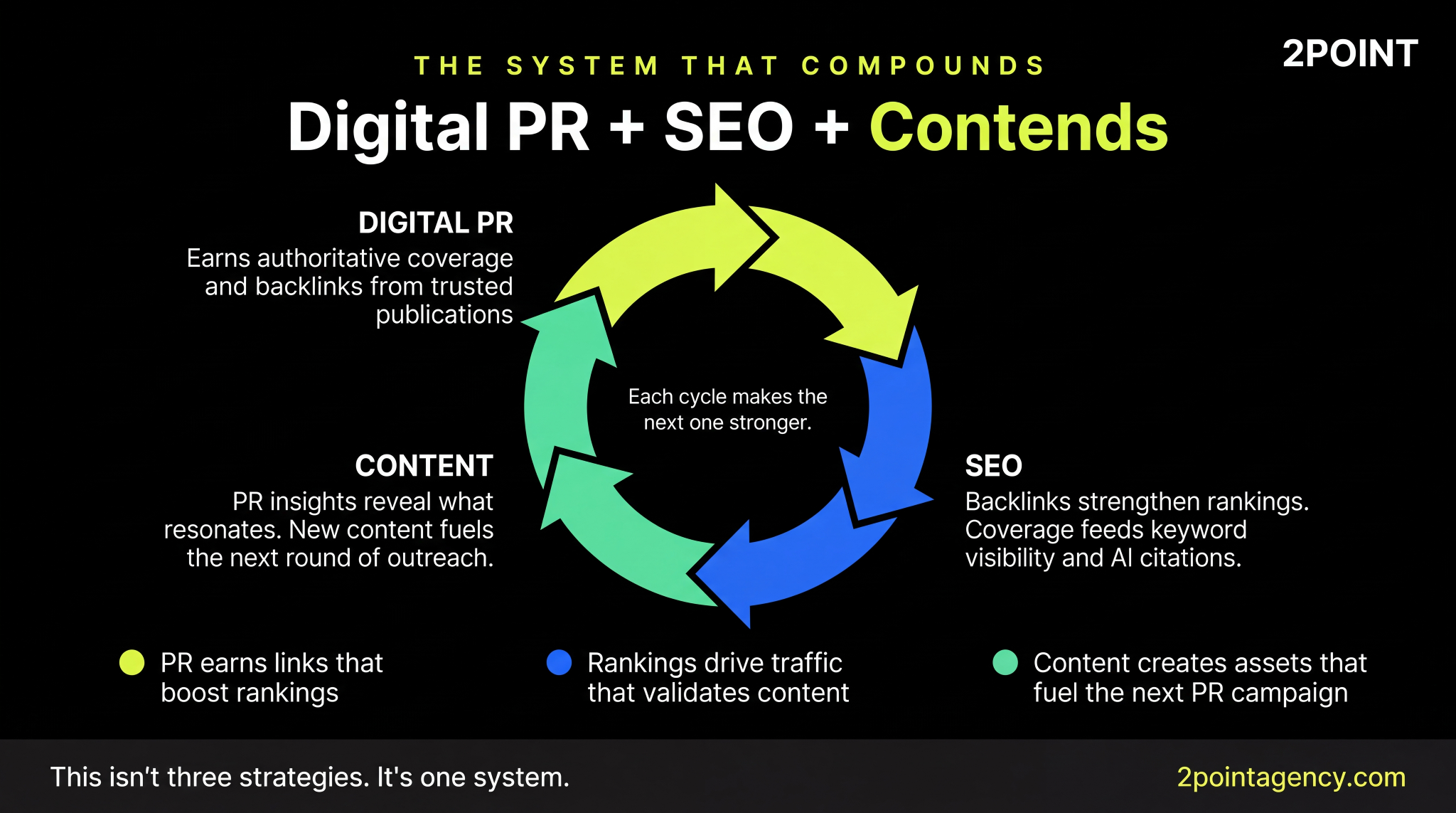
Digital PR works best as a system. Clear targets guide the story, strong assets give it weight, and consistent outreach keeps momentum alive.
In 2026, the stakes are higher because AI search means your brand either gets cited or gets ignored. Every editorial placement is now both a trust signal and a potential source of AI citations.
If your digital PR efforts feel like they’re starting from scratch each time, reach out to 2POINT. We’ll help you build a program that compounds.
FAQs
Why is digital PR important for modern brands?
Digital PR builds third-party credibility, reducing buyer doubt and keeping your brand visible across search, social, and AI-generated answers. In 2026, a consistent digital PR strategy also creates the citation signals AI search systems rely on when surfacing recommendations.
How does digital PR support SEO and organic visibility?
Digital PR for SEO earns editorial backlinks from trusted publications, strengthening topical relevance and driving qualified referral traffic. Aim digital PR campaigns at pillar pages and content hubs so link authority flows to the pages you most want to rank.
What is the difference between digital PR and link building?
Digital PR vs link building comes down to approach: link building acquires backlinks through guest posts and directories, while digital PR earns them through media coverage from higher-authority publications. Digital PR also builds brand awareness, trust, and AI visibility that link building alone cannot deliver.
How does digital PR help with AI search visibility?
Digital PR AI visibility works because tools like ChatGPT, Perplexity, and Google AI Overviews cite trusted third-party sources. Each editorial mention becomes a potential AI citation, and brands without consistent digital PR campaigns have nothing for these systems to reference.
What does a good digital PR strategy include day-to-day?
A strong digital PR strategy maintains a steady rhythm: monitoring relevant narratives, developing one compelling story angle, preparing a landing page, and pitching the right journalists using proven digital PR tools. Track backlinks, referral sessions, and keyword movement after every campaign.
How long does it take to see results from digital PR campaigns?
Some digital PR campaigns earn coverage within days when the hook is timely, and assets are ready. Compounding authority takes longer because digital PR for SEO builds with repetition. Expect early referral spikes, followed by steadier branded search growth over 2 to 6 months.
Can small teams or B2B brands benefit from digital PR?
Small teams win with digital PR by targeting niche outlets and being easy to quote. One strong story per month builds steady visibility and borrowed trust. B2B brands benefit because their buyers research extensively, and third-party digital PR coverage surfaces during that process.