

 let’s connect


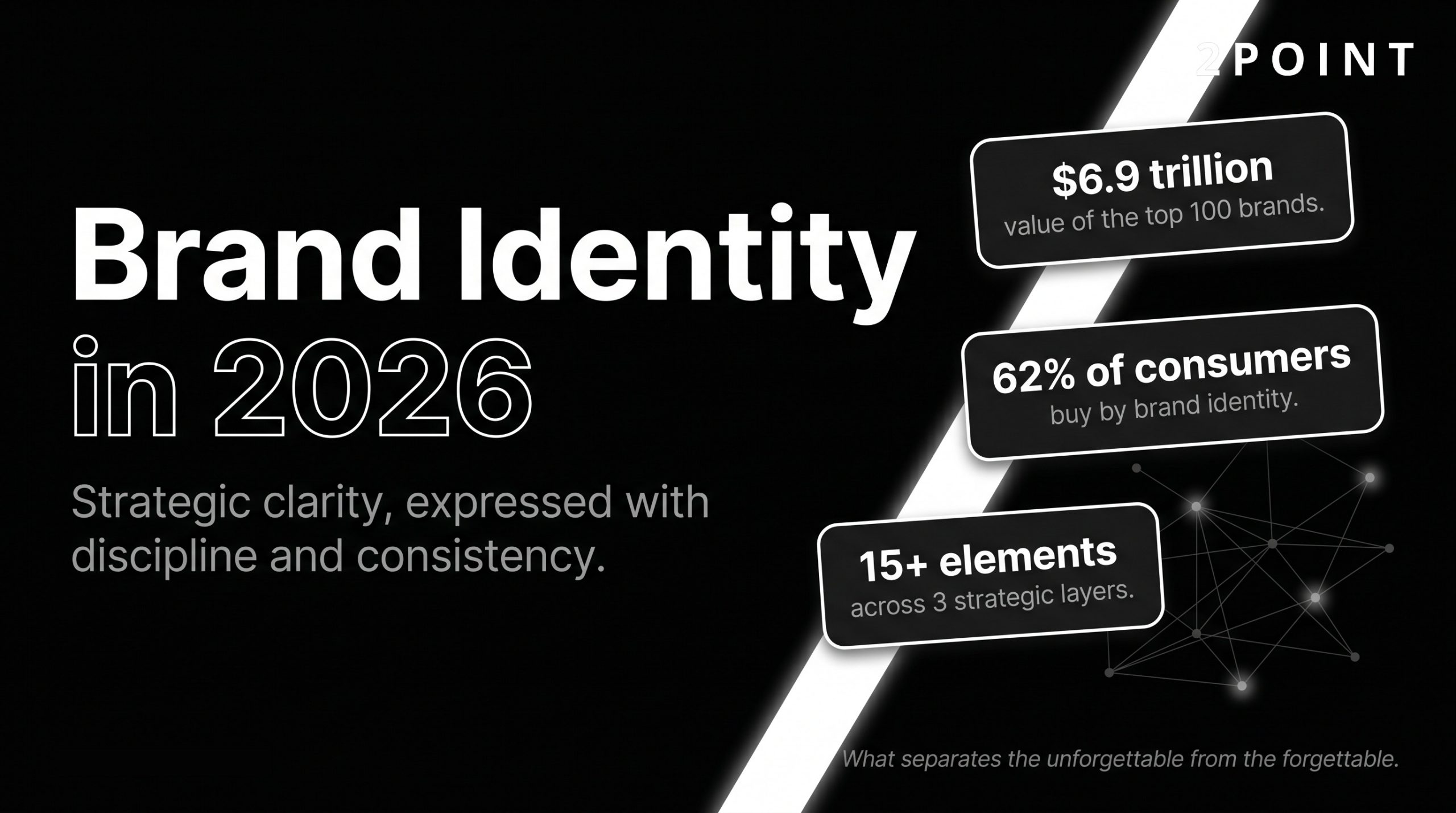
What Is Brand Identity? A Direct Answer
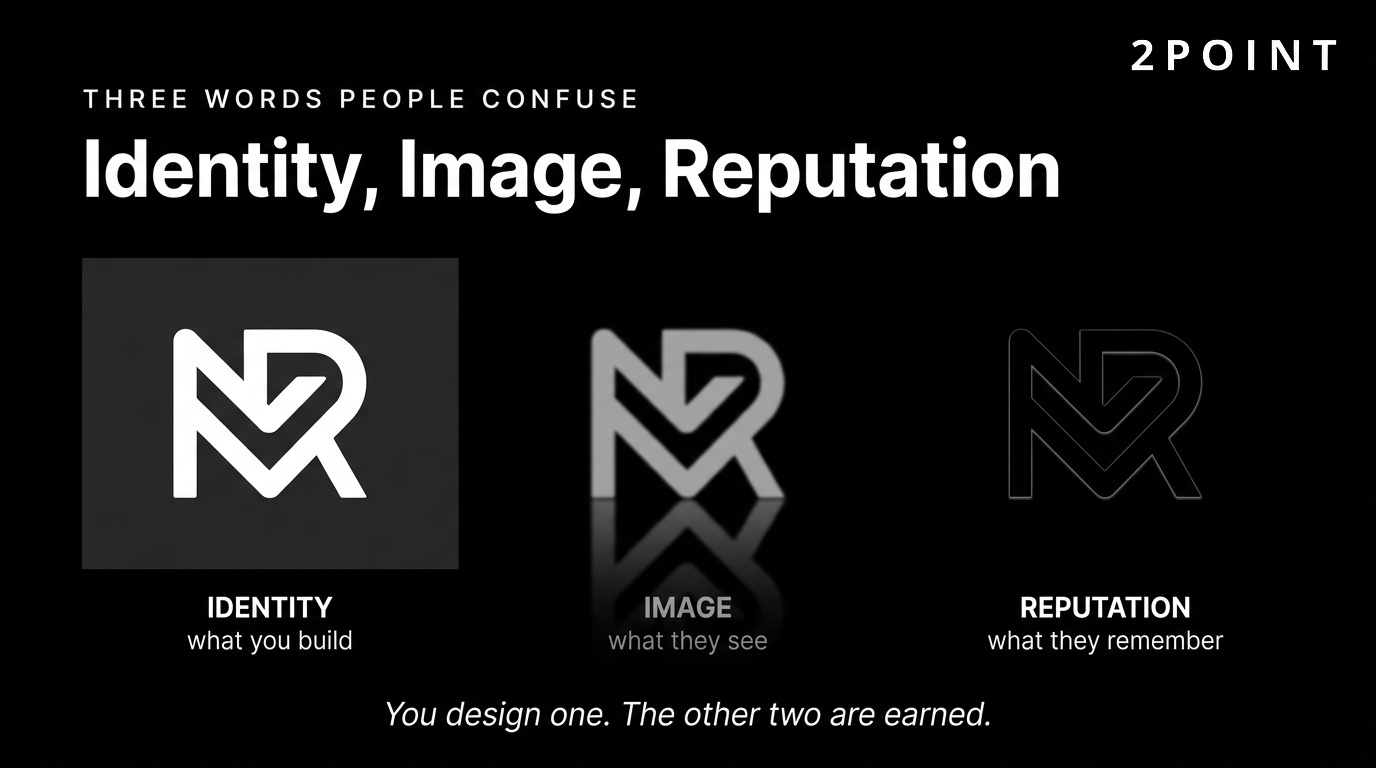
- Brand identity is the deliberate collection of visual, verbal, and experiential elements a company uses to present itself to the world.
- It includes your logo, color palette, typography, brand voice, values, and the way all of those elements work together as a system.
- Brand identity is not the same as brand image, which is how audiences perceive you, or brand reputation, which is earned over time through actions.
- A strong brand identity drives recognition, builds emotional loyalty, and creates a competitive advantage that is difficult for rivals to replicate.
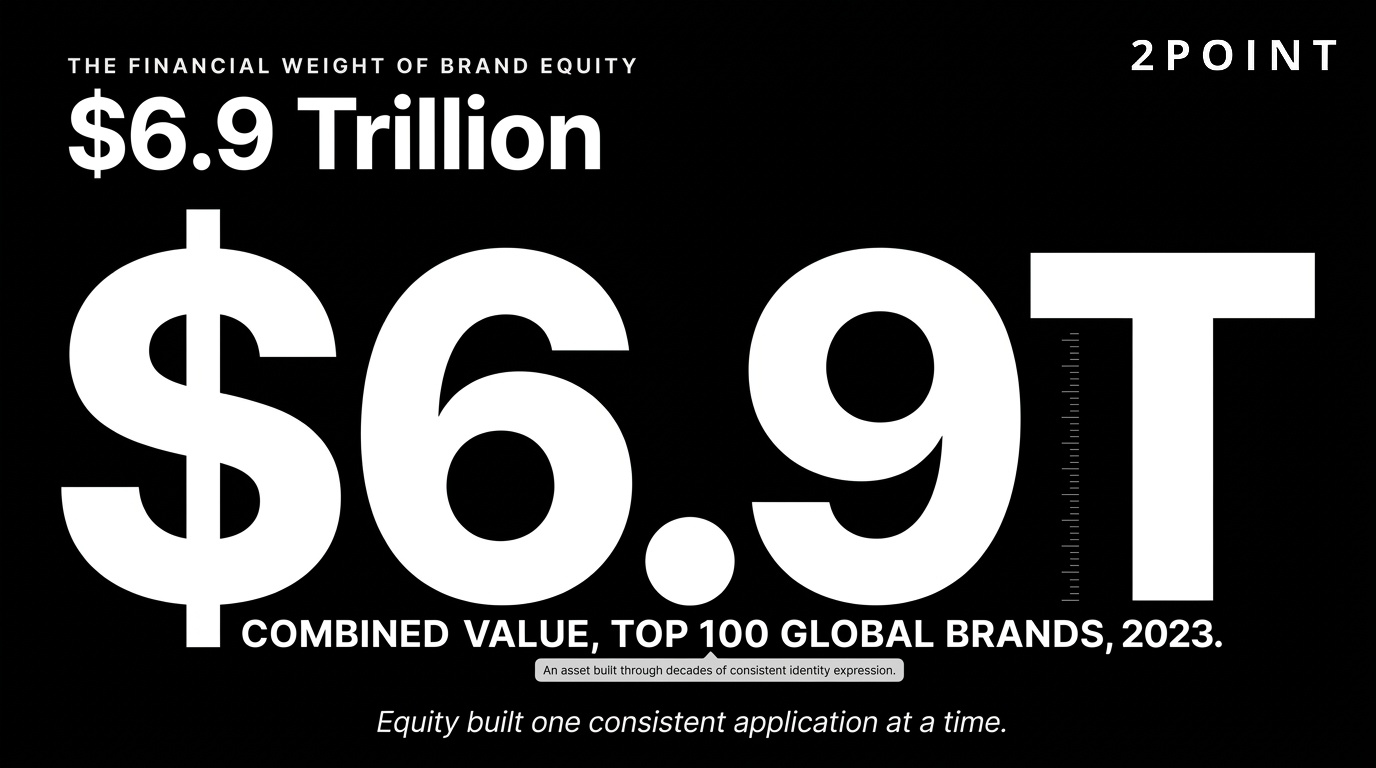
- The combined value of the world's top 100 brands reached $6.9 trillion in 2023, demonstrating the enormous financial weight of brand equity.
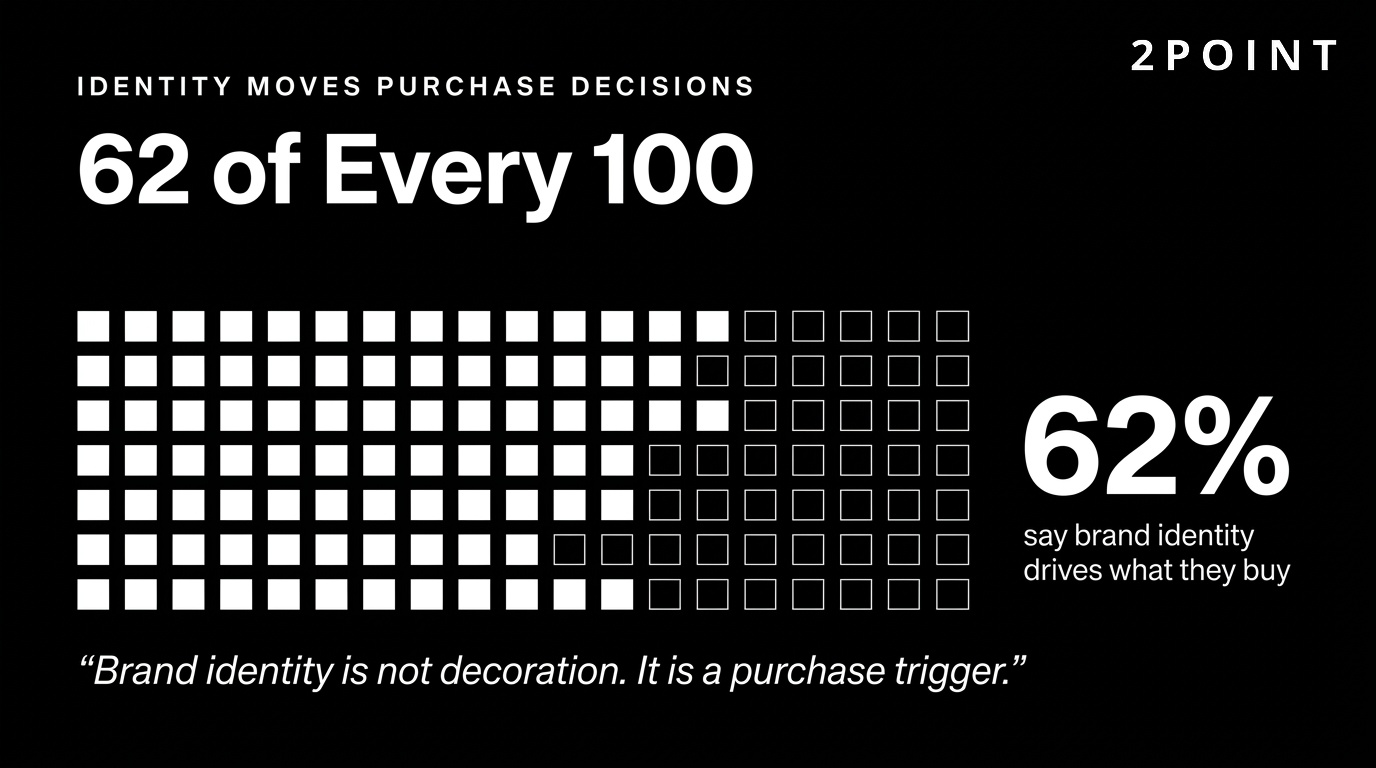
- Building a lasting brand identity requires strategic foundations first, then visual systems, then verbal systems, in that order.
- In 2026, effective brand identity demands motion, adaptability, authentic voice, and human creative direction alongside any AI tools used in production.
Understanding the full scope of what brand identity encompasses, how it is built, and what separates strong identities from forgettable ones is one of the highest-leverage investments any business can make. This guide covers every dimension of that topic, from foundational elements to 2026 trends, strategic frameworks, and the most common pitfalls costing brands their edge right now.
The Essential Elements of Brand Identity
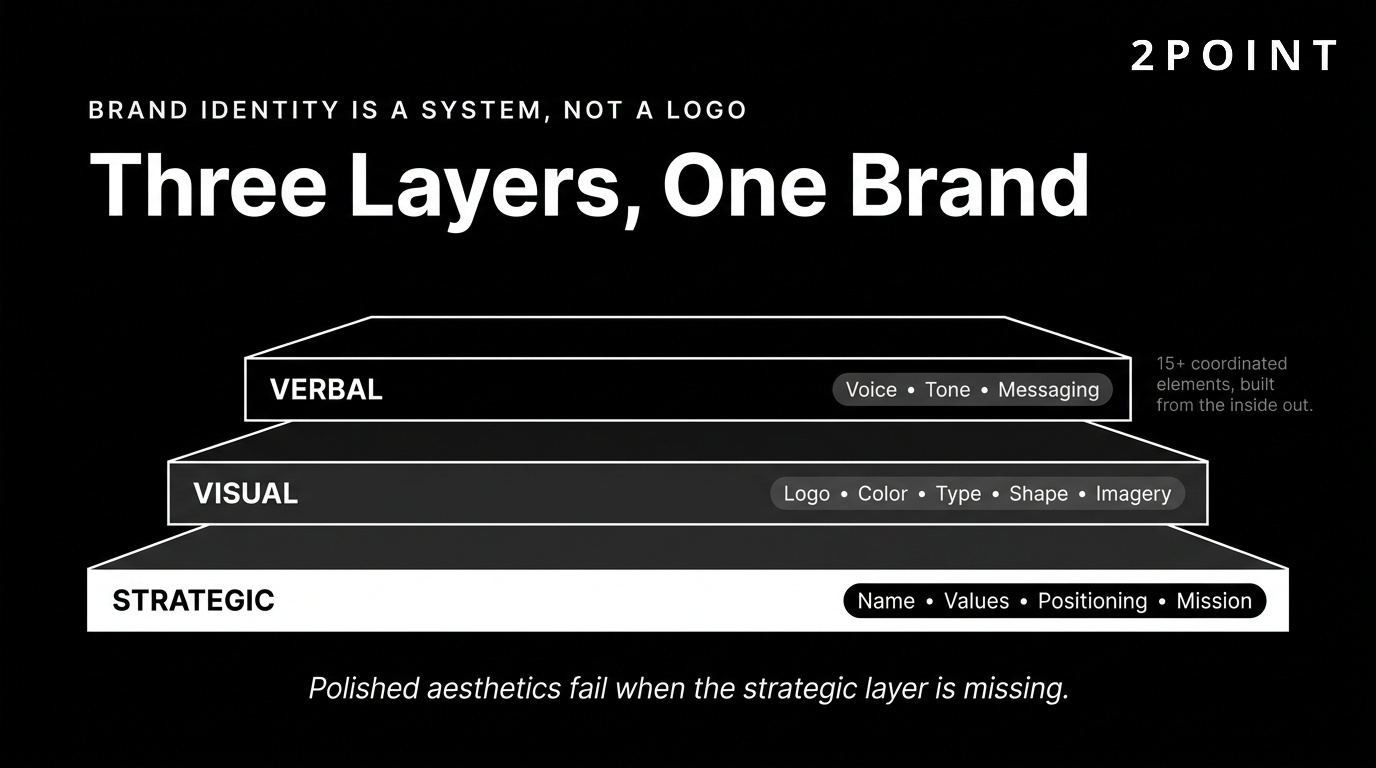
A complete brand identity is not a single asset. It is a coordinated system of fifteen or more elements spanning three core categories: strategic foundations, visual components, and verbal identity. Each element serves a specific function in driving recognition and creating emotional resonance. When these elements work together with consistency and intention, the result is an identity that compounds in value over time.
Most businesses make the mistake of treating brand identity as a visual exercise, jumping straight to logo and color choices before establishing strategic clarity. That approach produces aesthetically polished but strategically hollow results. The most durable brand identities in the world are built from the inside out, starting with what the brand stands for and working outward to how it looks, sounds, and behaves.
Strategic Foundation Elements
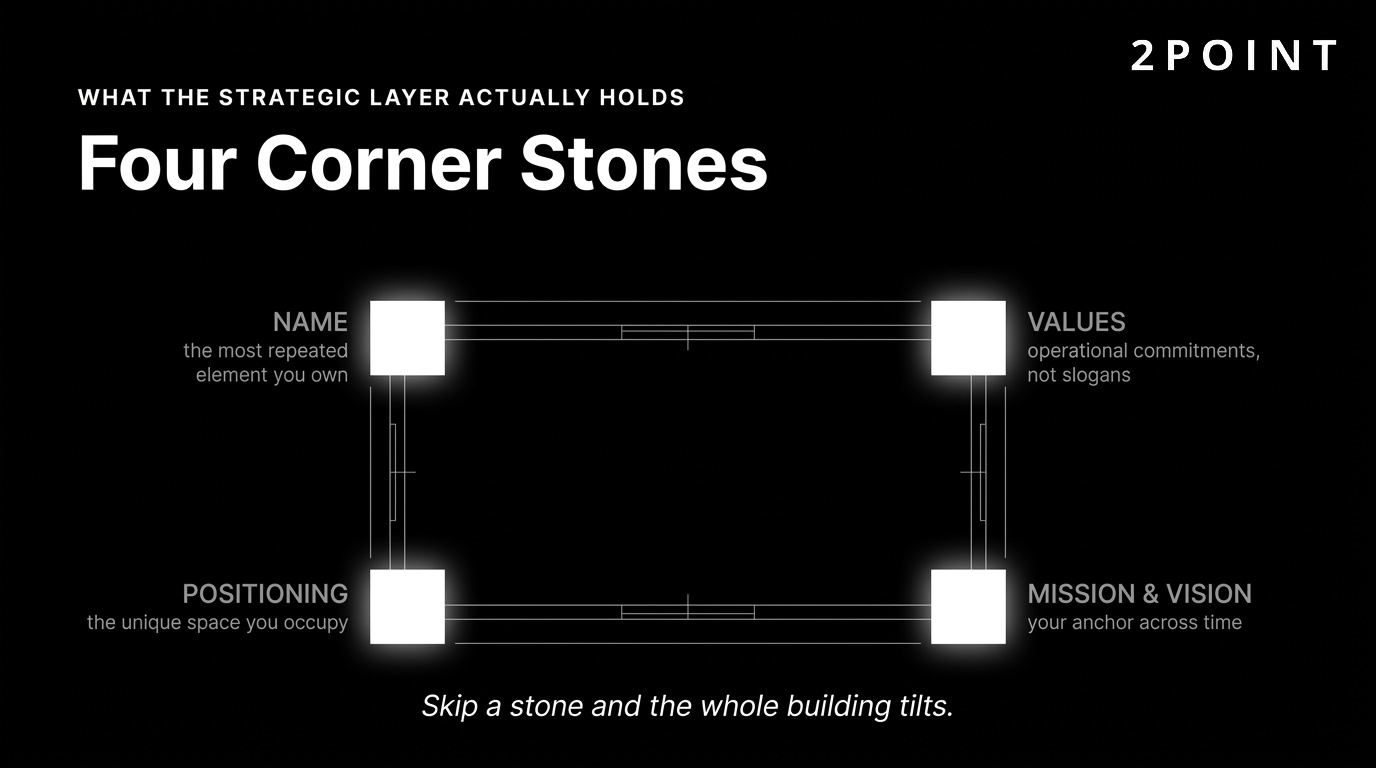
The strategic layer of brand identity answers the most important question any brand must address: who are you to your audience, and why does that matter? This layer includes four interconnected components that function as both a decision-making framework and a filter for every creative and operational choice that follows.
Your brand name is the single most repeated element of your identity. Effective brand names are distinctive, easy to pronounce across languages and cultures, and memorable after a single exposure. They carry both practical utility and emotional resonance. Names like Apple, Notion, and Stripe succeed because they evoke something beyond their literal meaning while remaining simple enough to stick.
Brand values define what your brand stands for beyond its products or services. They are not aspirational slogans but operational commitments that shape hiring, product decisions, and customer experience. Purpose-driven brands that genuinely embody their stated values consistently outperform competitors who treat values as marketing copy. Understanding the importance of having a solid brand identity always begins with clarity on values.
Brand positioning defines the unique market space your brand occupies. It answers why someone should choose you over every available alternative, expressed not as a feature list but as a distinct promise. Your positioning is the invisible architecture supporting every visible element of your identity.
Mission and vision statements anchor your identity across time. They ensure that your brand remains coherent as it scales, pivots, or extends into new categories. When visual or verbal choices feel uncertain, well-crafted mission and vision statements provide the evaluative standard for making the right call.
Practical steps for establishing your strategic foundation include reviewing existing statements with fresh eyes, identifying the emotional qualities your brand naturally sparks in your best customers, mapping your true competitive position with honesty, and defining the specific personality attributes you want people to associate with your brand.
Visual Identity Components
Visual identity is the most immediately recognizable layer of brand identity. It communicates in milliseconds, transcends language, and works across every medium from a billboard to a mobile notification. Five core components make up a complete visual identity system.
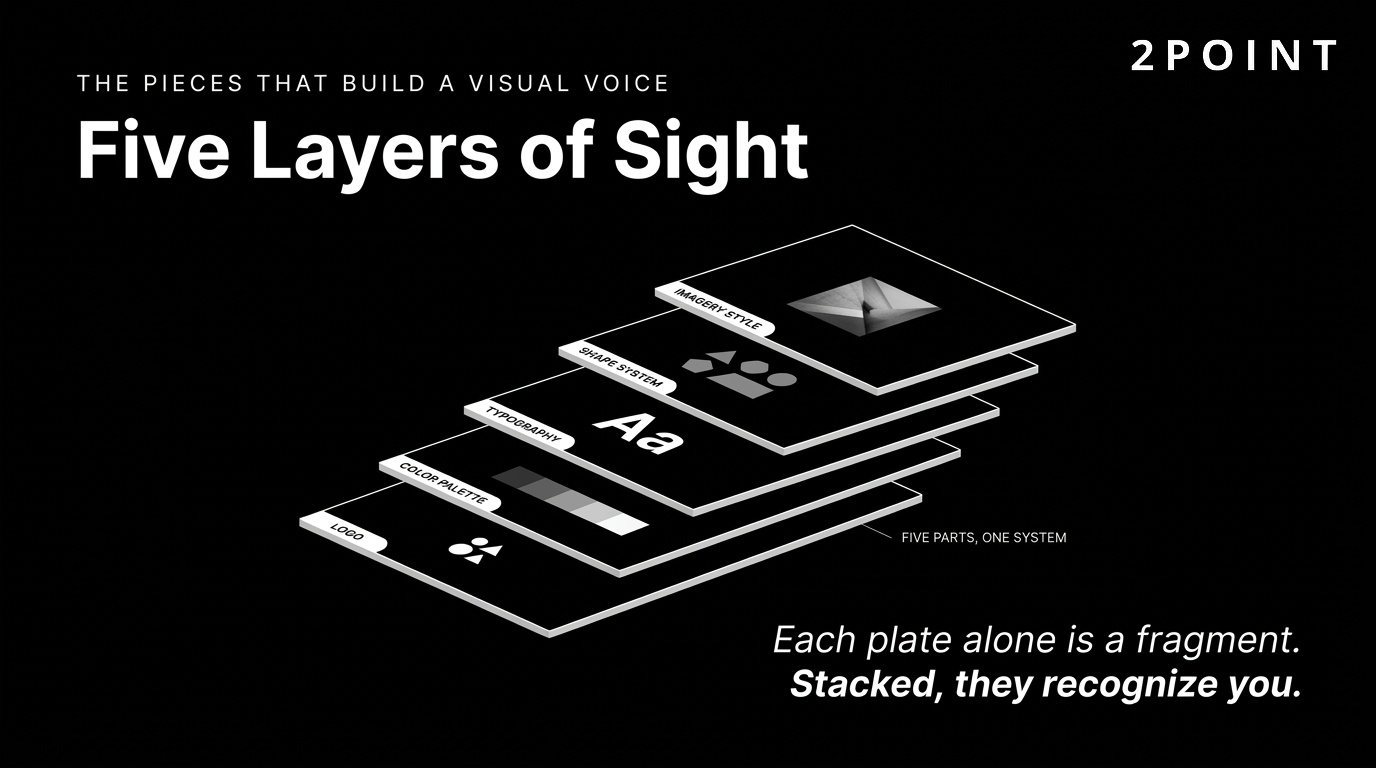
The logo is your brand's most compressed visual statement. At its best, a logo creates instant recognition without requiring any words to accompany it. The Nike swoosh communicates momentum, athleticism, and aspiration in a single curved line. The Apple mark is elegant, minimal, and unmistakable at any size. Effective logos are designed to be recognized, reproduced, and remembered, not admired for their technical complexity. Logo design is not just about appearance. In 2026, logo behavior, meaning how a logo animates, transitions, and adapts across contexts, matters just as much as its static form.
The color palette carries extraordinary psychological weight. Colors trigger emotional responses, create instant visual distinction, and establish category ownership when applied consistently over time. Red communicates urgency and passion. Blue signals trust and stability. Green is associated with growth and nature. Beyond individual color psychology, the specific combination of colors you choose and how you use them becomes a recognition signal in itself. A brand with a well-established color palette can communicate its identity through color alone, without a logo in sight.
Typography is the visual voice of your brand. Serif typefaces carry heritage, authority, and formality. Sans-serif fonts communicate modernity, clarity, and accessibility. Display typefaces express personality and distinction. The fonts you choose, the hierarchy you establish, and the expressive latitude your typographic system allows all contribute to how your brand is perceived. In 2026, typography-led identities are among the most distinctive and successful in the market, with brands building entire identities around custom or carefully selected typographic systems rather than relying on logos as primary signals.
Shape systems provide a consistent geometric language across every brand asset. Whether you default to rounded corners, hard edges, organic curves, or angular geometries, your shape vocabulary creates coherence across applications without requiring explicit brand elements to be present in every design.
Imagery style encompasses your approach to photography, illustration, and graphic elements. Do you use candid documentary photography or styled editorial imagery? Flat vector illustration or hand-drawn textures? Abstract geometric graphics or realistic human-centered scenes? Defining and consistently applying your imagery style creates visual coherence that reinforces your brand identity even in contexts where your logo does not appear.
Verbal Identity and Brand Voice
Verbal identity is the system of language choices, tone, and perspective that defines how your brand communicates in every context. It covers everything from the headline on your homepage to the error message in your app to the way your customer support team signs off on emails. A consistent brand voice is not a single tone applied uniformly everywhere. It is a defined range of expression that remains recognizably yours while adapting to different contexts.
In 2026, verbal identity has reached parity with visual identity as a strategic priority. As AI tools flood the market with polished but generic content, the brands that sound like nobody else have an enormous competitive advantage. Brands like Liquid Death, Oatly, and Monzo have proven that a distinctive voice can be a more powerful differentiator than any visual element. Their writing is unmistakable because it reflects genuine creative direction and human editorial judgment, not committee compromise or algorithmic optimization.
Voice is no longer a marketing asset alone. It is a whole-company tool that shapes product copy, support interactions, sales conversations, and investor communications. When verbal identity is treated as a strategic priority from the beginning, it creates coherence across every customer touchpoint and builds the kind of familiarity that translates into trust and loyalty. Effective brand storytelling depends entirely on having a clear, distinctive verbal identity to tell that story through.
Consistency and System Thinking
Brand identity elements do not work in isolation. Their power compounds when they operate as a unified system. Every time a customer encounters your brand, whether through an ad, a product, a social post, or a support interaction, each touchpoint either reinforces or erodes the mental model they hold of who you are.
Consistency is what transforms individual brand elements into recognizable identity. It is also what makes the investment in brand development pay off over time. Every consistent application of your visual and verbal system deepens recognition, reduces the cognitive effort required to process your brand, and builds the familiarity that precedes trust. Brand style guides exist to coordinate this consistency across teams, channels, and contexts. They are living documents, not rigid rulebooks, and they should balance clear standards with appropriate flexibility for different applications.
Brand Identity in 2026: The Current Landscape
Brand identity as a discipline is under simultaneous transformation from multiple forces. Artificial intelligence is reshaping how identities are produced and how audiences encounter brands. The attention economy is intensifying competition for recognition. The proliferation of screens, formats, and interaction modalities is demanding identities that behave across contexts rather than simply existing as static marks. Understanding what is actually working in 2026 requires setting aside assumptions formed in the very different competitive environment of just a few years ago.
The most important shift is not aesthetic. It is strategic. The brands winning in 2026 are those that have moved from treating identity as a visual exercise to treating it as a system of credibility-building signals across every channel where they appear. The brands struggling are those still operating from a 2022 playbook in a fundamentally different landscape.
The AI Revolution's Impact on Brand Identity
Artificial intelligence has not made brand identity less important. It has made authentic, distinctive, strategically grounded brand identity more important than ever. Here is why: as AI tools flood every channel with high-volume, high-polish content, the average quality floor has risen dramatically, but so has the problem of sameness. Content that was once difficult to produce is now trivially easy, which means differentiation through production quality alone is no longer viable.
AI agents are increasingly mediating how consumers discover products and make choices. When a customer asks an AI assistant for a recommendation, the AI draws on signals of credibility, consistency, and reputation, not on a brand's visual identity directly. This means brand identity now needs to work at two levels simultaneously: earning recognition and trust with human audiences, and building the kind of credible signal pattern that surfaces favorably in AI-mediated discovery contexts.
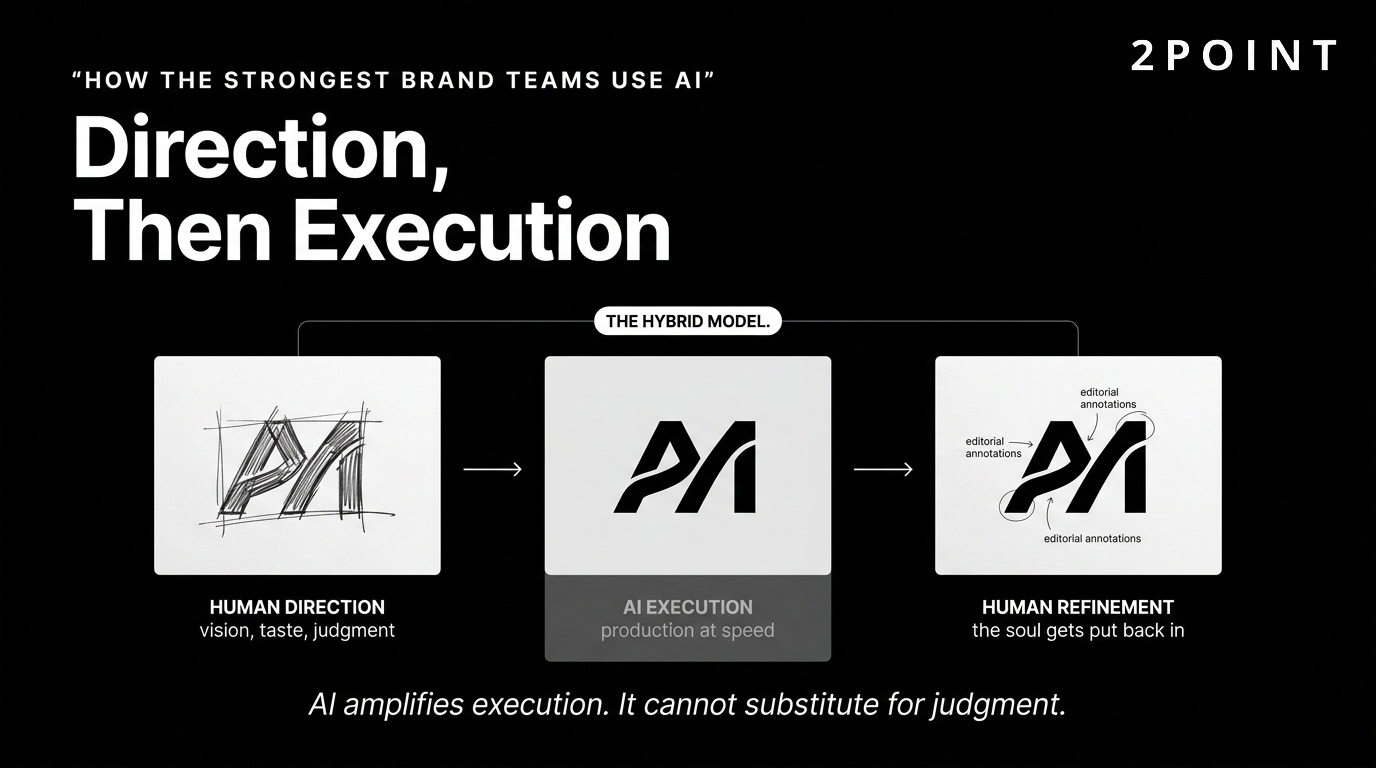
The brands navigating this successfully are using what practitioners are calling a hybrid intelligence model: human creative direction providing the strategic vision and emotional specificity, AI tools handling production efficiency, and human refinement ensuring the output meets a distinctively human standard. Fully AI-generated identities, those lacking genuine human editorial judgment at every stage, tend to produce what critics call "uncanny middle" aesthetics: technically proficient, culturally ungrounded, and emotionally forgettable.
The judgment work in brand identity, deciding what the brand stands for, what emotional tone it should strike, what cultural references it should use or avoid, must remain human. AI amplifies execution capacity but cannot substitute for the strategic and creative intelligence that gives a brand identity its soul.
From Static to Dynamic: The Motion-First Era
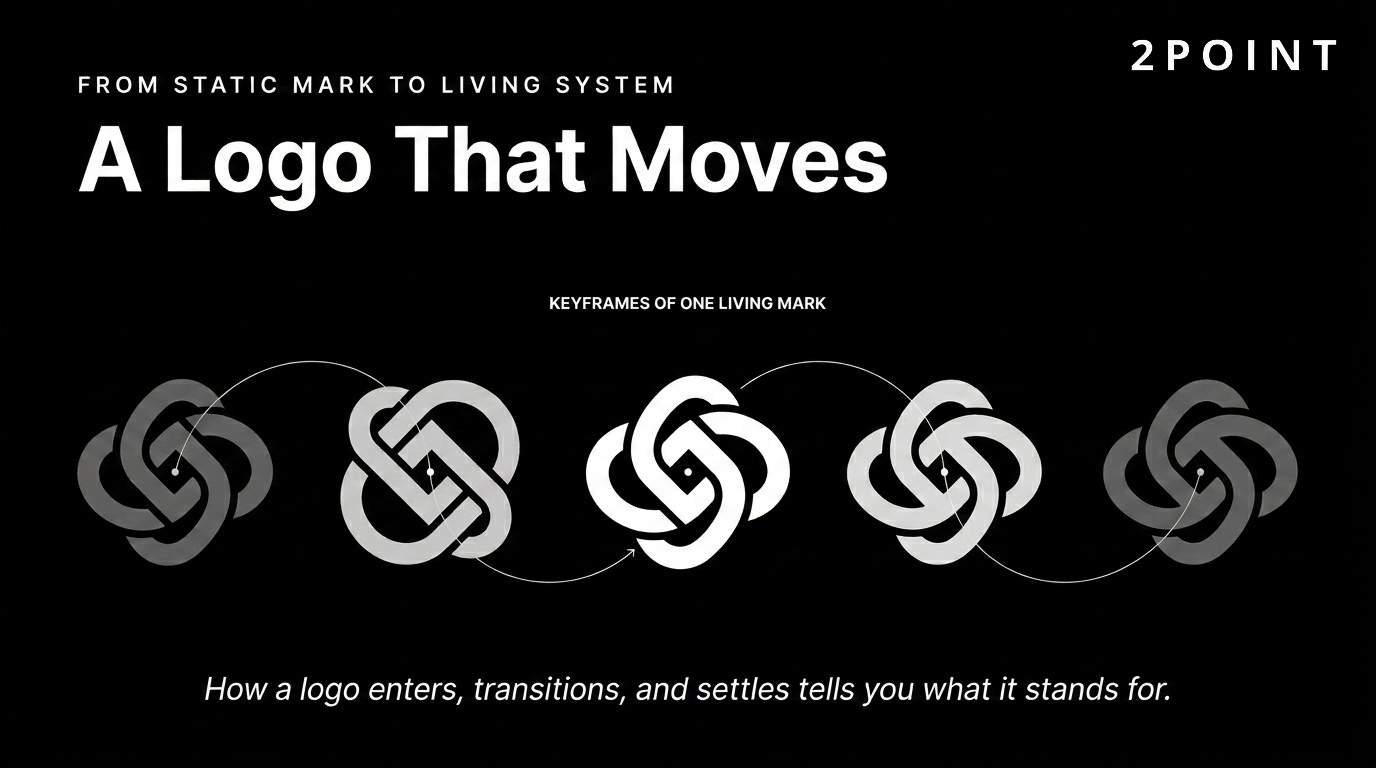
The most significant visual shift in brand identity over the past two years is the transition from static to dynamic identity systems. Motion is now as fundamental to a complete visual identity as color palettes and typefaces. This shift is not a trend in the superficial sense. It is a structural response to the reality that brands now live primarily on screens that can display animation, and that motion is one of the most powerful tools available for expressing personality, tone, and emotional character.
How a logo enters a frame, how it transitions between states, how interface elements animate, and how a brand's visual world moves tells audiences something that static design simply cannot. A brand whose visual system snaps and bounces communicates very different energy than one whose elements glide and breathe. Motion reveals character in ways that are felt before they are consciously processed.
This has practical implications for how brand identity work is scoped and executed. A logo designed only as a static mark is an incomplete deliverable in 2026. Identity systems now need to specify motion principles: the easing curves a brand uses, the pace of transitions, the way elements enter and exit compositions, and the micro-interactions that define the experience of using digital products. Brands that have invested in codifying their motion language have a significant advantage in expressing emotional nuance and maintaining coherence across digital environments.
The brands doing this best are treating motion not as decoration but as a communicative layer with as much strategic intentionality as any other element. Understanding the importance of video and motion for brand building is now a strategic requirement, not an optional enhancement.
Competitive Attention and Recognition Challenges
Every piece of content your brand publishes is competing in an environment where the next alternative is a single swipe away. Algorithm-driven feeds surface content based on engagement signals, meaning your brand earns visibility by winning the attention game in the first fraction of a second. Recognition must happen in milliseconds, before any intentional cognitive processing occurs.
The volume and velocity of content being produced, accelerated dramatically by AI tools, has created a sameness problem at scale. When every brand in a category is using similar aesthetic frameworks, similar color palettes, similar typographic choices, and similar content formats, the audience's ability to distinguish one brand from another collapses. This is the environment in which brand identity investments deliver their most measurable returns, because distinctive, well-executed identity systems stand out precisely when everything around them has converged to the mean.
What Is Winning vs. What Is Losing in 2026
A clear pattern is visible across brands that are building momentum in 2026. The identities earning the most admiration and market traction share common characteristics: they are typographically disciplined, architecturally structured, visually restrained, and confidently minimal without being cold or generic. Brands like Linear, Vercel, Notion, and Stripe exemplify this approach. Their identities feel like careful thinking made visible. They communicate competence and clarity through what they exclude as much as through what they include.
The identities losing ground in 2026 tend to share a different set of characteristics: reliance on AI-generated visual content without strong human creative direction, aesthetic choices borrowed from whatever was trending in 2022, performative complexity that signals effort without communicating meaning, and verbal identities that sound like every other brand in their category. The failure mode is not bad taste. It is strategic uncertainty expressed through aesthetic hedging.
| Brand Identity Approach | 2026 Performance Signal | Common Examples |
|---|---|---|
| Typographically-led, architecturally restrained | Winning: strong recognition, premium perception | Linear, Vercel, Notion, Stripe |
| Motion-forward with defined system behavior | Winning: emotional resonance, platform adaptability | Google, Apple, Airbnb |
| Voice-first with distinctive human editorial tone | Winning: audience loyalty, organic sharing | Liquid Death, Monzo, Oatly |
| Fully AI-generated without human creative direction | Losing: forgettable, culturally ungrounded | Generic category brands |
| 2022 aesthetic playbook (gradient blobs, generic sans) | Losing: visually undifferentiated from competitors | Late-adopter tech startups |
| Performative purpose without operational evidence | Losing: audience distrust, credibility erosion | Greenwashed lifestyle brands |
The clearest dividing line between winning and losing brand identities in 2026 is strategic intentionality: brands with a clear point of view, expressed with discipline and consistency, outperform those chasing aesthetic trends without a coherent strategic foundation.
8 Defining Brand Identity Trends for 2026
The trends shaping brand identity in 2026 are not superficial aesthetic preferences. Each one reflects a deeper strategic shift in how audiences engage with brands, how identity must function across an expanding range of contexts, and what differentiation actually requires in an increasingly AI-saturated visual landscape. Understanding these trends in their strategic depth, not just their surface appearance, is what allows brands to apply them meaningfully rather than mimicking their aesthetic forms.
Adaptive and Flexible Identity Systems
Adaptive identity systems treat the logo and brand mark not as fixed, singular objects but as flexible systems with defined rules for variation. The core recognition elements remain consistent, while the system allows for contextual adaptation across platforms, formats, screen sizes, and application environments. This is not about having multiple logos. It is about designing a visual language that knows how to behave in different contexts while remaining unmistakably itself.
Google's visual identity is the most cited example of adaptive system excellence. The core "G" mark flexes across products including Search, Android, Chrome, and Workspace, appearing in different configurations, color applications, and motion states while maintaining immediate recognizability. Apple demonstrates the same principle differently: a minimal core identity that can shift from stark black-and-white to vibrant, colorful campaign expressions without ever losing its essential character.
For brands building new identities in 2026, adaptive systems require designing for behavior from the beginning, not retrofitting flexibility into a static mark after the fact. Color palettes are defined as mood systems rather than strict rules, allowing for variation that serves different contexts while preserving overall coherence. The flexibility is built into the architecture of the system, with clear parameters defining where variation is permitted and what must remain constant. A cohesive brand strategy is the foundation that makes this kind of flexibility possible without losing identity coherence.
Typography-Led Branding as a Primary Signal
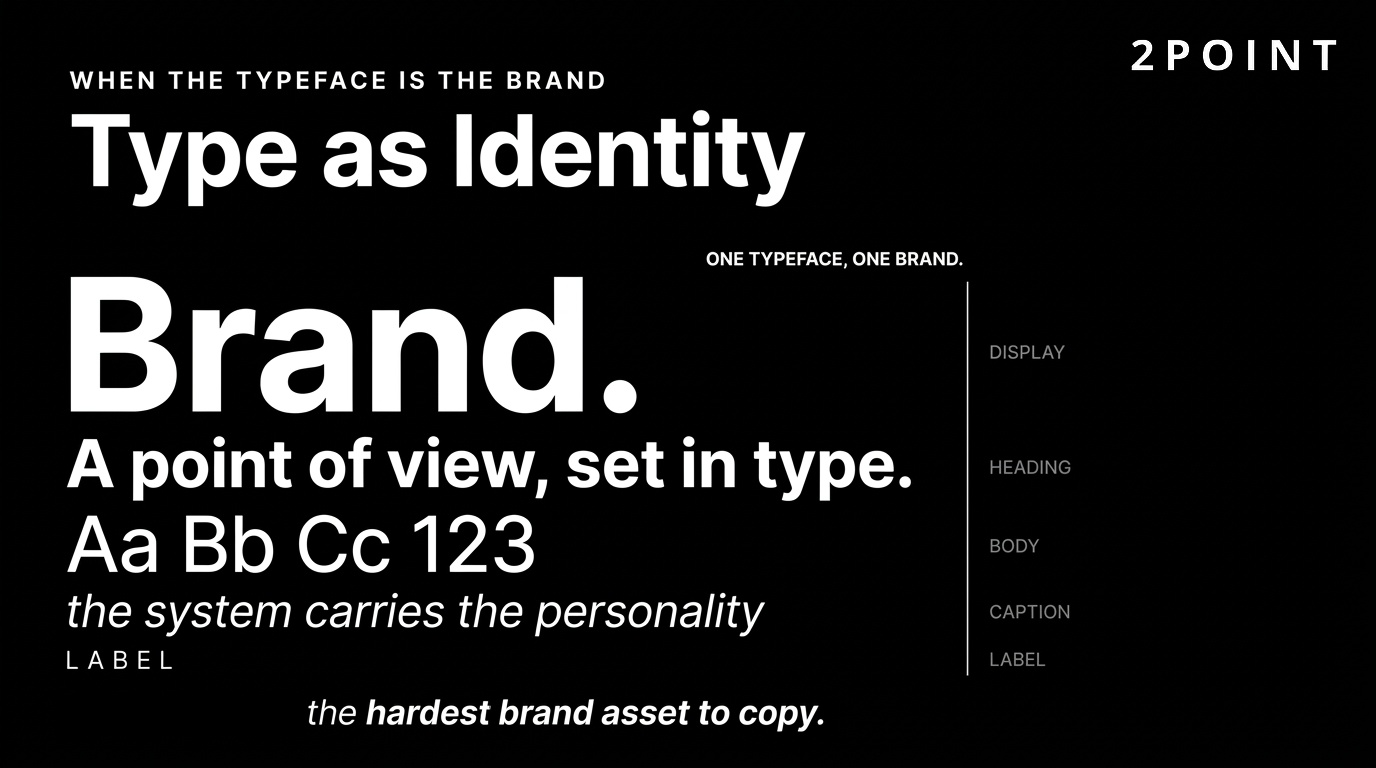
Typography has moved from supporting role to leading character in the most sophisticated brand identities of 2026. Where previous eras relied on distinctive icons or logomarks as the primary recognition signal, leading brands are now building entire identity systems around custom or carefully curated typographic systems, with the icon or mark serving as a secondary signal or disappearing altogether.
This shift is driven by several forces. Custom typography is extremely difficult to replicate without the original source files, making it one of the most defensible forms of brand differentiation. Well-crafted typographic systems also carry enormous expressive range, communicating personality, hierarchy, and tone through decisions about weight, spacing, scale, and layout. Oversized editorial typography, elegant serif letterforms used at architectural scale, and experimental spacing applied with discipline are all markers of the identities commanding the most attention in 2026.
For brands considering a typography-led approach, the investment required is in developing a genuine typographic point of view, not simply selecting a fashionable typeface. The brands doing this well have made deliberate decisions about what their typographic system communicates and have applied those decisions with the same rigor they would bring to any other strategic brand element. Strong online brand building in this era often begins with owning a distinctive typographic voice.
Verbal Identity as Competitive Advantage
The single most underinvested area of brand identity for most businesses is their verbal identity, and in 2026 that underinvestment is increasingly costly. Writing that sounds like nobody else's writing is an extraordinary competitive advantage at a moment when AI tools are producing vast quantities of competent but indistinguishable prose.
The brands winning through verbal distinctiveness are not just running clever ad campaigns. They have developed a voice that pervades every text-bearing surface of their business: product copy, error messages, help documentation, email marketing, social content, and internal communications. Monzo's copy is charming, direct, and unmistakably human in a category dominated by corporate-speak. Liquid Death's writing is confrontational, irreverent, and sharply funny in a way that creates immediate recognition and intense loyalty. Oatly built a global brand whose primary differentiator was the sheer oddity and humanity of its packaging copy.
The lesson is not that every brand should be funny or irreverent. It is that every brand should have a voice so specific and consistently applied that audiences could identify it without seeing a logo. Achieving that level of verbal distinctiveness requires treating voice as a strategic priority, investing in genuine copywriting talent and direction, and resisting the efficiency trap of letting AI tools write brand copy without strong human editorial oversight. Creating a unique brand persona is often the most effective starting point for developing a verbal identity that is genuinely distinctive.
Multi-Sensory Brand Experiences
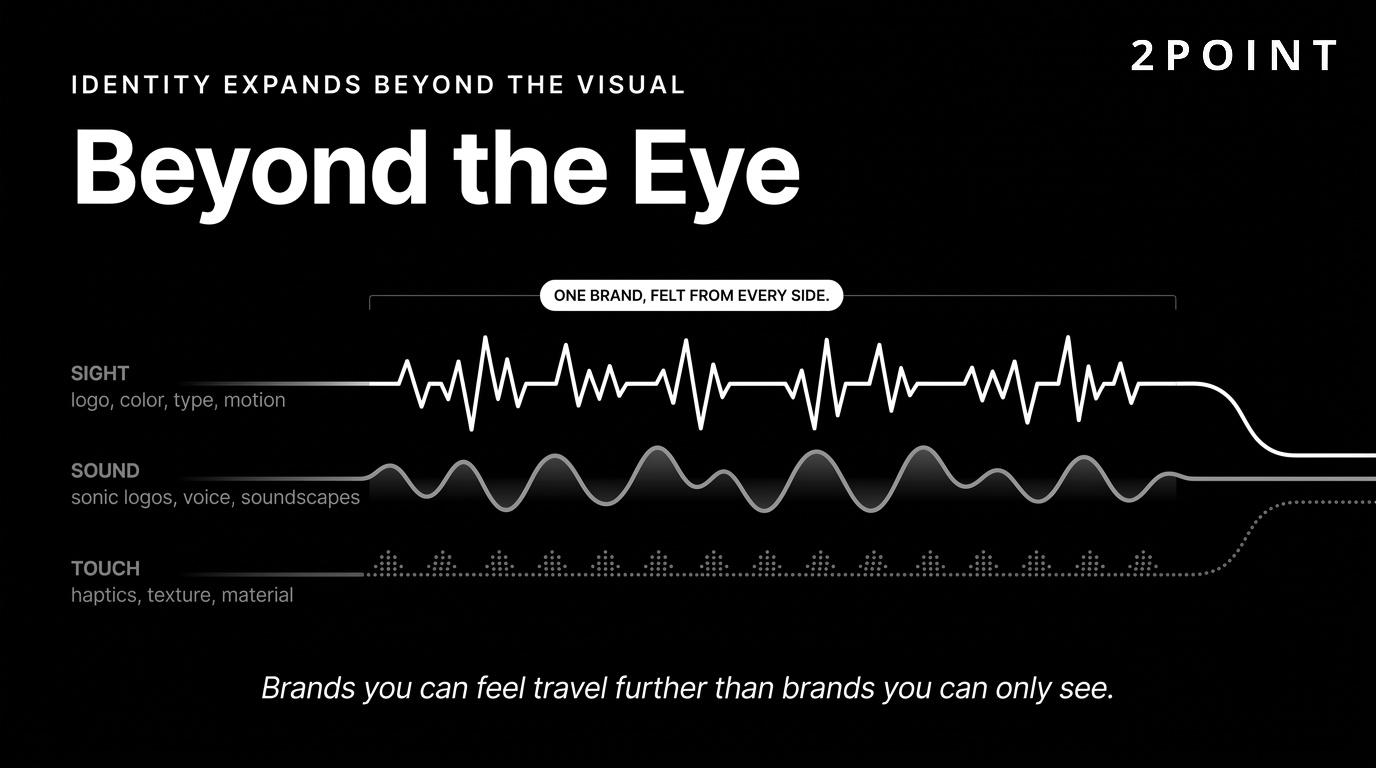
Brand identity is expanding beyond the visual into every sense that a brand experience can engage. Audio identity, including sonic logos, brand soundscapes, and voice interface personalities, has moved from novelty to necessity as smart speakers, podcasts, voice search, and screen-free interaction contexts have multiplied. Texture and material choices in physical touchpoints, the specific sounds that digital product interactions make, and the haptic feedback patterns in mobile applications all contribute to how a brand is experienced and remembered.
Sensory touches build a kind of recognition that visual identity alone cannot achieve. A brand whose digital product interactions have a specific, satisfying sound quality creates an experience dimension that competitors who have only invested in visual identity cannot match. The most forward-thinking brand identity work in 2026 maps out sensory experiences as deliberately as visual systems, defining how the brand should feel and sound, not only how it should look. Design that is felt, not just seen, creates the deepest and most durable forms of brand recognition.
Humanized Design and Intentional Imperfection
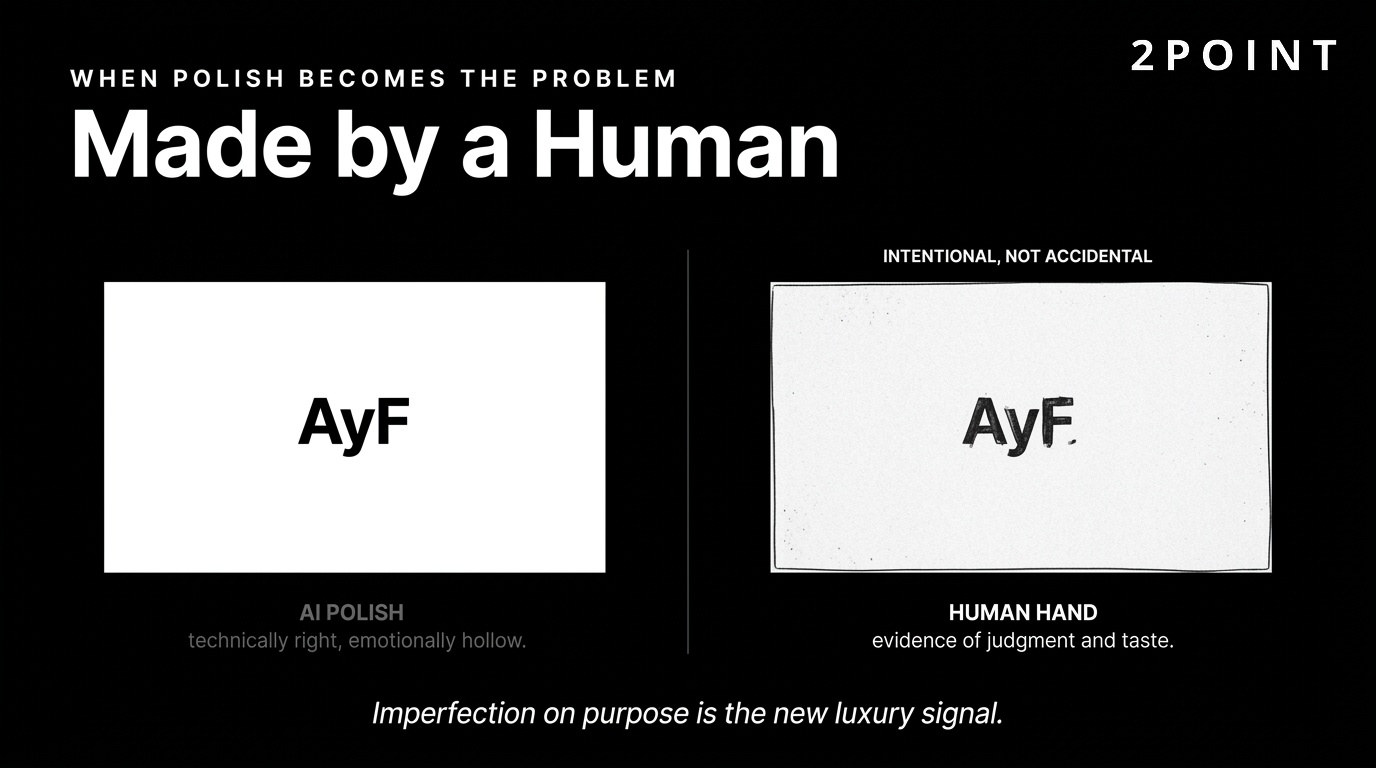
As AI tools have raised the floor of visual production quality, they have simultaneously created an appetite for the unmistakably human. Hand-crafted imperfections, grain and texture applied intentionally, scanned paper textures, collage aesthetics, raw editorial layouts, and the visual language of zine culture and DIY printing are all in strong evidence in the brand identities generating the most cultural traction in 2026.
This is not nostalgia for analog limitations. It is a strategic signal. Imperfection in this context communicates that a human made a judgment, exercised taste, and decided that this specific texture, this particular irregularity, this handmade quality serves the work. It is a direct counterstatement to the smooth, frictionless, algorithmically-optimized aesthetic of AI-generated content.
Soft-glow gradients with grain, organic shapes that feel drawn rather than calculated, photography with the intentional warmth of analog film, and layouts that break the grid with purpose rather than accident are all expressions of this trend. The common thread is the presence of a human sensibility that has chosen to leave evidence of its process in the final work. For brands whose audiences value authenticity, craft, and creative integrity, this approach communicates those values at the level of form itself.
Evolved Minimalism: Warmer, Softer, More Emotionally Nuanced

Minimalism remains one of the most powerful and enduring aesthetic orientations in brand design, but its character is evolving. The sterile, cold corporate minimalism that dominated the 2015 to 2022 period, characterized by stark white fields, heavy Helvetica, and the complete elimination of any decorative warmth, is giving way to a softer, more emotionally nuanced version of the same underlying principle.
Evolved minimalism in 2026 uses soft neutrals rather than hard whites and blacks, introduces subtle textures rather than perfectly clean surfaces, favors natural lighting and warmth over clinical brightness, and allows for moments of gentle visual richness within an otherwise restrained system. The result is identities that are clean and focused without feeling cold or impersonal.
The pushback worth acknowledging is that minimalism as a default aesthetic, applied without genuine strategic intention, has itself become a form of visual sameness. The brands using evolved minimalism most effectively are doing so because it genuinely expresses their strategic character, not because it is the safe or fashionable choice. Minimalism as lazy default produces the same undifferentiated results as any other aesthetic applied without conviction. A cohesive brand image built on evolved minimalism requires as much strategic intentionality as any other approach.
Authentic Purpose-Driven Identity
2025 saw the saturation point of vague purpose-driven brand language. The aesthetic of sustainability, the visual signifiers of social responsibility, and the rhetorical gestures toward ethical business practice reached a point of such ubiquity that audiences developed sophisticated pattern recognition for distinguishing genuine commitment from performative branding.
Brands that built identities around purpose claims without the operational evidence to support them have paid a credibility cost that visual rebranding cannot easily repair. The audience's ability to detect the gap between stated values and actual behavior is sharper than ever, amplified by social media, review platforms, and the permanent record of public claims.
Authentic purpose-driven identity in 2026 means leading with specificity and evidence rather than vague aspiration language. It means showing measurable operational changes rather than communicating "eco-conscious aesthetics." It means making long-term commitments and documenting progress rather than participating in trend cycles. The role of brand identity in building consumer trust has never been more directly tied to the alignment between what a brand says and what it demonstrably does.
Emotional Connection and Narrative-Centered Design
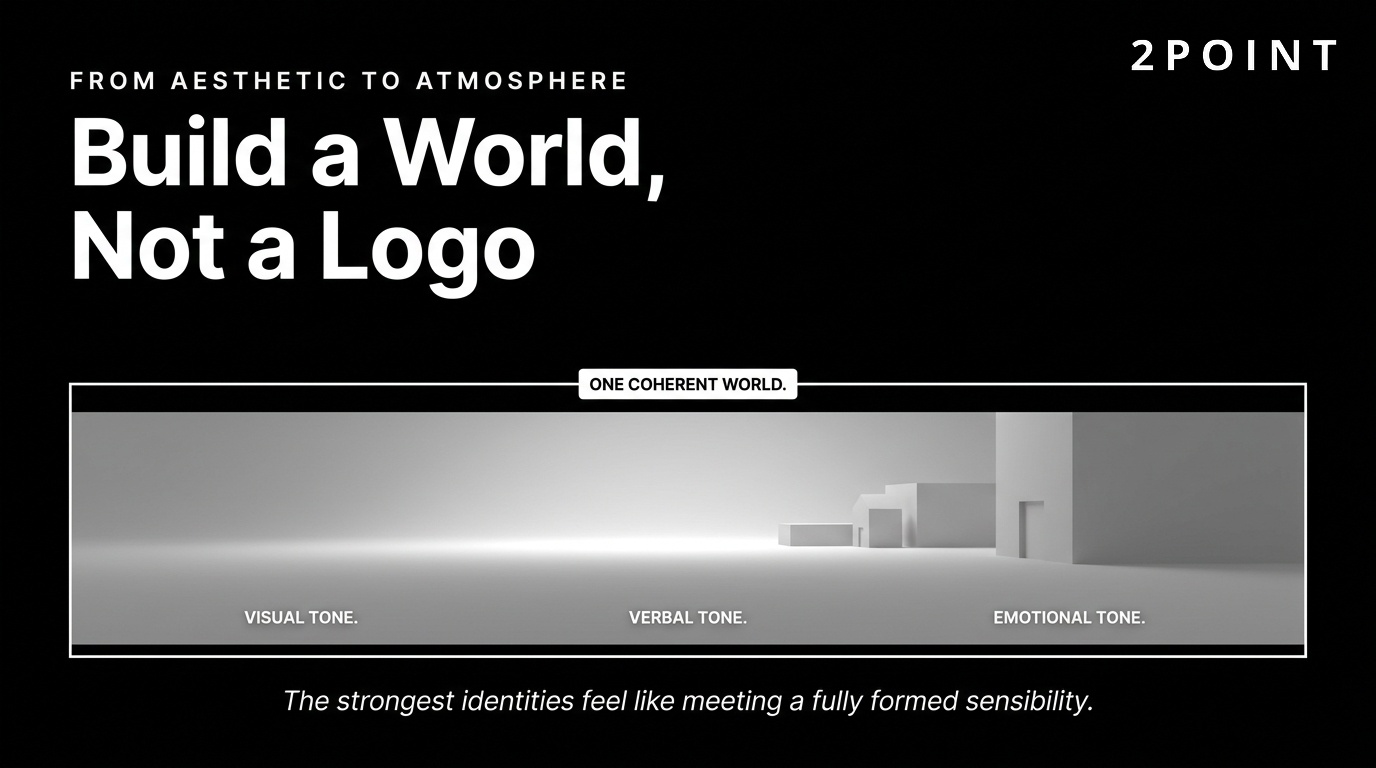
The final defining trend is the deepest: a movement toward brand identities that prioritize emotional atmosphere, narrative depth, and authentic values expression over surface aesthetics. Cinematic, story-oriented, and immersive identity work is drawing on the vocabulary of film, editorial design, and literary narrative to create brand worlds that audiences want to inhabit rather than simply consume.
This goes beyond having a brand story. It means designing every element of an identity to contribute to a coherent emotional world, where visual choices, typographic decisions, motion language, and verbal tone all express the same underlying values and emotional orientation. The identities doing this best in 2026 feel like meeting a fully formed human sensibility rather than encountering a corporate communication system. That quality of human specificity is what drives the deepest and most loyal audience relationships.
How to Build a Brand Identity: A Strategic Framework
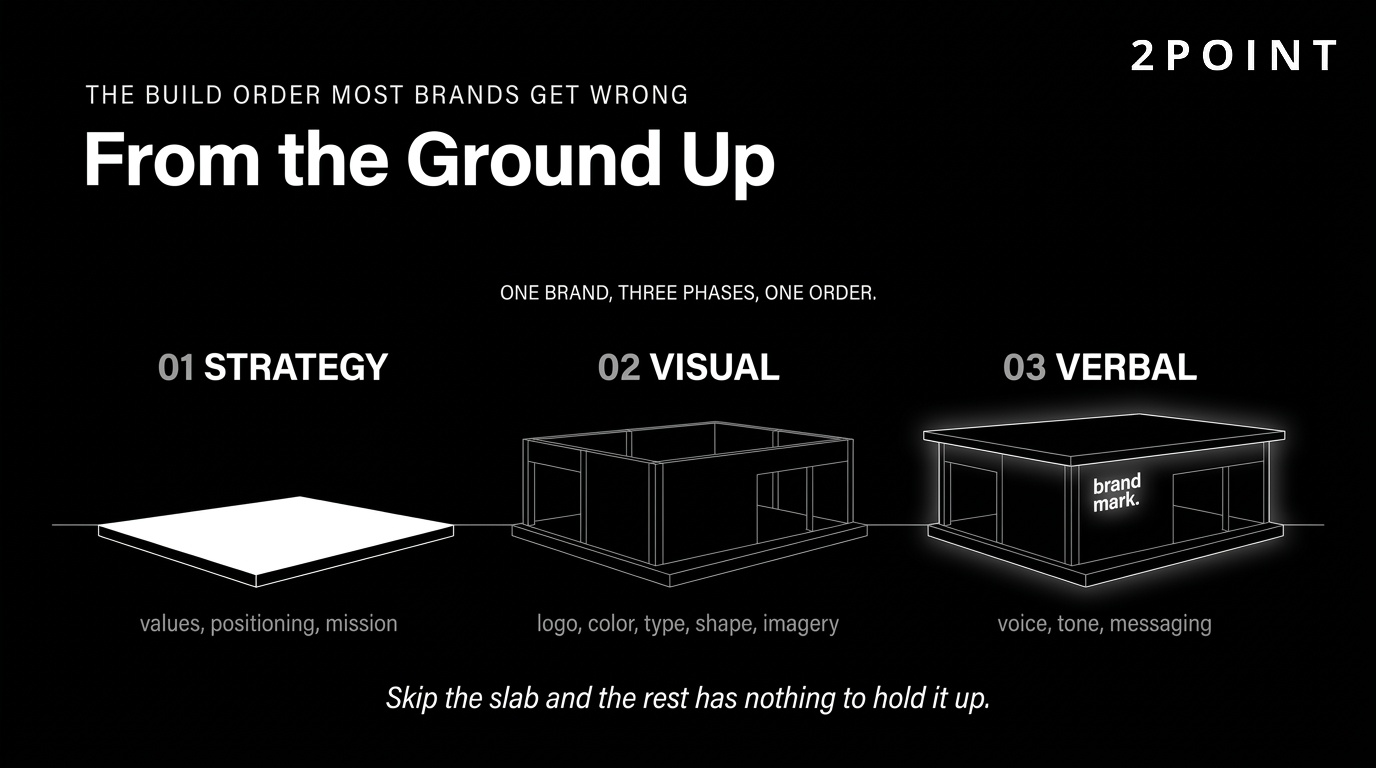
Building a brand identity that lasts requires a systematic approach that begins with foundations, not aesthetics. The most common and costly mistake in brand identity development is jumping to visual choices before establishing strategic clarity. A logo designed before you know what you stand for and who you are talking to is a visual solution to an undefined problem. The framework below prevents that failure by sequencing the work correctly.
Start With Strategic Foundations
Every element of your brand identity should be answerable to a strategic question: does this serve what we stand for, who we serve, and how we are different? Before any visual or verbal work begins, you need clear answers to those three questions.
Start by reviewing your mission, vision, and values statements with genuine critical attention. Are they specific enough to make decisions with? A mission statement that could apply to any company in your category is not a useful identity anchor. It needs to capture something specific about what you do and why it matters in a way that is genuinely yours.
Next, define your target audience not as a demographic but as a psychographic portrait. What do they value? What language do they use? What aesthetic world do they already inhabit? What emotional needs does your brand address beyond the functional ones? Your identity needs to speak to a specific human sensibility, and you cannot design for a sensibility you have not clearly articulated.
Map your competitive positioning with honesty. Where do your actual competitors cluster in terms of visual language, tone, and values expression? Your identity should occupy differentiated space, which means knowing where not to go as clearly as knowing where to aim. Define five to eight brand personality attributes: specific adjectives that describe the character you want your brand to embody, grounded in your genuine strategic character rather than aspirational fantasy.
Only after completing this strategic layer should you move into visual and verbal development. The strategic foundation provides the evaluative criteria for every creative decision that follows. Building a strong solid brand identity always starts with this kind of strategic clarity.
Developing Visual and Verbal Identity Systems
With strategic foundations established, you can move into the development of visual and verbal systems. The sequence matters here too: visual identity should develop before verbal identity is fully codified, because both need to express the same strategic character and it is easier to align them when one provides reference for the other.
For visual identity, begin with logo behavior as well as logo appearance. Explore how the mark will animate, what motion principles will define its behavior, and how it will adapt across its full range of applications before finalizing the static version. This prevents the common problem of designing a beautiful static mark that breaks in motion or fails at small sizes on mobile interfaces.
Build your color system as a mood architecture rather than a strict palette. Define primary, secondary, and functional colors with specific usage guidelines, but also articulate the emotional territory your color system should occupy. This gives your team the context to make good decisions in novel situations rather than requiring a rule for every scenario.
Develop your typographic hierarchy with both structure and expression in mind. Your type system needs to function practically, creating clear information hierarchy across all your communication materials, and expressively, communicating your brand's personality through the specific weights, sizes, and spacing choices you make at every level of the hierarchy.
For verbal identity, create voice guidelines that go beyond tone descriptors. Provide before-and-after examples showing how the same information is expressed in your brand voice versus a generic or competitor voice. Define the vocabulary that belongs to your brand and the language that does not. Specify how your voice adapts across contexts, what stays constant from a blog post to a legal terms page, and what appropriately shifts. Developing a strong brand narrative within these voice guidelines gives your verbal identity the emotional depth that makes it genuinely compelling.
The Core vs. Flexible Elements Framework
Every brand identity system needs an internal architecture that distinguishes between elements that must remain constant and those that can adapt to context. The most useful way to think about this distinction is structural: some elements are the load-bearing walls of your identity, and some are the walls you can repaint without consequence.
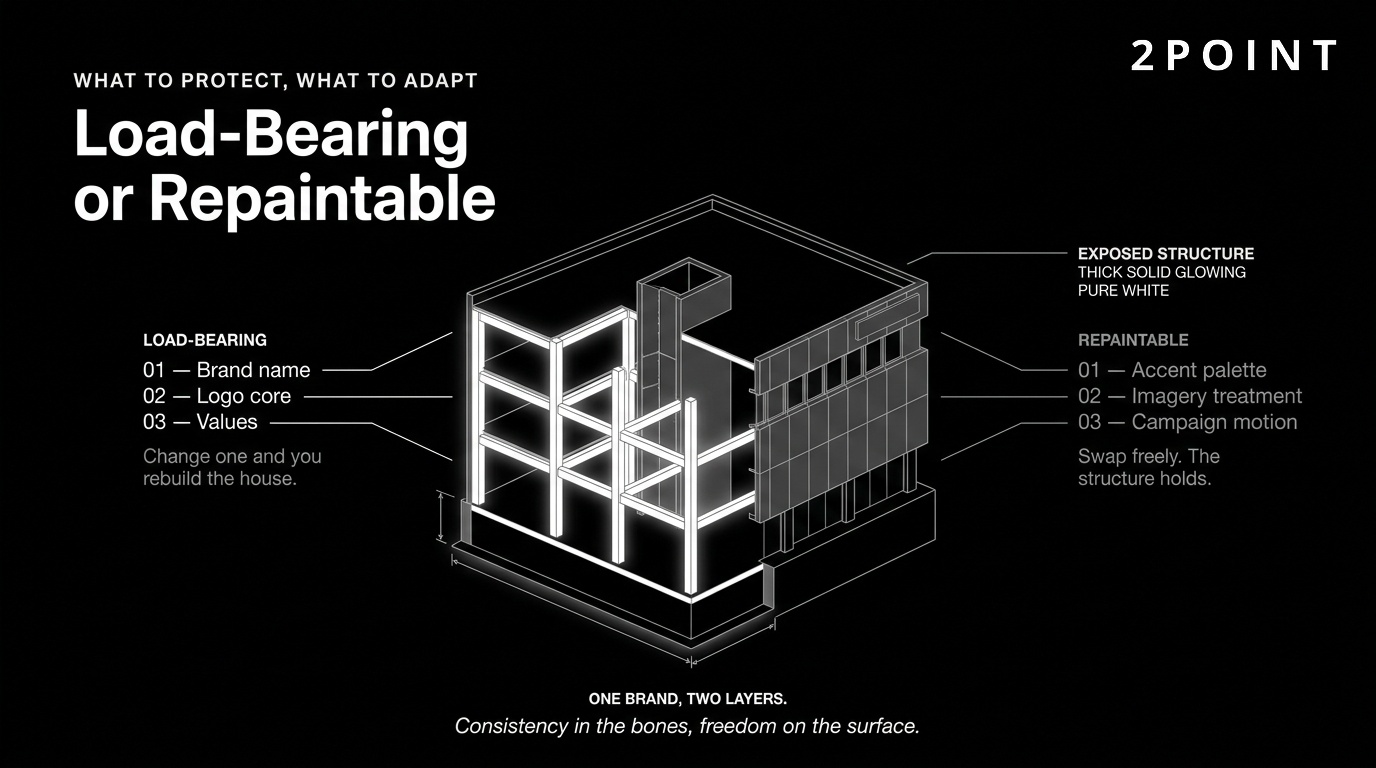
Your brand name, core mark, and fundamental values are load-bearing. Changing them requires rebuilding significant structural equity, and that cost should not be taken lightly. Changes to these elements erase recognition built through consistent application over time and should only happen when the strategic identity they represent has genuinely and fundamentally changed.
Your color extensions, seasonal accent palettes, typographic weight variations, imagery style nuances, and contextual voice adaptations are repaintable walls. They can and should flex to serve different campaigns, platforms, seasons, and cultural contexts, provided the overall identity system remains cohesive and recognizable.
The practical challenge is making this distinction clearly enough that people throughout your organization can make confident decisions about what to adapt and what to protect. Brand guidelines that articulate this distinction explicitly, with examples of both appropriate flexibility and impermissible deviation, are the most useful coordination tools available to multi-person brand teams.
| Brand Identity Element | Flexibility Level | Rationale |
|---|---|---|
| Brand name | None: core element | Changing erases all accumulated name recognition |
| Primary logo mark | Minimal: can animate, never alter | Primary recognition signal across all contexts |
| Core brand values | None: strategic foundation | Everything else is justified or rejected by these |
| Primary color palette | Low: extensions allowed, core protected | Primary colors carry brand recognition weight |
| Secondary color palette | Medium: seasonal and contextual variation | Supports campaigns without altering core identity |
| Typography system | Low: hierarchy fixed, expression varies | Type system carries significant brand personality weight |
| Imagery style | Medium: general parameters with contextual range | Specific images change; overall aesthetic stays constant |
| Brand voice core | Low: tone shifts, character remains constant | Voice consistency builds recognition across touchpoints |
| Motion principles | Medium: campaign motion can vary within system | Underlying motion language should remain coherent |
The most effective brand identity systems protect their structural elements with absolute consistency while building genuine flexibility into their adaptive elements, giving teams creative latitude without sacrificing brand coherence.
Creating and Using Brand Guidelines
Brand guidelines are the coordination infrastructure that makes consistent identity application possible across teams, agencies, freelancers, and channels. A comprehensive set of guidelines covers visual standards with application examples, voice and tone guidance with contextual examples, accessibility requirements for color contrast and type sizes, and the flexibility parameters defining where adaptation is permitted.
The most common mistake in brand guideline development is creating documents so rigidly prescriptive that they require a rule for every scenario. This produces either paralysis when novel situations arise or quiet non-compliance when the rules are impractical. The best guidelines provide enough context, including the strategic reasoning behind each decision, that people can make good judgment calls in situations the guidelines did not explicitly anticipate.
Guidelines are living documents. They should be reviewed and updated regularly to incorporate new platforms, formats, and application contexts as they emerge. A brand guideline document that has not been touched in three years is almost certainly failing to address half the contexts in which your brand is currently being applied. Build a regular review process into your brand management workflow from the beginning.
The Business Value of Strong Brand Identity
Brand identity is not a marketing cost. It is a business asset with measurable impact on revenue, margin, loyalty, and competitive position. Understanding the specific mechanisms through which identity creates business value is essential for making the case for identity investment and for measuring whether that investment is delivering returns.
Building Brand Equity and Recognition
Brand equity is the premium value a brand commands above and beyond the functional utility of its products or services. Strong brand identity is the primary driver of brand equity accumulation, because equity is built through consistent, recognizable, positive brand experiences over time. Every consistent application of your visual and verbal identity deepens the recognition that precedes preference, and preference is the lever that drives both acquisition and retention.
Recognition works through mental shortcuts. When your brand becomes familiar enough, consumers process it with dramatically less cognitive effort than an unfamiliar brand. That ease of processing is interpreted as liking, and liking drives choice when alternatives are otherwise comparable. This is why building brand recognition in competitive markets is such a high-leverage activity: once established, it operates as a continuous, low-cost competitive advantage.
The $6.9 trillion combined value of the world's top 100 brands is not primarily a reflection of those brands' physical assets or technology advantages. It is a reflection of the equity accumulated through decades of consistent, strategically coherent brand identity expression. That equity reduces marketing costs, supports pricing power, and creates resilience when companies face competitive or reputational challenges.
Creating Emotional Connections and Driving Loyalty
The most durable form of brand loyalty is emotionally grounded. When consumers feel that a brand's values genuinely align with their own, that the brand's personality resonates with their self-image, and that the brand consistently delivers experiences that match its identity promises, the relationship transcends rational calculation.
The psychological pathway runs through several stages: recognition builds familiarity, familiarity enables trust, trust generates preference, preference creates loyalty, and loyalty produces advocacy. Each stage is reinforced by consistent, authentic identity expression. Conversely, inconsistency, inauthenticity, or misalignment between identity claims and actual experience interrupts this pathway and erodes the equity built at earlier stages.
The community dimension of this dynamic is increasingly important. Brands with strong identities attract audiences who identify with what the brand represents, creating communities that extend the brand's reach and resilience beyond anything the brand itself could produce through paid marketing. Understanding the importance of community in digital branding is essential for understanding why strong brand identity generates compounding returns over time. When your community plays a role in growing your brand, your identity investment multiplies its own impact.
Competitive Differentiation Through Brand Identity
In markets where product features and pricing converge, brand identity becomes the primary basis for competitive differentiation. A distinctive, well-executed identity allows a brand to occupy its own category of mind, separating it from direct competitors who may offer functionally similar products.
This differentiation has direct pricing implications. Brands with strong identities command premium prices because their identity signals quality, reliability, and values alignment in ways that reduce the perceived risk of purchasing. Apple's pricing power in consumer electronics, Patagonia's pricing power in outdoor apparel, and Stripe's pricing power in payments processing all reflect the premium that a strong, trusted brand identity supports.
Identity also enables market expansion. A brand with a clear, trusted identity can extend into adjacent categories with credibility that would take a new brand years to build from scratch. The identity equity accumulated in one context transfers to new contexts, provided the extension is coherent with the core identity values. This is how Amazon moved from books to cloud computing with audiences willing to grant trust to the new offering on the basis of the established identity.
Measuring Brand Identity Success
Brand identity investment should be measurable, even when the metrics are less immediate than direct response advertising. The most useful signals for evaluating identity performance include brand-search volume lift over time, which indicates that audiences are actively seeking your brand rather than encountering it accidentally. Unaided recall surveys measure whether audiences can spontaneously name your brand in your category context. Net Promoter Score and customer satisfaction metrics reflect the experience alignment between identity promises and actual delivery.
Category share-of-search, measuring your brand's proportion of total search volume in its category, provides a competitive benchmark for identity strength. Social listening data captures the sentiment and language audiences use when discussing your brand, providing qualitative evidence of how well your identity is landing. The key to useful measurement is consistency: tracking the same metrics over time provides far more actionable intelligence than any single-point measurement.
Common Brand Identity Pitfalls and How to Avoid Them
The most instructive way to understand what makes brand identity work is to examine what makes it fail. The pitfalls below represent patterns visible across multiple high-profile brand identity failures in 2025 and 2026, and each one is avoidable with the right strategic awareness.
AI-Generated Sameness: The Hollow Identity Problem

The rapid availability of AI image generation tools in 2024 and 2025 produced a predictable result: a flood of brand visual assets that are technically polished but culturally and emotionally hollow. Hyper-detailed imagery with the specific uncanny quality of AI generation, color palettes assembled by algorithm rather than taste, and typographic choices borrowed from the AI's training data rather than chosen with strategic intention collectively produced what critics called the "uncanny middle" aesthetic of 2025.
The problem is not AI tools per se. It is AI tools used as shortcuts rather than collaborators. When AI replaces creative direction rather than amplifying it, the result is identity that lacks genuine human specificity. Audiences have developed surprisingly accurate sensitivity to this quality gap, and they respond to AI-generated brand identity with the same low-engagement, low-trust response they bring to stock photography: a recognition that something is technically adequate but not genuinely communicative.
The solution is the hybrid intelligence model: strong human creative direction setting the strategic and aesthetic vision, AI tools providing production efficiency within that vision, and human refinement ensuring that every output meets the standard of genuine emotional specificity. The judgment work stays human. The execution work can be amplified by AI. Inverting that relationship produces the hollow results that are currently cluttering every visual medium.
Trend-Chasing Without Strategic Anchor
Brand identity trend adoption without strategic anchoring produces an equally damaging failure mode: identities that chase every aesthetic wave and end up with no coherent character of their own. Volume and velocity in the trend cycle means that a brand optimizing for current aesthetic approval will be visually outdated within eighteen months and will have accumulated no genuine recognition equity in the meantime.
The test for any trend adoption is simple: does this trend serve your specific strategic identity, or are you adopting it because it is currently popular? If the answer is the latter, the cost in identity coherence will exceed any short-term engagement benefit. Brands that have defined their identity clearly enough to evaluate trends against their strategy are protected from this failure mode. Brands without strategic clarity will always be vulnerable to the appeal of whatever the current aesthetic consensus rewards with likes and shares.
Performative Sustainability and Purpose Claims

Perhaps the most consequential brand identity failure pattern of the past two years has been the collapse of credibility for performative purpose-driven branding. The saturation of vague environmental and social responsibility language in brand identities, accompanied by the "look" of sustainability in visual choices like earthy palettes, handwritten typefaces, and kraft paper textures, without operational evidence to support the claims, has eroded audience trust in this entire category of brand signaling.
Audiences have become sophisticated at detecting the gap between stated purpose and demonstrated operational reality. Social media amplifies the evidence of that gap when it exists. The cost is not just reputational damage for individual brands caught in the disconnect. It is a generalized skepticism that now makes it harder for genuinely purpose-driven brands to communicate their values credibly.
The solution requires operational honesty: making verifiable claims with specific evidence, demonstrating measurable impact rather than aspirational language, and building purpose into business operations before building it into brand communications. Transparency about imperfect progress is more credible than claims of flawless commitment. Long-term operational change matters more than trend participation. How customer reviews shape your branding strategy is particularly relevant here, since authentic customer testimony about operational reality is one of the most credible signals of genuine purpose alignment available to a brand.
Inconsistency and Coordination Failures
Inconsistent brand application is one of the most common and most easily preventable brand identity problems. It manifests as different visual presentations across channels, copy that sounds nothing like the brand voice on some platforms while being on-brand on others, and customer experiences that contradict the identity promises made in marketing materials.
Inconsistency has multiple causes. Lack of accessible, actionable brand guidelines means that people creating brand content cannot apply the right standards even when they intend to. Decentralized creation without cross-functional coordination produces fragmented applications. Guidelines that exist but are never communicated or enforced might as well not exist. The cost is every missed recognition opportunity, every moment of audience confusion, and every piece of accumulated brand equity that fails to build because the application was not consistent enough to reinforce the mental model.
The solution is both infrastructural and cultural. Brand guidelines need to be genuinely usable by non-specialists. Cross-functional brand training ensures that everyone creating brand content understands the standards and the reasoning behind them. Regular brand audits catch drift before it becomes entrenched. Central coordination with local flexibility allows the brand to remain consistent while serving the genuine needs of different functions and contexts. The impact of customer reviews on brand perception underscores why every touchpoint matters: audiences form holistic impressions from every interaction, and inconsistency anywhere in the experience erodes the coherence the brand is trying to build.
Knowing When to Refresh vs. When to Rebuild
A brand identity that was built ten years ago is not automatically in need of replacement. Many of the world's most valuable brand identities have remained substantially consistent for decades. But there are clear warning signs that indicate when intervention is required. A visual identity that feels disconnected from the current services or product experience is one. Messaging that no longer resonates with how the target audience thinks about its own needs is another. An appearance so dated relative to competitors that it implies operational obsolescence is a third.
The distinction between refresh and rebuild matters strategically. A refresh updates the expression of an identity while preserving its core equity: modernizing typography, evolving color applications, updating imagery style, or refining the logo's proportions. A rebuild starts from strategic foundations and produces a genuinely new identity. Rebuilds are appropriate when the strategic character of the brand has genuinely changed, not simply when the current visual language feels tired. For brands navigating the decision, understanding effective brand repositioning strategies provides the strategic framework for determining whether a refresh or a full repositioning is the right response to current conditions.
Real-World Brand Identity Success Stories
The most useful lessons in brand identity come from examining brands that are executing effectively right now, in the same competitive environment every brand faces in 2026. The examples below represent different approaches and scales, but they share a common pattern: strategic clarity expressed with consistency and creative discipline.
Adaptive System Excellence: Google and Apple
Google's brand identity is arguably the most complex adaptive system in the world. The core "G" mark must function coherently across a product ecosystem spanning Search, Maps, Android, Chrome, Workspace, Cloud, YouTube, and dozens of other products, each with its own interface and context requirements. The solution is a system with clearly defined core elements and an explicit framework for how those elements behave across different contexts and motion states.
The result is a brand that is simultaneously everywhere and nowhere: recognizable in any context without being visually dominant in any single product's user experience. The underlying consistency, the specific combination of the four signature colors, the geometric clarity of the letterforms, and the defined motion behavior, maintains recognition even when the application varies significantly from one product to the next.
Apple demonstrates the same principle with even greater restraint. A single minimal mark that can shift from the starkest black-and-white product photography to vibrant, saturated campaign imagery without ever feeling inconsistent. The identity is not rigid. It is deeply understood. The creative teams working within it know the system well enough to exercise genuine flexibility without ever drifting from the core character. The lesson is that adaptive identity requires exceptional clarity about what must remain constant, not freedom from constraints.
Voice-First Identity: Monzo and Liquid Death
Monzo, the UK-based digital bank, built one of the most admired brand identities in financial services not through extraordinary visual innovation but through exceptional copy. The interface text, marketing communications, and customer support interactions all share a voice that is warm, direct, unpretentious, and unmistakably human in a category historically dominated by corporate-speak and compliance-driven language.
The impact is measurable. Monzo's NPS scores are extraordinary by financial services standards. Its organic social engagement far exceeds category norms. Its customer advocacy rate is a primary growth driver. None of this can be attributed solely to product features. A comparable product with generic copy would not produce these results. The voice is the differentiator, and it is the product of genuine creative direction and consistent execution across every text-bearing surface of the business.
Liquid Death is the more extreme example. A brand selling canned water, one of the most undifferentiated product categories imaginable, that has become a cultural phenomenon primarily through the sheer distinctiveness and commitment of its writing. The copy is confrontational, darkly funny, and operates with a consistent internal logic that makes it feel like a genuine creative worldview rather than a marketing strategy. The result is fierce loyalty and extraordinary press coverage for a product that is functionally identical to its competitors. Voice as strategic asset is not a metaphor here. It is the entire business case.
Emotional Evolution: Airbnb and Warmth as Strategy
Airbnb's identity evolution over the past two years represents one of the clearest examples of emotional refinement as strategic repositioning. The brand moved away from the flat, functional minimalism that had characterized its visual language toward a warmer, more organically human aesthetic, reintroducing warmth in color applications, adding organic shape vocabulary, and shifting photography direction toward imagery that feels richer and more emotionally specific.
The result is an identity that maintains the clarity and accessibility of the previous system while adding emotional depth. It feels like a brand that has grown up from its startup phase into a more mature, globally resonant character. The core recognition elements remain intact: the Bélo mark, the coral-adjacent color family, and the underlying emphasis on human connection. What has evolved is the emotional register: warmer, softer, more capable of communicating the specific feeling of belonging that the brand's positioning has always claimed.
The lesson for other brands is that refinement is often sufficient and is almost always less risky than reinvention. When an identity has accumulated genuine recognition equity, the question should always be what to evolve rather than what to replace. Timing the evolution to align with genuine shifts in audience expectations, as Airbnb did by moving toward warmth in the post-pandemic context where emotional connection was a heightened audience value, is what makes the difference between a refresh that resonates and one that simply signals change for its own sake.
Architecture and Restraint: Linear, Vercel, Notion, and Stripe
The identities of the most admired technology brands of 2025 and 2026 share a set of characteristics that reward close examination. They are typographically disciplined, structurally clean, and architecturally confident. They communicate through the quality of their information design as much as through any graphic element. They are, in the most accurate sense, interfaces that have achieved the status of brand identities.
Linear's identity treats brand design as a form of product design: precise, functional, and expressing its values through the quality of execution rather than through expressive gestures. Vercel's visual language communicates technical sophistication through its restraint. Notion's identity has achieved the rare quality of feeling both minimal and warm simultaneously. Stripe's brand system, among the most studied in the industry, demonstrates how a payment infrastructure company can build an identity that communicates creative possibility and developer respect through typographic excellence and structural clarity.
What these identities share is the absence of design anxiety. They do not feel like they are trying to prove anything or compensate for uncertainty with visual noise. Their restraint communicates confidence. They define their behavior alongside their shapes, specifying how the brand moves and interacts, not just how it looks in static applications. This approach is increasingly the reference standard for technology and software brands, and its influence is spreading into adjacent categories as audiences develop taste calibrated by these exemplary systems. Strong business identity in B2B contexts increasingly demands exactly this kind of architectural confidence.
The Future of Brand Identity Beyond 2026
The forces reshaping brand identity in 2026 are not reaching a stable equilibrium. They are accelerating. The brands building durable identity systems today are doing so with an awareness of the trajectory beyond the current moment, designing for the next evolution rather than optimizing for the current state.
Technology Integration and AI-Mediated Discovery
The most significant technology-driven shift on the near horizon is the deepening role of AI agents in mediating product discovery and purchase decisions. As consumers increasingly delegate research and recommendation to AI assistants, the signals those systems use to evaluate brand credibility become as strategically important as the signals that influence human perception.
This creates a new dimension of brand identity work: ensuring that your brand's presence across the web, its consistent messaging, its review ecosystem, and its evidence of genuine expertise and credibility are optimized not only for human pattern recognition but for AI system evaluation. The impact of influencer partnerships on brand perception is one relevant signal in this context, as third-party credibility signals carry increasing weight in AI-mediated discovery environments.
Voice and audio interfaces are expanding the sensory contexts in which brand identity must function. AR and VR environments are beginning to create requirements for spatial brand identity, how a brand is experienced in three dimensions and in mixed-reality contexts. Haptic technology is opening new channels for sensory brand expression. Each of these emerging modalities represents an extension of the multi-sensory identity direction that leading brands are already pursuing.
Personalization at Scale and Identity Coherence
Data-enabled personalization is creating pressure to adapt brand communications to individual contexts and preferences at a scale and granularity previously impossible. This creates a fundamental tension with the consistency principle that drives identity recognition. The resolution of this tension is one of the defining brand challenges of the next five years.
The brands navigating this most successfully are treating personalization as a layer that operates on top of a fixed identity core rather than as a property of the identity itself. The core visual language, the fundamental values expression, and the distinctive verbal character remain constant, while specific content, emphasis, and contextual framing adapt to individual signals. This maintains the recognition benefits of consistency while delivering the relevance benefits of personalization.
The role of a brand ambassador is also evolving in this context, as human advocates who embody brand values authentically provide a form of personalized brand expression that neither algorithmic personalization nor static content can replicate. The strategic value of human brand representation increases as the channels for digital identity expression multiply.
Cultural Agility and Global Identity Expression
As brands operate across increasingly diverse cultural contexts simultaneously, the ability to maintain identity coherence while adapting to cultural specificity becomes a core competency. This is not simply a translation challenge. It requires a deep understanding of what elements of a brand identity are universal and what elements carry culturally specific connotations that may not transfer.
The brands building for this future are investing in cultural intelligence as a component of brand strategy, not just a consideration for campaign localization. They are designing identity systems with explicit cultural flexibility built into the adaptive layer, allowing for genuine cultural expression within a coherent global framework. The importance of social media in brand building is particularly relevant here, as social platforms provide both the primary channel for cultural brand expression and the real-time feedback system for understanding how that expression lands across different cultural contexts.
Preparing Your Brand Identity for What Comes Next
The most practical preparation for the brand identity landscape beyond 2026 is building systems that are inherently adaptable without being infinitely malleable. This means investing in strategic foundations clear enough to evaluate novel contexts and challenges. It means designing visual and verbal systems with flexibility explicitly built in. It means treating brand management as an ongoing practice rather than a project with a completion date.
It also means maintaining the human creative intelligence at the center of all brand identity work. As AI tools become more capable and more integrated into creative production, the premium on genuine human judgment, strategic thinking, cultural grounding, and emotional specificity will only increase. The brands that come to rely on AI to make creative decisions rather than amplify human creative decisions will find themselves with the same hollow identity problem that is already visible at the leading edge of this shift.
At 2POINT, the approach to brand identity starts from this principle: technology changes the tools available for building and expressing an identity, but it does not change what makes an identity genuinely worth building. Strategic clarity, human creative direction, consistent expression, and authentic values alignment are the foundations of brand equity across every technological era. The future will demand new forms of expression and new contexts for identity to function within, but it will not change the underlying logic of what makes a brand real.

Frequently Asked Questions About Brand Identity
What exactly is brand identity and how does it differ from brand image?
Brand identity is the deliberate set of visual, verbal, and experiential elements a company creates and controls: logo, colors, typography, voice, and values. Brand image is how audiences actually perceive the brand based on their experiences and interactions with it. A company designs its brand identity, but its brand image is formed in the minds of its customers.
What are the most important elements of a strong brand identity?
The core elements of a strong brand identity span three categories: strategic foundations including brand name, values, positioning, mission, and vision; visual components including logo, color palette, typography, shape system, and imagery style; and verbal identity including brand voice, tone, and messaging framework. All elements must work as a coordinated system to build recognition and trust over time.
How long does it take to build a recognizable brand identity?
Initial brand identity development, from strategic foundations through visual and verbal system creation, typically takes three to six months for a thorough process. Building genuine market recognition through consistent identity application generally takes two to five years of sustained, coordinated expression across all touchpoints. The timeline accelerates significantly with higher media investment and decelerates in crowded, visually similar categories.
How much does developing a brand identity cost?
Brand identity development costs vary enormously based on scope and provider. Freelance designers may charge $2,000 to $15,000 for logo and basic visual identity work. Specialized brand agencies typically charge $25,000 to $250,000 or more for comprehensive identity systems including strategy, visual identity, verbal identity, and guidelines. Enterprise-level rebrands at major companies can cost millions when accounting for all applications and rollout.
What is the difference between brand identity and branding?
Brand identity refers to the specific elements that make up how a brand presents itself: the logo, colors, typography, voice, and values system. Branding is the broader process of creating, developing, and managing those elements over time, as well as the strategic activity of building meaning and association in the minds of audiences. Brand identity is the output; branding is the ongoing practice.
Can a small business benefit from investing in brand identity?
Small businesses benefit disproportionately from clear brand identity investment because they typically compete in environments where differentiation is difficult and trust must be established quickly. A distinct, professional identity signals credibility and competence to prospective customers before any direct interaction occurs. Even modest investments in a clear visual and verbal system deliver compounding recognition benefits as the business grows.
How does brand identity affect customer trust and loyalty?
Brand identity builds trust through consistency: when customers encounter the same visual presentation, voice, and values expression across every touchpoint, it signals organizational reliability and reduces the perceived risk of doing business with the brand. This consistency accelerates the psychological pathway from recognition to familiarity to trust to loyalty, which is why brands with well-managed identities consistently outperform competitors on retention metrics.
What is the role of color in brand identity?
Color is one of the most powerful elements in a brand identity system because it communicates emotion and triggers recognition before any other element is consciously processed. Specific colors carry both universal psychological associations and culturally specific meanings, making color selection a strategic decision that should be grounded in both brand values and target audience context. Consistent color application over time allows a brand to own its color space in its category.
Brand identity vs. brand strategy: what is the difference?
Brand strategy is the overarching plan defining how a brand will build and leverage its position in the market: the target audience, competitive differentiation, positioning, and long-term goals. Brand identity is the expressive system through which that strategy is made visible and audible: the specific visual, verbal, and experiential elements that communicate the strategy to audiences. Strategy sets the direction; identity is how that direction is communicated.
How do you know when it is time to rebrand or refresh your brand identity?
Key signals that a brand identity needs attention include: the visual system feeling disconnected from the current product or service experience, messaging that no longer resonates with how the target audience thinks about their own needs, a dated appearance relative to competitors that implies operational irrelevance, or significant inconsistency across platforms and channels. A refresh updates expression while preserving equity; a full rebrand is warranted only when the brand's strategic character has genuinely changed.
How does brand identity impact pricing power and business valuation?
A strong brand identity supports pricing power by creating perceived value beyond functional utility, reducing the price sensitivity of loyal customers, and signaling quality and reliability to prospective buyers. This premium translates directly into business valuation: brands with high recognition, strong emotional associations, and consistent identity expression are valued at significant multiples above their tangible asset value, as reflected in the $6.9 trillion combined value of the world's top 100 brands.
What is the biggest brand identity mistake businesses make in 2026?
The most costly mistake in 2026 is using AI tools to generate brand visual and verbal assets without strong human creative direction, strategic anchoring, and editorial refinement. The result is technically polished but emotionally hollow identity work that audiences recognize as generic and that fails to build the genuine recognition and trust that justify brand investment. AI amplifies execution; it cannot substitute for the human judgment that makes an identity worth building.
