

 let’s connect


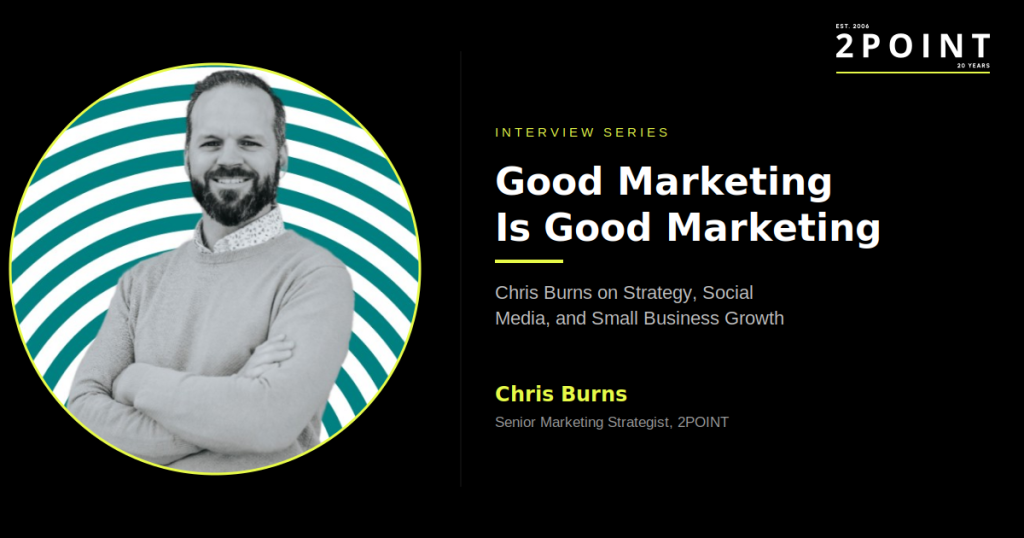
Chris Burns has spent years helping businesses of all shapes and sizes figure out what is actually working in their marketing. Along the way, this has enabled him to consistently identify what a business thinks is working, but isn’t. As a Senior Marketing Strategist at 2POINT, he was recently interviewed about his approach to strategy, social media, and competitive positioning.
What emerged was a candid, experience-led perspective that challenges some of the most common assumptions small businesses hold about how growth actually happens.
The Light Switch Theory, and Why It Fails

One of the first things Chris addresses is a pattern he sees repeatedly with small business clients: what he calls the "light switch theory" of marketing. When sales dip, a business owner reaches for a quick fix:
- New ad campaign
- More social posts
- A different platform
Expecting immediate results on all of them. Burns is direct about why this rarely works.
"That is what I call reactionary marketing," he explains, "and it's the opposite of strategic marketing." His view is that success for small businesses requires a multi-faceted marketing approach, delivered with consistency and patience. A single tactic or platform, no matter how well executed, is not going to move the needle on its own.
The challenge, Burns acknowledges, is that small business owners are typically wearing multiple hats. When something doesn't show results in the first few weeks, the temptation to abandon it is strong. His message is consistent: dedicate the time, maintain the consistency, and let the strategy breathe.
The Case Study: How Buddha’s Cup Grew Tour Revenue by 37%
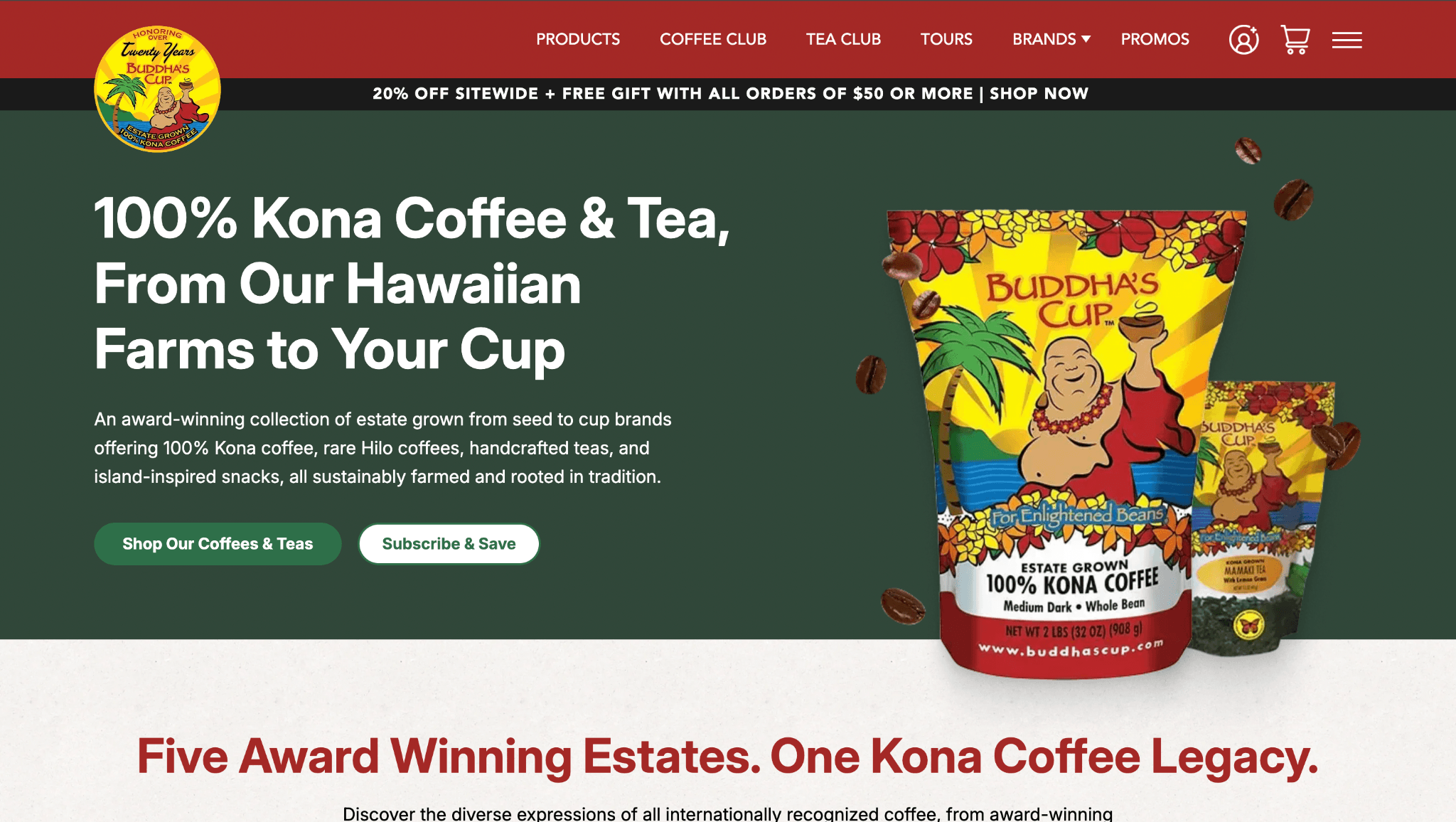
To illustrate how a holistic approach plays out in practice, Burns points to his work with Buddha’s Cup, a coffee and tea farm based in Hawaii. When he began working with the company, their marketing was one-dimensional, a situation he says is common among small businesses that believe most of their sales are being driven by one or two channels.
By expanding the strategy to include Meta Ads, Google Ads, Social Media, SEO, and online travel platforms like TripAdvisor and Viator, the team was able to reach entirely new customer segments. The results were significant: a 37% increase in tour revenue in 2025, and near-doubled holiday and Black Friday sales compared to the previous year.
"It wasn't one thing that we did. It wasn't necessarily budget. It was doing a lot of things well," Burns says. This outcome is central to how he frames marketing success, not as a single breakthrough moment, but as the compounding effect of diversifying and refining a strategy month over month.
The Truth About Organic Social Media
Burns is refreshingly blunt on the topic of organic social media; a channel many small businesses continue to over-invest in. The reality, he says, is that organic reach on Facebook, Instagram, and LinkedIn has declined to around 5%, and that figure is not an opinion but published data. Platforms have a commercial incentive to suppress organic business content in order to drive advertising spend.
His advice is practical: reduce the time spent on organic posting to a maximum of one or two hours per week, and redirect that energy toward paid advertising. That said, he does not dismiss organic content entirely. When someone clicks on an ad and lands on a profile that hasn't been updated in months, he notes, that is an immediate red flag. Organic presence still matters, it just does not need to dominate the calendar.
When asked what he would examine first if a business owner said their social media wasn't working, Burns gives three clear priorities: content quality (specifically whether it stops the scroll), video (which dominates time spent on every major platform, including LinkedIn), and the presence of an advertising strategy. Without all three, he says, even a well-managed social presence will underperform.
Knowing Where You Actually Stand in Your Market

On the subject of competitive positioning, Burns is equally methodical. Before building any strategy for a new client, he conducts market research, not just for his own benefit, but because most business owners genuinely do not have a clear picture of the competitive landscape they are operating in.
His process involves tools like SEMrush, Google Ads Library, and Facebook's ads transparency feature, alongside what he calls a "scroll test", reviewing four or five competitors on social media to assess content quality, consistency, and engagement. He also audits competitor websites for SEO health and page speed.
The goal, he explains, is not to obsess over what competitors are doing but to identify gaps. "It's easy for us to criticise others, but it's very hard for us to criticise our own business, because we tend to be romantic about it," he says. That objectivity, the ability to look at your own brand the way a stranger would, is often what competitive research unlocks.
Following the audit, Burns insists on a concrete action plan with no more than three priorities, each with a clear owner and a deadline. Progress is progress, but without execution, research is just information.
The Unpopular Opinion: Good Marketing Has No Industry
Asked whether there is something he has wanted to say publicly but has not always found the right moment for, Burns does not hesitate. His view, one he acknowledges not everyone in the industry embraces, is that good marketing is simply good marketing, regardless of the sector.
"If you have a good positioning statement that talks about the problem you solve, and you can talk to customers about your success rate, and you can show customer success, you will have a good brand," he says. The industry, in his view, is largely irrelevant. Clear messaging, strong content, and consistent execution travel across verticals.
This belief connects back to everything else Burns says in the interview: that marketing is less about finding the magic tactic and more about doing many things well, consistently, over time. For small businesses especially, that shift in mindset, from reactive to strategic, from single-channel to multi-faceted, from short-term to macro thinking, is where the real competitive distance gets created.