


 let’s connect


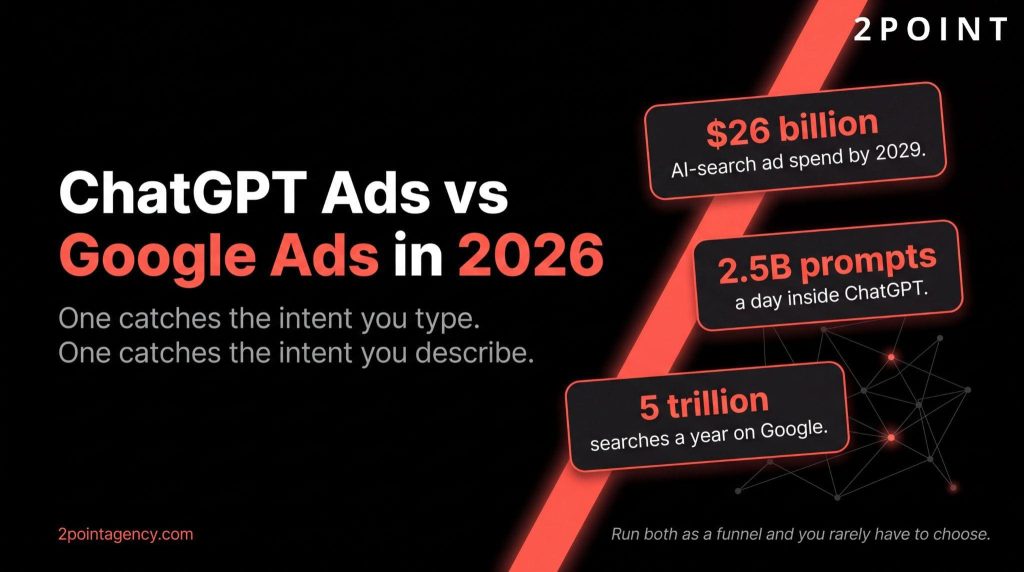
In the ChatGPT Ads vs Google Ads matchup, Google still wins on reach, mature measurement, and proven last-click ROI, while ChatGPT wins on intent-rich, conversation-aware placements with low early competition.
For most brands in 2026, Google stays the workhorse, and ChatGPT is a high-upside test channel; running both usually beats picking one.
Two platforms, two different bets on how people find what they want. Google Ads catches the intent you type into a search box. ChatGPT ads catch the intent you describe out loud, mid-conversation, while you are still deciding.
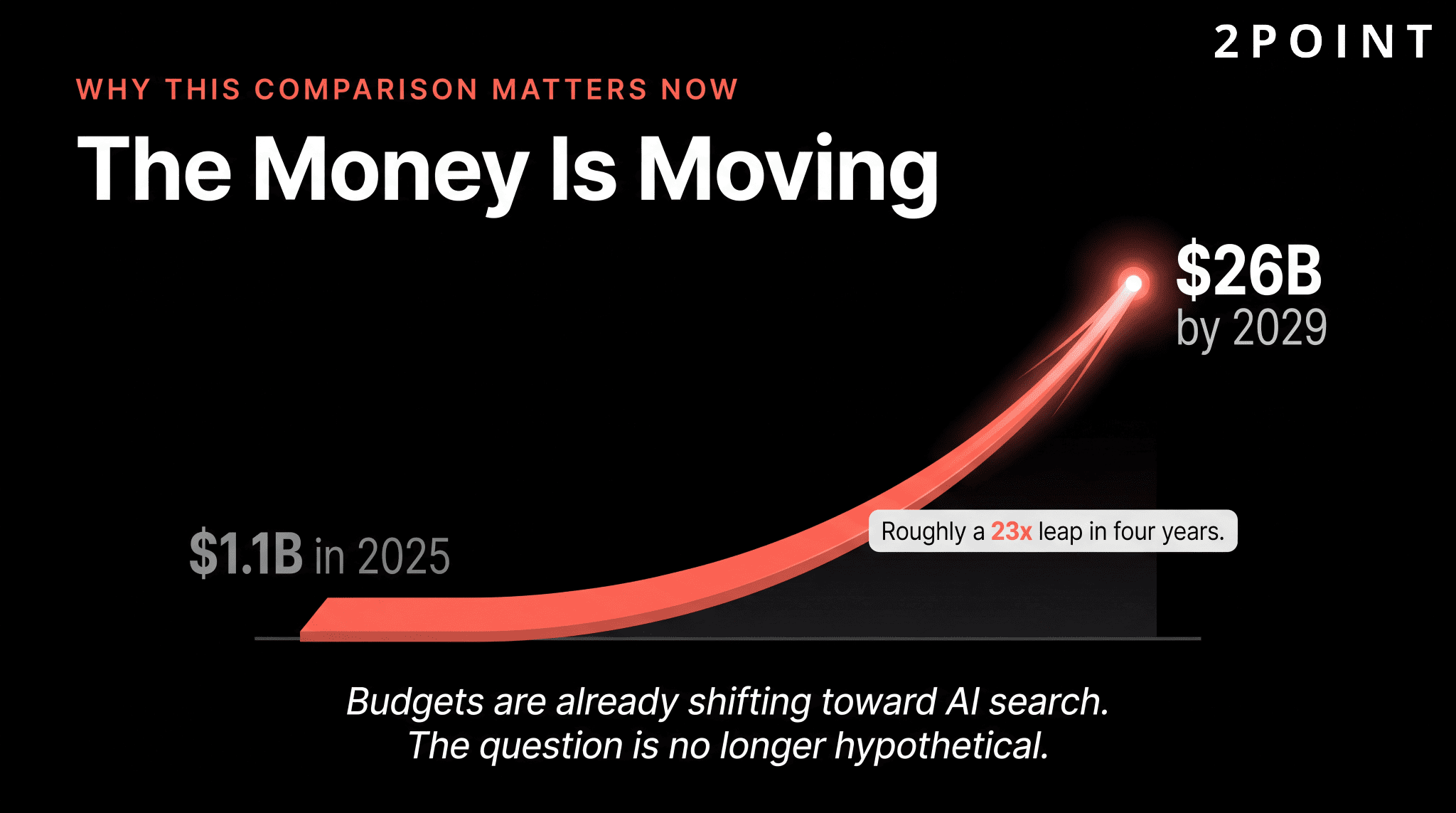
And the stakes keep rising. Budgets are already shifting toward AI search, so the Chatgpt Ads vs Google Ads question is no longer hypothetical.
Picking the right one is rarely obvious. That's where 2POINT helps: we plan, run, and measure the test until your budget finds its best home.
Key Takeaways
- ChatGPT Ads vs Google Ads is a trade-off: Google leads on reach and ROI, ChatGPT on intent and low competition.
- ChatGPT matches ads to the live conversation, no keywords or cookies, so relevance is built in.
- On measurement, ChatGPT Advertising vs Google Ads isn't close: Google has two decades of maturity, ChatGPT's reporting stays young and aggregate.
- Neither platform replaces the other, so the best media plans run them together as a funnel.
- ChatGPT Ads vs Meta Ads (and ChatGPT Ads vs Facebook Ads) is a different trade: conversation intent against social reach.
- Test ChatGPT on a small, tracked budget while Google continues to carry your high-intent demand.
ChatGPT Ads vs Google Ads: At-a-Glance Comparison
Before we go deeper, here's the short version of ChatGPT Ads vs Google Ads. The comparison below lays out the trade-offs you will feel the moment real budget is on the line.
| Dimension | ChatGPT Ads | Google Ads |
| Targeting | Live conversation context, no keywords or cookies | Keywords and audience signals in an auction |
| Audience and reach | Logged-in adults on the Free and Go tiers | Billions of daily searches across Search, YouTube, and Display |
| Pricing model | Auction-based, no public rate card yet | Auction-based CPC and CPM with mature benchmarks |
| Intent type | Needs expressed in full-sentence questions | Typed keywords, often with high purchase intent |
| Ad formats | A labeled sponsored result below the answer | Text, Shopping, Display, video, and more |
| Measurement | Aggregate metrics are still maturing | Deep, mature attribution and reporting |
| Platform maturity | New in 2026, low competition | Two decades of tooling and data |
| Best for | Discovery and nurture inside active chats | High-intent capture and proven last-click ROI |
How Each Platform Works
Knowing the mechanics changes how you read every other section, so it is worth slowing down here for a minute.
How Google Ads works
Google Ads runs on a keyword auction. You bid on the terms and audiences you want, and your ad enters a real-time auction every time someone searches, paying mostly per click or per thousand impressions.
The highest bid doesn't always win, though, because relevance and quality also shape your placement.
That model spans Search, YouTube, Display, and Shopping, so you get reach that almost nowhere else can match. Two decades of tooling sit behind it, which means you inherit mature bidding, audience controls, and reporting on day one. Above all, Google Ads meets demand that already exists, reaching buyers who are actively searching.
How ChatGPT Ads work
ChatGPT Ads skip the keyword auction.
Instead, the system reads the conversation you are already having, finds a sponsored product that fits, and drops a clearly labeled ad beneath the answer. The answer never changes, since the ad runs on a separate system. For now, only logged-in adults on the Free and Go plans see them, so paid tiers never see you.
That is the whole edge: you reach people mid-decision, not mid-search. So when you are ready to launch a campaign, you can have it live in an afternoon.
Targeting: Keywords vs Conversational Context
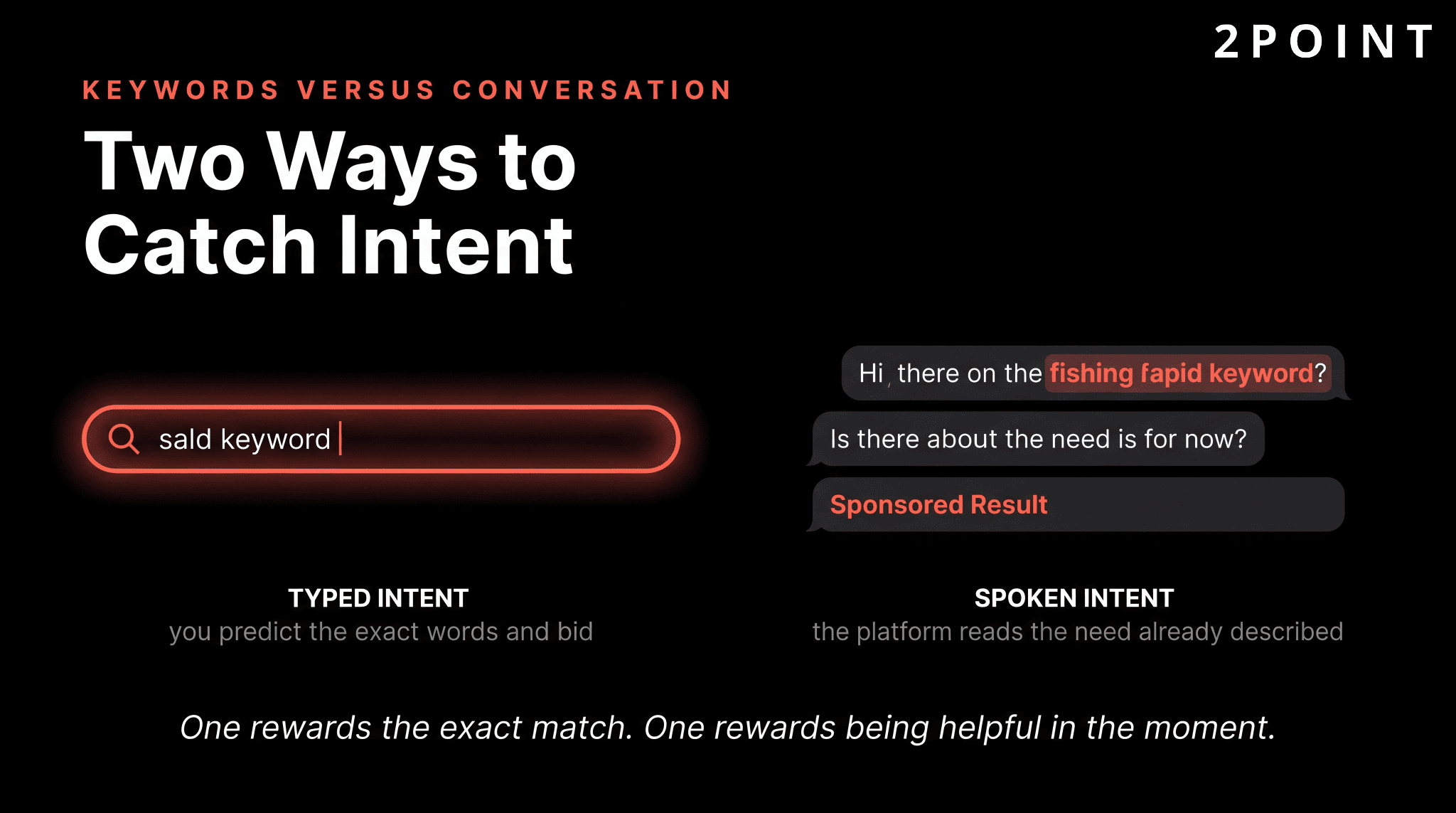
Targeting is the heart of the ChatGPT Ads vs Google Ads difference, because each platform finds you differently:
- Google: you predict the exact words a buyer types, then bid on them.
- ChatGPT: the platform reads the need someone already described, so you match intent without guessing.
That shift also rewards different creative: keyword ads reward a tight match and a strong offer, conversational ads reward being helpful in the moment. The same logic is reshaping organic search, so how AI search and traditional SEO differ sharpens your paid playbook.
Pricing and ROI Compared
On pricing, ChatGPT Ads vs. Google Ads start the same way: both run auctions, so you set budgets and bids, not a fixed price. Google's costs are well documented but vary widely by industry, while ChatGPT has no rate card yet, so treat any figure as an estimate.
The real story is early competition. Fewer advertisers bid inside ChatGPT, so attention stays cheap for the quality you get, and disciplined testers tend to win that window.
It is why whether ChatGPT Ads are worth it comes down to discipline, not price.
Cost alone is the wrong lens, though. A cheap click that never converts is your most expensive line, so judge each platform on cost per outcome, not cost per click. The channel that reaches the right person at the right moment usually wins.
Reach and Audience Quality
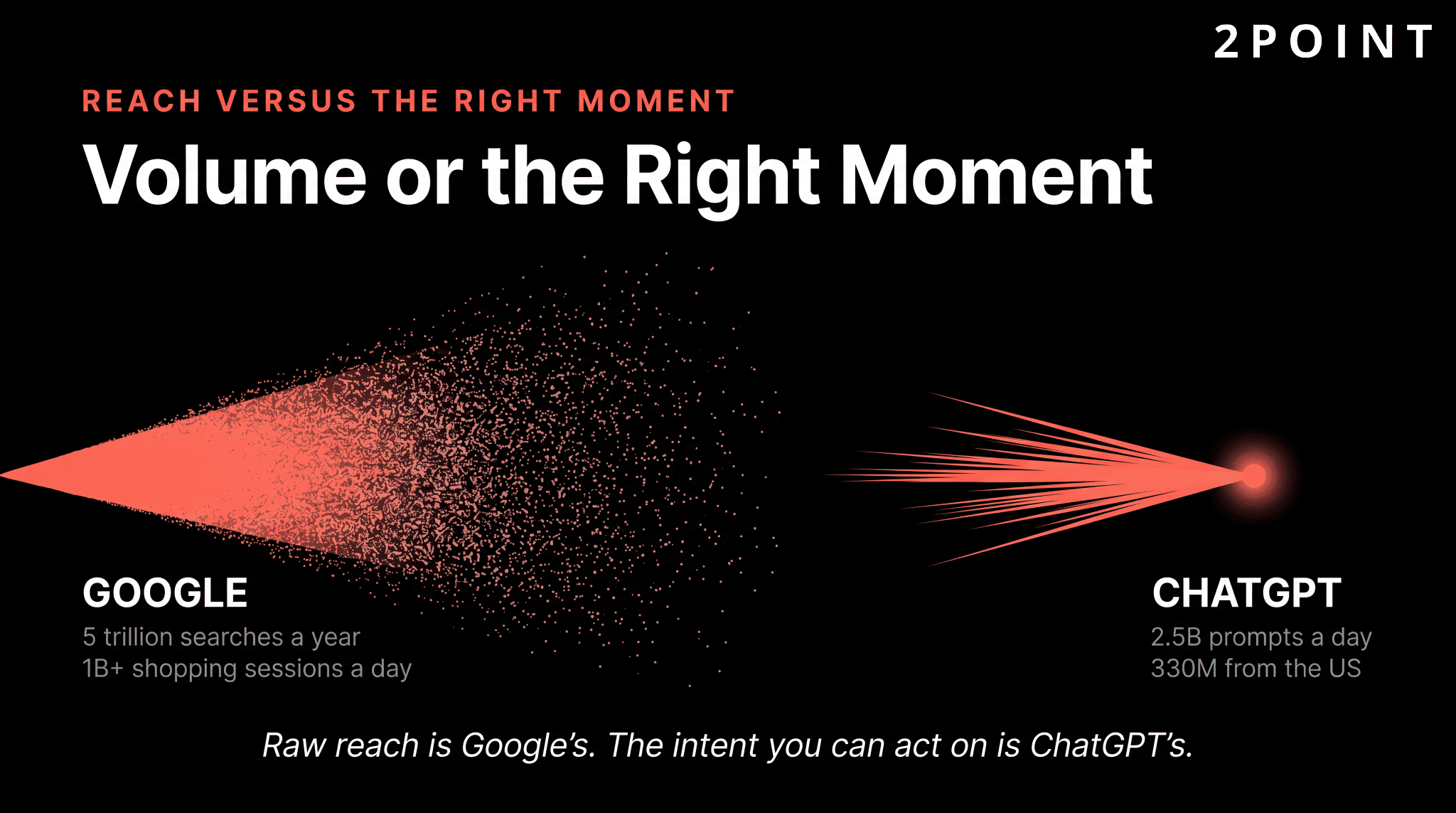
On reach and audience quality, ChatGPT Ads vs Google Ads split cleanly: one wins on volume, the other on the intent you can actually act on.
- Google's scale is staggering, with more than 5 trillion searches a year and over a billion shopping sessions a day. Raw reach is Google's, full stop.
- ChatGPT is smaller but sharper, fielding about 2.5 billion prompts a day, roughly 330 million from the U.S.
Those are not idle searches, though. They are people thinking out loud, comparing options, and asking for a recommendation, which is exactly the moment your ad earns its click.
Where Meta and Facebook Ads Fit
Plenty of you are really asking a three-way question, so let us put ChatGPT Ads vs Meta Ads head-on. Meta's reach is enormous: 3.58 billion daily active people across its apps and about $196 billion in 2025 ad revenue, all targeted by social behavior and interests.
- Facebook and Instagram: you interrupt people while they scroll for entertainment, so you earn attention with reach and creative range.
- ChatGPT: You assist a decision already in progress, so timing and intent do the heavy lifting.
So the ChatGPT Ads vs Facebook Ads trade-off mirrors the Google one: social wins on scale and creative, ChatGPT wins on the moment.
Measurement and Attribution
On ChatGPT Ads vs Google Ads, measurement is where Google's lead is widest. You get granular attribution honed over two decades, while ChatGPT hands you aggregate signals, not individual details.
So your own tracking carries the weight. Because last-click undercounts discovery that assists but never closes, lean on multi-touch reporting:
- Track blended cost-per-acquisition across channels.
- Give each conversion a reasonable attribution window.
- Review assisted conversions, not just final closes.
Measured that way, you see what each platform truly contributes, not just who grabbed the final click.
When to Use ChatGPT Ads vs Google Ads
Strategy beats loyalty in ChatGPT Ads vs. Google Ads, so match the channel to the job at hand.
The real question is rarely which platform wins in the abstract. It is which one fits this campaign, this offer, and this stage of your buyer's journey?
- Reach for Google when you need proven last-click ROI, broad reach, or high-intent capture right now.
- Reach for ChatGPT when you sell a considered purchase and want to influence buyers while they research.
- Default to Google for restricted categories like health or politics, which ChatGPT excludes.
- Test ChatGPT early as a challenger, when you want attention, your bigger rivals have not claimed.
Either way, ChatGPT advertising earns its place only inside a wider mix, alongside the right formats, targeting, and budget splits.
Can You Run Both Together?
Yes, and honestly, most of you should. ChatGPT Ads vs Google Ads was never a single-winner question; the two are complements once you stop pitting them against each other.
Use ChatGPT to spark discovery and nurture intent, then let Google capture the high-intent searches that follow. When the handoff is clean, your blended cost per result tends to fall.
Rather not juggle both? Our paid advertising and multi-channel marketing teams run the combined program and report exactly what each channel contributes.
So, Where Should Your Budget Go in 2026?
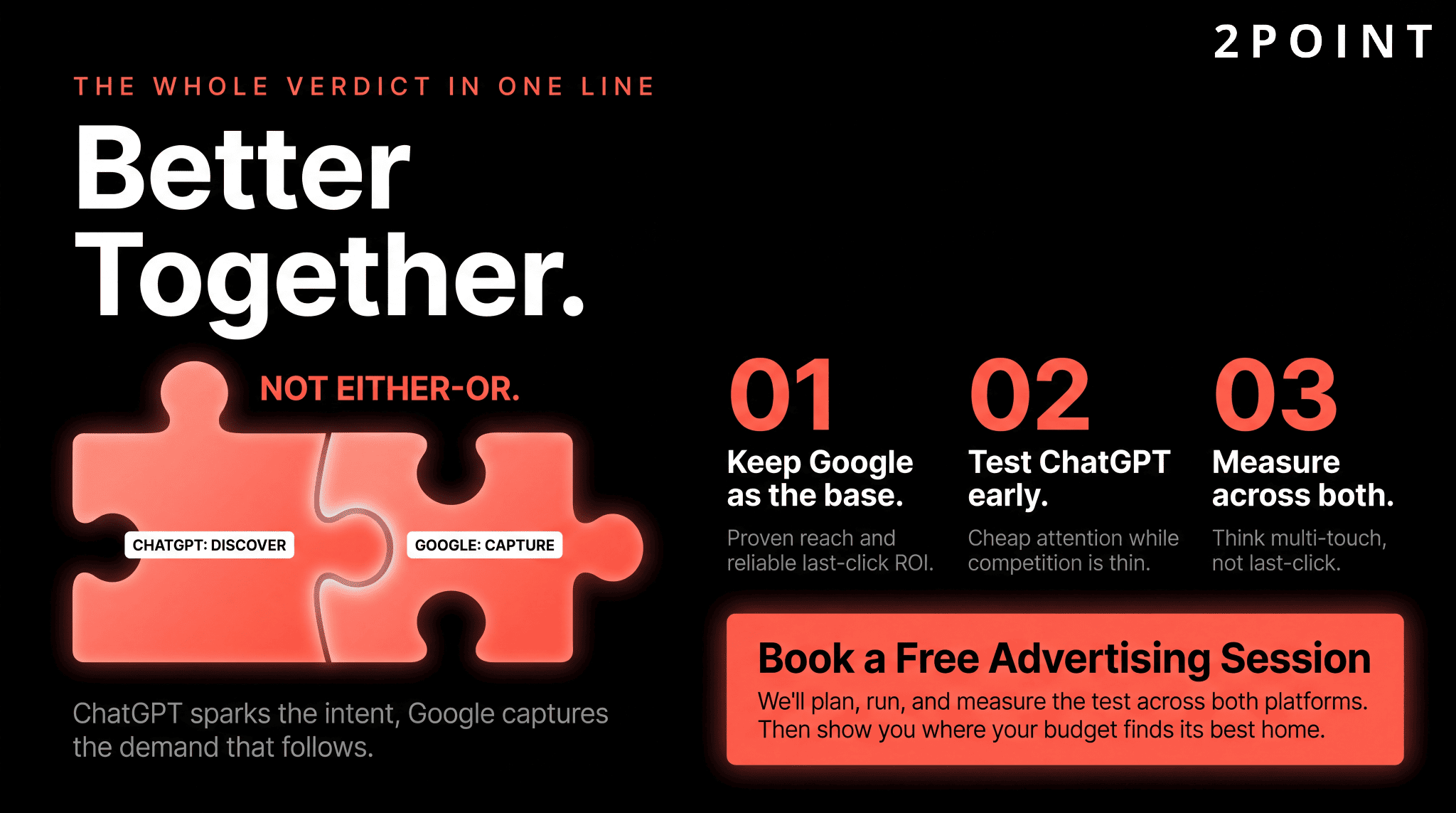
In the ChatGPT Ads vs Google Ads decision, Google still earns the base budget for reach and reliable returns, while ChatGPT earns a disciplined, well-tracked test for the intent and low competition you cannot find anywhere else right now.
Keep Google carrying the load, test ChatGPT carefully, and let your own numbers settle the rest. When you would rather not run both alone, our paid advertising and multi-channel marketing teams run the combined program for you.
FAQs
Are ChatGPT Ads cheaper than Google Ads?
Sometimes, but it depends. In the ChatGPT Ads vs Google Ads cost comparison, both run auctions, so spend follows your budget and bids. ChatGPT's competition is thinner today, which can keep attention costs lower. That said, it has no public rate card yet, so treat any figure as an estimate.
Is ChatGPT replacing Google Ads?
No. The ChatGPT Advertising vs Google Ads story is layering, not replacement. Google still has broad reach and proven last-click ROI, while ChatGPT offers intent-rich conversational placements you cannot buy elsewhere.
For now, ChatGPT is a high-upside test channel that complements Google rather than displacing it.
How do ChatGPT Ads compare to Meta and Facebook Ads?
In ChatGPT Ads vs Meta Ads terms, Meta wins on reach and behavioral targeting, while ChatGPT wins on live buying intent. The ChatGPT Ads vs Facebook Ads choice is similar: Facebook interrupts entertainment to earn attention, whereas ChatGPT meets people who are already asking a purchase question.
Can you run ChatGPT Ads and Google Ads together?
Yes, and pairing them usually beats choosing one. Run ChatGPT for conversational discovery and nurture, then run Google to capture the high-intent queries that follow as buyers decide.
The ChatGPT Ads vs Google Ads decision is rarely either-or once you treat both channels as one funnel.