

 let’s connect


What Is Digital Marketing and Why Does It Matter in 2026?
- Digital marketing is the promotion of products, services, or brands through online channels such as search engines, social media, email, and websites.
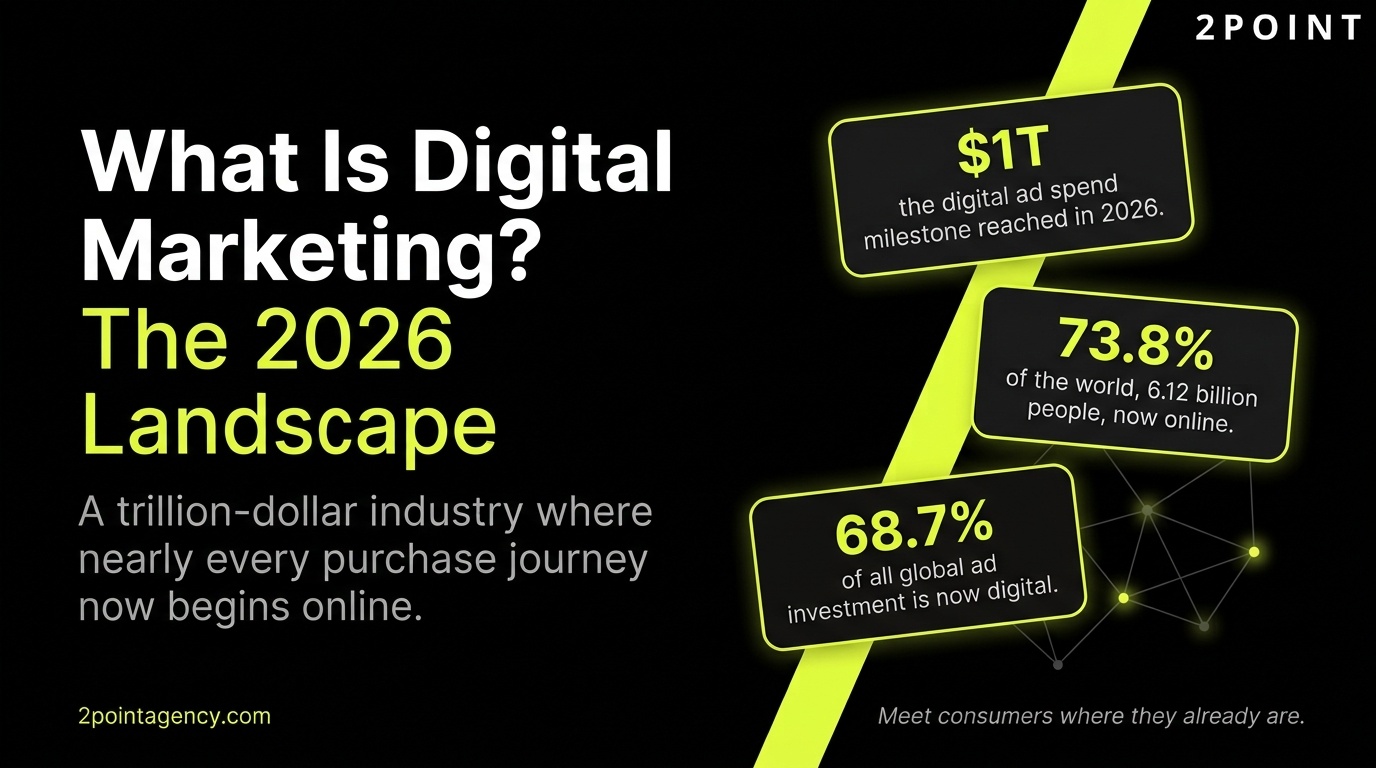
- Global digital ad spend is expected to hit $1 trillion in 2026, marking a historic milestone for the industry.
- 73.8% of the global population (6.12 billion people) is now online, making digital the primary channel for consumer reach.
- Digital channels now represent 68.7% of total global ad investment, surpassing traditional media by a wide margin.
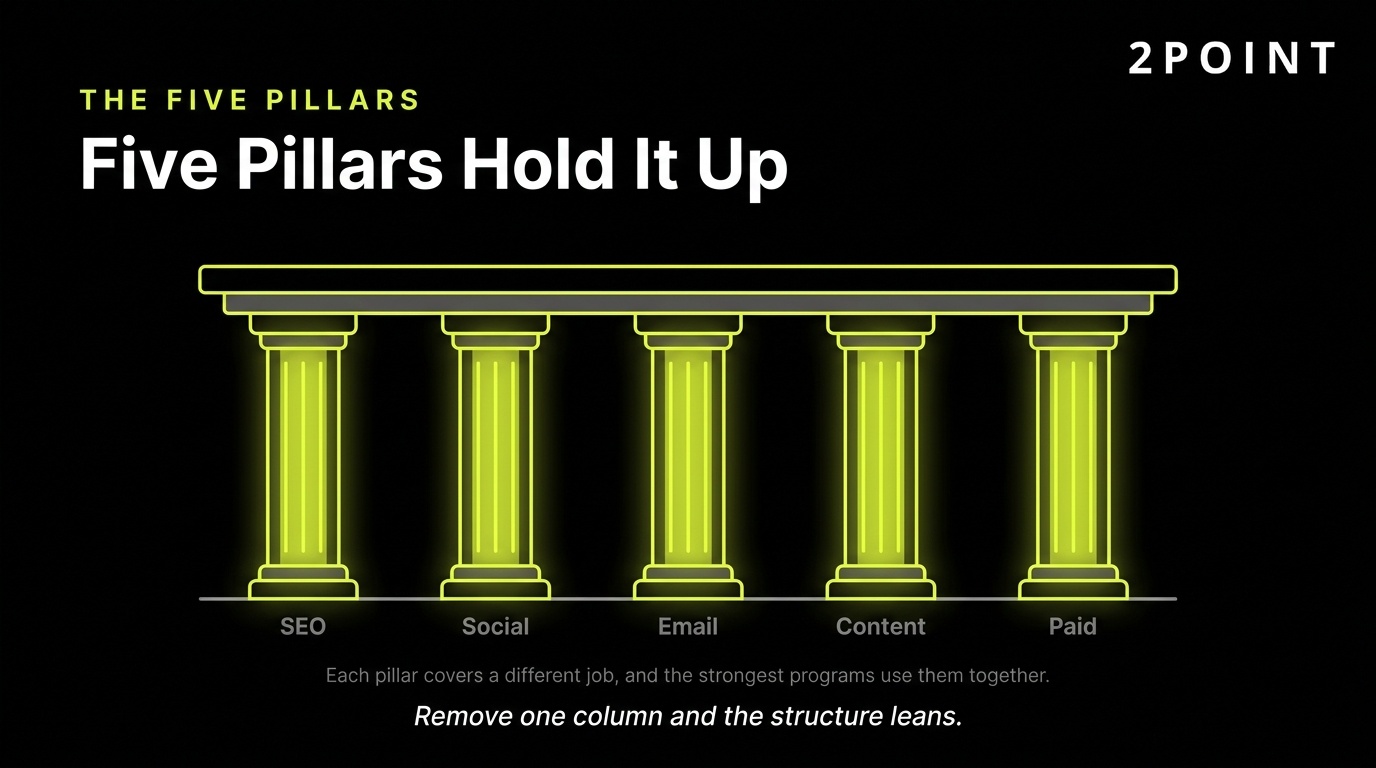
- The five core pillars of digital marketing are: search engine optimization (SEO), social media marketing, email marketing, content marketing, and paid digital advertising.
- Artificial intelligence has transformed how campaigns are planned, executed, and optimized, with 75% of marketing organizations now using at least one form of AI.
- Businesses that ignore digital channels risk losing visibility, revenue, and competitive relevance in an economy where consumers begin nearly every purchase journey online.
The State of Digital Marketing in 2026: A $1 Trillion Industry
Digital marketing has crossed a threshold that seemed distant just a few years ago. The global digital advertising market is not just growing; it is reshaping entire economies, redefining how brands communicate, and creating new categories of professional expertise that did not exist a decade ago. Understanding where the industry stands right now is essential before diving into how to compete within it.
Market Size and Growth Trajectory
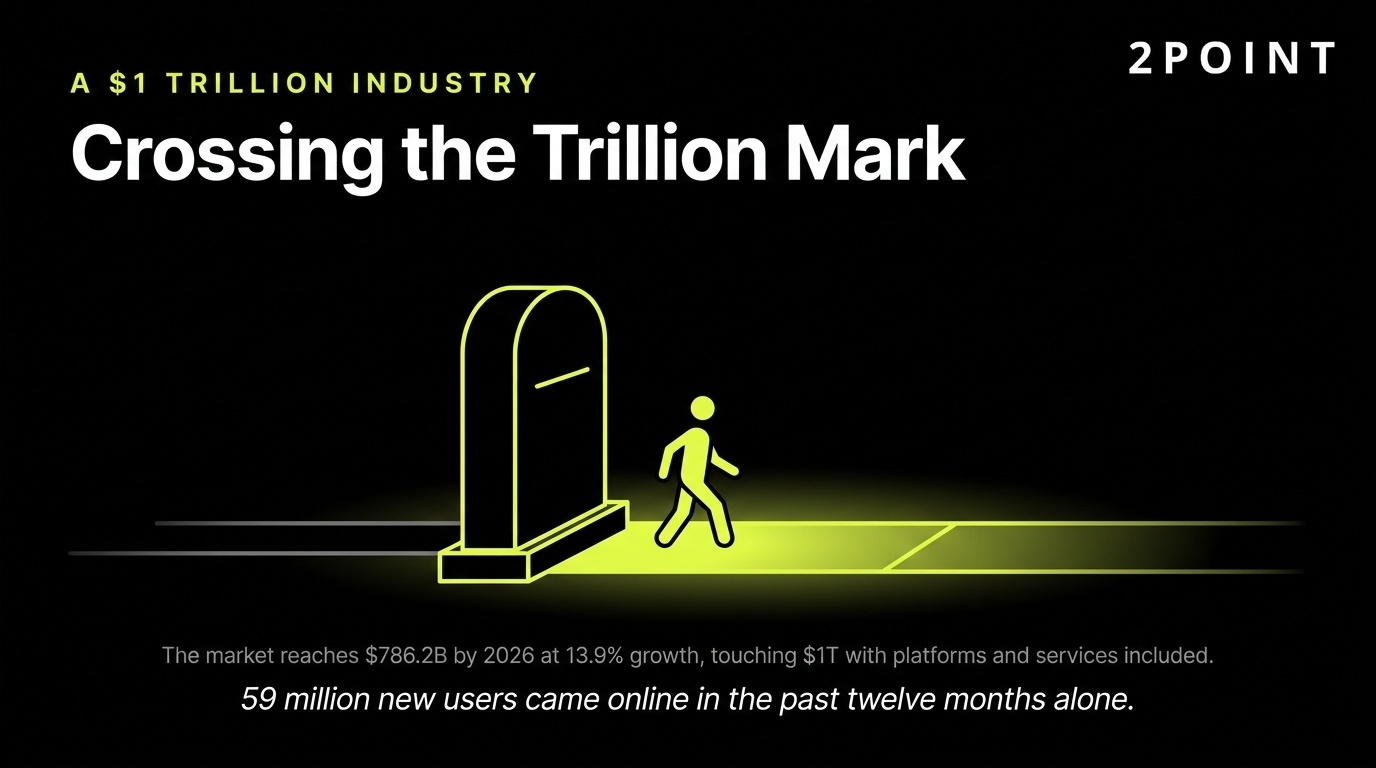
The global digital advertising market is projected to reach $786.2 billion by 2026, growing at a CAGR of 13.9%. Some projections reconcile higher, touching the $1 trillion mark when ancillary digital marketing services such as technology platforms, creative production, and analytics tools are included. Either way, the scale is extraordinary.
Regional distribution reveals important nuances. North America dominates the market, with the United States accounting for 84.30% of North America's total digital marketing revenue. Asia-Pacific is the fastest-growing region, fueled by explosive mobile adoption in markets like India, Indonesia, and Southeast Asia. Europe holds a significant share but faces regulatory complexity that constrains certain targeting methods.
The growth is not merely a function of more ad dollars chasing the same audiences. It reflects structural changes: 59 million new internet users came online in the past 12 months, and the average internet user now spends 33 hours and 13 minutes online every week. That is an enormous window of attention, and brands that understand how to earn a share of it consistently are the ones pulling ahead.
Industry Transformation Through Technology
The mechanics of running a digital marketing campaign look almost unrecognizable compared to five years ago. AI, automation, and data analytics have fundamentally changed how campaigns are conceived, executed, and refined. The shift from manual workflows to automated, data-driven systems has collapsed the time it takes to move from strategy to live execution.
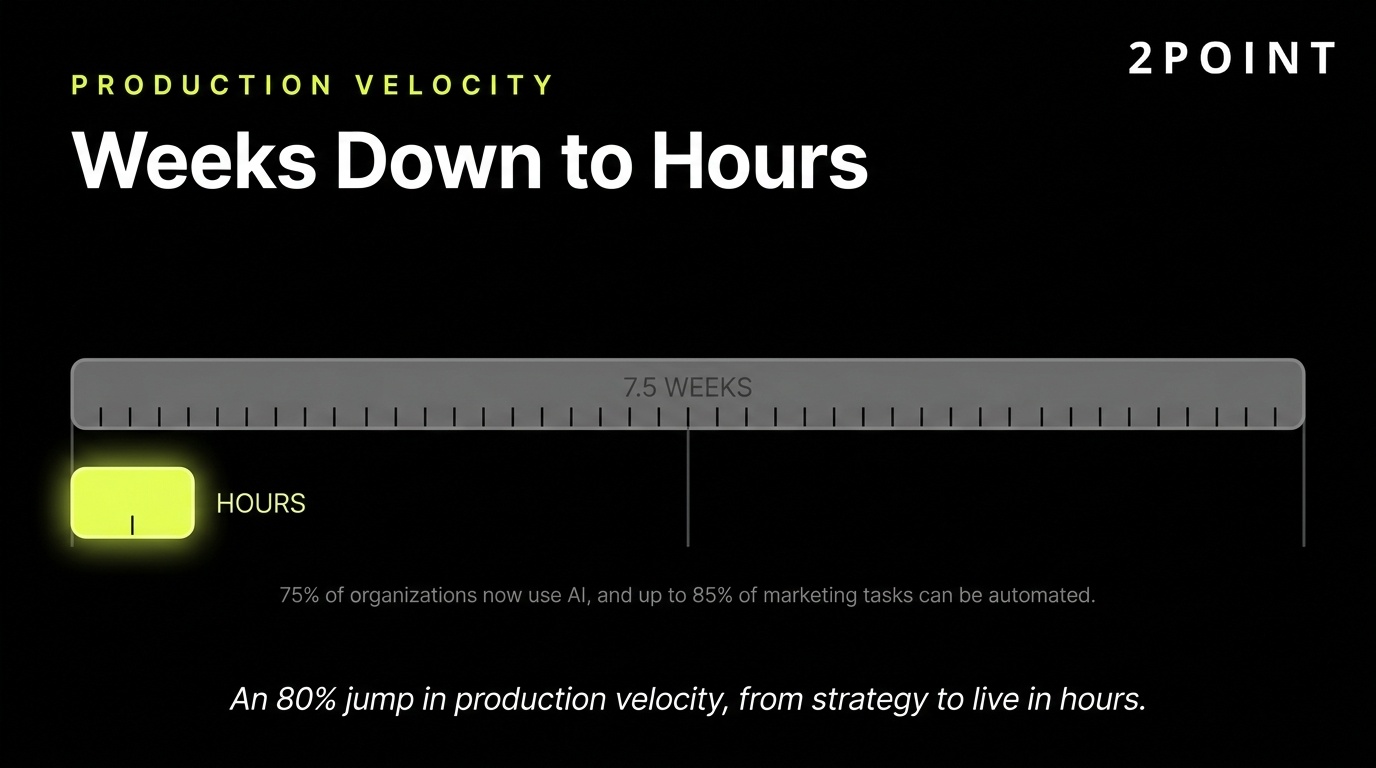
According to Salesforce research, 75% of marketing organizations now use at least one form of AI. The practical implication is that 85% of marketing tasks can be automated through AI, and campaign production timelines have shrunk from an average of 7.5 weeks to just hours in organizations that have embraced these tools, representing an 80% improvement in production velocity.
Perhaps most importantly, traditional channel silos have begun to collapse. Email, social, search, and paid media no longer operate in isolated departments with separate strategies. Unified customer data platforms now pull behavioral signals from every touchpoint, enabling marketers to build coherent customer journeys that span channels without losing continuity. This integration is a competitive advantage for teams that have built the infrastructure and a source of strategic confusion for those still operating in silos.
The Shift to Mobile-First Ecosystems
Any discussion of the current digital marketing landscape must center mobile prominently. 78% of retail website visits now come from smartphones, and 57% of purchases and 64% of searches happen on mobile devices. Desktop-first design and strategy are not just suboptimal; they are actively harmful to conversion rates and search visibility.
The shift to mobile extends beyond websites. App-based marketing, push notifications, SMS campaigns, and in-app advertising have created entirely new channels that require mobile-specific creative approaches. Google's mobile-first indexing means that a site's mobile performance directly determines its search ranking, making mobile page speed a revenue-critical metric rather than a technical nicety.
E-commerce now accounts for 23% of global retail sales, and the majority of that activity happens on smartphones. Brands that have not optimized their entire purchase funnel for mobile are operating at a structural disadvantage that compounds with every passing quarter.
Consumer Behavior and Digital Expectations
Modern consumers do not follow linear purchase journeys. They research across platforms, compare across devices, and expect brands to meet them with relevant content at every stage. This complexity makes omnichannel consistency one of the most important capabilities a marketing organization can develop.
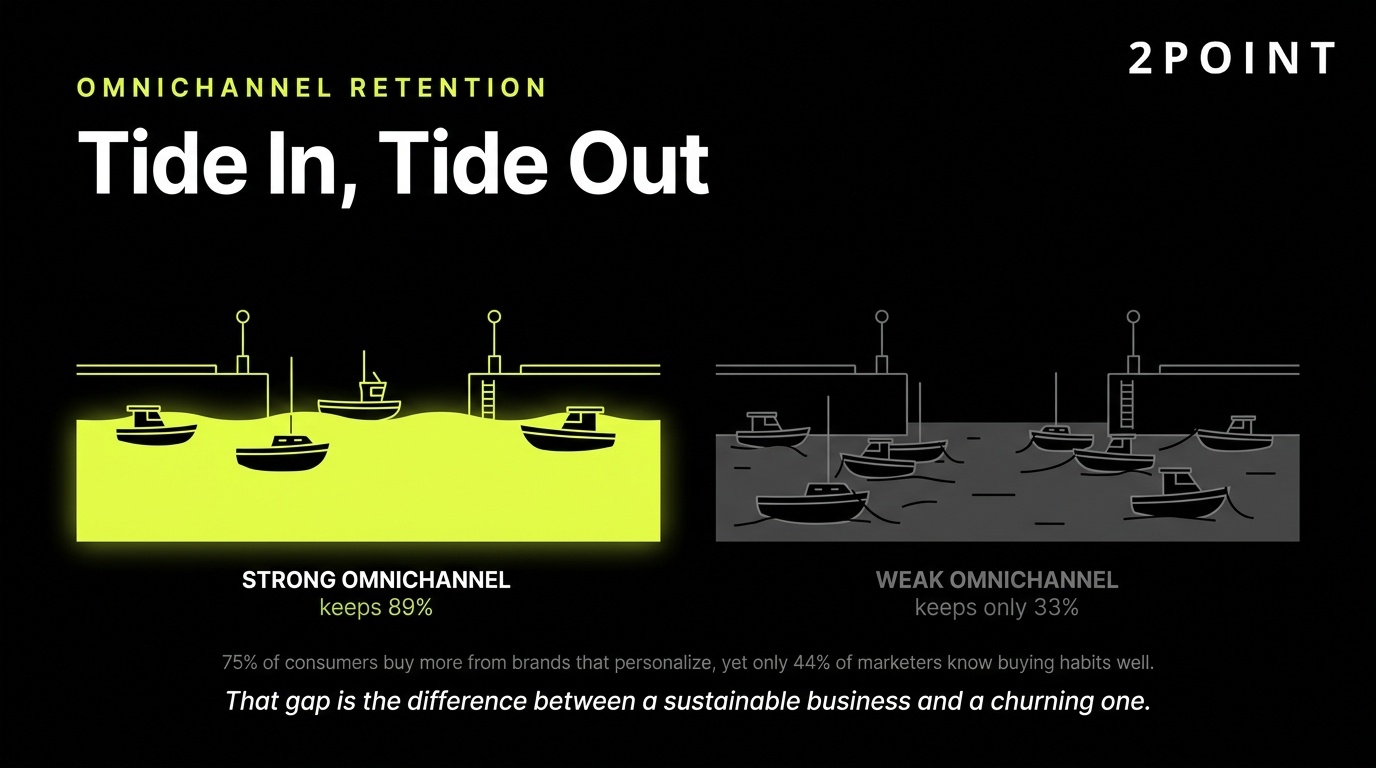
The data on this is compelling: businesses with strong omnichannel strategies retain 89% of their customers, while those with weak omnichannel approaches retain only 33%. That is not a marginal difference; it is the difference between a sustainable business and a churning one.
Personalization expectations have also intensified. 75% of consumers say they are more likely to buy from brands that deliver personalized content. Yet only 44% of marketers report knowing their customers' buying habits well. This gap between consumer expectation and marketer capability represents one of the biggest opportunities available to businesses willing to invest in better data analytics and customer intelligence.
Privacy concerns are adding complexity to this picture. Cookie deprecation, platform-level privacy changes, and growing regulatory scrutiny are forcing marketers to rethink data collection strategies. First-party data, earned through genuine value exchange rather than passive tracking, is rapidly becoming the most valuable asset in a marketer's toolkit.
How Artificial Intelligence Is Reshaping Digital Marketing Strategy
AI in marketing is no longer an experimental concept discussed at conferences. It is a production reality for the majority of marketing organizations, and its influence is accelerating. Understanding where AI adds genuine value, where it introduces risk, and where the technology is headed is now a core strategic competency for marketing leaders.
From Experimentation to Enterprise Adoption of AI in Marketing
The journey of AI in marketing has moved remarkably fast. Early applications were narrow: chatbots answering basic customer service queries, recommendation engines surfacing related products, and basic predictive models scoring lead quality. Today, the scope is dramatically broader and the tools are production-ready.
75% of marketing professionals have adopted AI in their daily practices, with 76% using it specifically for content creation. 70% rely on AI-powered analytics tools, and 66% use AI tools daily for strategic decisions. These are not experimental adoption rates; they are mainstream integration figures.
What makes 2026 the true adoption tipping point is that ROI has become measurable and comparable. Early AI tools required significant technical investment with uncertain returns. Today's platforms are marketed to practitioners rather than engineers, the use cases are well-documented, and the competitive pressure to adopt has intensified to the point where abstaining is itself a strategic risk. 95% of marketing teams report testing AI for creative production, though 42% describe themselves as still in an initial testing phase, suggesting meaningful headroom for deeper integration.
Practical AI Applications Across Marketing Functions
The breadth of AI applications across the marketing function is one of the more striking features of the current landscape. It is not concentrated in a single area; it is distributed across almost every workflow that involves data, language, or repetitive decision-making.
Content generation is the most visible use case. AI tools assist with blog drafts, social media posts, ad copy variations, product descriptions, and email subject lines. 46% of marketers already use AI to streamline creative output. The more sophisticated applications go beyond drafting: AI can analyze performance data from thousands of previous campaigns to predict which creative elements are likely to resonate with a specific audience segment before a single dollar is spent.
Audience segmentation has been transformed by machine learning. Where manual segmentation relied on demographic buckets and broad behavioral categories, AI-driven segmentation identifies micro-segments based on hundreds of behavioral signals simultaneously. The result is messaging that reaches the right person at the right moment with the right offer. 31% of marketers specifically want AI predictive models to forecast campaign performance before launch, which would fundamentally change how budgets are allocated.
Average productivity gains from AI integration run at approximately 32%, and with 85% of marketing tasks theoretically automatable, the ceiling for efficiency gains is still very high. The opportunity is not just cost reduction; it is freeing human marketers to focus on the creative, strategic, and relational work that machines cannot replicate.
The Challenges and Limitations of AI in Digital Marketing
A balanced view of AI in marketing requires honest engagement with its limitations. The hype cycle has produced unrealistic expectations in some organizations, and the practical challenges of deploying AI at scale are more significant than vendor marketing often suggests.
The quality problem is real and widely acknowledged. 43% of marketers say generative AI produces inaccurate information, making it the top challenge with the technology. 34% struggle with biased content outputs, and 30% report receiving irrelevant or surface-level results that require substantial human rework before they are usable.
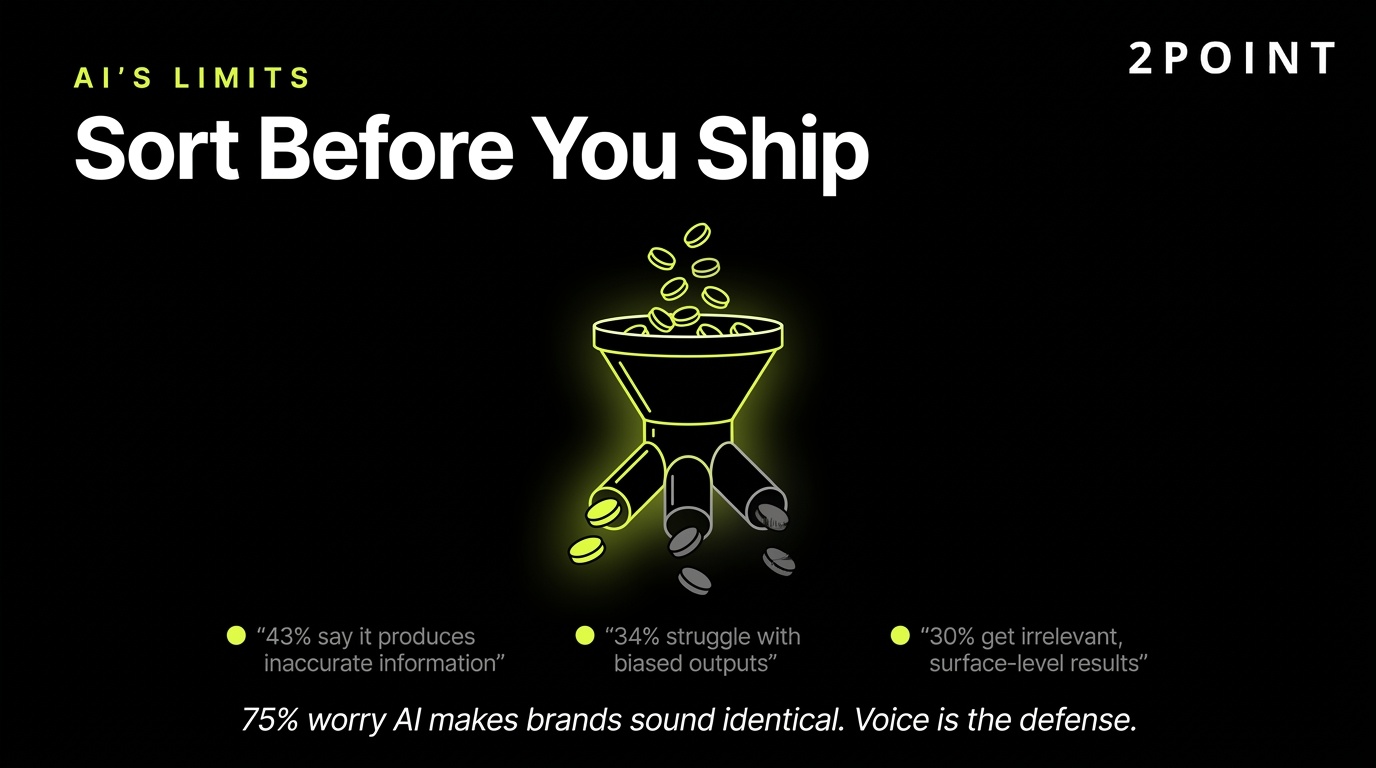
Perhaps the most strategically important concern is brand differentiation. 75% of marketing professionals worry that AI risks making brands look and sound identical to competitors, and 86% have already seen AI-generated outputs that resemble competitor content. When every brand uses the same AI tools trained on the same data, the outputs naturally converge. Strong brand messaging frameworks and distinctive brand voices become critical defenses against this homogenization risk.
Implementation friction is another real barrier. 30% of marketers estimate it takes more than a month to onboard a new AI platform, a significant investment of time and organizational energy that smaller teams may struggle to sustain.
Agentic AI and the Future of Autonomous Marketing Operations
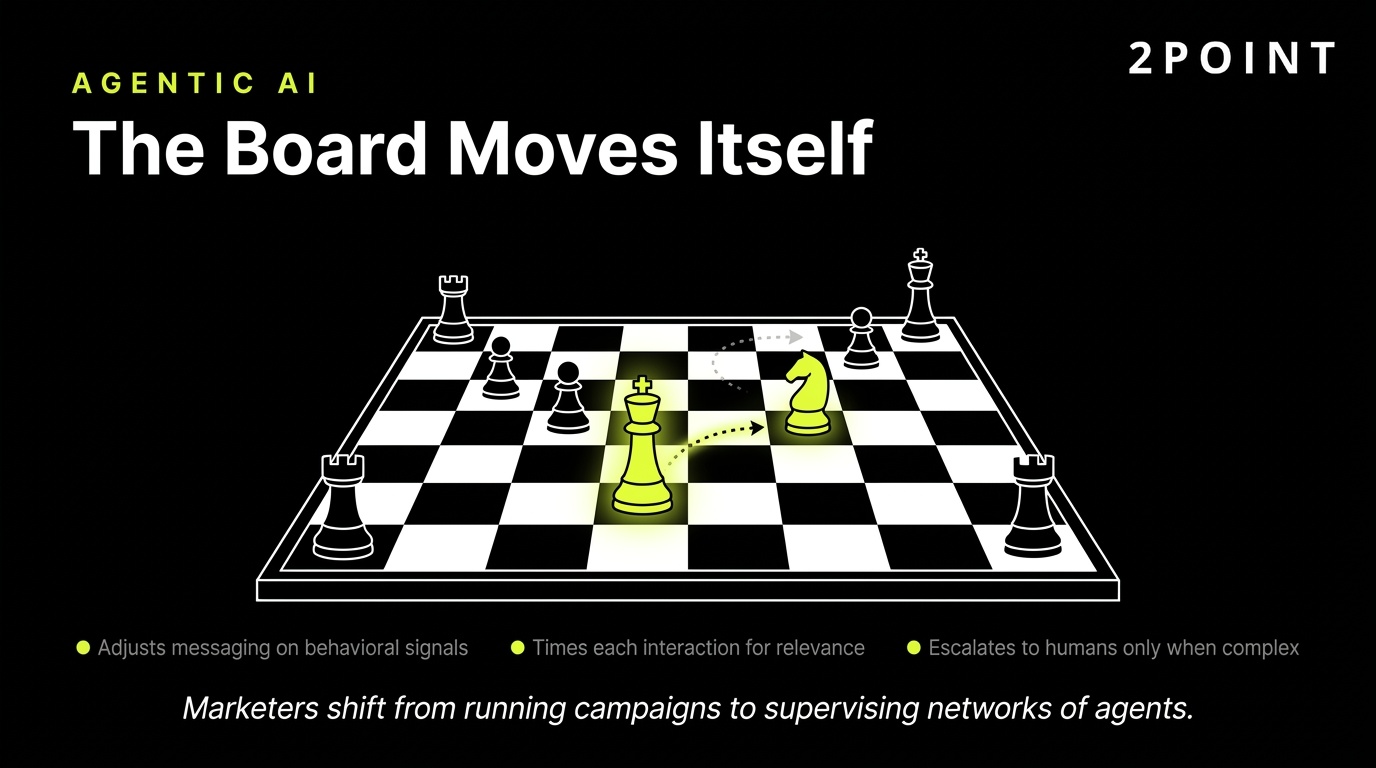
The next frontier beyond current AI tools is agentic AI: systems that can execute multi-step decisions independently, without requiring human input at each stage. Unlike traditional automation, which follows pre-programmed rules, agentic AI can reason about context, adapt to changing conditions, and take sequences of actions to achieve a defined goal.
In marketing, this means AI agents that can independently manage routine customer engagements across channels, adjusting messaging based on behavioral signals, timing interactions for maximum relevance, and escalating to human agents only when genuinely complex situations arise. The shift from channel-based execution to agent-driven customer journeys represents a fundamental change in how marketing operations will be structured over the next three to five years.
Gartner's research on the future of marketing points to a transformation in marketing roles: practitioners will shift from executing campaigns in specific channels to supervising and optimizing networks of AI agents. This demands a new skill set that combines strategic judgment, data literacy, and the ability to define clear objectives that AI systems can reliably pursue. The organizations that begin building these capabilities now will have a meaningful head start.
Search Marketing and the AI Search Revolution Changing SEO Forever
Search engine optimization has been a cornerstone of digital marketing strategy for two decades. In 2026, it remains the highest-ROI channel for many businesses, but the mechanics of how search works are undergoing the most significant transformation since Google introduced PageRank. Understanding both the enduring value and the emerging disruption is essential for any serious SEO strategy.
SEO's Enduring ROI Advantage Over Paid Channels
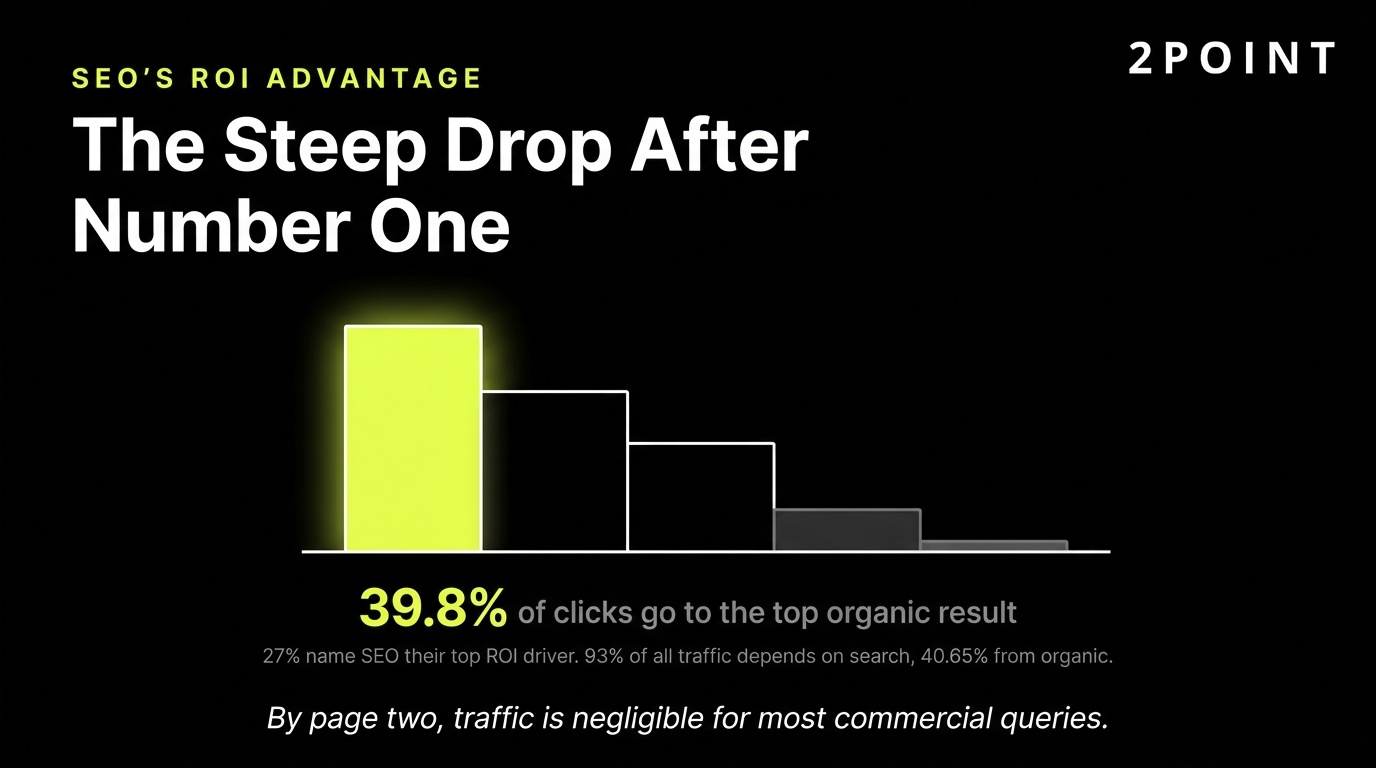
Despite constant predictions of its obsolescence, SEO continues to deliver among the best returns of any digital marketing investment. 27% of marketers cite websites, blogs, and SEO as their biggest ROI driver, more than any other single channel. Email comes second at 22%. Paid search and social, despite their larger share of budget in many organizations, rank below organic search on ROI by this measure.
The structural reason is straightforward. Organic search traffic has no cost-per-click. Once a page ranks well, it continues generating traffic without requiring continuous ad spend. 93% of all website traffic depends on search engines, and organic search accounts for 40.65% of website traffic overall. Building and protecting this organic visibility is one of the highest-leverage investments a business can make in its digital infrastructure.
The competitive dynamics of organic search are intensely winner-takes-most. The top organic result on Google captures an average of 39.8% of all clicks for a given query. The second result gets roughly half that. By the time you reach the second page of results, traffic is negligible for most commercial queries. This steep drop-off explains why ranking position matters so profoundly, not just for visibility, but for the entire economics of a digital marketing program. Strong brand presence in organic search is therefore a durable asset, not merely a traffic metric.
Google's Search Market Dominance and What It Means for Strategy
Google's grip on global search remains extraordinary. Google commands 89.62% of search traffic across all devices globally, with Bing holding just 4.04%. For practical purposes, Google-first SEO is not a strategic choice; it is an acknowledgment of where the audience lives.
That said, Bing's integration with Microsoft's AI products, including Copilot, has added relevance to a platform that many marketers had largely deprioritized. For B2B audiences with heavy Microsoft product usage, multi-engine optimization is more strategically valuable than it was even two years ago. The audience overlap is small but can be commercially significant in certain verticals.
The concentration of search power in Google also creates concentration of risk. Algorithm updates, policy changes, and structural shifts in how Google displays results can dramatically affect organic traffic overnight, as many publishers have discovered to their cost. Diversifying traffic sources across social, email, direct, and referral channels is a risk management strategy as much as it is a growth one.
AI Overviews and the Search Visibility Crisis for Content Publishers
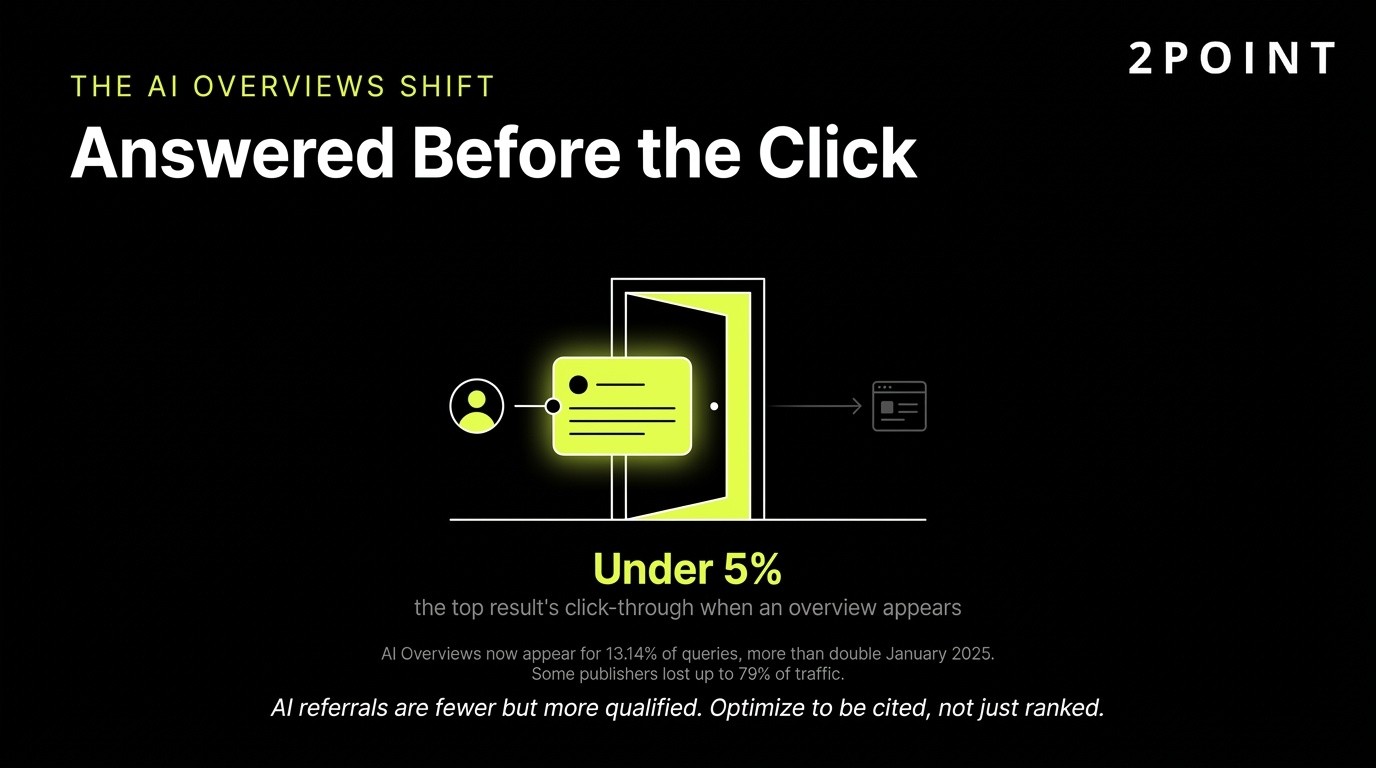
The most disruptive force in search marketing right now is Google's AI Overviews feature, which generates direct answers to queries at the top of the search results page, often eliminating the need for users to click through to any source. The data on adoption is striking: AI Overviews now appear for 13.14% of all Google queries, more than double the 6.49% rate recorded in January 2025.
The traffic impact is severe. When an AI Overview appears, the top organic result's click-through rate can drop from approximately 39.8% to under 5%. Some content publishers have reported organic traffic losses as high as 79% in categories where AI Overviews now dominate the page. 50% of marketers report noticing search traffic declines coinciding with increases in AI-driven traffic.
There is a counterintuitive silver lining: AI referral traffic, while currently only 0.26% of total traffic, shows higher purchase intent and engagement rates than average organic traffic. Being cited by an AI Overview or referenced in a large language model response may deliver fewer visits but more qualified ones. The strategic implication is that optimizing for AI citation is now as important as optimizing for ranking position.
Adapting Your SEO Strategy for the Large Language Model Era
The shift from ranking to being cited represents a meaningful strategic reorientation for SEO practitioners. In a world where AI systems summarize information rather than just index it, the attributes that make content citation-worthy differ somewhat from those that have historically driven rankings.
Topical authority is more important than ever. AI systems favor sources that demonstrate consistent, comprehensive expertise in a defined domain. Thin content spread across many loosely related topics is less likely to be cited than deep, well-structured content from a recognized authority in a specific area. Building genuine subject matter authority, supported by original research, expert contributions, and comprehensive coverage, is the most durable SEO investment available.
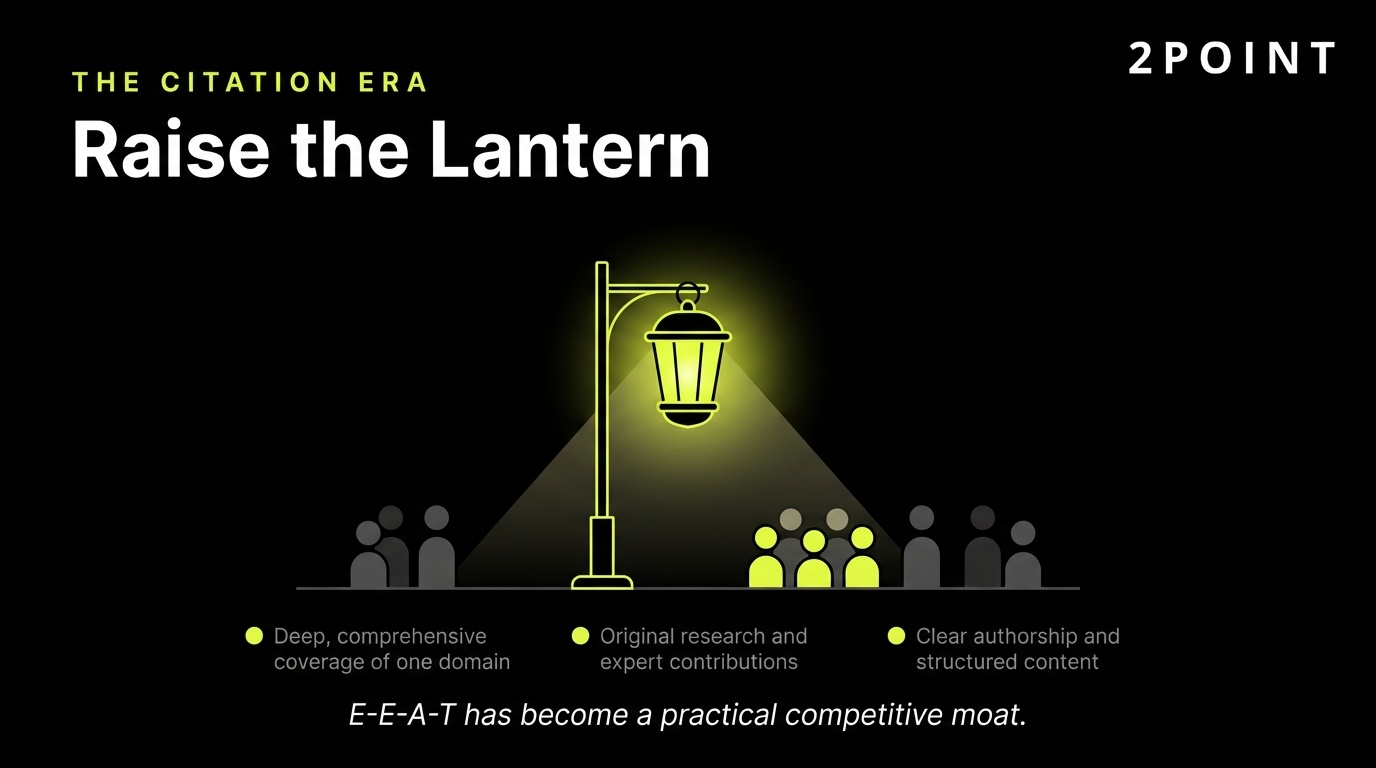
E-E-A-T (Experience, Expertise, Authoritativeness, Trustworthiness) has evolved from a Google quality guideline into a practical competitive moat. Demonstrating real-world experience, citing credible sources, maintaining factual accuracy, and earning trust signals from other authoritative sites are all factors that influence both traditional rankings and LLM citation likelihood. Structured data, clear author attribution, and well-organized content hierarchies also help AI systems accurately understand and cite content. Building online visibility in this new era requires a more holistic approach than keyword optimization alone.
Social Media Marketing Strategies for a $207 Billion Advertising Market
Social media marketing has matured from a channel that brands used reluctantly into one of the primary engines of digital commerce. The scale of the ecosystem, the sophistication of its advertising infrastructure, and the behavioral shift toward social as a primary discovery and shopping platform have made it indispensable for virtually every category of consumer business.
The Scale of the Social Advertising Ecosystem
The numbers that define social media marketing in 2026 are genuinely staggering. Global social media advertising spend has reached $207 billion, with some projections placing the social advertising market at $338.75 billion in 2026 when the full scope of the ecosystem is included. The market is projected to grow to $530.34 billion by 2030, growing at an 11.86% CAGR.
5.24 billion people now use social media worldwide, representing 64% of the global population. The United States alone will generate $126 billion in social ad revenue in 2026. By 2030, 82.9% of social advertising spend will come from mobile devices, reinforcing the mobile-first imperative that runs across every digital channel.
These numbers create both enormous opportunity and intense competition. Reaching an audience of billions is theoretically possible; capturing their attention meaningfully and efficiently requires increasingly sophisticated strategy, creative excellence, and platform expertise. Understanding social media trends is no longer optional for brands competing in consumer markets.
Platform Performance Dynamics and the Meta vs. Google Rivalry
One of the most significant market dynamics in digital advertising right now is the battle between Meta and Google for overall ad revenue supremacy. Meta is forecast to generate $243.46 billion in 2026 ad revenues compared to Google's $239.54 billion, the first time Meta has overtaken Google in total ad revenues. Meta now commands 26.8% of global ad spend versus Google's 26.4%.
TikTok's trajectory is equally noteworthy. TikTok is expected to reach 2.14 billion users in 2025, a scale that demands serious attention from any brand targeting consumers under 40. The platform's algorithm, which surfaces content based on interest rather than social graph, has demonstrated an ability to deliver organic reach that Facebook and Instagram have systematically reduced for brand pages.
Content format matters enormously on social platforms. Visual content is 40 times more likely to be shared than text-based content, and 86% of consumers say they prefer user-generated content over content from brands or influencers. This preference for authenticity has significant implications for how brands allocate their social media budgets and structure their content strategies. Navigating influencer marketing partnerships thoughtfully, alongside UGC strategies, can help bridge the authenticity gap.
Social Commerce and the Rise of Shoppable Content
Social commerce represents one of the most commercially significant developments in the social media space. The ability to complete a purchase without leaving a platform has fundamentally shortened the path from discovery to transaction, and the numbers reflect its growing importance. Social commerce is projected to account for 17% of all e-commerce sales, a share that has grown rapidly as platforms have invested heavily in native checkout experiences.
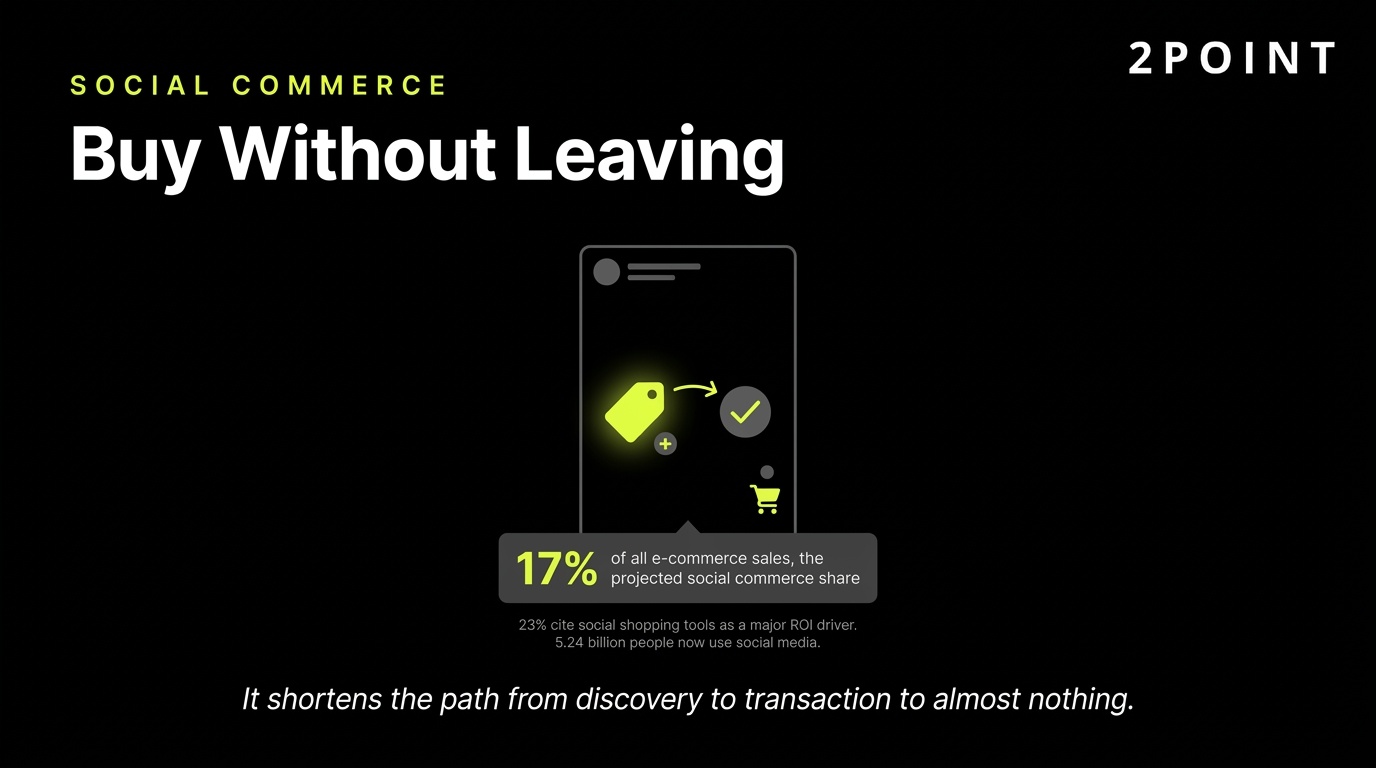
23% of marketers cite social shopping tools as a major ROI driver, and 29% point to them as a leading use case for their social media investment. Instagram's product tags, TikTok Shop, Pinterest's buyable pins, and Facebook's Marketplace have each created frictionless pathways from content to commerce that were not possible even a few years ago.
The strategic advantage of social commerce goes beyond convenience. It keeps customers within platforms where brands have built audiences and trust, reducing the friction that typically occurs when users are redirected to external websites. Combined with the behavioral data these platforms collect, social commerce enables a level of targeting precision and purchase intent alignment that direct-to-consumer brands are increasingly building entire strategies around. Seasonal peaks represent particularly high-value windows for social commerce, and brands with well-executed seasonal campaigns consistently outperform those with static year-round approaches.
Short-Form Video Dominance and Platform-Specific Content Strategy
Short-form video has become the defining content format of the current era. Short-form video now accounts for 82% of all internet traffic, a staggering dominance that reflects both consumer preference and platform algorithm bias toward video. 91% of businesses now use video as their primary marketing tool, and 82% of video marketers report strong ROI from their video investments in 2026.
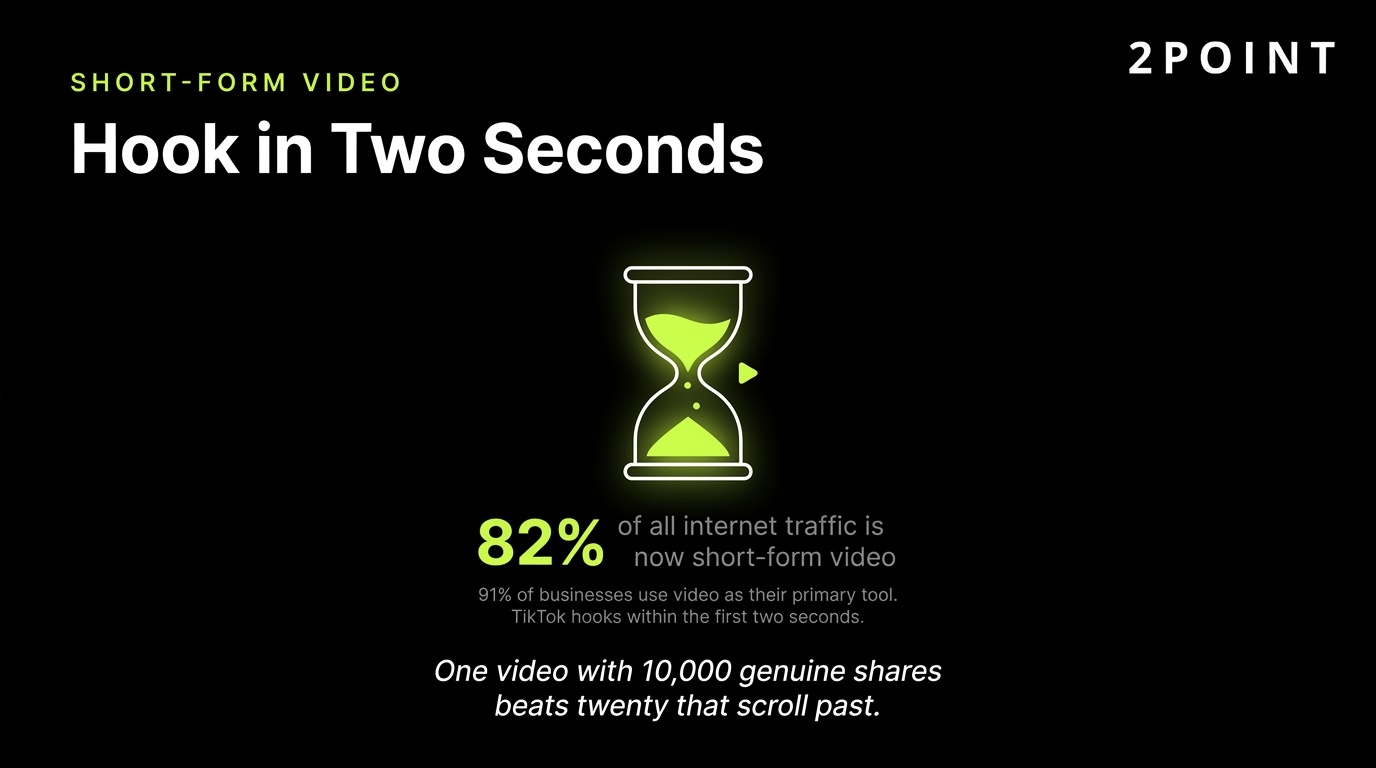
Platform-specific optimization is critical because what works on TikTok often fails on Instagram Reels and vice versa, even when the underlying content concept is similar. TikTok rewards native, authentic-feeling content that hooks within the first two seconds. Instagram Reels performs better with slightly higher production values and clearer visual storytelling. YouTube Shorts benefits from strong search intent alignment and clear titles that reflect the video content accurately.
The quality-over-quantity shift is one of the most important strategic adjustments brands need to make in video content. Early social media strategies rewarded volume. Today's algorithms, combined with increasingly discerning audiences, reward depth of engagement over breadth of output. A single video that generates 10,000 genuine shares and hundreds of meaningful comments delivers more algorithmic and brand value than 20 videos that scroll past without engagement. Effective community engagement strategies built around video content are what separate high-growth social media programs from those that plateau.
Email Marketing ROI: Why This Channel Still Delivers $36 to $44 Per Dollar Spent
Email marketing is frequently dismissed by newer practitioners as an outdated channel, a relic of an earlier internet era before social media and messaging apps. That perception does not survive contact with the data. Email delivers returns that no other digital channel can match, and its infrastructure is both mature enough to be reliable and flexible enough to support sophisticated personalization and automation strategies.
The Extraordinary Return on Email Marketing Investment
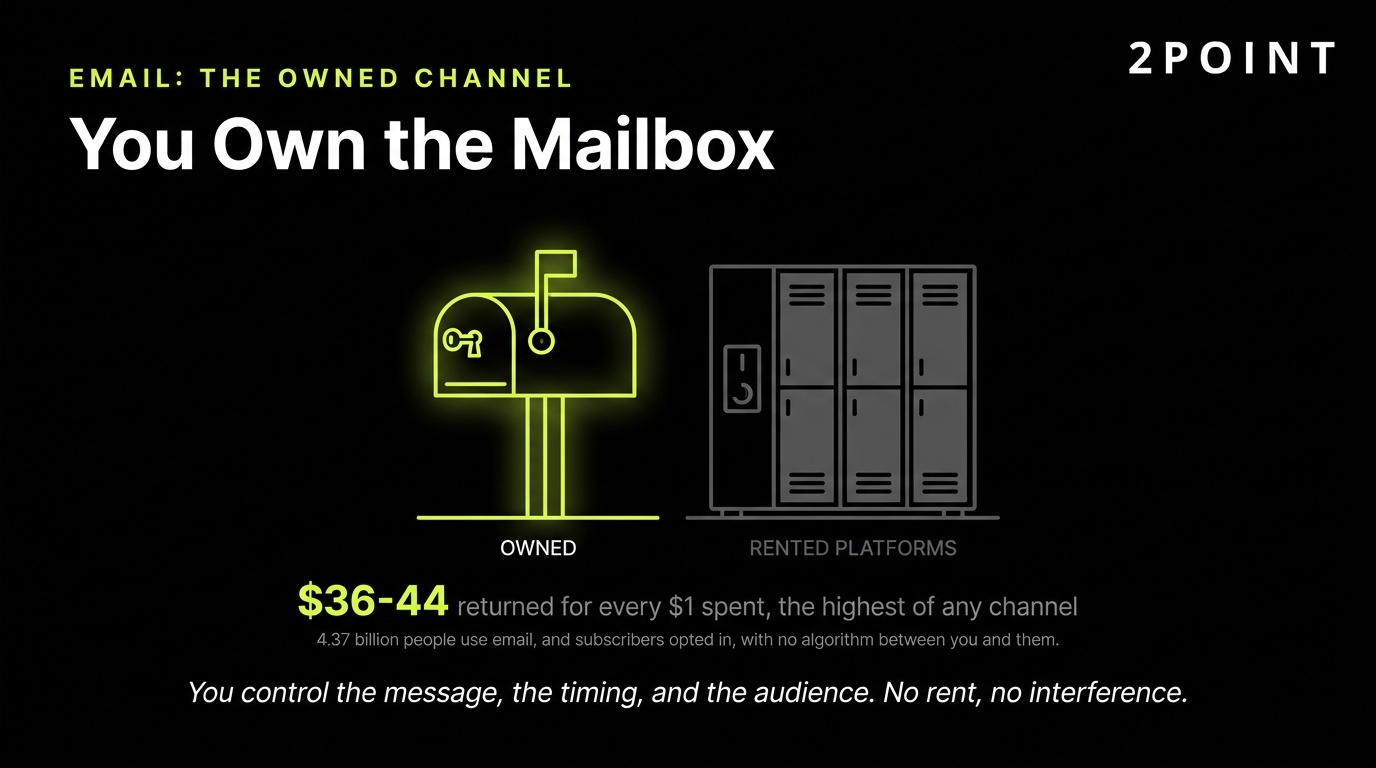
The email marketing ROI figures are, frankly, remarkable. Email generates between $36 and $44 for every $1 spent, making it the highest-returning channel across all forms of digital advertising. Some benchmarks push this higher for well-optimized programs. 30% of companies report earning $36 to $50 per dollar invested in email, and 35% report returns in the $10 to $36 range.
The reasons for email's exceptional ROI are structural. Unlike social media or search advertising, where you are renting access to an audience controlled by a third-party platform, an email list is an owned asset. The business controls the communication, the timing, and the message without algorithmic interference or escalating cost-per-impression. Subscribers have explicitly opted in, signaling interest and intent that purchased audience segments cannot replicate. Building strong email marketing programs remains one of the most reliable paths to sustainable revenue generation in digital marketing.
Email also benefits from an accountability infrastructure that is more developed than most other channels. Open rates, click-through rates, conversion rates, and revenue attribution can be tracked with precision, enabling continuous optimization that compounds returns over time. The directness of the channel, one message to one inbox, also creates a personal quality that social media feeds and search results cannot match.
Email Market Scale and Global User Fundamentals
4.37 billion people use email globally, with 376.4 billion emails sent every day. The user base is projected to reach 4.73 billion by 2026, growth driven by mobile access to email in emerging markets where email is often the primary form of digital communication. The email marketing industry itself generated $13.69 billion in revenue in 2025 and is expected to reach $15.81 billion by end of 2026.
One of email's underappreciated advantages is its universality. Unlike platform-specific formats that require users to have a particular app installed, email reaches essentially every internet user regardless of which devices, browsers, or social platforms they use. This accessibility makes email particularly valuable for reaching older demographics, B2B audiences, and users in markets where social platform adoption is uneven.
Personalization and Segmentation Strategies That Drive Email Performance
Generic batch-and-blast email campaigns still work in a narrow sense, they cost little and reliably generate some response. But the gap between generic and personalized email performance is enormous and continues to widen. Personalized subject lines increase open rates by double digits. Segmented campaigns consistently outperform unsegmented ones on every metric from open rate to revenue per recipient.
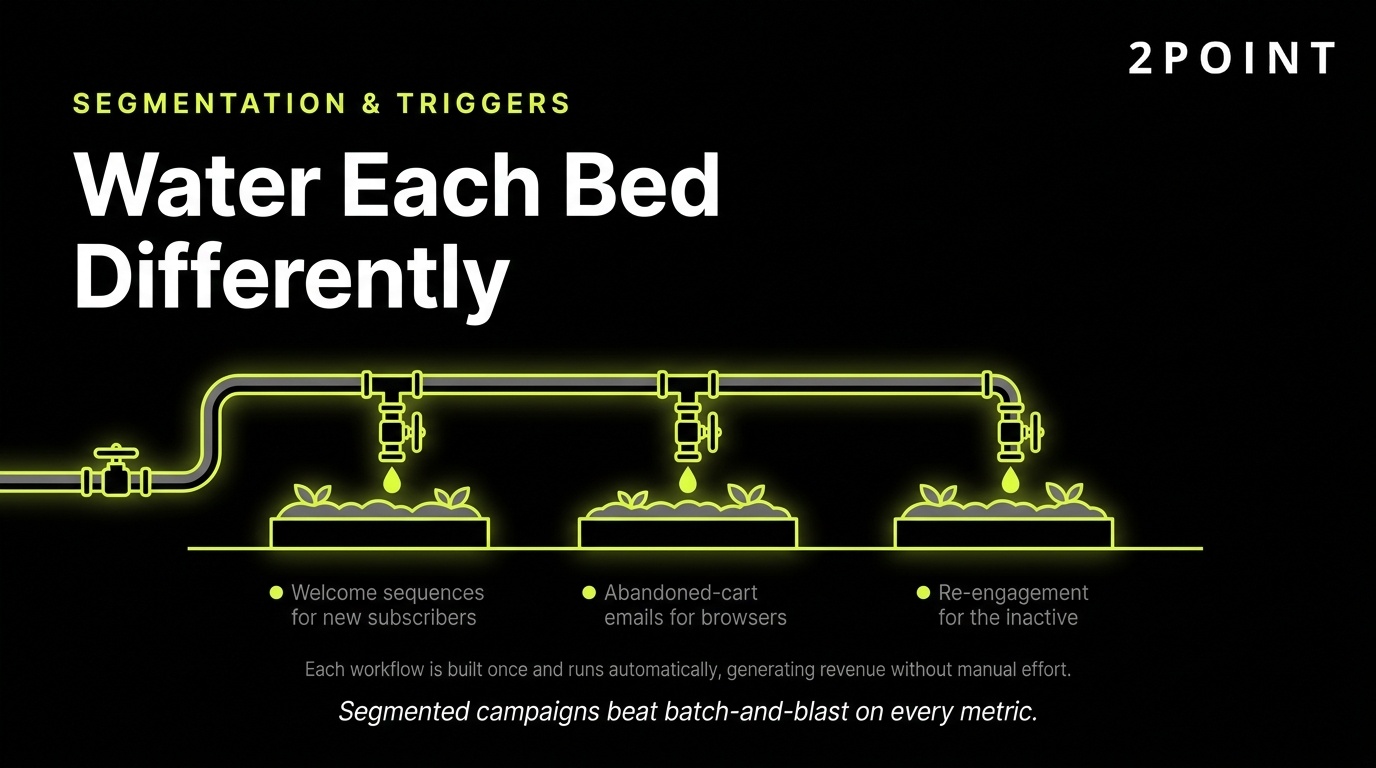
Effective segmentation starts with data: purchase history, browsing behavior, engagement history, demographic attributes, and expressed preferences all contribute to segment definitions. Behavioral triggers are particularly powerful: welcome sequences for new subscribers, abandoned cart emails for browsers who did not purchase, re-engagement campaigns for inactive subscribers, and post-purchase sequences designed to deepen loyalty. Each of these workflows can be built once and run automatically, generating revenue without ongoing manual intervention. Building emotional connections through well-timed, relevant email communication is one of the highest-value applications of personalization technology available to modern marketers.
Mobile Email Optimization for Maximum Deliverability and Engagement
Given that the majority of email opens now happen on smartphones, mobile optimization is not optional. Responsive email templates that adapt gracefully to screen size, shorter subject lines that display fully on mobile (typically under 40 characters), and preheader text that extends the subject line value are all baseline requirements for any serious email program.
Single-column layouts, large tap targets for calls-to-action, and images that load quickly on mobile connections are design standards that any email developer should implement as defaults. Preview text, the short snippet visible in the inbox before opening, is often neglected but is one of the most impactful elements for driving open rates. The combination of sender name, subject line, and preview text is the entire first impression; optimizing all three together consistently outperforms optimizing subject lines in isolation.
Content Marketing Strategies That Drive Long-Term Digital Marketing Results
Content marketing is the discipline of creating and distributing genuinely valuable information to attract, engage, and retain a defined audience, with the long-term goal of driving profitable customer behavior. It is one of the oldest digital marketing disciplines and, in an era of AI-generated noise, one of the most competitively differentiating when executed with genuine craft and strategic clarity.
The $107 Billion Content Marketing Industry
Global content marketing revenue is expected to reach $107 billion by 2026, reflecting widespread adoption across business categories and geographies. 73% of B2B marketers and 70% of B2C marketers use content marketing as part of their strategy, and 61% report that their content strategy has become more effective over the past year, driven by refined skills and deeper organizational commitment to the discipline.
Content marketing's value proposition is long-term and compounding. A well-researched article that ranks for a high-intent keyword continues to generate traffic and leads for years after publication. A podcast that builds a loyal audience delivers recurring brand exposure with minimal ongoing cost. A comprehensive resource library positions a brand as an authoritative source in its industry, creating trust that shortens sales cycles and increases conversion rates across all other digital channels.
Content Formats, Distribution Channels, and Optimal Production Strategies
The range of effective content formats available to digital marketers is broader than ever. Blog posts, long-form guides, video content, infographics, podcasts, webinars, case studies, whitepapers, email newsletters, and interactive tools all have valid roles depending on audience preference, sales cycle length, and competitive landscape.
Blog post length is a topic that generates ongoing debate. The average blog post length reached 1,394 words in 2024 and shortened slightly to 1,333 words in 2025, reversing a decade-long trend toward longer content. The peak was 1,427 words in 2023. The data suggests that quality and relevance matter more than word count; a well-structured 1,200-word piece that fully answers a reader's question outperforms a padded 3,000-word piece that buries the answer.
Distribution is as important as creation. Content that is published and left to find its own audience delivers a fraction of the results it would achieve with active distribution across email, social, paid amplification, influencer outreach, and community channels. A multichannel distribution plan should be developed before content is published, not as an afterthought. Strong data analytics applied to content performance reveal which formats and topics drive genuine business outcomes versus those that only generate surface-level engagement metrics.
Original Research as the Highest-Value Content Differentiation Strategy
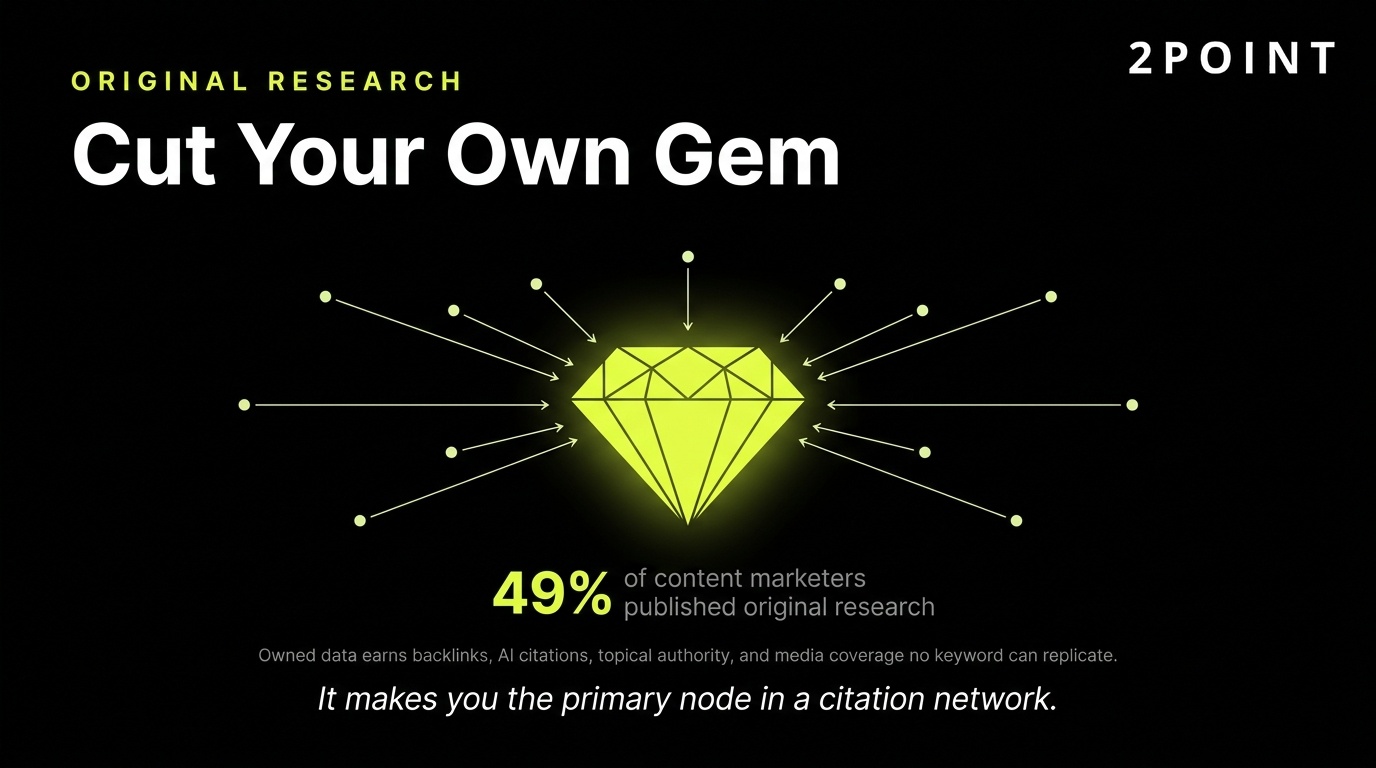
In a content landscape increasingly crowded with AI-generated summaries and recycled opinions, proprietary research stands out as one of the few genuinely un-replicable content assets. 49% of content marketers published original research in 2025, an increase from 2024, recognizing the competitive advantages that owning unique data provides.
Original research earns backlinks, earns citations in AI-generated content, establishes topical authority, and generates media coverage that no amount of SEO keyword optimization can replicate. When a brand publishes a well-designed survey, analysis, or industry benchmark that other sources reference, it becomes the primary node in a citation network that drives compounding authority and visibility. Building a sustainable strategy for content requires identifying research topics that align with brand expertise and audience information needs, then executing studies with the rigor and transparency needed to earn genuine citation.
Quality Versus Quantity in the Age of AI-Generated Content
The flood of AI-generated content has raised the stakes for human-crafted work. When any topic can be covered in seconds by a large language model, the differentiation has to come from insight, experience, original analysis, and authentic brand voice rather than from simple information delivery.
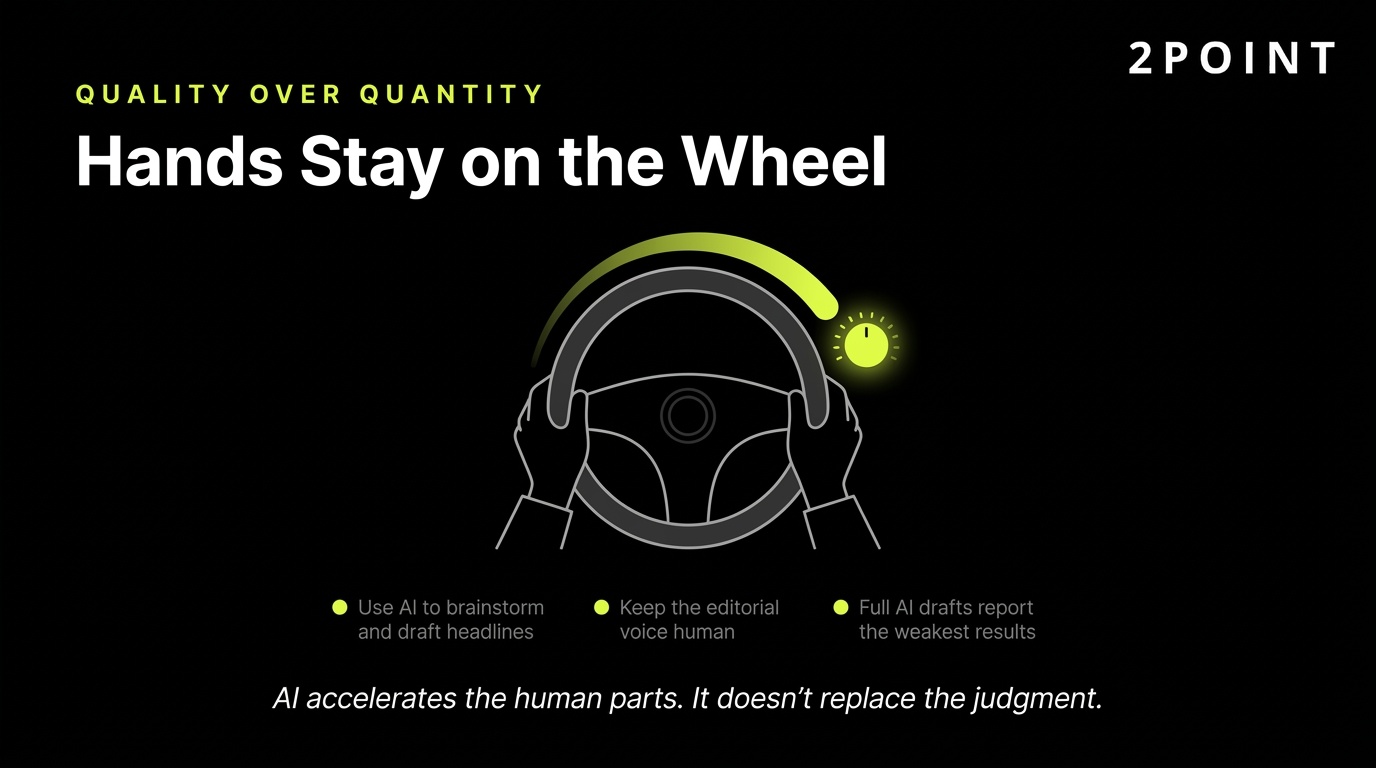
The data on AI and content performance is nuanced. Content writers who use AI for support tasks such as brainstorming, headline generation, and visual research are more likely to report strong performance than those who do not use AI at all. However, writers who use AI to generate complete drafts are the least likely to report strong content performance. The productive middle ground is using AI to accelerate the human-driven parts of content production without allowing it to replace the strategic judgment, editorial voice, and experiential insight that make content genuinely valuable. Clarity in marketing communications becomes the premium when AI tools are available to everyone but coherent, insightful communication remains distinctly human.
Digital Advertising Strategies for Performance-Driven Marketing in 2026
Paid digital advertising is the lever that most businesses pull first when they need rapid results. Unlike SEO and content marketing, which build equity over time, digital advertising can generate traffic, leads, and sales within hours of campaign launch. The complexity lies in doing it efficiently, at scale, and in ways that complement rather than compete with organic efforts.
Digital Advertising Spend and Format Distribution in 2026
The scale of paid digital advertising makes it the largest single category within digital marketing. More than 75% of marketers plan to increase or maintain their search and display advertising investment in 2026, and U.S. digital ad spending is expected to exceed $383 billion by 2027.
Format-level breakdown reveals where budgets are flowing. Search advertising leads at $114.2 billion (38.8% of total digital ad spend), growing 11% year-over-year. Display reached $81.6 billion. Video saw the strongest growth, jumping 25% to $78 billion. Audio advertising remained steady at $8.4 billion. The video growth rate reflects the broader shift toward video consumption across all digital environments and the maturation of programmatic video buying infrastructure.
Effective measurement of campaign performance across these formats requires a unified attribution approach that assigns credit accurately across touchpoints. Last-click attribution, still common in many organizations, systematically undervalues awareness-stage and consideration-stage advertising in favor of bottom-funnel channels. Data-driven attribution models that reflect the full customer journey are essential for making accurate budget allocation decisions.
Programmatic Advertising and the Rise of Retail Media Networks
Retail media networks have emerged as the fastest-growing category in digital advertising, and their growth trajectory shows no signs of slowing. Retail media is the fastest-growing advertising channel at 14.1% growth, and off-site programmatic retail media is growing at twice the rate of on-site retail media placements.
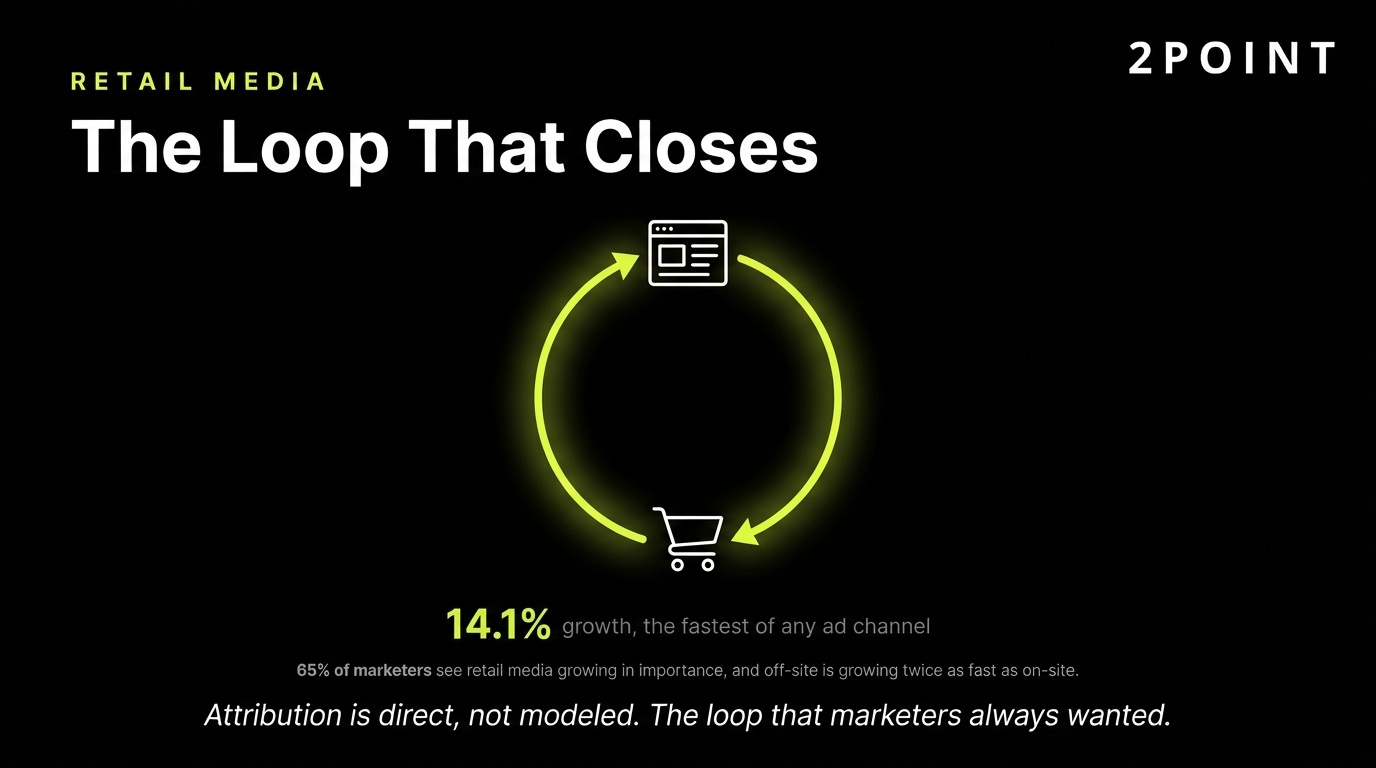
65% of global marketers have seen retail media networks play an increasingly important role in their advertising strategies, with North America showing the highest adoption at 74% versus 48% in Europe. The closed-loop measurement capability is retail media's most compelling structural advantage: because the same company controls both the advertising platform and the point of purchase, attribution is direct rather than modeled, delivering the purchase accountability that digital marketers have always wanted but traditional programmatic buying could not provide.
CTV and OTT's Evolution from Awareness Channel to Performance Medium
Connected TV and over-the-top streaming advertising has matured from a brand awareness play into a full-funnel performance channel. 56% of global marketers planned to increase OTT and CTV spending in 2025, up from 53% in 2024. North America showed the most dramatic acceleration: 66% of North American marketers planned CTV increases in 2025, compared to just 44% in 2024, a 22-point jump in a single year.
Shoppable video is the innovation that has transformed CTV's role in the marketing funnel. The ability to integrate interactive elements and direct purchase links into streaming content turns what was previously a passive awareness medium into a conversion channel. CTV political ad spending is forecast to surge 20% compared to 2024, reflecting both the channel's growing audience scale and its targeting precision for politically relevant demographic and geographic segments.
Ad Blocking, Consumer Fatigue, and the Case for Creative Excellence
Not all advertising is welcomed by the audiences it targets. 25% of U.S. consumers use ad blockers, and 41% say they are annoyed by internet advertising. These numbers are a reality check for any advertiser who treats creative quality as an afterthought and focuses exclusively on targeting and bidding efficiency.
The solution is not less advertising; it is better advertising. Native advertising formats that match the form and function of the surrounding content consistently outperform disruptive banner formats. Contextual targeting, which places ads in editorially relevant environments rather than chasing users across the web based on behavioral data, is experiencing a renaissance as cookie-based targeting becomes less viable. The brands that invest in genuine creative excellence, work that is entertaining, useful, or emotionally resonant rather than merely promotional, earn a fundamentally different relationship with their audiences than those that simply buy attention. Transparent communications in advertising build the kind of trust that makes audiences more receptive to commercial messages over time.
Emerging Technologies Shaping the Future of Digital Marketing
The digital marketing landscape is shaped not only by what works today but by the technologies that are moving from experimental to mainstream. Understanding these emerging trends allows forward-thinking marketers to build capability ahead of the curve rather than scrambling to catch up when competitors are already ahead.
Augmented Reality Marketing and Immersive Shopping Experiences
Augmented reality has moved from a novelty into a commercially significant marketing tool, particularly in categories where physical interaction with a product has traditionally been a barrier to online purchase. 71% of consumers say they would shop more frequently if AR were available, and 61% say they prefer shopping at businesses that offer AR-enabled experiences.
The market opportunity is substantial. The global AR market is predicted to reach $461.25 billion by 2030, growing at a CAGR of 41.50%. More than 30% of marketers are already integrating AR and VR into their campaigns. Practical applications include virtual furniture placement for home goods retailers, virtual try-on for apparel and beauty brands, interactive product demonstrations for complex technical products, and immersive property tours for real estate. Each of these use cases reduces purchase hesitation by giving consumers a more confident basis for their buying decisions.
Voice Search Optimization for the Conversational Web
Voice search is quietly becoming a mainstream information-retrieval behavior that digital marketers must account for in their SEO and content strategies. More than 20% of global internet users over the age of 16 now use voice assistants to find information, and 73.7% of marketers plan to maintain or increase their voice search optimization investment.
The numbers for future adoption are compelling. Voice assistant usage on smartphones is forecast to rise to 48.7% by 2029, and the United States is expected to reach 157 million voice assistant users by end of 2026. Optimizing for voice search requires a different content approach than traditional keyword optimization: voice queries are conversational, question-formatted, and typically local in intent. Content that directly answers specific questions in natural language, structured with FAQ formats and clear direct answers, performs disproportionately well in voice search results.
Local businesses benefit most immediately from voice search optimization. "Near me" queries and intent-driven voice searches for local services represent high-commercial-intent traffic that well-optimized local content can capture efficiently. Schema markup for local business information, clear NAP (Name, Address, Phone) consistency, and Google Business Profile optimization are the foundational elements of a voice-ready local SEO strategy.
Data Privacy, Cookieless Targeting, and First-Party Data Strategies
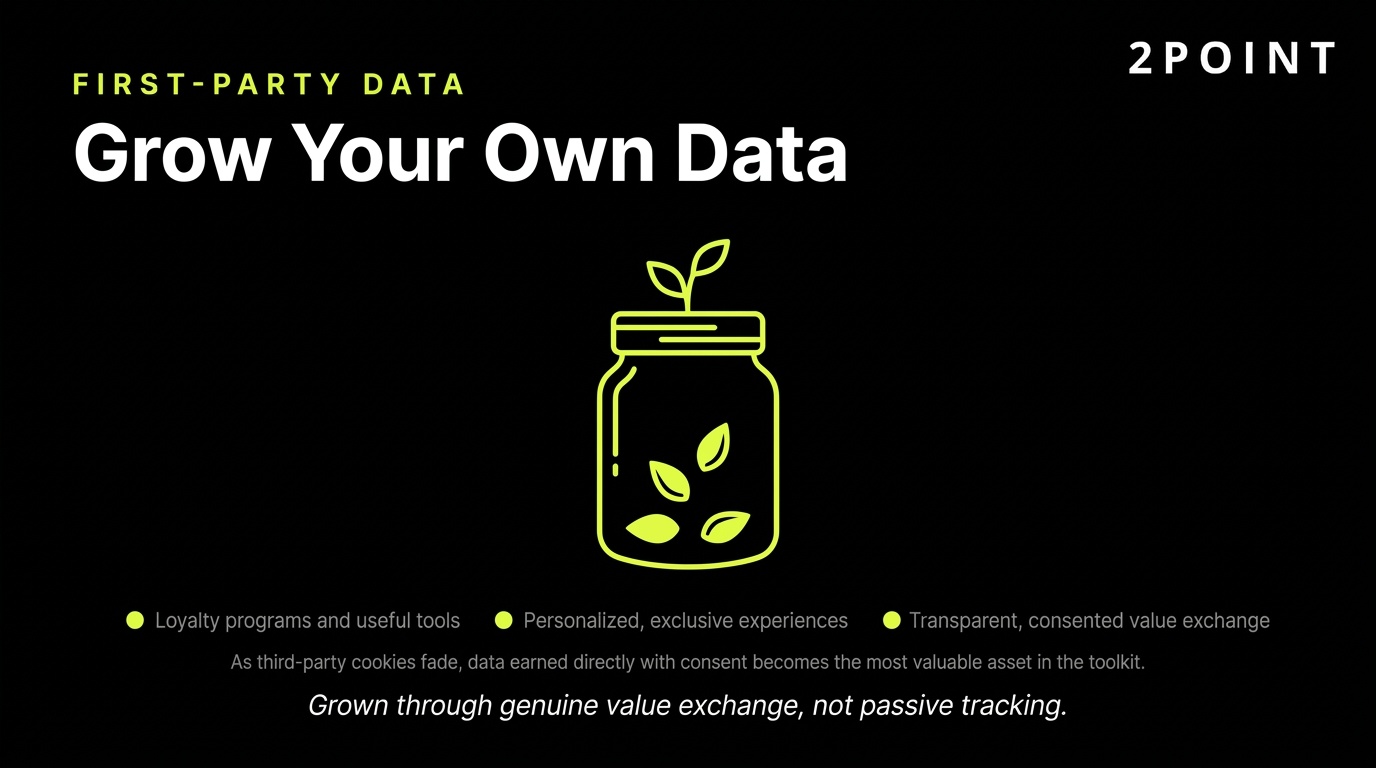
The deprecation of third-party cookies, combined with platform-level privacy restrictions from Apple's App Tracking Transparency framework and growing regulatory requirements under GDPR, CCPA, and their successors, has fundamentally changed the data landscape for digital marketers. Targeting strategies built on third-party behavioral data are losing reliability, and the entire industry is navigating this transition with varying degrees of urgency.
First-party data, information collected directly from customers with explicit consent, has become the most valuable data asset in digital marketing. Building programs that generate high-quality first-party data requires genuine value exchange: loyalty programs, personalized experiences, exclusive content, useful tools, and transparent communication about how data will be used. Brands that have invested early in first-party data collection are significantly better positioned for a cookieless future than those that relied heavily on third-party audience segments.
The shift also accelerates the importance of consumer behavior research as a strategic input. When behavioral tracking becomes less reliable, qualitative understanding of customer motivations, decision-making processes, and channel preferences becomes more valuable. Organizations that invest in both quantitative data infrastructure and qualitative consumer insight will navigate the privacy transition with the least disruption to marketing effectiveness.
Personalization at Scale and the Hyper-Relevant Customer Experience
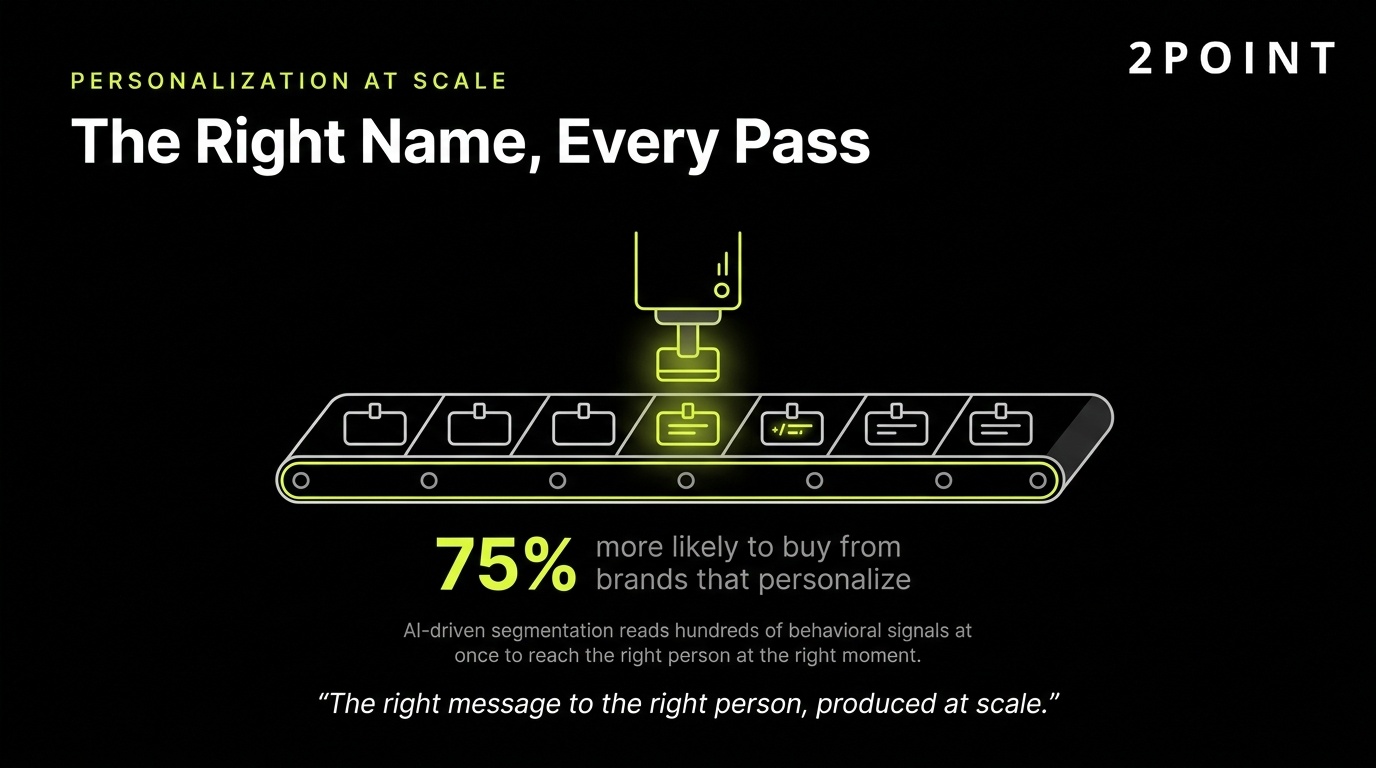
The aspiration of personalization at scale has existed in digital marketing for years. The convergence of AI, first-party data infrastructure, and real-time decisioning platforms is making it genuinely achievable. Dynamic content that adapts to individual user behavior, predictive product recommendations, personalized email sequences triggered by specific actions, and AI-curated content feeds all represent different implementations of the same underlying principle: the right message to the right person at the right moment.
The commercial case for personalization is well-established. Recall that 75% of consumers are more likely to buy from brands that deliver personalized content experiences. The challenge is executing personalization at the depth and sophistication that consumers now expect without crossing the line into surveillance-like targeting that triggers discomfort. The key is using behavioral signals that customers provided knowingly and using them to deliver genuinely helpful, relevant experiences rather than simply demonstrating that a brand has been tracking their every click. This is where marketing effectiveness evaluation becomes essential: continuously testing whether personalization efforts are improving customer experience and commercial outcomes rather than simply adding technical complexity.
How to Build a Digital Marketing Strategy That Delivers Measurable Results
Having reviewed the individual channels and technologies that constitute modern digital marketing, the most important question for practitioners is how to synthesize this information into a coherent strategy. A digital marketing strategy is not a list of tactics; it is a structured approach to allocating resources, coordinating channels, measuring outcomes, and continuously improving performance toward defined business goals.
Setting Goals, Defining Audiences, and Mapping the Customer Journey
Every effective digital marketing strategy starts with clarity about three things: what you want to achieve, who you are trying to reach, and what path they take from first awareness to loyal customer. These three elements, goals, audience, and journey, provide the foundation that every channel decision, budget allocation, and content choice should be built upon.
Goals need to be specific, measurable, and connected to business outcomes rather than marketing vanity metrics. Increasing organic search traffic by 40% is a marketing metric. Generating 500 qualified sales leads per month at a target cost per lead is a business outcome metric. The difference matters because it determines how success is measured, how budgets are justified, and how marketing performance is communicated to organizational leadership.
Audience definition goes deeper than demographics. Understanding the specific problems, information needs, objections, and decision triggers of your target customer enables content and messaging that resonates rather than merely describes. Building detailed buyer personas that reflect actual customer research, including interviews, survey data, and behavioral analytics, gives every marketer on the team a shared model of who they are creating for.
Channel Selection and Budget Allocation Based on Audience and Objectives
One of the most common strategic errors in digital marketing is trying to be present everywhere simultaneously without the resources to be excellent anywhere. Channel selection should be driven by two factors: where your target audience spends their time and attention, and where your business can realistically build and sustain a competitive capability.
For most businesses, a focused approach that prioritizes two or three primary channels and executes them excellently will outperform a diluted presence across six or eight channels. A B2B software company with a long sales cycle and a technically sophisticated audience may achieve better results from SEO-driven content marketing, LinkedIn advertising, and email nurturing than from TikTok short-form video and Instagram shopping. The inverse may be true for a direct-to-consumer beauty brand. Channel selection is a strategic choice that should reflect customer behavior research, not industry conventions or competitor imitation.
Measurement Frameworks and Continuous Optimization Principles
A digital marketing strategy without a measurement framework is a set of activities without accountability. Defining key performance indicators before campaigns launch, establishing baseline metrics, and committing to regular review cadences ensures that marketing investment is continuously evaluated against business outcomes rather than simply executed and forgotten.
Effective measurement combines leading indicators, metrics that predict future outcomes such as engagement rates, email subscriber growth, and organic ranking improvements, with lagging indicators, metrics that confirm past results such as revenue, customer acquisition cost, and lifetime value. Relying exclusively on lagging indicators means waiting too long to identify problems; relying exclusively on leading indicators means optimizing for signals that may not reliably predict the outcomes that matter.
Continuous optimization is the practice of systematically testing hypotheses about what drives better results, implementing changes based on evidence, and building institutional knowledge over time. A culture of testing, one where campaigns are never considered finished but always open to improvement, is one of the most durable competitive advantages a digital marketing team can develop. Teams at 2POINT approach digital marketing strategy this way: building measurement infrastructure before campaigns launch, establishing clear performance benchmarks, and maintaining the discipline to optimize based on evidence rather than intuition.
Comparing Digital Marketing Channels by ROI, Scale, and Strategic Purpose
Choosing the right mix of digital marketing channels requires understanding how each one compares across the dimensions that matter most to business performance. The table below synthesizes the key attributes of the major channels discussed throughout this guide.
| Digital Marketing Channel | Reported ROI Range | Primary Strategic Purpose | Time to Results | Scale Potential | Cost Structure |
|---|---|---|---|---|---|
| SEO (Organic Search) | Highest long-term (27% cite as top ROI driver) | Sustained traffic, brand authority, lead generation | 3 to 12 months | Very High (93% of traffic depends on search) | Investment in content and links; no cost-per-click |
| Email Marketing | $36 to $44 per $1 spent | Nurturing, retention, conversion, loyalty | Immediate to weeks | High (4.37 billion global users) | Platform fees; very low variable cost per send |
| Content Marketing | Long-term compounding (supports all other channels) | Authority building, SEO support, lead nurturing | 6 to 18 months | High (universal across channels) | Production investment; distribution costs optional |
| Social Media Marketing | Variable (23% cite social shopping tools as major ROI driver) | Awareness, engagement, commerce, community | Immediate to months | Very High (5.24 billion users) | Mixed: organic free; paid on cost-per-click or CPM basis |
| Paid Search (PPC) | Immediate measurable returns; lower than SEO long-term | Immediate traffic, intent-driven conversions | Hours to days | High ($114.2B search ad market) | Cost-per-click; scales with budget |
| Programmatic Display | Lower direct ROI; strong for awareness and retargeting | Brand awareness, retargeting, reach | Hours to days | Very High ($81.6B market) | CPM and CPC; ongoing spend required |
| Video Advertising (CTV/Social) | Strong ROI reported by 82% of video marketers | Awareness, engagement, increasingly direct response | Days to weeks | High ($78B, growing 25% YoY) | Production cost plus media placement; varies widely |
| Influencer Marketing | Variable; strong for niche audiences | Awareness, social proof, audience trust | Weeks to months | Medium to High (niche-dependent) | Flat fees or performance-based; varies by tier |
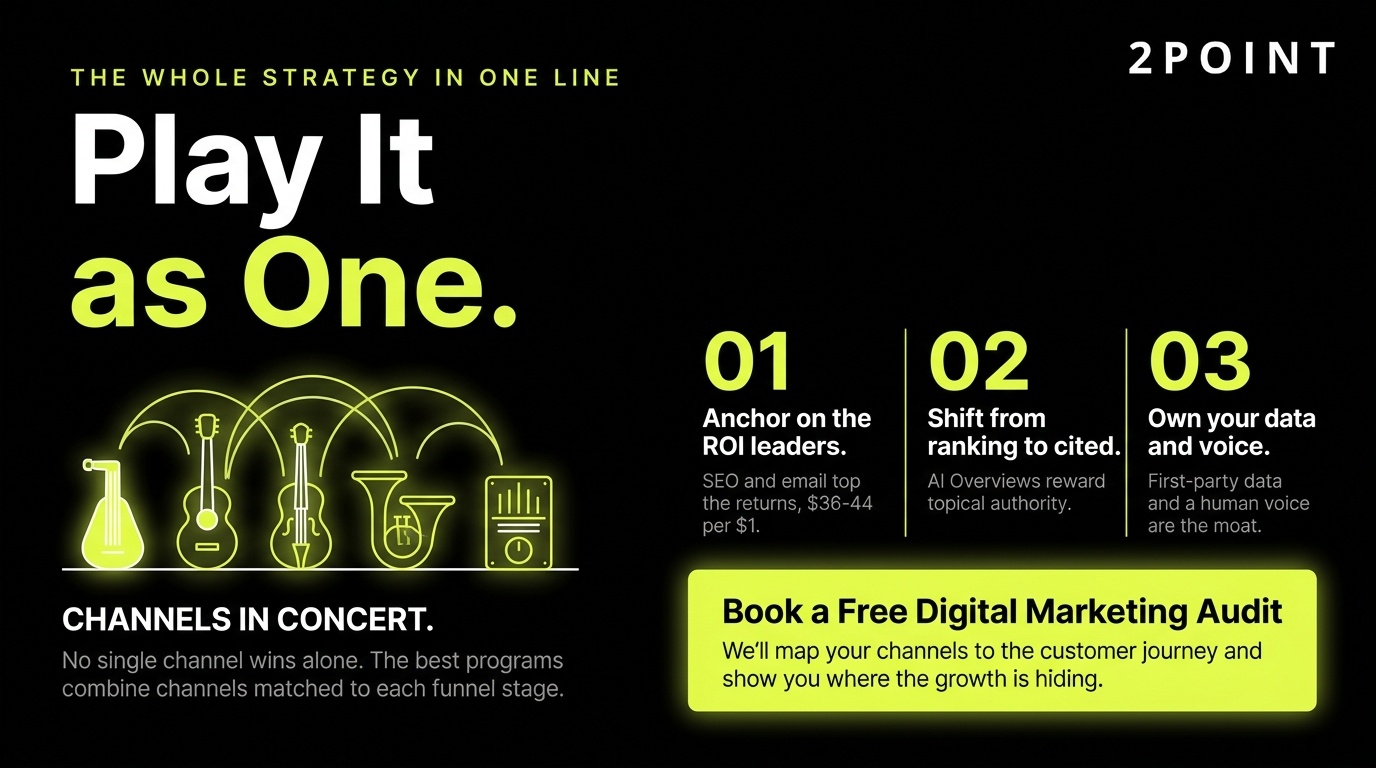
The key takeaway is that no single digital marketing channel consistently outperforms across all objectives; the highest-performing digital marketing strategies use a combination of channels matched to specific funnel stages, audience behaviors, and business goals.
Building a Future-Ready Digital Marketing Program in 2026 and Beyond
Digital marketing in 2026 is simultaneously more powerful and more complex than it has ever been. The tools, data, and channels available to modern marketers give even small organizations the ability to reach global audiences, personalize communications at scale, and measure commercial outcomes with precision that previous generations could only dream about. The challenge is building the strategic clarity, organizational capability, and cultural commitment to testing and learning that transforms these tools into durable competitive advantages.
The overarching trends discussed throughout this guide point in a consistent direction. AI is becoming a production-critical component of marketing operations, not a future curiosity. Search is being fundamentally restructured by large language models, requiring a shift from ranking strategies to citation and authority strategies. Social commerce is compressing the distance between discovery and purchase. Email remains the most reliable owned-channel investment available. And first-party data is replacing third-party targeting as the foundation of personalized marketing.
Businesses that approach these changes reactively, responding to disruptions only after they have already affected performance, will find themselves in an increasingly difficult position. Those that build capability proactively, investing in data infrastructure, AI literacy, content quality, and audience relationships now, will find the current complexity is actually a competitive filter that rewards preparation.
The human elements of digital marketing remain irreplaceable. Creative insight, strategic judgment, empathetic customer understanding, and authentic brand voice are the qualities that differentiate excellent marketing from technically adequate marketing. AI accelerates and scales; it does not replace the vision and judgment that determine what to build in the first place.
Whether you are building a digital marketing program from the ground up or refining an existing one, the principles are consistent: know your audience deeply, choose channels strategically, create genuinely valuable content, measure what matters, and optimize continuously. Organizations that commit to these fundamentals, supported by the right technology and expertise, will find that the trillion-dollar digital marketing landscape is full of opportunity.
Frequently Asked Questions About Digital Marketing
What is digital marketing in simple terms?
Digital marketing is the promotion of products, services, or brands through online channels including search engines, social media, email, websites, and mobile applications. It encompasses both paid and organic strategies designed to reach, engage, and convert target audiences where they spend their digital time. Unlike traditional marketing, digital marketing can be precisely targeted, measured in real time, and continuously optimized based on performance data.
How much does digital marketing cost for a small business?
Digital marketing costs vary widely depending on channel mix, geographic targeting, industry competitiveness, and whether work is done in-house or through an agency. Small businesses can begin with content marketing and email marketing for minimal out-of-pocket cost beyond time investment, while paid advertising can start from a few hundred dollars per month. Most small businesses spend between 7% and 12% of their revenue on marketing, with digital channels typically representing the majority of that budget.
What is the highest ROI digital marketing channel?
Email marketing consistently delivers the highest measured ROI, generating between $36 and $44 for every $1 spent according to current benchmarks. SEO is the top ROI driver cited by 27% of marketers and delivers superior long-term returns compared to paid advertising because it builds organic traffic that does not require ongoing spend. The best-performing programs combine email and SEO with targeted paid advertising to cover the full customer journey.
How is AI changing digital marketing strategies?
AI is transforming digital marketing by automating content generation, enabling predictive audience segmentation, accelerating campaign optimization, and delivering personalization at scales that were previously impossible. 75% of marketing organizations now use at least one form of AI, with average productivity gains of 32%. Key challenges include AI-generated content quality issues, brand homogenization risk, and the time required to implement new AI platforms effectively.
What is the difference between digital marketing and traditional marketing?
Traditional marketing uses offline channels such as print, television, radio, and outdoor advertising to reach audiences, typically with limited targeting precision and delayed or indirect measurement. Digital marketing operates through online channels and offers real-time performance data, granular audience targeting, interactive content formats, and the ability to adjust campaigns immediately based on results. Digital now represents 68.7% of total global advertising investment, reflecting its superior measurability and targeting capabilities.
Is SEO still worth investing in with AI search changing the landscape?
SEO remains one of the highest-ROI digital marketing investments despite disruption from AI Overviews and large language model-mediated search. While AI Overviews have reduced click-through rates for top organic results in some query categories, SEO authority and topical expertise are now also the primary factors that determine whether content gets cited by AI systems. The strategy shifts from ranking for keywords to building genuine topical authority that AI systems trust as a citation source.
What are the main components of a digital marketing strategy?
A complete digital marketing strategy includes: defined business goals and KPIs, detailed audience personas based on research, channel selection aligned with audience behavior, a content strategy that delivers value across the customer journey, paid advertising plans for immediate reach and retargeting, email marketing automation for nurturing and retention, an SEO framework for long-term organic visibility, and a measurement system that tracks performance against business outcomes. Each component should be integrated rather than operated independently.
How does social media marketing differ from social media advertising?
Social media marketing is the broader discipline of building brand presence, audience relationships, and community on social platforms through both organic and paid content. Social media advertising refers specifically to the paid placement of promotional content within social platforms using targeting capabilities and paid distribution. Effective social media strategies use organic content to build authenticity and audience trust while using paid advertising to accelerate reach, target specific segments, and drive direct conversions.
What digital marketing trends matter most in 2026?
The most impactful digital marketing trends in 2026 include: agentic AI transforming marketing automation from rule-based workflows to autonomous decision-making, AI Overviews disrupting organic search traffic and requiring new citation-focused SEO strategies, retail media networks emerging as the fastest-growing advertising channel at 14.1% growth, short-form video dominating with 82% of internet traffic, and the accelerating shift to first-party data strategies as third-party cookie targeting becomes less viable.
How do you measure digital marketing effectiveness?
Digital marketing effectiveness is measured through a combination of channel-specific metrics and business outcome metrics. Channel metrics include organic traffic, click-through rates, engagement rates, email open rates, and ad impression share. Business outcome metrics include customer acquisition cost, conversion rate, revenue attributable to marketing, and customer lifetime value. Effective measurement requires defining KPIs before campaigns launch, establishing baseline benchmarks, implementing proper attribution modeling, and committing to regular performance review and optimization cycles.
What is content marketing and how does it support digital marketing goals?
Content marketing is the creation and distribution of valuable, relevant content designed to attract and retain a defined audience, with the goal of driving profitable customer action. It supports digital marketing goals by fueling SEO with indexable content, providing material for social media distribution, nurturing email subscribers through educational resources, and building the brand authority that makes paid advertising more efficient. The global content marketing industry is expected to reach $107 billion by 2026, reflecting its central role in integrated digital marketing strategies.
How does digital marketing differ for B2B versus B2C companies?
B2B digital marketing typically involves longer sales cycles, multiple decision-makers, and higher-value transactions, making content marketing, SEO for research-intent queries, LinkedIn advertising, and email nurturing particularly effective. B2C digital marketing usually involves shorter purchase cycles and emotional decision-making, making social media, short-form video, influencer partnerships, and paid search more central to the strategy. Both B2B and B2C marketers benefit from email marketing and SEO, but the content formats, messaging approaches, and conversion paths differ substantially between the two contexts.
