let’s connect


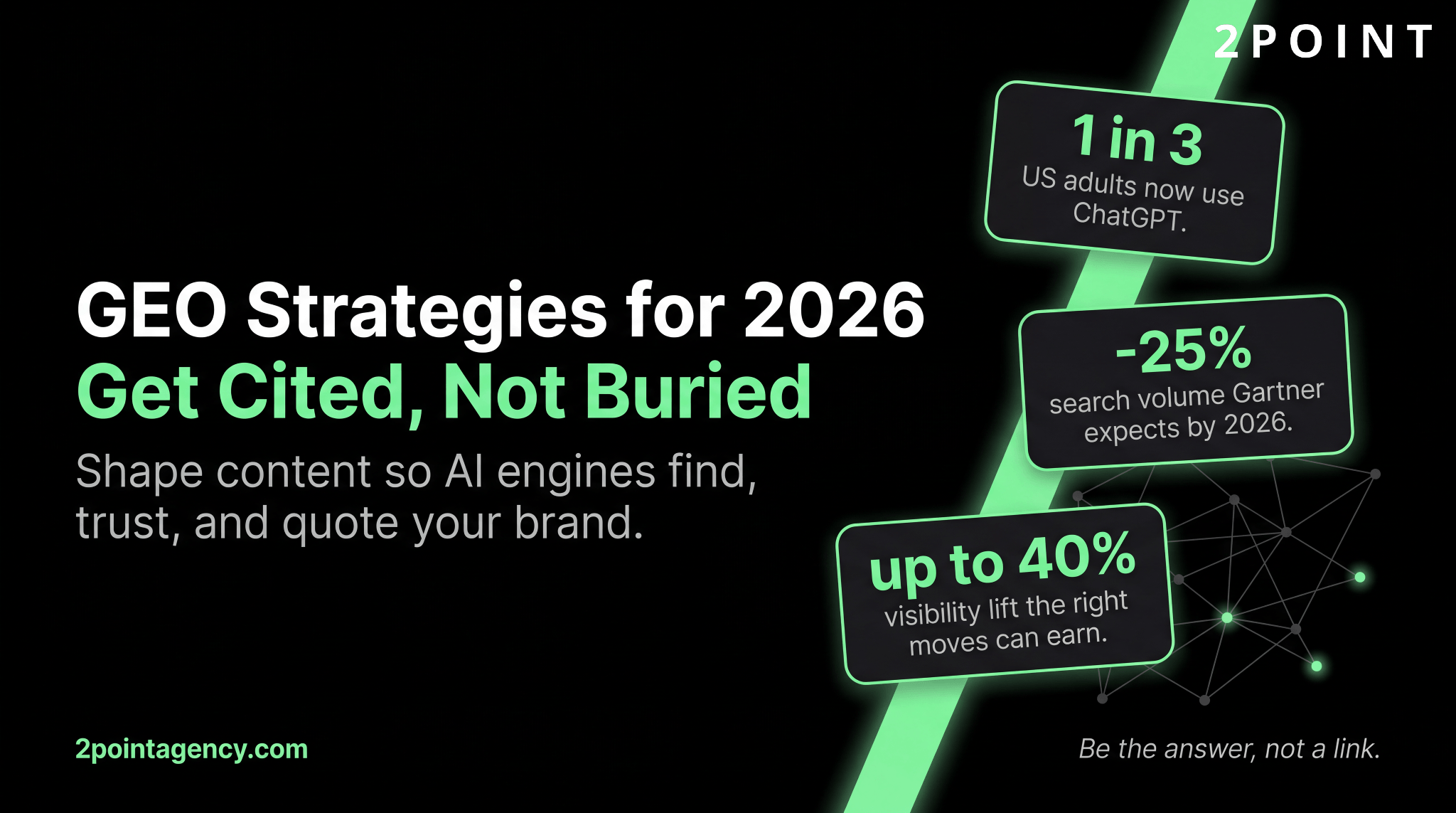
AI no longer hands users ten blue links. It gives one answer and a few sources. If your brand is not one of them, you are invisible, even if you rank well.
Generative engine optimization strategies are how you earn that spot, shaping content so AI engines find, trust, and quote you. None of it is luck. It comes down to clear answers, clean structure, and machine-readable pages.
That is the work 2POINT runs for brands in AI search. Below are nine strategies and a 90-day roadmap for this quarter. If you own SEO or content, this is for you.
TL;DR: The Direct Answer
The best generative engine optimization strategies for 2026 combine extractable answers, machine-readable structure, deep topical authority, strong entity signals, third-party citations, and Bing visibility.
Together, they help AI engines like ChatGPT, Gemini, Perplexity, and Google AI Overviews retrieve and cite your brand.
The strongest generative engine optimization tips share one trait. They work as a system, not a bag of one-off tactics, and they pay off when you run them consistently. Each lever builds on solid SEO rather than replacing it, since the pages that rank are the ones engines pull from.
What Is Generative Engine Optimization? (Quick Recap)
Generative engine optimization, or GEO, is the practice of optimizing content so AI-generated answers surface and cite your brand instead of burying you in a list of links.
The audience is already large. According to the Pew Research Center, more than a third of US adults use ChatGPT, and Gartner expects traditional search volume to fall 25% by 2026 as buyers move their questions to AI assistants. That shift is why GEO has gone from optional to essential.
It overlaps heavily with answer engine optimization, its close sibling, and both sit under the wider AI-search umbrella. Get GEO right, and you show up where your buyers now look first.
How Generative Engines Pick Sources
The generative engine optimization strategies below all target how an engine decides who to cite. It pulls pages from a search index, weighs each on authority, relevance, freshness, and how easily a machine can read it, then stitches the best into a single answer.
The original GEO research found that the right moves can lift your visibility up to 40%, so it is not guesswork. It is the logic behind how ChatGPT cites sources. Picture a careful librarian, not a slot machine, and you will see why clarity and proof beat clever tricks.
9 Generative Engine Optimization Strategies for 2026
Here are nine generative engine optimization strategies you can ship this quarter. Treat these generative engine optimization tips as a system, since each one reinforces the others.
1. Lead With Extractable, Quotable Answers
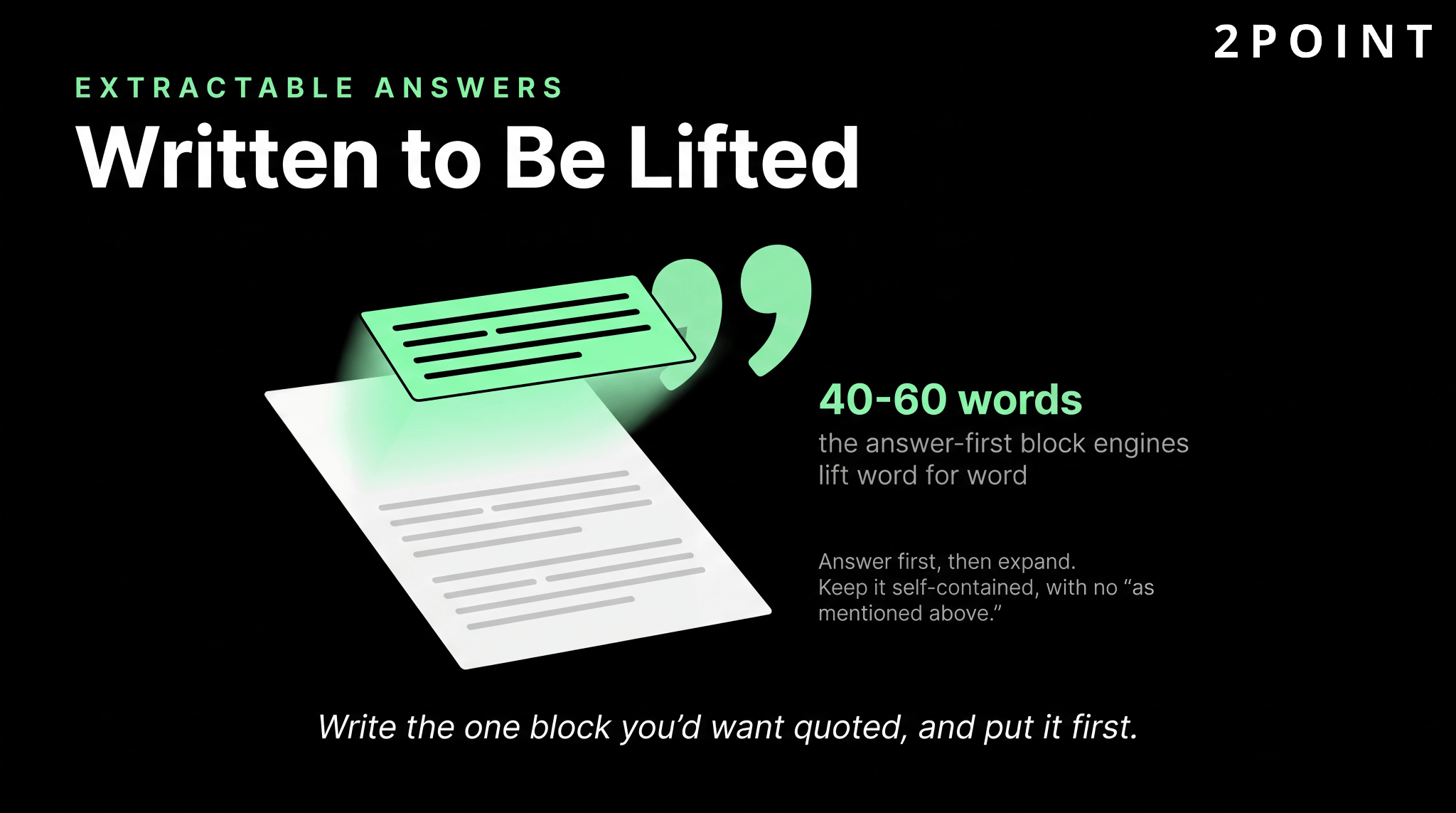
Start every page with a 40-to-60-word answer that an engine can lift word for word. Answer the question first, then expand for readers who want the depth.
That opening block is often the exact text that gets quoted, so keep it self-contained. Skip phrases like “as mentioned above,” since an engine may pull it with no surrounding context.
2. Structure Content for Retrieval
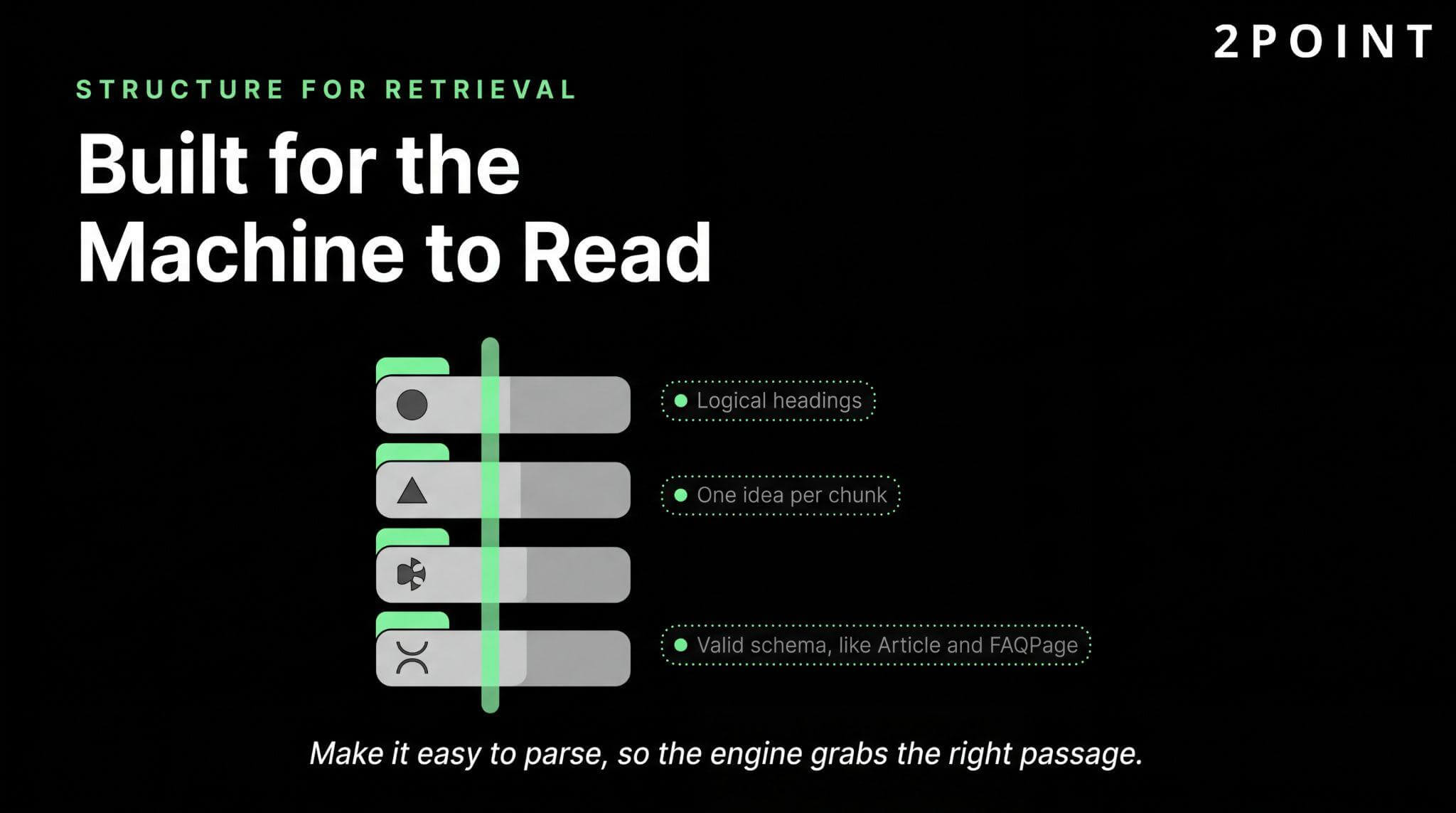
Next, make the page easy for a machine to parse. Use logical headings, short chunks, and a valid schema so engines do not have to guess.
The Schema.org vocabulary gives you the types, like Article and FAQPage, that engines rely on to read your content cleanly. Keep each chunk to a single idea, so a model can grab the right passage without dragging in noise.
3. Build Topical Authority (Pillar and Cluster)
One page rarely wins a topic. Cover it fully with a pillar and a cluster of supporting articles, which is how you earn the long-tail citations that thinner competitors cannot reach. Then, internal-link every cluster page back to the pillar with descriptive anchors, so engines can map how your pages relate.
4. Strengthen Entity and Brand Signals
Engines cite sources they recognize, so they become a clear entity. Consistent naming, a named author, and a presence in the knowledge graph teach models who you are and why you are worth quoting.
Align your profiles across the platforms that feed those graphs, since mismatched details only blur the identity you are building.
5. Earn Third-Party Citations and Mentions
This is the off-page side of GEO. Digital PR, expert quotes, and original data studies earn the third-party mentions that models borrow trust from, and that borrowed authority builds faster than anything you say about yourself.
One original statistic others cite back to you can pull more retrievals than a dozen generic posts.
6. Optimize for Bing
ChatGPT’s index leans heavily on Bing, so Bing visibility is a prerequisite most marketers miss. Submit your sitemap to Bing Webmaster Tools and treat your Bing rankings as retrieval eligibility, not an afterthought. The free tool also flags crawl issues that quietly keep you out of the ChatGPT pool.
7. Keep Content Fresh and Dated
Add a visible “last updated” stamp and refresh your stats for time-sensitive prompts.
Engines favor current pages, and following generative engine optimization news helps you update your numbers before they go stale.
A visible date reassures readers, too, which lifts the engagement signals that feed back into ranking.
8. Make Content Machine-Accessible
None of this lands if crawlers cannot reach you.
Allow GPTBot in robots.txt, add a valid schema, and publish an llms.txt file that maps your priority pages. If that last step is new, how to write llms.txt walks through the setup in about half an hour.
9. Target Conversational, Long-Tail Prompts
Finally, remember that people ask AI full questions, not keywords. Build content around the natural-language prompts your buyers actually use, since those exact phrasings are what trigger a retrieval.
The People Also Ask box and the follow-up questions AI tools suggest are a cheap, endless source of them.
GEO Strategy by Funnel Stage
Match each strategy to intent, since each funnel stage needs a different page.
- At the top, definitions and explainers that answer “what is” and “how does” prompts.
- In the middle are comparisons and how-tos that weigh options against each other.
- At the bottom, “best X,” alternatives, and pricing pages that capture buyers ready to choose.
These generative engine optimization tips work best when each page owns the stage its keyword implies. Map your keywords to a stage before you write, and you avoid the trap of one bloated page doing three jobs.
A 90-Day GEO Roadmap
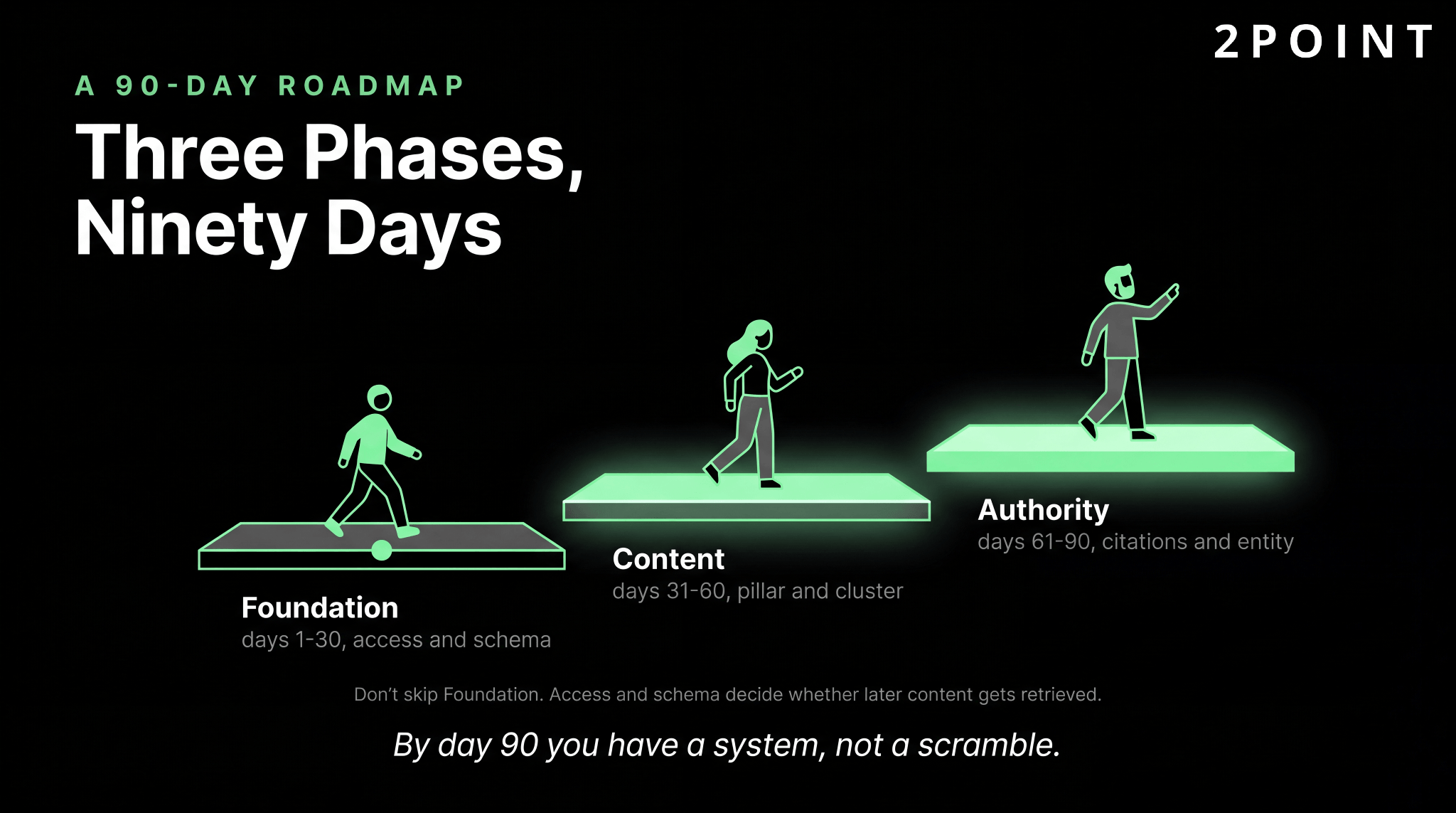
You cannot do everything at once, so sequence it across three phases.
- Phase 1, Foundation (days 1 to 30), fix machine accessibility, add schema, and publish llms.txt
- Phase 2, Content (days 31 to 60), build an answer-led pillar and cluster around your priority topic
- Phase 3, Authority (days 61 to 90), earn citations, strengthen your entity, and chase third-party mentions
That is how to roll out generative engine optimization strategies without burning out your team.
Each phase makes the next easier, and by day 90, you have a system, not a scramble. Do not skip Phase 1, since accessibility and schema decide whether your later content gets retrieved. If you want a partner to run it, our managed SEO maps the gaps and sequences the fixes.
How to Measure GEO Strategy Success
Measure GEO by citations, not just rankings. Track how often each engine names or links you for your priority prompts, watch your share of AI answers over time, and pair that with impressions and assisted conversions.
As AI search scales, that visibility becomes its own metric, and Google’s AI Overviews already serve two billion monthly users.
Keeping up with generative engine optimization news matters too, since engines keep changing how they retrieve content. Measuring it all well sits at the core of LLM SEO. Each month, spot-check your top 20 prompts and log every change you make, so you can tie any movement back to its cause.
GEO Strategy Mistakes to Avoid
A few missteps stall otherwise solid programs.
- Chasing tactics with no authority base under them.
- Blocking GPTBot in robots.txt by default.
- Publishing thin content that adds nothing new.
- Ignoring Bing and, by extension, ChatGPT’s retrieval pool.
- Running with no measurement, so you cannot tell what is working.
Most of these stem from skipping the foundation and jumping straight to content, leaving strong pages invisible to the engines. The strongest generative engine optimization strategies come down to doing the fundamentals in the right order and tracking your results honestly.
Will AI Cite You or a Competitor?
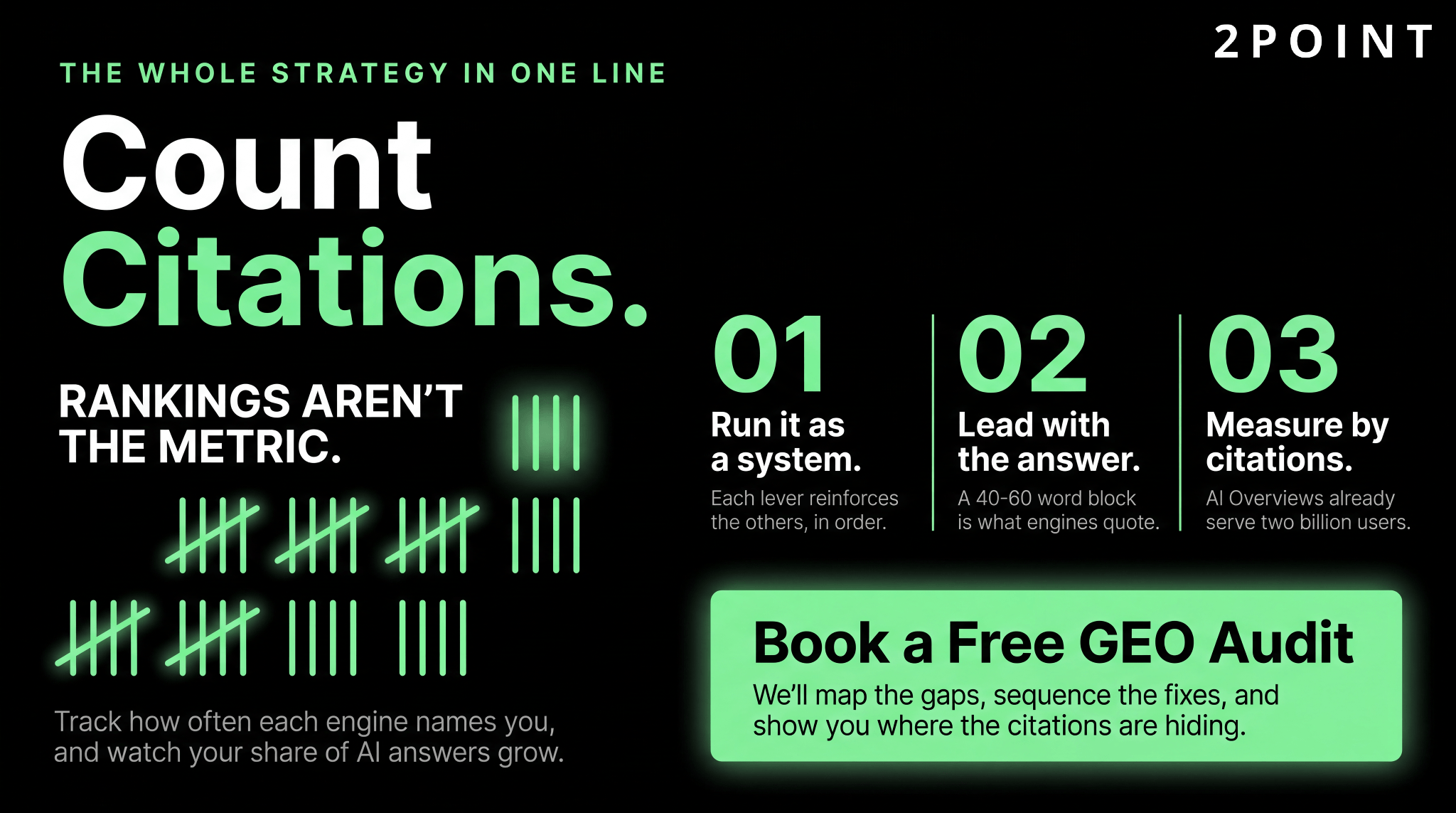
Strong generative engine optimization strategies work as a system, deliver extractable answers, maintain a clean structure, establish real authority, and leverage external citations to build trust.
Run them in order, measure your citation share, and refresh as engines evolve. These generative engine optimization best practices compound with your SEO instead of competing, since the pages that rank are the ones engines retrieve.
When you want a team to run it, our managed SEO and multi-channel marketing start earning citations this quarter.
FAQs
What is the best generative engine optimization strategy?
There is no single best move. The strongest generative engine optimization strategies combine an extractable answer, clean structure and schema, topical authority, and third-party citations. If you must start with one, lead with a crisp 40-60-word answer, since that block is what engines most often quote.
How do I get my brand cited by ChatGPT or Gemini?
Make your content easy to retrieve and trust. A few generative engine optimization best practices drive this, such as allowing GPTBot, adding schema, leading with direct answers, and earning citations from credible sites. ChatGPT leans on Bing’s index, so Bing visibility helps, while Gemini rewards strong authority and structure.
How long does a GEO strategy take to work?
It varies, partly because engines keep shifting, which is why generative engine optimization news is worth following. Structural fixes like answers and schema can surface within days, while authority and entity signals build over months. A 90-day roadmap is realistic for foundations and early citations.
Does GEO work for small brands?
Yes. Topical depth and clean structure let a focused small brand win citations for niche prompts, even without much domain authority. Knowing how to do generative engine optimization on a narrow topic often beats a big brand that spreads itself thin across everything at once.
How is GEO strategy different from SEO strategy?
SEO strategy optimizes pages to rank and earn clicks, while GEO strategy optimizes content to be quoted inside AI answers. They share fundamentals like authority and structure, yet GEO leans harder on extractable answers, schema, machine access, and third-party citations. Most generative engine optimization tips reflect that shift, pushing you toward answers a machine can lift cleanly.