


 let’s connect


Why is generative engine optimization important in 2026? Your customers have already changed how they search.
Why is generative engine optimization important in 2026?
Your customers have already changed how they search. They used to type a query and scan ten blue links. Now they ask ChatGPT or Google's AI and act on one synthesized answer, often without clicking through.
That rewrites the stakes for you. If your brand is not the cited source, a competitor's is, and you drop out of the buying journey. Worse, with no lost click to flag, traditional analytics barely register it.
At 2POINT, we help you earn those citations first. If you own a demand, this is built for you.
TL;DR: The Direct Answer
Generative engine optimization matters because AI engines now resolve a growing share of searches on the spot, and the brands they cite earn the visibility and trust that page-one rankings used to deliver. Everyone else drops out of the buying journey before a human reaches the site. That is why GEO matters now.
Two things make it urgent. AI answers are eating into traditional search faster than most teams have adjusted to, yet competition for citations remains low, letting early movers gain ground cheaply.
Better still, the work builds on the SEO you already run, so little of it is wasted.
The Shift: How AI Is Changing Search in 2026
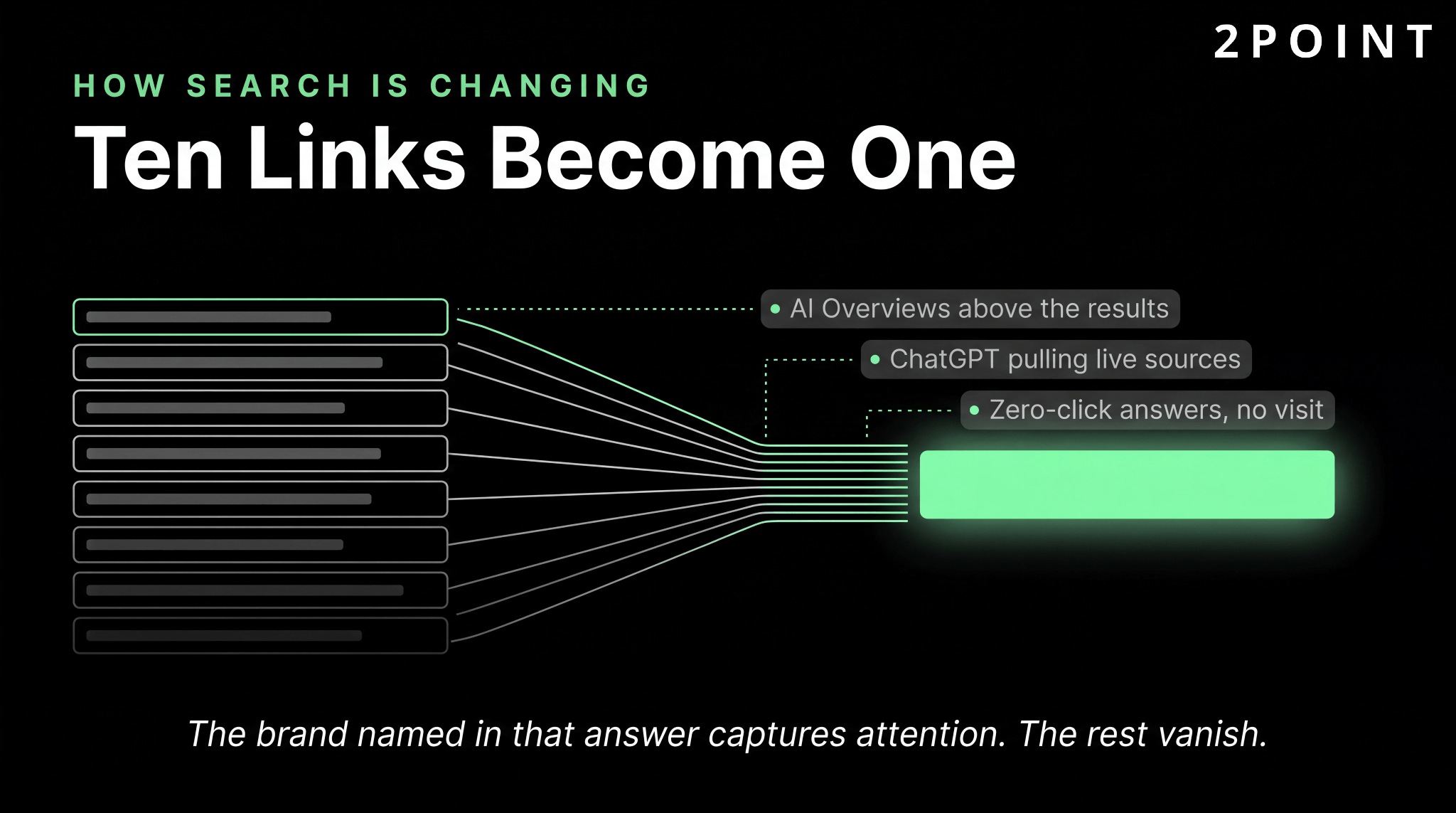
Search is no longer a list of links. Three surfaces now sit between your customer and your website, each summarizing your website into a single answer.
- AI Overviews, Google's summarized answer above the results.
- ChatGPT search, which pulls live web sources into a chat reply.
- Zero-click answers, where the query resolves without a visit.
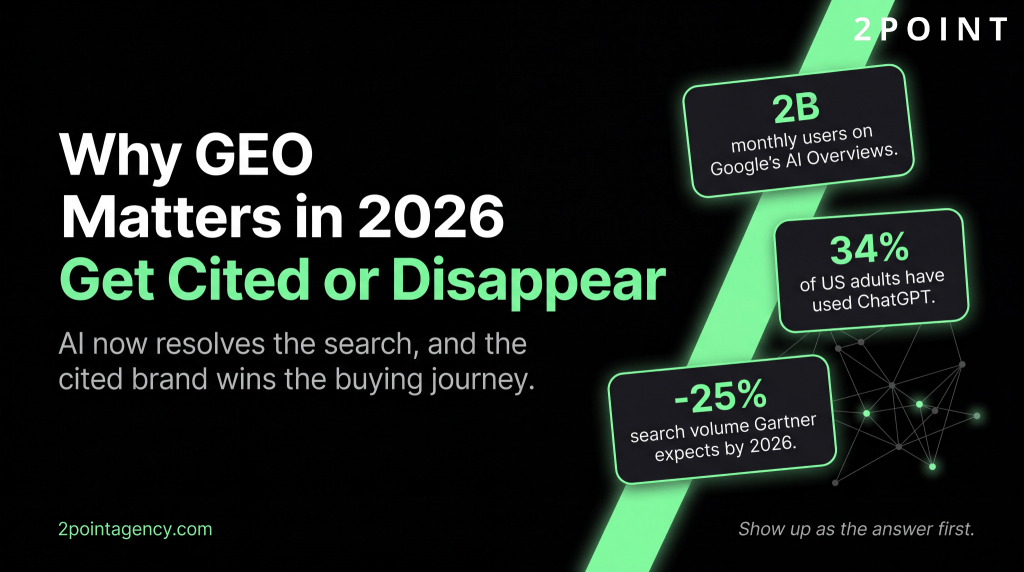
Google's AI Overviews reach 2 billion monthly users, meaning most searchers see a synthesized answer rather than a ranked link. Anyone following generative engine optimization news has watched it spread into more query types.
The consequence is simple. The brand named in that answer captures attention, and if it is not yours, you vanish at the moment of decision. This is not a forecast. It is how a large share of searches already resolve.
Why GEO Matters for Your Business
You have seen how search is changing. The sharper question is what that change does to you. At the business level, the benefits of generative engine optimization show up in five concrete shifts.
1. Buyers Ask AI First
More of your buyers now open ChatGPT or Gemini before they ever reach Google. A Pew Research Center survey found that 34% of US adults have used ChatGPT, roughly double the share in 2023.
Younger buyers lead the shift. Among adults under 30, use has climbed from 33% in 2023 to 43% in 2024, and now reaches a 58% majority, with 46% already turning to ChatGPT to learn something new.
So your future customers are researching inside AI, asking the exact questions your brand should answer. If you are absent from those answers, they form opinions without you.
2. AI Answers Are Winner-Take-Most
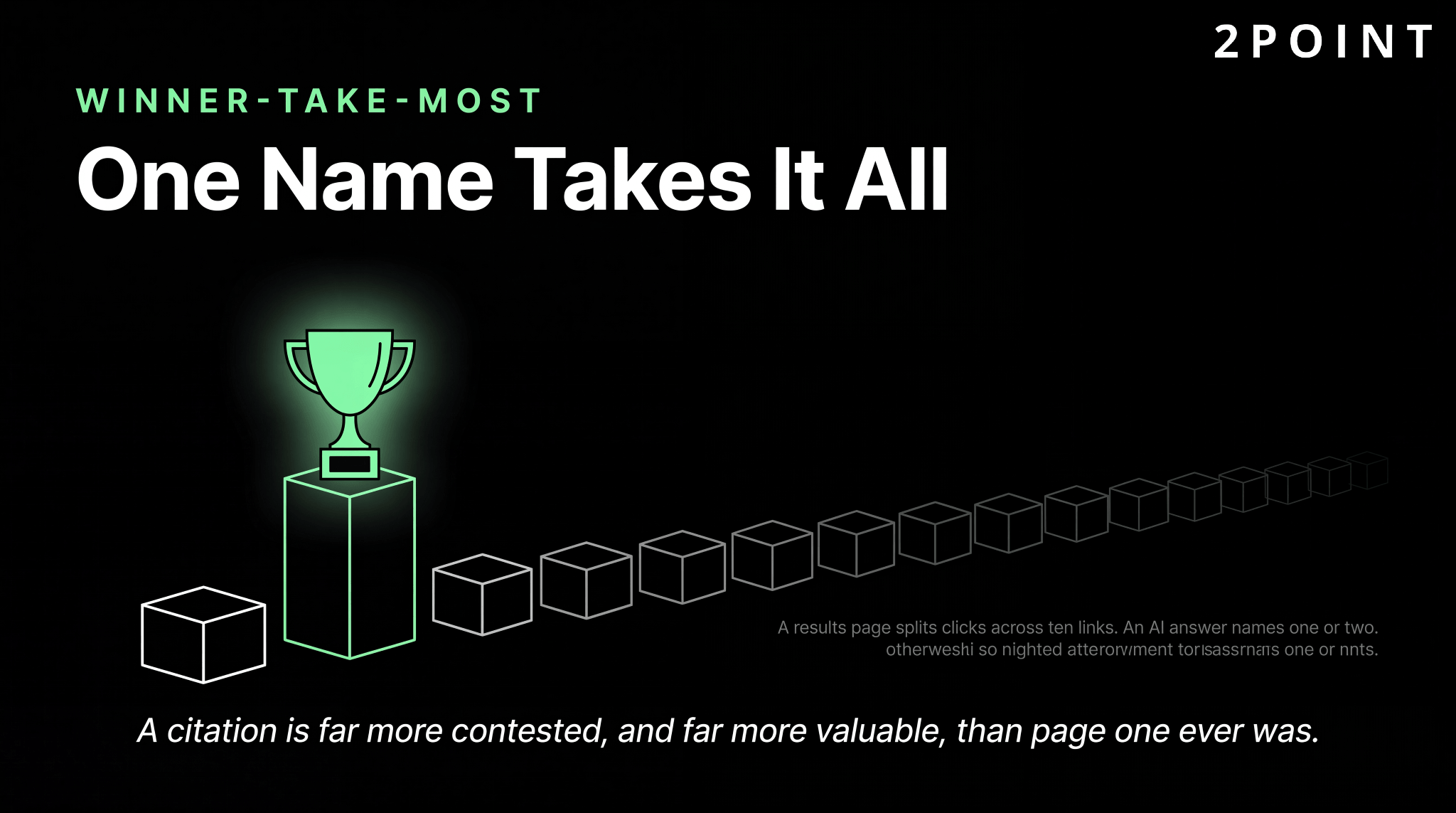
On a traditional results page, attention spreads across many links. In an AI answer, it collapses onto one or two names. That single shift changes how much visibility is worth to you.
- A search page shows 10 blue links to 10 brands, and clicks scatter across them.
- An AI answer usually names one or two, so the cited brand takes almost everything.
For you, that makes a citation far more contested and far more valuable than a page-one ranking ever was. Second place barely registers.
3. Visibility No Longer Equals Traffic
Here is the counterintuitive part. Many AI citations never produce a click, yet they still shape demand.
A Pew Research Center analysis found that only about 1% of visits to a page with an AI summary ended in a click on a cited source. Still, a buyer who sees you recommended carries that impression into a later search or a direct visit. So measure your share of citations alongside sessions, because influence is real even when the click never lands.
4. First-Mover Advantage
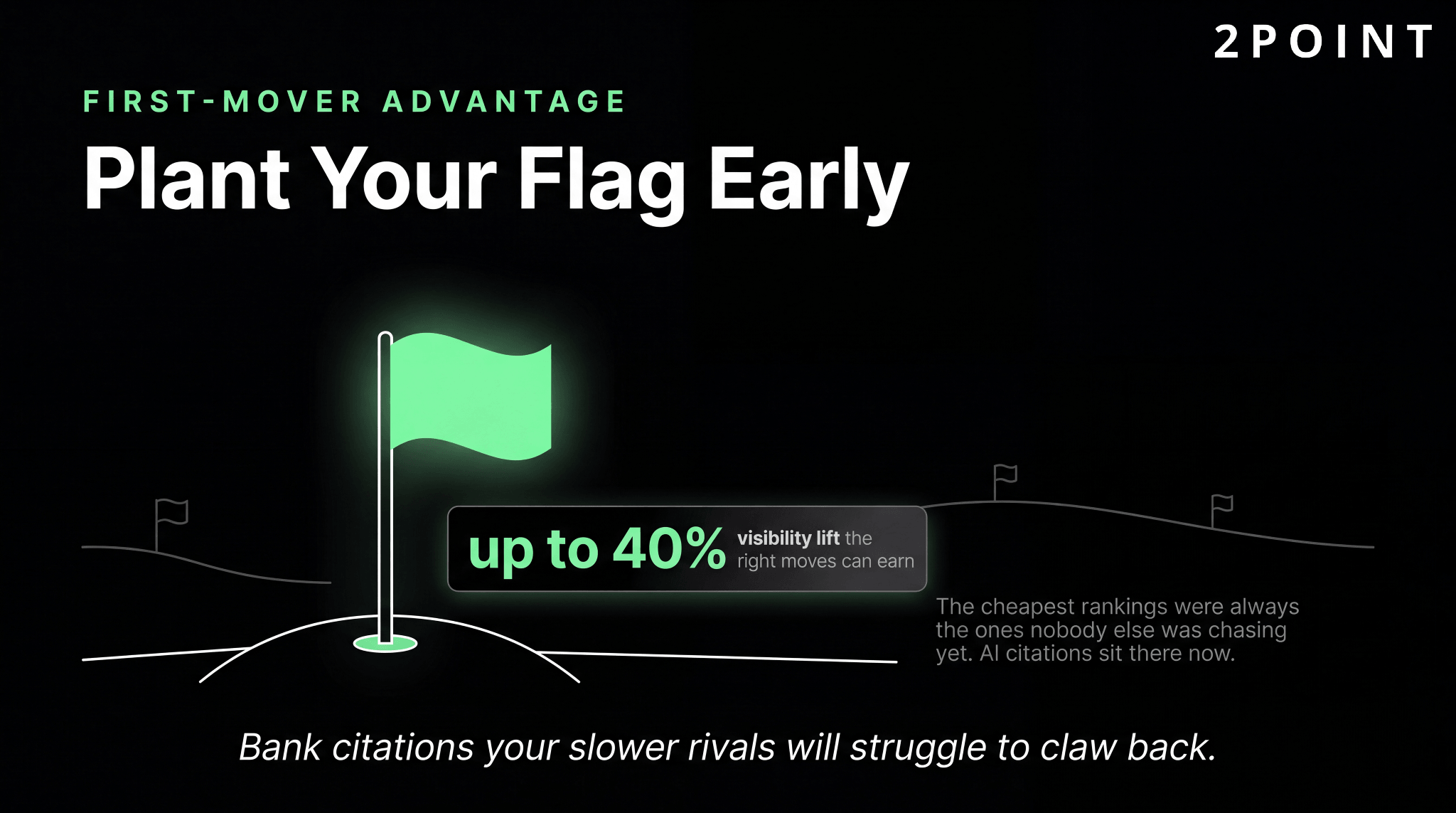
Timing is the quiet advantage here. In most niches, competition for AI citations is still thin, and that will not last. Build authority and clean structure now, and you bank citations your slower rivals will struggle to claw back once everyone wakes up to the same opening.
Think back to early SEO. The cheapest rankings to win were always the ones nobody else was chasing yet, and AI citations sit in that exact window today. Move while the window is still open.
5. Brand Recommendation and Trust
Finally, a citation is not just about visibility. It is an endorsement.
When an assistant names you as the answer, that recommendation carries a trust a blue link rarely earns, especially from a tool people already rely on. Better still, it compounds.
The more an engine surfaces, the more it treats you as the reliable answer, which makes you harder to displace. Showing up at the decision point is the most valuable real estate in search, and unlike a paid placement, you cannot buy your way in.
The Cost of Ignoring GEO
Doing nothing has a price, and it stays invisible right up until it is not.
While you wait, competitors get cited, you fade out of AI-mediated discovery, and you only notice when the pipeline softens for reasons your dashboards cannot quite explain. That blind spot is what makes it dangerous.
Gartner expects traditional search volume to fall 25% by 2026 as buyers shift to AI assistants, so the traffic you count on today is already eroding. The cost of ignoring GEO is not a sudden cliff. It is a slow leak; you feel it in quiet quarters at a time.
GEO Is an Opportunity, Not Just a Threat
Flip the framing, and the upside is just as large. This is one of the real benefits of generative engine optimization. GEO compounds over time, builds on the SEO you already run, and rewards the quality content strong brands already publish.
The original GEO research paper found that the right optimizations can lift a source's visibility in AI answers by up to 40%, so the gains are real and winnable.
Better still, the work you do for AI search also strengthens your traditional search, since both reward the same answer-engine optimization fundamentals: clarity, structure, and authority. One effort, two payoffs.
What GEO Looks Like in Practice
GEO is not exotic, and that is the good news. The playbook is mostly fundamentals you already recognize.
- Lead each page with a clear, extractable answer.
- Structure content with a clean, valid schema.
- Build topical authority across related queries.
- Earn credible third-party citations and mentions.
- Keep everything fresh and crawlable for AI bots.
That is the whole game. None of it replaces your marketing. It sharpens that work for a new surface. The same principles underpin the broader discipline of LLM SEO, which spans all AI search models. So if your content already serves readers well, you are most of the way there, and GEO mainly makes it legible to machines.
Is GEO Worth It for Small Businesses?
Yes, and arguably even more so. Smaller brands win citations for the niche and local prompts where big competitors spread themselves thin. Take a dense market like San Diego.
The San Diego Regional EDC reports that small businesses make up 98% of the region's firms, which means an early-moving local player like you can own AI answers rivals have not even noticed yet.
That low competition is the whole argument. So is generative engine optimization worth it for a small business? When so few players are fighting for those citations, your honest answer is almost always yes, and the window is widest right now.
How to Get Started with GEO
The best way to start is small and compounding. You do not need a giant program on day one.
- Pick your highest-value prompts, the questions real buyers ask.
- Lead the matching pages with direct, quotable answers.
- Add a clean schema so engines can parse them.
- Earn a few credible mentions to build authority.
From there, you scale into the prompts that matter most. The generative engine optimization importance for your business rests on one thing: showing up as the answer before your competitors figure out how.
If you would rather move fast with help, our managed SEO team identifies gaps and sequences fixes.
Will AI Name You, or Your Competitor?
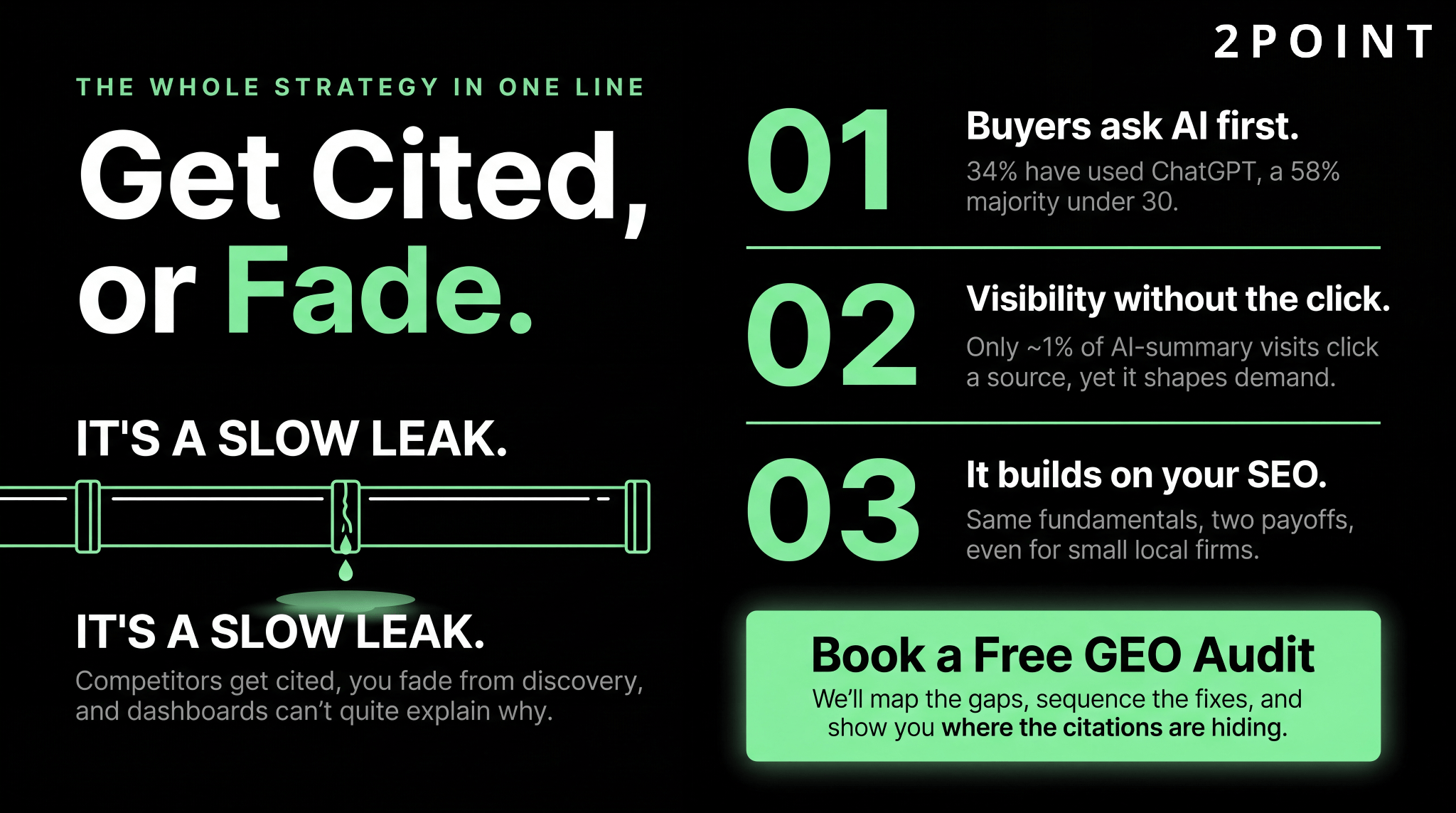
The business case is simple. AI now mediates how customers discover and choose brands, and the ones cited in those answers win. Ignore it, and you fade from the conversation. Invest now and you compound an advantage while competition stays thin. That is why GEO matters more every quarter.
Start with your highest-value prompts and build on the SEO you already have. When you want it handled, our managed SEO team folds GEO into the multi-channel marketing that drives growth.
FAQs
Why is generative engine optimization important?
Generative engine optimization is important because AI engines now answer a growing share of searches directly, and the brands they cite gain the visibility and trust that clicks once delivered. As more buyers ask ChatGPT and Gemini before Google, showing up as the cited answer is no longer optional. It is how you stay in the buying journey.
Is GEO worth it in 2026?
Yes. Competition for AI citations remains low, making it a strong first-mover play. Whether generative engine optimization is worth it depends on whether you want that early edge, and most brands do. The work compounds and builds on your existing SEO, so the cost stays modest while the upside, owning AI answers in your niche, is large.
Does GEO matter for small businesses?
Very much. Small and local brands win citations for the niche prompts where big competitors spread themselves thin, so the benefits of generative engine optimization land fast when few rivals are even trying. A focused local business can realistically own the AI answers in its market with modest, consistent effort over just a few quarters.
Will GEO replace SEO?
No. GEO extends SEO rather than replacing it, since AI engines pull heavily from the same indexed, well-structured pages that already rank. Treat the generative engine optimization importance as a new layer on top of solid SEO, not a swap. Run both together and the same content works across traditional search and AI answers at once.
What happens if I ignore GEO?
You slowly disappear from AI-mediated discovery. Competitors get cited in your place, your zero-click visibility erodes, and you notice only when the pipeline softens for reasons your analytics struggle to explain. Following generative engine optimization news helps you spot these shifts early and act before that slow leak turns into a real revenue problem you cannot easily reverse.