

 let’s connect


What the Data Shows
The May 2026 core update ran May 21 through June 2.
Google followed it with a spam update on June 24 that cleaned up what the core update missed.
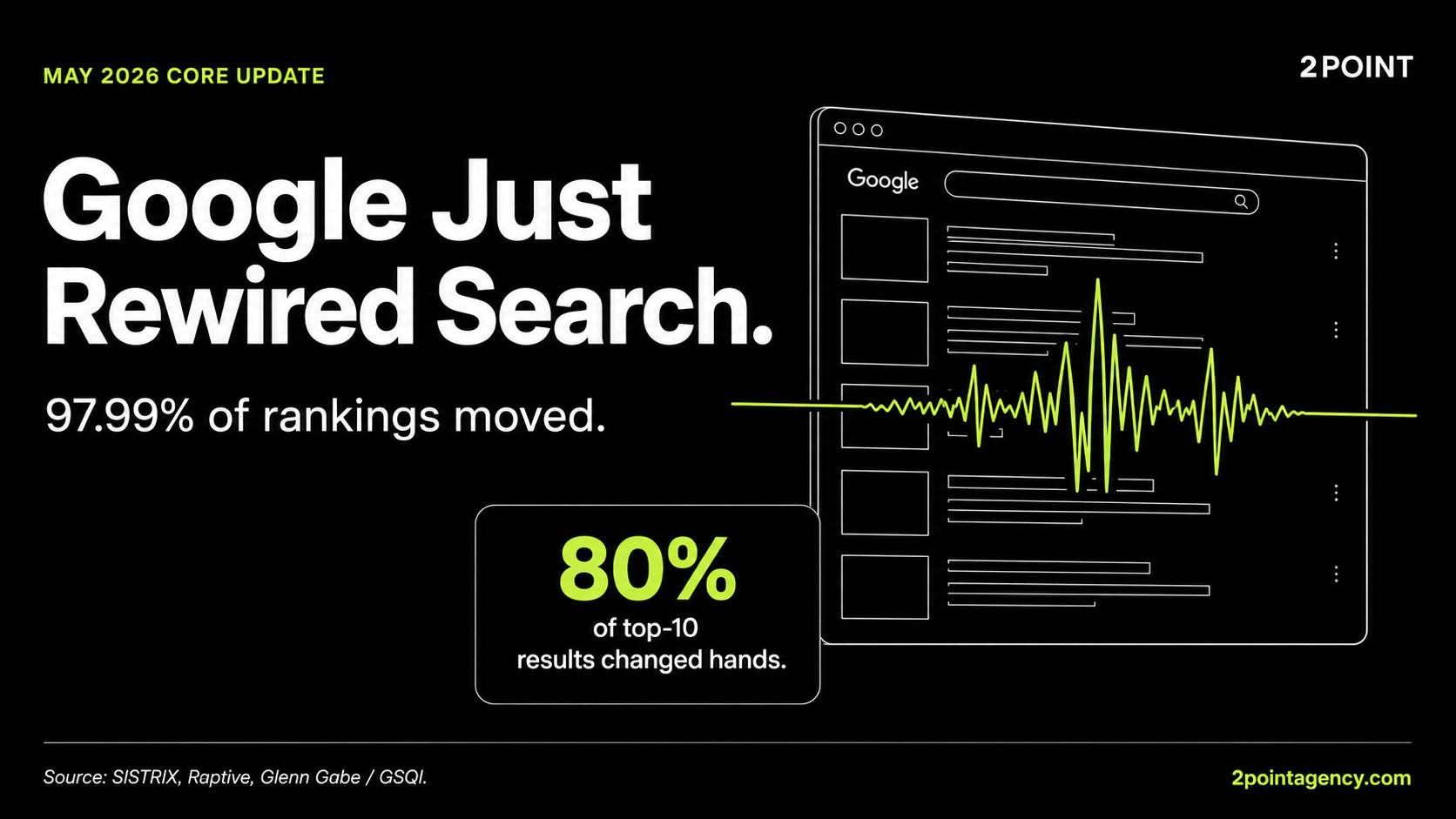
- 97.99% of top 100 rankings moved
- 80% of top 10 rankings moved
The sharpest technical SEO analysts in the industry called it "a real core update with a clear quality changes to Google search."
Peak volatility hit May 30, the highest volatility reading since March.
Mobile was even more turbulent than desktop through the entire update period. These changes have had a significant impact on the entire search landscape (not just your business).
Who Got Hit and Why
Some of the biggest losers are notable. These aren't small sites.
YouGlish: -69.6%
Forvo: -68.1%
Freepik: -63.1%
GoodRx (UK): -80.0%
Reddit (US): -13.7%
Quora (UK): -31.3%
Stack Exchange (UK): -31.8%
The Reddit drop is worth catching your attention.
Google spent most of 2024 boosting UGC platforms. That reversed this time.
The pattern across every loser is the same: content that exists to capture a query instead of genuinely answer it.
YouGlish is built on top of other people's audio.
Forvo aggregates pronunciations it didn't record.
Both lost to the original sources they were indexing.
Sites that scaled through AI language translation across multiple languages dropped hard.
Thin aggregator pages lost positions they've been holding for years.
Who Won and Why
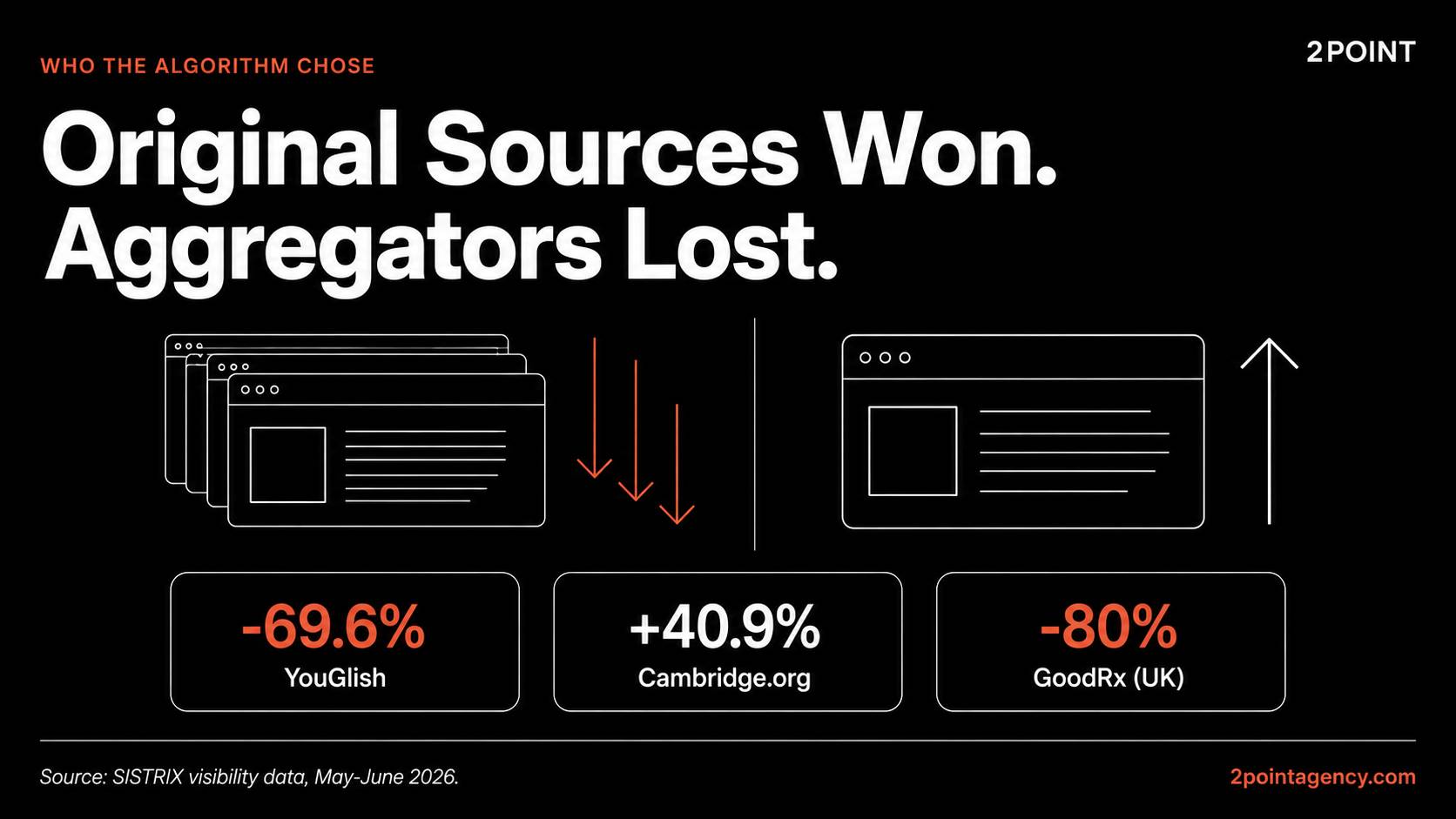
Cambridge.org gained 40.9% while YouGlish lost 69.6%.
One is the original. One is the tool built on top of it.
Google chose the original.
Cambridge.org (UK): +40.9%
Trip.com (US): +82.2%
ZipRecruiter (US): +44.8%
YouTube: +16.3%
WebMD (UK): +8.8%
Amazon.co.uk (UK index): +21.3%
Raptive analyzed over 4,000 publisher sites. 70% were stable. 36% improved compared to March.
The trait that separated survivors from losers in their study wasn't SEO practices. It was ad density.
Sites with fewer ads were significantly more stable while sites optimized for ad revenue at the expense of reader experience lost rankings.
The update also enforced market-level intent matching in ways I haven't seen before.
Amazon.com dropped 54.6% in the UK index.
But, Amazon.co.uk gained 21.3% in the same index.
Google is now matching source to the market the searcher is in, not just the query & site health.
Aleyda Solis described the change well:
"Visibility moved toward the source type that best fit the dominant intent, the expected format, and the user's market."
Domain authority doesn't override specificity anymore.
The Part Nobody Is Talking About
The core update didn't happen in isolation. It launched the same day Google announced AI Overviews expanding to over a billion monthly users.
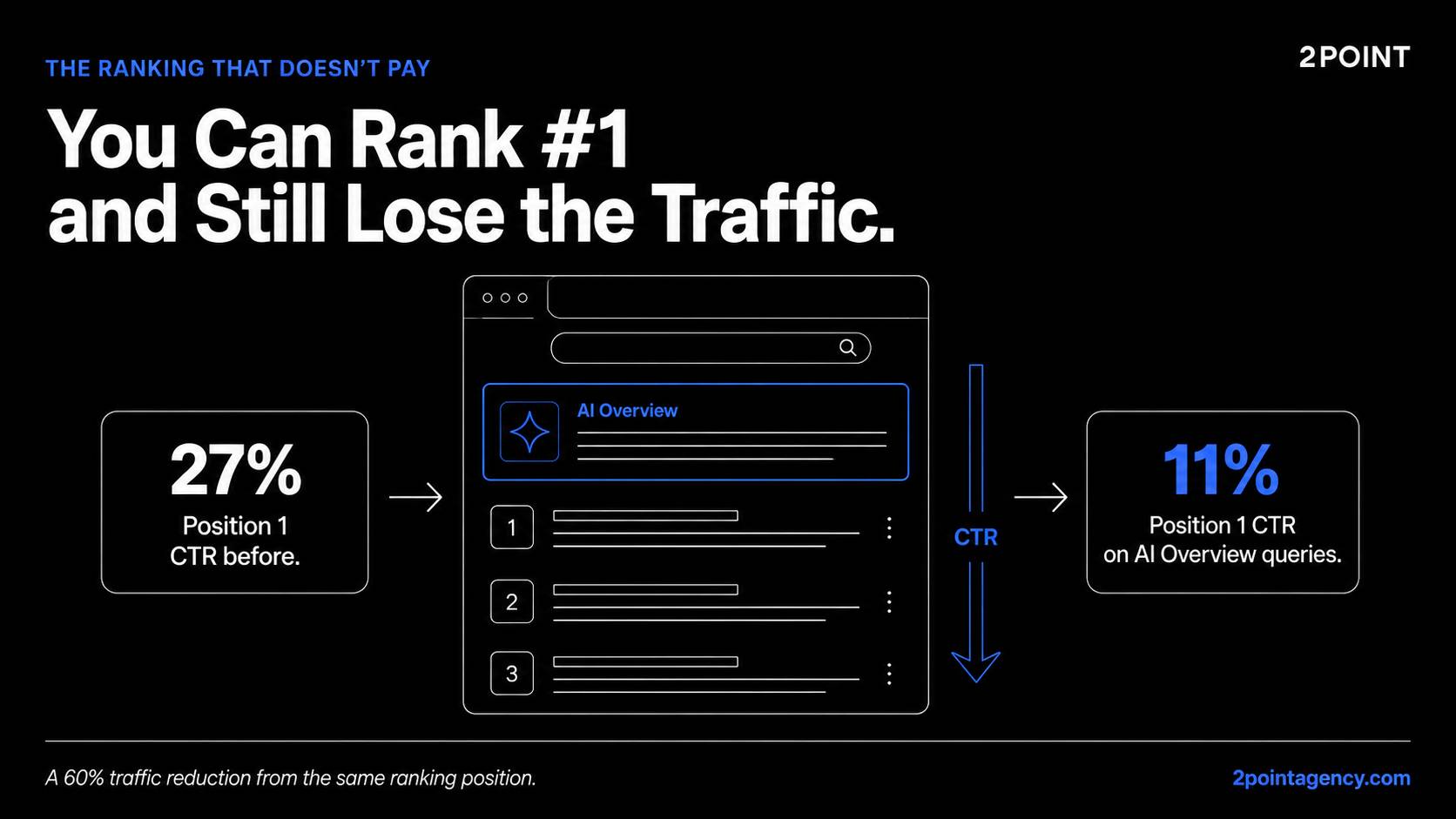
Position-one CTR on AI Overview queries dropped from roughly 27% to as low as 11%.
That's a 60% traffic reduction from the same ranking position.
You can rank first and still lose most of the traffic if Google is answering the query above your result. Most sites are tracking their rankings without tracking what those rankings are actually worth.
Sites cited inside AI Overviews saw +35% organic clicks and +91% paid clicks versus un-cited competitors.
AI Overview citation is its own game now, separate from traditional organic. Most businesses aren't focusing on it.
That's the whole reason we built AIObot, it's the only way to address this problem with jet fuel.
What Google Said
They provided no recovery guidance for the sites effected.
"A ranking drop doesn't mean your pages have problems."
That's technically true, yet still, completely unhelpful.
Core updates aren't out to penalize you, they're just trying to recalibrate which source best fits a query.
The sites that lost rankings weren't "penalized".
They got removed from a ranking by a more precise definition of what is or isn't relevant.
Google said to wait until at least June 9 before reading the data. Week-over-week Search Console comparison, one full week post-rollout.
If you pulled data during the rollout and reacted to it, you probably overreacted.
But now...
What You Should Do
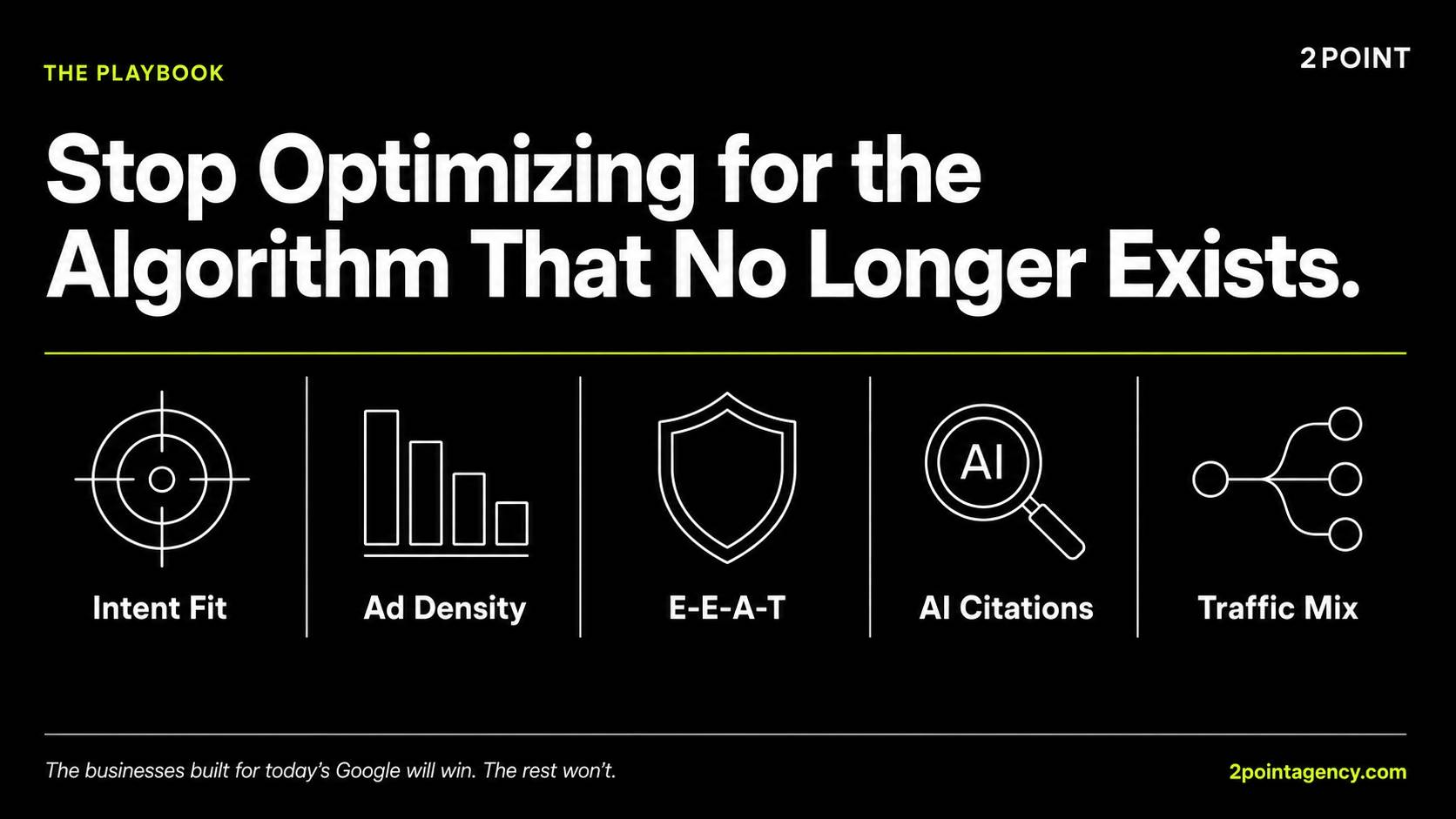
Before you build another piece of content, ask whether your site is in the format and is the source type users expect when they run that search.
If they expect an authoritative reference, you need to be the reference, not a summary of one.
Audit ad density on your top pages. The Raptive data is clear enough to act on: ad loads that hurt the reader experience are now a ranking liability. (So if your site is ad-driven be conservative about placements).
This extends to self promotion as well ^
Review your E-E-A-T signals with honest eyes.
First-hand experience, demonstrated expertise, verifiable authority, earned trust.
Claimed credibility doesn't count. It has to be visible on the page.
Start tracking AI Overview citations as a separate metric from organic rank. Find the queries you want to own, look at what's being cited in the Overview, and match that format and depth.
This is a different discipline and it needs its own attention.
Diversify your traffic now. A newsletter list, a referral program, a social channel, and organic search is a more defensible stack than organic alone.
The businesses that have the most success dealing with these updates are the ones that never let any single channel dominate their websites traffic.
Take This With You
Every major core update for the past two years has moved in the same direction.
Google keeps getting better at identifying the original, the authoritative, the most intent-matched source for every query.
Everything derivative and manufactured to rank keeps getting compressed.
That trend is likely to never slow down.
Recovery from this update takes weeks to months and requires real content work, not a technical patch.
The May update worked exactly as Google intended.
The question is whether your site was built for the Google that exists today or the one from two years ago.
Are you seeing traffic gaps in Search Console you can't explain?
We audit SEO performance across our client base regularly and can tell you exactly what your data is showing. Reach out and we'll take a look.
