

You've built a clientele on results and word-of-mouth. We build the digital infrastructure that brings in new patients consistently, without depending on one platform or one provider's following to carry the whole business.



MedSpas and aesthetic practices grow fast on Instagram and referrals until neither is reliable. The booking calendar shouldn't depend on a single influencer post or a provider's personal following.
Aesthetic patients research before they book. A practice with strong reviews, high Google visibility, and clear before/after proof wins new patients before the first consultation request ever comes in.
Paid social and search for immediate patient volume, local SEO for sustainable baseline bookings, and a review and reputation program that does the converting before your front desk picks up.
A strategy call. We look at your current visibility, review profile, and cost per new patient and tell you exactly what we'd fix first.
What you've built is a solid foundation. But there's a ceiling you reach when new patient volume depends on things you can't control or scale. For the MedSpa and aesthetic practices that came to us, it showed up in three ways:
Over 70% of aesthetic practices cite Instagram as their primary patient acquisition channel, but organic reach for business accounts has dropped significantly over the past three years. A practice that relies on posts, reels, or a provider's personal following to fill the calendar has no fallback when reach drops or a key provider leaves.
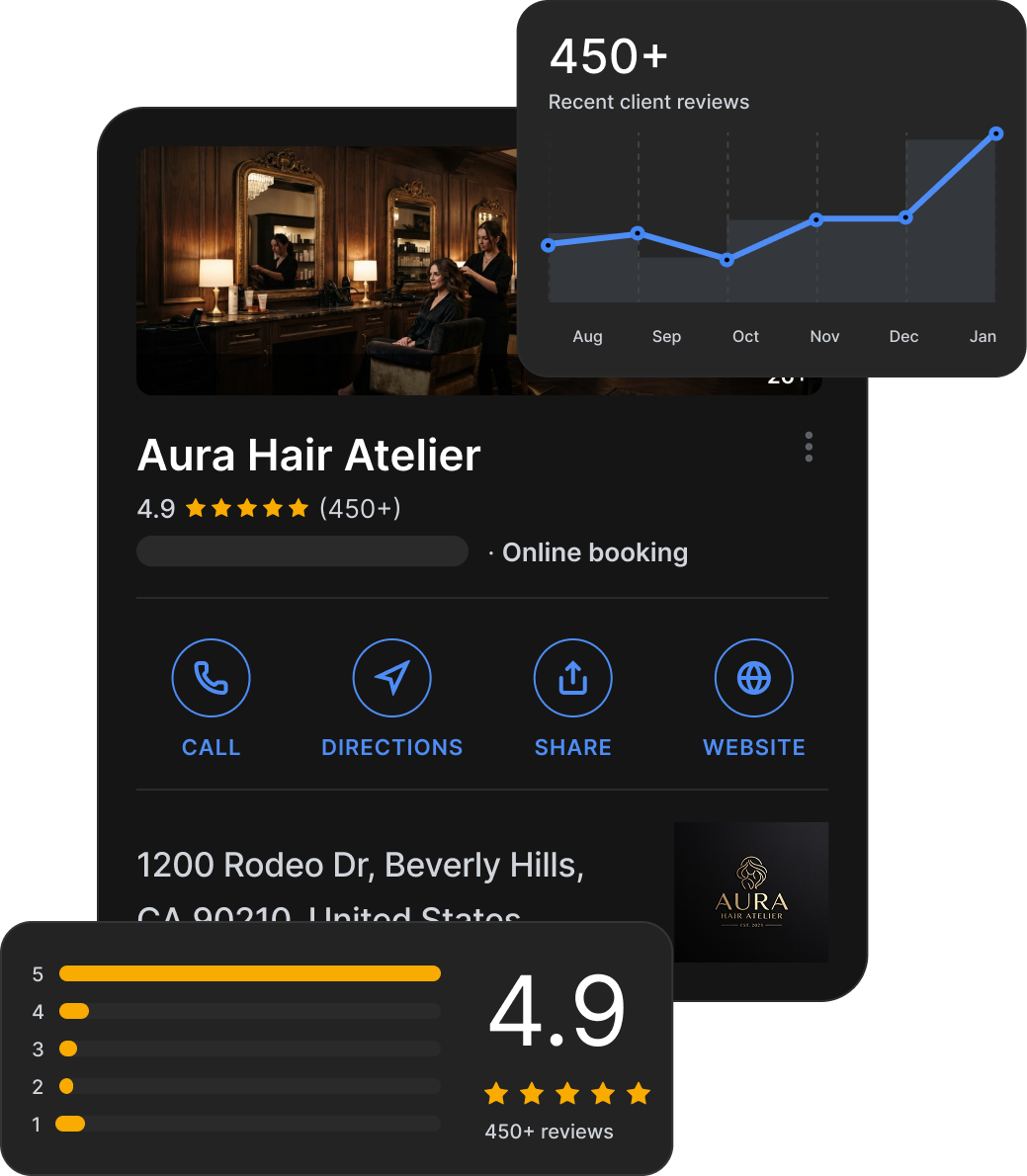
Aesthetic patients check reviews before they book a consultation, and they weight volume as heavily as rating. A practice with 50 reviews at 4.8 stars consistently loses to a competitor with 300 reviews at 4.7, not because of care quality but because review count reads as proof of scale. Most MedSpas have never built a system to collect them.
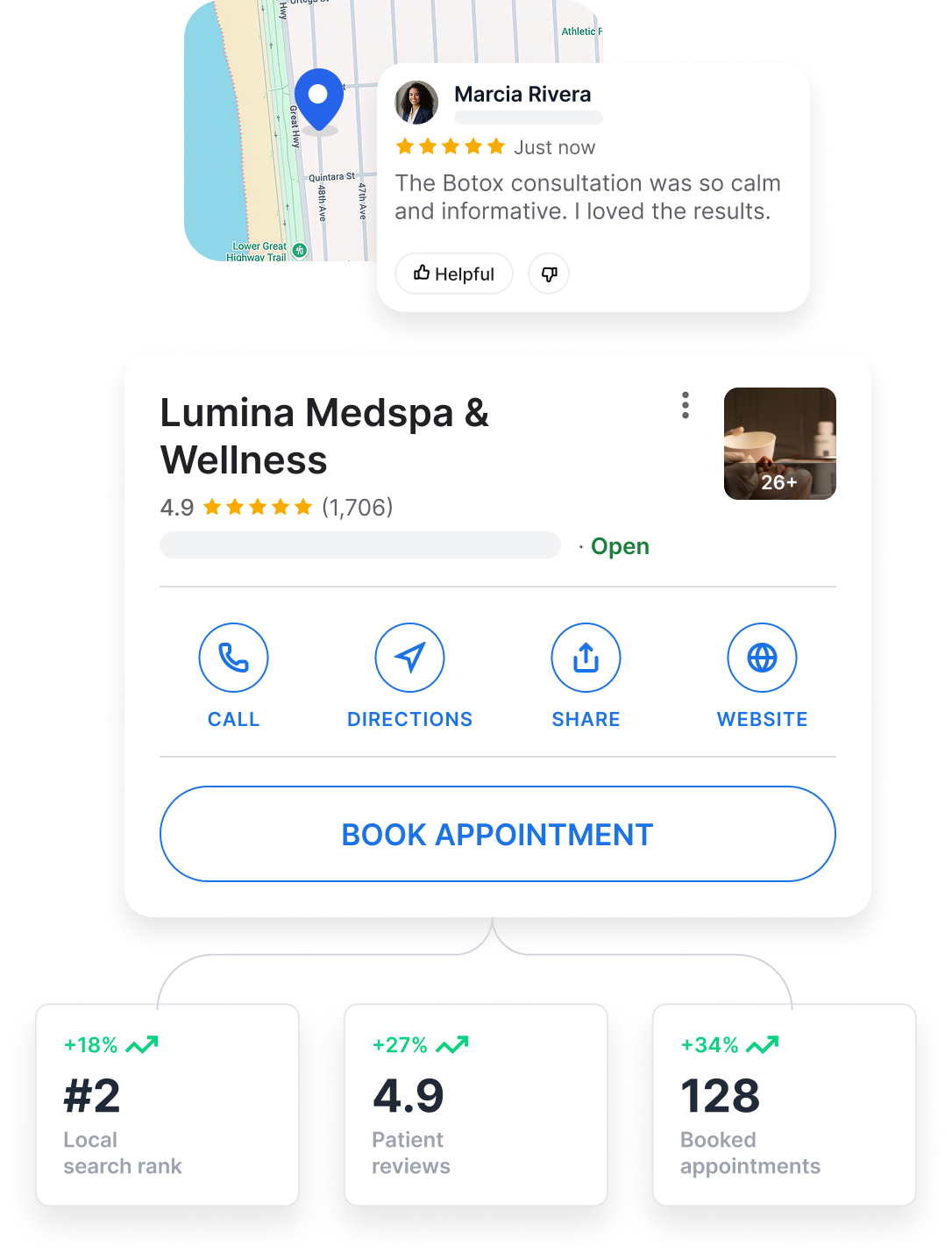
Patients searching "botox near me" or "lip filler [city]" click one of the top three map results. If your practice isn't there, the intent never reaches you. Most aesthetic practices have never optimized their Google Business Profile or built the local citation presence needed to rank for those searches.
Every practice we work with gets evaluated on two things before we recommend a channel mix: where their highest-intent patients are actively searching right now, and where untapped demand is sitting unaddressed. That tells us whether to lead with paid search, paid social, or both, and in what sequence.
On every account, you work directly with a CMO-level strategist alongside our paid media and SEO departments. Reporting is tied to new patient bookings and cost per consultation, not impressions, reach, or follower counts.
% of health and wellness clients actively running each channel with 2POINT
A specialty wellness practice came to us growing entirely on word-of-mouth with no paid search, a weak Google Business Profile, and fewer than 30 online reviews. We launched Google Ads targeting service-specific local searches, rebuilt their Google Business Profile, and introduced a review collection system. By month six, cost per new patient dropped below $90 and the review count had grown to over 200 with a 4.9 average.

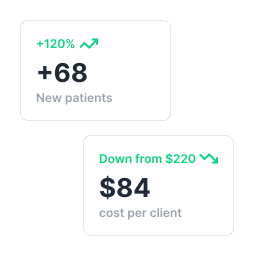
Three results from an aesthetic practices in the first six months after launching paid search and local SEO together.
New patient growth achieved for a specialty wellness practice in the first six months after launching paid search and local SEO together
Cost per new patient for a practice that previously had no digital channel, achieved within six months through targeted Google Ads and local SEO
Online review count growth in six months through a structured review collection system built alongside the paid program, driving map pack visibility from the start.
Four stages, from baseline to a program generating new patients every month.
We start with your Google Business Profile, review volume, current site traffic, and how patients are finding you. That baseline tells us where the biggest gaps are before we recommend anything.
We design the paid social, paid search, local SEO, and reputation programs together before launching any of them. Each channel supports the others, and the sequence matters. We document what each is accountable to before touching a budget.
Conversion tracking is set to consultation requests or online bookings from day one. We measure cost per new patient, not cost per click or impressions.
Keyword lists, audiences, bidding, and creative update every month based on what's generating consultations and at what cost. The program tightens over time.
The treatment mix and market size shape the channel strategy and intake design. The underlying logic stays the same: search visibility, review credibility, and conversion that turns interest into consultations.
Paid social, paid search, and review volume working together to fill the treatment room across a broad service menu.
High-intent search captures patients already researching. Review credibility and consultation conversion are the entire acquisition strategy.
Treatment-specific paid search and local SEO for patients searching by procedure, plus a review program that handles the volume required to rank.
Paid social performs well for visual treatments. Paired with local SEO and review management, it builds a consistent pipeline.
Retention and rebooking programs alongside new patient acquisition. The economics favor loyalty as much as new volume.
Content and organic SEO build the trust that paid search then converts for higher-consideration treatment decisions.
Awareness campaigns paired with local SEO and review volume drive both walk-in and appointment-based volume.
High-intent, long-consideration patients. Search, retargeting, and review credibility carry the full acquisition path.
Straight answers before the call.
Yes. The channel mix varies based on service range, price point, and whether the practice is a single location or multi-location, but the underlying approach is the same regardless of practice type.
Not on day one. We audit what's running, identify what's working and what isn't, and can either take over management or work alongside your current setup. Most clients consolidate everything with us within the first few months once they see the reporting.
Most practices see consultation volume within the first two to three weeks of campaigns going live. Paid social typically takes four to six weeks to optimize as the algorithm learns the audience. Local SEO compounds over three to six months.
Ad spend varies widely by market size, treatment mix, and growth goals. We scope recommended spend after the strategy call once we've looked at your current acquisition costs and competition in your market.
Yes. Provider-specific campaigns and personal brand content for injectors and practitioners can be a strong acquisition channel, and we build programs that include it when it fits the practice's model.

“Great customer service! They are very patient even when needing to make a change back and forth getting to exactly the right look.”
“Excellent creative work.”
“Everyone at 2POINT is wonderful to work with.”
“The entire service was very professional, efficient and friendly.”
“I have worked with 2POINT at two different startup companies and they did a fantastic job with both web-design and managed all of our marketing initiatives. ”
“We’ve been with 2POINT for about a year and a half now, and couldn’t be happier.”
“Simply the best.”
“I’m really happy that I have asked this company to work on my marketing needs. They did a great job so far and I will definitely work with them again!”
“The team was amazing! Their communication and final delivery of my animated logo was top notch. I highly suggest 2POINT.”
“The 2POINT team I worked with was professional, prompt, and eager to meet our specific needs. I can highly recommend them. They definitely delivered! ”
“Excellent communication, and product we were very happy with the work they did for us.”
“We have worked with their team for almost a decade and hope to continue partnering with them.”
“Everybody on the team was very engaged, communicative and creative throughout the entire process.”
“The attention they give to my business has helped it grow. I really appreciate them!”
“Love working with 2POINT Digital Marketing Agency! ”
“2POINT is amazing! I get compliments on our website all the time!”
“I would definitely work with these guys again, they were able to take my visions and bring it to light. Extremely excited to use my animations on all my projects.”
“The design they came up with is absolutely stunning, and I've already received numerous compliments on the site's clean, modern look.”
“Great group of people, always willing to listen and work together to collaborate on the best ideas for our company!”
“Working with 2POINT on our custom animations was just delightful!”
Book a strategy call. We'll look at your current visibility, review profile, and patient acquisition costs and tell you exactly what we'd change first.







 let’s connect