

 let’s connect


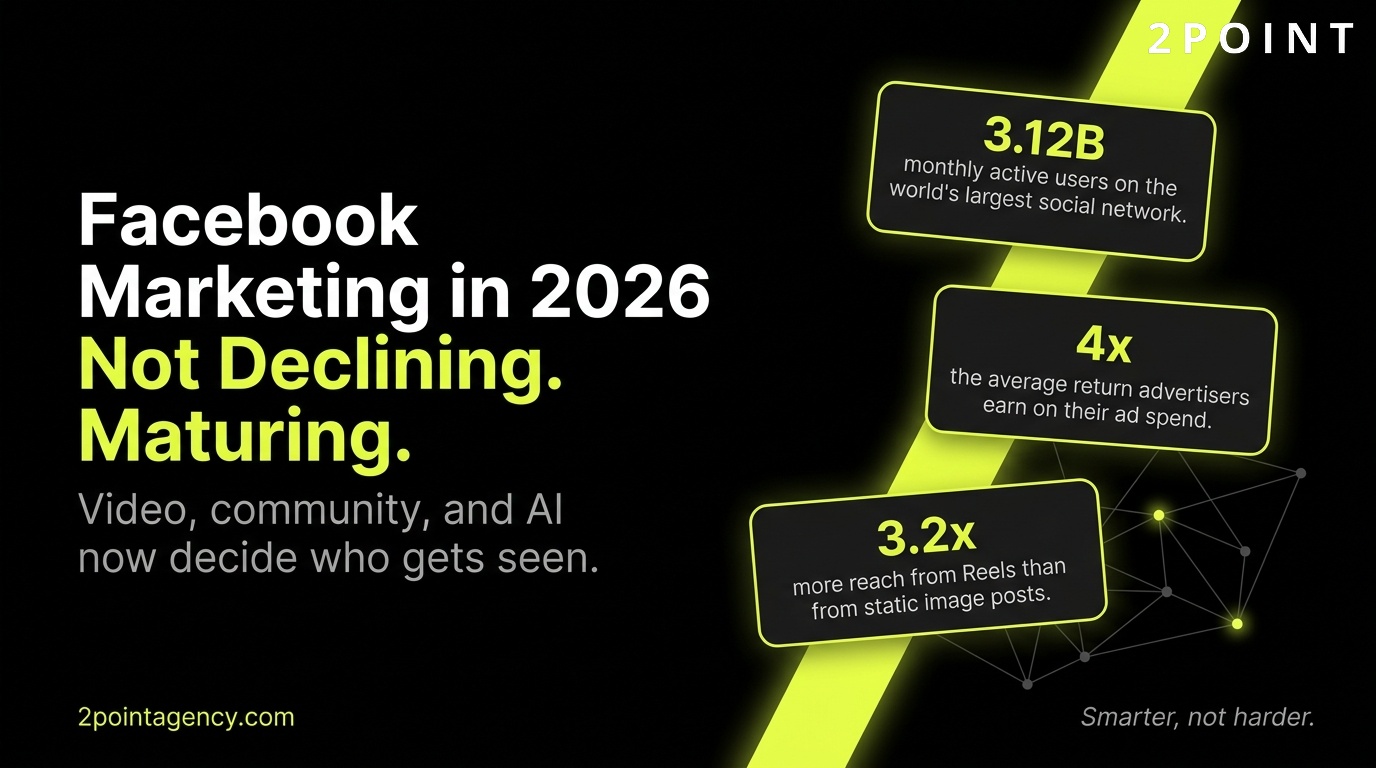
Facebook marketing remains one of the most powerful and cost-effective ways to reach your target audience at scale. Before diving into strategy, here is a direct answer to what Facebook marketing is and why it matters right now:
- Facebook marketing uses Facebook’s platform, including organic posts, paid ads, Groups, Messenger, and Marketplace, to reach and convert target audiences.
- Facebook has 3.12 billion monthly active users and 2.15 billion daily active users, making it the world’s largest social network.
- Advertisers achieve an average return of 4x their ad spend on the platform.
- Facebook marketing combines two distinct approaches: organic content to build trust and community, plus paid advertising to amplify reach and drive conversions.
- In 2026, AI-powered tools like Advantage+ campaigns, Reels dominance, and community-first strategies define best practices.
- Facebook advertising reaches over 2.28 billion users, offering unmatched targeting across more than 1,500 audience parameters.
- This guide covers Facebook marketing strategy, advertising costs, algorithm changes, Reels, community building, advanced ad tactics, organic strategy, and emerging trends for 2026.
Why Facebook Marketing Still Matters in 2026
Despite the rise of newer platforms and shifting attention patterns, Facebook remains the undisputed center of gravity for digital marketers worldwide. Its combination of scale, data infrastructure, commerce tools, and cross-platform integration creates a marketing environment that no other single platform can replicate. Understanding why Facebook marketing continues to dominate helps you allocate budget and creative energy with confidence.
Platform Scale and Market Dominance
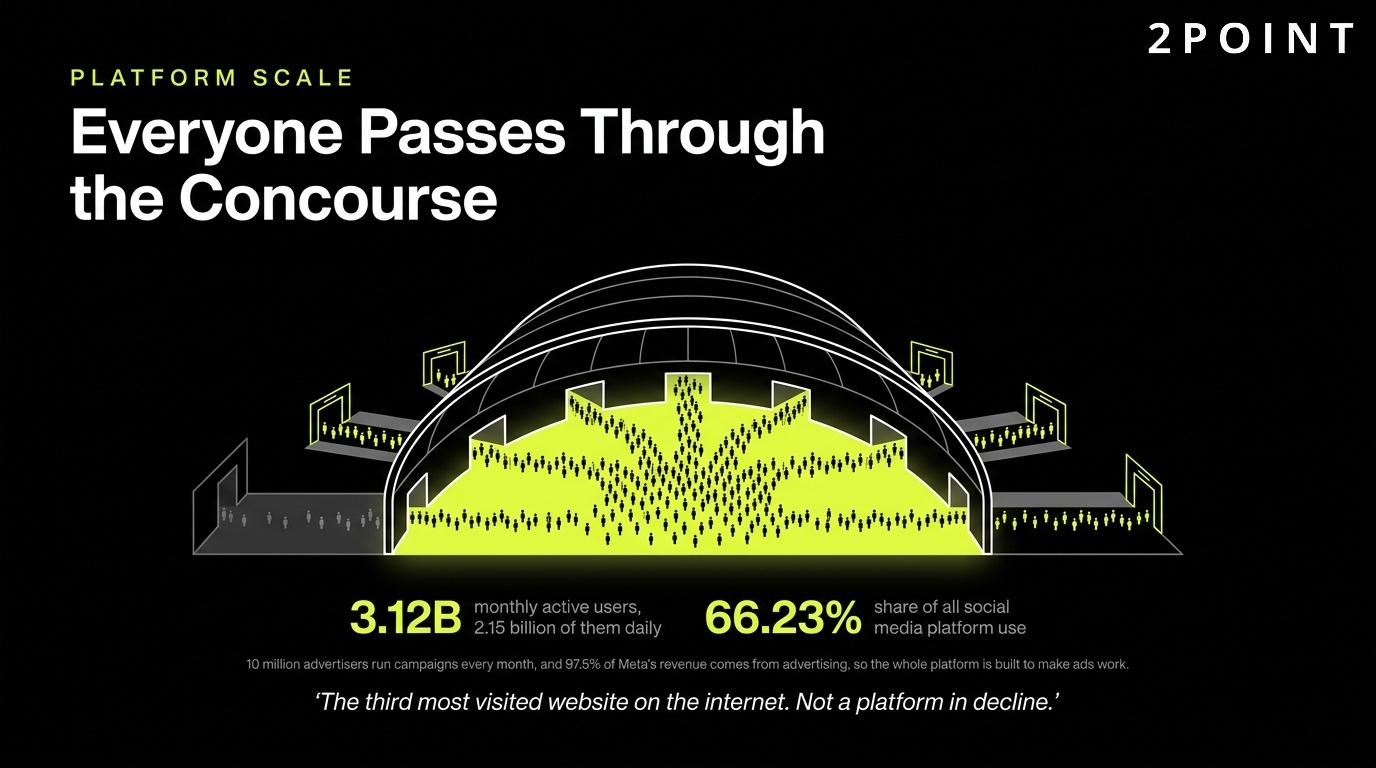
The numbers are staggering and worth dwelling on. Facebook attracts 3.12 billion monthly active users and 2.15 billion daily active users, making it not just the largest social network but the third most visited website on the entire internet. This is not a platform in decline. It is a platform that has embedded itself into daily digital habits across virtually every demographic and geography.
Facebook commands a 66.23% market share among all social media platforms, a number that reflects both legacy dominance and continued user growth in emerging markets. For marketers, this concentration of attention means that any campaign launched on Facebook instantly has access to the widest possible pool of potential customers.
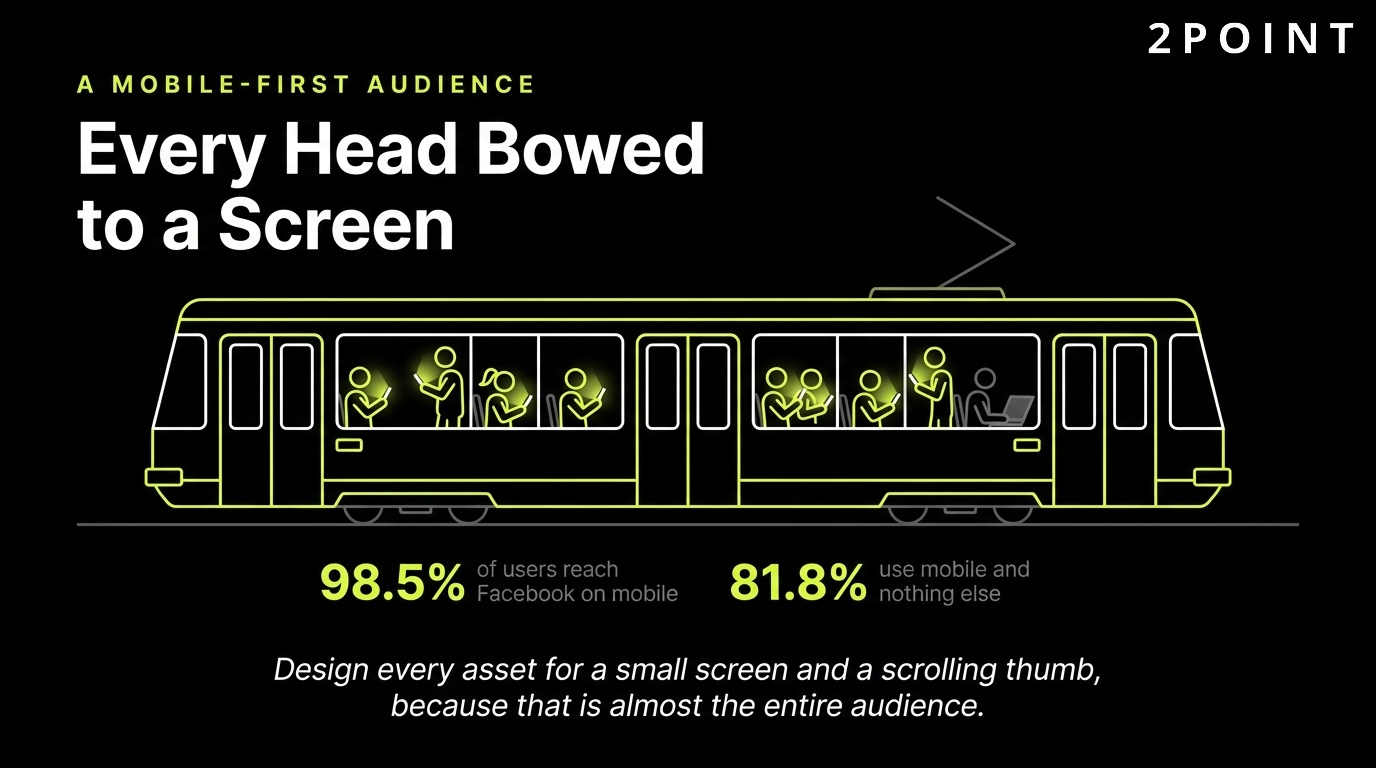
Mobile access tells a particularly important story for campaign design. 98.5% of Facebook users access the platform via mobile, with 81.8% using mobile exclusively. This means every creative asset, every landing page, and every ad format must be designed with a small screen and a scrolling thumb in mind. The platform’s advertising reach extends to 2.28 billion users, giving marketers a truly global stage from which to operate their Facebook marketing campaigns.
Financial Performance and Advertiser Growth
Facebook’s financial trajectory tells the story of a platform that advertisers continue to trust with their budgets. Meta’s 2024 revenue reached $164.5 billion, with projections for 2026 ranging between $150 and $170 billion. That revenue does not come from subscriptions or hardware. 97.5% of Meta’s total revenue is generated through advertising, which means the platform’s entire incentive structure is aligned with helping advertisers achieve results.
The advertiser base is enormous and growing. More than 10 million advertisers are active on Facebook every month, spanning everything from Fortune 500 companies to solo entrepreneurs running their first campaign. Over 200 million businesses use Facebook’s free and paid tools to manage their presence, run promotions, and engage with customers. This critical mass of business activity creates a self-reinforcing ecosystem where suppliers, customers, and competitors all converge in one place.
For you as a marketer, this financial reality is actually encouraging. A platform generating this level of advertiser revenue is continuously reinvesting in its ad products, measurement tools, and AI capabilities. The competitive pressure from 10 million fellow advertisers also means that Meta is perpetually improving targeting precision, audience tools, and creative formats to justify advertiser spend. Your investment is funding a platform that is actively working to make your campaigns more effective.
E-Commerce and Social Commerce Integration
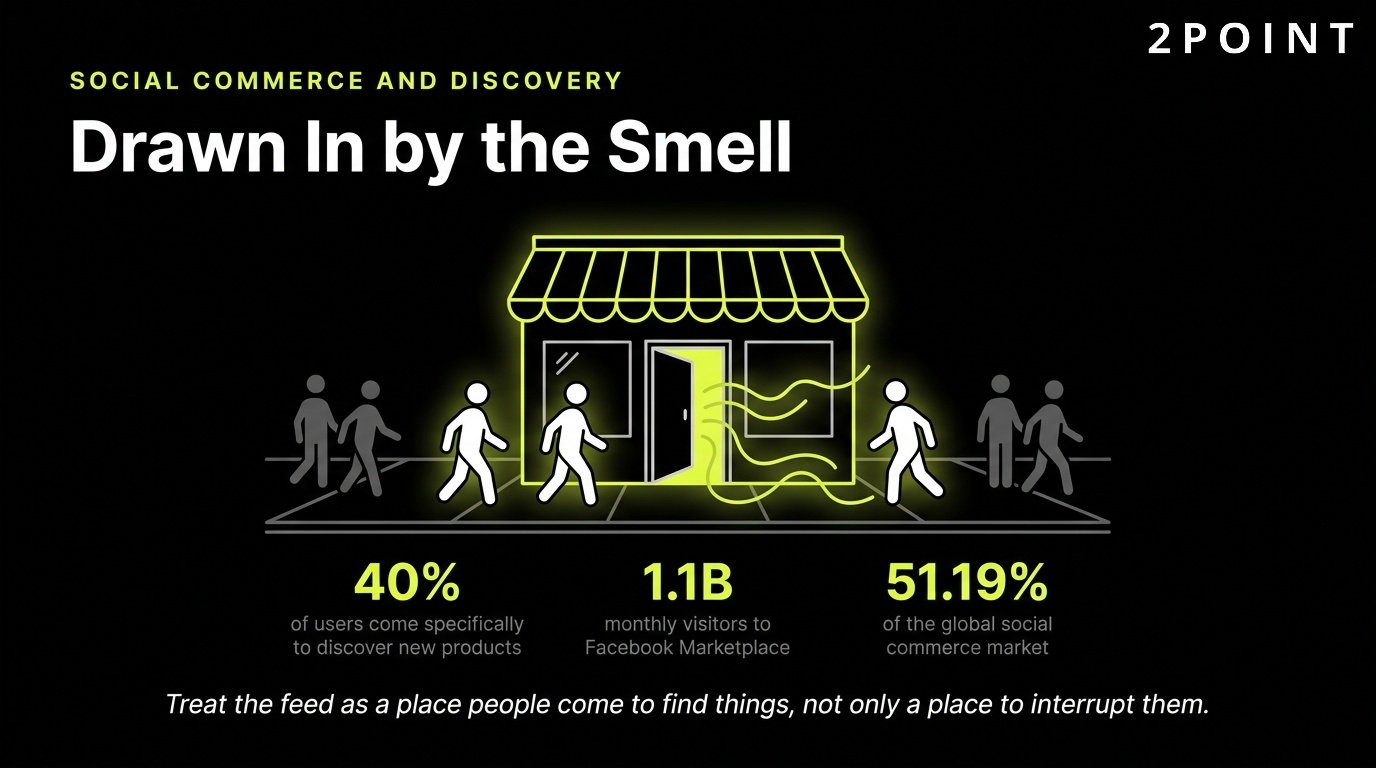
Facebook has evolved far beyond a place where people share updates with friends. It has become one of the world’s largest commerce hubs. Facebook Marketplace attracts 1.1 billion monthly visitors, making it a peer-to-peer and business-to-consumer marketplace rivaling dedicated e-commerce platforms. For brands selling physical products, Marketplace represents a direct discovery channel with purchase intent baked in.
The broader social commerce picture is even more compelling. Facebook holds a 51.19% share of the global social commerce market, meaning more than half of all social media shopping activity flows through Facebook’s ecosystem. This is not a coincidence. It reflects Facebook’s early and sustained investment in shopping infrastructure, including Shops, product catalogs, and in-app checkout functionality.
Perhaps the most strategically useful statistic for brand marketers is this: 40% of Facebook users use the platform specifically to discover new products. This discovery behavior means that a well-placed organic post or paid ad can intercept a user who is actively open to finding something new to buy, not simply scrolling to kill time. Building your Facebook marketing strategy around this discovery mindset, rather than treating Facebook as a pure interruption channel, dramatically improves engagement and conversion outcomes.
Competitive Advantages Over Other Platforms
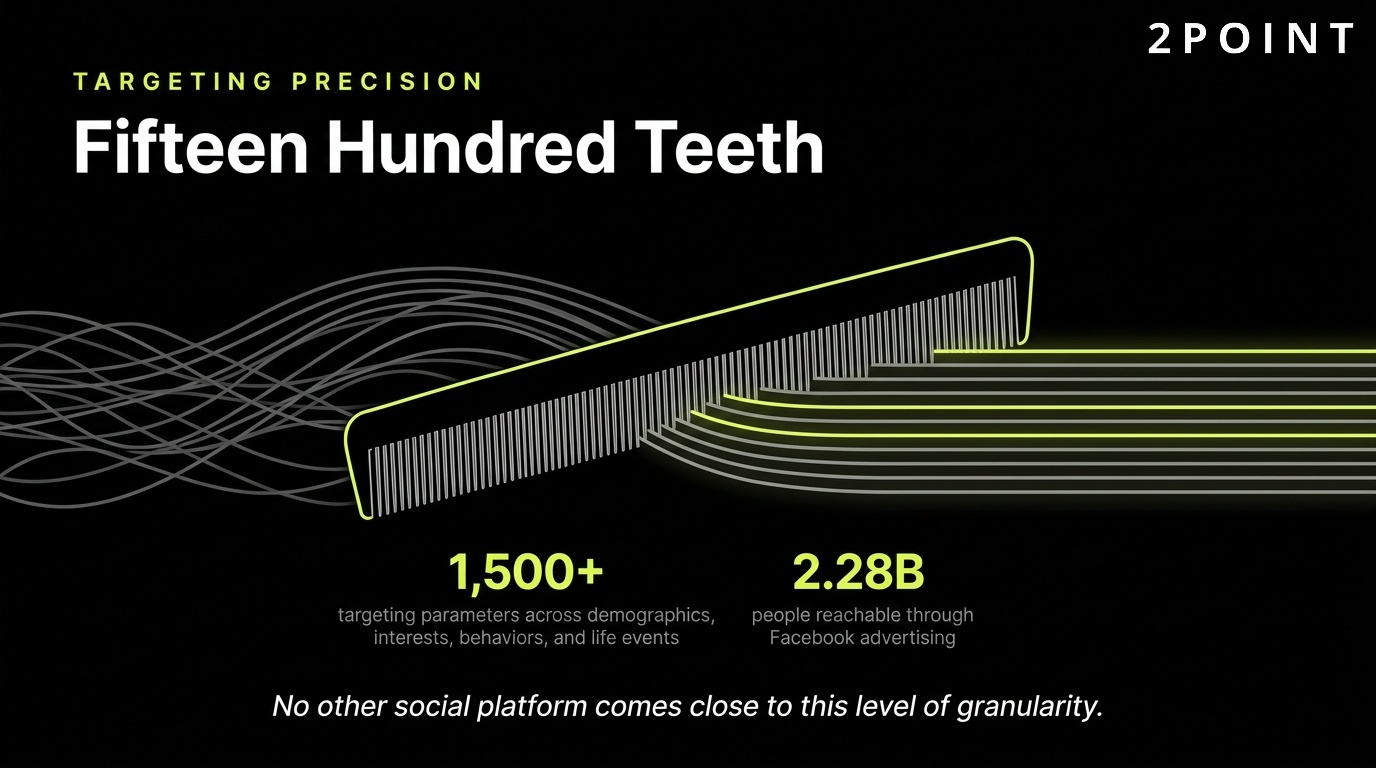
What genuinely separates Facebook from every competing platform is the depth and precision of its targeting infrastructure. Facebook offers over 1,500 targeting parameters, spanning demographics, interests, behaviors, life events, purchase intent, device usage, and connection data. No other social platform comes close to this level of granularity, which is why sophisticated advertisers consistently return to Facebook even as they diversify across other channels.
The community infrastructure through Facebook Groups is another genuine competitive moat. While Twitter/X, LinkedIn, and TikTok all offer some community features, Facebook Groups host millions of highly specific, niche communities with deeply engaged members. For brands, owning or participating in a relevant Group creates a direct relationship with potential customers that is not mediated by an advertising auction.
Facebook’s cross-platform synergy within the Meta ecosystem amplifies everything. Campaigns can seamlessly extend across Instagram, Messenger, and WhatsApp, all managed through a single Ads Manager interface. This interconnected reach, combined with a mature ad infrastructure that has been refined through billions of campaign cycles, gives Facebook marketing practitioners a measurable advantage over those working with newer, less battle-tested platforms. Understanding digital marketing vs social media marketing helps clarify where Facebook fits within your broader strategy.
Understanding Facebook Advertising Costs and ROI
One of the most common questions marketers ask is whether Facebook advertising is worth the investment. The answer depends on understanding current cost benchmarks, industry-specific variations, and realistic performance expectations. Let’s walk through the numbers that should inform every Facebook advertising budget conversation in 2026.
Current Cost Benchmarks for Facebook Ads in 2026
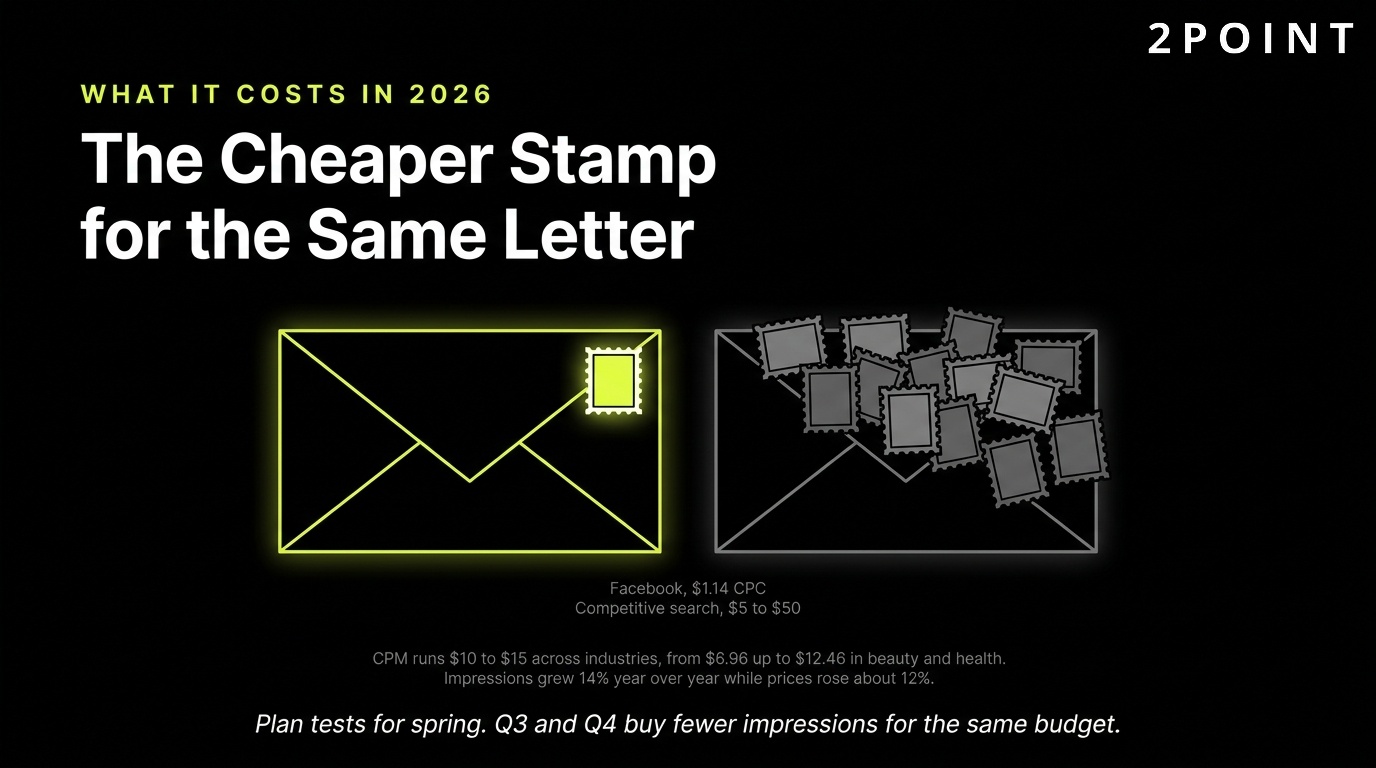
The average cost-per-click on Facebook is currently $1.14, up from $1.05 in 2025, reflecting both increased advertiser demand and platform growth. This average, however, obscures significant variation by industry, audience, and objective. CPC can range from $0.50 to $3.00 depending on the vertical, with highly competitive industries like financial services and insurance sitting at the upper end of that range.
For impression-based buying, average CPM (cost per thousand impressions) runs between $10 and $15 across all industries. Industry-specific CPM ranges from $6.96 to $12.46, with consumer-facing categories commanding premium pricing due to higher competition and purchase value. The overall trend is one of modest but steady price increases. Ad impression volume grew 14% year over year, while prices increased approximately 12%, meaning more eyeballs are available at slightly higher prices than before.
These cost trends actually reflect positive market dynamics. The impression growth signals that Facebook is attracting more users and serving more content, while the controlled price increase suggests the auction is competitive but not hyperinflated. Compared to search advertising CPCs, which often exceed $5 to $50 in competitive categories, Facebook advertising remains a relatively affordable entry point for building awareness and nurturing prospects.
Industry-Specific Facebook Ad Cost Variations
Understanding where your industry sits within the cost landscape helps you set realistic expectations and plan budgets accurately. The data reveals meaningful differences across verticals.
| Industry Category | Average CPM | Average CTR | Strategic Implication |
|---|---|---|---|
| Beauty and Health | $12.46 | Above average | High competition requires strong creative differentiation |
| Art and Home Decor | Mid-range | 2.92% | High click intent; optimize for conversion post-click |
| Clothing and Fashion | Mid-range | 2.84% | Strong visual format ROI; retargeting especially effective |
| Finance and Insurance | High | Lower average | High CPC offset by high customer lifetime value |
| Food and Beverage | Low to mid | Average | Frequency and reach matter more than single-touch conversion |
The key takeaway from this industry breakdown is that raw CPM or CPC numbers mean little without understanding the customer lifetime value and conversion rate in your specific market. A $12.46 CPM in beauty might deliver excellent ROI if your average order value is $80, while the same CPM in a low-margin category could be unsustainable.
Facebook Ad ROI and Performance Metrics That Actually Matter
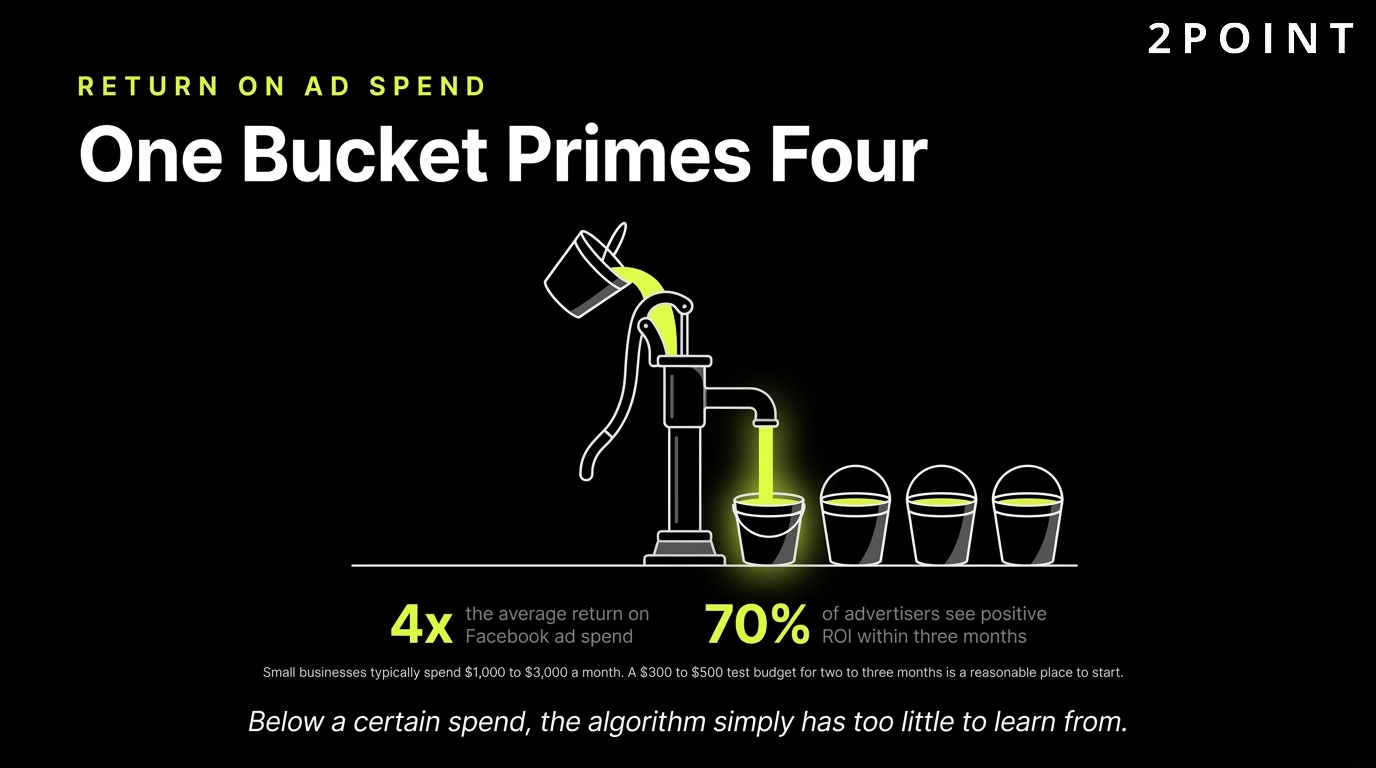
Beyond cost inputs, the output metrics for Facebook advertising are genuinely encouraging. Advertisers achieve an average ROI of 4x their ad spend on Facebook, a benchmark that reflects the platform’s combination of targeting precision and massive reach. This is not a best-case scenario. It is an industry average, meaning many well-optimized campaigns significantly exceed it.
The timeline to ROI is also faster than many marketers expect. 70% of advertisers report positive ROI within the first three months of running Facebook campaigns, which reflects the platform’s ability to reach in-market audiences quickly when campaigns are properly structured. The most powerful performance lever available is retargeting. Retargeting campaigns convert at 10x the rate of cold prospecting campaigns, which explains why audience segmentation and pixel implementation are non-negotiable components of any serious Facebook marketing strategy.
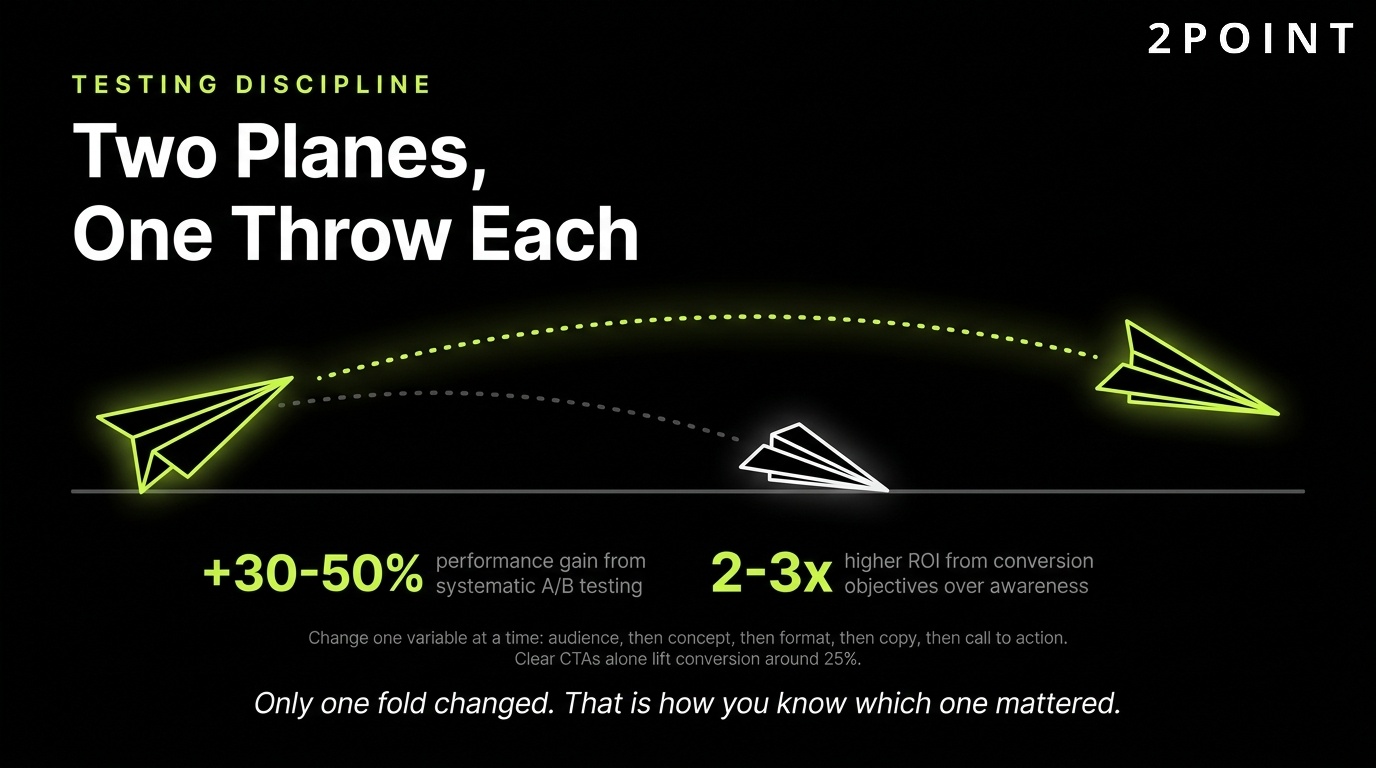
Testing discipline compounds performance over time. A/B testing consistently improves campaign performance by 30 to 50%, while using conversion-optimized campaigns rather than awareness objectives delivers 2 to 3x higher ROI. These are not minor marginal improvements. They represent fundamental differences in how campaigns are structured and what the algorithm optimizes toward.
Budget Planning for Small Business Facebook Marketing
Many small business owners approach Facebook advertising wondering how much they actually need to spend to see results. The honest answer is that there is a floor below which the algorithm lacks sufficient data to optimize effectively. The average small business spends between $1,000 and $3,000 per month on Facebook advertising, a range that allows for meaningful testing across audiences and creatives while staying within typical small business marketing budgets.
Starting with a testing budget of $300 to $500 per month for two to three months is a reasonable entry point if even the lower end of typical small business spend feels daunting. This allows you to gather conversion data, identify winning audiences, and understand your baseline CPA before scaling. Be mindful of seasonal cost fluctuations. Q3 and Q4 see significant CPM increases as retail advertisers flood the auction during the holiday shopping season, which means the same budget buys fewer impressions in November than in March. Plan your testing phases for lower-cost periods and reserve budget for scaling proven campaigns during peak seasons.
The 2026 Facebook Algorithm and How Content Discovery Actually Works
The Facebook algorithm has undergone a fundamental philosophical shift over the past two years. Understanding how content discovery works in 2026 is not optional knowledge. It is the foundation upon which every organic and paid Facebook marketing decision should be built.
How Unconnected Content Changed Organic Facebook Marketing
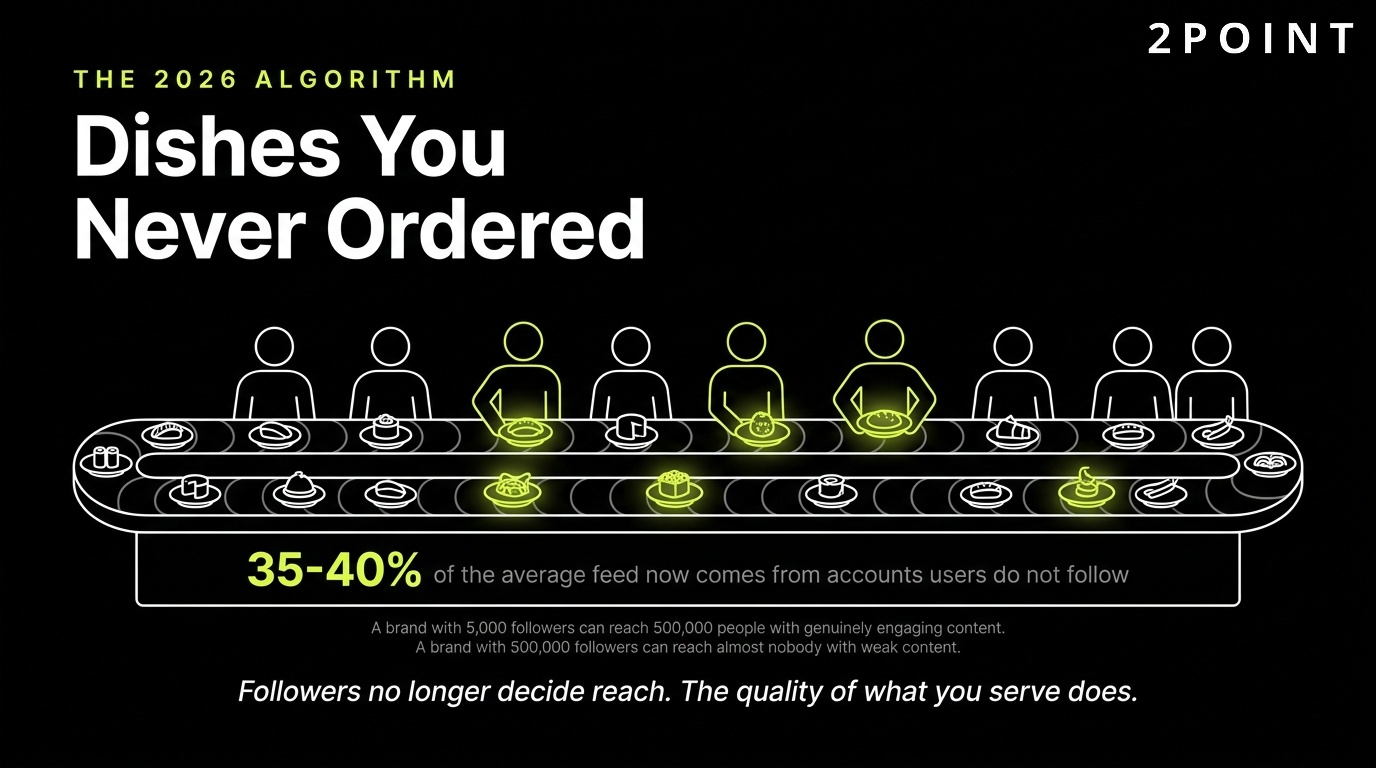
The most significant algorithmic change reshaping Facebook marketing is the rise of content recommendations from accounts users do not follow. Between 35% and 40% of content in the average user’s News Feed now comes from accounts they are not connected to, surfaced purely through algorithmic recommendation. This shift mirrors what TikTok pioneered, and it has profound implications for how brands should think about organic reach.
Under the old follower-centric model, building a large Facebook page following was the primary goal because your posts would reach those followers. Under the new discovery-based model, a brand with 5,000 followers can have a post reach 500,000 people if the algorithm determines it is high-quality, engaging content that matches user interests. Conversely, a brand with 500,000 followers can have a post reach almost nobody if engagement signals are weak. This is both a threat and an extraordinary opportunity, particularly for emerging brands that have not yet built large audiences.
The practical implication is that every piece of content you create now competes not just with other brands your followers follow, but with the entire corpus of content that the algorithm could show them. This raises the creative bar significantly, but it also means that great content can achieve organic distribution at a scale that was previously impossible without paid amplification.
How Meta’s AI Powers Facebook Content Distribution
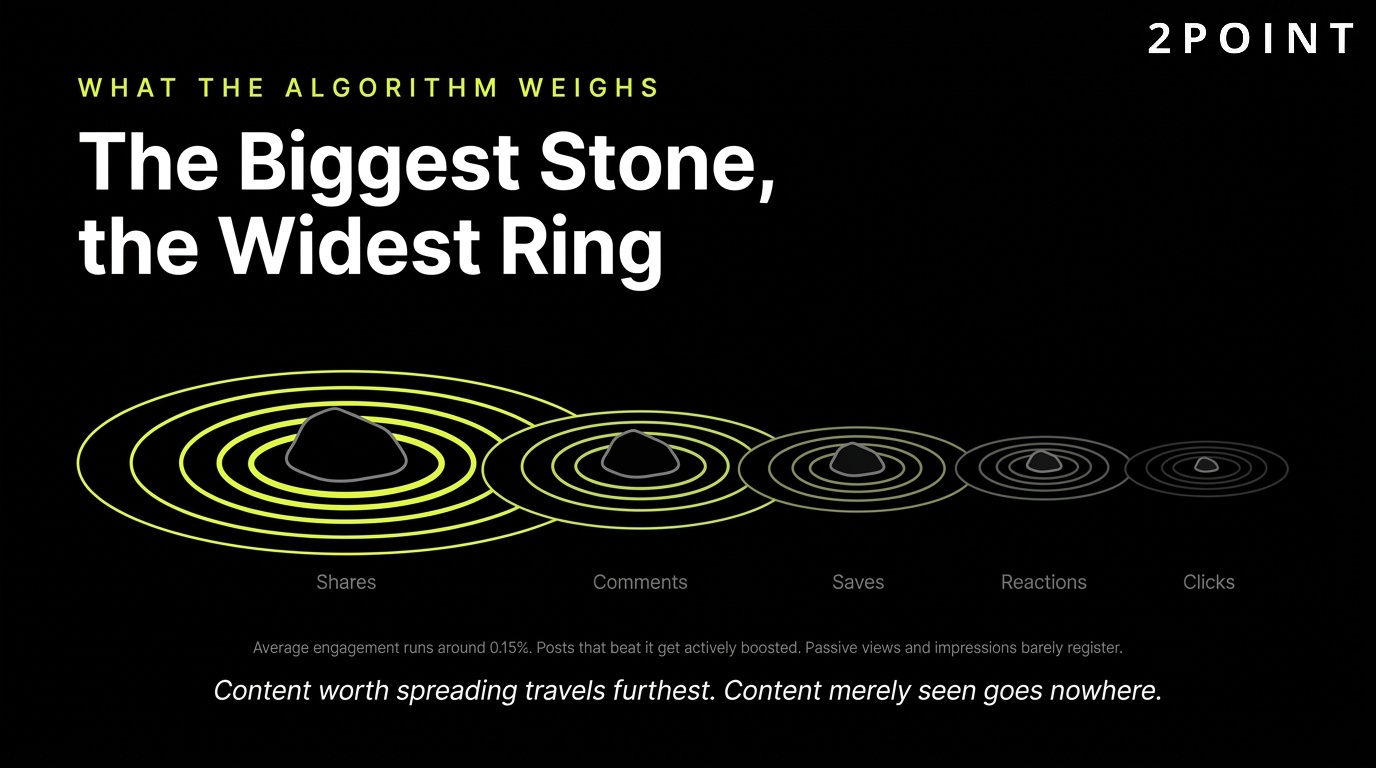
Meta’s AI systems now determine what users see with a sophistication that goes far beyond simple engagement metrics. The algorithm evaluates content across hundreds of signals including completion rate, shares, comments, saves, click-through behavior, time spent, and past interaction patterns with both the creator and similar content. AI-powered Advantage+ campaigns consistently outperform manually configured campaigns in both reach and conversion efficiency, suggesting that Meta’s machine learning has genuinely surpassed human intuition for audience matching.
The implications extend beyond paid advertising. The same AI infrastructure that powers Advantage+ also governs organic content distribution, which means feeding the algorithm high-quality signals, strong engagement, genuine user interaction, content completion, and sharing behavior, is what creates sustainable organic reach. As one industry framework summarizes it: 2026 is the year of “smarter, not harder” marketing on Facebook. This means working with the algorithm’s preferences rather than trying to game them with posting frequency or keyword stuffing.
For marketers, the practical path forward is to invest more in creative quality and audience alignment, and less in volume of posts. One genuinely compelling video that earns strong completion rates and shares will outperform ten mediocre posts that generate passive scrolls. Building a social media marketing plan that accounts for AI-driven distribution is now a core competency for Facebook marketers.
Facebook as a Search and Product Discovery Platform
Facebook is increasingly functioning as a search and discovery engine, not merely a social feed. 40% of Facebook users actively use the platform to discover new products, a behavior that has significant implications for how content should be titled, captioned, and tagged. Users are not just passively waiting to be shown products. They are actively searching within Facebook for businesses, reviews, Groups related to their interests, and product recommendations from communities they trust.
This search behavior means that the SEO principles you apply to your website have a meaningful analog on Facebook. Business page names, post captions, Group descriptions, and even image alt text all contribute to how findable your content is when users search within the platform. Treating Facebook more like a search platform than a broadcast channel is an emerging best practice that rewards brands who adopt it early.
Optimizing Your Content for Algorithmic Distribution
Understanding the algorithm is only useful if it translates into actionable content decisions. The engagement signals that matter most to Facebook’s distribution algorithm in 2026 are, in approximate order of importance: shares (indicating content worth spreading), comments (indicating content worth discussing), saves (indicating content worth revisiting), reactions (indicating emotional response), and clicks (indicating content worth exploring further). Passive views and impressions carry far less algorithmic weight.
Content formats the algorithm currently favors include Reels and short-form video, followed by photo albums, then single images, then text posts, then link posts (which the algorithm somewhat depresses because they take users off-platform). The average engagement rate on Facebook is approximately 0.15%, which sounds low but reflects a massive denominator of total followers and impressions. Posts that exceed this benchmark are being actively boosted by the algorithm, while posts below it see diminishing distribution over time. The most effective approach combines strong creative assets with clear campaign objectives that give the algorithm a clear signal of what success looks like.
Mastering Facebook Reels and Short-Form Video Marketing
If there is a single format shift that defines Facebook marketing in 2026, it is the ascendance of Reels. Short-form video has moved from an experimental format to the dominant mode of content consumption on the platform, and marketers who have not adapted their content strategy accordingly are leaving significant reach and engagement on the table.
The Dominance of Reels in 2026 Facebook Marketing
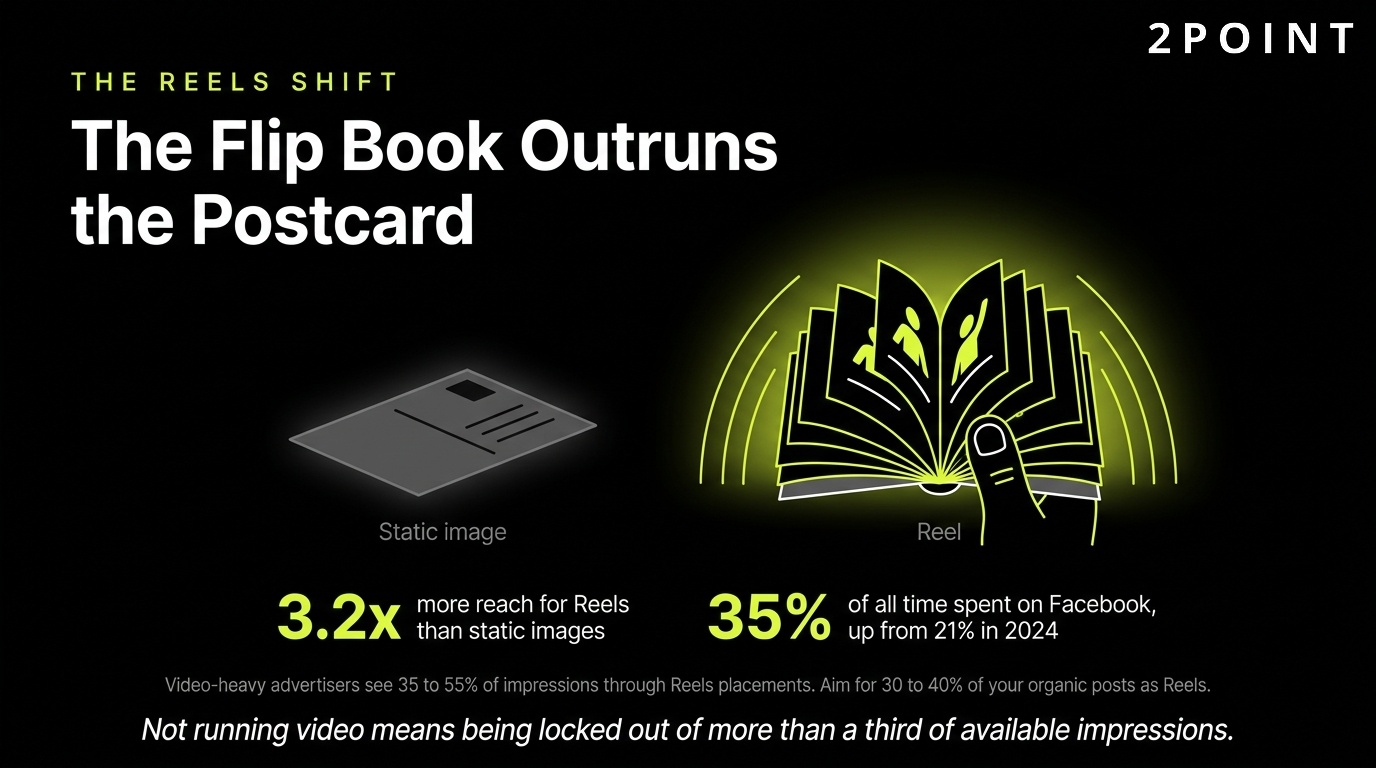
The reach advantage of Reels over static content is not subtle. Facebook Reels generate 3.2x more reach than static image posts, a multiplier that reflects the algorithm’s strong preference for the format. More tellingly, Reels now account for 35% of all time spent on Facebook, up from 21% in 2024. That is a 67% increase in time-on-format within two years, a growth rate that signals a durable behavioral shift rather than a passing trend.
For advertisers, the numbers are equally compelling. Brands running video-heavy campaigns see 35 to 55% of their total impressions delivered through Reels placements. This means that if you are running Facebook ads but not creating video content, you are effectively locked out of more than a third of available impressions. As the platform continues to invest in Reels infrastructure, including creator monetization, interactive stickers, and shopping integration, this percentage will only increase.
The strategic implication is clear: video content creation is no longer optional for brands that want to compete on Facebook. This does not necessarily require expensive production budgets. The platform’s engagement data consistently shows that authentic, relatable content often outperforms highly polished productions, particularly for smaller brands where human personality and genuine storytelling create a competitive advantage against impersonal corporate content.
Video Performance Benchmarks Worth Knowing
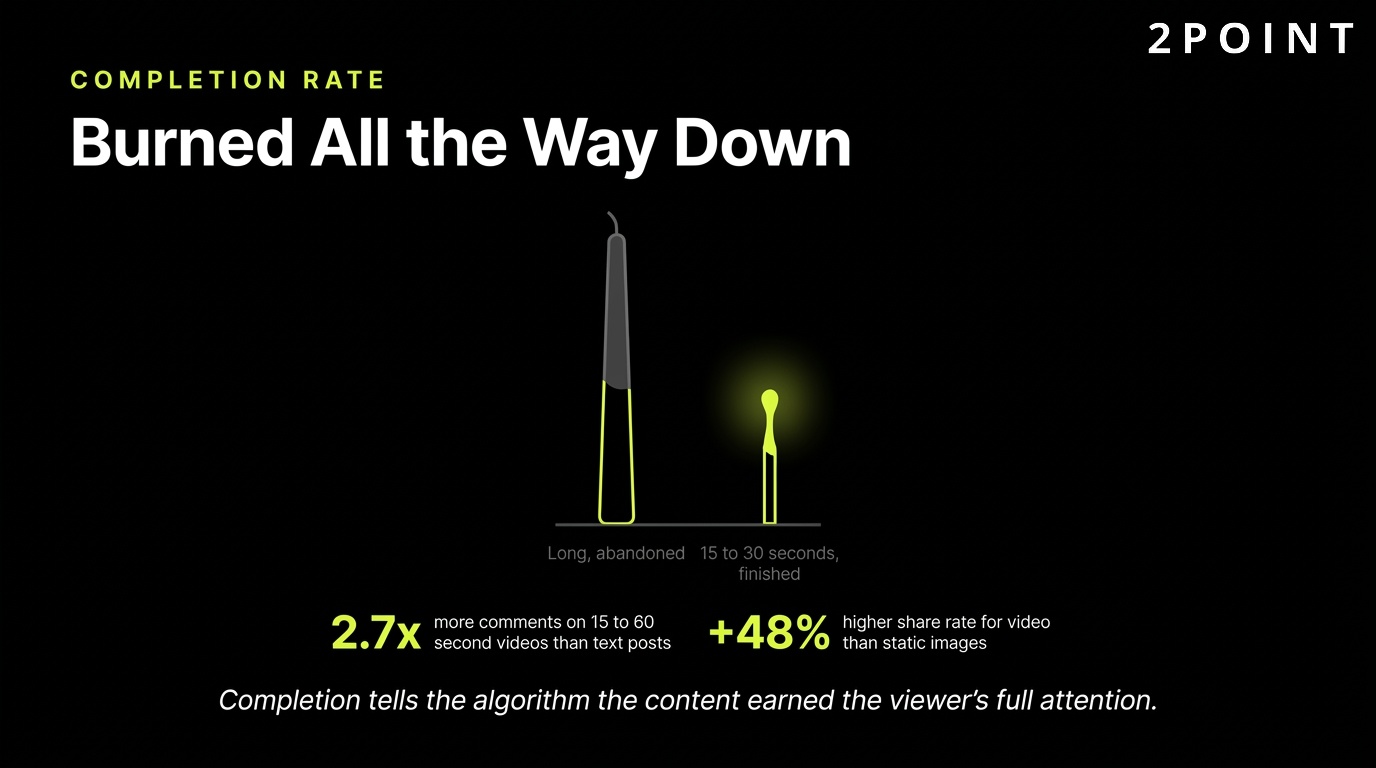
Beyond reach, the engagement advantages of video content are well-documented. Short-form videos between 15 and 60 seconds generate 2.7x more comments than text-based posts, which is the engagement signal that carries the most algorithmic weight. Comments indicate genuine interaction and emotional investment in the content, both of which the algorithm interprets as quality signals. Video content also achieves 48% higher share rates than static images, extending organic reach beyond the original audience.
Completion rate is perhaps the most important video metric that many marketers undervalue. When the Facebook algorithm sees high completion rates on your video, it interprets this as a signal that the content is compelling enough to warrant broader distribution. Keeping Reels between 15 and 30 seconds maximizes completion rates, as shorter videos naturally achieve higher percentages of full views. For video marketing that generates algorithmic momentum, optimizing for completion rather than just clicks changes how you script, structure, and edit your content.
Creating Effective Reels Content for Facebook
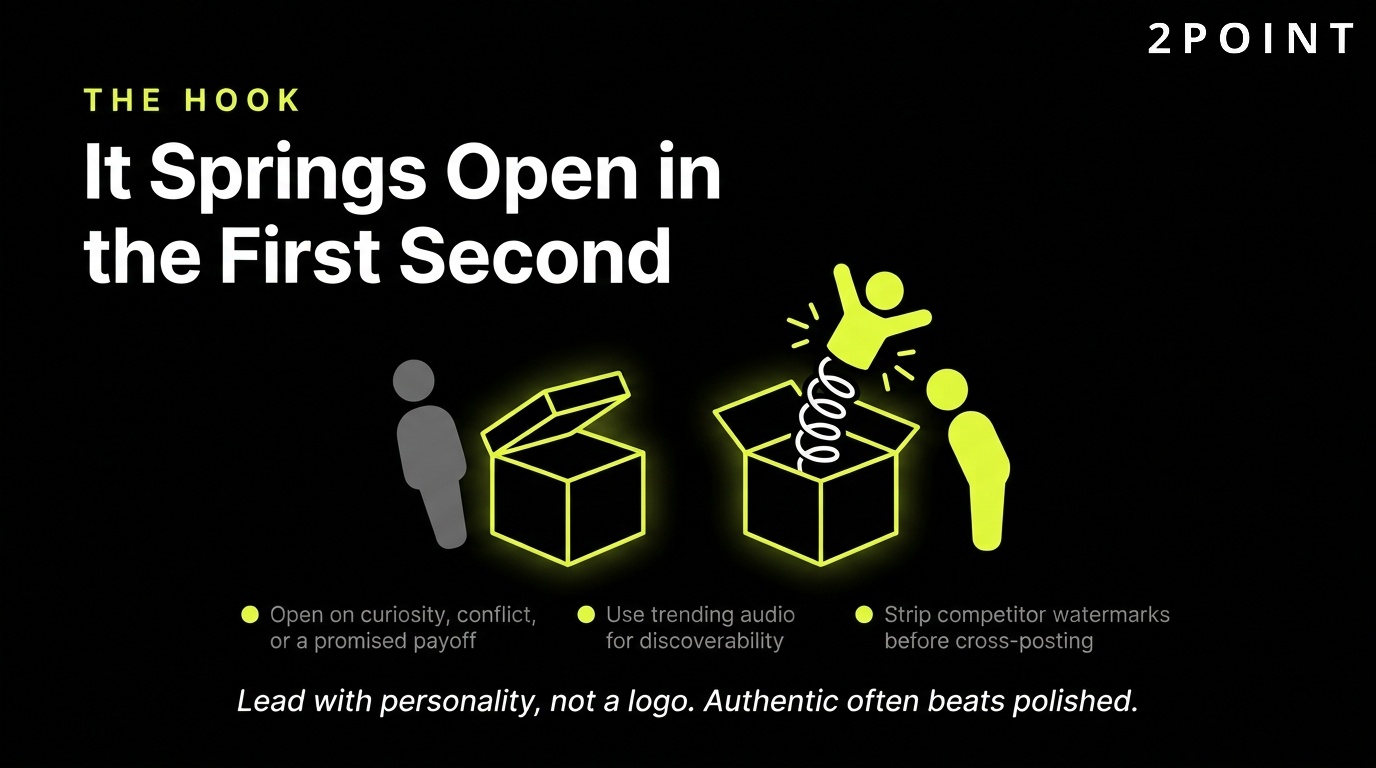
The most common creative mistake brands make with Reels is approaching them with the same mindset they bring to traditional advertising: a polished setup, a middle, and a call to action at the end. Reels require the opposite structure. Authentic storytelling is the dominant trend in effective Facebook Reels, which means leading with personality, conflict, or curiosity rather than a brand logo or product shot.
The first one to two seconds of a Reel are disproportionately important. This is when users decide whether to continue watching or swipe past. Effective hooks include unexpected visual moments, direct questions to the viewer, surprising statements, or the promise of a specific payoff (“Here’s how we cut our ad spend by 40%”). Audio selection also matters significantly. Trending sounds increase discoverability within the Reels algorithm because the platform surfaces audio-matched content in discovery feeds. When possible, use trending audio tracks for non-branded content and custom audio for ads where brand voice consistency matters more.
Repurposing your best-performing content from TikTok and Instagram Reels to Facebook is an efficient way to populate your video calendar without creating everything from scratch. However, remove TikTok watermarks before cross-posting, as Facebook’s algorithm actively penalizes content that carries competitor branding. The platform wants creators to treat Facebook Reels as a primary destination, not a content dump, and it distributes accordingly.
Video Ads vs. Organic Video Strategy on Facebook
The decision between boosting organic video content and creating dedicated video ad campaigns depends on your objectives and where your content sits in the marketing funnel. Organic video is best suited for building brand awareness, establishing community trust, and testing which content themes resonate before committing paid budget. When an organic Reel significantly outperforms your average engagement rate, that is a signal worth boosting with paid amplification because the algorithm has already validated the creative’s effectiveness.
Dedicated video ad campaigns, particularly those using Reels placements, are more appropriate for direct response objectives: driving website clicks, product purchases, app installs, or lead form completions. Facebook Ads outperform organic posts by more than 1,000% in total reach when the objective is maximum distribution to a targeted audience. The most effective Facebook marketing strategies combine organic video for trust-building with paid video ads for conversion, using each approach where it performs most efficiently rather than treating them as mutually exclusive channels.
Building and Leveraging Facebook Communities for Organic Growth
Perhaps the most underutilized dimension of Facebook marketing for brands is the community infrastructure that Facebook has built over the past decade. Facebook Groups represent an engagement and retention channel that most competitors simply do not have, and brands that understand how to build and activate communities are seeing outsized organic reach benefits as a result.
The Community-First Marketing Shift on Facebook
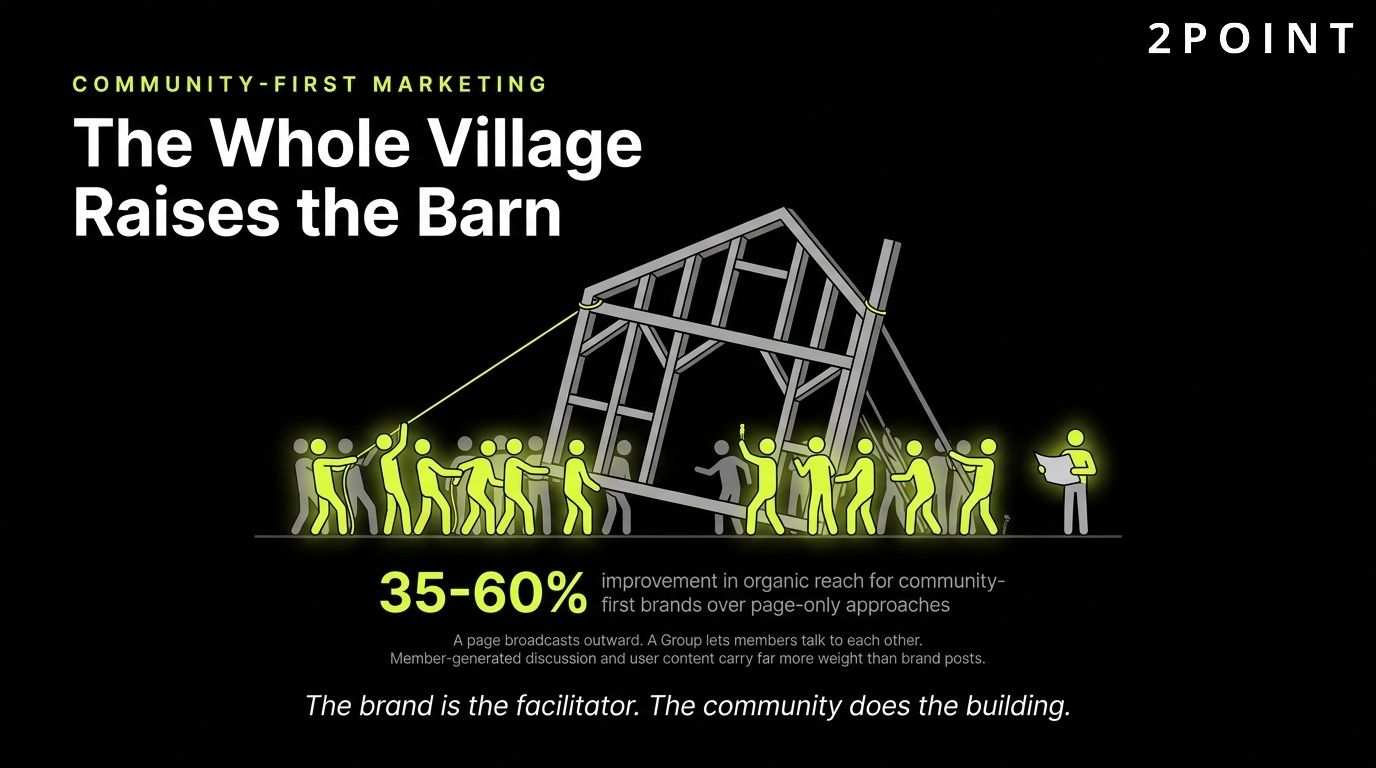
Facebook marketing is moving away from the broadcast model, where brands publish and audiences passively consume, toward a participation model where the brand facilitates conversations rather than simply starting them. Brands that pivot to community-first strategies are reporting 35 to 60% improvements in organic reach compared to page-only approaches. This reach improvement is not an accident. It reflects the algorithm’s preference for content that generates genuine discussion and community participation.
The fundamental difference between a Facebook page and a Facebook Group is one of direction. A page broadcasts outward from the brand. A Group creates a space where members talk with each other, share experiences, ask questions, and build relationships that extend beyond the brand itself. This community infrastructure is what transforms casual followers into brand advocates. Community participation is now a central pillar of effective Facebook marketing, not a supplementary tactic. This philosophy is closely aligned with customer-centric marketing principles that prioritize long-term relationship value over transactional interactions.
Facebook Groups Strategy for Building Brand Communities
Successful brand-owned Facebook Groups share several common characteristics. They have a clear, specific purpose that extends beyond selling the brand’s products. A fitness equipment company’s Group might focus on home workout routines, nutrition questions, and member transformation stories rather than product announcements. This distinction matters because members join Groups for value, not for advertising. Facebook hosts millions of active Groups across virtually every niche, and it maintains a significant lead over other platforms in community-building infrastructure.
Effective Group moderation is what separates thriving communities from spam-filled ghost towns. Establishing clear community guidelines, welcoming new members personally, prompting discussion with weekly themed posts, and recognizing active contributors all contribute to a Group culture that members want to participate in. The goal is to create a space where members feel ownership over the community, because member-generated discussions carry far more algorithmic weight than brand posts. Converting Group members to customers happens organically when members trust the brand that facilitates their community, and it happens far more reliably than through cold advertising to strangers.
User-Generated Content Integration in Facebook Marketing
User-generated content (UGC) is one of the most powerful assets available to Facebook marketers, and it costs nothing to generate when your community strategy is working well. Customer reviews, unboxing videos, transformation stories, product photos, and testimonials shared within Groups or on your page carry authenticity signals that no amount of professional production can manufacture. UGC consistently enhances both authenticity and engagement metrics across brand pages, with the added benefit that it reduces your content creation burden while increasing the variety and relatability of your feed.
Encouraging UGC requires a combination of clear prompts, social recognition, and sometimes tangible incentives. Running monthly photo challenges, featuring customer stories in your Group, resharing customer posts with proper attribution, and creating a branded hashtag that makes it easy for customers to tag you all contribute to a steady stream of authentic content. Before resharing any customer content on your brand page, always obtain explicit permission, whether through a direct message or a clear community guideline that outlines your resharing policy. This both protects you legally and demonstrates respect for your community members’ content ownership. A strong approach to personalized marketing strategy incorporates UGC as a channel for reinforcing authentic customer voices.
Measuring Community Engagement Success
Measuring the success of a community-based Facebook marketing strategy requires moving beyond vanity metrics like page likes and post reach. Shares and comments are more meaningful performance indicators than awareness metrics when evaluating community health. A post that generates 200 comments and 50 shares reaches a far more engaged audience and builds more durable brand equity than a post that reaches 10,000 people passively but generates no interaction.
Building meaningful relationships with your audience is the long-term goal of community engagement, and it manifests in metrics like Group membership growth rate, average posts per week from members (not just the brand), member retention over time, and eventual conversion rates from Group members vs. cold audiences. The conversion data is particularly telling: brands consistently find that customers who engaged in their Facebook Group before purchasing have higher average order values, lower return rates, and significantly higher lifetime values than customers acquired through direct advertising alone. Using CRM tools in marketing to track community-sourced customers separately helps you quantify this community premium over time.
Advanced Facebook Advertising Tactics for Higher Performance
Once you have established the foundational elements of your Facebook marketing strategy, a set of advanced advertising tactics can meaningfully separate your results from competitors running generic campaigns. These approaches require more sophistication and testing discipline, but the performance payoff justifies the investment.
Advantage+ Campaigns and AI Automation in Facebook Ads
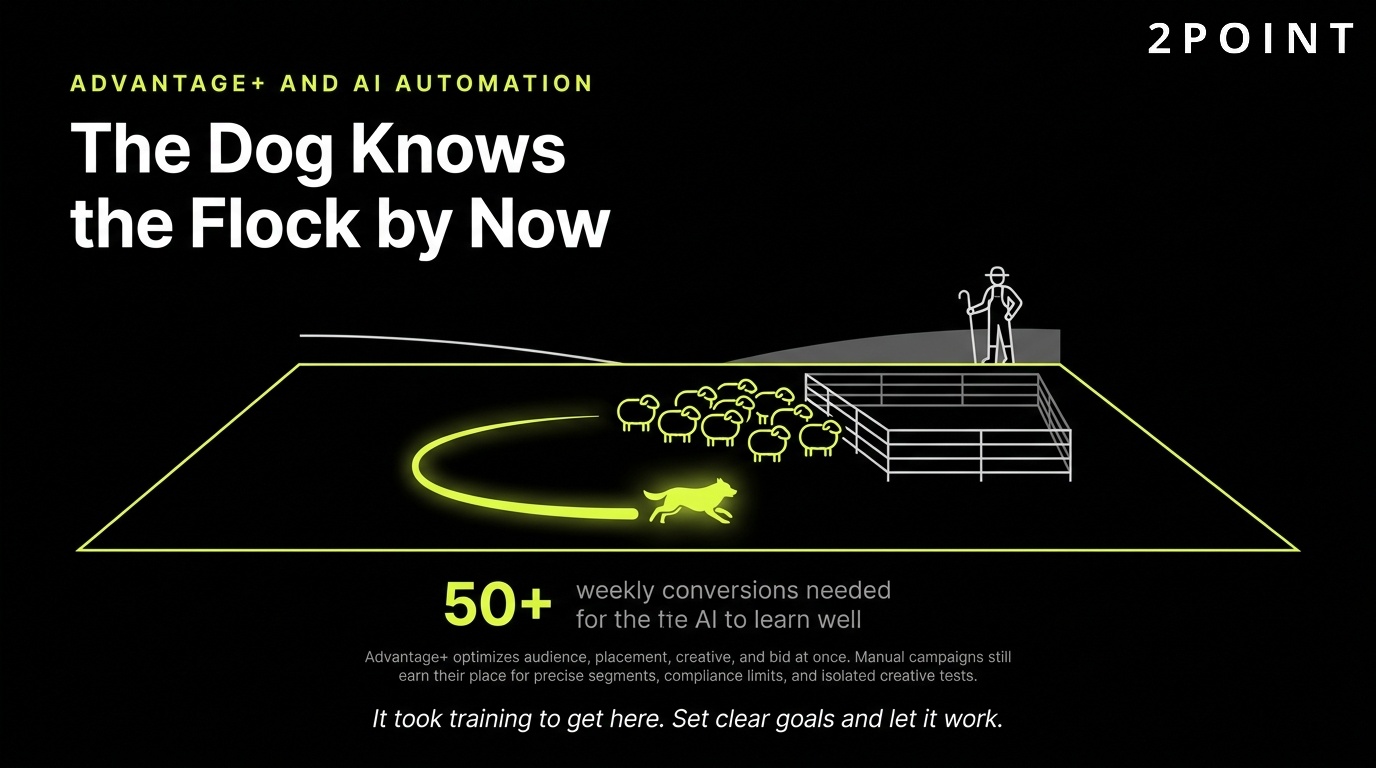
Meta’s Advantage+ suite of AI-powered campaign tools represents the most significant shift in Facebook advertising since the introduction of Custom Audiences. Advantage+ campaigns are consistently delivering stronger results than manually configured campaigns across conversion objectives, with Meta’s AI optimizing in real time across audience, placement, creative, and bid simultaneously. This multi-dimensional optimization is something human campaign managers simply cannot replicate manually at scale.
The appropriate use cases for Advantage+ vs. manual campaigns are worth understanding. Advantage+ Shopping Campaigns work best for e-commerce advertisers with a clear product catalog and sufficient conversion history (at least 50 conversions per week) for the algorithm to learn from. Manual campaigns retain their value when you need precise audience control for specific segments, when you are running campaigns with compliance restrictions that limit audience signals, or when you are testing new creative concepts and want to isolate variables. CPM stabilization is one of the practical benefits of Advantage+ campaigns because the AI dynamically adjusts bids to find the most cost-efficient delivery windows. Setting clear marketing goals before launching Advantage+ campaigns helps the algorithm optimize toward the outcomes that actually matter to your business.
Retargeting and Lookalike Audiences in Facebook Marketing
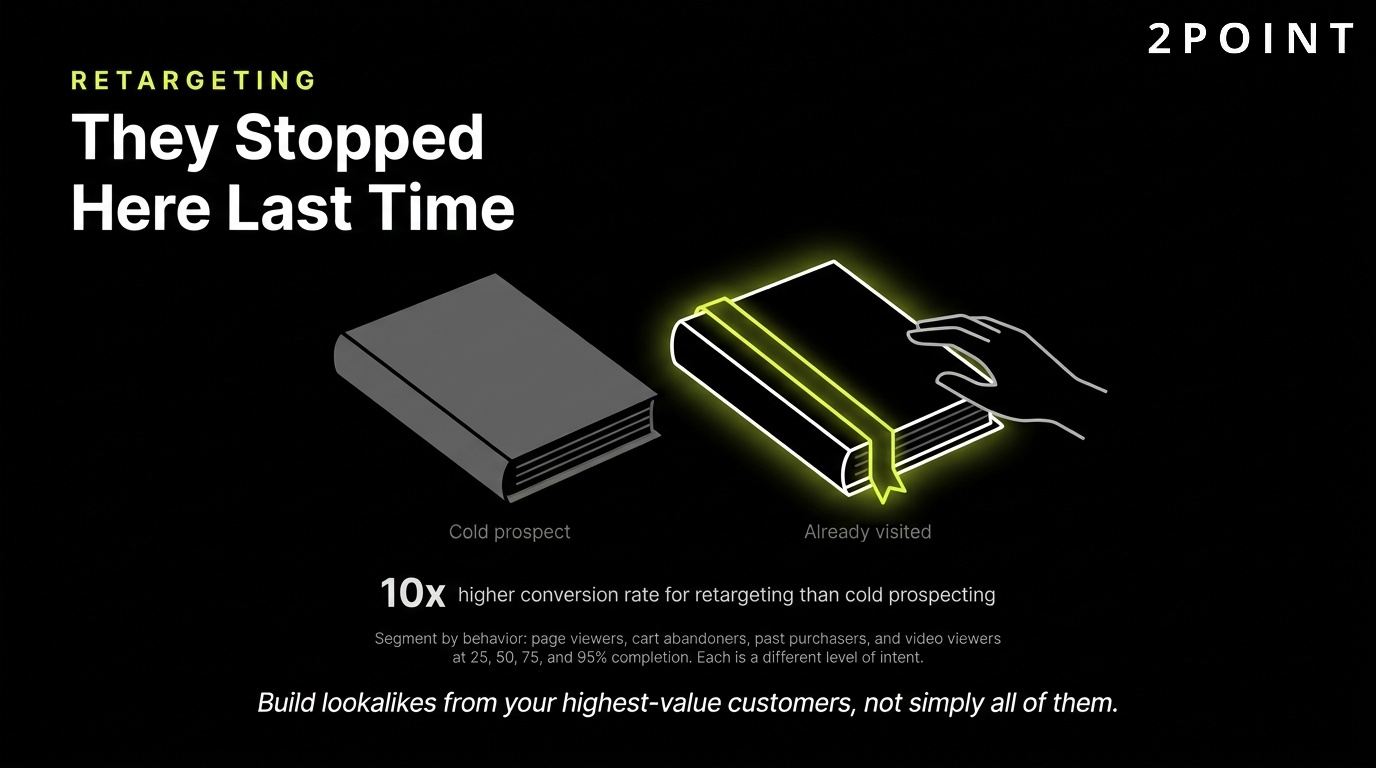
The performance gap between cold audience prospecting and retargeting on Facebook is substantial enough to warrant treating them as fundamentally different campaign types rather than variations of the same approach. Retargeting campaigns achieve 10x better conversion rates than cold prospecting campaigns, which reflects the obvious but often underweighted principle that showing relevant ads to people who have already expressed interest converts dramatically better than introducing your brand to strangers.
Effective retargeting requires careful audience segmentation. Rather than retargeting all website visitors with the same ad, segment by behavior: page viewers who did not add to cart, cart abandoners, past purchasers (for cross-sell and upsell), and video viewers at various completion thresholds (25%, 50%, 75%, 95%). Each segment represents a different level of intent and warrants different messaging and offers. Lookalike audiences are consistently identified as one of the most effective Facebook targeting tools because they find new users who statistically resemble your best existing customers. Build Lookalikes from your highest-value customer lists, not simply all customers, to ensure the algorithm is finding prospects with genuine revenue potential. Interest-based targeting continues to drive strong engagement even in the post-privacy-change landscape, particularly when combined with behavioral signals from your pixel data.
Creative Optimization and A/B Testing for Facebook Ad Campaigns
The creative component of a Facebook ad campaign is responsible for a disproportionate share of performance variance. Two campaigns running to identical audiences with identical budgets can produce wildly different results based solely on creative quality and relevance. Systematic A/B testing improves campaign performance by 30 to 50% compared to running a single untested creative, which is why testing infrastructure should be built into your campaign setup process from the start.
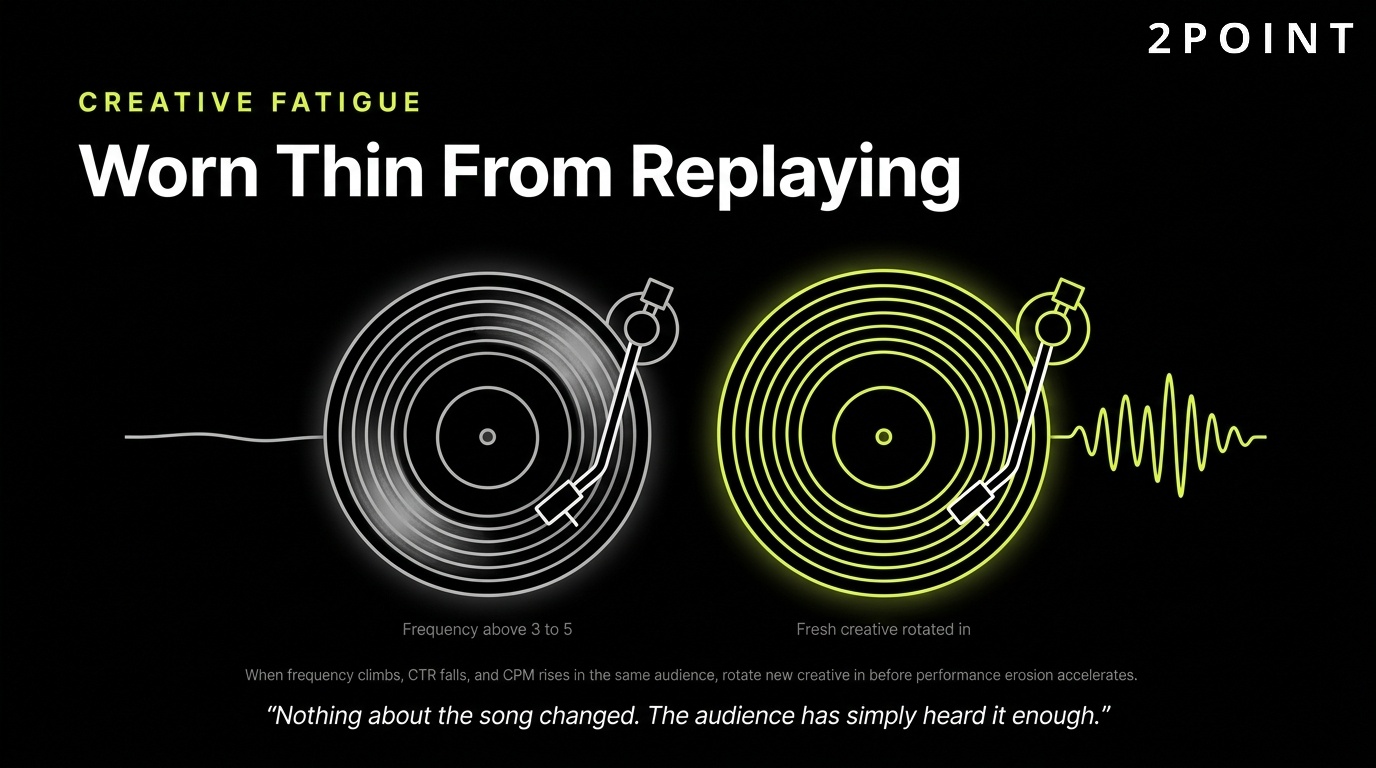
A structured testing hierarchy focuses on one variable at a time to isolate what is actually driving performance differences. Test in this order: audience (who sees the ad), then creative concept (what the ad communicates), then format (video vs. image vs. carousel), then copy length and tone, then call to action. Clear calls to action increase conversion rates by approximately 25%, and action-oriented CTAs like “Shop Now” and “Learn More” drive the highest engagement across most campaign types. Managing creative fatigue is essential for sustained performance. When frequency rises above 3 to 5 for a given audience segment and you see declining CTR and rising CPM, it is time to rotate new creative into the campaign before performance erosion accelerates. Understanding consumer behavior in marketing helps you predict when fatigue is likely and proactively refresh creative before performance dips.
Click-to-Messenger Ads and Conversational Facebook Marketing
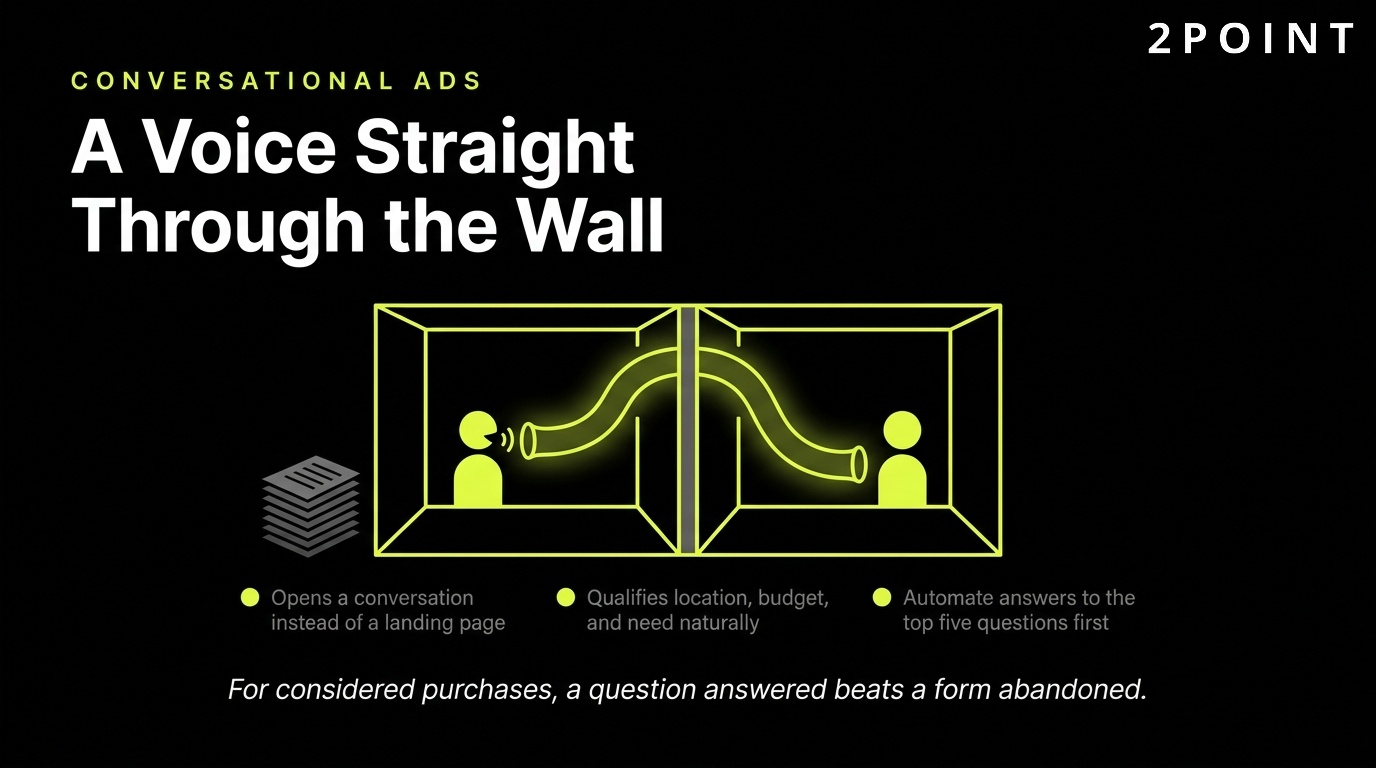
Click-to-Messenger ads represent one of the most underutilized high-performance formats in Facebook advertising. Rather than driving users to a website landing page, these ads open a Messenger conversation with the brand, creating an immediate, personal interaction that is qualitatively different from a standard web visit. Setting up Messenger automations that respond intelligently to high-intent queries allows you to qualify leads, answer common objections, and guide users toward conversion without requiring human intervention for every conversation.
Click-to-message ads that trigger AI-assisted conversations are particularly effective for service businesses, high-consideration purchases, and any product category where buyers typically have specific questions before committing. The conversation format naturally collects qualifying information (location, budget, specific needs) in a way that feels helpful rather than intrusive, making lead quality significantly higher than form-based lead generation. For businesses that have not yet explored conversational advertising, even a simple Messenger automation that handles the top five most common customer questions can dramatically improve the conversion rate of existing ad campaigns while reducing customer service load. This approach integrates naturally with marketing automation workflows that nurture leads from initial inquiry to purchase.
Organic Facebook Marketing Strategy: Building Reach Without Paid Ads
While paid advertising delivers speed and scale, a robust organic Facebook marketing strategy builds the brand trust and community depth that sustains long-term business growth. Organic and paid are not competitors. They are complements, with each approach strengthening the other when executed in coordination.
Content Mix and Variety for Organic Facebook Performance
Maintaining audience interest on Facebook requires deliberate content variety. Photo albums and image posts currently drive the highest engagement rates among non-video content formats, making them essential components of an organic content calendar. However, over-reliance on any single format eventually produces diminishing returns as audiences become habituated and the algorithm deprioritizes content from creators it perceives as formulaic.
A balanced organic content mix for most brands should include Reels and short-form video (30 to 40% of posts), photo albums and single images (25 to 35%), text posts and polls for direct community engagement (15 to 20%), and link posts to valuable external content including your own blog (10 to 15%). Content variety prevents audience boredom and signals to the algorithm that you are a diverse creator worth recommending. Planning this mix through a structured content calendar also prevents the reactive, inconsistent posting that plagues many small business Facebook pages and makes performance measurement nearly impossible. This is one reason why investing in content marketing infrastructure pays dividends across your Facebook organic strategy.
Posting Timing and Frequency for Maximum Organic Reach
The perennial question of when to post on Facebook has a deeply unsatisfying but accurate answer: it depends entirely on your specific audience’s behavior patterns. Generic “best times to post” guides circulate constantly, but they are calculated from aggregate data across millions of accounts and may have no relevance to your particular audience’s habits. Posting timing should be driven by your own audience’s behavior data, not industry averages.
The most reliable way to find your optimal posting times is to use Facebook Page Insights to identify when your specific followers are most active online, then test posting at those times over four to six weeks to measure whether timing correlates with engagement rates. What most brands find is that consistency matters more than perfect timing. Consistent posting schedules improve page visibility over time because the algorithm develops confidence in your posting reliability and begins distributing your content to users who regularly engage with your page. A page that posts three times per week on a consistent schedule will typically outperform one that posts irregularly, even if the irregular page occasionally achieves viral reach on individual posts. Consider how this fits into your multi-channel marketing cadence to avoid content overlap and audience fatigue across platforms.
Balancing Organic and Paid Facebook Marketing Strategies
The most effective Facebook marketing strategies treat organic and paid as mutually reinforcing systems rather than budget alternatives. The combined organic and paid strategy leverages the unique advantages of each approach simultaneously. Organic content builds brand credibility, establishes voice and values, and creates the community context that makes paid advertising more effective. Paid advertising amplifies your best content to new audiences, drives conversion at scale, and produces measurable revenue impact that can justify increasing organic content investment.
The practical integration of these strategies looks like this: build trust and test content concepts organically, identify your highest-performing organic posts based on engagement rate and reach, then use those proven concepts as the foundation for paid campaigns. Paid amplification spreads your message, while organic content maintains ongoing trust with your existing audience. A page that runs paid advertising without organic content risks looking like a commercial entity with no authentic presence, which reduces ad effectiveness over time as users learn to distrust pages with no genuine community activity. The benefits of social media marketing are most fully realized when organic and paid strategies work in concert rather than in isolation.
Competitor Analysis as a Facebook Marketing Intelligence Tool
One of the most underutilized free resources available to Facebook marketers is the competitive intelligence visible through Facebook’s own transparency tools. Every Facebook ad currently running is visible through Meta’s Ad Library, allowing you to see exactly what creative formats, messaging, and offers competitors are using. This is not just useful for inspiration. It reveals which approaches competitors are sustaining over time (suggesting they are working) and which they have abandoned (suggesting they are not).
A thorough competitor analysis examines competitors’ posts, audience growth rates, engagement patterns, and demographic signals. Third-party tools like Metricool, Sprout Social, and Socialinsider provide deeper analytics than Facebook’s native insights, including competitor engagement benchmarks and content frequency data. The goal of competitor analysis in Facebook marketing is not to copy what others are doing, but to identify gaps where your brand can differentiate. If all competitors in your category are running promotional discount ads, an organic thought leadership content strategy might break through the noise more effectively. Understanding B2B marketing vs. consumer marketing dynamics in your category also shapes how you interpret competitor behavior and position your own approach.
Emerging Facebook Marketing Trends and Future-Proofing Your Strategy
Facebook marketing in 2026 is not a static discipline. The platform is evolving rapidly across multiple dimensions including AI infrastructure, augmented reality advertising, geographic growth patterns, and privacy architecture. Understanding these emerging trends now positions you to adapt strategy proactively rather than reactively.
Influencer Collaboration and Brand Partnerships on Facebook
Influencer marketing has evolved significantly on Facebook compared to its early days as a purely Instagram and YouTube phenomenon. Facebook’s Reels infrastructure, creator monetization programs, and group influence dynamics have made the platform increasingly viable for influencer partnerships that reach engaged, trust-primed audiences. Collaborating with influencers whose values align with your brand is the defining principle of effective Facebook influencer marketing in 2026.
The micro-influencer opportunity on Facebook is particularly compelling. Creators with audiences of 5,000 to 50,000 followers in specific niches often maintain engagement rates that dwarf those of mega-influencers, at a fraction of the cost. A fitness equipment brand partnering with a local personal trainer with 12,000 dedicated followers will typically achieve higher conversion rates and more qualified leads than a partnership with a celebrity with 2 million casual followers. The key selection criteria should be audience alignment (do their followers match your target customer?), engagement quality (real comments vs. generic emoji responses), and content authenticity (does their style match the story you need to tell?). Performance tracking through unique discount codes, UTM parameters, and Facebook’s branded content tools allows accurate attribution even without formal affiliate tracking infrastructure. This approach complements affiliate marketing programs that extend your reach through commission-based partnerships.
Augmented Reality Advertising on Facebook
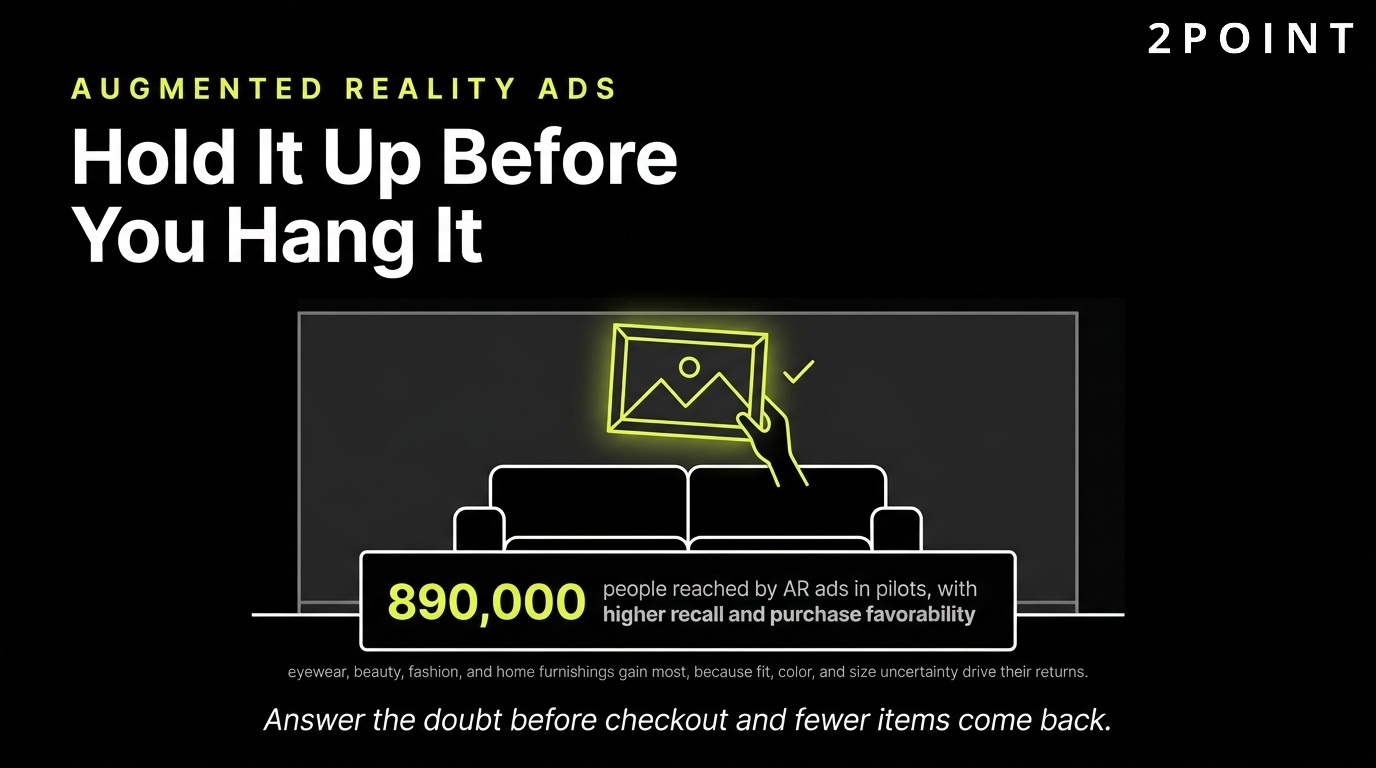
Augmented reality advertising is transitioning from a novelty format to a genuine performance driver for retail and e-commerce brands. AR ads on Facebook have reached 890,000 people in campaign pilots while delivering measurably higher brand recall and purchase favorability scores compared to standard ad formats. The mechanism is intuitive: when potential customers can virtually try on glasses, visualize furniture in their home, or test makeup shades using their phone camera, the psychological barrier between consideration and purchase drops significantly.
Retail brands, particularly in fashion, eyewear, beauty, and home furnishings, are especially well-positioned to benefit from AR ad formats because these categories historically suffer from high return rates driven by fit, color, and size uncertainty. AR experiences that let shoppers answer these questions before buying reduce return rates while increasing purchase confidence. Implementation requires working with Meta’s Spark AR platform to build the experience, which has a learning curve but is increasingly accessible through third-party AR development partners. For brands that have not yet experimented with this format, even a simple single-product try-on experience represents a meaningful competitive differentiator in most retail categories.
Localized and Culturally-Adapted Facebook Marketing Content
Global Facebook marketing strategy must account for the fact that the platform’s growth is not uniform across geographies. The fastest-growing Facebook user populations are concentrated in Southeast Asia and Sub-Saharan Africa, regions where mobile-first internet access, rising middle-class purchasing power, and strong community-oriented social behaviors create exceptional opportunities for brands that invest in genuinely localized marketing approaches.
Localized content that accounts for cultural nuance, local language, regional humor, and market-specific value propositions consistently outperforms translated versions of global campaigns. The failure mode of global Facebook marketing is assuming that what works in a Western market translates directly to other cultural contexts. A brand expanding into Indonesia, for example, needs to understand the central role of community and social proof in purchase decisions, the importance of religious and cultural calendar events, and the preference for messaging app-based customer service over web forms. One-size-fits-all content strategies leave conversion value on the table in every market where they are deployed. For mobile-friendly marketing, the mobile-first nature of Facebook usage in these emerging markets makes every localization decision a mobile optimization decision simultaneously.
Privacy Changes and First-Party Data Strategy for Facebook Marketers
The privacy landscape has shifted irrevocably since the iOS 14 update disrupted Facebook’s pixel-based attribution model. While many marketers viewed this as the death of Facebook advertising effectiveness, the reality has proven more nuanced. Interest-based targeting remains effective even in the post-privacy-change environment, particularly when supplemented with first-party data through Meta’s Conversions API.
Building a robust first-party data strategy is now the foundation of long-term Facebook advertising resilience. This means collecting email addresses, phone numbers, and behavioral data directly through your owned channels: email newsletters, loyalty programs, in-store capture, and SMS subscriptions. These first-party data assets can be uploaded to Facebook as Custom Audiences, used to build Lookalike Audiences, and matched against Facebook’s user graph without relying on pixel tracking that browsers and operating systems increasingly block. Implementing the Conversions API directly on your server creates a more reliable data pipeline than browser-based pixel tracking alone, improving attribution accuracy and giving the algorithm better training data for campaign optimization. Pairing first-party data strategy with email marketing automation creates an owned-audience loop that reduces your dependency on Facebook’s advertising ecosystem for repeat customer engagement, even as it improves your Facebook campaign performance. Understanding inbound marketing principles can also guide how you build organic data collection flows that attract rather than interrupt potential customers.
Bringing It All Together: Facebook Marketing Success in 2026
Facebook marketing in 2026 rewards marketers who embrace its full complexity rather than treating it as a single channel with a single playbook. The platform has evolved into an ecosystem where organic community-building, AI-powered paid advertising, short-form video, commerce integration, and conversational marketing all work together to create customer journeys that are more sophisticated than most brands currently capitalize on.
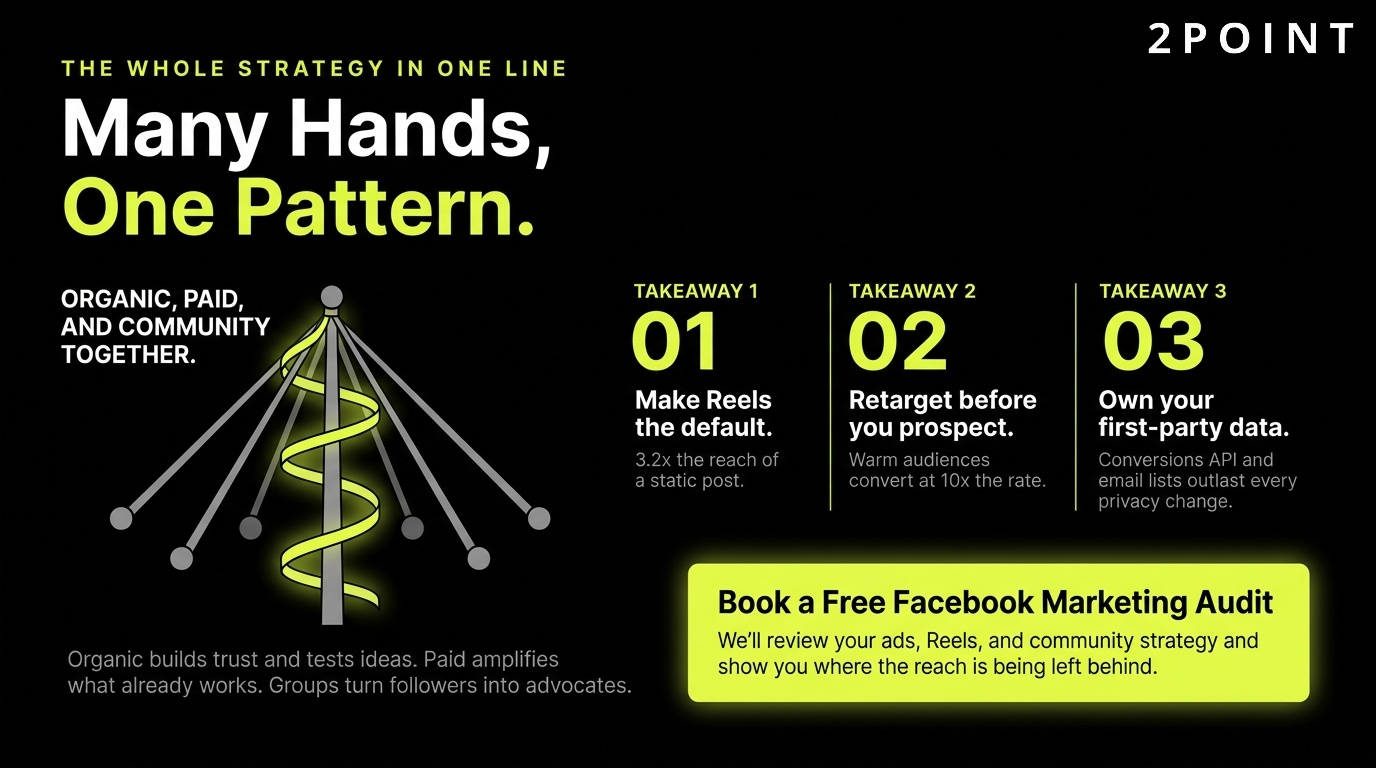
The foundational facts are worth restating: 3.12 billion monthly active users give Facebook a reach that no other platform can match. The average 4x return on ad spend makes it one of the highest-ROI digital advertising channels available. Reels deliver 3.2x more reach than static images and account for 35% of time spent on the platform. And brands that pivot to community-first strategies are seeing 35 to 60% organic reach improvements over page-only approaches. These numbers collectively describe a platform that is not declining. It is maturing and rewarding marketers who understand its current dynamics.
The strategic priorities that emerge from everything covered in this guide can be summarized clearly. First, build your Facebook marketing foundation on clear objectives before choosing tactics: awareness, consideration, conversion, and retention require different content strategies, ad formats, and success metrics. Second, invest in video content creation. Reels are not optional in 2026. They are the primary format through which Facebook distributes organic content and where paid advertisers access their largest impression pools. Third, embrace AI automation through Advantage+ campaigns and Messenger automations, but maintain human creativity in your content ideation and community management, because authenticity is what the algorithm and your audience both respond to.
Fourth, build community deliberately through Facebook Groups and UGC programs rather than broadcasting to passive audiences. The relationship between community depth and customer lifetime value is real and measurable. Fifth, protect your advertising performance with a first-party data strategy that does not depend entirely on third-party tracking. Owning your audience through email and SMS lists and implementing the Conversions API creates resilience against future privacy changes. Finally, keep testing. Meta’s revenue projections between $150 and $170 billion for 2026 signal continued platform investment and capability expansion. The brands that succeed will be those who stay curious, test new formats like AR ads and click-to-Messenger campaigns before their competitors do, and build the institutional knowledge that comes only from hands-on experimentation.
If you are looking for expert guidance in building and executing a Facebook marketing strategy that integrates all of these dimensions, 2POINT works with businesses to develop data-driven social marketing programs tailored to their specific audience, competitive landscape, and growth objectives.
Frequently Asked Questions About Facebook Marketing
What is Facebook marketing and how does it work?
Facebook marketing is the practice of using Facebook’s platform, including organic posts, paid ads, Groups, Messenger, Marketplace, and Reels, to reach and engage target audiences with the goal of building brand awareness, generating leads, or driving sales. It works through a combination of Facebook’s algorithmic content distribution for organic content and its advertising auction system for paid campaigns, both of which can be targeted using detailed demographic, behavioral, and interest data.
How much does Facebook advertising cost in 2026?
The average cost-per-click on Facebook is approximately $1.14 in 2026, with CPM (cost per thousand impressions) averaging between $10 and $15 across industries. Costs vary significantly by industry, audience competition, campaign objective, and seasonality, with Q4 typically seeing the highest CPMs due to holiday advertising demand. Small businesses typically budget $1,000 to $3,000 per month to run meaningful Facebook ad campaigns.
What is the average ROI for Facebook ads?
The average ROI for Facebook advertising is approximately 4x ad spend across all industries and campaign types. Approximately 70% of advertisers report positive ROI within the first three months of running campaigns, with retargeting campaigns achieving up to 10x better conversion rates than cold prospecting campaigns. ROI improves significantly with systematic A/B testing, conversion objective selection, and audience segmentation.
Is organic Facebook marketing still effective in 2026?
Yes, organic Facebook marketing remains effective but requires adapting to the current algorithm’s preference for short-form video, discovery-based distribution, and community engagement. Between 35 and 40% of News Feed content now comes from accounts users do not follow, creating genuine opportunities for brands with strong content to reach new audiences without paid amplification. Brands that pivot to community-focused strategies using Facebook Groups are seeing 35 to 60% improvements in organic reach.
What is Facebook Advantage+ and should I use it?
Facebook Advantage+ is Meta’s suite of AI-powered campaign automation tools that automatically optimize targeting, placements, creatives, and bids in real time. Advantage+ consistently outperforms manually configured campaigns for conversion objectives, particularly for e-commerce advertisers with sufficient conversion data for the AI to learn from. It is best suited for campaigns with clear conversion goals and at least 50 weekly conversions to supply the algorithm with adequate training data.
How important are Facebook Reels for marketing?
Facebook Reels are extremely important for marketing in 2026, generating 3.2x more reach than static image posts and accounting for 35% of all time spent on the platform. Short-form videos between 15 and 60 seconds generate 2.7x more comments than text posts and achieve 48% higher share rates than images. Brands that do not include Reels in their content strategy are effectively excluded from the format that receives the most algorithmic distribution priority.
How does Facebook marketing compare to Instagram marketing?
Facebook and Instagram both operate within the Meta ecosystem and can be managed through the same Ads Manager interface, but they serve different audience demographics and content behaviors. Facebook skews toward an older demographic (25 to 54 years old) and excels at community building through Groups, long-form content, and local business discovery. Instagram skews younger (18 to 34 years old) and prioritizes visual aesthetics, influencer culture, and product inspiration. Most brands achieve the best results by running coordinated campaigns across both platforms using Meta’s cross-placement targeting.
What is the difference between Facebook marketing and Facebook advertising?
Facebook marketing is the broader strategic practice that includes all activities on Facebook: organic posts, community management, Groups, Messenger engagement, Marketplace listings, and paid advertising. Facebook advertising specifically refers to the paid campaign component managed through Meta Ads Manager, including boosted posts, lead ads, conversion campaigns, and Reels ads. Effective Facebook marketing strategy uses both organic and paid approaches in coordination, with each reinforcing the other.
How do privacy changes affect Facebook advertising performance?
Privacy changes, particularly Apple’s App Tracking Transparency framework from iOS 14 onward, reduced Facebook’s ability to track user behavior across apps and websites, which affected attribution accuracy and some targeting capabilities. Interest-based and behavioral targeting within Facebook remains effective because it uses first-party data that users provide to Facebook directly. Advertisers who implement the Meta Conversions API and build first-party data strategies through email and CRM systems are largely insulated from continued privacy changes.
How do I build a Facebook marketing strategy from scratch?
Start by defining clear marketing objectives (awareness, lead generation, or sales), then set up and fully complete your Facebook Business Page and Business Manager account. Build your audience through a combination of organic content publishing and targeted paid campaigns, starting with small test budgets to identify what resonates before scaling. Integrate Facebook Pixel and the Conversions API for accurate tracking, develop a Reels-forward content calendar, and establish a Facebook Group for community building alongside your main page activity.
What type of content gets the most engagement on Facebook?
Reels and short-form videos generate the highest reach and share rates on Facebook in 2026, followed by photo albums and high-quality single images. Content that sparks conversation through questions, community challenges, or relatable storytelling consistently drives more comments than purely promotional content. Authentic, human-centered content typically outperforms polished corporate content across all formats because it generates the genuine engagement signals the algorithm prioritizes for wider distribution.
How do Facebook Groups fit into a marketing strategy?
Facebook Groups function as owned community spaces where brands can build direct relationships with customers and prospects outside the competitive news feed environment. Brands that operate successful Facebook Groups consistently report higher customer lifetime values, lower churn rates, and stronger organic word-of-mouth than brands relying solely on page-based broadcasting. Groups work best when they are centered on shared member interests rather than brand promotion, with the brand serving as a facilitator and value provider rather than a constant advertiser.






