


 let’s connect


What Is Performance Marketing and Why Does It Matter in 2026?
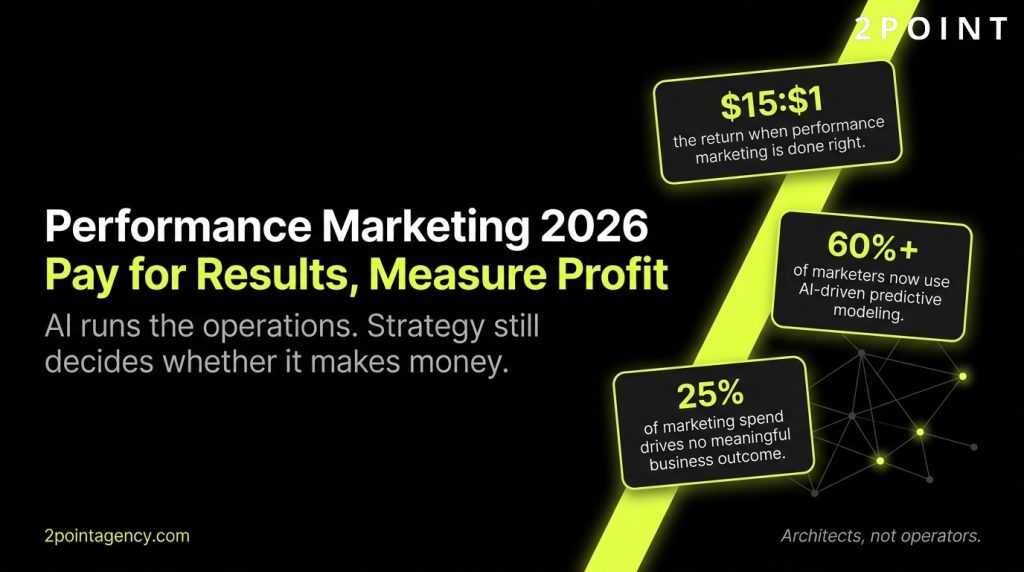
- Performance marketing is paid advertising where you pay only for measurable results: clicks, leads, sales, or downloads.
- Unlike traditional advertising, you are charged after the action occurs, making every dollar fully accountable.
- The global performance marketing market is projected to reach $27.78 billion by 2027.
- Done right, performance marketing delivers $15 in return for every $1 spent.
- Over 60% of marketers now use AI-driven predictive modeling to optimize campaigns.
- Performance formats already comprise 60% of all digital display advertising spending.
- The discipline has evolved from simple channel tactics into an orchestrated, privacy-aware growth system.
- AI now automates campaign operations, shifting marketers from operators into strategic architects.
- First-party data has replaced third-party tracking as the foundational fuel for AI-driven advertising engines.
- Success in 2026 requires aligning profit metrics, channel selection, creative strategy, and compliance into one unified framework.
How Performance Marketing Has Fundamentally Changed Since 2024
Performance marketing in 2026 looks almost nothing like the discipline that existed just two years ago. The tools are more powerful, the competitive environment is tighter, and the strategic demands on marketers have never been higher. Understanding how this evolution unfolded is not just useful background knowledge; it is the foundation for making smart decisions about where to invest and how to compete in today’s landscape.
From Channel Tactics to Growth Orchestration
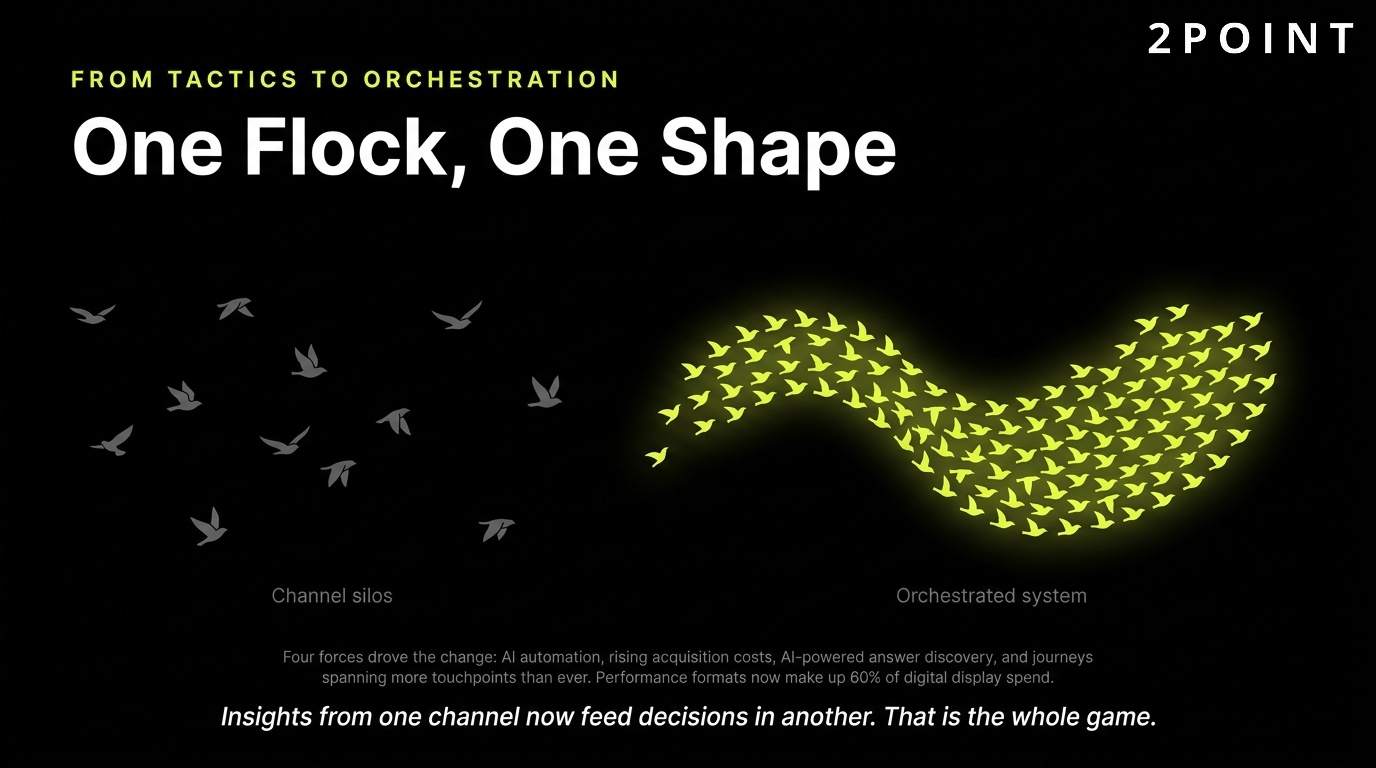
For most of its history, performance marketing was understood as a collection of channel-specific tactics. You ran Google Ads to capture search intent, Facebook campaigns to target audiences by demographics, and affiliate deals to extend reach through publishers. Each channel had its own team, its own budget, and its own set of metrics. Success meant squeezing better numbers out of each individual channel in isolation.
That model has collapsed. Four compounding forces drove the transformation: the rise of AI automation that handles what humans once managed manually, relentlessly rising customer acquisition costs that punish inefficiency, the growth of AI-powered answer discovery (which changes how people find brands entirely), and increasingly complex attribution as customer journeys span more touchpoints than ever before. According to Advertising Mojo’s performance marketing statistics, performance formats now comprise 60% of all digital display advertising spending, underscoring just how dominant the pay-for-results model has become across the entire digital ecosystem.
Today, performance marketing is understood as growth orchestration: the coordinated design of data systems, creative strategies, automation frameworks, and measurement architectures that work together across channels to produce compounding returns. Marketers who still think in terms of “my Google Ads team” and “my social team” are playing the previous game. The winning teams build unified systems where insights from one channel feed optimization decisions in another, where creative assets are tested across environments simultaneously, and where every touchpoint serves the larger goal of profitable customer acquisition.
This shift has fundamentally changed the marketer’s role. The best performance marketers in 2026 are not button-pushers who adjust bids and swap creative every morning. They are architects who design the systems, set the strategic parameters, interpret the signals, and make judgment calls that no algorithm can replicate. The operational execution increasingly belongs to machines. The strategic intelligence still belongs to humans.
The Collapse of Brand vs. Performance Silos

One of the most consequential changes in the marketing landscape is the dissolving boundary between brand marketing and performance marketing. For decades, these disciplines operated as separate departments with separate budgets, separate agencies, and even separate leadership teams. Brand teams worried about awareness, sentiment, and equity. Performance teams worried about clicks, conversions, and cost per acquisition. The two rarely spoke the same language, and conflict over budget allocation was a perennial source of organizational friction.
That separation is no longer intellectually defensible. Industry leaders and Google’s own 2026 marketing predictions have called for retiring the brand versus performance distinction entirely, and for good reason. Emotional resonance now directly and measurably influences conversion rates. Consumers who feel positively about a brand convert at higher rates, pay higher prices, return more often, and refer more frequently. These outcomes are all performance outcomes, measured in dollars and data. Treating brand investment as separate from performance investment means optimizing both poorly.
The practical implication is that creative work that builds genuine emotional connection is not a luxury sitting on top of performance marketing. It is a performance lever. The campaigns generating the best measurable returns in 2026 are those that combine clear direct-response mechanics with creative that makes people feel something. This convergence requires new skills, new organizational structures, and a willingness to measure brand investment in terms of its downstream effect on conversion, retention, and lifetime value.
Why “Pay for Results” Matters More Than Ever
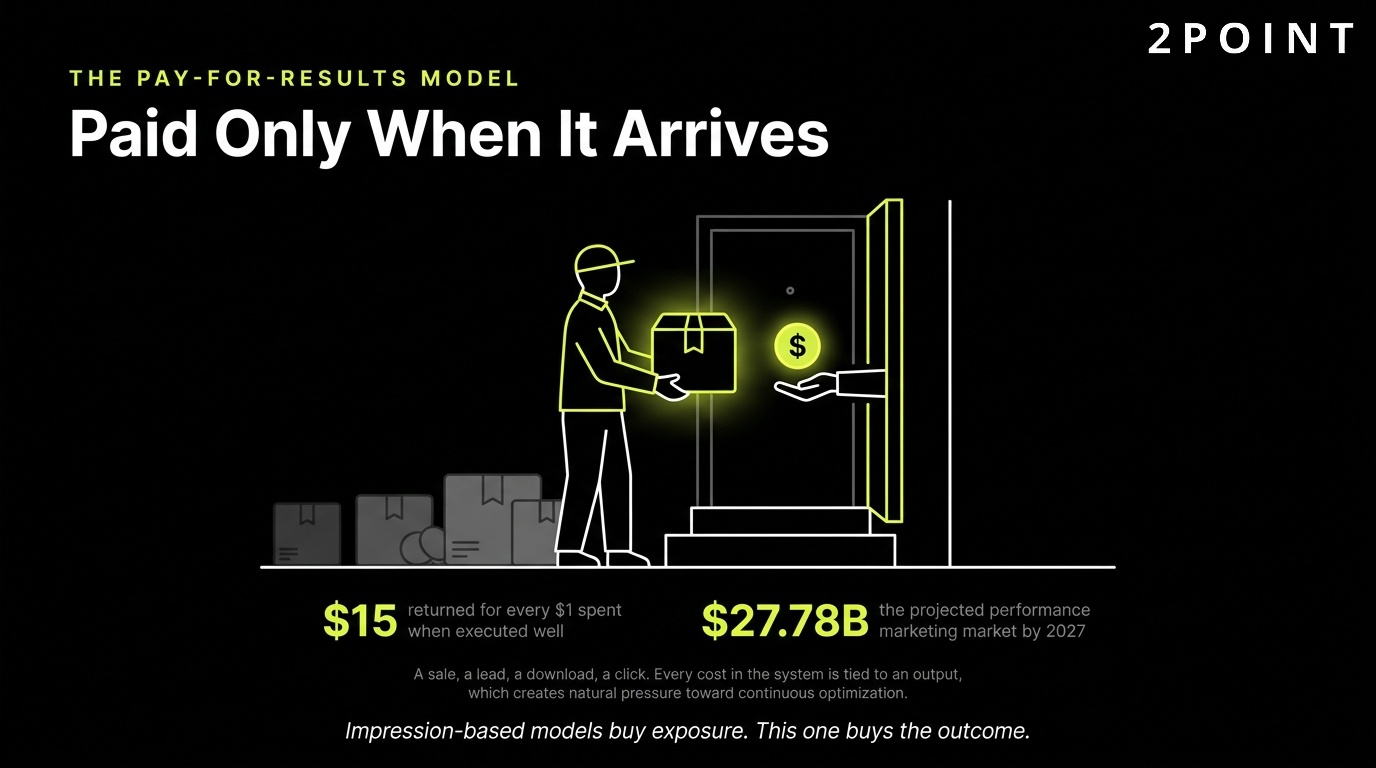
The core accountability model of performance marketing has not changed: advertisers pay only after a specific action occurs, whether that is a sale, a lead form submission, an app download, or another defined conversion. What has changed is how urgently businesses need that accountability. As economic uncertainty persists and marketing budgets face scrutiny from finance teams, the ability to demonstrate that every dollar spent produced a measurable outcome has become non-negotiable.
This is why performance marketing delivers $15 in return for every $1 spent when implemented correctly. The mechanism is straightforward: when you only pay for results, you eliminate the waste inherent in impression-based models where you buy exposure regardless of whether it leads anywhere. Every cost in the system is directly linked to an output. This creates natural pressure toward continuous optimization, because every dollar saved on inefficient placements or poor-performing creatives is a dollar that can be redeployed toward what is working.
For businesses operating on tight margins, this model is not just attractive; it is the only sustainable approach to paid acquisition. The brands that build systematic performance marketing infrastructure, the kind that connects spend directly to revenue outcomes at the unit economics level, are the ones positioned to grow profitably even in compressed market conditions. Those relying on vague notions of reach and awareness without measurable return accountability are increasingly at a disadvantage when budgets tighten.
The Four-Player Ecosystem That Makes Campaigns Work
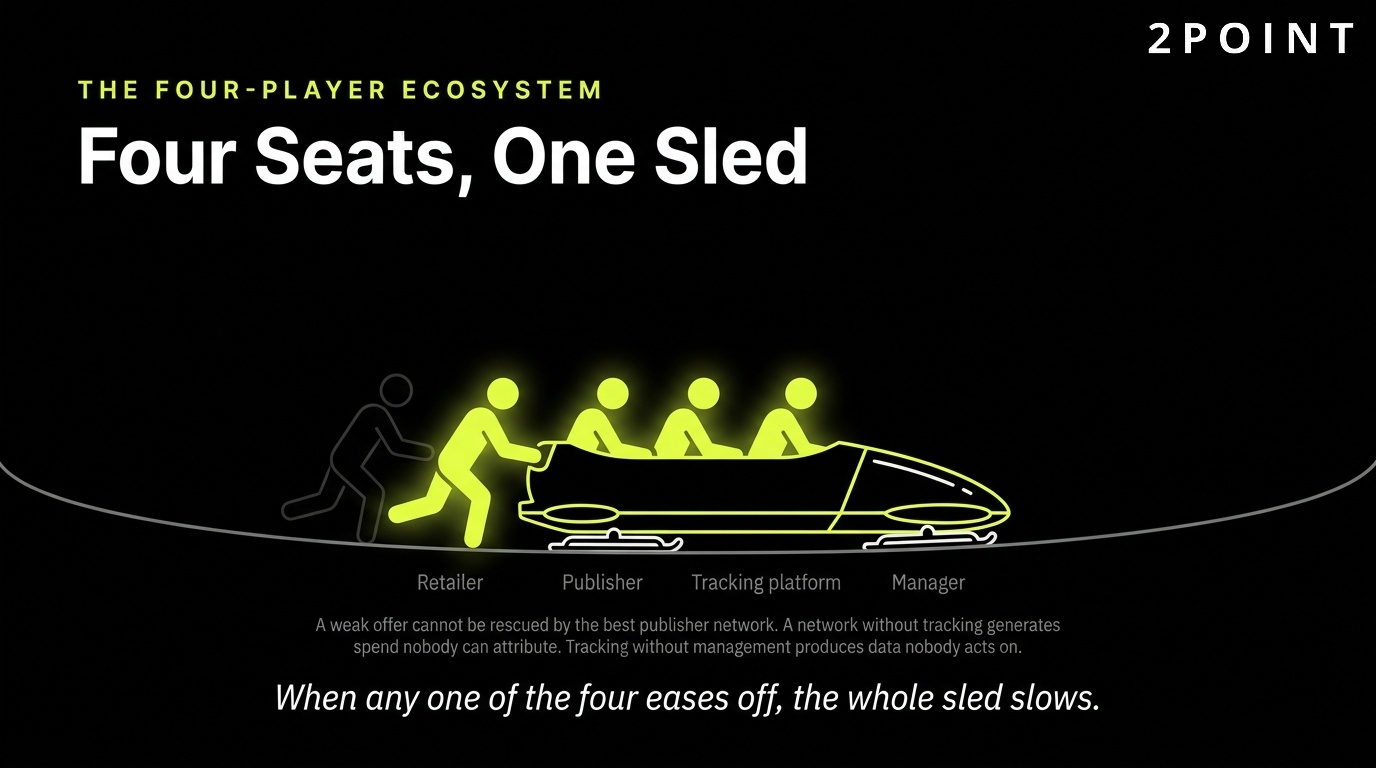
Performance marketing campaigns do not operate in isolation. They function through an interconnected ecosystem of four essential players, and understanding each role is critical to diagnosing why campaigns succeed or stall. BigCommerce identifies these four roles clearly: retailers (the brands paying for performance), publishers (the platforms and content creators distributing the message), tracking platforms (the technology infrastructure that attributes actions back to spend), and managers (the strategic operators who coordinate the system).
When any one of these four players underperforms, the entire system suffers. A retailer with a weak offer cannot be rescued by even the most sophisticated publisher network. A publisher network without reliable tracking generates spend that cannot be attributed or optimized. A tracking platform without skilled management produces data that no one acts on. Effective performance marketing requires all four operating in alignment, which is why experienced practitioners spend as much time evaluating their ecosystem as they do their creative or bidding strategy.
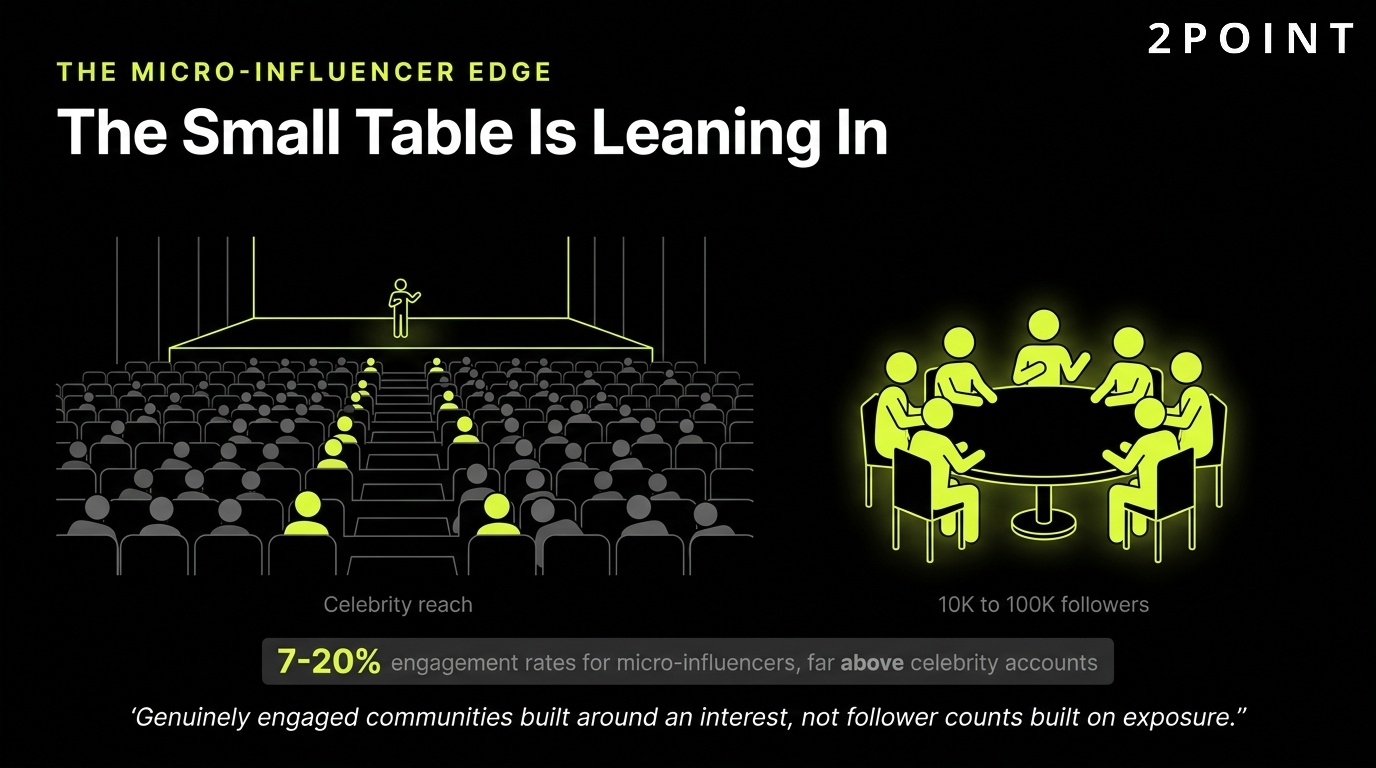
Within the publisher category, the rise of micro-influencers has become one of the most important developments of the past several years. Creators with between 10,000 and 100,000 followers consistently drive engagement rates between 7% and 20%, dramatically outperforming celebrity influencers whose audiences are larger but far less responsive. This happens because micro-influencer audiences are genuinely engaged communities built around specific interests, not passive follower counts accumulated through mass exposure. For performance marketers, this means that a well-selected micro-influencer partnership can deliver measurable conversion outcomes that rival or exceed much more expensive placements.
AI’s Transformation of Performance Marketing Operations
Artificial intelligence has not merely improved performance marketing. It has restructured it from the ground up. The algorithms that once required specialist knowledge to configure now operate autonomously across bidding, audience targeting, creative testing, and budget allocation. Understanding exactly what AI handles well, where it falls short, and how human judgment fits into the new architecture is the most important strategic question in the field today.
What AI Actually Automates (and What It Doesn’t)

In 2026, AI-driven tools handle a remarkable range of campaign operations that previously required constant human attention. Bid adjustments happen in real time across millions of auctions simultaneously. Audience segments expand or contract based on performance signals without manual intervention. Creative variants are tested at scale and traffic is shifted toward winners faster than any human team could manage. Budget pacing algorithms prevent both overspend and underspend across complex multi-channel setups. Over 60% of marketers are now using AI-driven predictive modeling, according to HubSpot’s State of Marketing Report, a figure that would have seemed aspirational just three years ago.
What AI does not automate is equally important to understand. Algorithms cannot define what success means for your business. They cannot determine whether your offer is compelling enough to sustain acquisition at your target cost. They cannot articulate why a customer should choose you over a competitor, or craft the emotional narrative that makes a brand memorable. They cannot evaluate whether a short-term conversion metric is actually healthy for long-term business value. All of these decisions require human strategic thinking, and no amount of computational power changes that.
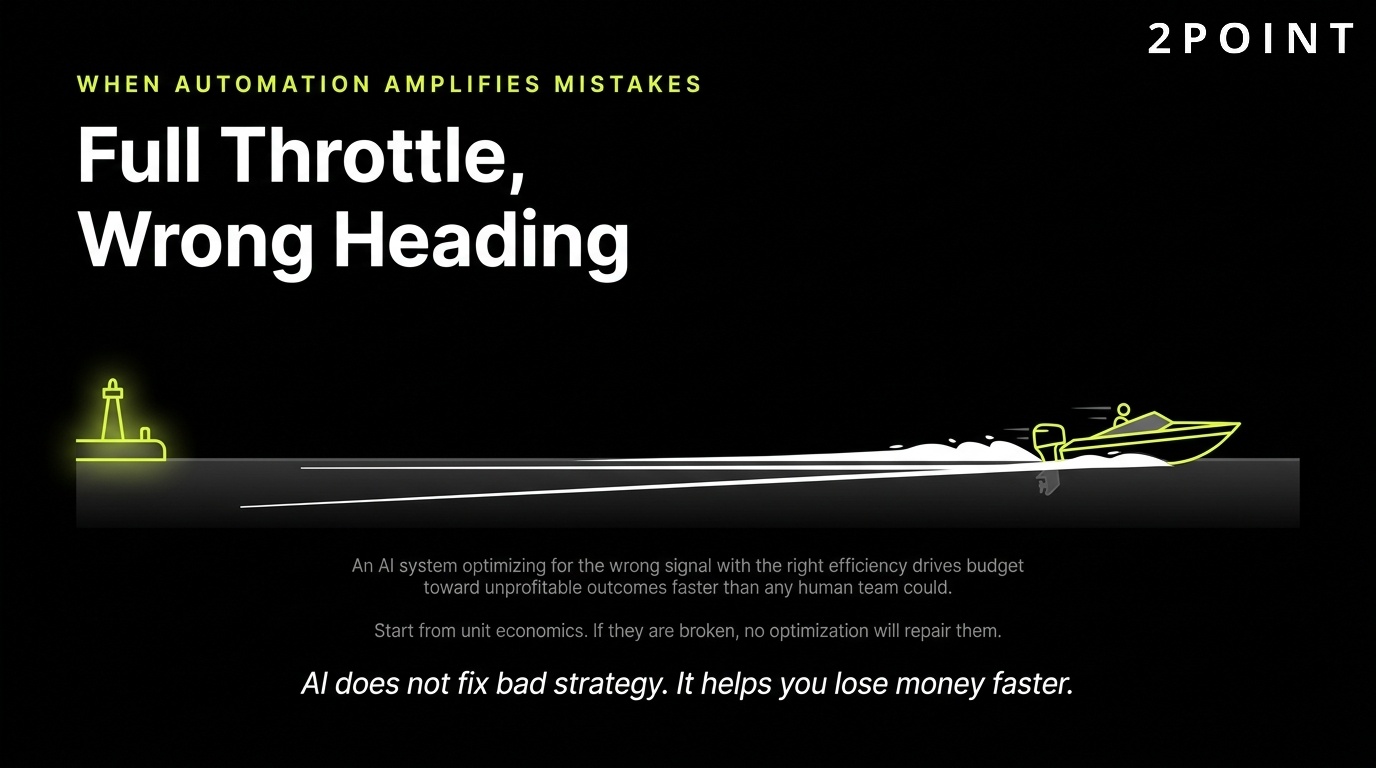
The marketers thriving in 2026 are those who have genuinely internalized this division of labor. They configure AI systems thoughtfully, establish the right optimization signals, monitor for misalignment between what machines measure and what the business actually needs, and continuously bring human creativity and judgment to the areas where algorithms have no advantage. The cautionary version of this story is equally important: “AI doesn’t fix bad strategy. It helps you lose money faster.” This warning is not hyperbole. An AI system optimizing for the wrong signal with the right efficiency will systematically drive your budget toward unprofitable outcomes at a speed no human team could match.
AI-Powered Personalization at Scale
One of the most genuinely transformative capabilities AI brings to performance marketing is personalization at a scale that was previously impossible. AI-powered algorithms now analyze massive datasets to deliver personalized experiences that reach the right person, at the right time, with creative tailored to their specific behavioral signals and context. The practical effect is something like having a marketing assistant that knows exactly what each individual customer wants and adjusts every element of their experience accordingly.
This personalization operates across multiple dimensions simultaneously. Dynamic creative optimization (DCO) tools assemble ad variants in real time, choosing from pools of headlines, images, calls to action, and offers based on what the algorithm predicts will resonate with a specific user. Predictive modeling identifies which users are most likely to convert before they have exhibited explicit buying intent, allowing campaigns to reach high-value prospects earlier in their journey. Audience lookalike modeling finds new potential customers who share behavioral patterns with your best existing ones, expanding reach without sacrificing qualification.
The result is campaign performance that compounds over time as AI systems accumulate more data and refine their predictions. Early campaign data is relatively noisy, and AI systems need a volume of conversions to calibrate their models effectively. This is why patient, systematic campaign building consistently outperforms reactive management. Brands that let their AI systems mature while feeding them high-quality first-party data as training fuel see dramatically better outcomes over six-month and twelve-month horizons than those constantly disrupting their learning phases with structural changes.
The Strategic Guardrails Humans Must Provide
The shift from human-managed to AI-operated campaigns has not reduced the importance of human marketers. It has elevated the strategic requirements placed on them. When algorithms handle execution, human judgment becomes the differentiating variable. The agencies and in-house teams winning the most in 2026 have made the transition from execution shops to strategic partners, and they are delivering value precisely because they provide the guardrails that AI systems cannot set for themselves.
What does providing strategic guardrails actually mean in practice? It starts with establishing unit economics as the foundational constraint for any AI system. The algorithm needs to know not just what a conversion costs, but what a conversion is worth, and whether that worth is uniform across customer segments or varies significantly by cohort, channel, or product category. It means designing the measurement architecture so that what AI optimizes for actually correlates with business profit, not just platform-reported success. It means maintaining brand positioning boundaries so that automated creative expansion does not drift into messaging that undermines brand equity even while hitting short-term conversion targets.
Beyond these structural inputs, humans must also provide the emotional intelligence that shapes creative strategy. Algorithms are extraordinarily good at testing and scaling what works. They are poor at generating the genuinely original creative insight that starts working in the first place. The most effective performance marketing creative in 2026 combines human-generated emotional resonance with AI-driven optimization and distribution. Neither works optimally without the other, which is why the teams that try to fully automate creative are consistently losing ground to those that treat it as a human-led, AI-amplified discipline.
When Automation Amplifies Bad Decisions
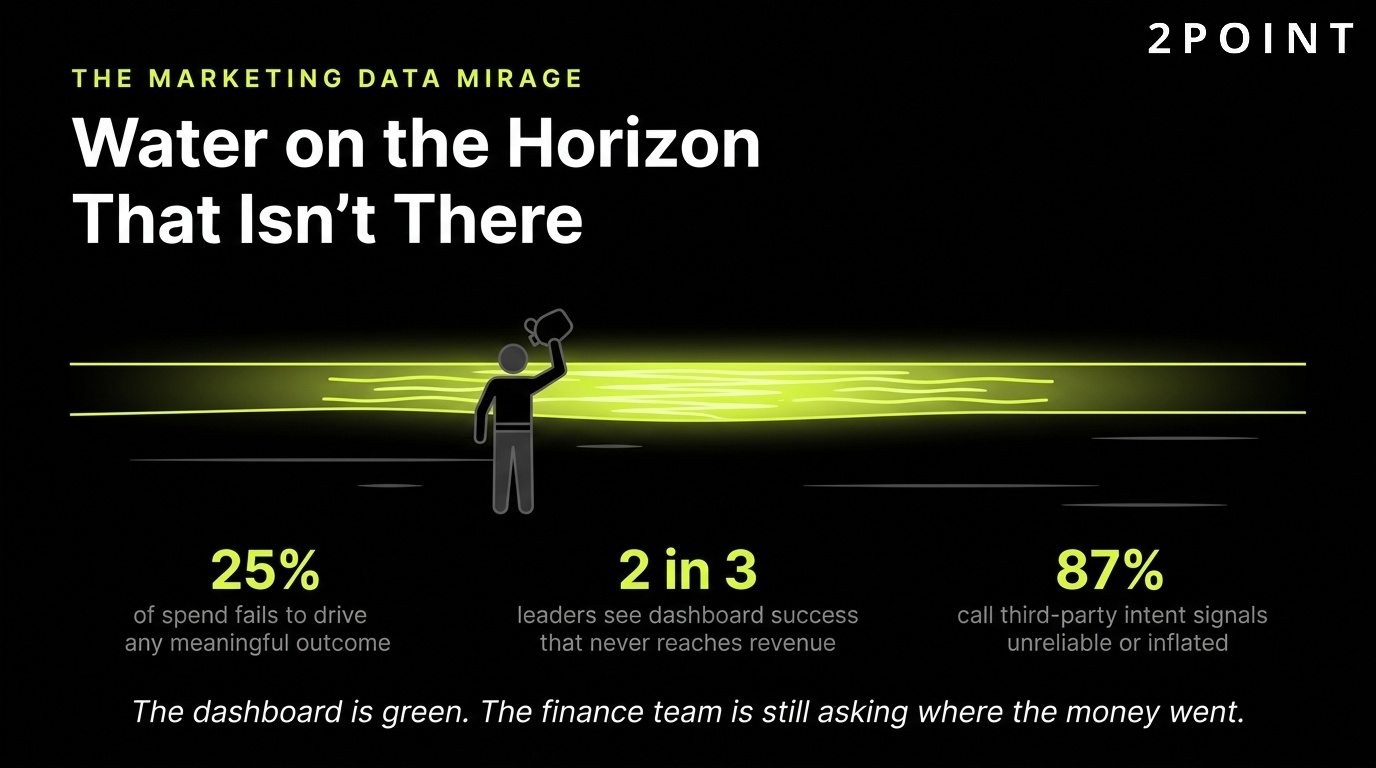
The risks of poorly configured automation are significant and backed by alarming research data. DemandScience’s State of Performance Marketing 2026 Benchmark Report found that AI is amplifying performance noise, with 25% of marketing spend failing to drive any meaningful business outcomes. Even more troubling, two-thirds of marketing leaders report that their dashboards show success metrics that consistently fail to translate into actual revenue. And 87% of organizations describe their intent signals from third-party marketing investments as unreliable or inflated.
This phenomenon has been termed the “Marketing Data Mirage.” Dashboards light up green. Click-through rates look strong. Conversions appear healthy by platform-reported standards. But when the finance team asks why revenue growth does not reflect the marketing investment, the answer is uncomfortable: the metrics being optimized were not actually connected to business outcomes. AI systems optimizing for these disconnected metrics do so with impressive efficiency, which means they systematically drive budget toward activities that look successful but generate no real value.
Avoiding this trap requires building measurement architecture that tracks the full chain from spend to revenue, not just from spend to platform-reported conversion. It requires skepticism about self-reported platform metrics and investment in independent attribution measurement. It requires the discipline to pause campaigns that generate impressive-looking numbers but do not move the business forward, even when the algorithm is confidently scaling them. The marketers who understand this distinction, between AI-reported success and actual business performance, are the ones who remain in control of their outcomes rather than being misled by their own tools.
The Privacy-First Performance Marketing Playbook
Privacy has moved from a compliance footnote to a central strategic consideration in performance marketing. The deprecation of third-party cookies, the proliferation of privacy-enhancing technologies, tightening regulations across major markets, and shifting consumer attitudes have collectively transformed how marketers can target, track, and measure. Brands that treat privacy as a constraint to work around will find themselves increasingly limited. Those that treat it as a strategic asset will find competitive advantage.
Why Third-Party Data Is Dead (and What Replaced It)

The era of granular cross-site behavioral tracking is effectively over. Privacy-enhancing technologies (PETs) now limit the kind of individual-level data collection that performance marketers relied on for precise audience targeting throughout the previous decade. Browsers restrict third-party cookies, mobile identifiers are increasingly opt-in, and regulatory frameworks in major markets either prohibit or significantly complicate the collection and use of behavioral data without explicit consent. The infrastructure that powered retargeting, lookalike modeling from third-party data, and cross-site behavioral segmentation has fundamentally changed.
What has replaced it is a combination of first-party data, contextual targeting, and AI modeling that generates insights from aggregated signals rather than individual tracking. MC Saatchi Performance identifies first-party data as “the fuel for every AI-driven advertising engine” in 2026, and this framing captures the new reality accurately. The brands with rich, consented, first-party data assets can train AI systems with high-quality signals. Those without them are feeding their algorithms inferior data and getting inferior results as a direct consequence.
The corollary to this shift is captured in the phrase “creative is the new targeting.” When you cannot rely on granular behavioral data to find exactly the right person, you rely on creative that is compelling enough to self-select the right audience. Strong creative attracts the people it is designed for and repels those it is not. This is not a step backward; it is a more sustainable approach that does not depend on tracking infrastructure that is being systematically dismantled. Developing capabilities in content marketing that resonates deeply with your target audience becomes a performance marketing capability, not just a brand-building one.
Building Your First-Party Data Asset
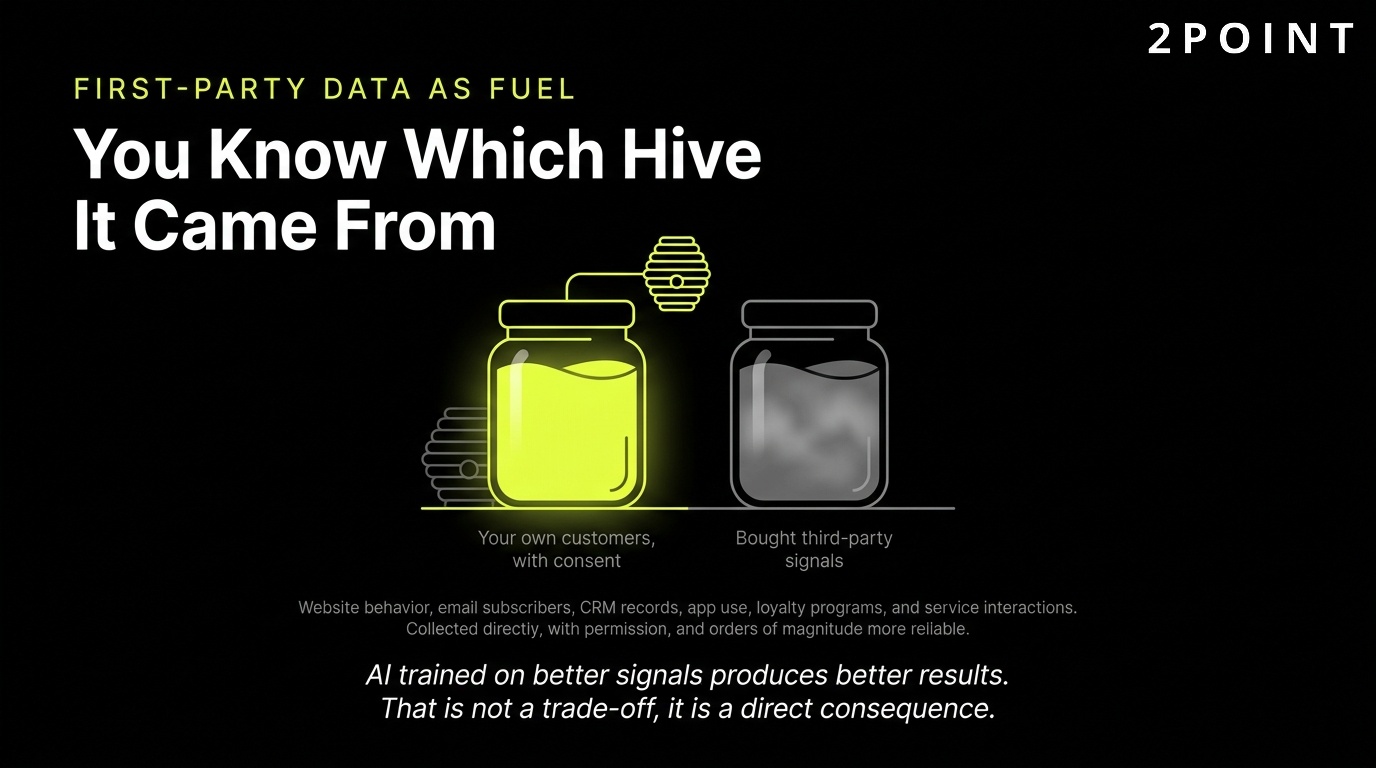
First-party data is the information you collect directly from your customers and prospects through your own owned channels: your website, your email list, your CRM, your app, your loyalty program, and your customer service interactions. Building and activating this data asset is no longer optional for serious performance marketers in 2026. It is the prerequisite for effective AI-driven campaigns, accurate measurement, meaningful personalization, and regulatory compliance.
The 87% of organizations that DemandScience reports find intent signals from third-party marketing investments unreliable or inflated are discovering this the hard way: buying behavioral data from third parties generates noise, not signal. Your own customers’ behavior, collected with their knowledge and consent through interactions with your brand, is orders of magnitude more reliable. It tells you what people actually do in relation to your specific products and services, not what algorithms infer from their activity across unrelated websites.
Building a strong first-party data asset requires investment across several dimensions simultaneously. You need website infrastructure that captures meaningful behavioral signals with appropriate consent mechanisms. You need email marketing capabilities that turn one-time buyers into subscribed relationships, creating a direct communication channel you own rather than rent. You need CRM tools that unify customer data from across touchpoints into coherent profiles. And you need the analytical capability to activate that data in your advertising platforms, either by uploading customer lists for matching, using it to train lookalike models, or feeding it into AI personalization systems. Each of these investments compounds over time, making your competitive position stronger with every additional customer interaction you capture and activate. Using CRM tools in marketing effectively is one of the highest-leverage infrastructure investments a performance marketing team can make.
How Consumers Value Privacy as Brand Equity
The strategic importance of privacy extends beyond regulatory compliance and technical targeting capabilities. Consumers in 2026 actively value privacy protection as a component of brand quality. Research increasingly shows that people prefer brands that demonstrably respect their privacy, and this preference influences purchase decisions, loyalty, and willingness to share data voluntarily.
This creates a virtuous cycle for brands that take privacy seriously. When customers trust that you handle their data responsibly, they are more willing to provide it directly, improving your first-party data asset. Better first-party data improves AI system performance and personalization quality. Better personalization increases conversion rates and customer satisfaction. Higher satisfaction drives repeat purchase and advocacy, improving customer lifetime value. The entire chain begins with a genuine commitment to privacy that consumers can recognize and feel confident about.
The competitive implication is significant. Brands that treat privacy as box-checking compliance and brands that treat it as a genuine consumer value proposition are now competing for the same customers with very different propositions. The brands winning trust with transparent, respectful data practices are building a customer relationship asset that is increasingly difficult for competitors to replicate. This is why forward-thinking marketers are beginning to communicate their privacy commitments explicitly, treating data responsibility as a differentiator in the same category as product quality or customer service. A strong customer-centric marketing philosophy naturally incorporates privacy respect as a core principle.
Navigating the 2026 Regulatory Landscape
The regulatory environment surrounding digital advertising continues to tighten across major markets, with implications that performance marketers must actively plan for. Australia’s decision to ban major social platforms including TikTok, Meta, Snap, YouTube, X, Kick, and Reddit for users under 16 is among the most significant recent developments, with Europe actively observing early-mover markets before considering comparable measures.
The practical effects of these regulatory changes cascade through performance marketing in several ways. Audience pools on affected platforms shrink as users under the age threshold are removed from targetable inventory. Traffic volumes decrease, which places upward pressure on costs as remaining inventory becomes more competitive. Campaign audience management complexity increases as marketers must navigate different rules across different markets while maintaining consistent business objectives. The administrative and compliance overhead of operating across a fragmented regulatory landscape grows.
Navigating this environment successfully requires treating compliance not as a reactive obligation but as a proactive planning input. Marketers who map their audience compositions against emerging regulations before they take effect can adjust channel strategies, diversify into less-regulated inventory, and build the first-party data assets that reduce dependence on platform-provided targeting. Those who wait for regulations to arrive before adapting find themselves making reactive decisions under pressure, which consistently produces inferior outcomes. Staying informed about regulatory developments in your key markets is now as important as staying current on platform algorithm changes.
Metric Evolution: From ROAS to POAS and Beyond
The metrics performance marketers use to evaluate success have undergone significant evolution, driven by growing sophistication about what actually indicates business health. The most important shift has been the recognition that Return on Ad Spend (ROAS), long the standard success metric for paid advertising, has serious structural limitations that make it an inadequate guide for business decisions. Understanding what to measure instead is one of the highest-leverage changes a performance marketing team can make.
Why ROAS Became a Vanity Metric
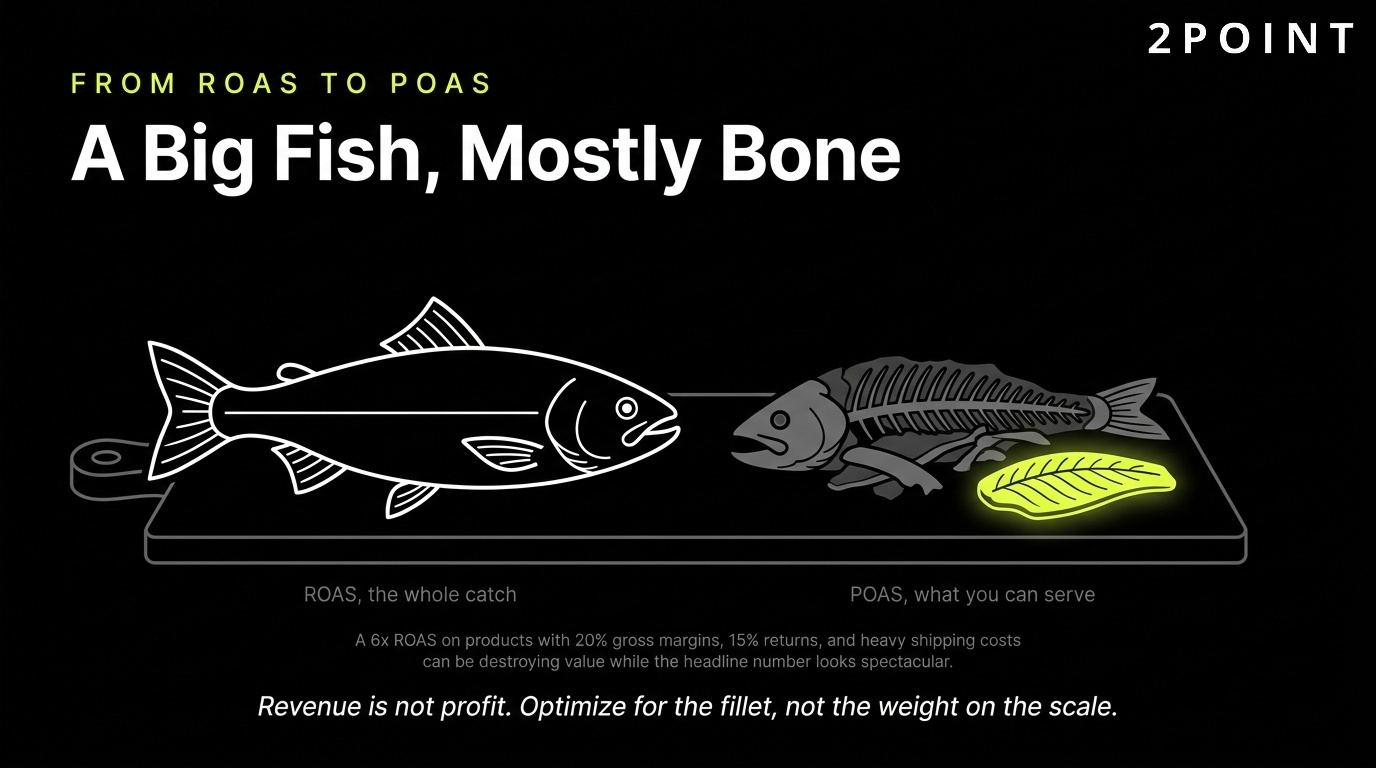
ROAS is calculated simply: divide total revenue generated by total advertising spend, and the result tells you how many dollars of revenue you produced per dollar of ad spend. A ROAS of 4x means you generated $4 in revenue for every $1 spent on advertising. This sounds like useful information, and for a crude first approximation of campaign efficiency, it is. The problem is that revenue is not profit, and campaign performance measured in revenue can look spectacular while the underlying business is losing money on every transaction.
High ROAS can accompany deeply negative unit economics when you account for the costs that ROAS calculations ignore: cost of goods sold, fulfillment and shipping costs, return rates and associated reverse logistics costs, platform fees and transaction costs, and the true fully-loaded cost of operating customer service for the order volume generated. A campaign generating a 6x ROAS on products with 20% gross margins, 15% return rates, and significant shipping costs may be destroying value even while its ROAS number looks impressive. The marketing team celebrates, the finance team is confused, and the business grows in the wrong direction.
The broader issue is that ROAS creates incentive structures that are misaligned with profitability. Teams optimizing for ROAS will shift budget toward high-revenue, low-margin products over lower-revenue, higher-margin ones. They will prioritize channels that generate trackable revenue over those that drive branded demand upstream in the funnel. They will underinvest in retention, because retention activity tends to show up less cleanly in ROAS calculations than acquisition. Each of these choices makes the ROAS number look better while potentially undermining the actual health of the business.
Calculating and Optimizing for POAS
Profit on Ad Spend (POAS) corrects ROAS’s fundamental flaw by measuring what actually matters: profit, not revenue. High-growth brands are prioritizing POAS in 2026 because it provides an honest picture of whether advertising spend is generating real business value. The calculation works by subtracting all variable costs associated with an order from the revenue it generates, then dividing that contribution margin by the advertising spend that drove the order.
| Metric | What It Measures | Key Limitation | Best Used For |
|---|---|---|---|
| ROAS (Return on Ad Spend) | Revenue per dollar of ad spend | Ignores COGS, returns, shipping, fees | Initial channel comparison |
| POAS (Profit on Ad Spend) | Profit per dollar of ad spend | Requires accurate cost data per SKU | True profitability optimization |
| CAC (Customer Acquisition Cost) | Total spend divided by new customers | Ignores customer lifetime value | Acquisition efficiency benchmarking |
| LTV:CAC Ratio | Customer value relative to acquisition cost | Requires longitudinal customer data | Long-term growth sustainability |
| Conversion Rate | Percentage of visitors who take desired action | Does not indicate revenue quality | Funnel efficiency optimization |
The most valuable performance marketing metric depends on your business model, but POAS provides the most direct signal of whether advertising spend is generating actual profit rather than impressive-looking revenue numbers.
Implementing POAS optimization requires connecting your advertising platforms to cost-of-goods data at the product or SKU level, which is a non-trivial data infrastructure challenge for many businesses. However, the investment is justified because it fundamentally changes optimization behavior in ways that benefit the business. When you optimize for POAS, you naturally shift budget toward high-margin products even if their absolute revenue is lower. You identify customer segments whose purchasing behavior generates genuine profit rather than just volume. You surface channels and creative strategies that attract profitable buyers rather than bargain hunters who return frequently and erode margins. The businesses building POAS infrastructure today are creating a measurement advantage that will be increasingly important as margins compress and efficiency expectations rise.
The Core KPIs That Still Matter
While POAS represents the evolution of headline metrics, several foundational KPIs remain essential for understanding campaign performance at the operational level. Approximately 31.1% of marketers track Return on Marketing Investment (ROMI), and 33.9% focus on conversion rates as primary indicators, reflecting the ongoing importance of these operational signals even as strategic metrics evolve.
Click-through rate (CTR) measures the percentage of people who see an ad and click it, serving as a leading indicator of creative relevance and audience alignment. Cost per click (CPC) tracks the average amount paid for each click, providing a foundation for calculating funnel economics downstream. Conversion rate, the percentage of visitors who complete the desired action, is the critical link between traffic volume and business outcomes and is the primary lever for personalized marketing strategy that matches offer to intent.
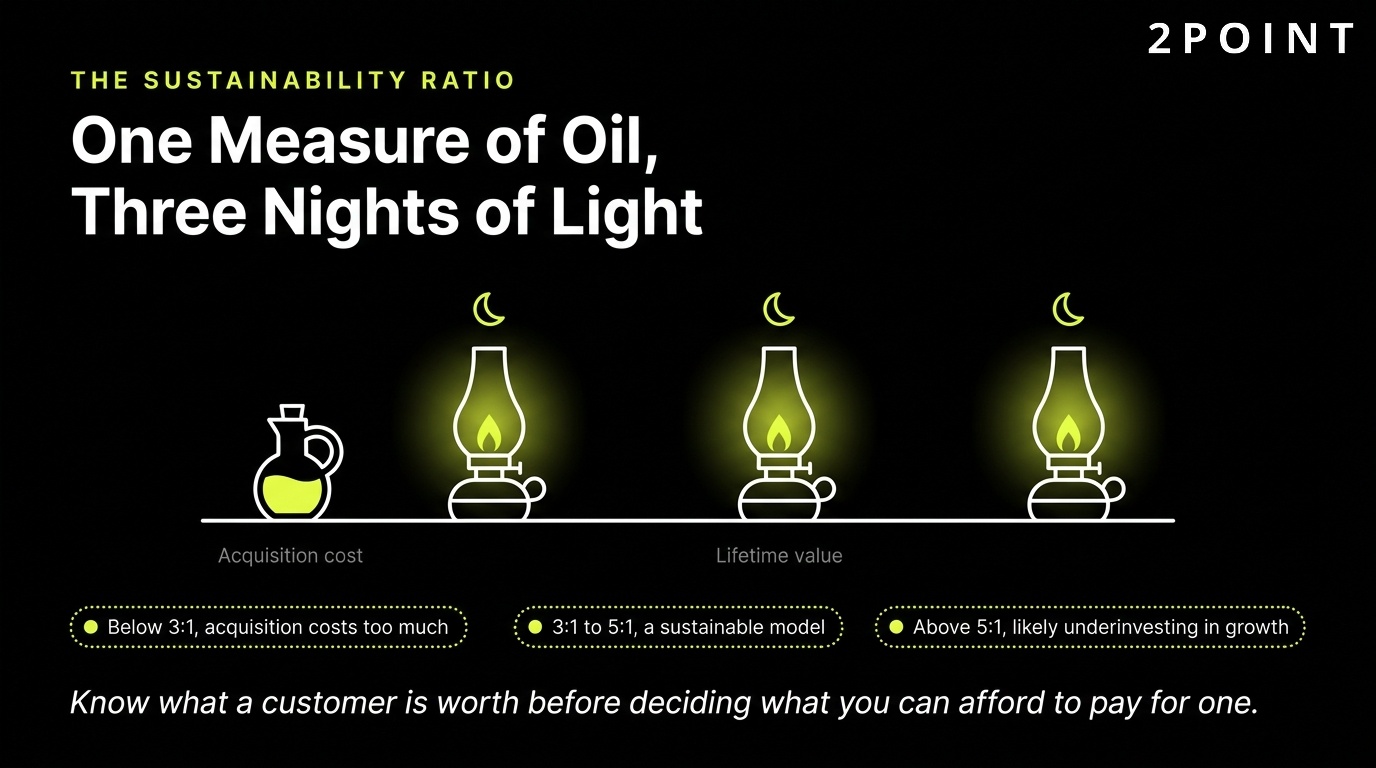
Customer Acquisition Cost (CAC) is calculated by dividing total sales and marketing spend by the number of new customers acquired in a given period. According to Supermetrics’ performance marketing analytics guide, tracking CAC across channels, campaigns, customer types, locations, and cohorts reveals efficiency differences that aggregate numbers hide. The LTV:CAC ratio, which compares the lifetime value of a customer to the cost of acquiring them, is the most important strategic metric for evaluating whether your acquisition model is sustainable. A ratio below 3:1 typically indicates that acquisition costs are too high relative to what customers spend over their relationship with your brand, while ratios above 5:1 may suggest underinvestment in growth.
The discipline of tracking these metrics systematically, not just looking at aggregate campaign numbers, is what separates performance marketers who understand their business from those who are simply running ads. The ability to create digital marketing reports that drive actionable insights from this data is one of the most valuable skills in the modern marketing organization.
Solving the Attribution Puzzle in a Multi-Touch World
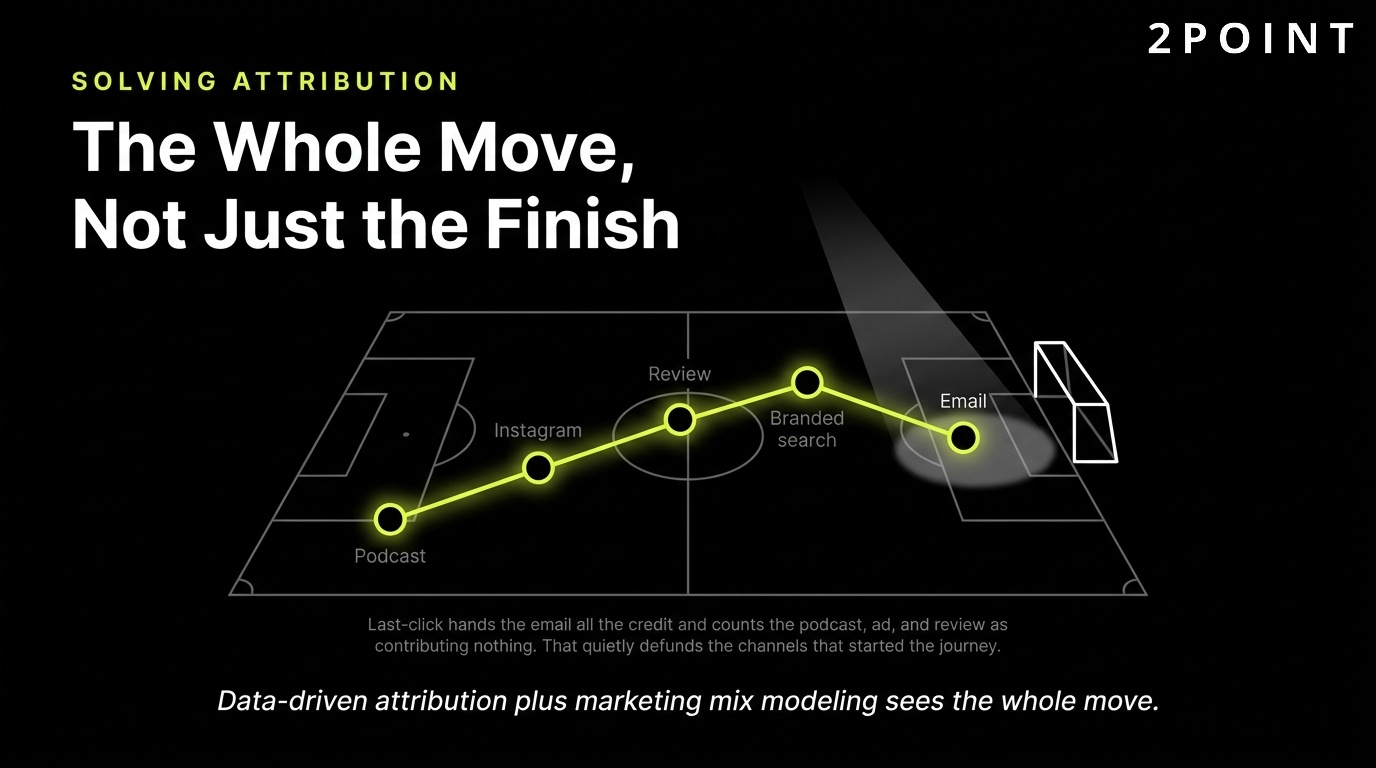
Attribution, the process of assigning credit for conversions to the marketing touchpoints that influenced them, has always been complex in performance marketing. In 2026, it has become one of the field’s central intellectual challenges. Last-click attribution, which assigns 100% of conversion credit to the final touchpoint before purchase, remains widely used but systematically misrepresents how customers actually make decisions.
The reality of modern customer journeys is that they involve many touchpoints across multiple channels over days or weeks before a purchase occurs. A customer might discover a brand through a podcast mention, see a retargeting ad on Instagram, search Google for a comparison review, click a branded search ad, and finally convert through an email offer. Last-click attribution gives all credit to the email while counting the podcast, Instagram ad, and review content as contributing nothing. This systematically undervalues upper-funnel and mid-funnel channels, leading to budget decisions that deprioritize brand-building and awareness activity in ways that hurt long-term performance.
Multi-touch attribution models address this by distributing credit across all touchpoints based on various rules: linear models split credit equally, time-decay models give more credit to recent touchpoints, and data-driven models use machine learning to assign credit based on actual path analysis. The 2026 measurement shift is toward data-driven attribution combined with marketing mix modeling (MMM) to capture the full contribution of channels that do not appear in last-click reports. This more complete picture of how channels work together leads to significantly different, and generally better, budget allocation decisions than last-click models ever could.
High-Growth Channels Dominating Performance Marketing in 2026
The channel landscape for performance marketing in 2026 is broader, more complex, and more interconnected than it has ever been. New formats are emerging, existing channels are evolving rapidly, and the relative performance of different placements shifts continuously as consumer behavior changes and platform algorithms update. Understanding which channels deserve investment, and why, requires both data literacy and strategic judgment about where your specific customers spend their attention.
Social Commerce and Shoppable Video
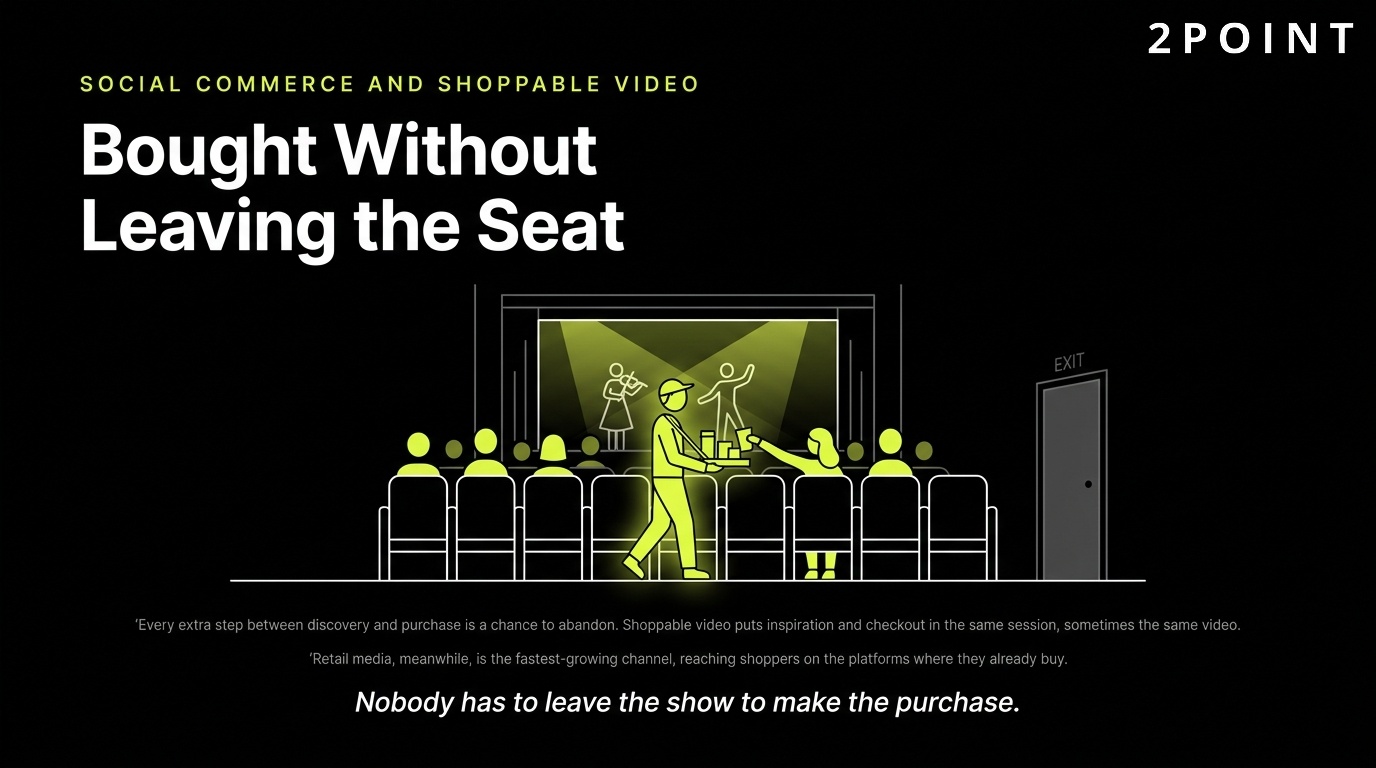
Shoppable video has emerged as one of the most consequential developments in performance marketing, with brands rapidly increasing spend on formats that embed e-commerce functionality directly into video content. On TikTok, Instagram Reels, and YouTube live streams, viewers can now discover products, see them demonstrated, and complete purchases without ever leaving the app they are already engaged with. MC Saatchi Performance flagged shoppable video as a top commerce bet in 2026, with brand spend growing rapidly as the format proves its conversion capabilities at scale.
The performance marketing logic behind shoppable video is compelling. Every additional step between discovery and purchase is an opportunity for a customer to abandon the transaction. Traditional digital advertising required at minimum a click to a landing page, a product selection, an add-to-cart action, and a checkout process before money changed hands. Shoppable video compresses this dramatically, allowing the discovery moment and the purchase decision to occur in the same session, sometimes within the same video. This reduction in friction is particularly powerful for impulse-driven categories, where the gap between inspiration and action must be as short as possible.
For performance marketers, the measurement of shoppable video requires integration between platform-native attribution and your own order management system. Platform-reported conversion data for social commerce is often incomplete, particularly as privacy changes limit tracking across sessions. Building a measurement approach that combines platform data with CRM-level customer acquisition tracking gives you a cleaner picture of true performance than relying on any single data source. The investment in understanding this channel’s true contribution is worthwhile given the growth trajectory it is on and the efficiency advantages it offers for brands in the right categories. Video marketing capabilities are no longer optional for performance marketing teams targeting social commerce audiences.
Retail Media’s Explosive Rise
Retail media has become the fastest-growing advertising channel in performance marketing, and the reasons are straightforward: advertising on retailer platforms allows brands to reach shoppers at the exact moment of purchase consideration, with targeting based on actual purchase history rather than inferred behavioral signals. When you advertise on Amazon, you can target people who have previously purchased competitive products. When you advertise on Walmart’s platform, you can reach shoppers actively browsing categories adjacent to yours. This proximity to purchase intent is extraordinarily valuable for performance marketers.
The other major advantage of retail media is measurement. Because purchases happen on the same platform where the advertising runs, attribution is more direct and less susceptible to the cross-site tracking limitations that complicate measurement elsewhere. A brand advertising on a retailer’s platform can see with reasonable confidence which ad exposures led to which purchases, making optimization more straightforward than in environments where the purchase happens on your own site after a complex attribution chain.
The growth trajectory of retail media shows no signs of slowing. Major retailers including Amazon, Walmart, Target, and Kroger have built sophisticated advertising platforms that are attracting significant budget from brands who previously allocated almost entirely to traditional digital channels. For consumer goods brands in particular, retail media represents the intersection of performance marketing accountability with proximity to purchase, a combination that makes it genuinely difficult to ignore when planning channel strategy. Understanding how retail media fits within your broader marketing mix is an essential strategic exercise for brands selling through retail channels.
Search Advertising’s Continued Dominance
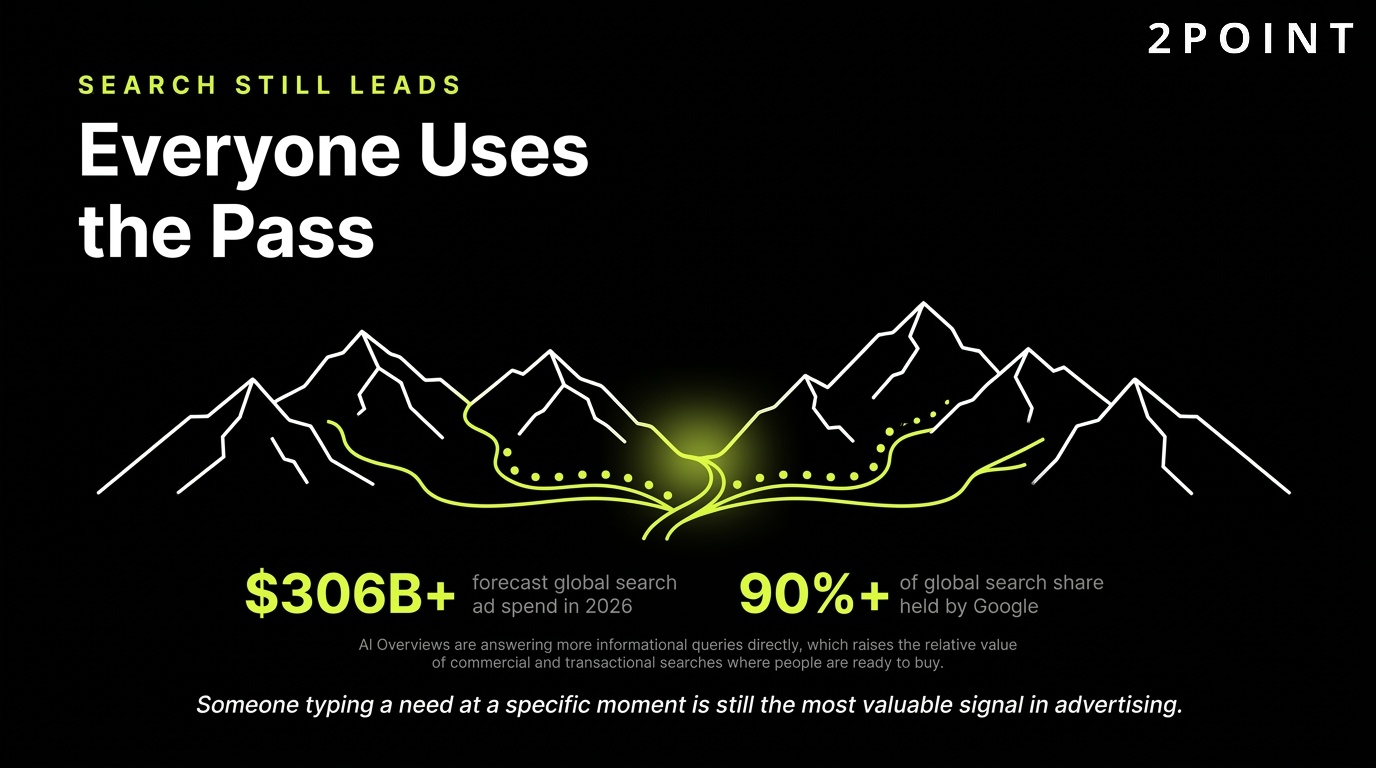
Despite the emergence of powerful new channels, search advertising remains the largest format in digital performance marketing by spending volume. Global search advertising spending is forecast to exceed $306 billion in 2026, driven by the enduring commercial intent that search queries capture. When someone types a product or service query into a search engine, they are expressing a specific need at a specific moment, and the ability to appear in front of that person with a relevant offer is as valuable as any advertising opportunity in existence.
Google’s position in this landscape remains dominant. With over 90% of global search engine market share, Google Ads remains the primary arena for search performance marketing, and that concentration has direct implications for costs. As more advertisers compete for the same high-intent queries, cost-per-click inflation continues in competitive categories. Nearly 27% of marketers rely on search and display advertising as primary channels, making it by far the most commonly used paid performance channel.
The evolution of search advertising in 2026 is significant. AI Overview results at the top of Google’s search results pages are changing how users interact with search, with some informational queries now answered directly without a click. This is reducing organic traffic for informational content while increasing the relative importance of commercial and transactional queries where users are ready to purchase. For performance marketers, this means search advertising remains indispensable for bottom-of-funnel intent capture, even as the search environment changes around it. Staying current with these shifts, including how to craft ads that compete effectively alongside AI-generated answers, is an ongoing strategic requirement. Evaluating digital marketing platforms carefully helps performance marketers understand where search fits relative to other channel investments.
Email Marketing: The Owned-Relationship Channel
In a landscape where most performance marketing channels involve rented audiences on platforms you do not control, email stands apart as one of the few channels where you own the relationship outright. The Growth Syndicate identifies email as distinct from platform-based channels precisely because of this ownership quality: your subscriber list is an asset that does not disappear if a platform changes its algorithm, raises its prices, or bans your account. The relationship exists between your brand and your subscriber, not between your brand and the platform.
From a performance marketing perspective, email’s measurement capabilities are strong. Open rates, click-through rates, conversion rates, and revenue per email can be tracked with relatively high reliability using your own analytics infrastructure, independent of the platform data issues that complicate attribution in paid social and programmatic channels. Segmentation and personalization capabilities are mature, allowing sophisticated behavioral triggers, lifecycle-based sequences, and product-specific remarketing that would be expensive to replicate through paid channels.
The performance marketing application of email extends beyond simple promotional sends. Abandoned cart sequences, post-purchase win-back campaigns, loyalty tier communications, and reactivation campaigns for lapsed customers all function as performance marketing activities with measurable revenue impact. The brands generating the most value from email in 2026 are those that treat their list as a first-party data asset to be nurtured and activated, not just a broadcast channel for promotional messages. Building this capability requires investment in list growth, data quality, and testing infrastructure, but the returns are among the most reliable in the performance marketing toolkit. A well-designed social media marketing plan that drives email list growth amplifies email channel performance by continuously expanding the owned-relationship asset.
Conversion Rate Optimization as a Compounding Lever
Performance marketing is often discussed primarily in terms of traffic acquisition: how you get people to your website or app. But acquisition is only half of the equation. What happens after people arrive determines whether your advertising investment produces revenue or evaporates into a leaky funnel. Conversion rate optimization (CRO) is the discipline of systematically improving what happens after the click, and its impact on overall performance marketing ROI is frequently larger than equivalent investment in traffic acquisition.
Why Traffic Means Nothing Without Conversion
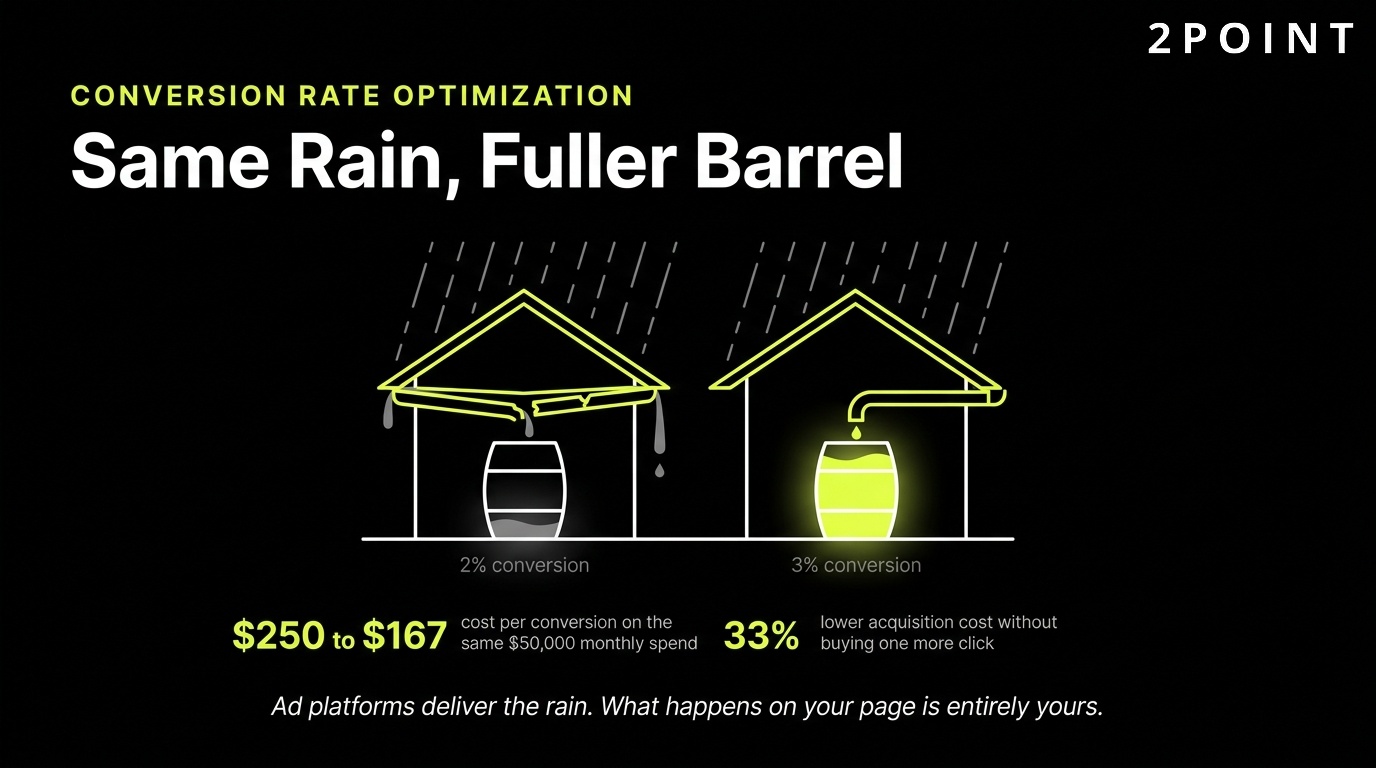
Ad platforms are extraordinarily good at one thing: delivering traffic. Whether it is qualified search intent from Google, engaged social audiences from Meta or TikTok, or purchase-intent shoppers from retail media, the platforms can get people to your landing page or product listing with increasing efficiency. What happens on your page is entirely outside their control and entirely within yours.
Average landing page conversion rates cluster in the mid-single digits across most industries, which means that even a well-optimized landing page sends the majority of visitors away without converting. The elements that influence whether someone in that traffic stream converts or leaves include page layout and visual hierarchy, headline clarity and relevance to the ad they clicked, copy that addresses objections and builds confidence, social proof in the form of reviews, case studies, and trust signals, form simplicity and checkout friction, page load speed, and mobile experience quality. Each of these factors can meaningfully move conversion rates, and the compounding effect of optimizing several simultaneously can be dramatic.
The ROI logic of CRO investment is compelling when you examine it carefully. If you currently spend $50,000 per month driving 10,000 visitors to a landing page that converts at 2%, you generate 200 conversions at a cost per conversion of $250. If CRO work improves that conversion rate to 3%, the same $50,000 generates 300 conversions at a cost per conversion of $167. You have effectively reduced your customer acquisition cost by 33% without changing your advertising spend, your channel mix, or your creative. That efficiency improvement is permanent and compounds over every subsequent month of spending.
The Multiplication Effect of Funnel Optimization
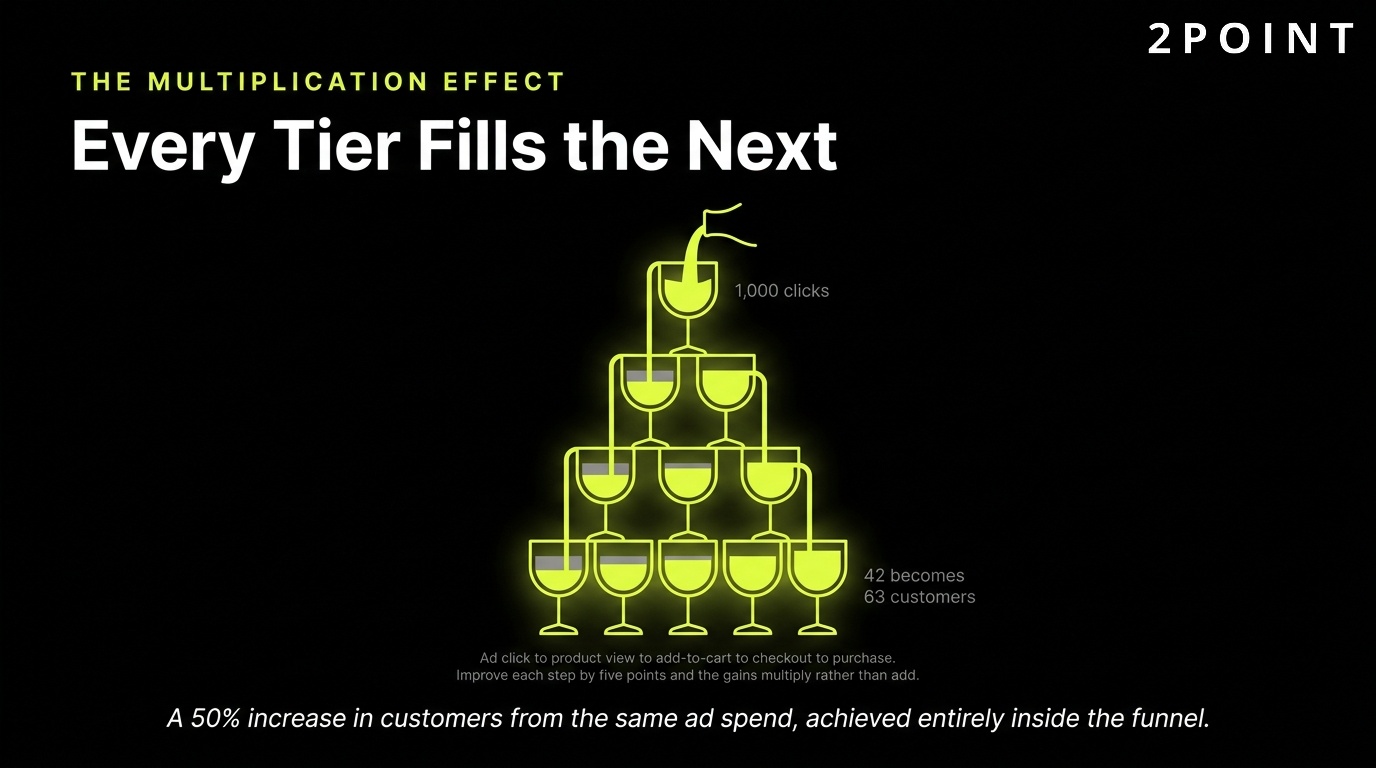
The compounding power of CRO becomes even more apparent when you think in terms of the full funnel rather than a single conversion point. Every customer journey through your performance marketing funnel involves multiple micro-steps, each of which has its own conversion rate. A typical e-commerce funnel might progress from ad view to click, click to product page visit, product page to add-to-cart, add-to-cart to checkout initiation, checkout initiation to purchase completion. Each transition point represents an opportunity for optimization, and improvements at each point multiply rather than add.
Consider a funnel where 1,000 users click an ad, 40% view the product page (400 users), 25% of those add to cart (100 users), 60% of those begin checkout (60 users), and 70% of those complete purchase (42 customers). Now improve each micro-step by just 5 percentage points: the final purchase count rises from 42 to roughly 63 customers, a 50% increase in conversions from the same ad spend, achieved entirely through funnel optimization with no increase in traffic. This multiplication effect is why systematic funnel optimization consistently outperforms purely traffic-focused strategies for improving overall performance marketing efficiency.
The practical implication is that performance marketing teams should invest in CRO infrastructure at least proportionally to their traffic acquisition investment. The businesses putting 95% of their marketing budget into getting people to pages and 5% into what those pages do are systematically underperforming their potential. The more competitive the traffic environment, the more essential landing page performance becomes, because as cost-per-click rises, the economic value of conversion rate improvement rises proportionally.
What to Test and How to Test It
Effective CRO requires a systematic testing methodology rather than ad-hoc experimentation. The SMART goals framework provides a useful structure for establishing concrete success metrics before any test begins: tests should be Specific about what element is being changed and why, Measurable with clear tracking in place, Achievable given your traffic volumes, Relevant to the conversion objective you are optimizing for, and Time-Bound with predetermined test durations that prevent premature conclusions.
The hierarchy of testing priority should be based on impact potential relative to implementation effort. Headlines and primary calls to action typically have the highest impact potential because they influence every visitor’s first impression and decision to engage further. Offer structure (pricing presentation, guarantee language, bundle configuration) often has dramatic impact in categories where purchase confidence is a barrier. Form length and checkout flow have major impact in lead generation and e-commerce respectively. Image and video creative on landing pages affects both engagement and trust. Page load speed affects everyone and has well-documented conversion implications, particularly on mobile.
Testing methodology matters as much as testing subject. A/B tests need sufficient statistical power to generate reliable conclusions, which requires adequate sample sizes before results are acted on. Sequential tests (trying one thing after another rather than simultaneously) are vulnerable to time-based confounds like seasonality, day-of-week effects, and external events. Multivariate tests can generate efficiency but require significantly more traffic to reach significance across multiple variable combinations. Building a testing cadence that generates reliable insights rather than misleading noise requires discipline, patience, and a basic understanding of statistical validity that every serious performance marketing practitioner needs to develop.
Tools and Automation for Budget Tracking
The operational side of performance marketing requires robust tooling to maintain visibility across campaigns and channels simultaneously. Automating ad spend tracking for real-time monitoring and budget adjustment is no longer a nice-to-have capability; it is a fundamental requirement for operating efficiently at any meaningful scale. When campaigns run across multiple platforms simultaneously, manual monitoring creates dangerous blind spots where budget can be misallocated for hours or days before a human notices the problem.
Modern performance marketing stacks typically include a combination of platform-native dashboards, third-party analytics aggregation tools, and custom reporting infrastructure built on data warehousing. The goal is a unified view of spend and performance across all channels that updates frequently enough to support operational decision-making. This infrastructure investment pays dividends in two ways: it enables faster optimization responses to performance changes, and it surfaces the cross-channel patterns that are invisible when you look at each platform’s data in isolation. The brands with the best marketing data infrastructure consistently outperform their peers on cost efficiency metrics, not because they have access to better advertising inventory, but because they act on performance signals faster and more accurately than competitors operating with less visibility.
The Dark Side: Ad Fraud and Invalid Traffic
Performance marketing’s promise of paying only for results is only as reliable as the integrity of the results being measured. Ad fraud, the systematic generation of fake clicks, fraudulent impressions, and non-human traffic that consumes advertising budgets without delivering any genuine business value, represents one of the most serious threats to performance marketing’s accountability model. The scale of this problem in 2026 demands serious attention from every marketer investing in digital advertising.
The $136 Billion Fraud Problem
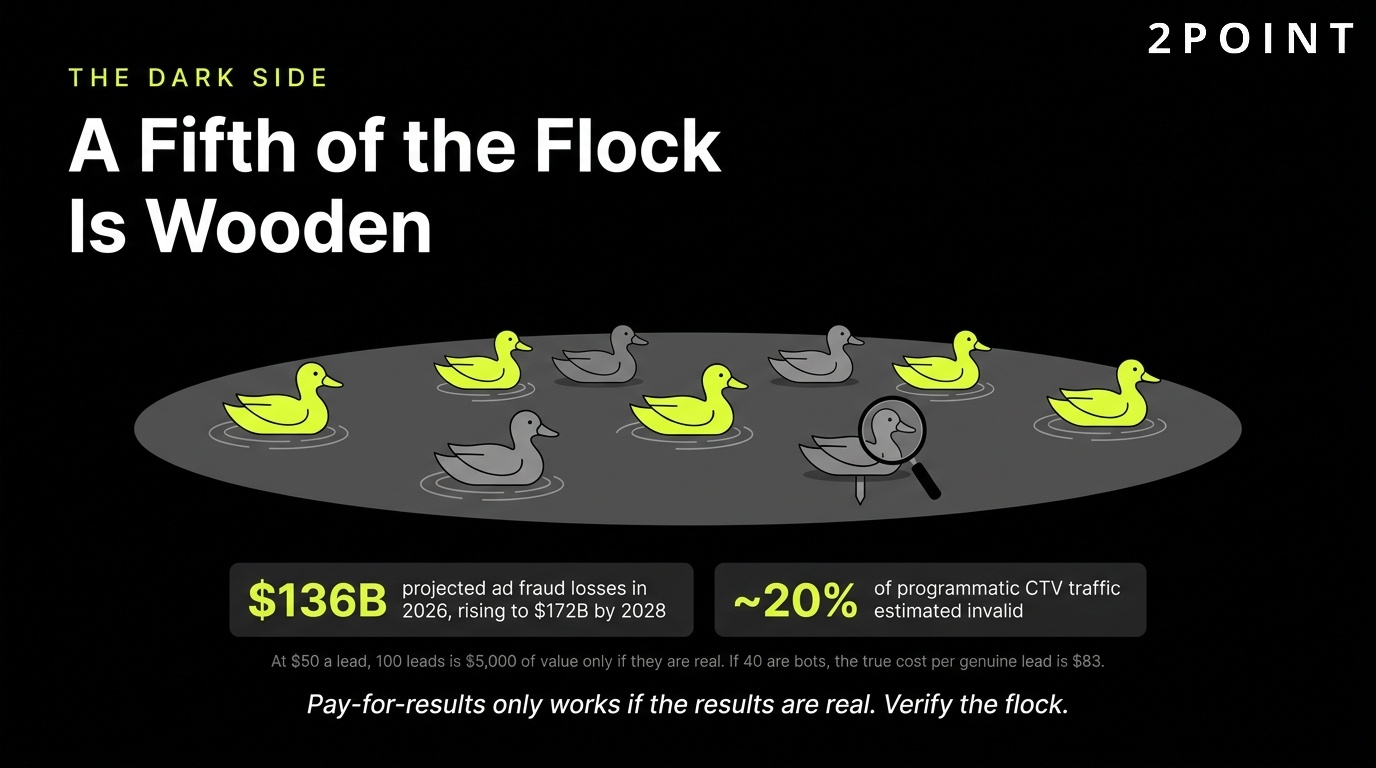
Global ad fraud costs are projected to reach $136 billion in 2026, rising to $172 billion by 2028, making it one of the largest categories of economic loss in the digital economy. Non-human traffic generated by bots, click farms, and fraudulent publisher networks consumes real advertising budget while generating zero real business outcomes. The advertisers paying for these “results” are funding criminal enterprises while receiving nothing of value in return.
North America is expected to suffer the highest economic losses from ad fraud, primarily because the region’s high cost-per-click and cost-per-thousand-impression rates make fraudulent traffic more lucrative for bad actors. When a click is worth more money, stealing that click is more profitable. This creates a perverse dynamic where the most competitive, premium advertising environments also attract the most sophisticated fraud operations. Connected TV advertising has emerged as a particularly vulnerable channel, with some estimates indicating that nearly 20% of programmatic CTV traffic consists of invalid impressions generated by fraudulent players rather than real viewers.
The sophistication of modern ad fraud operations makes them difficult to detect through casual observation. Bot traffic has evolved significantly from the early days of obviously machine-generated click patterns. Sophisticated fraud operations use residential IP addresses, simulate realistic browsing behavior, complete forms, and even generate post-click activity that looks like genuine engagement in analytics dashboards. Detecting this kind of fraud requires purpose-built verification technology and data science capabilities, not just intuition or basic analytics review.
Identifying and Preventing Invalid Traffic
Protecting your performance marketing investment from fraud starts with implementing third-party ad verification technology. Tools from providers specializing in traffic quality analysis sit between your ad serving and your analytics, flagging suspicious traffic patterns in real time and preventing fraudulent clicks from being charged to your account or counted in your performance metrics. These tools look for signals including unusual click timing patterns, geographic anomalies, device fingerprint irregularities, and behavioral signals inconsistent with genuine human browsing.
Beyond verification tools, fraud prevention requires active monitoring of your campaign metrics for anomalies that might indicate fraudulent activity. Sudden spikes in click-through rates without corresponding conversion improvements are a common signal. Unusually low time-on-site or page depth metrics from traffic that looks engaged by click volume suggest bot activity. Click rates that vary dramatically by time of day or day of week in patterns that do not match human behavior are worth investigating. Geographic concentration of clicks from regions where you do not operate or target is another red flag that deserves immediate scrutiny.
Working with platforms and networks that have strong fraud prevention infrastructure is itself a form of protection. Major platforms including Google and Meta invest substantially in detecting and filtering invalid traffic before it is charged to advertisers, though no system eliminates fraud entirely. When working with programmatic networks, publisher-level reporting and the ability to exclude specific sites and apps from your buys gives you additional control over where your ads appear and the quality of traffic they generate. The additional effort of maintaining a curated whitelist of high-quality publisher placements is worthwhile for campaigns where fraud exposure is likely to be significant.
Why Transparency and Accountability Matter
Fraud prevention connects directly to performance marketing’s core philosophical promise. The fundamental advantages of performance marketing, paying only for measurable results and gaining real-time visibility into what those results cost, are compromised when the results being measured are fraudulent. An advertiser paying $50 per lead who receives 100 leads per month is receiving $5,000 of value only if those 100 leads are from real potential customers. If 40 of them are bot-generated form submissions, the real cost per genuine lead is $83, changing the economics of the entire campaign significantly.
This is why transparency infrastructure, the combination of verification tools, independent analytics, first-party tracking, and regular fraud audits, is not an optional add-on to a performance marketing program. It is a prerequisite for the accountability that gives performance marketing its strategic value. Without it, you cannot trust your metrics, cannot make reliable optimization decisions, and cannot have confidence that your budget is producing the business outcomes you are paying for. The brands that take fraud prevention seriously protect not just their budgets, but the integrity of the measurement systems that make performance marketing superior to traditional advertising in the first place.
Building Your Performance Marketing Strategy for 2026
With a thorough understanding of the landscape, the channels, the metrics, and the challenges, the most important question becomes: how do you build a performance marketing strategy that works for your specific business? The answer is not a universal template but a framework for making strategic choices that align your acquisition investment with your business economics, your customer reality, and your organizational capabilities.
Setting Goals Aligned with Unit Economics
Every effective performance marketing strategy starts not with channel selection or creative development but with a clear understanding of unit economics. How much does it cost to deliver your product or service? What is the gross margin per transaction? What is the average order value, and how does it vary across customer segments and product categories? What rate of repeat purchase do your customers exhibit, and over what time horizon? These numbers determine the maximum acceptable customer acquisition cost, and that maximum acceptable CAC is the foundational constraint around which everything else must be designed.
The process of working backward from profitability requirements to campaign targets is essential but frequently skipped. The warning bears repeating: “If your unit economics are broken, AI will simply help you lose money faster.” If the unit economics of your business cannot sustain the acquisition costs required to compete in your target channels, no amount of optimization will fix the problem. The only solutions are improving margins, increasing conversion rates to lower effective CAC, finding lower-cost channels, or improving customer lifetime value to justify higher initial acquisition investment. Knowing which of these levers applies to your situation requires starting the strategy process with unit economics, not channel tactics. Setting clear marketing goals rooted in unit economics ensures that the entire team is aligned around the metrics that actually determine business success.
Once unit economics establish the acceptable CAC, you can work forward to determine the required conversion rates, traffic volumes, and channel costs that would allow you to operate within that constraint profitably. This analysis often reveals that certain channels are structurally incompatible with your current margins, which is valuable information to have before committing budget. It also identifies where improvements in funnel conversion or customer lifetime value would unlock previously inaccessible channels, which defines a roadmap for strategic investment that goes beyond immediate campaign optimization.
Choosing Channels Based on Customer Journey
Channel selection in performance marketing is most effective when grounded in customer journey mapping rather than category conventions. Different channels serve different psychological moments in a buyer’s progression from awareness to consideration to decision, and treating all channels as interchangeable direct-response vehicles consistently leads to underperformance in channels that operate earlier in the journey and are difficult to attribute accurately.
The Growth Syndicate’s analysis highlights podcast advertising and LinkedIn as channels that are “valuable, and easy to misjudge.” Host-read podcast mid-roll placements run at CPMs of $25 to $50 and convert better than pre-roll formats, but their conversion path typically involves delayed action: a listener hears an ad, potentially searches for the brand later, and converts through a different channel. LinkedIn content builds professional credibility and brand familiarity that influences downstream decisions without often closing deals directly. Neither channel should be evaluated purely on last-click conversion metrics, and both should be included or excluded based on their role in the full customer journey rather than their direct attribution performance.
The practical approach to customer journey-based channel selection starts with qualitative research about how your customers actually discover and evaluate brands like yours. What triggers their search? Which channels do they encounter during consideration? Where do they look for social proof and validation? What finally tips them toward purchase? This understanding, combined with quantitative data from attribution modeling, reveals which channels play which roles in your specific customer’s journey. Channel investment decisions made from this understanding are dramatically more effective than those made from general category assumptions or competitor imitation. Exploring how digital marketing helps local businesses adapt channel selection to their specific customer journey provides useful grounding for market-specific strategy decisions.
Balancing Automation with Strategic Control
One of the most practically important decisions in building a 2026 performance marketing strategy is determining exactly where automation should operate and where human judgment must override it. The temptation to automate everything, fully surrendering campaign management to AI systems, is real given how capable these systems have become. The countervailing temptation to maintain manual control over everything, out of mistrust for black-box algorithms, is equally real and equally problematic. The optimal approach lives in the space between these extremes.
The 2026 performance marketing landscape calls for a clear division where automation handles bidding and budget pacing (which AI manages better than humans due to speed and data volume), audience expansion and lookalike modeling (where machine pattern recognition outperforms manual segmentation), creative variant testing at scale (where AI can simultaneously test more combinations than any human team), and real-time campaign monitoring with automated alerts for anomalies. Human strategic judgment should govern messaging strategy and brand positioning, offer architecture and pricing decisions, the interpretation of data patterns that require business context, decisions about entering or exiting channels, and creative ideation that generates genuinely novel concepts for AI to test and scale.
This division of labor treats marketers not as campaign operators but as architects, the role that iStudios Media describes as “architect of data and creative strategy.” In this role, your job is to design systems that give AI the right signals to optimize against, provide creative raw material that is compelling enough to work when AI scales it, and interpret outcomes with enough business context to distinguish genuine performance from the Marketing Data Mirage. The shift from operator to architect is challenging for marketers trained in hands-on campaign management, but it is the adaptation that performance marketing’s evolution demands. Many businesses find that evaluating outsourcing marketing versus building an in-house team helps clarify which capabilities should be developed internally and which benefit from external expertise.
Embracing Hyper-Personalization Without Creepiness
Personalization is one of the most powerful performance marketing levers available in 2026, but it exists on a spectrum from genuinely helpful to uncomfortably intrusive. The brands that navigate this spectrum successfully use first-party data and AI to deliver experiences that feel relevant and considerate rather than surveilled and manipulated. The difference is not just about what data you use but about how transparently you use it and what value exchange you offer customers in return.
Success in 2026 performance marketing requires the combination of first-party data utilization, hyper-personalization, influencer marketing, and automation working in an integrated system. Hyper-personalization that draws on your own customer data, the preferences, behaviors, and purchase history that customers have shared directly with your brand, consistently feels more appropriate than personalization based on inferred behavioral tracking across third-party sites. Customers understand that their account history informs recommendations; they are often surprised and uncomfortable when advertising reflects knowledge that feels inexplicably omniscient.
The practical approach to non-creepy personalization focuses on relevance to the current relationship. Showing someone a product complementary to something they recently purchased is helpful, not intrusive. Sending an email referencing a recent support interaction to offer a relevant solution feels caring rather than surveillance-like. Serving an ad for an item that someone left in their cart is expected and generally appreciated. The threshold between helpful and creepy is partly about data source (your own versus third-party) and partly about recency and context. AI Digital’s performance marketing strategy guide emphasizes that effective personalization should feel like the brand understands you, not like it has been watching you. Building personalization on a foundation of first-party data, transparent value exchange, and genuine customer benefit keeps it on the right side of that line while delivering the conversion improvements that make it worth the investment. Building a mobile-friendly marketing campaign is particularly important for personalization, since mobile is where most personalized experiences are delivered and where friction in the experience has the highest cost.
The Future of Performance Marketing: What Comes Next
Performance marketing in 2026 is simultaneously more powerful and more demanding than it has ever been. The tools available to practitioners are extraordinary: AI systems that optimize campaigns at speeds and scales impossible for human teams, measurement infrastructure that can trace the full economic impact of advertising investment, personalization capabilities that make every customer interaction feel individually relevant, and channel options that reach consumers at every stage of the decision journey. At the same time, the complexity of operating within privacy constraints, avoiding fraud, navigating regulatory variation across markets, and maintaining strategic control over AI systems creates a higher baseline of competence required to compete effectively.
The synthesis of everything covered in this guide points to eight imperatives for performance marketing success in 2026 and beyond. First, build first-party data assets as AI fuel. The brands with rich, consented, high-quality customer data will train better AI systems than those relying on degraded third-party signals. This investment is non-optional and compounds in value over time. Second, focus on profitability metrics (POAS) over vanity metrics (ROAS). The gap between revenue-based success indicators and actual business health is large enough to sustain losing strategies for dangerously long periods. Third, embrace automation while providing strategic guardrails. AI is an extraordinarily powerful executor of well-defined strategy, and a dangerously efficient executor of poorly defined strategy. The human role is setting the right targets.
Fourth, treat creative as the new targeting. As privacy changes limit demographic and behavioral precision, the ability to create content that self-selects the right audience through relevance and resonance becomes the primary competitive differentiator. Fifth, measure the full customer journey rather than just the last click. The channels that build awareness and consideration are generating value that last-click attribution systematically misses and systematically underfunds. Sixth, respect privacy as brand equity. The brands that demonstrate genuine commitment to responsible data practices build customer trust that converts to tangible business advantage in acquisition cost, loyalty, and willingness to share data voluntarily.
Seventh, test continuously across every funnel stage. The compounding mathematics of conversion rate improvement mean that systematic testing discipline, applied at every micro-step of the customer journey, consistently outperforms equivalent investment in traffic volume. Eighth, prevent fraud through transparency and verification infrastructure. The integrity of performance marketing’s accountability model depends on measurement systems that accurately reflect real human behavior, not fraudulent simulations of it.
Looking forward, performance marketing will continue becoming more automated, more regulated, and more creatively demanding. The competitive advantage will increasingly belong to brands that can combine the analytical discipline of data-driven optimization with the human creative intelligence that makes compelling ideas, and the organizational agility to adapt quickly as technology, regulation, and consumer behavior continue to evolve. With the digital advertising market reaching between $835 and $876 billion by end of 2026, and performance formats comprising 60% of digital display spending, the stakes have never been higher or the opportunity more significant.
Performance marketing delivers $15 ROI for every $1 spent when executed with strategic discipline. The gap between that potential and the 25% of spend that generates no meaningful outcomes is not a technology gap; it is a strategy and execution gap. Closing it requires exactly the combination of data rigor, creative excellence, measurement integrity, and human strategic judgment that the best performance marketing practitioners bring to the discipline. At 2POINT, these principles form the foundation of how we approach building performance marketing systems that generate sustainable, measurable growth rather than impressive-looking numbers that do not translate to business results.

Frequently Asked Questions About Performance Marketing
What is performance marketing in simple terms?
Performance marketing is a type of digital advertising where you only pay when a specific action occurs, such as a sale, a click, a lead form submission, or an app download. Unlike traditional advertising where you pay for exposure regardless of results, performance marketing makes every dollar accountable to a measurable outcome.
How is performance marketing different from traditional digital marketing?
Traditional digital marketing often involves paying for impressions or time-based placements where results are not guaranteed. Performance marketing ties payment directly to defined results, so advertisers only spend money when a target action is completed. This shifts risk from the advertiser to the publisher and creates built-in optimization pressure toward efficiency.
What is a realistic ROI for performance marketing campaigns?
Well-executed performance marketing campaigns deliver approximately $15 in return for every $1 spent, according to 2026 industry data. However, actual ROI varies significantly by industry, channel, offer quality, and how rigorously the program is managed. Poorly configured campaigns or those with broken unit economics can generate losses at high speed when AI automation is applied without strategic oversight.
What is POAS and why is it better than ROAS?
POAS (Profit on Ad Spend) measures profit generated per dollar of advertising spend, while ROAS (Return on Ad Spend) measures revenue generated. ROAS is misleading because it ignores cost of goods sold, shipping, returns, and platform fees, making campaigns appear profitable when they may not be. POAS provides an accurate picture of whether advertising investment is generating genuine business value.
How does AI change performance marketing strategy?
AI automates bidding, audience targeting, creative testing, and budget pacing at speeds and scales impossible for human teams. However, AI cannot define strategy, set business objectives, provide emotional intelligence in creative, or evaluate whether what it is optimizing for actually maps to business profit. Marketers must shift from operators to strategic architects who configure AI systems thoughtfully and monitor for misalignment between machine-optimized metrics and real business outcomes.
Is performance marketing still effective without third-party cookies?
Yes, performance marketing remains effective without third-party cookies, but it requires adaptation. First-party data collected directly from your customers through owned channels becomes the foundational targeting and personalization fuel. Contextual targeting, AI modeling on aggregated signals, and creative-led audience self-selection replace the granular behavioral tracking that third-party cookies enabled. Brands that build strong first-party data assets are outperforming those that have not made this transition.
What are the most important performance marketing metrics to track?
The most important metrics are POAS (Profit on Ad Spend) for overall profitability, Customer Acquisition Cost (CAC) for efficiency benchmarking, LTV:CAC ratio for sustainability assessment, conversion rate for funnel efficiency, and click-through rate as a creative relevance signal. ROAS remains useful as a first-level comparison tool but should never be the sole metric for optimization decisions due to its failure to account for true profitability.
How much of my marketing budget does ad fraud waste?
Global ad fraud is projected to waste $136 billion in 2026, and the percentage affecting individual campaigns varies significantly by channel, targeting approach, and verification measures in place. Programmatic connected TV advertising is particularly vulnerable, with some estimates indicating nearly 20% of traffic is invalid. Implementing third-party verification tools and monitoring for anomalous traffic patterns is essential for protecting budgets.
Performance marketing vs. brand marketing: which should I prioritize?
The 2026 consensus among industry leaders is that this distinction should be retired entirely. Emotional brand equity directly and measurably influences conversion rates, repeat purchase, and willingness to pay premium prices, all of which are performance outcomes. The most effective campaigns in 2026 combine direct-response mechanics with creative that builds genuine emotional connection. Treating brand and performance as separate investments with separate teams and budgets consistently underperforms an integrated approach.
What is affiliate marketing and how does it fit in performance marketing?
Affiliate marketing is a specific performance marketing channel where publishers (affiliates) promote your products and earn a commission only when a defined action occurs, such as a sale. It is one of the purest expressions of the pay-for-results model because publishers bear the traffic acquisition cost and are compensated only for outcomes. Understanding how to create a successful affiliate marketing program can be a highly efficient addition to a diversified performance marketing strategy.
How do I know if my performance marketing strategy is working?
Your strategy is working if POAS is positive and improving, CAC is at or below the level your unit economics require, the LTV:CAC ratio is at or above 3:1, and revenue growth correlates with marketing investment changes. If dashboards show impressive platform metrics but finance sees no revenue impact, you may be experiencing the Marketing Data Mirage: AI optimizing for signals that do not map to actual business outcomes.
How does social media marketing fit into a performance marketing strategy?
Social media platforms are major performance marketing channels for both paid advertising and organic content that drives measurable actions. Paid social allows precise targeting, creative testing at scale, and direct-response formats including shoppable video. The investment in understanding social media marketing costs and platform dynamics is essential for performance marketers allocating budgets across channels competitively.