

Getting found is only part of the problem. We build the full pipeline: search visibility, intake process, and the digital presence that converts qualified prospects into consultations.





Most legal marketing spending goes to Google Ads with no intake process to convert what it generates. Traffic without a tight intake is money that cycles back out of the firm every month.
Search intent is highest in legal. People Google their legal problem the day it becomes urgent. The firm that shows up with clear messaging and a fast intake wins the case at that moment.
Paid search, local SEO, and intake optimization working together. Every piece is designed around a single outcome: signed clients, not website traffic.
A strategy call. We review your current marketing, intake process, and competitive position and tell you exactly what's broken and how we'd fix it before you commit.
Three patterns that drain budget without producing signed clients.
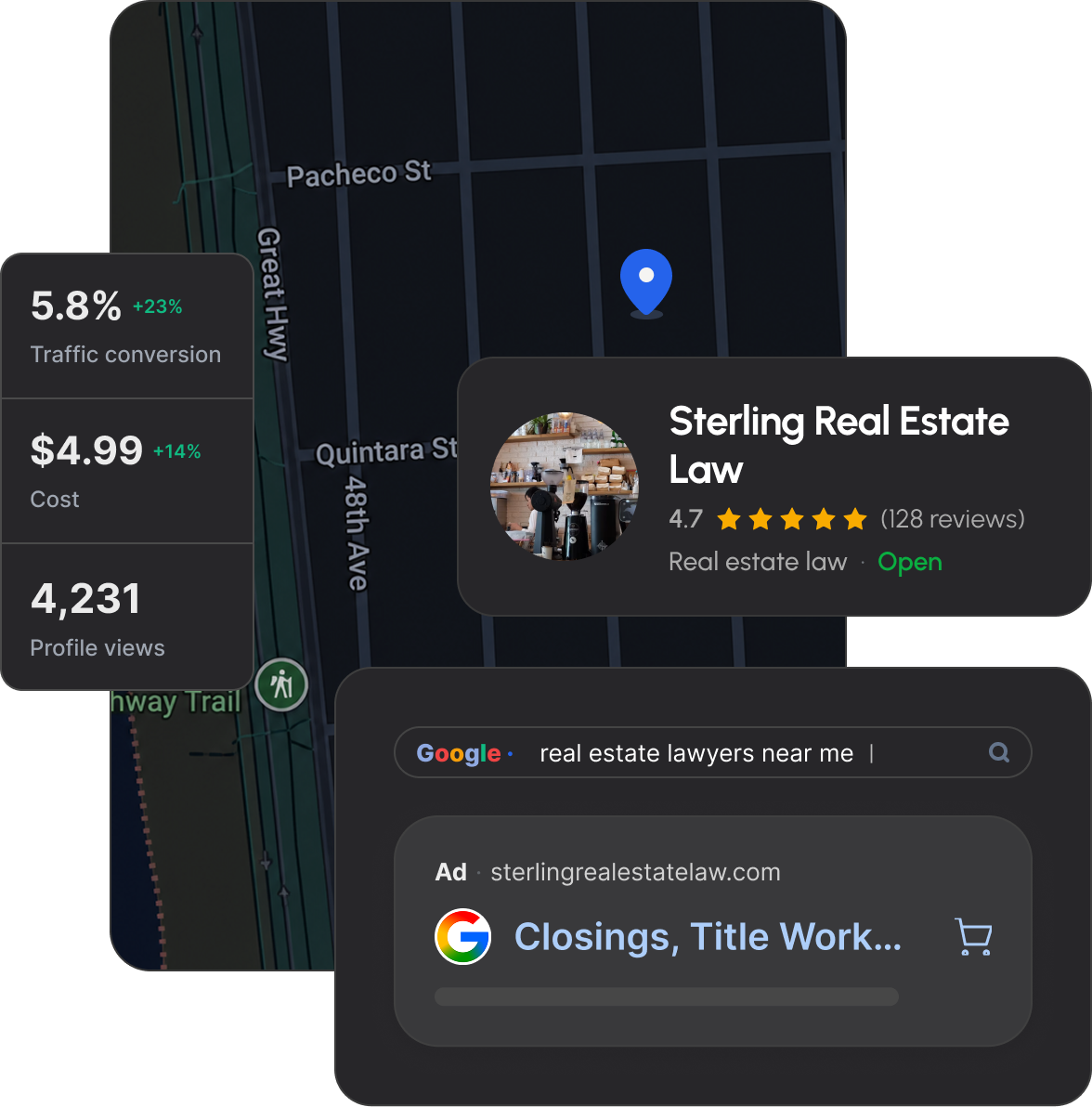
Firms spend heavily on Google Ads and then lose 80% of inbound leads to slow response, unclear intake steps, or a website that doesn't answer the question the prospect came with. Fixing intake is almost always a bigger lever than increasing ad spend.
Broad match, national keywords, and competitor terms burn budget on clicks that will never convert. The highest-intent legal searches are specific, local, and often lower volume. Missing those while spending on vanity keywords is the default for most PPC setups.
Google Business Profile and local map pack visibility drive a large share of legal intakes. Firms with poor local SEO pay for every click through ads when organic placement would deliver the same prospect for free. Most legal websites are not built to compete for local organic.
Paid search captures urgent intent. Local SEO builds baseline visibility. Intake optimization makes sure neither one leaks. We run all three as one connected program.
% of legal clients actively running each channel with 2POINT
A multi-attorney litigation firm came to us entirely dependent on referrals: no paid search presence, no local SEO, and no intake process beyond a phone number. We launched Google Ads with a tight practice-area keyword strategy, rebuilt their Google Business Profile, and redesigned their intake flow from initial contact through consultation scheduling. Within six months, signed clients from digital were tracking above the firm's referral baseline, and cost per signed client sat well below their previous attempts at Google Ads.

The practice area shapes the keyword strategy and intake design. The underlying logic is the same: high-intent search, qualified lead capture, and tight intake conversion.
Keyword strategy and intake speed are the decisive factors in winning clients at this search volume.
Clear, empathetic messaging and fast response are the conversion drivers.
Speed of response and after-hours availability separate firms that win these cases from those that lose them to a competitor.
Content and local presence build the pipeline over time rather than through high-cost paid search.
Reputation and community presence matter as much as search visibility for this practice type.
Content authority and professional credibility drive client acquisition here.
Local SEO and referral infrastructure from adjacent professionals are the primary pipeline sources.
Both plaintiff and employer-side work require different messaging strategies and search term targeting.
Signed client growth from digital for a litigation firm that previously relied entirely on referrals, achieved in under six months
Signed client growth from digital for a litigation firm that previously relied entirely on referrals, achieved in under six months
Intake conversion rate improvement achieved through intake process redesign alone, with no increase in ad spend
Cost per signed client after keyword strategy, intake optimization, and local SEO were running together. We have been building legal pipelines for 20+ years.
Four stages, from baseline to a program generating new clients every month.
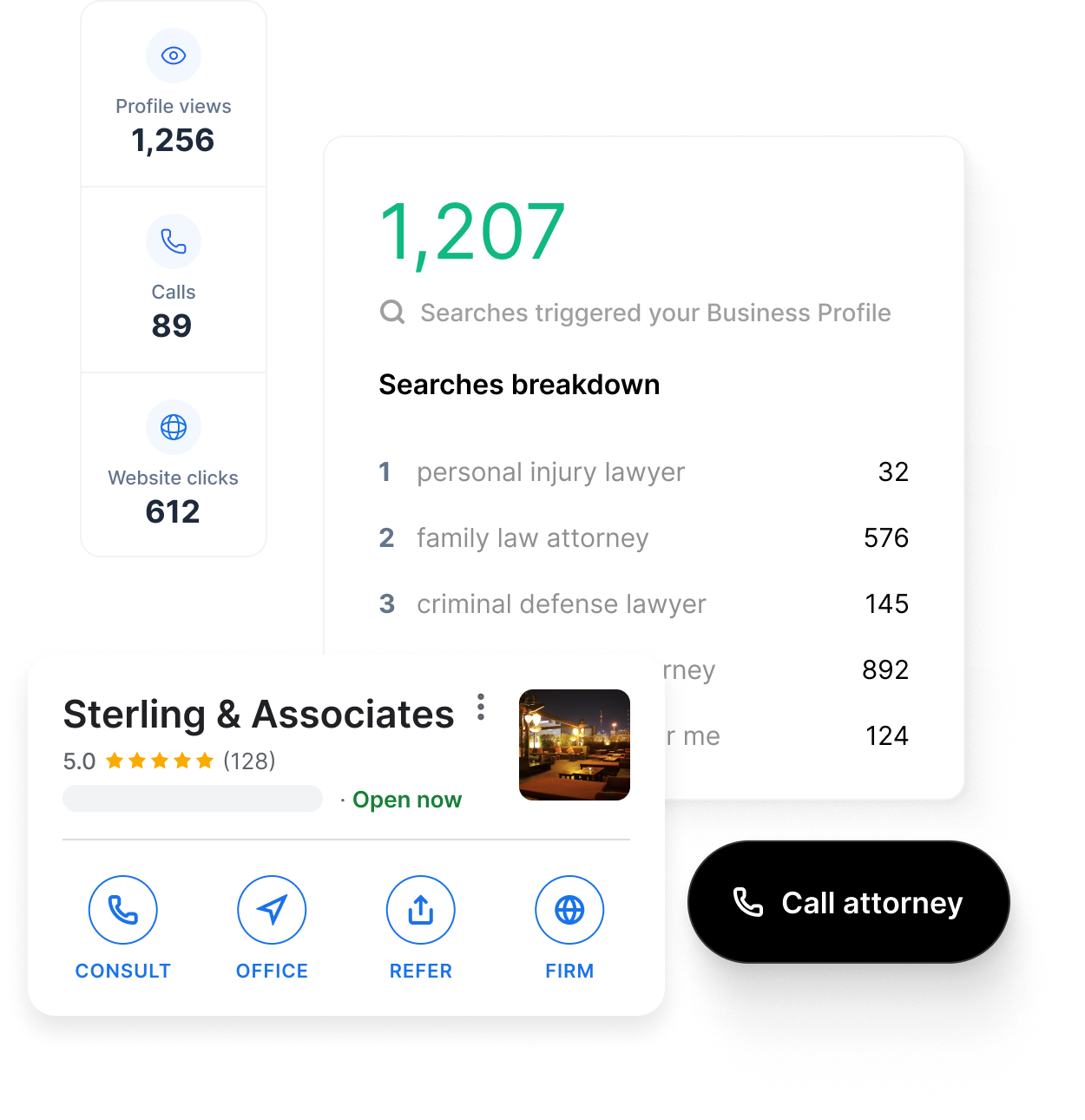
We start with your current spend, intake process, and search position. Most firms have at least one major leak before we launch anything new.
We map the keyword strategy, intake flow, and local SEO foundation before launching anything. The three pieces are designed to work together. Running any one without the others wastes the budget.
Every channel launches with conversion tracking tied to intake events, not just clicks. We measure cost per consultation and cost per signed client from day one.
Budget shifts follow what's producing clients. Keyword lists tighten. Intake data informs creative and messaging updates. The program improves every month it runs.
Straight answers before the call.
Most failed legal PPC campaigns share the same problems: broad match keywords, no negative list, and landing pages that don't convert. The clicks are expensive regardless of who manages it. The question is whether those clicks turn into clients. We fix the intake side alongside the paid side so the cost per signed client drops even when CPCs stay high.
Google Ads produces inquiries within the first two to four weeks once campaigns are live. Local SEO improvements show visible movement in 60 to 90 days. Organic SEO compounds over 6 to 12 months. Most firms see a measurable intake increase from paid within the first month.
We work across practice types. The marketing strategy differs by practice area because search behavior and intake urgency differ. We map the right approach during the strategy call rather than assuming one model fits all legal marketing.
Ad spend varies by market and practice area. We can tell you what it takes to compete in your market during the strategy call, based on actual auction data rather than a generic estimate. Our management fee is separate and based on the scope of the program.
Yes. Intake optimization is part of every legal program we build. In most cases, intake improvements deliver a bigger return than increasing ad spend. We audit the full intake flow from first contact through consultation scheduling as part of onboarding.
Referral practices benefit from digital in two ways: new cases come in when referral volume is slow, and a strong digital presence reinforces credibility with the referral sources who look your firm up before they send a client. We build digital as a complement to referrals, not a replacement.

“Great customer service! They are very patient even when needing to make a change back and forth getting to exactly the right look.”
“Excellent creative work.”
“Everyone at 2POINT is wonderful to work with.”
“The entire service was very professional, efficient and friendly.”
“I have worked with 2POINT at two different startup companies and they did a fantastic job with both web-design and managed all of our marketing initiatives. ”
“We’ve been with 2POINT for about a year and a half now, and couldn’t be happier.”
“Simply the best.”
“I’m really happy that I have asked this company to work on my marketing needs. They did a great job so far and I will definitely work with them again!”
“The team was amazing! Their communication and final delivery of my animated logo was top notch. I highly suggest 2POINT.”
“The 2POINT team I worked with was professional, prompt, and eager to meet our specific needs. I can highly recommend them. They definitely delivered! ”
“Excellent communication, and product we were very happy with the work they did for us.”
“We have worked with their team for almost a decade and hope to continue partnering with them.”
“Everybody on the team was very engaged, communicative and creative throughout the entire process.”
“The attention they give to my business has helped it grow. I really appreciate them!”
“Love working with 2POINT Digital Marketing Agency! ”
“2POINT is amazing! I get compliments on our website all the time!”
“I would definitely work with these guys again, they were able to take my visions and bring it to light. Extremely excited to use my animations on all my projects.”
“The design they came up with is absolutely stunning, and I've already received numerous compliments on the site's clean, modern look.”
“Great group of people, always willing to listen and work together to collaborate on the best ideas for our company!”
“Working with 2POINT on our custom animations was just delightful!”
Tell us what's working, what you've tried, and where you're seeing the most friction. We'll come prepared with a read on your channel mix and what we'd build first.







 let’s connect