

 let’s connect


What Is Med Spa Marketing and Why Does It Matter in 2026?
- Med spa marketing is the system of strategies medical spas use to attract, convert, and retain patients across digital and traditional channels.
- Effective med spa marketing in 2026 requires integrating SEO, social media, paid advertising, email automation, and patient retention into one cohesive system.
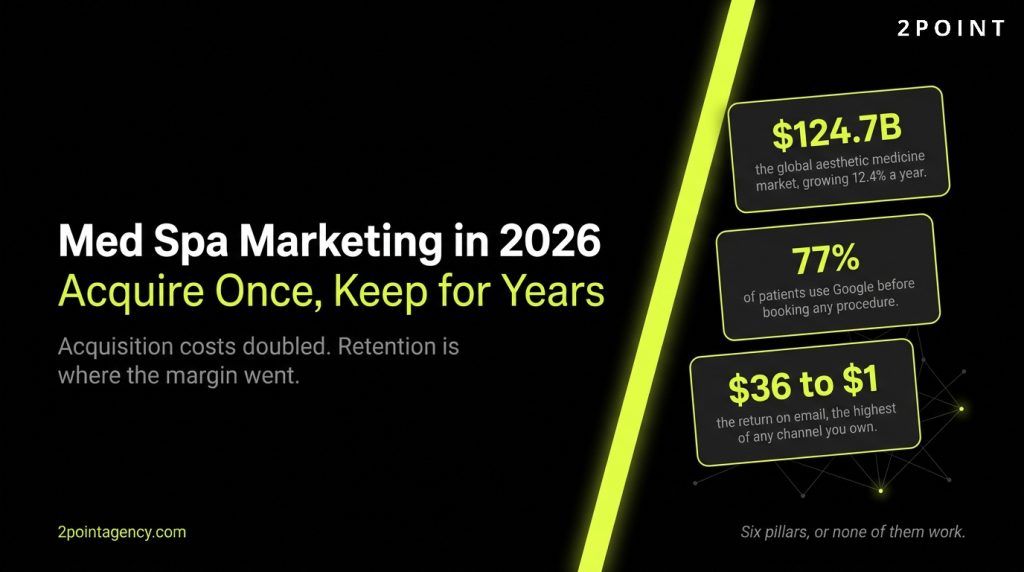
- The global aesthetic medicine market has reached $124.7 billion, but patient acquisition costs have doubled since 2023.
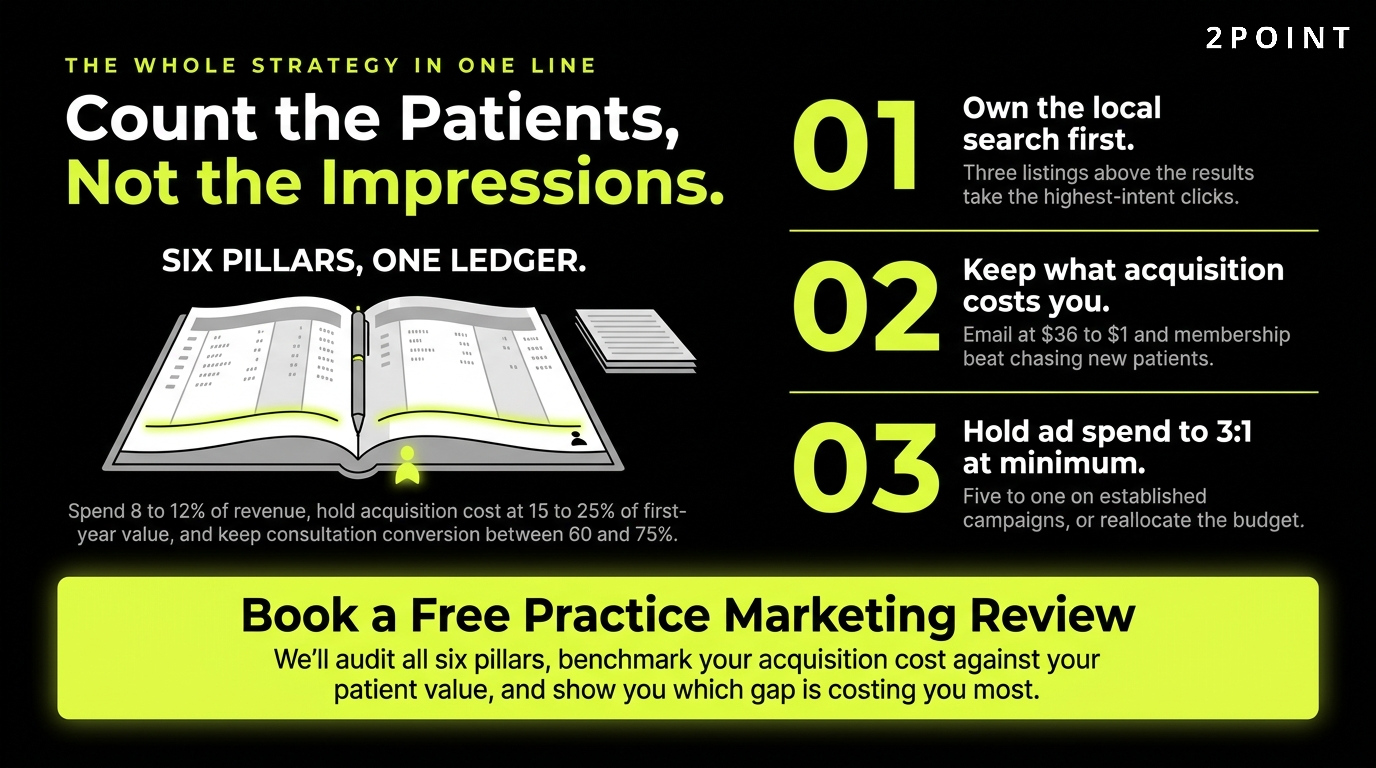
- Successful practices invest 8 to 12 percent of revenue in marketing and track cost per acquired patient, not vanity metrics.
- The six core pillars of med spa marketing are: local SEO and Google Business Profile, social media content, paid advertising, email and SMS automation, review management, and patient retention programs.
- Practices that combine immediate acquisition tactics with long-term brand building consistently outperform those running disconnected campaigns.
- Ignoring even one pillar creates gaps in the patient journey that competitors will fill.
Understanding the Med Spa Marketing Landscape in 2026
The aesthetic medicine industry is no longer a niche market serving a small segment of high-income patients. It has become a mainstream wellness category, and the numbers reflect that shift decisively. Understanding the landscape before building your strategy is the difference between marketing that generates real revenue and marketing that generates impressive-looking reports.
Market Size and Growth Trajectory
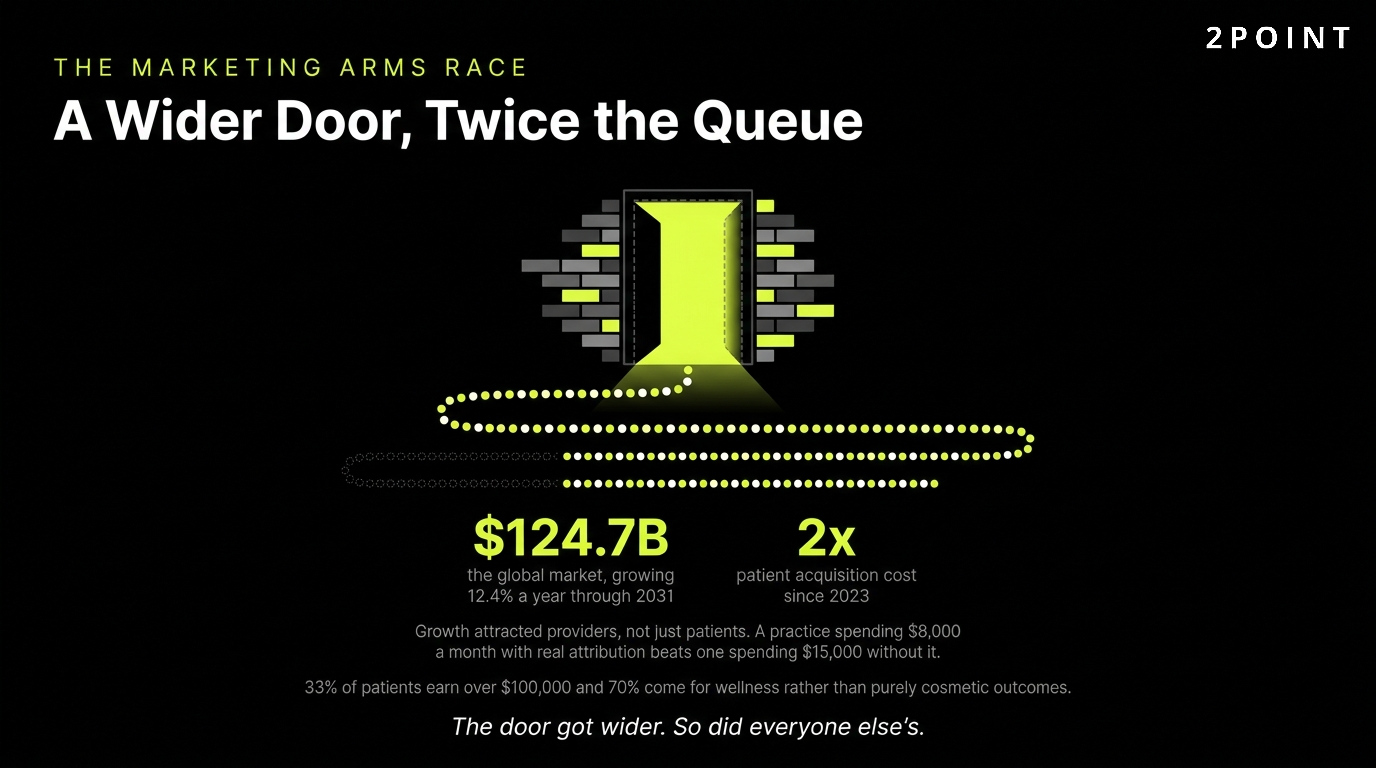
The global aesthetic medicine market is valued at $124.7 billion in 2026, with a compound annual growth rate of 12.4 percent projected through 2031. That growth rate sounds like good news for practice owners, and in one sense it is. More patients are seeking aesthetic treatments than ever before, and cultural acceptance of cosmetic procedures has expanded significantly across age groups and demographics.
The challenge is that market growth has attracted a flood of new providers. More med spas are competing for the same local patients, bidding on the same keywords, and running the same promotions. 77 percent of patients use Google before booking any aesthetic procedure, which means digital discoverability is no longer optional. It is the primary battleground for patient acquisition.
This intensified competition has created a genuine marketing arms race. Practices investing properly in digital infrastructure consistently outperform competitors who rely on word of mouth or sporadic promotions. However, rising ad costs mean that efficiency matters more than raw spending. A practice spending $8,000 per month on Facebook ads with a clear attribution system will outperform one spending $15,000 with no measurement framework. Strategic allocation, grounded in data, is the defining competency of winning practices in 2026.
Your Target Patient Demographics and Psychographics
Effective medical spa marketing begins with a precise profile of the patient you are trying to reach. Research consistently shows that 33 percent of med spa patients have household incomes exceeding $100,000, and 70 percent visit for wellness and relaxation purposes, not purely cosmetic outcomes. This distinction matters enormously for how you position your practice and craft your messaging.
Age segmentation shapes your content strategy in practical ways. Patients in their 20s and early 30s are primarily interested in prevention: protecting skin health, addressing early fine lines, and establishing long-term wellness routines. Patients in their 40s and 50s are actively addressing visible aging signs and seeking noticeable but natural-looking results. Patients in their 60s and beyond are looking for advanced rejuvenation options and expect a high degree of clinical credibility from their provider.
The psychographic profile of the med spa patient is equally important. These are research-heavy buyers. They consume educational content, study before-and-after galleries, read provider credentials, and evaluate reviews before scheduling a consultation. Your digital presence functions as your most powerful sales tool because the “sale” happens before the patient ever calls your front desk. Reviews and testimonials influence the booking decisions of more than 77 percent of prospective patients, making social proof a foundational marketing asset rather than a nice-to-have.
How Patient Acquisition Costs Are Reshaping Strategy
Patient acquisition costs have doubled since 2023, driven by three converging forces. First, more med spas are competing for the same local search keywords, pushing up cost-per-click across Google and Meta platforms. Second, patients are requiring more touchpoints before converting, meaning the cost of the full nurture sequence is higher even when individual ad costs stay flat. Third, platform algorithm changes have reduced organic reach, forcing practices to pay for visibility they previously earned for free.
This environment makes retention and lifetime value optimization critical components of any med spa marketing strategy. Acquiring a patient once at an inflated cost and keeping them for years through email nurture, loyalty programs, and excellent clinical experience is dramatically more profitable than continuously chasing new patients. 40 to 60 percent of consultations originate from online channels, so every retention dollar spent online compounds in value over the patient relationship.
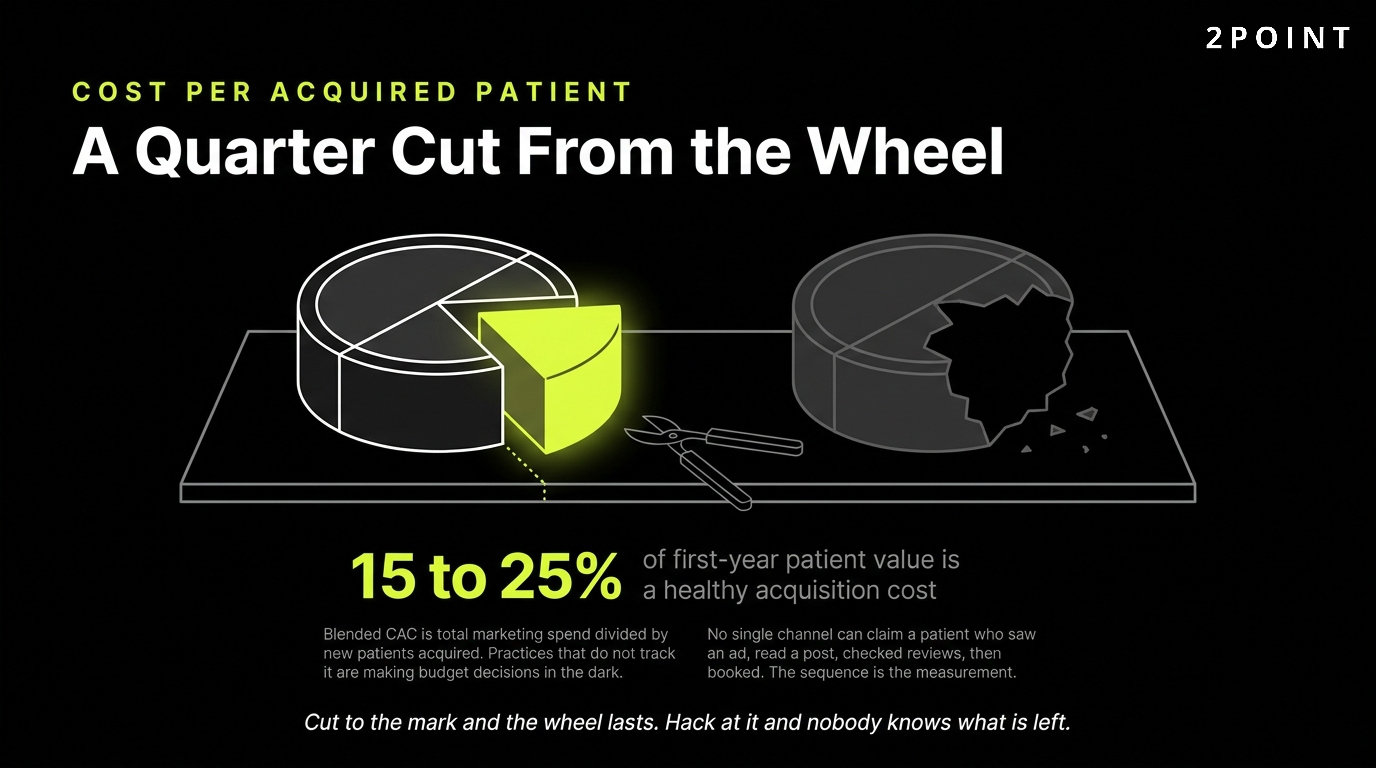
Practices that track blended customer acquisition cost (total marketing spend divided by new patients acquired) maintain CAC at 15 to 25 percent of first-year patient value. Practices that do not track this metric are making budget decisions in the dark. Multi-channel attribution is the complementary discipline: a patient who sees your Instagram ad, reads your blog post, checks your Google reviews, and then books represents revenue that no single channel can claim. Understanding the full sequence is what separates growing practices from stagnating ones.
The Shift from Acquisition-Only to Integrated Growth Systems
The most important strategic shift in aesthetic practice marketing over the past two years is the move from acquisition-only thinking to integrated growth systems. Winning practices in 2026 do not just acquire patients. They optimize the entire patient journey from first awareness through long-term advocacy. SEO drives qualified traffic to your website, paid ads generate consultation bookings, email nurtures unconverted leads, SMS reminders reduce no-shows, and post-treatment automation requests reviews and books follow-up appointments. Each channel feeds the next.
Retention programs have proven their ROI conclusively. A loyalty or membership model that increases patient visit frequency by 30 percent delivers more revenue than spending the equivalent budget on Facebook ads chasing new patients. Email marketing generates $36 in return for every $1 spent, making it the highest-ROI channel available to med spa operators. Yet it remains underutilized by the majority of practices.
The six-pillar framework for sustainable medspa marketing success addresses: strategy and planning, digital presence, demand generation, retention and engagement, cross-channel integration, and measurement. Practices that address all six pillars consistently over 12 or more months outperform those executing random tactics. Discipline in execution, sustained over time, creates compounding returns that short-term campaigns simply cannot match.
Local SEO for Med Spas: Your Highest-Leverage Marketing Investment
When patients decide they want a treatment, the first thing most of them do is open Google and type a phrase like “Botox near me” or “med spa in [their city].” What happens in the next three seconds determines whether they find you or your competitor. Local SEO is the discipline that controls that outcome, and it delivers compounding returns that paid advertising simply cannot replicate.
Why Local SEO Belongs at the Top of Your Marketing Budget
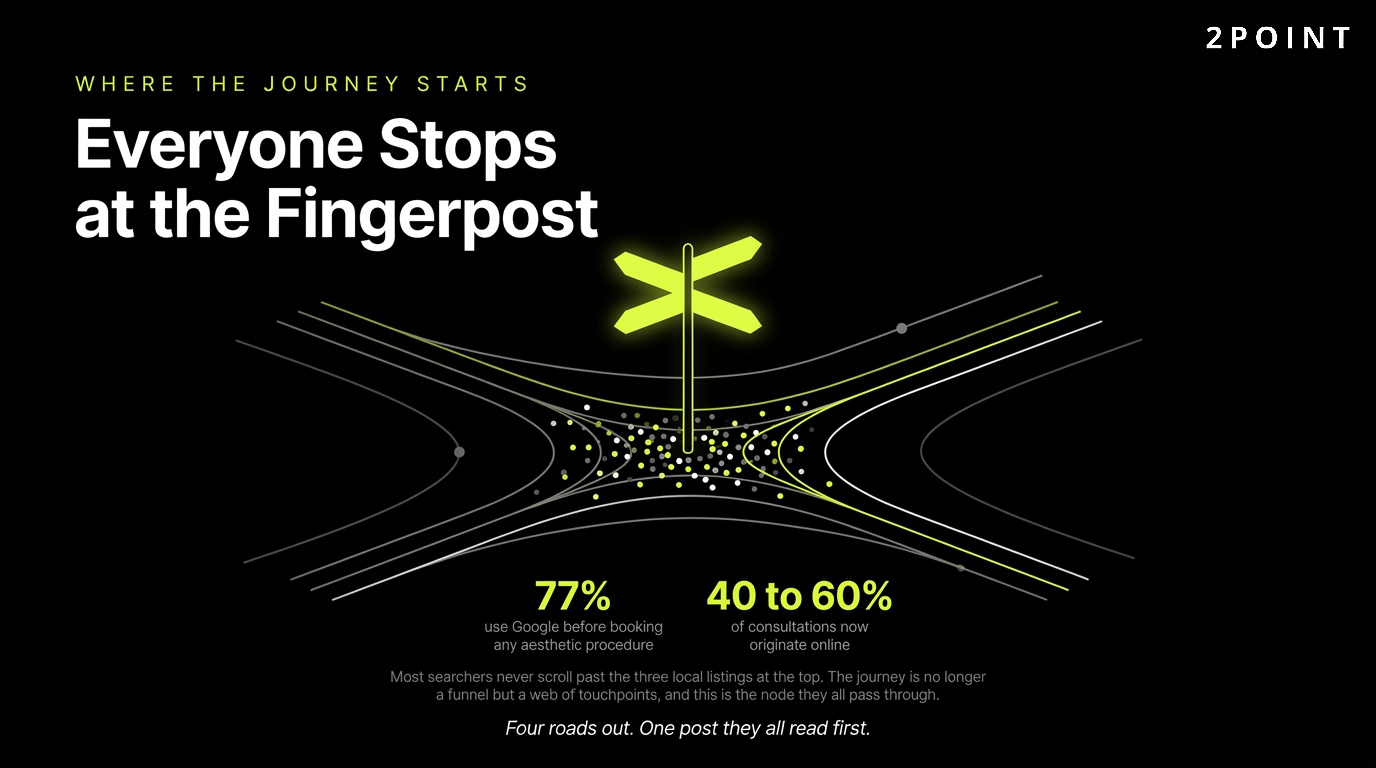
With 77 percent of patients using Google before booking aesthetic procedures, and the vast majority never scrolling past the map pack at the top of search results, local SEO is arguably the single most important channel in your med spa marketing strategy. The map pack, those three local business listings appearing above organic results, captures the highest-intent clicks from patients who are actively ready to book rather than casually browsing.
Unlike paid advertising, which stops generating results the moment your budget runs out, SEO investments compound over time. A first-page ranking for “Botox in [your city]” or “CoolSculpting [your neighborhood]” can drive consultation bookings for years with minimal ongoing cost. 50 percent of med spas now invest meaningfully in SEO strategies, which means this channel has become table stakes rather than a competitive differentiator. However, the quality and consistency of SEO execution still varies enormously, leaving significant opportunity for practices willing to invest properly.
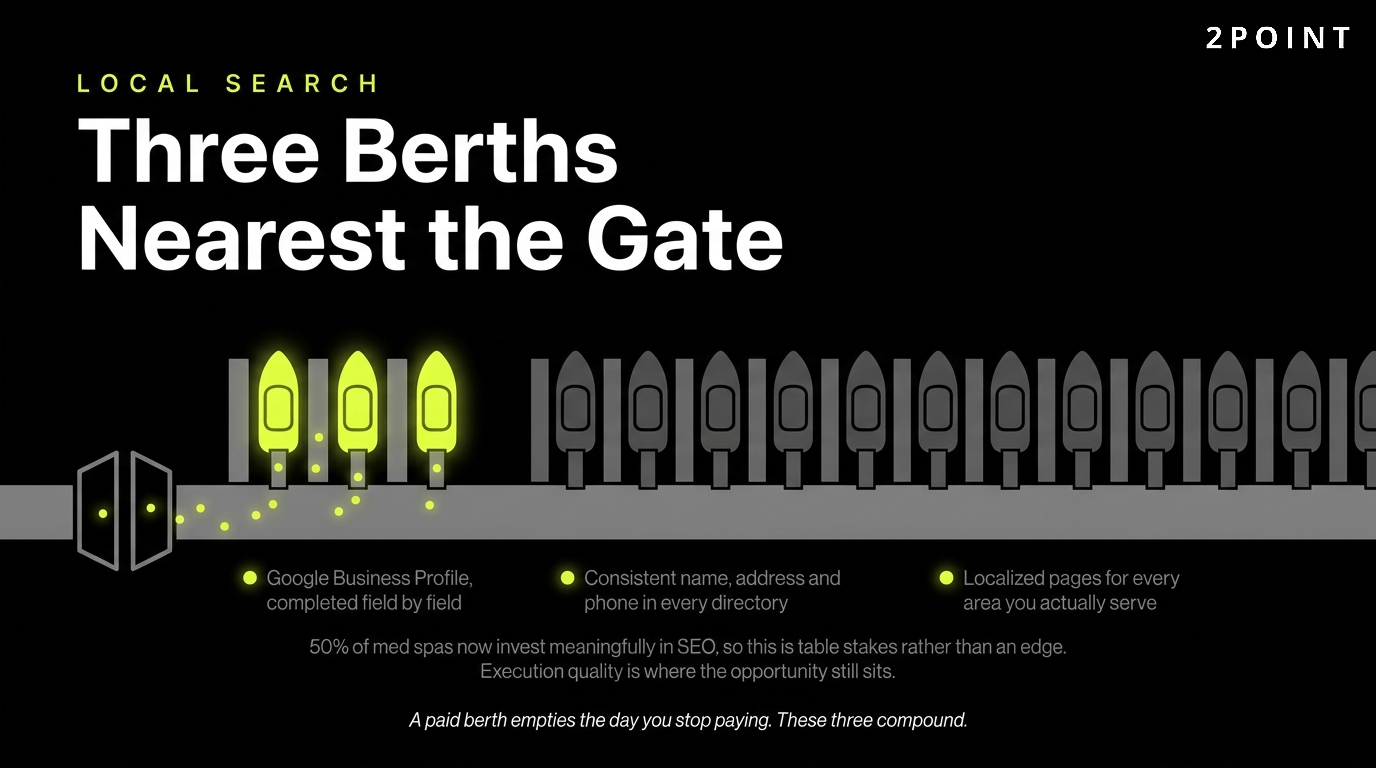
The three pillars of local SEO for med spas are: Google Business Profile optimization, local citation building (ensuring consistent name, address, and phone number across all directories), and localized website content. Each pillar reinforces the others, and neglecting any one of them creates gaps that competitors will exploit. Approaching local business marketing as a long-term investment rather than a quick fix is the mindset that produces lasting results.
Google Business Profile Optimization: A Step-by-Step Checklist
Your Google Business Profile is effectively a free mini-website that appears before your actual website in local search results. It is the first thing most patients see when they search for your practice by name or by treatment type in your area. An optimized profile can mean the difference between being in the map pack and being invisible to the majority of local searchers.
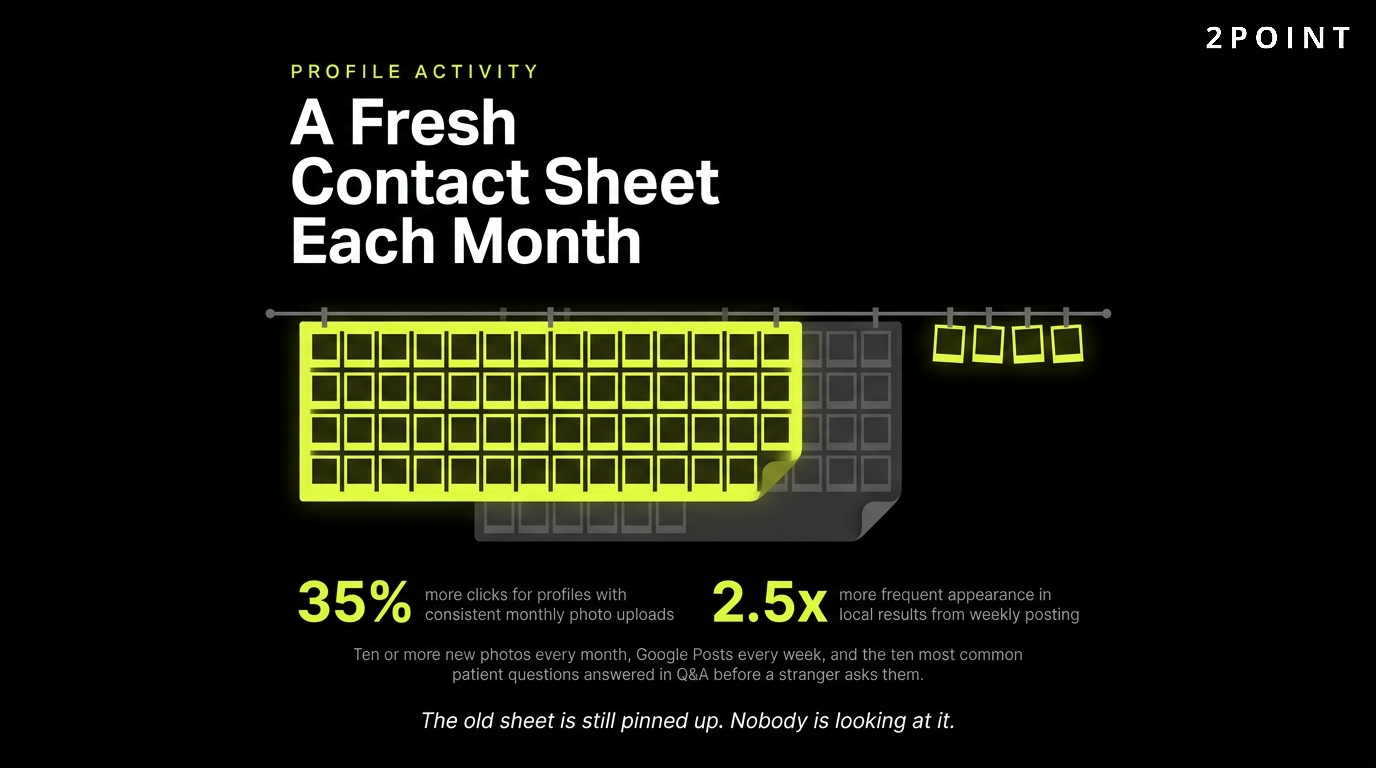
Follow these steps to fully optimize your Google Business Profile:
- Complete every available section: Write a keyword-rich business description (750 characters maximum), list every treatment you offer in the services section, add all relevant attributes (such as “women-owned,” “LGBTQ+ friendly,” “accessible”), set accurate hours including holiday hours, and add a direct appointment booking link to your scheduling system.
- Implement a consistent photo upload strategy: Upload 10 or more high-quality photos every month. Include exterior shots, interior and treatment room images, team photos, procedure photos, and compliant before-and-after images. Profiles with consistent monthly photo uploads see 35 percent more clicks than those with static galleries.
- Post weekly Google Business Profile updates: Google Posts about new treatments, seasonal promotions, educational content, and events stay live for seven days. Weekly posting keeps your profile active in the algorithm and gives searchers fresh reasons to engage. Consistent posting results in your profile appearing 2.5 times more frequently in local results.
- Proactively manage the Q&A section: Add and answer the ten most common patient questions before they are asked by strangers. Cover pricing ranges, insurance acceptance, recovery times, treatment candidacy, and booking process. This gives you control over the first impressions patients form from your profile.
- Build review velocity: Google heavily weights both the volume and recency of reviews. Aim for four or more new reviews every month, not a burst of twenty reviews in January followed by silence. Consistent review acquisition signals that your practice is active and continually serving patients.
The Review Acquisition System That Actually Drives Bookings
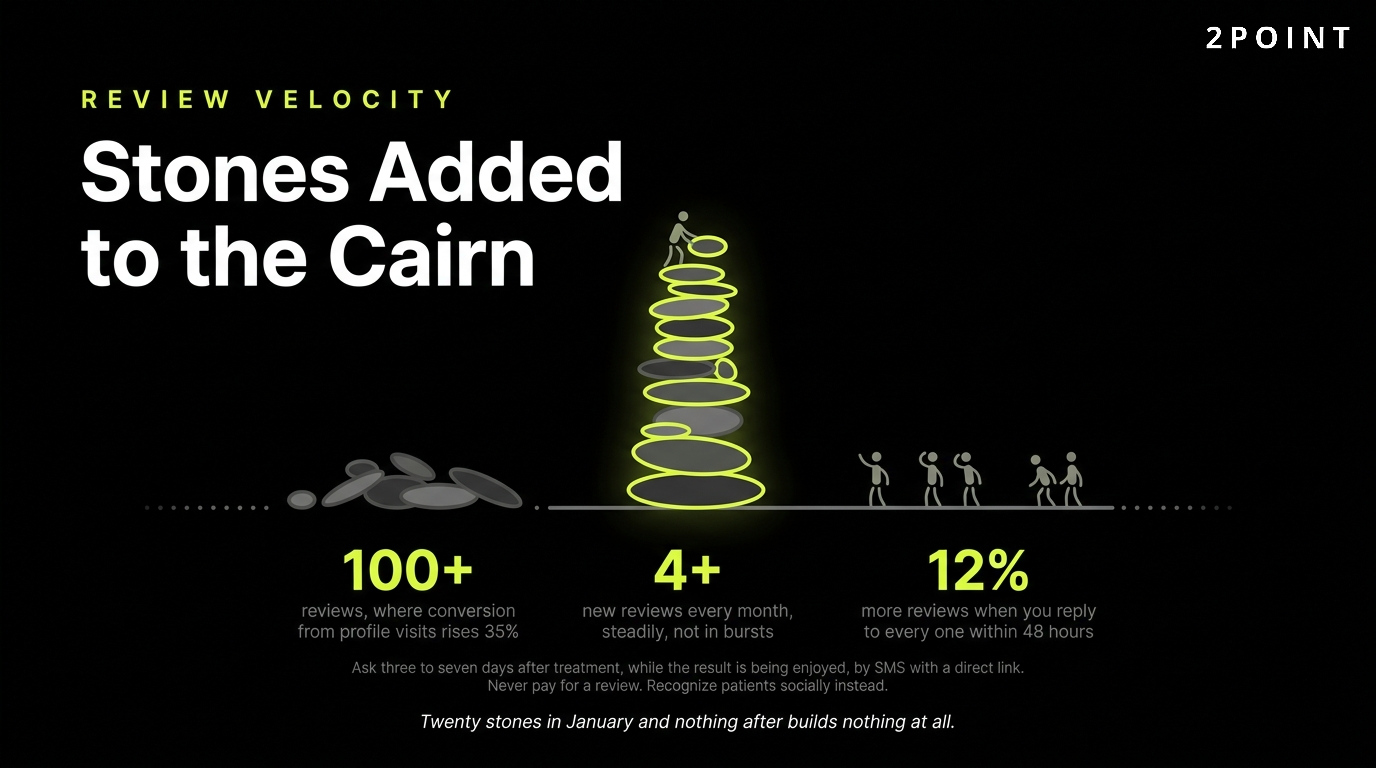
Reviews are the single most underutilized asset in medical spa marketing. They function simultaneously as a ranking signal for local SEO, a trust builder for potential patients, and an input that AI recommendation engines use when suggesting providers. Practices with 100 or more Google reviews see 35 percent higher conversion rates from profile visits to consultation bookings than those with fewer reviews, and that gap only widens as review count grows.
The most effective review acquisition system works like this. Time your review request carefully: send it three to seven days after the treatment, when the patient is experiencing and enjoying their results but the experience is still vivid. Deliver the request via automated SMS with a direct link to your Google review page, eliminating every possible point of friction. The message should be brief, personal, and specific to the treatment received rather than a generic blast.
Never offer financial incentives for reviews, as this violates Google’s policies. Instead, recognize patients socially through a featured patient spotlight on social media or include them in a quarterly appreciation drawing for complimentary services. The most important post-review action most practices neglect is consistent response. Respond to every review within 48 hours. Thank positive reviewers by name and reference something specific they mentioned. Address negative reviews professionally, express genuine concern, and invite the patient to contact you privately to resolve the situation. Responding to reviews increases future review volume by 12 percent, because it signals to other patients that their feedback will be seen and valued.
On-Site SEO: Optimizing Your Website for High-Intent Local Searches
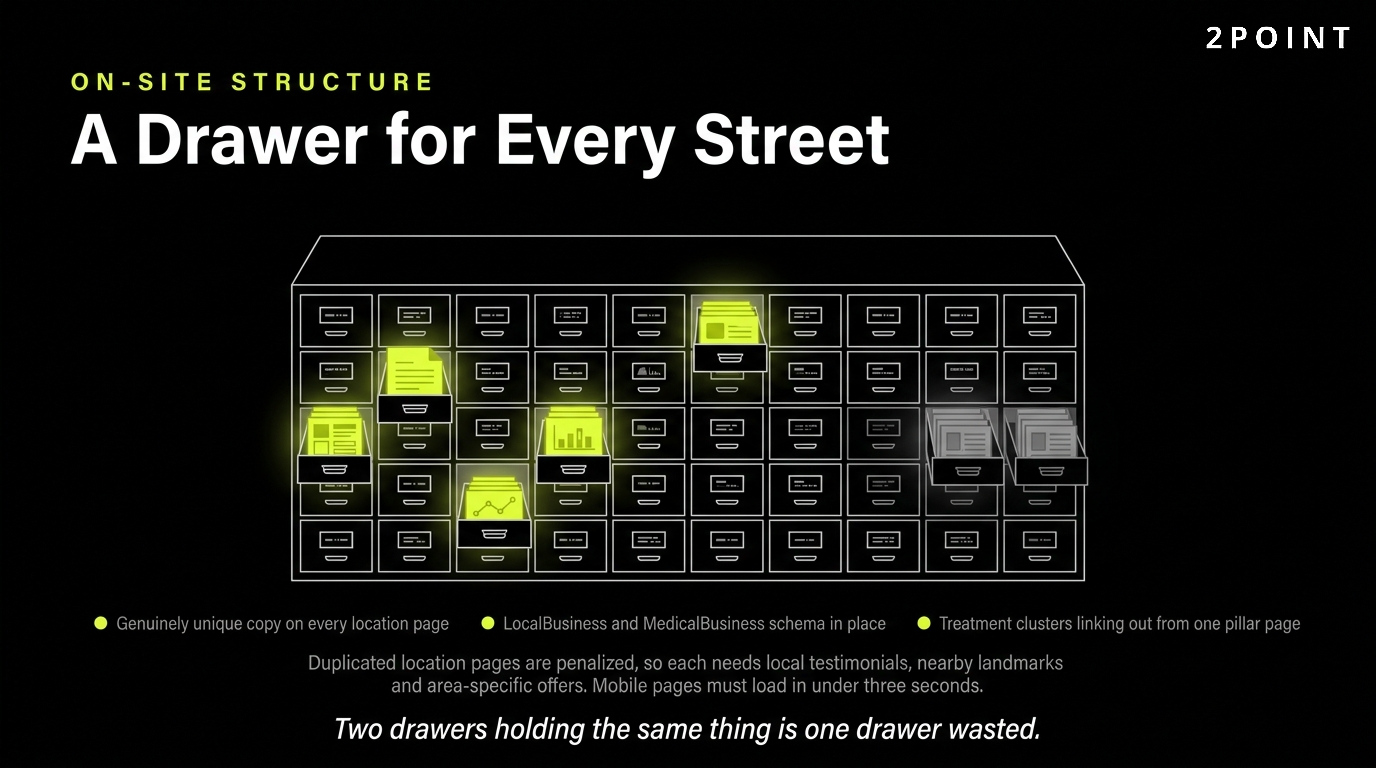
Your website must be optimized to capture patients who are searching for specific treatments in specific locations. This requires a deliberate content architecture that goes well beyond having a homepage and a services menu.
Create dedicated location-specific pages for every city or neighborhood you serve. Each page should contain unique, locally relevant content including testimonials from patients in that area, references to local landmarks or communities, and area-specific offers. Duplicate content across location pages is penalized, so invest in genuinely unique copy for each. Every service page should incorporate natural location modifiers, addressing phrases like “our [treatment] services in [city]” rather than leaving pages geographically generic.
Implement LocalBusiness and MedicalBusiness schema markup so Google understands your practice as a medical entity with specific services, providers, and a defined service area. Build content clusters around your highest-value treatments: a pillar page on Botox linking to supporting articles covering Botox versus Dysport comparisons, Botox cost guides for your city, and what-to-expect preparation content. This cluster structure signals topical authority, which Google rewards with higher rankings. Finally, ensure your site loads in under three seconds on mobile devices. Google’s mobile-first indexing means your mobile experience is your actual website in the algorithm’s eyes, and a slow mobile experience will suppress your rankings regardless of how strong your content is.
Answer Engine Optimization: Getting Your Med Spa Found by AI Search
Search behavior has changed fundamentally. A growing segment of patients no longer types a query into Google and clicks through a list of blue links. They ask an AI engine, receive a synthesized answer, and may never visit a traditional search result at all. For med spa owners, this shift represents both a threat and an opportunity.
Understanding the AI Search Revolution and Its Impact on Patient Acquisition
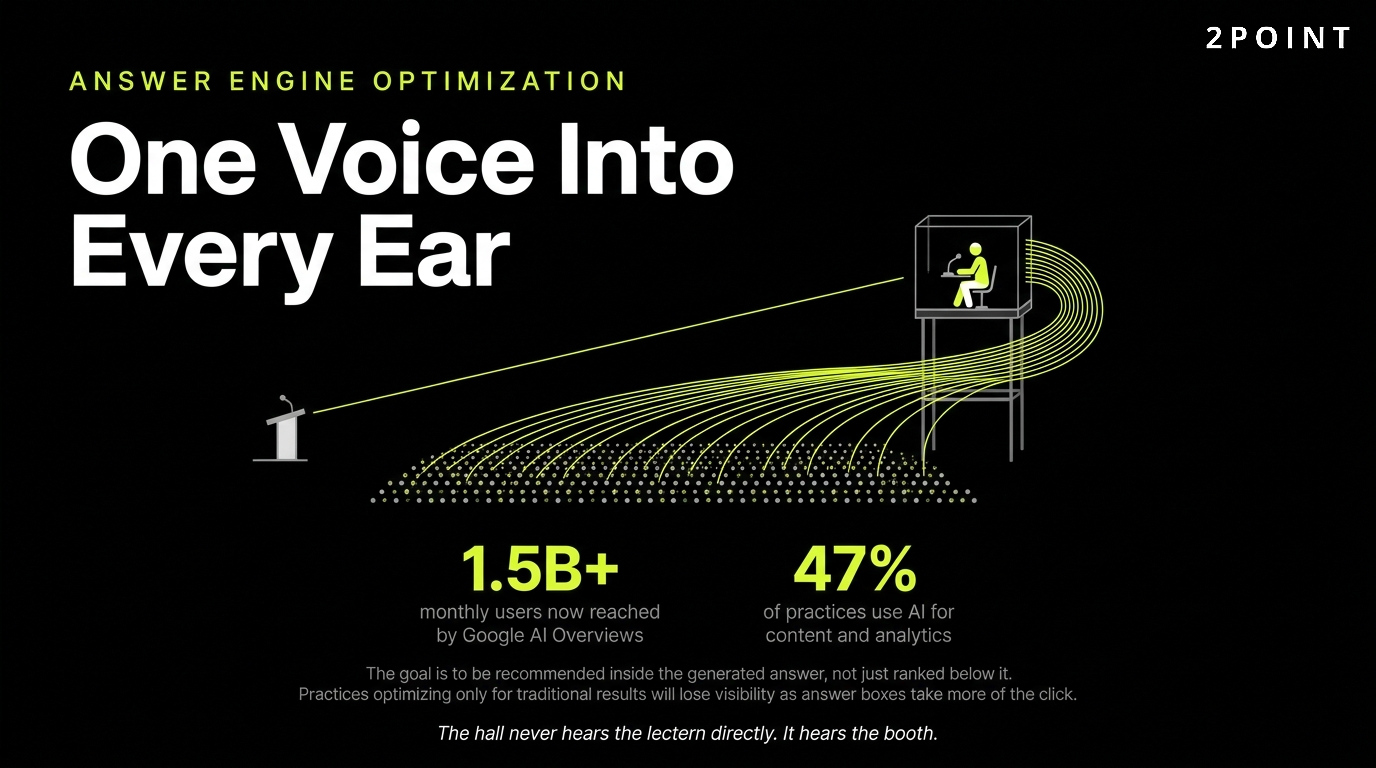
Google AI Overviews now reach 1.5 billion or more monthly users, appearing at the top of results for the majority of informational health and beauty searches. ChatGPT answers questions about treatment candidacy and recovery times. Perplexity synthesizes research for patients comparing procedures. Voice assistants field questions like “What is the best med spa near downtown Austin?” across millions of smart devices daily.
This creates a discipline called Answer Engine Optimization (AEO), sometimes called Generative Engine Optimization (GEO). The goal is to get your practice recommended within AI-generated answers, not just ranked in traditional results that appear below the AI overview. 47 percent of practices now leverage AI for content creation and analytics, but far fewer have taken the deliberate steps needed to ensure their content feeds AI recommendation engines appropriately.
The patient journey Google now describes is no longer a linear funnel. It is a dynamic web of touchpoints where patients bounce between AI overviews, social media platforms, review sites, and practice websites before committing to a consultation. Your digital content needs to show up at every node of that web. Practices optimizing only for traditional SEO will steadily lose visibility as AI answer boxes capture an increasing share of clicks. Early adopters of AEO gain disproportionate competitive advantage in markets where most competitors have not yet recognized the shift.
How AI Engines Decide Which Med Spas to Recommend
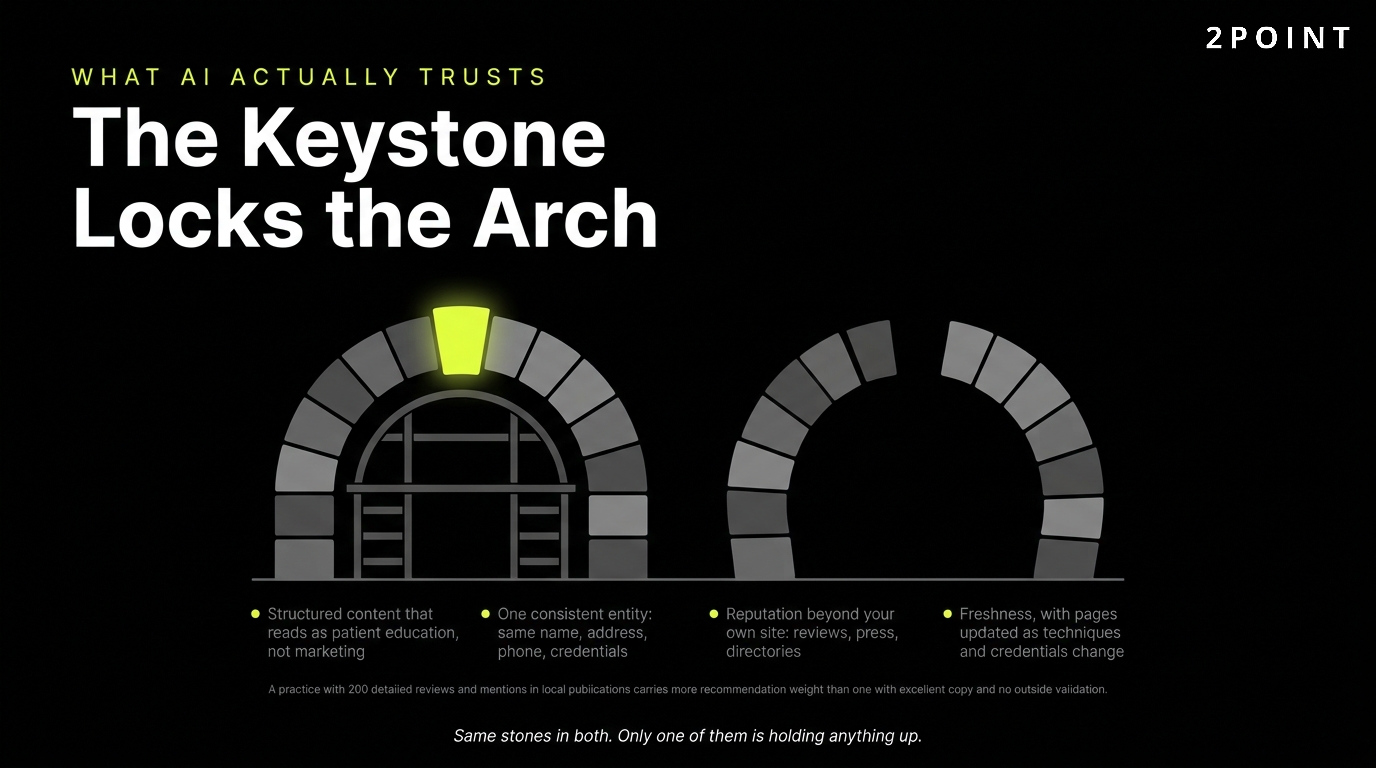
AI recommendation engines do not rank websites the same way traditional search algorithms do. Understanding what they favor is the foundation of effective AEO for aesthetic practices. The following factors drive AI recommendations in the aesthetic category:
- Authoritative, structured content: AI engines favor content with clear hierarchical structure, medical citations, and demonstrated clinical expertise. Treatment guides that read like patient education materials, not marketing copy, are pulled into AI answers far more frequently than promotional pages.
- Entity recognition: AI needs to identify your practice as a coherent entity on the web. Consistent name, address, and phone number across all platforms, clear provider bios with credentials, and structured data markup all help AI engines categorize and trust your practice as a legitimate medical business.
- Reputation signals across the web: AI engines aggregate reviews, media mentions, directory listings, and links from authoritative health and local sources. A practice with 200 detailed Google reviews, mentions in local lifestyle publications, and links from medical association sites carries far more AI recommendation weight than one with excellent website content but minimal external validation.
- Comprehensive question-focused content: Format your treatment pages to directly answer who, what, when, where, why, and how. AI engines extract answers from content that addresses questions explicitly. Pages that bury key information in paragraphs lose out to pages that surface answers in clearly formatted Q&A structures.
- Content freshness: AI engines favor active, current practices. Regularly update treatment pages with the latest techniques, new provider credentials, updated pricing context, and fresh before-and-after examples to signal that your information is current and reliable.
Content Formats That Win in AI-Driven Search
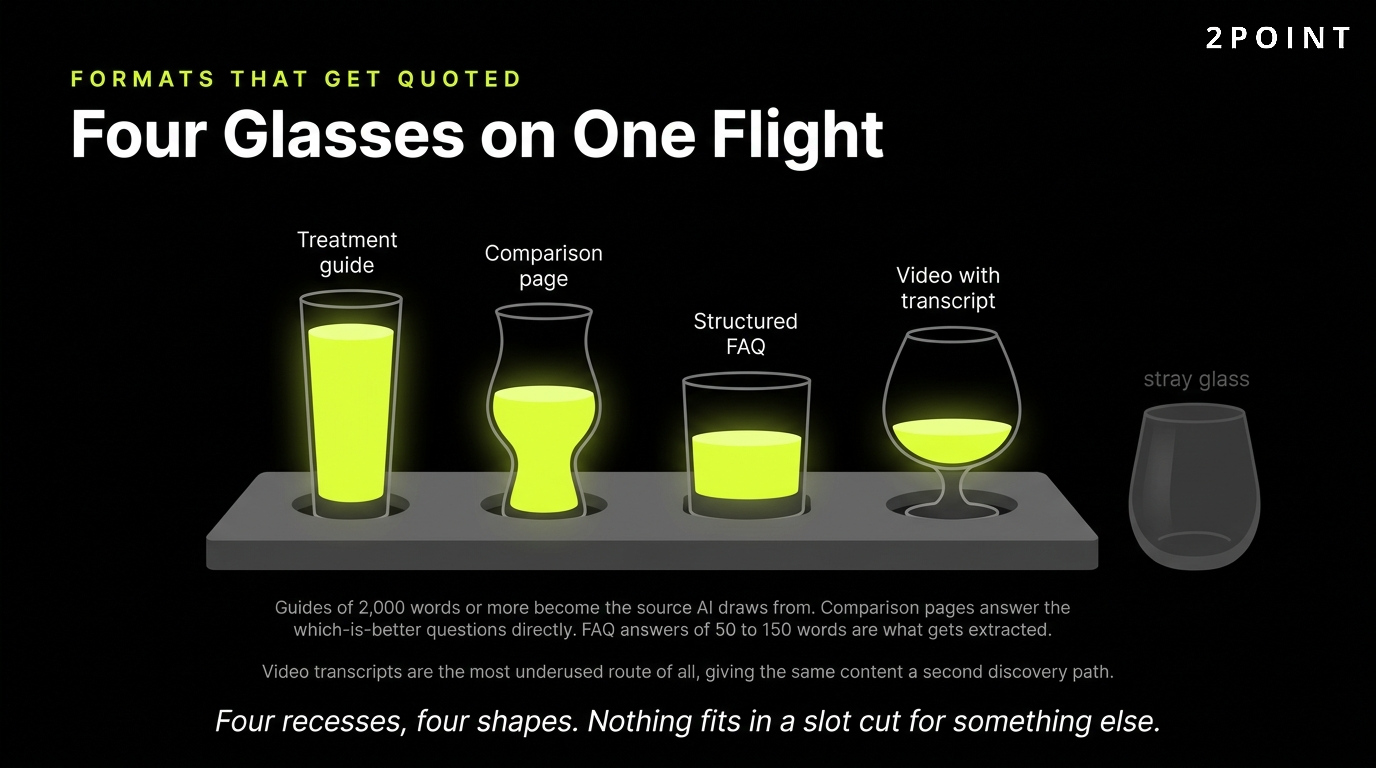
Not all content performs equally in AI search environments. The following formats consistently earn placement in AI-generated answers for aesthetic and med spa queries:
Comprehensive treatment guides of 2,000 words or more cover the full spectrum of patient questions about a procedure: what it is, ideal candidates, the treatment process, recovery timeline, expected results, realistic costs, and associated risks. These guides become the source material AI engines draw from when answering the treatment questions patients ask conversationally.
Comparison content performs exceptionally well because patients frequently ask “which is better” questions. Pages directly comparing Botox versus Dysport, CoolSculpting versus Emsculpt, or laser versus IPL for pigmentation give AI engines a clean, structured answer they can surface. These pages also capture patients deep in the decision phase, making them high-conversion traffic sources.
Structured FAQ pages with schema markup should accompany every major treatment page. Format each FAQ entry as a genuine question and answer pair, with concise answers of 50 to 150 words followed by detailed expansion. This structure is precisely what AI engines extract when building answer summaries. Combine this with content marketing best practices to build topical authority across your entire site.
Video content with full transcripts represents an underutilized AI visibility opportunity. Upload treatment explanation videos to YouTube, embed them on your site, and include complete transcripts. AI engines can parse and extract from transcripts, giving your video content an additional discovery pathway that most practices are not exploiting.
Implementing Schema Markup for AI Discoverability
Schema markup is structured data code that explicitly communicates the meaning of your content to search engines and AI systems. Think of it as a translation layer: while your website content communicates with human readers, schema markup communicates the same information in a format that machines can parse precisely. For med spas, schema implementation is one of the highest-ROI technical SEO investments available.
The essential schema types for medical spa websites are: LocalBusiness and MedicalBusiness schema covering your practice name, address, phone, hours, service area, and accepted payment methods; Service schema listing every treatment as a distinct offering with description and service area; Person schema for each provider including credentials, education, and specialties; FAQPage schema marking up all FAQ sections for direct AI extraction; and Review schema enabling aggregate star rating display in search results.
Most modern website platforms, including WordPress with popular SEO plugins, Wix, and Squarespace, include schema tools that require minimal technical knowledge. For custom-built sites, Google’s Structured Data Markup Helper generates the necessary code. Always test your implementation using Google’s Rich Results Test tool to confirm your schema is error-free and eligible for enhanced display. Schema is invisible to human visitors but dramatically improves how AI engines and search algorithms understand, categorize, and recommend your practice.
Med Spa Social Media Marketing: Building an Audience That Books
Social media is where aesthetic practices build the visual trust that converts curious followers into booked patients. The key word is “build.” Social media marketing done well is a long-term brand asset, not a quick acquisition channel. Understanding platform dynamics, content strategy, and engagement mechanics is what separates accounts that drive revenue from those that simply consume time.
Platform Selection: Where Your Patients Actually Are
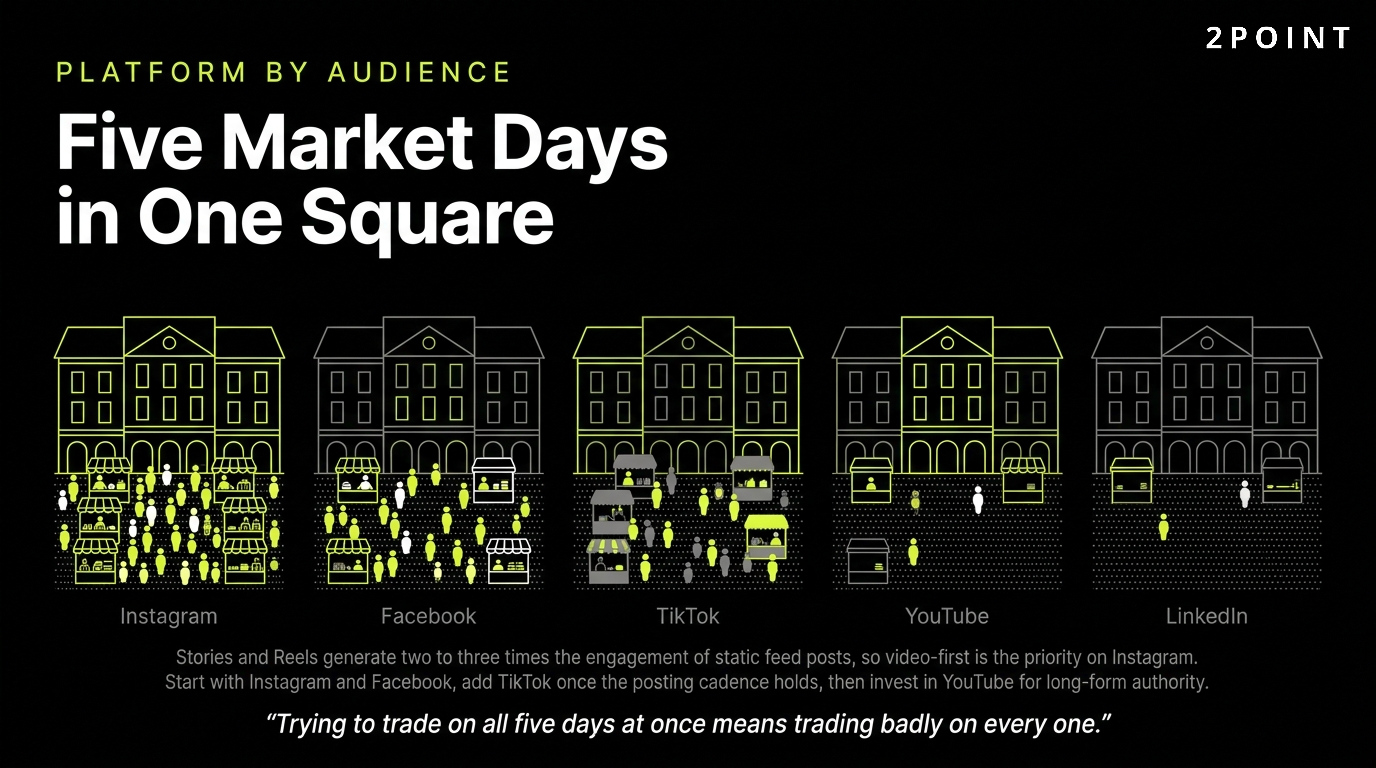
The most common mistake in med spa social media marketing is trying to maintain a strong presence on every platform simultaneously. Resource dilution produces mediocre content everywhere rather than excellent content where it matters. The right approach is strategic concentration based on where your specific patient demographics spend their time.
| Social Platform | Primary Patient Demographic | Best Content Types for Med Spas | Key Advantage |
|---|---|---|---|
| Ages 25 to 54, higher income | Before-and-afters, Reels, Stories, educational carousels | Highest visual engagement for aesthetic content | |
| Ages 40 and above, local community | Long-form education, event promotion, detailed testimonials | Most sophisticated local ad targeting | |
| TikTok | Ages 18 to 35 | Treatment demystification, trending audio, day-in-the-life | Viral reach potential, fastest-growing aesthetic audience |
| YouTube | All ages, research phase | Procedure explanations, provider Q&As, patient journeys | Authority building, AEO transcript indexing |
| High-net-worth professionals | Thought leadership, B2B partnerships, staff recruitment | Premium demographic access, referral partnerships |
The most effective starting strategy for most med spas is to establish Instagram and Facebook first, add TikTok once a consistent posting cadence is in place, and then invest in YouTube for long-form authority content. Choosing the right social media platforms based on your patient demographics is more valuable than maintaining a superficial presence everywhere. Instagram Stories and Reels generate two to three times higher engagement than static feed posts, making video-first content the priority for practices building their Instagram presence.
The 70/20/10 Content Framework for Aesthetic Practices
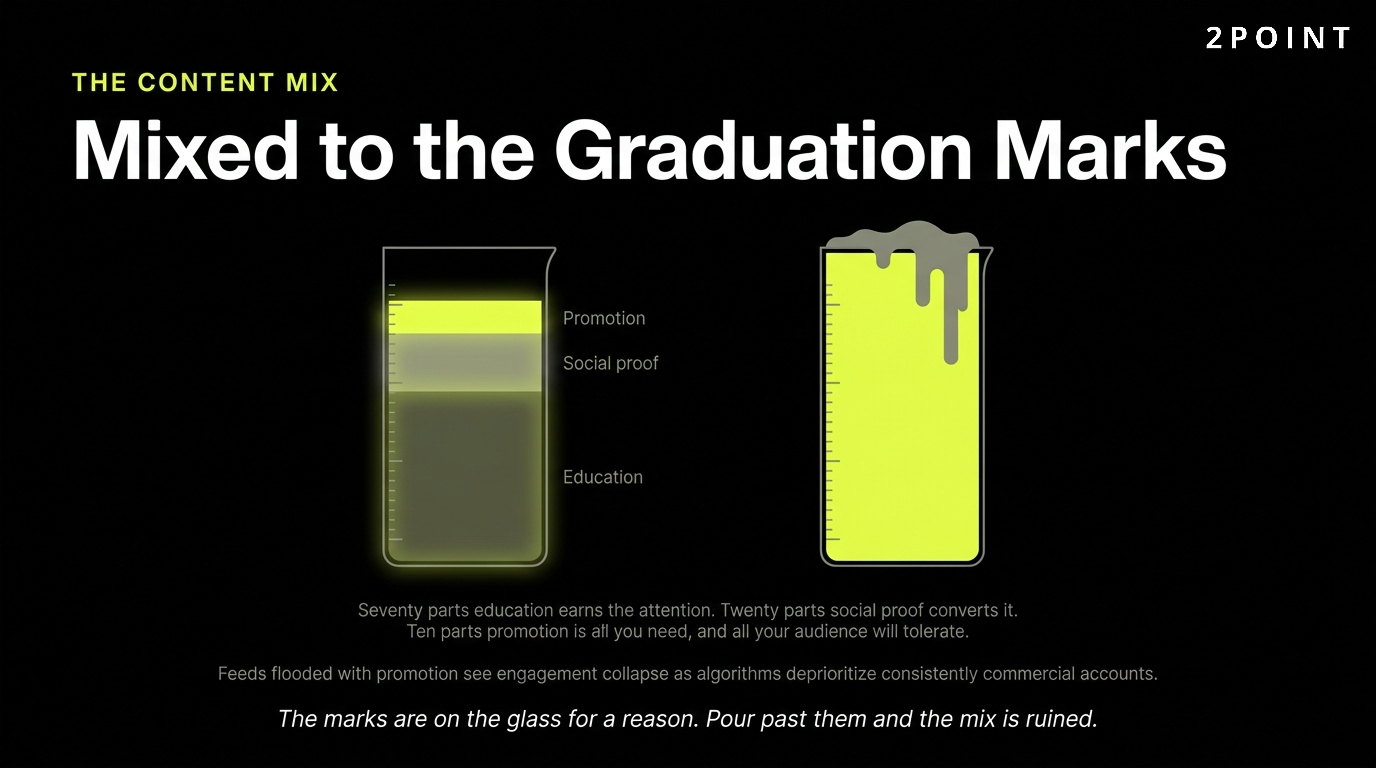
The most sustainable and effective content mix for med spa social media follows the 70/20/10 framework. This structure balances value delivery with social proof and direct promotion in proportions that match how patients actually move through the decision journey.
70 percent educational content builds the authority and trust that makes your other content convert. Treatment explainers, skincare ingredient breakdowns, myth-busting posts, procedure process videos, recovery timelines, and answers to common patient questions all belong here. Educational content earns attention, encourages saves and shares (the highest-value engagement signals), and positions your providers as genuine experts rather than service vendors. Strong examples include: “Three signs you may be ready for Botox,” “How to maximize your CoolSculpting results,” and “Why retinol and vitamin C should not be layered at night.”
20 percent social proof content converts engaged followers into booked patients. Before-and-after photos with proper patient consent and compliant disclaimers are the most powerful format in this category. Video testimonials, review highlights, detailed case study posts, and patient transformation stories all build the trust that closes the gap between interest and action. Authentic patient stories, when shared with permission and sensitivity, routinely outperform any branded content in engagement and booking conversion.
10 percent promotional content delivers direct commercial calls to action: special offers, package announcements, new service launches, and limited-time booking incentives. Keeping promotional content at 10 percent ensures that when you do promote something, your audience is engaged and receptive rather than conditioned to ignore you. Practices that flood their feeds with promotions see engagement collapse and organic reach drop as algorithms deprioritize consistently commercial accounts. A well-executed social media marketing plan balances these proportions deliberately rather than posting reactively.
Visual Content Best Practices and Compliance Requirements
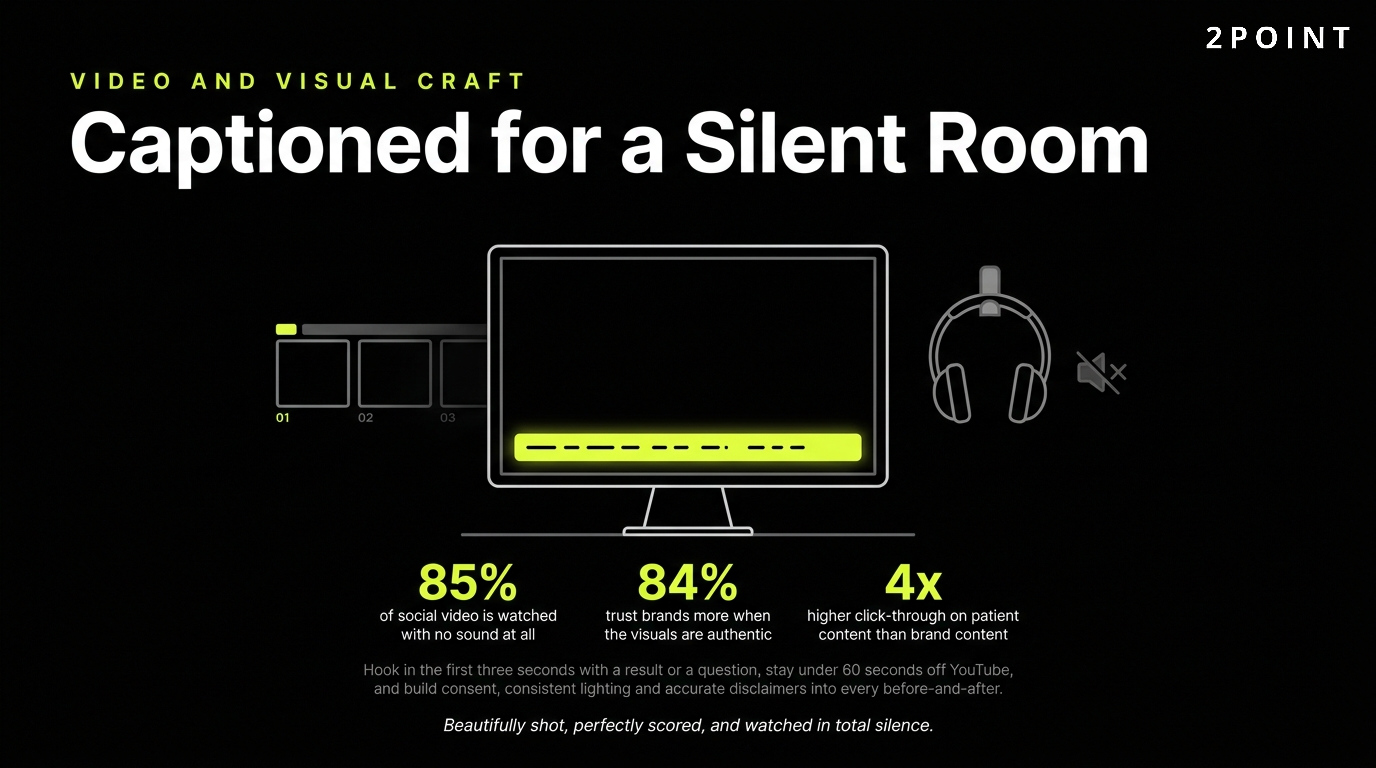
84 percent of consumers trust brands more when marketing includes authentic visual content. For med spas, before-and-after photography is the most powerful trust-building tool available. However, compliance is non-negotiable and must be built into every step of your visual content workflow.
For before-and-after photos, obtain written consent using HIPAA-compliant release forms that explicitly specify use in digital marketing materials. Photograph results using consistent lighting, angles, and positioning so that comparisons reflect genuine treatment outcomes rather than photography tricks. Include clear, accurate disclaimers such as “Results may vary” and “Multiple treatments shown” where applicable. Never publish graphic procedure-in-progress images without an appropriate content warning, and watermark all images to prevent unauthorized use by competitors.
For video content, the most important technical rule is to always add captions. 85 percent of social media video is watched without sound, making captioning essential for your message to land. Hook viewers in the first three seconds with a result or a compelling question rather than a logo animation or slow introduction. Keep social platform videos under 60 seconds unless you are publishing on YouTube. Use trending audio on Instagram and TikTok where it fits naturally, as algorithmic distribution rewards content that participates in platform trends.
User-generated content deserves a dedicated strategy. UGC generates four times higher click-through rates than brand-created content because it signals authenticity that no amount of professional production can replicate. Create a branded hashtag, feature patient content monthly with proper permission and attribution, and build a culture where patients feel proud to share their experiences. This turns satisfied patients into an organic marketing channel that compounds with every new satisfied patient you add.
Engagement Tactics That Build a Community Around Your Practice
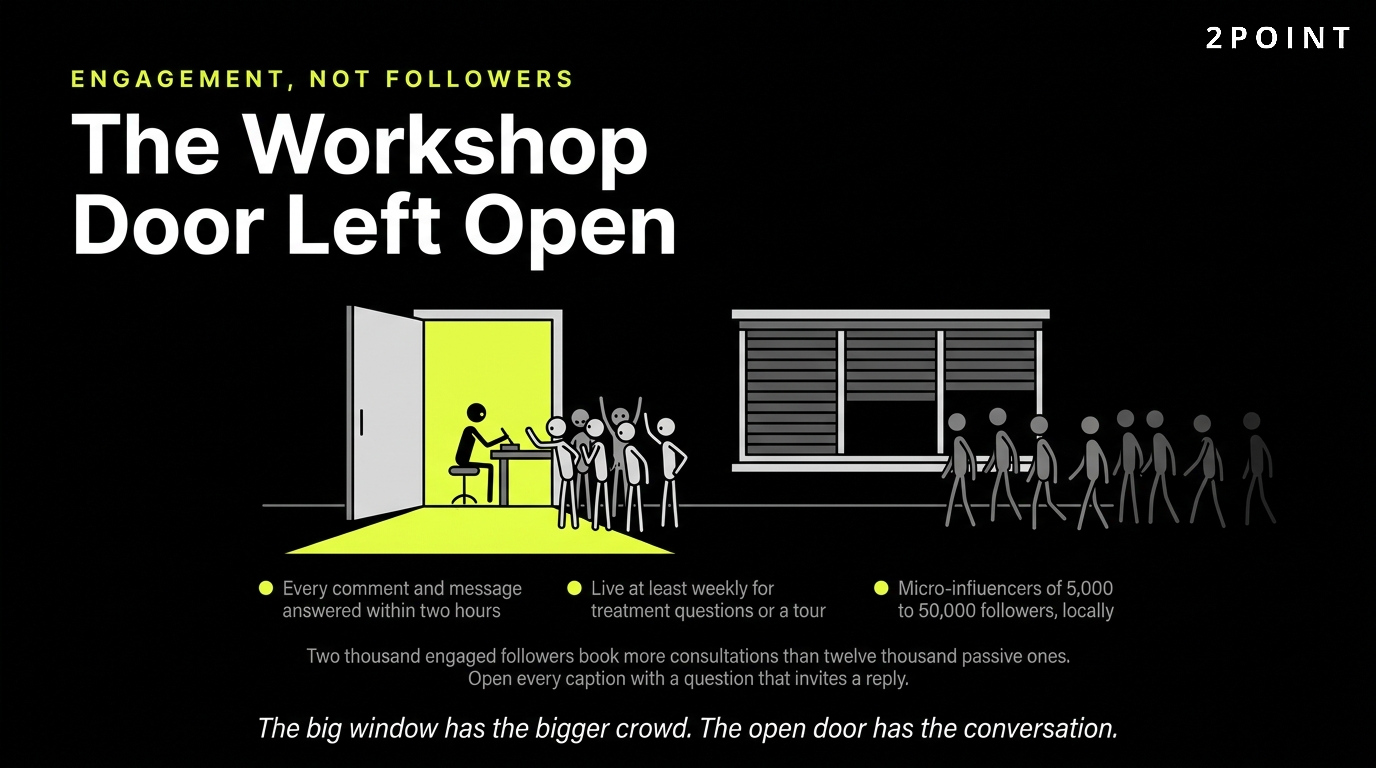
Follower count is a vanity metric. Engagement rate, calculated as total interactions divided by total followers, is the metric that predicts business outcomes. A med spa account with 2,000 highly engaged followers will generate more consultation bookings than one with 12,000 passive followers who scroll past without interacting. Building community requires deliberate, consistent engagement tactics rather than passive content publishing.
Start every caption with a question or a perspective that invites a response. “What is your biggest skincare concern right now?” or “Which treatment would you try first?” generates comments that signal the algorithm to distribute your content more widely. Use Instagram Stories features including polls, question stickers, and quiz formats to create low-friction interaction. These features also provide genuinely useful patient feedback that can inform your service development and marketing messaging.
Respond to every comment and direct message within two hours during business hours. Fast response rates increase booking likelihood directly (patients who receive quick answers are more likely to convert) and signal to the platform algorithm that your account is active and high quality. Go live at least weekly on Instagram or Facebook for treatment Q&A sessions, facility tours, or provider interview formats. Live video receives algorithmic priority in feeds and triggers push notifications to followers, giving you a direct communication channel that bypasses the standard content distribution algorithm.
Micro-influencer partnerships in the 5,000 to 50,000 follower range within your local market deliver a combination of authentic credibility and targeted reach that celebrity influencers rarely match. Negotiate arrangements where the influencer documents their genuine treatment experience in exchange for complimentary services, rather than scripted promotional posts. Authentic documentation of real results is more persuasive than polished promotional content, and it aligns with the research-heavy purchasing behavior that characterizes your target patient. Understanding social media engagement metrics helps you evaluate whether influencer partnerships are actually delivering results or just impressions.
Paid Advertising Strategies for Medical Spa Patient Acquisition
Organic marketing builds brand equity over time, but paid advertising fills your consultation calendar now. The most effective med spa marketing systems use both in parallel, with paid ads generating immediate bookings while SEO and content build the long-term foundation. Getting paid advertising right requires platform knowledge, targeting discipline, and rigorous measurement.
Google Ads for Med Spas: Capturing High-Intent Search Traffic
Google Search advertising is the highest-intent paid channel available to medical spa marketers. When someone searches “Botox clinic near me” or “CoolSculpting cost in [city],” they are not browsing for entertainment. They are actively looking for a provider. Google Ads places your practice in front of that intent at the precise moment it exists, which is why search advertising typically delivers the highest conversion rates of any paid channel in the aesthetic category.
Effective Google Ads campaigns for med spas are built around tight keyword groupings organized by treatment category and intent stage. Branded campaigns capture patients searching your practice name directly. Treatment-specific campaigns target high-value procedures like Botox, fillers, laser treatments, and body contouring. Competitor campaigns (bidding on competitor brand names, which is legally permissible) capture patients considering alternatives. Use exact match and phrase match keyword types to avoid wasting budget on irrelevant searches, and build extensive negative keyword lists to exclude terms like “at home,” “DIY,” and generic research terms that signal non-booking intent.
Responsive Search Ads allow you to provide multiple headline and description variations that Google automatically tests and optimizes. Supplement these with call extensions (enabling click-to-call directly from the ad), location extensions (showing your address and distance), and sitelink extensions directing to specific treatment pages, the booking page, and the before-and-after gallery. Your landing pages must match the specific treatment and promise of each ad closely. A patient clicking a Botox ad who lands on your homepage will bounce at a much higher rate than one who lands on a dedicated Botox page answering their specific questions and offering a clear booking path.
Meta Advertising: Building Intent and Driving Consultations on Facebook and Instagram
While Google captures existing demand, Meta advertising on Facebook and Instagram builds demand by reaching patients who match your target demographic but have not yet expressed active treatment intent. This distinction shapes your entire creative and targeting strategy on the platform.
Meta’s custom audience and lookalike audience tools are among the most powerful targeting capabilities available to med spa marketers. Upload your existing patient list to create custom audiences for retargeting, then build lookalike audiences that Meta populates with users whose demographic and behavioral profiles match your best patients. Layer in interest-based targeting (skincare, wellness, cosmetic procedures) and demographic filters (age ranges, income indicators, location radius) to refine your audience further. The most effective Meta campaigns run a three-stage funnel: awareness content (educational Reels and before-after photos) for cold audiences, consideration content (testimonials, treatment walkthroughs, provider credentials) for warm audiences who engaged with your awareness content, and direct conversion campaigns (consultation booking offers, limited-time specials) for hot audiences who have visited your website or engaged repeatedly with your content.
Creative quality is the primary performance lever on Meta. Scroll-stopping visuals, authentic patient testimonials, and video content that demonstrates results outperform generic promotional graphics by significant margins. Test two to four creative variations per ad set simultaneously, let Meta’s algorithm identify winners with statistical confidence, then scale the winning creative while continuing to test new variations. Budget creep is the most common failure mode: pausing winning campaigns to try new concepts resets Meta’s learning algorithm and costs you accumulated performance data. Make incremental adjustments rather than campaign rebuilds whenever possible. Exploring the pros and cons of different digital marketing platforms helps practices decide where to concentrate paid advertising resources.
Retargeting Campaigns: Converting the Patients Who Almost Booked
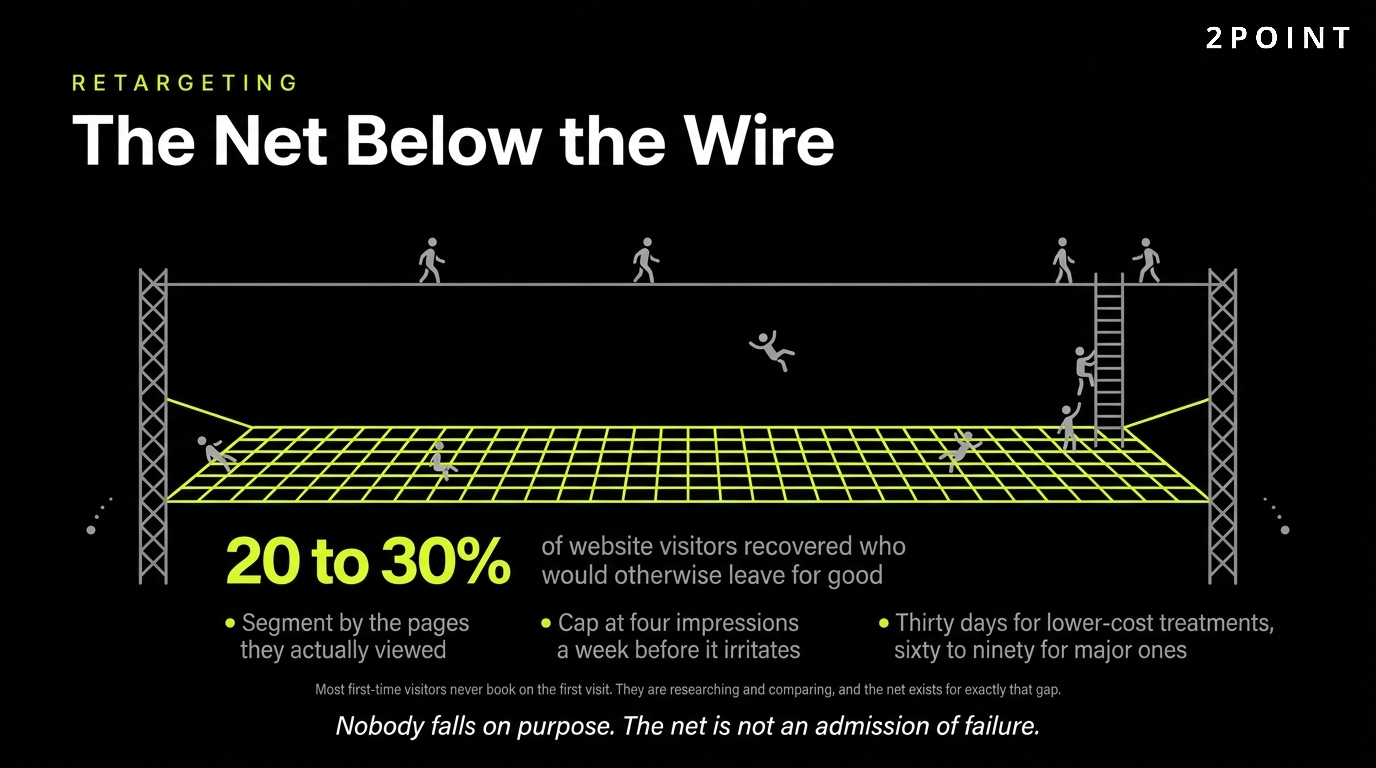
The majority of patients who visit your website for the first time do not book on that first visit. They are researching, comparing, and building trust before committing. Retargeting campaigns re-engage this warm audience with customized messaging that acknowledges their prior interest and provides the nudge needed to convert.
Install the Meta Pixel and Google Ads remarketing tag on every page of your website to build retargeting audiences automatically. Segment these audiences by the pages they visited: patients who viewed your Botox page receive Botox-specific retargeting, those who visited the pricing page receive offers with consultation value messaging, and those who started but abandoned your booking form receive urgent, friction-reducing ads that simplify the next step. Dynamic retargeting ads that automatically feature the specific treatment a patient viewed generate significantly higher conversion rates than generic “come back and book” messages.
Set frequency caps on retargeting campaigns to prevent overexposure. Seeing your ad more than four times per week creates annoyance rather than conversion intent, and it can damage brand perception. Time-limit your retargeting windows based on your typical patient consideration cycle: 30 days for lower-cost treatments and 60 to 90 days for high-investment procedures where the research phase is naturally longer. A well-structured retargeting system can recover 20 to 30 percent of website visitors who would otherwise leave without booking, dramatically improving the return on every dollar you spend on traffic acquisition.
Email and SMS Marketing Automation for Med Spa Patient Retention
The highest-ROI channel in the entire med spa marketing ecosystem is also one of the most underutilized: email marketing. With email generating $36 for every $1 spent, building and nurturing a patient email and SMS list is not optional for practices that want predictable revenue. Automation makes this scalable without adding staff hours.
Building Your Email and SMS List from Every Patient Touchpoint
Every interaction your practice has with a current or prospective patient is an opportunity to capture contact information for ongoing communication. The key is making list enrollment feel like a benefit rather than a marketing transaction. Offer something genuinely valuable in exchange for contact details: a downloadable treatment guide, a skincare quiz with personalized recommendations, early access to new service announcements, or membership in a VIP rewards program. These exchanges build a list of engaged contacts rather than a collection of emails from patients who forget they signed up.
Collect email and SMS opt-ins at every touchpoint: website forms (exit-intent popups, embedded forms on treatment pages, consultation request forms), in-practice intake forms with explicit digital communication consent, social media lead generation ads, and post-visit follow-up sequences that invite patients to join your communications list. Maintain strict HIPAA compliance in all patient communication workflows, particularly when referencing treatment history or health information in email or SMS content. Work with your practice management software or a healthcare-compliant email platform to ensure your automation sequences meet regulatory requirements. The benefits of email marketing automation are most fully realized when your list is built with genuine patient consent and maintained with consistent, valuable communication.
Automated Email Sequences That Nurture Patients Through the Journey
Marketing automation allows your practice to deliver personalized, timely communication to every patient without manual effort. The following automated sequences cover the most impactful stages of the med spa patient journey:
New lead nurture sequence: When a prospective patient submits a contact form or books a consultation, trigger an immediate confirmation email followed by a three to five email sequence over 14 days. Email one confirms the booking with clear preparation instructions. Email two introduces the specific provider they will see with credentials and a brief personal bio. Email three addresses the three most common concerns patients have before their first appointment. Email four features two or three relevant patient testimonials. Email five delivers a pre-appointment reminder with directions, parking information, and what to bring.
Post-treatment follow-up sequence: Send a care instructions email immediately after treatment. Follow up at day three to check on recovery and answer questions. At day seven, send the review request SMS (timed for peak satisfaction). At day 30, provide a results check-in with content about what to expect at the one-month mark. At day 60 to 90 (depending on treatment), send a rebooking reminder with the specific timing recommendation for their next appointment. This sequence converts one-time patients into loyal long-term clients without requiring staff to make individual calls.
Re-engagement campaigns: Identify patients who have not visited in six months and deploy a re-engagement sequence featuring their past treatment, before-and-after results, and a personalized incentive to return. These campaigns consistently generate returns because they reach patients who already trust your practice and are simply out of the habit of booking, not actively seeking a different provider. A marketing automation workflow that covers all three of these sequences operates like a silent, always-on retention engine for your practice.
SMS Marketing: The Highest Open-Rate Channel in Your Stack
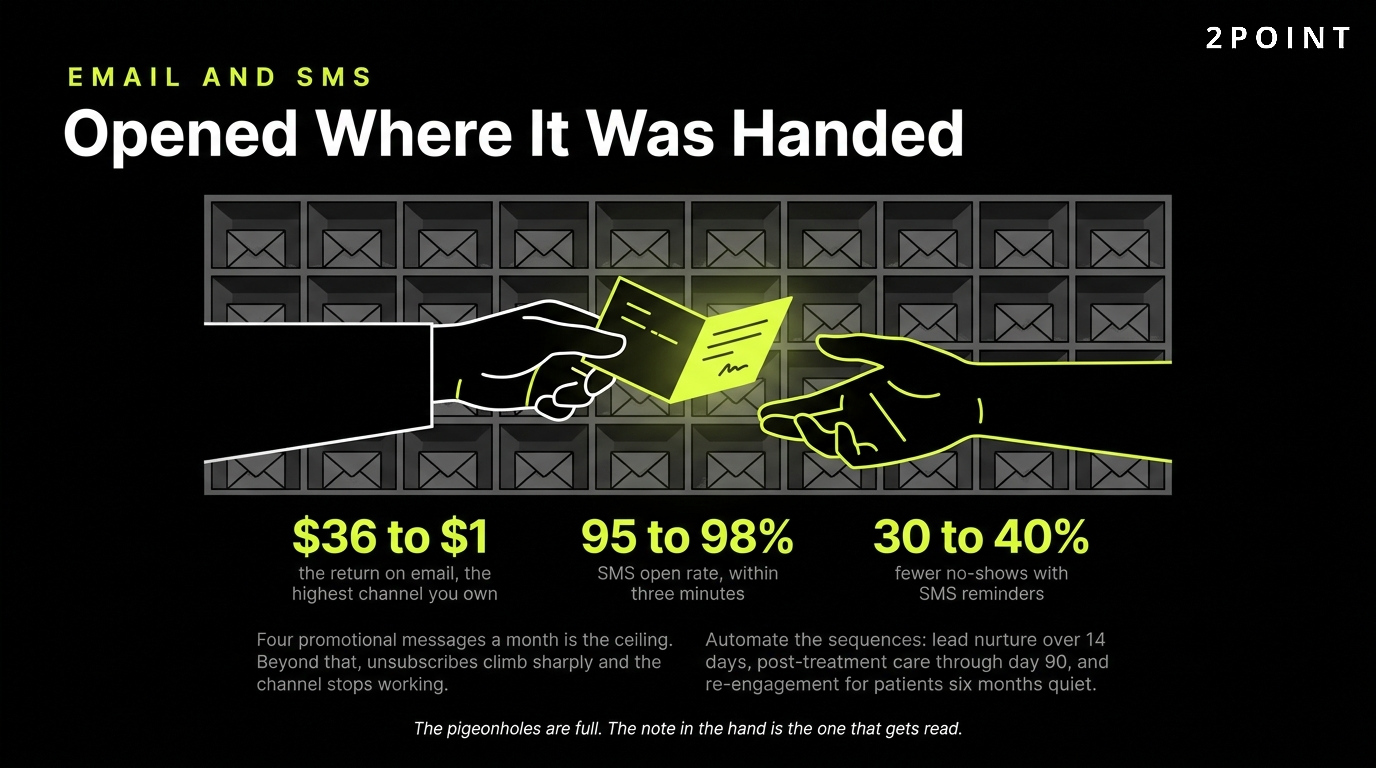
SMS marketing achieves open rates of 95 to 98 percent within three minutes of delivery, a performance level that no other marketing channel approaches. For appointment reminders, time-sensitive promotions, and review requests, SMS is the most reliable way to reach patients with the expectation of nearly immediate engagement.
Use SMS for appointment confirmations and reminders (reducing no-show rates by 30 to 40 percent), same-day booking opportunities when cancellations open appointment slots, flash promotions valid for 24 to 48 hours creating genuine urgency, post-treatment check-ins demonstrating care beyond the appointment, and review request messages with direct Google links. Always obtain explicit SMS marketing consent separate from appointment reminder consent, and include clear unsubscribe instructions in every promotional SMS. Maintain a cadence of no more than four promotional SMS messages per month. Beyond that frequency, unsubscribe rates climb sharply and patient goodwill erodes, defeating the purpose of the channel entirely.
Patient Retention Programs and Membership Models
The most profitable med spas in 2026 have solved the retention equation. They understand that the cost of acquiring a patient once and keeping them for five years is far lower than acquiring five different patients to fill the same revenue. Building structured retention programs is the strategic investment that compounds the return on every other marketing dollar you spend.
Membership Models: Creating Predictable Revenue and Loyal Patients
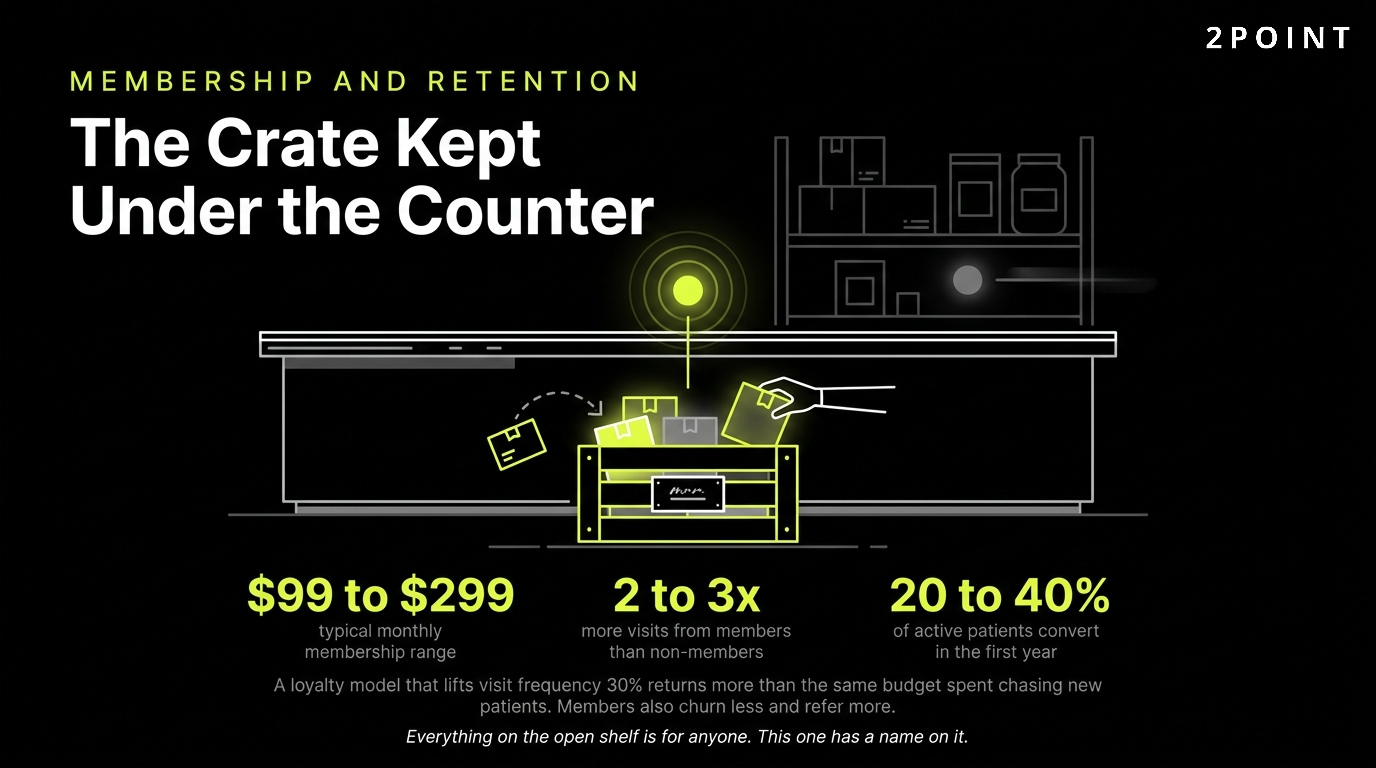
Membership programs transform transactional patient relationships into subscription relationships that generate predictable monthly revenue. A well-designed med spa membership typically offers a monthly fee in the range of $99 to $299 in exchange for a defined package of treatments, a significant discount on additional services, and member-exclusive benefits like priority booking, early access to new treatments, and birthday bonuses.
The business case for membership models is compelling. Members visit two to three times more frequently than non-members, their average transaction value is higher because they are already on a monthly commitment, their churn rate is lower because the sunk cost of membership creates inertia toward continued engagement, and they refer friends at higher rates because they are invested advocates rather than occasional customers. Practices that launch membership programs typically see 20 to 40 percent of their active patient base convert within the first year, with that cohort generating disproportionate revenue relative to their size.
Design your membership tiers to match your patient segments. An entry-level tier at $99 per month might include one monthly facial or injectables unit discount and 10 percent off all services. A mid-tier at $179 might include a monthly treatment plus 20 percent off and a quarterly skin analysis. A premium tier at $299 might include a monthly treatment, 25 percent off all services, and priority same-day booking. Market the program through your email list, in-practice consultations, and social media, and train your front desk team to present it as a value addition rather than an upsell. Customer-centric marketing principles emphasize designing these programs around what genuinely serves the patient, because programs that feel like a value receive enthusiastic word-of-mouth promotion while those that feel exploitative generate churn and resentment.
Loyalty Programs and Referral Systems That Drive Word-of-Mouth Growth
Loyalty points programs provide a lighter-weight retention mechanism for patients who are not ready for membership but who benefit from an incentive structure that rewards ongoing engagement. Award points for every dollar spent, for completing patient satisfaction surveys, for referring friends, for writing reviews, and for engaging with your social media. Create a clear, visible rewards structure where points translate to treatment credits, product discounts, or complimentary add-ons.
Referral programs are among the most cost-efficient patient acquisition channels available to med spas. A referred patient costs a fraction of what a paid advertising acquisition costs, arrives with pre-existing trust because a friend vouched for your practice, and tends to have a higher lifetime value than acquisition-channel patients. Build a structured referral incentive: give both the referring patient and the new patient a meaningful credit toward their next service. Make the program easy to share with a digital referral link rather than a paper card. Track referral attribution carefully so you understand which of your existing patients are your most valuable word-of-mouth ambassadors, and nurture those relationships with VIP recognition and exclusive benefits.
Paid Advertising, Budgeting, and Measuring Med Spa Marketing ROI
Strategic budget allocation and rigorous measurement are what separate med spa marketing that grows practices from marketing that simply costs money. Without a clear framework for how to invest and how to evaluate returns, even excellent tactical execution produces unpredictable results.
How to Set Your Med Spa Marketing Budget
The industry benchmark for medical spa marketing investment is 8 to 12 percent of gross revenue. A practice generating $1 million annually should invest $80,000 to $120,000 in marketing. A practice generating $500,000 annually should invest $40,000 to $60,000. Practices in growth mode, actively expanding their patient base, should invest at the higher end of this range. Established practices with strong referral engines and high retention rates can often maintain growth at the lower end.
Budget allocation across channels depends on your practice’s current growth stage. The following table provides a recommended allocation framework for practices at different revenue levels and growth phases:
| Marketing Channel | Growth-Phase Allocation | Mature-Phase Allocation | Primary Objective |
|---|---|---|---|
| Google Ads (Search + Display) | 30 to 35 percent | 20 to 25 percent | High-intent patient acquisition |
| Meta Advertising (Facebook + Instagram) | 25 to 30 percent | 20 to 25 percent | Demand building and retargeting |
| SEO and Content Marketing | 15 to 20 percent | 25 to 30 percent | Long-term organic traffic growth |
| Email and SMS Automation | 10 to 15 percent | 10 to 15 percent | Retention and lifetime value |
| Social Media Content and Management | 10 percent | 10 to 15 percent | Brand building and community |
| Review Management and Reputation | 5 percent | 5 to 10 percent | Trust signals and conversion optimization |
Growth-phase practices should concentrate resources on paid acquisition channels to build patient volume quickly, while mature practices shift investment toward SEO, retention, and brand building for long-term sustainable growth.
The Metrics That Actually Measure Med Spa Marketing Success
Vanity metrics like follower count, website visits, and ad impressions tell you almost nothing about whether your marketing investment is working. The metrics that matter are those directly connected to patient acquisition, revenue generation, and retention performance. Build your reporting framework around these core KPIs:
- Cost per acquired patient (CAP): Total marketing spend divided by new patients acquired in the same period. Target: 15 to 25 percent of first-year patient value.
- Consultation conversion rate: Percentage of consultations that result in a booked treatment. Industry benchmark: 60 to 75 percent. Below 60 percent indicates consultation process, pricing presentation, or treatment recommendation issues.
- Patient lifetime value (LTV): Total revenue generated per patient over their full relationship with the practice. Increasing LTV through retention programs directly improves the sustainable CAP you can afford.
- Return on ad spend (ROAS): Revenue attributable to paid advertising divided by paid advertising spend. Target: 3:1 minimum, 5:1 for established campaigns.
- Email open and click-to-book rate: Open rates above 25 percent indicate strong subject lines and list quality. Click-to-book rates above 3 percent indicate compelling offer and email content.
- Review acquisition rate: New Google reviews per month. Minimum target: four per month. High-performance target: 10 or more per month.
- Organic search ranking positions: Track rankings for your top 20 target keywords monthly. Ranking improvements compound into consultation volume over time.
Building a monthly digital marketing report that tracks these KPIs against benchmarks and prior periods gives you the data to make confident budget decisions rather than reactive guesses. Setting clear marketing goals before each quarter ensures your measurement framework aligns with your business objectives rather than tracking metrics that feel good but do not connect to revenue.
Aesthetic Practice Marketing: Building Your Brand for Long-Term Dominance
Tactics generate consultations. Brand builds a practice that patients choose even when competitors are running better promotions or ranking higher in search for a particular week. Long-term growth in aesthetic practice marketing requires both tactical excellence and brand investment working in parallel.
Positioning Your Aesthetic Practice in a Crowded Market
Brand positioning answers one fundamental question: why should a patient in your market choose your practice over every other option available to them? In a market where multiple med spas offer the same treatments at similar prices, the answer to that question is rarely found in the service menu. It is found in the combination of clinical expertise, patient experience, aesthetic philosophy, and community identity that makes your practice feel distinctly yours.
Effective positioning for aesthetic practices typically gravitates toward one of three archetypes. The clinical authority position emphasizes provider credentials, advanced technology, and medical rigor, attracting patients who prioritize safety and expertise above all else. The results-focused position leads with before-and-after evidence, patient transformation stories, and outcome guarantees, attracting patients who are motivated by visible, proven results. The luxury wellness position emphasizes the entire experience, from booking through treatment through aftercare, attracting patients who want to feel cared for as much as they want to look better. Choose the archetype that most authentically reflects your practice’s genuine strengths and your providers’ natural communication styles, then build every marketing touchpoint to express and reinforce that position consistently.
Provider Personal Branding as a Competitive Advantage
In aesthetic medicine, patients do not just choose a practice. They choose a person. The provider relationship is often the primary reason patients return, refer friends, and remain loyal even when competitor promotions might otherwise tempt them away. Building provider personal brands within your practice’s broader marketing strategy is one of the highest-leverage differentiators available to multi-provider practices.
Encourage and support each provider in developing a distinctive content voice on social media. An injector who demystifies neurotoxin techniques in approachable, educational TikToks builds a personal following that becomes a practice asset. A laser specialist who documents patient journeys with clinical detail builds trust that generic practice content cannot replicate. Provider bios on your website should go well beyond a credentials list to include personal aesthetic philosophy, specific areas of expertise, and the kind of conversational warmth that helps prospective patients envision a real relationship. Practices where providers are recognizable and accessible as individuals attract patients who are less likely to comparison-shop on price, because they are buying access to a specific person they trust, not a generic service category. Applying personalized marketing principles to provider branding means every patient touchpoint reflects the specific provider relationship rather than a generic corporate voice.
Video Marketing: The Fastest-Growing Trust Builder in Aesthetic Medicine
Video content has become the primary medium through which aesthetic practices build the authentic, human connection that converts prospective patients into loyal clients. Static images and written content still serve important functions, but video communicates tone, personality, warmth, and expertise in ways that text and photography simply cannot replicate at the same speed. Video marketing in aesthetic medicine generates among the highest engagement rates of any content format across every platform where it is deployed.
The most effective video formats for aesthetic practices include: treatment walkthrough videos that demystify the procedure process from check-in through recovery, provider Q&A sessions answering the most searched treatment questions, patient journey documentaries following a patient from consultation through results, educational “myth vs. fact” series addressing common misconceptions, and facility tours that help new patients feel comfortable before they arrive. Invest in basic production quality, specifically good lighting, clear audio, and stable footage, without over-producing to the point where content feels scripted or corporate. Authenticity is consistently the performance advantage in aesthetic video content. Patients respond to real providers in real settings demonstrating genuine expertise far more than they respond to polished advertising content, and the algorithm rewards that authenticity with broader organic distribution.
Medspa Marketing Strategies: Building the Integrated System
Individual tactics in isolation produce inconsistent results. The practices that dominate their local markets in 2026 have built integrated marketing systems where every channel amplifies every other channel, and the patient experience is seamlessly consistent from the first Instagram impression through the tenth treatment booking.
The Six-Pillar Integration Framework for Sustainable Growth
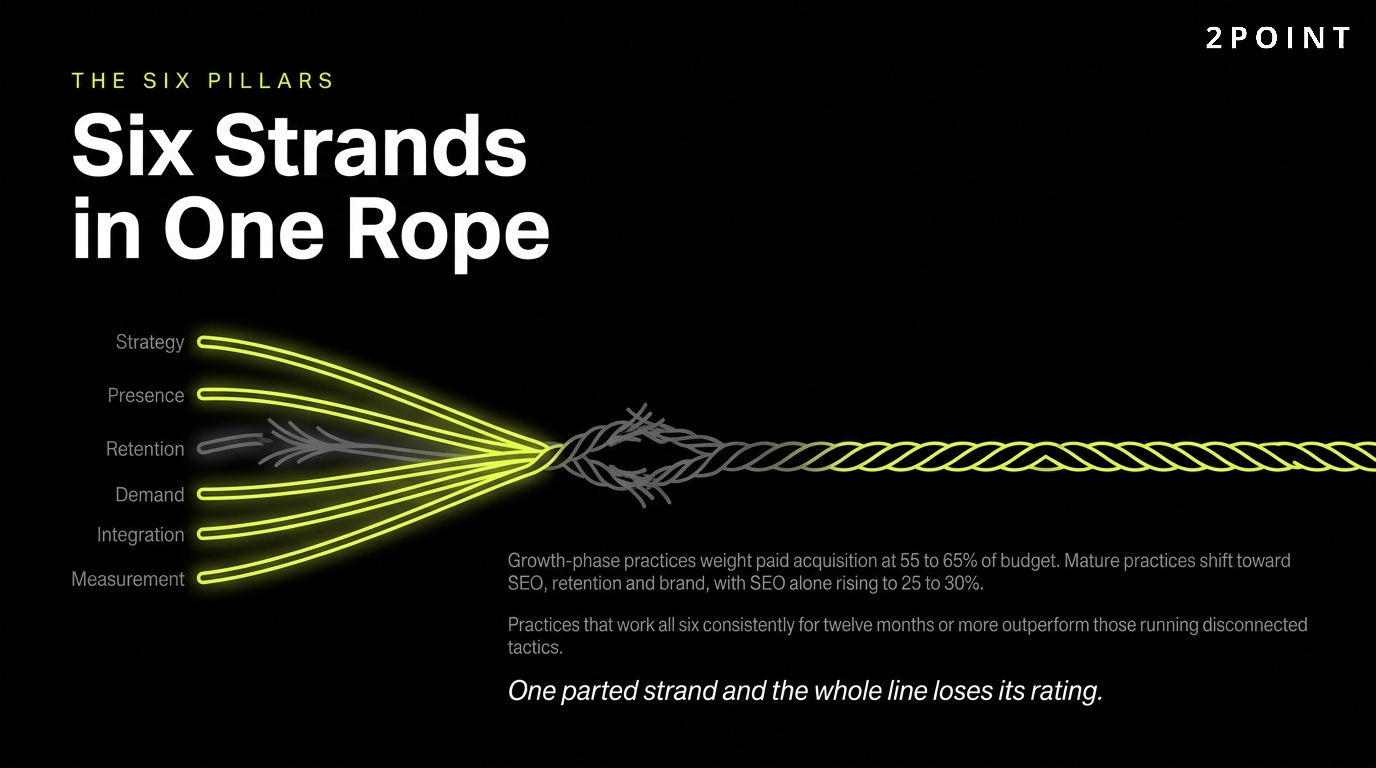
Building an integrated med spa marketing system requires addressing six interconnected pillars simultaneously. Neglecting any one creates a gap that limits the effectiveness of all the others.
Pillar 1: Strategy and Planning establishes your positioning, patient personas, competitive analysis, quarterly goals, budget allocation, and success metrics before any tactical execution begins. Without this foundation, tactical decisions are made reactively rather than strategically.
Pillar 2: Digital Presence encompasses your website, Google Business Profile, social media profiles, and directory listings. This is the infrastructure through which all other marketing efforts convert. Investing in acquisition without a strong digital presence is equivalent to running advertising for a store with no signage and locked doors.
Pillar 3: Demand Generation includes SEO, paid advertising, content marketing, and social media campaigns that bring new prospective patients into your ecosystem. This is the top of the funnel, and its efficiency determines your patient acquisition cost.
Pillar 4: Retention and Engagement covers email automation, SMS marketing, loyalty programs, membership models, and the post-treatment experience systems that keep acquired patients returning and referring. This pillar is where the lifetime value of your patient acquisition investment is realized.
Pillar 5: Cross-Channel Integration ensures that your messaging is consistent and your data is unified across all touchpoints. A patient who sees your Instagram ad, visits your website, and then calls your front desk should encounter the same brand voice, offers, and messaging quality at every step. Data from every channel feeds a unified patient profile that informs increasingly personalized communication.
Pillar 6: Measurement and Optimization closes the loop by tracking the KPIs that matter, testing hypothesis-driven improvements, and reallocating budget toward what the data confirms is working. Monthly reporting cycles with quarterly strategic reviews keep your marketing system adapting to both market changes and your own performance data.
When to Work with a Med Spa Marketing Agency
Many practice owners begin their marketing journey by handling it in-house, or by delegating it to a front desk staff member with some social media experience. This approach works at very early stages but quickly reaches its limits as the practice scales. The tipping point typically comes when the practice is generating over $400,000 annually and the owner recognizes that their time has higher value applied to clinical care and patient experience than to keyword research and ad optimization.
A specialized aesthetic practice marketing agency brings platform expertise, proven campaign structures, industry benchmarks, and dedicated analytical resources that generalist in-house efforts rarely replicate. When evaluating agencies, look for demonstrated experience with medical spa clients specifically (aesthetic medicine has unique compliance and content requirements that generalist agencies frequently mishandle), transparent reporting against the KPIs outlined above rather than vanity metrics, a clear attribution model that connects marketing spend to patient revenue, and a collaborative approach that treats you as a strategic partner rather than a passive client. The pricing for digital marketing services varies widely, so understanding what you are buying and how success will be measured before signing any agreement protects your investment. 2POINT works with aesthetic practices to build integrated marketing systems that cover all six pillars, with transparent reporting and strategy tailored to the specific competitive landscape of each market.
Frequently Asked Questions About Med Spa Marketing
What is med spa marketing?
Med spa marketing is the integrated system of digital and traditional strategies that medical spas use to attract new patients, convert consultations into booked treatments, and retain patients for long-term relationships. It typically includes local SEO, social media marketing, paid advertising, email and SMS automation, review management, and patient retention programs working together as one coordinated system.
How much should a med spa spend on marketing?
The industry benchmark for med spa marketing investment is 8 to 12 percent of gross annual revenue. A practice generating $1 million per year should invest $80,000 to $120,000 in marketing annually. Growth-phase practices benefit from investing at the higher end of this range, while established practices with strong referral pipelines can sustain growth at the lower end.
What is the most effective marketing channel for med spas?
There is no single most effective channel because the patient journey spans multiple touchpoints. However, local SEO and Google Business Profile optimization typically deliver the highest ROI over time due to compounding returns. For immediate patient acquisition, Google Search advertising captures the highest-intent traffic. Email marketing delivers the highest ROI per dollar spent at $36 for every $1 invested.
How do med spas get more patients from Google?
Med spas get more patients from Google by optimizing their Google Business Profile with complete information, photos, and weekly posts; building location-specific website pages with treatment-focused content; implementing LocalBusiness and MedicalBusiness schema markup; consistently acquiring new Google reviews; and running targeted Google Search ad campaigns for high-value treatments in their local market.
How do med spas market on social media?
Med spas market on social media by following a 70/20/10 content mix: 70 percent educational content that builds authority, 20 percent social proof content including compliant before-and-after photos and patient testimonials, and 10 percent promotional content with direct booking calls to action. Instagram and TikTok are primary platforms, with consistent posting, active engagement, and strategic use of Reels and Stories for algorithmic reach.
Is medical spa marketing different from regular health care marketing?
Yes, medical spa marketing differs from general healthcare marketing in important ways. Aesthetic patients are primarily elective consumers making discretionary spending decisions, making persuasion and trust-building more central than in other healthcare categories. Visual proof of results (before-and-after photography) plays a uniquely important role. However, med spa marketing still requires HIPAA compliance for patient communication and careful compliance review for any before-and-after content used in advertising.
What is the difference between med spa SEO and regular SEO?
Med spa SEO focuses specifically on local search optimization, treatment-specific keyword targeting, and medical entity signals that help Google categorize your practice correctly. Unlike general SEO, it requires MedicalBusiness schema markup, HIPAA-compliant content strategies, and significant emphasis on E-E-A-T signals (experience, expertise, authoritativeness, and trustworthiness) because Google applies heightened scrutiny to health-related content under its Your Money or Your Life quality guidelines.
How long does med spa marketing take to show results?
Paid advertising channels like Google Ads and Meta Ads can generate consultation bookings within days of launch. SEO typically requires three to six months to produce meaningful ranking improvements and six to twelve months to generate significant organic traffic volume. Email and SMS automation delivers measurable retention results within the first 30 to 60 days of deployment. Most practices see meaningful overall marketing ROI within three to six months of implementing a fully integrated system.
What are the biggest mistakes med spas make in their marketing?
The most common mistakes are: not tracking cost per acquired patient (making budget decisions without data), investing exclusively in acquisition without building retention systems, neglecting Google Business Profile optimization, running social media without a structured content strategy, failing to request reviews consistently, and treating marketing as a one-time project rather than an ongoing investment with regular optimization cycles.
Med spa marketing vs. plastic surgery marketing: what is the difference?
Med spa marketing focuses primarily on non-surgical aesthetic treatments with shorter patient consideration cycles, lower average transaction values per visit (offset by higher visit frequency), and strong social media and local SEO components. Plastic surgery marketing addresses higher-stakes surgical decisions with longer research cycles, higher transaction values, and greater emphasis on surgeon credentials, before-and-after galleries, and formal consultation processes. Both require HIPAA compliance and E-E-A-T content standards, but the persuasion journey and content strategy differ significantly in length and depth.
How do I measure the ROI of med spa marketing?
Measure med spa marketing ROI by tracking cost per acquired patient (total marketing spend divided by new patients acquired), patient lifetime value, consultation conversion rate, return on ad spend for paid channels, and organic search ranking progress for target keywords. Monthly reporting against these KPIs, compared to prior periods and industry benchmarks, provides the data needed to optimize budget allocation and demonstrate the business impact of marketing investment.
Can a small med spa compete with larger practices in digital marketing?
Yes, smaller practices can compete effectively with larger ones in local digital markets by concentrating resources on a tighter geographic area, building deeper community relationships, leveraging the authentic personal branding of individual providers, and executing consistently in the channels that matter most for local patient acquisition. A small practice that dominates local SEO, maintains an active and engaging social presence, and consistently acquires Google reviews will outperform a larger competitor with a bigger budget but inconsistent execution.