


 let’s connect


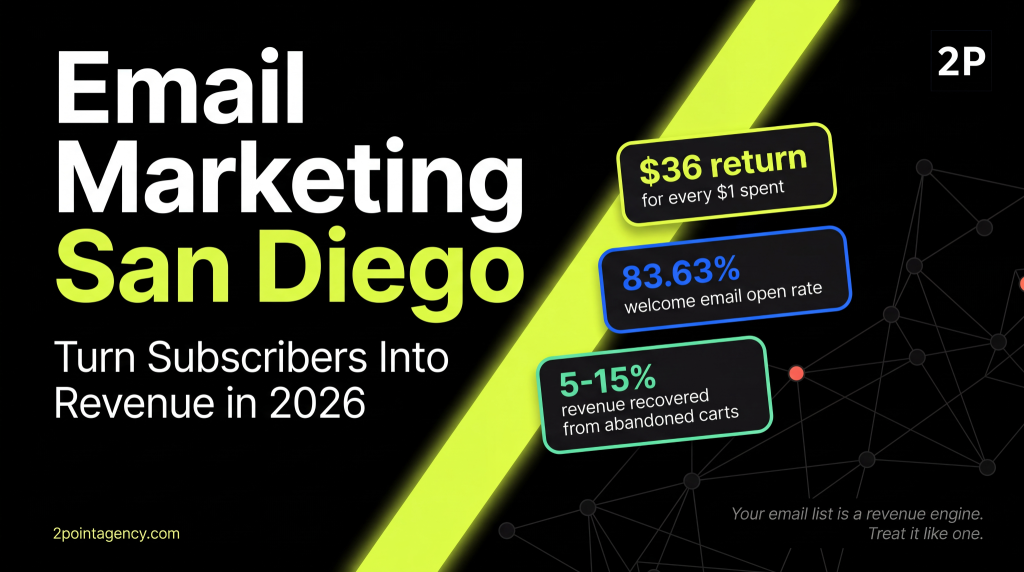
Most San Diego businesses are sitting on an underused asset: their email list.
Social media reach keeps declining. Ad costs keep climbing. But email delivers a direct line to people who already opted in to hear from you.
That's why email marketing in San Diego remains one of the most profitable channels available. With an average email marketing ROI of $36 for every $1 spent, the businesses treating it seriously are pulling away from those relying on paid traffic alone.
This guide covers how to build, segment, automate, and optimize San Diego email marketing to turn subscribers into consistent revenue. At 2POINT, we integrate email into multi-channel strategies that compound over time.
Key Takeaways
- Email marketing ROI averages 36:1, making it one of the most cost-effective channels for San Diego businesses.
- The shift in 2026 is from batch newsletters to email automation in San Diego that triggers the right message at the right time.
- List building, segmentation, and personalization separate revenue-generating email programs from those that get ignored.
- San Diego businesses in hospitality, e-commerce, professional services, and local services benefit most from a structured email marketing strategy.
- Email marketing in San Diego works best as part of a multi-channel approach where it nurtures leads generated by SEO, PPC, and social media.
Why Email Marketing Still Wins in 2026
The ROI Advantage
Email consistently delivers the highest return on investment of any digital marketing channel.
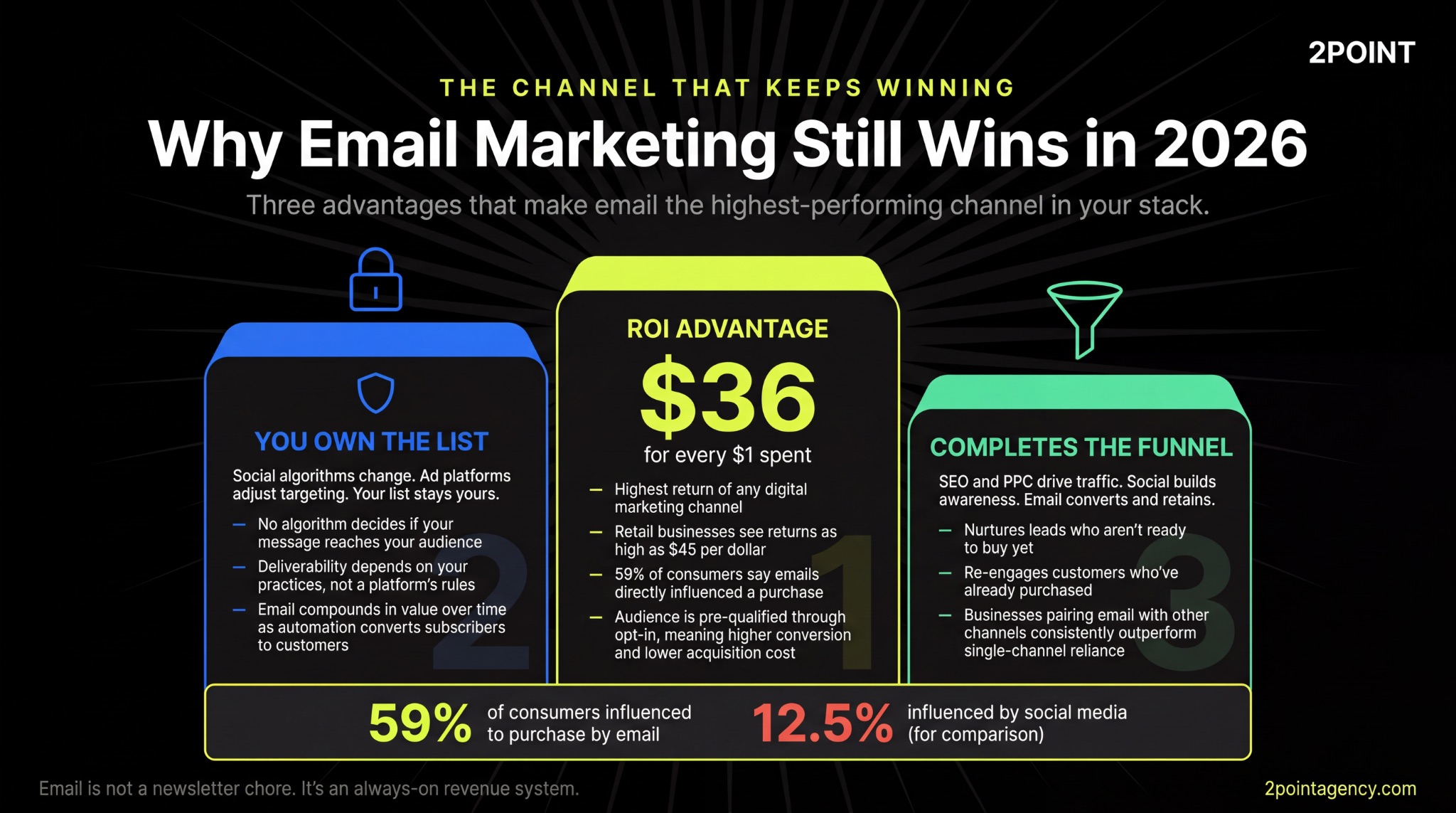
According to DemandSage's 2026 email marketing statistics, the channel generates $36 for every $1 spent, with retail businesses seeing returns as high as $45. On top of that, 59% of consumers say marketing emails have directly influenced their purchase decisions.
What makes this email marketing ROI so strong is the nature of the audience.
Unlike paid ads where you're interrupting strangers, email reaches people who've already raised their hand and opted in. Your list is pre-qualified, which means higher engagement, better conversion rates, and lower acquisition costs compared to nearly every other channel you're investing in.
You Own Your Email List
That ROI advantage becomes even more powerful when you consider ownership. Social media algorithms change. Ad platforms adjust targeting rules. But your email list is a business asset you control entirely.
No algorithm decides whether your message reaches your audience.
This is why email marketing San Diego businesses rely on compounds in value over time. As your list grows and automation sequences mature, you’re building a revenue channel that no platform change can take away from you.
Email Completes the Multi-Channel Funnel
Owning your list matters, but email works best when it’s connected to everything else you’re doing. SEO and PPC drive traffic. Social media builds awareness. Email is what converts and retains.
It nurtures leads who aren't ready to buy yet and re-engages customers who've already purchased. In San Diego's competitive market, businesses that pair email with a lead generation funnel built for conversions consistently outperform those relying on any single channel alone.
Building an Email List That Actually Converts
Email can only convert and retain if you have a list worth emailing. That starts with giving people a compelling reason to subscribe. Here are the opt-in methods that consistently deliver results:
- Lead magnets like free guides, checklists, templates, or discount codes in exchange for an email address.
- Website forms including pop-ups and embedded forms on your highest-traffic pages with clear value propositions.
- Checkout opt-ins that capture emails during purchase or intake for e-commerce and service businesses.
- Paid campaigns driving social and PPC traffic to landing pages built around email capture.
The best email marketing strategy ties list growth directly to your broader content marketing and distribution plan. Every piece of content you publish is an opportunity to capture an email.
List Hygiene and Quality Over Quantity
Growing your list is important, but keeping it clean is just as critical. A bloated list full of inactive subscribers hurts your deliverability and skews your metrics.
To protect both, follow these practices:
- Remove subscribers who haven't opened or clicked in 6 to 12 months.
- Use double opt-in to confirm intent and reduce spam complaints.
- Never buy email lists. Purchased lists destroy deliverability, violate CAN-SPAM, and produce zero meaningful engagement.
Segmentation: The Key to Relevance
How to Segment Your Email List
A clean list gives you a strong foundation, but segmentation is what makes your emails relevant.
Sending the same message to everyone guarantees most of it gets ignored. Instead, break your list into groups based on:
- Behavior: Purchase history, pages visited, engagement level, and abandoned carts.
- Demographics: Location within San Diego, industry, company size, or job title.
- Lifecycle stage: New subscriber, active lead, first-time customer, repeat buyer, or lapsed.
- Source: How they joined, whether through organic search, paid ads, events, or referrals.
Why Segmentation Drives Revenue
Segmenting your list is only valuable if it translates into better performance.
And the data confirms it does. A report by Omnisend on email marketing benchmarks found that segmented campaigns generate 30% more opens and 50% more click-throughs compared to unsegmented blasts.
That gap translates directly into revenue. San Diego email marketing programs built on proper segmentation consistently outproduce those sending the same message to everyone. Relevance also reduces your unsubscribes and spam complaints because subscribers receive content that actually matches what they care about.
Email Automation That Runs While You Sleep
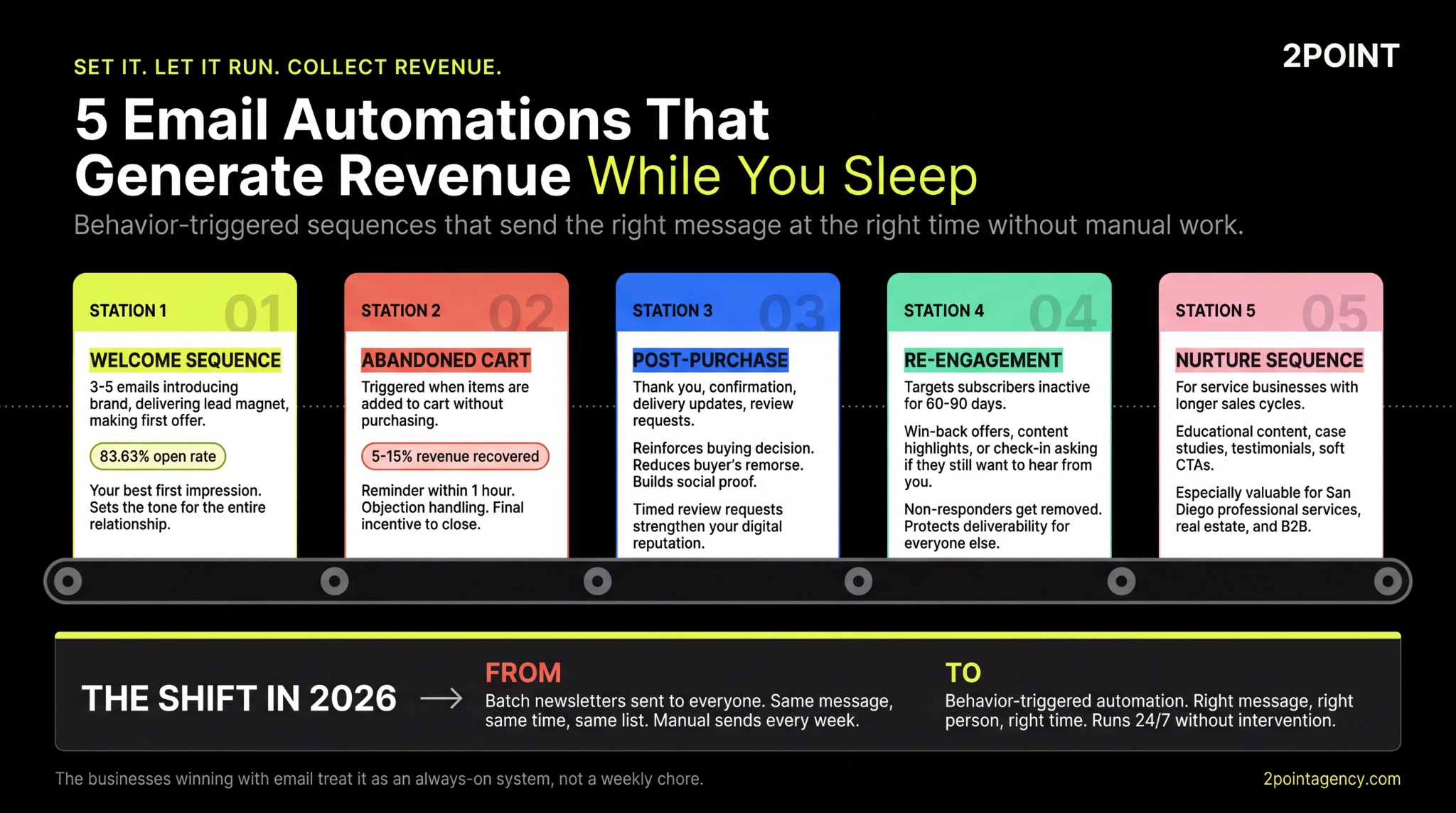
Segmentation tells you who to email. Automation tells you when. The right email automation in San Diego runs around the clock, delivering revenue without manual intervention. Here are the sequences that matter most.
Welcome Sequence
A 3 to 5 email series that introduces your brand, delivers the promised lead magnet, sets expectations, and makes an initial offer.
As reported by Mailmodo's welcome email statistics, welcome emails achieve an 83.63% open rate, dramatically outperforming standard campaigns. This is your best first impression, so make it count.
Abandoned Cart and Browse Abandonment
If your welcome sequence hooks new subscribers, this one recovers the revenue you're leaving on the table.
These emails trigger when a visitor adds items to cart or browses products without buying.
According to Moosend's cart abandonment statistics, they recover 5 to 15% of otherwise lost revenue. A strong sequence includes:
- A reminder of the items they left behind within the first hour.
- A follow-up addressing common objections like shipping costs or return policies.
- A final email with an incentive to complete the purchase.
Post-Purchase and Onboarding
Recovering abandoned carts is reactive. Post-purchase emails are proactive.
Thank-you emails, order confirmations, and delivery updates reinforce the buying decision and reduce buyer's remorse. For service businesses, onboarding sequences guide new clients through what happens after they sign.
Timed review requests then build the kind of social proof that strengthens your overall digital reputation.
Re-Engagement Campaigns
Not every subscriber stays active. Re-engagement campaigns target people who've gone quiet for 60 to 90 days with win-back offers, content highlights, or a simple check-in asking if they still want to hear from you.
Anyone who doesn't respond should be removed. Keeping dead subscribers on your list hurts deliverability for everyone else who actually wants your emails.
Nurture Sequences for Service Businesses
While e-commerce automation focuses on quick conversions, service businesses need a longer approach. Nurture sequences work when your sales process takes weeks or months.
To build trust over time, these sequences typically include:
- Educational content that positions your expertise without a hard sell.
- Case studies showing results for clients with similar challenges.
- Testimonials that reinforce credibility at key decision points.
- Soft CTAs that invite conversation rather than push for an immediate close.
These are especially valuable for San Diego professional services, real estate, and B2B companies where the decision to hire isn't made on impulse.
Writing Emails That Get Opened and Clicked
Subject Lines That Drive Opens
Your automation sequences are only effective if subscribers actually open your emails. That starts with the subject line. Here's what works:
- Keep subject lines under 50 characters with curiosity, urgency, or a direct value proposition.
- Personalize with the subscriber's name, location, or past purchase to lift open rates.
- A/B test consistently so you learn what resonates with your specific audience over time.
Email Copy That Converts
A strong subject line gets the open, but your copy determines whether subscribers take action.
Lead with the benefit and answer the reader's question: what's in it for me? Use short paragraphs, a single primary CTA, and a conversational tone that matches your brand.
You don't need to create everything from scratch either. The same approach to repurposing content across platforms applies here. Your blog posts, guides, and case studies all become email content that nurtures subscribers toward conversion.
Design and Mobile Optimization
Great copy loses its impact if your emails don't render properly on the devices your subscribers actually use. Over 60% of emails are opened on mobile, which means your email marketing in San Diego has to be designed mobile-first.
Single-column layouts, large tap targets, and images used sparingly with alt text are all non-negotiable. Test across Gmail, Apple Mail, Outlook, and Yahoo before every send to make sure nothing breaks.
Measuring Email Marketing Performance
Key Metrics to Track
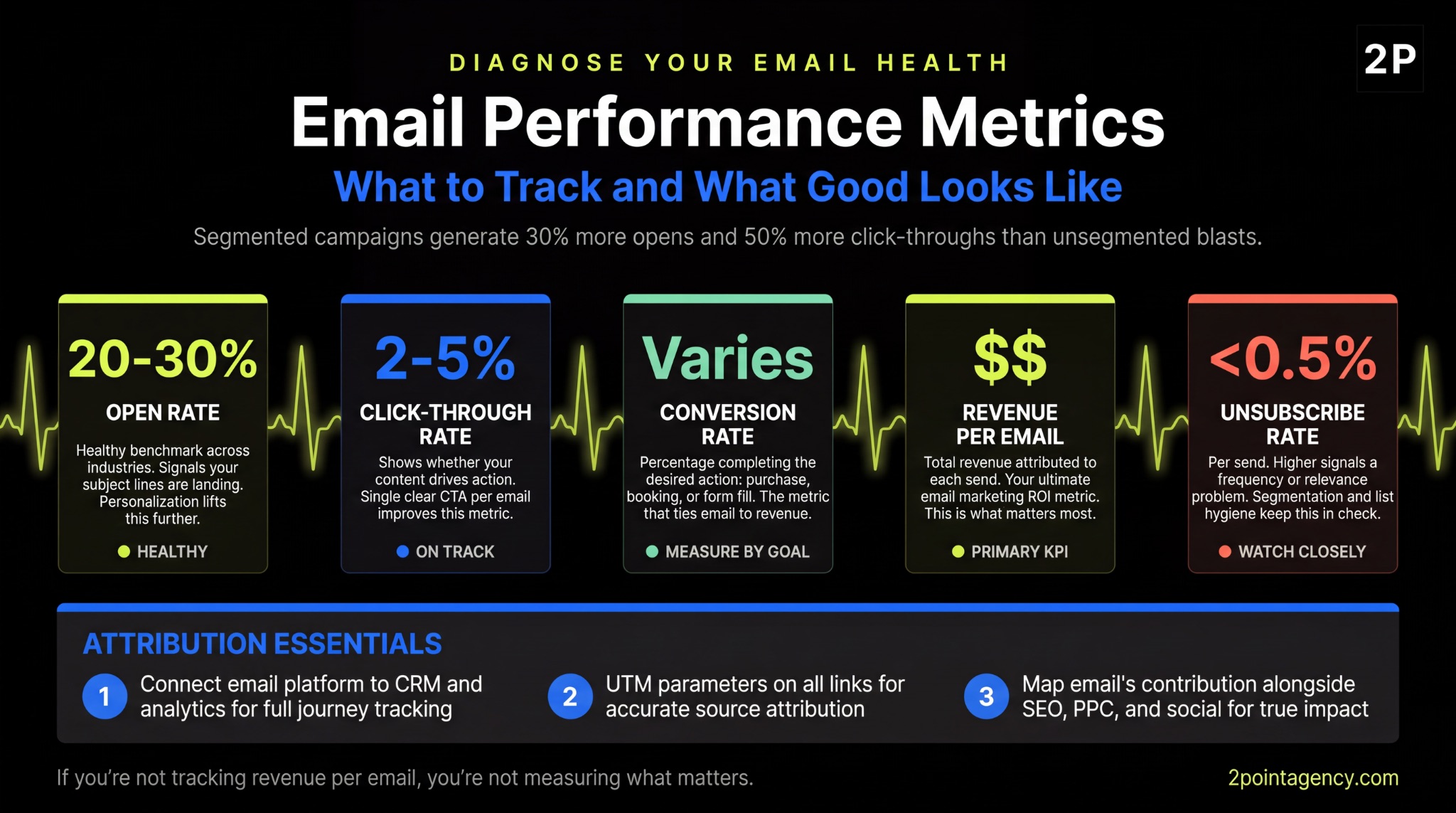
Designing for mobile ensures your emails get seen. But you also need to measure whether they're actually performing. These are the metrics that tell you if your email marketing strategy is working:
- Open rate: 20 to 30% is healthy for most industries and signals your subject lines are landing.
- Click-through rate: 2 to 5% is typical and shows whether your content drives action.
- Conversion rate: The percentage of subscribers who complete the desired action, whether that's a purchase, booking, or form fill.
- Revenue per email: Total revenue attributed to each send. This is your ultimate email marketing ROI metric.
- Unsubscribe rate: Should stay below 0.5% per send. Anything higher signals a frequency or relevance problem you need to address.
Attribution and Integration
Tracking individual metrics is valuable, but you also need to see how email fits into the bigger picture.
Connect your email platform to your CRM and analytics so you can track the full journey from email open to purchase. UTM parameters on all links enable accurate source attribution in Google Analytics
This level of tracking matters because email rarely works in isolation. A subscriber might discover you through SEO, sign up via a landing page, and convert through a nurture sequence. Mapping email's contribution alongside other channels through integrated marketing tool connections reveals its true impact on your broader marketing mix.
Email Marketing Platforms for San Diego Businesses
With your attribution set up, you need the right platform to execute everything we've covered. Each option serves a different type of business:
- Klaviyo: Best for e-commerce with deep Shopify integration, advanced segmentation, and revenue attribution.
- Mailchimp: Solid all-purpose platform for small businesses getting started with email marketing.
- HubSpot: Strong for B2B and service businesses needing CRM integration alongside email automation.
- ActiveCampaign: Powerful automation at a mid-range price point with flexible workflows.
- Constant Contact: Simple interface suited for local businesses and nonprofits.
The right choice depends on your business model, list size, integration needs, and budget. A trusted email marketing agency in San Diego should recommend the platform that fits your situation rather than defaulting to whatever they're most comfortable with.
How 2POINT Builds Email Marketing Programs in San Diego
At 2POINT, we integrate email marketing in San Diego into multi-channel strategies where email works alongside your SEO, PPC, and content efforts.
Every engagement starts with an audit of your existing program, list health, and automation gaps.
Your email marketing strategy gets built around the full customer lifecycle. Leads from SEO and PPC feed into San Diego email marketing nurture flows, while automation drives repeat purchases without manual sends.
Explore our marketing services to see how we structure email programs.
Turn Your Email List Into a Revenue Engine
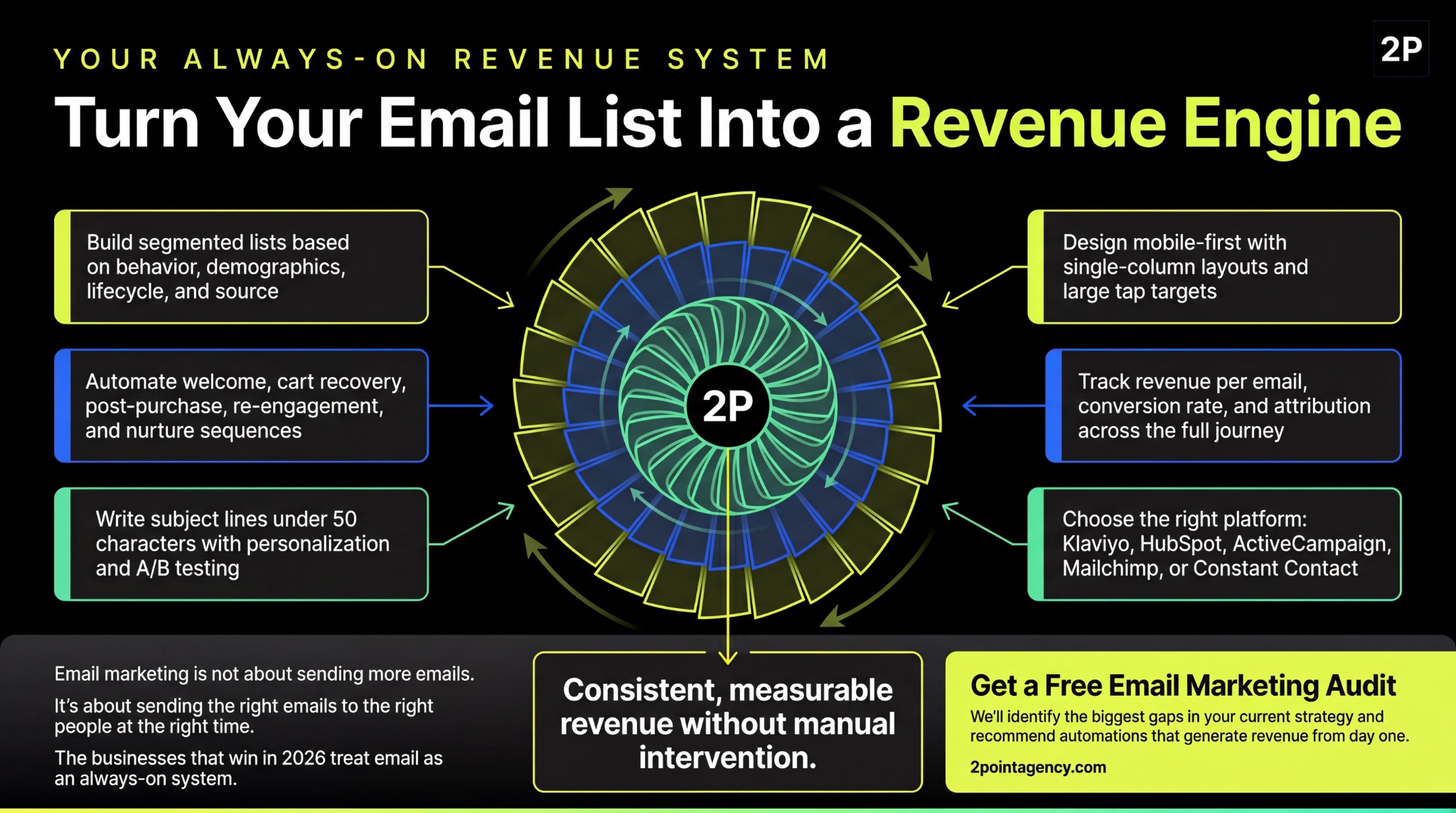
Email marketing in San Diego works best when you treat it as an always-on revenue system, not a weekly newsletter chore. Segmented lists, automated sequences, and revenue attribution turn email into one of your most profitable channels.
If your current program isn't delivering measurable results, get in touch with 2POINT. We'll show you where the biggest opportunities are hiding in your email strategy.
FAQs About Email Marketing
Is email marketing still effective in 2026?
Email marketing ROI averages $36 for every $1 spent, making it one of the highest-performing channels available. San Diego email marketing programs built on automation and segmentation consistently outperform social media and paid ads for conversions.
How often should I send marketing emails?
Most San Diego businesses see strong results sending one to three emails per week. The right cadence depends on your audience and content quality. Track your unsubscribe rates to find the frequency that works best.
What is the best email marketing platform for small businesses?
Mailchimp and Constant Contact work well for businesses starting out. E-commerce brands benefit from Klaviyo. The right email marketing services in San Diego depend on your integrations, list size, and growth goals.
How do I grow my email list?
Lead magnets, website opt-in forms, checkout captures, and paid ads driving to landing pages all build your list. For email marketing in San Diego, quality always matters more than quantity when it comes to driving real results.
What is email marketing automation?
Email automation in San Diego sends pre-built sequences triggered by subscriber behavior. Welcome series, abandoned carts, and nurture flows all run automatically, generating revenue without manual intervention as part of your broader email marketing strategy.
How do I measure email marketing ROI?
Track revenue per send, conversion rates, and cost per acquisition. Connect your email platform to analytics for full attribution. A strong email marketing agency in San Diego ties every dollar spent to signed deals and completed purchases.