


 let’s connect



Connected TV (CTV) makes every other channel in your performance stack work harder.
Most brands still have not figured that out.
They file it under brand awareness, put it in the brand budget, measure it on reach and frequency, and never let it touch a performance conversation.
It’s a huge mistake.
What happened?
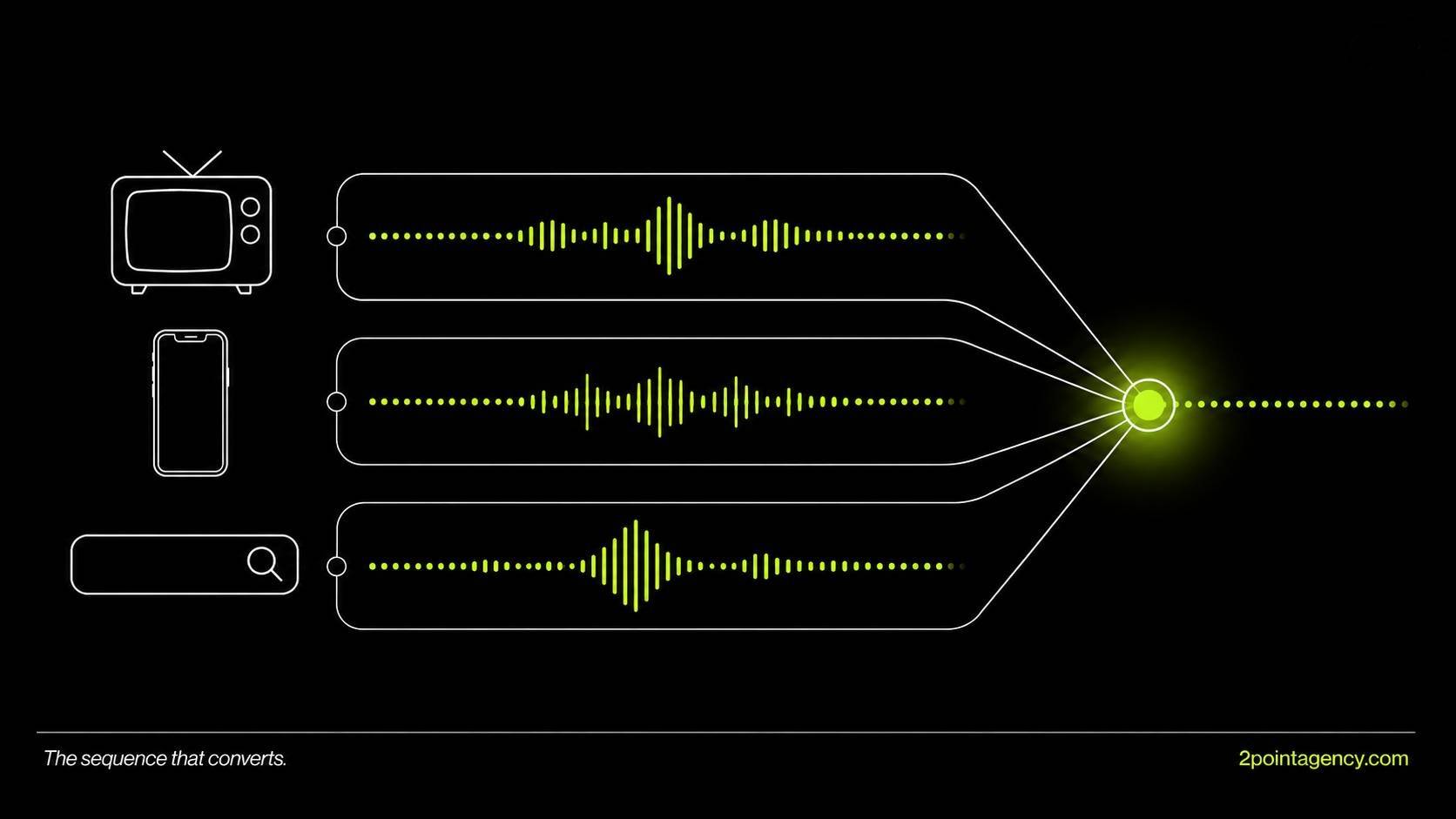
Mainly, attribution & tracking caught up.
Household IP (wifi network) matching now connects CTV ads to conversions across every device.
Automated Content Recognition (ACR) data tracks what a viewer actually watches, not just the platform they landed on.
Add in:
- Clickable overlays
- QR codes
- Shoppable ad units
All have become standard inventory across the major streaming platforms.
The infrastructure that made CTV a brand-only play is completely gone.
The audience is massive
Streaming surpassed linear (traditional) TV in viewership in 2024.
Adults 25 to 54, the core performance demographic, spend more time on connected TV than on any other screen.
A CTV viewer is seated, leaning back, and focused on the content.
You are not interrupting a scroll across 4 open tabs.
You are in their living space.
A web of connected channels
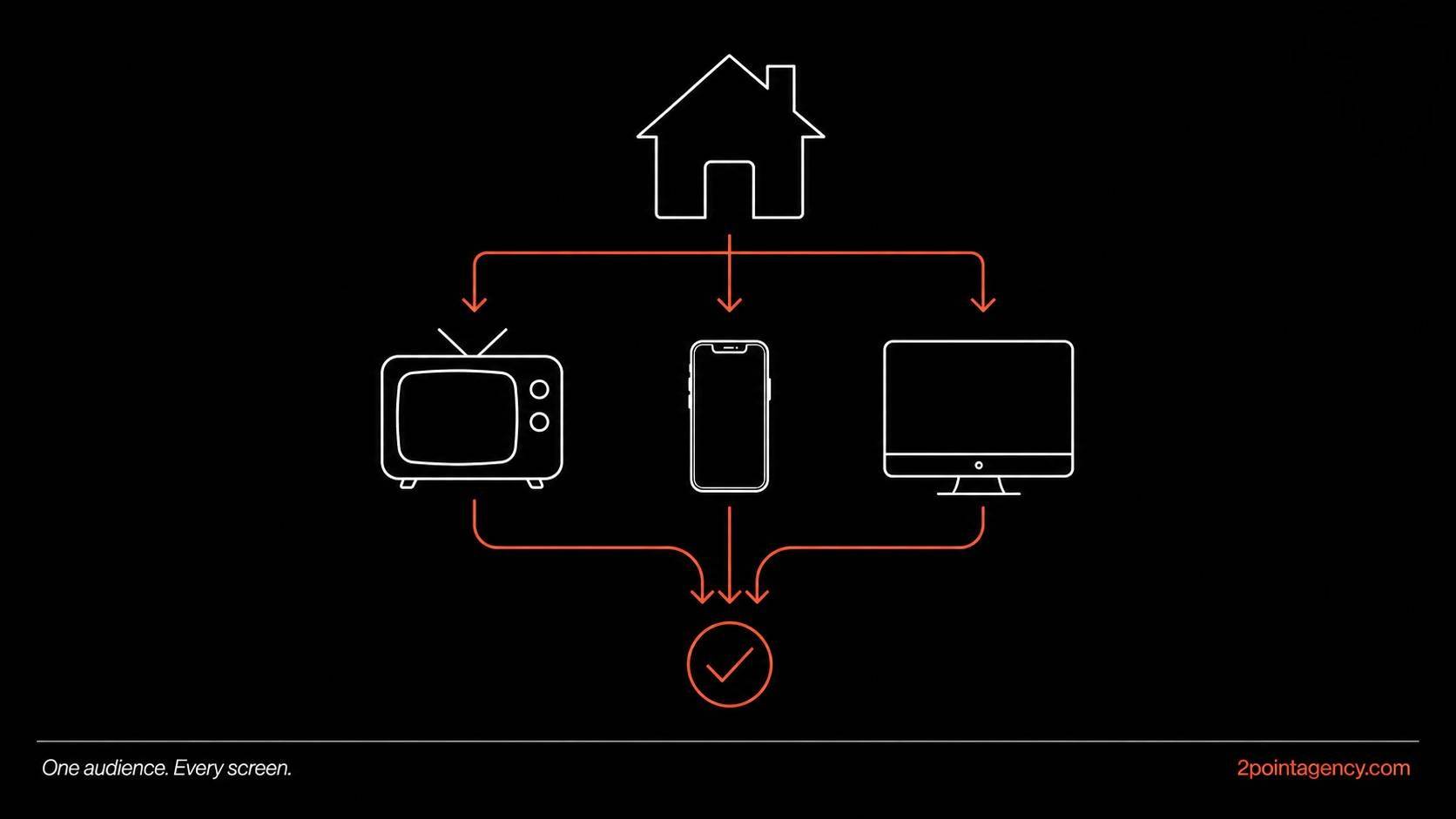
High-performing brands are not running 30-second awareness ads and hoping for the best.
Instead you build a string of ads all related to each other to create one seamless message.
CTV handles the introduction.
A 15 or 30-second ad served to a household matched against your target account list or a behavioral segment.
(Yes you can target specific people, locations, and demographics with TV now)
Paid social and search hit the same audience on every other screen they own.
- Your brand appears in the living room.
- Then on the phone.
- Then in the search bar.
Paid social campaigns supported by CTV convert at 20-40% higher rates than cold-only audiences.
Why most brands aren’t there yet
CTV buying is fragmented.
Roku, Amazon, Hulu, YouTube TV, and programmatic platforms all operate differently.
Even the creative requirements vary.
Most agencies still slot CTV into the brand budget because that is where it lived five years ago.
The performance opportunity exists because most of the competition is still doing it the old way.
CTV costs are way more reasonable compared to traditional TV.
But once more brands start realizing the performance opportunity the ‘gold rush’ will hit and costs will jump.
That’s exactly what happened to Google & Meta.
What you can do right away
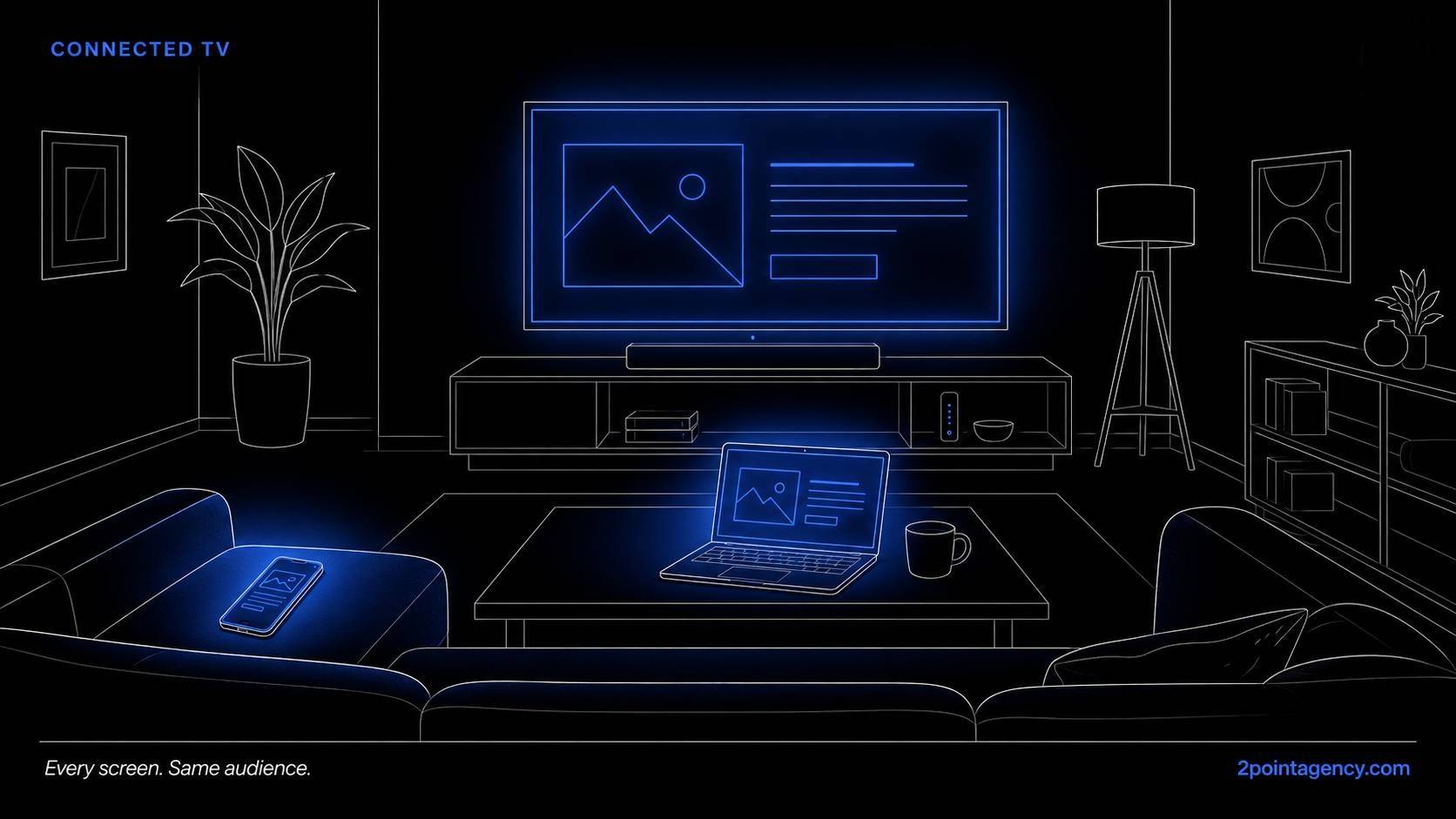
👉 Map your highest-value audience against available CTV targeting:
Geographic Data, Behavioral Data, Demographic Data, and even uploading your target account lists or existing CRM contacts.
👉 Build a two-stage sequence:
CTV for introduction, paid social for conversion.
Run it against a cold-only audience so you can see the lift.
👉 Track the impact downstream:
The evidence shows up in your paid social and search performance spiking, not in streaming metrics.
Are you still running CTV like a brand play or worse, not running CTV at all?
You are chasing the same audiences your competitors are, but with one less touchpoint in the sequence.